
Wycieczka audio po Ixelles: Sztuka, architektura i parlament w urokliwym Elsene
Belgijski lew zaryczał niegdyś z serca Elsene, a jego echo zaplątało się we wspaniałych fasadach i tajnych komnatach zaledwie kilka kroków od Place du Luxembourg. Poza kawiarnianymi ogródkami i wygładzoną polityką, ukryte prądy kształtują każdy kamień i cień. Ta wycieczka audio z przewodnikiem poprowadzi Cię przez korytarze władzy i obok wyciszonych skandali, odsłaniając nieoczekiwane historie, które tak wielu pomija. Dlaczego jedno nocne głosowanie na zawsze zniszczyło sojusze w Parlamencie Europejskim? Jakie tajemnicze kody wplecione są w bluszcz i secesyjne rzeźby Hôtel Albert Ciamberlani? Kto zaryzykował wszystko dla jednego skradzionego zdjęcia na Esplanadzie? Wędruj przez miasto, w którym rewolucjoniści szeptali w okazałych salach, a wizjonerzy wyryli swój bunt na szkle. Każdy krok odkrywa dramaty, sekrety i pytania bez odpowiedzi, rozświetlając Elsene w zaskakująco nowych barwach. Gotowy, by podążyć za rykiem ukrytym za fasadami? Rozpocznij swoją podróż już teraz.
Podgląd trasy
O tej trasie
- scheduleCzas trwania 30–50 minsIdź we własnym tempie
- straighten5.2 km trasy pieszejPodążaj wyznaczoną trasą
- location_on
- wifi_offDziała offlinePobierz raz, korzystaj gdziekolwiek
- all_inclusiveDożywotni dostępOdtwarzaj ponownie w dowolnym momencie
- location_onStart przy Muzeum w Ixelles
Przystanki na tej trasie
To spot the Museum of Ixelles, look for a pale, cubic building with large glass doors and a bold sign above the entrance, just past a striking circular metal sculpture out…Czytaj więcejPokaż mniej
To spot the Museum of Ixelles, look for a pale, cubic building with large glass doors and a bold sign above the entrance, just past a striking circular metal sculpture out front. Welcome to the Museum of Ixelles, where every brick has soaked up over a century’s worth of creative whispers and bold imaginations! Can you hear your footsteps echo on the stone plaza? Way back in 1892, the place opened its doors thanks to a generous painter and collector, Edmond De Pratere, whose friends soon joined in-imagine an art lovers’ secret club, each bringing treasures to share. By the early 1900s, legendary art patrons like Léon Gauchez and Fritz Toussaint had filled these walls with Belgian masterpieces. But it was Octave Maus who went wild: at one point he donated over 200 pieces, including glowing Impressionist and mysterious Symbolist works! Inside, along with Belgian greats, you’ll even find every original poster by the famous Toulouse-Lautrec, whose can-can girls could probably dance off the paper if no one was watching. The museum’s been closed for a big renovation since 2018, with fresh space for new surprises-if you listen closely, you might almost catch the clang of renovation from within, promising a new chapter. Don’t worry, the doors will reopen soon in 2025, ready to amaze a whole new generation!
Otwórz dedykowaną stronę →You’re looking at a long, sleek building with wide glass walls stretching along the green lawn-just glance to your right past the big tree, and all those shining windows belong to…Czytaj więcejPokaż mniej
You’re looking at a long, sleek building with wide glass walls stretching along the green lawn-just glance to your right past the big tree, and all those shining windows belong to the Institut Redouté-Peiffer. Now, let’s dive into its story! Imagine a classroom filled not with the stale smell of chalk, but with the bright scent of fresh-cut flowers and just a hint of fertilizer-this is no ordinary school. The Institut Redouté-Peiffer, crowned in glass and steel, is a bit of a shape-shifter. Once upon a time, back in 1913, there was a humble gardening school, where students learned to talk to roses, charm fruit trees, and maybe even wrestle a lawnmower or two. Years rolled by, and the school grew branches of its own: teaching floriculture, fruit arboriculture, floristry, everything you’d need if you ever fancied yourself in a botanical showdown. Then came the big twist-in 1996, the building before you became Institut Redouté-Peiffer after a handshake between two very different legacies. One is Pierre-Joseph Redouté, an 18th-century Belgian painter famous for turning roses into watercolor royalty. The other, Serge Peiffer: a scientist worth his weight in beakers and the sort of person who probably spent more time in labs than out of them. Fused together, their names reflect a place where creativity overlaps with chemistry. Today, the institute is a lively crossroads: students dissect flowers and experiments, tinker in photography studios, whip up tasty dishes, and crash sports balls in the gym. Greenhouses, rock gardens, labs full of bubbling potions-there’s even a darkroom where you learn to capture the perfect splash of sunlight. So, the next time someone says schools are boring, just remind them of the wild, blossoming world tucked behind these sunlit windows!
Otwórz dedykowaną stronę →

Pokaż jeszcze 7 przystankówPokaż mniej przystankówexpand_moreexpand_less
To spot Place du Luxembourg, simply look for a bustling cobblestone square surrounded by elegant white 19th-century buildings-with a prominent bronze statue at the grassy center…Czytaj więcejPokaż mniej
To spot Place du Luxembourg, simply look for a bustling cobblestone square surrounded by elegant white 19th-century buildings-with a prominent bronze statue at the grassy center and a lively mix of cars, buses, and people all around. Welcome to Place du Luxembourg-or, if you want to sound like a local Eurocrat or journalist, just call it “Place Lux” or “Plux.” You’re standing in the very heart of the European Quarter, but don’t worry, you don’t have to debate policy to fit in! Look around you-a broad, open square lined with cafes, bars, and banks, their terraces always filled with people unwinding after work. In the center of it all stands the Monument to John Cockerill, who’s looking heroic and a little tired, surrounded by figures from the industrial age: a glass-blower, a mechanic, a puddler, and a coal miner. It’s like the Avengers of Belgian industry, minus the spandex. Let’s jump back to the 1850s-try to imagine the smell of fresh-cut stone, the sound of horses’ hooves on cobblestone, and the hopeful chatter of merchants and café owners setting up shop. This square was the crowning jewel of the Leopold Quarter, designed just after the Belgian Revolution to be the most prestigious place in town. Architect Tilman-Francois Suys planned out the district, but it took the coming of the railway in 1854 for Place du Luxembourg to really catch steam-literally and figuratively! At that time, the railway station here wasn’t just a transport hub; it was a social crossroads of three classes. Traveling first class? You’d get a grander waiting room than if you were, say, toting coal-stained clothes. The station grew over the years, with grand pavilions popping up to welcome people arriving in the city. Auguste Beernaert, the Belgian prime minister, even lived in a corner house. You never know who you might have bumped into-perhaps someone plotting the future of Belgium, or just looking for a good coffee. But it’s not all old world charm. Fast forward to 1989-the tracks go underground, and in roars the European Parliament complex, so big it looks like it’s trying to hug the square with glass and steel arms. That central railway station entrance you see? It’s now an info point and museum. If you peer behind the Cockerill statue, you’ll see the buildings of the European Parliament’s Espace Léopold stretching their modern faces out. Some people say it’s grand, others say it’s more misplaced than a Belgian waffle at a salad bar. As the sun drops and Thursday nights arrive, Place Lux transforms. Imagine the buzz of voices and laughter, the clatter of high heels on paving stones, and music drifting from open bar doors-this is the capital’s biggest after-work party spot. But not everyone’s cheering; locals have grumbled about all the bottles, confetti, and, let’s just call it “creative litter,” left behind. At one point, politicians even threatened to close the party down! Now here’s a twist out of a detective story: in 2024, during a heated farmers’ protest, the famous Cockerill monument was vandalized-one mechanic statue was burned! But don’t worry, after months of restoration, it’s back in place, shinier and as indomitable as ever. Plans are afoot to restore this square to its historic roots, with new trees and lawns-maybe even adding a new metro stop. So, whether you’re a local, a bureaucrat, or just pretending to be a journalist on your European adventure, you’re standing in a space where history and modern Brussels dance cheek-to-cheek every day. And who knows? Maybe you’ll leave with a story of your own.
Otwórz dedykowaną stronę →Ahead of you, Chaussée de Wavre stretches out as a lively city street flanked by rows of modern and historic buildings, with a crossroads and energetic cyclists marking the…Czytaj więcejPokaż mniej
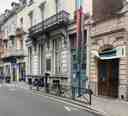
Ahead of you, Chaussée de Wavre stretches out as a lively city street flanked by rows of modern and historic buildings, with a crossroads and energetic cyclists marking the scene-just look straight down the gently rising road before you. Chaussée de Wavre is more than just a long name with a French twang-it’s the backbone of daily life here, connecting the heart of Brussels all the way to the forests on the edge of the city. Imagine the sound of bicycle bells and car engines weaving together as this street hums with life, running through three different neighborhoods: Ixelles, Etterbeek, and Auderghem. If you took this route in the 1800s, you might have seen farmers carting fresh produce to the city or, centuries later, rush-hour crowds heading toward the European Parliament-nowadays, you might race a cyclist or a tram instead! Along the way, you’d spot famous stops like the quirky Vendôme cinema for movie lovers, the Royal Belgian Institute of Natural Sciences (home to the biggest dinosaur hall in Europe-roar!), and the serene Jean-Félix Hap Garden for a secret picnic. This isn’t just any road; it’s part of the mighty N4, stretching all the way from Brussels to Arlon. And yes, it’s named after the city of Wavre, so if your French pronunciation slips, don’t worry-locals have heard it all before!
Otwórz dedykowaną stronę →To spot the Camille Lemonnier Museum, look for a stately cream-colored townhouse with ornate black wrought-iron balconies and long red banners by the green-gray door, standing…Czytaj więcejPokaż mniej
To spot the Camille Lemonnier Museum, look for a stately cream-colored townhouse with ornate black wrought-iron balconies and long red banners by the green-gray door, standing right along the Waversesteenweg. As you stand here, imagine the soft echo of footsteps on old wooden floors, the murmur of distinguished artists and writers drifting from behind tall windows, and the distant clatter of horse-drawn carriages from the late 1800s. This elegantly aged townhouse wasn’t always a museum-it was built in 1889 for baron Oscar Jolly, and you can almost smell the cigar smoke and see the velvet curtains billowing inside! For decades, it stood quietly until, in 1997, its doors opened to honor one of Belgium’s most daring French-speaking writers, Camille Lemonnier, whose spirit practically lingers in the air around you. Lemonnier wrote just a short stroll from here at 25 rue du Lac, but his creative heart beats in these rooms. Thanks to his daughter Marie, his study from that old apartment has been carefully recreated in a way that makes you wonder if he might step in any minute, grumbling about a lost manuscript! But it’s more than just his desk and inkwell-every wall here buzzes with brilliant colors from masterpieces Lemonnier collected through friendships with the city’s most talented painters: you’ll spot portraits by Van Strijdonck and Emile Claus, landscapes from Baron and Heymans, and works by his own daughter Louise. What’s better than a houseful of paintings? How about sculptures by Jef Lambeaux or even a plaster cast from Rodin himself-don’t worry, the sculptures don’t bite! This museum is one of Ixelles’ hidden treasures, a cabinet of wonders stuffed with literary secrets and stories, waiting for curious visitors with a love for imagination and old-fashioned mystery.
Otwórz dedykowaną stronę →To spot CIVA, look for a modern brick building with big glass windows and a distinctive arched walkway above the entrance, nestled between two trees straight ahead of…Czytaj więcejPokaż mniej
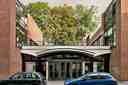
To spot CIVA, look for a modern brick building with big glass windows and a distinctive arched walkway above the entrance, nestled between two trees straight ahead of you. Imagine Brussels in the 1960s and 70s, a city where bulldozers rolled right through old neighborhoods, tearing down beautiful homes and pushing out whole communities. It wasn’t exactly the kind of urban planning that won any popularity contests. Local architects and city lovers started gathering everything they could-old protest flyers, surreal blueprints for dream buildings, sketches, and radical manifestos. They were determined not to let Brussels forget its architectural soul, even if they had to stash it all away in mysterious archives and dusty drawers. From these passionate rebels, two key groups emerged: the Archives d’Architecture Moderne and the Sint-Lukasarchief. Their mission? To record every quirky cornice, every garden plan, every lost vision of what the city *could* have been. Fast forward to the 1980s and a new obsession blooms: gardens and landscapes. Landscape architect René Pechère didn’t just have a green thumb-he had a Bibliophile’s brain! He filled a library with over 10,000 books-including gems from the 16th and 17th centuries-and handed them over, making sure anyone with a spark of curiosity could wander through centuries of botanical dreams. By the time 1999 rolled around, architects, librarians, and even a few politicians decided to pool all this creative energy. They fused libraries, archives, and centers into one delightful hodgepodge: CIVA. Since then, CIVA has become the city’s own HQ for curious minds. Here, you’ll find exhibitions, debates, wild plans for greener futures, and heaps of architectural secrets. Brussels’ story of loss, protest, and rediscovery still buzzes in the air-only now, it’s all on show, and you don’t even need to sneak past a librarian to see it!
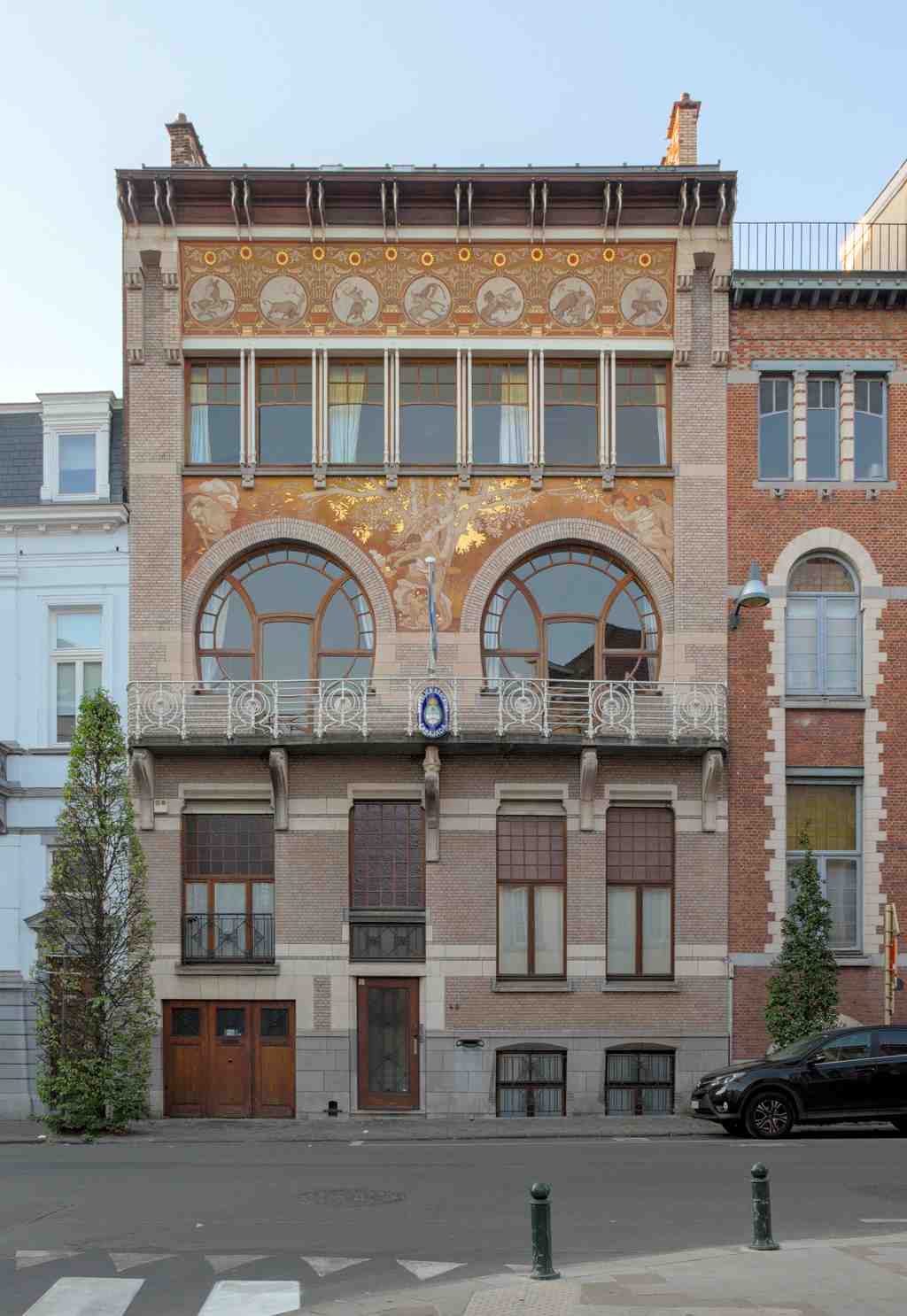
Otwórz dedykowaną stronę →To spot the Hôtel Albert Ciamberlani, look for the striking building with grand horseshoe-shaped windows and a stunning upper façade painted with golden, flowing, symbolic figures…Czytaj więcejPokaż mniej
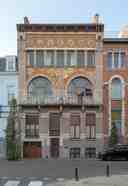
To spot the Hôtel Albert Ciamberlani, look for the striking building with grand horseshoe-shaped windows and a stunning upper façade painted with golden, flowing, symbolic figures and a ring of circular medallions just under the roof-it's right at number 48, where the street widens a little. Now, let’s dive into the story behind this unforgettable house! Take in the sweet scent of fresh brick and the faint echo of footsteps from another era. Imagine standing here in 1897: Brussels is abuzz with innovation, and an artistic revolution is sweeping through the city. This house wasn’t built for just anyone-it was the dream home of the symbolist painter Albert Ciamberlani, lovingly commissioned by his devoted mother. And as if that’s not sentimental enough, the creative force behind its bold form was the celebrated architect Paul Hankar, who was practically the neighborhood’s own superstar of creativity (his own house is just steps away, so talk about having your work close to home!). Of course, any good story has a bit of drama. The land for the house was unusually wide, much to Hankar’s frustration. He wrestled with sketches, tried massive windows, considered central bow windows, and then, in a final stroke of brilliance, created the layered, rhythmic façade you see now. The result? A place described by art historians as one of the most beautiful Art Nouveau façades in Belgium-imagine getting that in your yearbook! Now look up at the building’s crown-the sgraffito artwork bursting with golden light. Albert Ciamberlani himself designed this masterpiece: in the center, a lush pear tree unfurls while delicate figures beneath it represent different stages of life. Just below the overhanging eaves, a lineup of medallions shows either scenes from the heroic Labors of Hercules or dynamic hunts-even the experts can’t always agree. There’s nothing stiff or stuffy here-it’s a living mural, full of energy and mystery, brought to sparkling life by artist Adolphe Crespin, and influenced by the likes of Walter Crane. Hankar wasn’t too traditional with the exterior, but inside, things are a bit more down-to-earth: a layout with grand rooms on one side, cozy studies and stairwells on the other, bedrooms scattered across two floors, and an enormous salon gazing out over Rue Defacqz. What really sets this building apart, though, is its eclectic style: see those round openings in the railing? That’s a nod to Chinese moon gates. Horizontal bands across the façade? Inspired by medieval architecture. And all those flowing lines and natural forms-pure Art Nouveau, with a Belgian twist. In the 1920s, modern living crept in: the lower façade changed, and even a garage appeared. The original furniture-Hankar-designed works of art-now lives in a museum in Ghent, but the soul of the place remains. Carefully restored in 2006, the Hôtel Ciamberlani is still dazzling, still mysterious, and still drawing admiration-just as it did when Ciamberlani painted the story of life in gold across its face. So take it all in and don’t be surprised if you feel just a little bit more artistic yourself!
Otwórz dedykowaną stronę →Look to your right, and you’ll see a striking pale stone church with a tall, stepped bell tower and arched windows rising up from the corner just ahead-St Andrew’s Church is hard…Czytaj więcejPokaż mniej
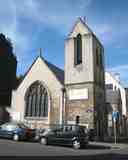
Look to your right, and you’ll see a striking pale stone church with a tall, stepped bell tower and arched windows rising up from the corner just ahead-St Andrew’s Church is hard to miss with its classic cross-topped silhouette against the Brussels sky. As you stand here, imagine the echoes of distant footsteps and laughter drifting across Ixelles back in 1830, when a group of Scots founded a humble Presbyterian kirk right here in Belgium. Now, imagine a twist of mystery-after the Belgian Revolution, the church’s records simply vanish into thin air. Poof! Not even Sherlock Holmes could sniff them out. Fast forward to 1898: The Reverend Francis Gordon sweeps into Brussels, and church services become a bit of a nomadic adventure, hopping from one spot to the next every Sunday for nearly three decades. I hope he got some decent frequent walker points! By 1900, things get serious. The congregation is buzzing-150 folks gather, the first elders are ordained, and everyone chips in to raise money for a real church. At last, in 1925, this very building rises, not just as a house of worship, but as a moving memorial to the Scottish soldiers who lost their lives here in World War I. Just pause a moment and picture the first Sunday: sunlight streaming through the arched window, people from every corner of the world squeezing in. Over the years, the congregation has boomed, thanks to Brussels drawing people from Europe, Africa, and beyond-today, more than 30 nationalities mix here, side by side. The minister since 2004 is Reverend Dr Andrew Gardner, all the way from Scotland. Walk the block and you’ll see Art Nouveau houses surrounding you, including one by a superstar architect, Victor Horta. Quite the neighborhood, eh? There’s history, heart, and a good dash of Scottish spirit sealed into every stone.
Otwórz dedykowaną stronę →To spot Tenbosch Park, just look ahead for a winding gravel path that curves through manicured green lawns, surrounded by tall shady trees and thick hedges-like a secret garden…Czytaj więcejPokaż mniej
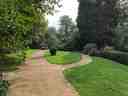
To spot Tenbosch Park, just look ahead for a winding gravel path that curves through manicured green lawns, surrounded by tall shady trees and thick hedges-like a secret garden waiting to be explored. Welcome to Tenbosch Park, where urban Brussels takes a deep, leafy breath. Picture yourself wandering here decades ago, back when this spot was a private wonderland guarded by high walls and the dreams of a botanist named Jean-Louis Semet. Hear the gentle rustle of unusual leaves as Semet and his horticulturist-friend, Hector Noyer, paced these grounds, pondering which rare and exotic tree might grow best in Belgian soil. The estate was originally bought by Semet’s grandparents in the 1800s for a grand château, but Jean-Louis had other plans-he swapped palace for a villa and turned the gardens into a mini-jungle of discoveries. Imagine the tension as trees from far-off lands got settled in Brussels’ chilly winters-some thrived, some quit after the first frost-but all added to the collection’s magic. When Brussels-Capital Region took over in 1982, it became a puzzle for landscape architects: how to keep this botanical treasure trove alive, and still add playgrounds, pétanque courts, and winding paths that loop mysteriously through the hills? Thanks to a local architect who saw gardens like a painter sees a canvas, and neighbors who shared a lot of opinions, Tenbosch Park became what you see now-a masterpiece you can walk through. Each season rewrites the story here: fiery leaves in autumn, lush shades in spring, and always those two tranquil ponds flanked by statues, like silent storytellers. The gardeners today are half-scientists, half-magicians, nurturing rare specimens and keeping the park’s character as wild and wonderful as its history. So go ahead-pause, listen, and soak up the peace that has grown here, bush by glorious bush.
Otwórz dedykowaną stronę →
Najczęściej zadawane pytania
Jak rozpocząć trasę?
Po zakupie pobierz aplikację AudaTours i wpisz kod realizacji. Trasa będzie gotowa do natychmiastowego rozpoczęcia – po prostu dotknij \"Play\" i podążaj trasą z nawigacją GPS.
Czy potrzebuję internetu podczas trasy?
Nie! Pobierz trasę przed rozpoczęciem i korzystaj z niej w pełni offline. Jedynie funkcja czatu wymaga internetu. Zalecamy pobieranie przez WiFi, aby oszczędzać dane mobilne.
Czy to wycieczka grupowa z przewodnikiem?
Nie – to samodzielny audioprzewodnik. Zwiedzasz niezależnie, we własnym tempie, z narracją audio odtwarzaną przez telefon. Bez przewodnika, bez grupy, bez harmonogramu.
Ile trwa trasa?
Większość tras zajmuje 60–90 minut, ale to Ty kontrolujesz tempo. Wstrzymuj, pomijaj przystanki lub rób przerwy, kiedy chcesz.
Co jeśli nie zdążę ukończyć trasy dzisiaj?
Żaden problem! Trasy mają dożywotni dostęp. Wstrzymaj i wznów, kiedy chcesz – jutro, za tydzień lub za rok. Twój postęp jest zapisywany.
W jakich językach są dostępne trasy?
Wszystkie trasy są dostępne w ponad 50 językach. Wybierz preferowany język podczas realizacji kodu. Uwaga: języka nie można zmienić po wygenerowaniu trasy.
Gdzie znajdę trasę po zakupie?
Pobierz darmową aplikację AudaTours z App Store lub Google Play. Wpisz kod realizacji (wysłany e-mailem), a trasa pojawi się w Twojej bibliotece, gotowa do pobrania i rozpoczęcia.
Jeśli trasa Ci się nie spodoba, zwrócimy Ci pieniądze. Skontaktuj się z nami pod adresem [email protected]
Bezpieczna płatność przez 


