Wycieczka audio po Townsville: Kulturalne i historyczne atrakcje miasta Townsville
W palącym słońcu Queensland Townsville strzeże opowieści o łotrzykach z czasów gorączki złota, zatopionych skarbach i podwodnych cudach, które większość odwiedzających ledwie dostrzega. Załóż słuchawki i zanurz się w wycieczce audio z przewodnikiem, która odkrywa ukryte dramaty miasta – od koralowych labiryntów w Reef HQ po kolonialne legendy w hotelu Tattersalls. Dlaczego największe na świecie akwarium z żywą rafą zostało nagle zamknięte za zamkniętymi drzwiami? Kto szeptał sekrety wśród duchów i reliktów HMS Pandora w Muzeum Tropikalnego Queensland? I jaki skandal omal nie zrujnował balu z epoki wiktoriańskiej na Flinders Street? Przemierzaj zielone ulice i lśniące nabrzeża, podczas gdy pogrzebane skandale, tropikalne tajemnice i huczne uroczystości ożywają pod twoimi stopami. Przygotuj się na zwroty akcji, niespodzianki i widoki, których nigdy nie zapomnisz. Rozpocznij swoją opowieść o Townsville już teraz – i odkryj, jak wiele cudów kryje się tuż pod powierzchnią.
Podgląd trasy
O tej trasie
- scheduleCzas trwania 40–60 minsIdź we własnym tempie
- straighten3.5 km trasy pieszejPodążaj wyznaczoną trasą
- location_onLokalizacjaTownsville, Australia
- wifi_offDziała offlinePobierz raz, korzystaj gdziekolwiek
- all_inclusiveDożywotni dostępOdtwarzaj ponownie w dowolnym momencie
- location_onStart przy Reef HQ
Przystanki na tej trasie

So, let's dive in, shall we? Reef HQ is nothing short of aquatic awe! It once held the title of the world's largest living coral reef aquarium. Built as a Bicentennial…Czytaj więcejPokaż mniej
So, let's dive in, shall we? Reef HQ is nothing short of aquatic awe! It once held the title of the world's largest living coral reef aquarium. Built as a Bicentennial Commemorative project, this place was more than just an exhibit - it was a vibrant, living creature designed to bring the wonders of the Great Barrier Reef onto land. With over 130 coral species and 120 fish species, it was like someone took a slice of the reef and plopped it right in Townsville. Not just any fishbowl, my friend! Originally opened in 1987 under the name Great Barrier Reef Aquarium, it later got its snazzier title, Reef HQ, in 1999. Dr. Graeme Kelleher, the visionary behind this marvel, aimed to make the ocean's magic accessible to everyone. And boy, did it succeed! Visitors could meander through the Coral Reef Exhibit, experience the thrill of the Predator Exhibit, and even chill in a cafe. Unique to Reef HQ, was its open-air design which allowed natural sunlight, moonlight, and even rain to grace its waters, mimicking the natural conditions of a real coral reef. Say hello to the closest thing you'd get to scuba diving without getting wet! Although it shuttered its doors in 2021 for refurbishment, fear not! Plans are in motion for a brand-new aquarium set to make waves in 2026. For now, many of its marine inhabitants have found temporary digs elsewhere, being cared for until they can return home. So there you have it, Reef HQ - or should I say, reef "HQ-ool"! Ready to swim on to the next stop?
Otwórz dedykowaną stronę →As you're strolling along, keep an eye out on your left-you can't miss the Museum of Tropical Queensland! It's the distinctive building with a striking modern design. Look up and…Czytaj więcejPokaż mniej
As you're strolling along, keep an eye out on your left-you can't miss the Museum of Tropical Queensland! It's the distinctive building with a striking modern design. Look up and you'll see a large angular roof jutting out overhead. The facade of the building is primarily blue with a mix of grey and green panels, giving it a cool, contemporary vibe. There are several tall white pillars that support the wide roof-creating quite an architectural statement. Welcome to the Queensland Museum Tropics! Formerly known as the Museum of Tropical Queensland, this spot is like hitting the jackpot for North Queensland's history. Inside, you'll find captivating galleries telling the tales of magnificent World Heritage-listed rainforests and reefs, alongside the dramatic story of the HMS Pandora-the ship tasked with capturing the infamous Bounty mutineers. Opened in 1987 along Ross Creek, this museum had a makeover in 1990 and started focusing on tropical Queensland's amazing cultural and natural heritage. The community was so fascinated by the HMS Pandora that they banded together for a fundraising effort, which led to a new, purpose-built museum unveiling in 2000. Here, you'll find an exact 1:1 replica of the Pandora's bow-it's like sailing back in time! The museum's got it all: extensive coral, biodiversity, maritime, and cultural collections. Talk about ocean treasures! Maritime archaeology shines here, with more than 8,000 artifacts from some 25 shipwrecks dotting the Queensland coast and Great Barrier Reef, with the Pandora taking center stage. But wait, there's more! The place is a treasure trove of First Nations history too. It houses over 22,000 objects from Queensland’s Aboriginal cultures, as well as a hefty number of items relating to the Torres Strait Islander peoples. From ancient artifacts to contemporary works of art, it's a celebration of tradition and innovation. So, whether you're into shipwrecks or cultural heritage, or you just love a good ocean tale, the Queensland Museum Tropics has got you covered. Dive in and explore!
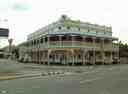
Otwórz dedykowaną stronę →Alright, adventurer, you're approaching the Tattersalls Hotel! It'll be on your left side, nestled at the corner of Flinders and Wickham Streets. Look for a striking…Czytaj więcejPokaż mniej
Alright, adventurer, you're approaching the Tattersalls Hotel! It'll be on your left side, nestled at the corner of Flinders and Wickham Streets. Look for a striking colonial-style white building with a wrap-around balcony adorned with decorative latticed railings. The sign "Tattersalls Hotel Est. 1865" proudly crowns its façade. Trust me, it's hard to miss! Now, for a splash of history with a twist of fun: Tattersalls Hotel, a heritage-listed gem at 87 Flinders Street, is also known as Molly Malone's Irish Pub. Added to the Queensland Heritage Register in 1992, this place is as old as gold-quite literally! The City of Townsville, founded in 1864, was a bustling port town rooted in exploration and enterprise. The hotel’s story dates back to the 1860s when Hermann de Zoet & Company first turned the spot into the "Townsville Boarding House." After a calamitous cyclone in 1867 turned it to kindling, Alexander Mollison swiftly rebuilt it, holding a grand reopening ball-ballroom blitz, anyone? However, financial woes ended his dance early. Enter James Evans, who renamed it Tattersalls, inspired by British sporting clubs and the excitement of horse racing. Talk about raising the 'stakes'! By the late 1860s, Townsville was booming thanks to nearby goldfields. A two-storey brick extension was added to cater to the growing crowd of miners and merchants. The hotel boasted an "American Bowling Saloon"-social networking, the old-school way! Tattersalls became a prime spot for first-class accommodations, fine spirits, and top-notch stabling. Even today, its charm and legacy remain, a testament to Townsville’s vibrant history. And who knows, if you listen closely, you might just hear the echo of that grand ball beneath the hustle and bustle of the modern day!
Otwórz dedykowaną stronę →
Pokaż jeszcze 12 przystankówPokaż mniej przystankówexpand_moreexpand_less
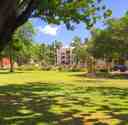
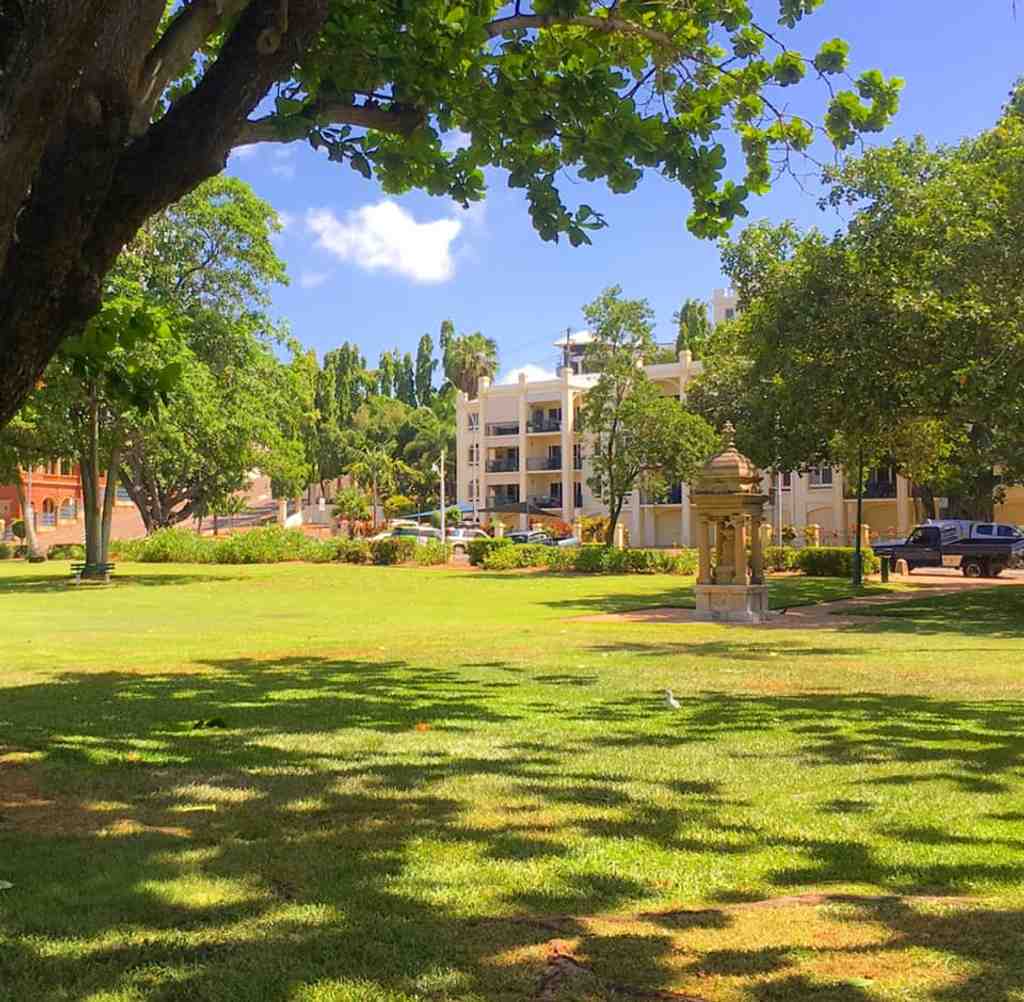
Alright, you’re now approaching the beautiful Anzac Memorial Park! Take a look ahead and you should see a lush green open space with well-maintained grass. The park features…Czytaj więcejPokaż mniej
Alright, you’re now approaching the beautiful Anzac Memorial Park! Take a look ahead and you should see a lush green open space with well-maintained grass. The park features several large trees providing generous shade, and in the center, there's an intriguing stone structure with a pointed top - sort of like a mini-temple or a fancy birdhouse. Now, while you admire the surroundings, let’s dive into its fascinating history. Anzac Memorial Park is a heritage-listed gem located at The Strand, right in the heart of Townsville CBD. Its roots date back to 1912, and over the years, it's become known by a few names: The Strand Park and Townsville War Memorial. In 1992, it was given a special nod by being added to the Queensland Heritage Register. The park’s story begins in the 1860s when locals used the foreshore along The Strand as a recreational area. Fast forward to February 1901, the entire foreshore between King and Howitt Streets was reserved for public use, and by June 1912, a slice of this land was made a permanent park - thus, Anzac Memorial Park was born! Back in the day, The Strand was just a sandy track with no shade, but it was popular with the brave bathers (mostly men) of the time. Then, in 1881, the town council decided to add a touch of greenery by planting 30 cedar trees, and a mix of cocoa and betel nut trees soon followed. By 1889, the area had transformed into a lovely spot for evening promenades, especially on moonlit nights. One quirky addition from this period is a charming drinking fountain built in memory of William Joseph Castling, a local butcher and mayor. It has been moved around a bit over the years but adds a vintage flair to the park. One of the park’s key contributors was John Henry Tyack, a local hotel owner and mayor. His passion for beautifying the foreshore saw the creation of a small, ornate bandstand designed by Sydney architect Arthur Beckford Polin. The bench you may rest on was funded by public donations and assembled by municipal workers. So, whether you’re here to soak in the history, have a peaceful walk, or simply enjoy a sunny day surrounded by lively greenery, Anzac Memorial Park is the place to be. Enjoy your time and take some time to appreciate the details that make this park a historical treasure!
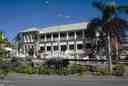
Otwórz dedykowaną stronę →Alright, adventurer, you're about to spot a real gem! Look to your right, and you’ll see an impressive two-story building with a brick facade, a hipped corrugated-iron roof, and…Czytaj więcejPokaż mniej
Alright, adventurer, you're about to spot a real gem! Look to your right, and you’ll see an impressive two-story building with a brick facade, a hipped corrugated-iron roof, and lots of classical design elements. It stands proud with its two projecting end bays featuring round arched windows and door openings. In between those bays, you'll notice a two-story colonnade with open verandahs, making the building both grand and airy. To top it all off, there’s a dramatic, centrally-located bifurcated staircase that just screams, "Come on in!" Now, let's dive into the fun backstory of this place! Welcome to the Townsville State Government Offices, a heritage-listed beauty located at 12-14 Wickham Street. This stately building was put up between 1935 and 1937, thanks to an employment scheme cooked up during the 1930s Depression by Labor Premier William Forgan Smith. This wasn’t just any building project; it was a lifesaver that provided jobs for architects, foremen, and construction workers using local materials. Designed by the Queensland Government Architect Andrew Baxter Leven, this building had one mission: to be the super office! The ground floor was designed to house Labour Agents and the Lands Department, while the first floor was packed with offices for various departments, a land courtroom, and even a visiting Ministers' room. Talk about a full house! The structure shows off the high standards of the Public Works Department, featuring classical touches like round arched openings, prominent keystones, and eaves. Its verandahs and balconies, perfect for cross-ventilation, were custom-made to beat the tropical Townsville heat. So, as you stand here, think of this place as a monument to ingenuity and community spirit born in challenging times, and a beautiful callback to some top-notch architectural design. Now, let’s keep this adventure going!
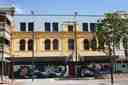
Otwórz dedykowaną stronę →Alright, keep your eyes peeled to the right! As you are walking along Flinders Street towards stop number 6, you’ll soon see a building that radiates historic charm. It's got two…Czytaj więcejPokaż mniej
Alright, keep your eyes peeled to the right! As you are walking along Flinders Street towards stop number 6, you’ll soon see a building that radiates historic charm. It's got two stories of lovely yellowish masonry with arched windows on the first floor. Look out for "Stanton House" written in bold letters up top, right below a blue parapet that crowns this heritage-listed beauty. The lower part of the building, while showcasing some captivating modern artwork, still gives off that old school charisma. Let’s dive into the tale of this storied structure. Stanton House, originally known as Hof’s Building, has been around since the 1880s. Imagine that! It was constructed for a chap by the name of John Frederick Hof, who seemed to have a Midas touch in business endeavors. Hof originally came to Australia during the gold rush era, working various jobs and eventually dabbling in mining ventures. He decided to try his luck in Townsville, and in 1885, he built the very structure you're looking at now. Hof was a forward-thinker! After fires devastated Flinders Street, authorities mandated that only buildings made of stone, masonry, or metal could stand in what they deemed a first-class area. So, Hof took matters into his own hands, brick by brick, quite literally, as he set up the Brunswick Brick and Tile Works to produce materials for the construction of Hof’s Building. This building wasn’t just another pretty facade; it played a significant role in the commercial boom of Townsville. With shops and offices bustling with activity, one could almost hear the clinking of pianos from Beale & Co. Ltd piano showroom, which celebrated its opening with musical demonstrations. Fast forward to the 20th century, and the building became the Diocesan Registry named in honor of George Henry Stanton, North Queensland’s first bishop. It has switched hands many times since, but one thing's certain: Stanton House has always been a hub of activity, adapting to the times and continuing to serve various commercial purposes. So there you have it, a building that’s more than just bricks and mortar-it’s a cornerstone of Townsville’s commercial history, with a splash of artistic flair! Keep enjoying your walk through history!
Otwórz dedykowaną stronę →You're just about to reach the Perc Tucker Regional Gallery, so keep your eyes peeled to the right. It's the elegant, cream-colored building on the corner of Flinders and Denham…Czytaj więcejPokaż mniej
You're just about to reach the Perc Tucker Regional Gallery, so keep your eyes peeled to the right. It's the elegant, cream-colored building on the corner of Flinders and Denham streets. The gallery is adorned with large arched windows and intricate detailing on the upper balcony railings. Look for the vibrant banners and posters near the entrance-those are your cues that you're in the right place! Now, let's dive into the good stuff about this gallery! Perc Tucker Regional Gallery (that’s “purse” like you would carry on a shopping spree) opened its doors in 1981 and has become a cherished fixture in Townsville's cultural scene. This heritage-listed gallery boasts a collection of over 2,000 artworks, with exhibits that include art from North Queensland, the Tropics, and beyond. Named after a former mayor, Perc Tucker focuses on themes related to the Tropics, making it a kaleidoscopic hub for art lovers. From Contemporary Art of Tropical Queensland and Historical Art of Tropical Queensland to Aboriginal or Torres Strait Islander Art and even Contemporary Art from Papua New Guinea, this place covers it all. There's also a fascinating collection of popular art and ephemera, which gives you a peek into the quirkier side of the art world. The gallery is more than just a pretty face, offering membership and volunteer programs for those who want to get more involved. Plus, they host a slew of activities like art classes, exhibition tours, artist talks, lectures, workshops, and performances. If you’re around town during ‘Ephemera’, don’t miss it! Held every other year along The Strand, this event transforms a 2-kilometer beachfront strip into an open-air gallery filled with sculptures. It's a visual feast accompanied by guided tours, performances, and workshops, celebrating art in all its seaside glory. Now, step inside and let the vibrant world of Tropical art sweep you off your feet! Exploring the realm of the collection of artwork and exhibitions, ephemera or the the percival portrait painting prize? Feel free to consult the chat section for additional information.
Otwórz dedykowaną stronę →As you approach stop number 8, take a look to your right-you can't miss it! St James' Cathedral stands tall with its stunning red-brick exterior, featuring striking Gothic Revival…Czytaj więcejPokaż mniej
As you approach stop number 8, take a look to your right-you can't miss it! St James' Cathedral stands tall with its stunning red-brick exterior, featuring striking Gothic Revival architecture. The first thing that will catch your eye is undoubtedly the main entrance with its large arched doorway, flanked by a tall rectangular bell tower to its left. The pitched roof and two-tiered windows add to its historic charm. Standing atop Melton Hill, this cathedral is a true icon in Townsville's central business district. Let’s dive into its fascinating history, shall we? St James' Cathedral is a heritage-listed beauty that serves as the spiritual heart of the Anglican Diocese of North Queensland. Designed by Arthur Blacket and built in 1887 by MacMahon & Cliffe, this majestic structure was added to the Queensland Heritage Register on 21 October 1992. Fun fact: before this grand cathedral was built, Anglican services in Townsville were held at the local courthouse. Well, court's adjourned, and church is now in session! Initially, the parishioners of Townsville attended services atop Melton Hill in a weatherboard structure with a shingle roof, purchased with their own funds. Bishop George Henry Stanton, the diocese's first bishop, was a bit of a globe-trotter. He spent several months in England fundraising before finally arriving in Townsville in May 1879. The church expanded to accommodate more worshippers and even added an organ donated by Miss S.E. Holland, a friend of the Bishop. As time went on, the vision evolved, and grand plans to construct a new cathedral began in 1883. Although the original designs called for sandstone and granite columns to host 1,000 parishioners, budget cuts necessitated a transition to red brick and concrete. It’s like the medieval times version of "budget-friendly DIY!" Laying the foundation stone on the Golden Jubilee of Queen Victoria in 1887, the builders aimed high, but financial constraints meant only half of the cathedral could be constructed initially. The final stages in the 1890s saw Walter Morris Eyre assume architectural oversight, swapping out plans for more complex materials in favor of practical red brick construction. So, take a moment to soak in the historical grandeur of St James' Cathedral-it's been quite the journey from weatherboard to cherished heritage!
Otwórz dedykowaną stronę →As you approach Synod Hall, look to your right. You’ll spot an elevated light-colored, wooden structure with a gently sloping, gabled roof and a small cross perched at the top -…Czytaj więcejPokaż mniej
As you approach Synod Hall, look to your right. You’ll spot an elevated light-colored, wooden structure with a gently sloping, gabled roof and a small cross perched at the top - that’s our destination! Notice the two prominent windows with decorative awnings just below the roof peak. This lovely hall is flanked by some lush greenery and framed by several trees, giving it a quintessentially serene ambiance. A brick wall with a beige railing in front slightly hides it, but its distinct architectural style makes it unmistakable. Now, let’s time-travel a bit through history! Synod Hall, formerly known as Jubilee Hall and Parish Room, stands proudly at 36 Cleveland Terrace. This heritage-listed Anglican church hall was constructed between 1897 and 1898 and was added to the Queensland Heritage Register on 21 October 1992. The hall’s name has a touch of royal flair, reflecting its construction during Queen Victoria’s Diamond Jubilee Year. It hosted its inaugural events in the first week of January 1898, showcasing its Victorian charm. Interestingly, Townsville was established in November 1864, expanding rapidly with the early Church of England services taking place by March 1866 in the Court House. Under the guidance of Rev. Mr. Searle from Bowen and Townsville’s first parish incumbent, Rev. James Adams, the church flourished. The foundation stone of the parish’s growth, literal and figurative, was laid on Melton Hill in December 1872. Fast forward to November 1887, when architect Walter Morris Eyre, a member of the Cathedral Committee and key figure in the construction of St James Cathedral, might have designed Jubilee Hall. Though the original “Parish Room” design wasn’t built immediately, community efforts culminated in the hall’s grand opening in January 1898. Synod Hall swiftly became the heart of parish and diocesan activities, including hosting the Anglican Diocese of North Queensland Synod gatherings. In 1899, under Bishop Christopher Barlow's invitation, Miss Florence Buchanan from Thursday Island began working with Chinese and Japanese children, opening a Japanese school in the hall. Despite facing challenges like Cyclone Leonta in 1902, which saw the destruction of the Mission Hall below Synod Hall, this resilient building continued to serve varied purposes. From hosting Anglican High School for Girls (later St Ann’s School) to being a temporary church during St James Cathedral’s repairs, Synod Hall’s historical significance is undeniable. So, here's to a building with more historical layers than a lasagna! Enjoy its timeless charm and the echoes of its vibrant past.
Otwórz dedykowaną stronę →Alright, you're nearly at Osler House! Look to your right, and you’ll spot a charming and distinct two-story building with a yellow and beige facade. It’s hard to miss with its…Czytaj więcejPokaż mniej
Alright, you're nearly at Osler House! Look to your right, and you’ll spot a charming and distinct two-story building with a yellow and beige facade. It’s hard to miss with its intricate ironwork on the balcony and the prominent columns supporting it. The top features a kind of classical balustrade, and there are two palm trees adding a touch of tropical flair right in front of it. Oh, and don’t forget to look for the sign that says “Osler House”; it’s carved right into the front wall. Now, let me tell you a bit more in a fun way about Osler House. Picture this: it's 1888, and you're a prominent businessman with a plot of land. What do you do? If you're John Deane, you get the best architects in town, W. G. Smith & Sons, to design a house that’s not just a home but also a doctor’s surgery - talk about a multifunctional property! Osler House is the brainchild of William George Smith and his talented sons, who were quite the architectural rock stars in North Queensland back then. Built from 1888 to the 1950s, it was the cool kid on the block, literally being described as “about the coolest in town” because of its superb ventilation. It was specifically designed with a doctor's practice in mind; imagine having your surgery downstairs and living quarters upstairs! Dr. Sidney Spark was the first to call it home-turned-surgery, followed by Dr. Walter Nisbet, who went on to become a major during the Boer War. Even the Commercial Travellers Association saw its potential, setting up a club there in 1901. They might have been the ones who added the lovely verandah you see now. This building didn’t just sit pretty - it witnessed the hustle and bustle of Townsville, providing a unique blend of residential and professional space. It stands today as a testament to the innovative spirit of its time, making it a perfect selfie spot with a slice of history. How’s that for a house with stories to tell? Keep exploring!
Otwórz dedykowaną stronę →Alright, intrepid explorer! To spot the Westpac Bank Building, turn your gaze to your right as you walk along Flinders Street. You can't miss it - it's that imposing, grand white…Czytaj więcejPokaż mniej
Alright, intrepid explorer! To spot the Westpac Bank Building, turn your gaze to your right as you walk along Flinders Street. You can't miss it - it's that imposing, grand white building with tall columns that look like they were borrowed from an ancient Greek temple. It's quite the sight! Now, let's dive into the story of this magnificent building: The Westpac Bank Building, nestled at 337-343 Flinders Street in Townsville's CBD, is not just any ordinary building; it's a heritage-listed gem! Designed by the architectural duo Hall and Cook and brought to life in 1935 by the Stuart Brothers from Sydney, this two-storeyed masonry marvel was originally erected as the Bank of New South Wales. Quite the mouthful, right? But don't worry, things get even more fascinating. This was actually the third premises built by the bank in Townsville. The Bank of New South Wales, which traces its origins back to 1817, played a pivotal role in the early development of Townsville. Fun fact: Robert Towns, one of the co-founders of Townsville, was a director of the Bank of New South Wales and pushed hard to have a bank branch at Cleveland Bay. And voilà, after a few hiccups, the bank opened its doors in rented premises on March 20, 1866, following closely behind the Australian Joint Stock Bank. By 1867, the bank had purchased an allotment at the corner of the Strand and Wickham Street, setting up premises and a manager's residence two years later. Fast forward a bit to 1875, and anticipating the bustle of future businesses, they snagged two more allotments on the coveted corner of Flinders and Wickham Streets. The bank kept moving westward with the city's business pulse, finally purchasing an allotment in 1915 on the corner of Flinders and Stokes Streets. Fast-forward to the 1930s, and in comes our hero building, constructed for a tidy sum of £32,345. The building, complete with offices, shops, and banking facilities, was a blend of practicality and grandeur. Those impressive bronze entrance doors alone cost over £1,000, and the interiors were decked out in north Queensland maple. Talk about banking in style! Located at the bustling corner of Flinders Street Mall and Stokes Street, in the heart of Townsville, this building stretches 62 feet (19 meters) along Flinders Street and 135 feet (41 meters) up Stokes Street. Its giant Tuscan columns, raised base, ornate parapet, and a lovely central cartouche will transport you to another era. So, as you stand admiring this 'imposing edifice', remember you're looking at a piece of history that’s been standing tall since 1935. Now, how’s that for a grand story behind those grand columns?
Otwórz dedykowaną stronę →You're nearing the Australian Mutual Provident Society Building! It's a beautiful, three-story structure located on the corner of Flinders and Stanley Streets. Keep your eyes…Czytaj więcejPokaż mniej
You're nearing the Australian Mutual Provident Society Building! It's a beautiful, three-story structure located on the corner of Flinders and Stanley Streets. Keep your eyes peeled to your left as you walk along Flinders Street. The building stands out with its attractive light-colored facade, framed windows, and elaborate architectural details that include a distinctive parapet with carving at the top. Now, let's delve into the story of this landmark! The Australian Mutual Provident Society Building, also known as the AMP Building, was designed by Hall and Cook and constructed between 1937 and 1938 by the Stuart Brothers. Standing tall at 416-418 Flinders Street, it holds a significant place in Townsville’s history and was added to the Queensland Heritage Register on August 1, 2005. This beauty was the second building in Townsville purpose-designed for AMP as its North Queensland regional office. Dating back to 1849, the Australian Mutual Provident Society came into existence with the mission of providing life assurance based on mutual principles for the residents of New South Wales. Their unique approach to sustaining policies by advancing premiums from surrender values quickly set them apart. In April of 1883, the first district agency was set up in Townsville, starting from a modest, galvanized iron-roofed wooden building. Despite the humble beginnings, the branch experienced significant success, catering to a broad area and eventually necessitating more substantial premises. The current building, a replacement for the original, was designed by Brisbane architects Francis Hall and Harold Cook, marking Townsville’s burgeoning industrial growth. If you think it sounds like something out of a novel, well, that’s because Townsville’s history is rich with dramatic progress and expansion. So there you have it! This charming building is not just a pretty facade but a cornerstone of Townsville’s commercial history. Now, as you stand before it, you can appreciate its architectural beauty while knowing a bit more about its past. Enjoy the view!
Otwórz dedykowaną stronę →Got it! You're approaching the Townsville School of Arts now. It'll be on your left side as you walk down Stanley Street. Look for a grand, old building with a rather stately…Czytaj więcejPokaż mniej
Got it! You're approaching the Townsville School of Arts now. It'll be on your left side as you walk down Stanley Street. Look for a grand, old building with a rather stately appearance-with intricate architectural details that scream craftsmanship from the 19th century. It's got a facade that's hard to miss, with classic arched windows and a certain elegant air about it. Now, let's step into a bit of history, shall we? The Townsville School of Arts is quite the heritage gem. Established as a school of arts in 1891, it was designed by the talented architects Eyre & Munro and built by local builder James Smith. Think of it as a 19th-century version of a multi-purpose cultural center. Back then, folks didn't have easy access to books or libraries. This place provided the community with knowledge-basically the Google of its time, minus the cat videos. The idea behind Schools of Arts, which originated in Britain in the early 1800s, was to promote moral, social, and intellectual growth. These institutions were the backbone of adult education and even offered lending libraries. Imagine how exciting it would have been to borrow a book back in the day when books were as precious as gold! The first school of arts committee in Queensland was formed in Brisbane in 1849. Townsville's committee was established in 1866 and included big names like Captain Robert Towns and John Melton Black, who were instrumental in the town’s development. Initially, the School of Arts operated out of a small cottage and subsequently moved to a more permanent site on Melton Hill. However, seeing as the city was expanding, it was eventually relocated to its current spot on Stanley and Walker Streets. It opened with a bang-or should I say, a debutante ball- in May 1891, followed by a grand concert. Talk about making an entrance! The building housed classrooms, meeting rooms, and a large library. Believe it or not, the first gas cooking classes in town were held here in 1895. Cooking with gas must’ve been quite the perilously pioneering experience back then! Attached to the school is what was originally called Her Majesty’s Theatre, comfortably seating 600 people. This venue has seen its share of performances, even gracing Chinese Opera in 1894. So, as you stand here today, imagine the generations of townsfolk who passed through these doors seeking enlightenment, entertainment, and a bit of culture. The Townsville School of Arts is a testament to the communal spirit and intellectual curiosity of this vibrant city. Alright, let's keep moving! Where to next?
Otwórz dedykowaną stronę →Look to your left as you walk down Flinders Street and you'll spot a grand building that really stands out with a strong, classical presence. The Townsville State Government…Czytaj więcejPokaż mniej
Look to your left as you walk down Flinders Street and you'll spot a grand building that really stands out with a strong, classical presence. The Townsville State Government Offices is this striking two-story masonry structure you're looking at, with a basement too. You’ll notice its rock-faced granite base and a cement-rendered facade. The main entrance on Flinders Street is hard to miss, perched between two large square fluted columns topped with a broken pediment and a crest. Now, let's dive into the details! The Townsville State Government Offices, located at 419 Flinders Street, is rich in history and architectural flair. It was designed by Andrew Baxter Leven and built in 1928 by the Queensland Department of Public Works. You might know it better as the former Public Curator's Office. This beautiful building was added to the Queensland Heritage Register on January 13, 1995. The office was constructed to centralize various departmental offices, reflecting Townsville's status as a major regional center after experiencing rapid growth with the gold discoveries in nearby Ravenswood in 1868. Fun fact: Townsville was proclaimed a town in 1866, and it's been booming ever since! The charm of this building lies in its design, which is typical of many government buildings of that era, like the Cairns Court House and the Maryborough City Hall. The structure includes a two-story colonnade with the ground floor featuring an ornate concrete balustrade and the upper story showcasing a simple wrought iron one. More details to marvel at: the corner bays of the building show off colossal stylized ionic columns, and the facade is crowned by a deep entablature and parapet. Inside, the entrance greets you with a vestibule and a flight of marble steps flanked by ionic columns, leading you into the main corridor. Oh, and they even left room for a lift in case a third story got added - how’s that for forward-thinking? All in all, the State Government Offices stands as a testament to Townsville's historical importance and is a wonderful illustration of classical revival architecture. It's like stepping back in time, but without worrying about tripping over your toga! Enjoy the rest of the tour!
Otwórz dedykowaną stronę →Alright, you're approaching the last stop of our tour-The Great Northern Hotel! As you walk down Flinders Street, keep an eye to your left. You'll be looking for a substantial…Czytaj więcejPokaż mniej
Alright, you're approaching the last stop of our tour-The Great Northern Hotel! As you walk down Flinders Street, keep an eye to your left. You'll be looking for a substantial two-storeyed, L-shaped brick building perched at a corner, right at the intersection of Flinders and Blackwood Streets. The hotel's facades stretch along both streets adorned with wide verandahs, complete with bullnose roofing, cast-iron balustrading, and a charming wooden valance on the lower level. There's also a hidden corrugated-iron roof behind a parapet, brimming with classical motifs. Now, let me regale you with the story of this heritage gem. Drumroll, please-The Great Northern Hotel was designed by the renowned architects Tunbridge & Tunbridge and was erected between 1900 to 1901. These guys clearly knew how to build a hotel that would stand the test of time, considering its addition to the Queensland Heritage Register on October 21, 1992. Built for the timber firm Wilson Hart & Company, the hotel actually owes its inception to the Queensland Government's 1900 announcement of a new Townsville railway terminus. They planned to erect it closer to the retail and business heart of Townsville, sparking the ambition to create first-class hotels in the vicinity for the anticipated influx of travelers. Though there were other contenders, only the Great Northern Hotel materialized, launching in early 1901 as the premier lodging closest to the new railway terminus. Boasting 36 bedrooms and costing a princely sum of £8,000 to £9,000, the building quickly gained a reputation. Designed to be a first-class establishment, it offered fine dining, comfortable and airy bedrooms, and spacious public rooms. Essentially, it provided travelers with much-needed luxury and comfort-quite the swanky joint for its time! And lest we forget, it also became a cornerstone of social life in Townsville, proving popular not just with travelers but with townsfolk alike. Over the years, it’s remained a prominent drinking venue and a well-known element of the city’s landscape. Despite a turbulent moment in 2015 when the hotel suffered a fire, the Great Northern Hotel remains an indomitable part of Townsville’s heritage, standing sturdy and proud with a character that’s impossible to miss-or for that matter-forget. So here we are, standing before a storied piece of Townsville's history, blending past grandeur with present charm. Get ready to snap some photos and let your imagination drift to the early 1900s when this hotel was the epitome of opulence. Cheers to the Great Northern Hotel!
Otwórz dedykowaną stronę →
Najczęściej zadawane pytania
Jak rozpocząć trasę?
Po zakupie pobierz aplikację AudaTours i wpisz kod realizacji. Trasa będzie gotowa do natychmiastowego rozpoczęcia – po prostu dotknij \"Play\" i podążaj trasą z nawigacją GPS.
Czy potrzebuję internetu podczas trasy?
Nie! Pobierz trasę przed rozpoczęciem i korzystaj z niej w pełni offline. Jedynie funkcja czatu wymaga internetu. Zalecamy pobieranie przez WiFi, aby oszczędzać dane mobilne.
Czy to wycieczka grupowa z przewodnikiem?
Nie – to samodzielny audioprzewodnik. Zwiedzasz niezależnie, we własnym tempie, z narracją audio odtwarzaną przez telefon. Bez przewodnika, bez grupy, bez harmonogramu.
Ile trwa trasa?
Większość tras zajmuje 60–90 minut, ale to Ty kontrolujesz tempo. Wstrzymuj, pomijaj przystanki lub rób przerwy, kiedy chcesz.
Co jeśli nie zdążę ukończyć trasy dzisiaj?
Żaden problem! Trasy mają dożywotni dostęp. Wstrzymaj i wznów, kiedy chcesz – jutro, za tydzień lub za rok. Twój postęp jest zapisywany.
W jakich językach są dostępne trasy?
Wszystkie trasy są dostępne w ponad 50 językach. Wybierz preferowany język podczas realizacji kodu. Uwaga: języka nie można zmienić po wygenerowaniu trasy.
Gdzie znajdę trasę po zakupie?
Pobierz darmową aplikację AudaTours z App Store lub Google Play. Wpisz kod realizacji (wysłany e-mailem), a trasa pojawi się w Twojej bibliotece, gotowa do pobrania i rozpoczęcia.
Jeśli trasa Ci się nie spodoba, zwrócimy Ci pieniądze. Skontaktuj się z nami pod adresem [email protected]
Bezpieczna płatność przez