AudaTours logoAudaTours

San Francisco Audiotour: Een culturele odyssee door San Francisco

Audiogids13 stops

Mist drijft over Market Street terwijl glazen torens glinsteren boven geheime tunnels en verzonken pleinen. Het kloppende hart van San Francisco klopt het luidst waar ouderwetse weelde samensmelt met vernieuwing – en schandalen, rebellie en wilde dromen zich in het volle zicht verbergen. Begin aan een zelfgeleid audio-avontuur door dit doolhof van geschiedenis, van torenhoge warenhuiskoepels tot het meest over het hoofd geziene plein van de stad. Ontdek verhalen die zelfs de lokale bevolking mist, terwijl je je een weg baant door drama, debat en oogverblindend spektakel. Wat dreef de politie ertoe om te overwegen de marmeren hallen van een luxe winkelcentrum te patrouilleren? Welke ramp dwong een groots warenhuis om steen voor steen te herbouwen – om vervolgens sterker te herrijzen? En waarom herbergt Hallidie Plaza in het geheim de sleutel tot de overstromingen van San Francisco? Ga dieper met elke stap. Rijd met spiraalroltrappen naar verdwenen winkelkoninkrijken, dwaal door schaduwrijke hoeken gevormd door activisme en controverse, en zie Market Street door de ogen van rebellen, architecten en visionairs. Klaar om de verborgen verhalen van San Francisco te ontrafelen? Begin met luisteren – de mist onthult nooit alles op het eerste gezicht.

Tourvoorbeeld

map

Over deze tour

  • schedule
    Duur 40–60 minsGa op je eigen tempo
  • straighten
    2.7 km wandelrouteVolg het geleide pad
  • location_on
  • wifi_off
    Werkt offlineEén keer downloaden, overal gebruiken
  • all_inclusive
    Levenslange toegangOp elk moment opnieuw afspelen, voor altijd
  • location_on
    Start bij San Francisco Centre

Stops op deze tour
  1. Imagine it's October 1988. San Francisco-a city with flair and fog in equal measure-gets its flashiest new neighbor. Developed by Sheldon Gordon, a man whose resume includes the…Meer lezenToon minder

    Imagine it's October 1988. San Francisco-a city with flair and fog in equal measure-gets its flashiest new neighbor. Developed by Sheldon Gordon, a man whose resume includes the glitzy Forum Shops at Caesars Palace and Beverly Center, the original San Francisco Shopping Centre opened its doors with 500,000 square feet of retail heaven. On the upper floors was the grandest Nordstrom you could ever dream of-so big, you might need a hiking pole just to cross the shoe section. Add to that the United States’ very first spiral escalator-yes, you heard right, a swirling escalator, perfect for shopaholics who wanted a little extra drama with their purchases. Connecting shoppers not just to stores but to the pulse of the city, the mall linked right into the iconic Powell Street station below. You could go from subway to shopping spree without ever seeing daylight, which, let’s be honest, might actually be a good thing with Bay Area weather. Linking up with Emporium-Capwell, a department store flagship that had already claimed a spot in city lore, the mall quickly shrugged off its slow start to become one of the top-performing shopping centers in America. Good deals do that, right? But change is the only constant in San Francisco, and by 1996, the Emporium name dropped the Capwell part and, not long after, dropped out altogether when Federated Department Stores bought its parent company. For a while, Macy's camped out here with a temporary furniture store-a bit like those times you stay with a friend “just for a week,” and suddenly months go by. The mall itself changed hands faster than a baseball at a Giants game. Urban Shopping Centers, a big-deal investment trust, took over half in 1997. Soon, Rodamco North America, a European firm with its eye on the U.S., took a bite. Then, like pepperoni on a pizza, Westfield jumped on in 2002, gobbling up the whole thing. In 2003, the creative minds at Forest City joined Westfield to cook up a plan that would make architects everywhere swoon. They preserved only the beautiful front façade and landmark dome-as if saving just the cherry on a sundae and replacing everything else. The new and improved mall, designed by Kohn Pedersen Fox and led by Kevin Kennon, gleamed with its 1.5 million+ square feet, a massive Bloomingdale’s, a sparkling nine-screen Century Theatres multiplex, and even a Bristol Farms gourmet supermarket for those in pursuit of the perfect organic apple. For a while, you could even take a college class here: San Francisco State University’s Downtown Campus was nestled within all the action. All this grandeur didn’t come cheap: at $440 million, every inch sparkled, so much so that in 2009, it vied for-and won-a "Best-of-the-Best" global design and development award. If shopping malls went to the Oscars, this one would’ve danced out with a golden statue. Still, by 2011, even SFPD considered moving in to help tackle a growing shoplifting problem-a not-so-glamorous side of big city life. Then came the especially wild ride: stores closing, reopening, new anchors, old names returning like lost socks. After years of store departures-Nordstrom and Bloomingdale’s waving goodbye, restaurants clinging on with delivery orders, lawsuits flying back and forth, the saga sometimes felt more soap opera than shopping trip. The mall’s value plunged 75% from a whopping $1.2 billion in 2016 to just $290 million by early 2024. Imagine that on your credit card statement. In April 2025, the last Bloomingdale’s packed up, leaving this nine-story giant with more echoes than excitement inside. Most residents now just order food online; with so few people wandering the halls, you might feel like you’ve stumbled onto the set of a post-apocalyptic movie-minus the zombies, but perhaps with a lost Lego figure or two. These days, San Francisco Centre is at the crossroads of uncertainty and potential. Will it become a soccer stadium? A food hall? A pickleball wonderland? Only time will tell. But you’re standing where history still echoes, where the city’s shopping soul flickers, still waiting for its next big chapter.

    Open eigen pagina →
  2. To spot The Emporium, just look to your left for a grand, white building with tall windows, rows of elegant columns, and a big arched entrance with “Bloomingdale’s” signage above…Meer lezenToon minder

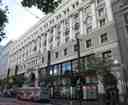
    To spot The Emporium, just look to your left for a grand, white building with tall windows, rows of elegant columns, and a big arched entrance with “Bloomingdale’s” signage above the doors. Welcome, intrepid explorer, to the legendary Emporium-the grand old dame of Market Street! Right here, where the clang of the cable cars mixes with the buzz of shoppers, you’re standing outside a building that’s been the beating heart of San Francisco’s shopping adventures for more than a century. Let’s spin the clock back to the 1890s. Imagine Market Street filled with horse-drawn carriages and dapper folks in bowler hats and flowing dresses, bustling past shop windows crammed with everything from shiny gadgets to silk gloves. The Emporium began its life as a co-operative store, cooked up by Adolph Feist, in a spot not far from where you’re standing. Back then, this place was a patchwork of individual shops, all under one massive roof. But don’t worry-there were no arguments over shelf space, just healthy competition over who could bring in the fanciest flour or the most dazzling hats! But the Emporium’s real superpower was its ability to change with the times. The building you see today was dreamed up by architect Albert Pissis, who decided San Francisco needed a little Parisian flair. He’d trained at the prestigious École des Beaux Arts, so he gave the Emporium soaring columns, stately windows, and a domed glass roof that sparkled in the sunlight. In its early years, this very spot survived the legendary 1906 earthquake-but sadly, a fire swept through, forcing a grand rebuild by 1908. Think of builders and laborers clanging their tools and shouting instructions as they pieced the Emporium back together, brick by brick. Through the decades, The Emporium was more than just a store-it was a stage for the city’s big moments. Every holiday season, crowds of wide-eyed kids would gather outside in anticipation, straining to catch a glimpse of Santa Claus arriving by cable car, stagecoach, or, rumor has it, anything he fancied that year. Picture the cheers and laughter spilling onto Market Street. And up on the rooftop, something extraordinary awaited: a miniature amusement park where you could spin in dizzy circles and eat cotton candy in the shadow of the Emporium’s great dome. As San Francisco thrived and spread, so did the Emporium name. From Oakland to Marin, Emporium Capwell stores popped up, each a gateway to the latest fashions and household wonders. The Emporium wasn’t just for city folk! And speaking of Oakland, Mr. Capwell himself, Harris Cebert Capwell, had his own store across the Bay, the Lace House, which he renamed after himself with the confidence of a true retail pioneer. Time, though, has a way of changing even grand institutions. Big department stores rose and fell, and chains battled for shoppers’ loyalty. The Emporium became Emporium-Capwell, then just Emporium, and eventually merged with retail giants like Macy’s and Bloomingdale’s. In the 1990s, its beloved Market Street flagship finally closed, leaving locals with bittersweet memories. Some recall debates about saving the building’s historic face-but never fear, the structure survived thanks to determined preservationists (and a large fine for not preserving enough of it!). Today, this spot hums with life once again. Inside, beneath the dazzling restored dome, Bloomingdale’s draws in a new generation, yet the ghosts of yesteryear linger. Step inside, and you’ll wander beneath the same lofty arches that once sheltered hopeful gold rush millionaires, excited families, and circus showmen. Some say, if you listen closely as you stroll beneath those windows, you might just hear the distant notes of a rooftop calliope or the jingle of Santa’s sleigh. So next time you’re shopping for a new coat or wandering through the dazzling halls, remember: you’re not just in a building; you’re walking the storied corridors of San Francisco’s own Emporium, where every marble step echoes with a century of bustling, joyful, and sometimes downright quirky history. And hey, don’t be surprised if the mannequins look like they’re winking at you-they know a lot of stories!

    Open eigen pagina →
  3. You’re looking for a sunken brick plaza below street level, just across from the big, classic buildings and next to a shiny, cylindrical elevator shaft-look down for a red-bricked…Meer lezenToon minder

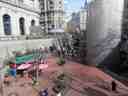
    You’re looking for a sunken brick plaza below street level, just across from the big, classic buildings and next to a shiny, cylindrical elevator shaft-look down for a red-bricked triangle with tables and escalators heading underground. All right, you’ve made it to Hallidie Plaza! Take a moment-breathe in that sweet mix of coffee from the carts and a whisper of BART tunnel dust. All around you, there’s a hum of city life…but maybe not the wild crowd you’d expect from the entrance to Powell Street Station, one of San Francisco’s busiest subway stops. In fact, Hallidie Plaza has a funny secret: for decades, it's been the city’s most bustling backdrop nobody seems to notice. It's kind of like an urban magic trick-walk by on Market, and you might not even realize there's a whole world happening 20 feet below your shoes! Picture it: the early 1970s. San Francisco is buzzing with hope for the future, shiny new dreams built on dust and daring. The Bay Area Rapid Transit system-BART-has just punched its way through the city, turning Market Street into a construction zone with visions of sleek, modern plazas rising from the chaos. Hallidie Plaza was born from this era, designed by the superteam of Lawrence Halprin, John Carl Warnecke, and Mario Ciampi-three architects with hopes as big as the city itself. Their idea? Create a sunken square, shielded from the roar of Market Street, where people could gather, rest, and start their journeys on BART. But San Francisco loves a plot twist! The architects embraced the dramatic: instead of a gentle slope, the plaza plunged deep, wrapped in granite walls and brick paving arranged like a herringbone weave. Escalators whisked people from the street down to the red brick floor, while a walkway zipped right below bustling Cyril Magnin Street. It was meant to be an amphitheater for city life-benches, planters, even a slick visitor center for lost tourists. But the reality? The lower you went, the lonelier it got. More oven than oasis on a hot day, with hardly any shade and a peculiar chill in its shadowy corners, the plaza somehow missed the mark. The people who did show up weren’t always shopping for new shoes. San Francisco’s urban planners and city officials have been playing a tug-of-war here ever since. There’s been a parade of attempts to draw a livelier crowd-planting more trees, adding benches, policing out the mischief, and, in the late '90s, even an elevator. And not just any elevator: a giant perforated cylinder that earned its very own nickname, “San Francisco’s Poop Chute.” (Hey, if a name like that doesn’t stick in your head, I don’t know what will!) Disability activists had sued, demanding access for everyone, sparking the city to commission a new public sculpture with the Arts Commission. Now, this plaza sits at a crossroads of power and quirky San Francisco history. Up top, you have department stores, the cable car turntable spinning its way around tourists, and legendary buildings like the Flood Building, while down here are echoes of city politics and more than a few hard-fought battles about just who belongs in a public space. More than once, the city tried to shoo away the unhoused by passing laws and policing harder, but as Chronicle critic John King dryly wrote, those efforts just moved the problem around. If you make a space too unwelcome, everyone loses-a lesson the city is still learning. But for all its quirks and cold edges, Hallidie Plaza has some unexpected flashes of fun and civic pride, too. There’s the sign pointing to San Francisco’s nineteen sister cities around the world, offering a kind of dreamer’s compass for tourists and locals. Across the years, plans have flickered to add more sculpture, flags, seats, or even a giant underground water cistern-the plaza’s hidden practical superpower, storing floodwater pumped out from Powell Station and maybe even keeping the city a bit drier on rainy days. If you squint, you almost see Hallidie Plaza as a stage-half café, half commuter crossroads, all wrapped up in a city’s hope that even sunken spaces can come alive with possibility. So as you stand here now, listen to the blended soundtrack of city sounds: streetcars dinging, BART trains rumbling, footsteps echoing off brick, and maybe…just maybe…the distant laughter of architects still imagining how to make this steep triangle a grand entrance for everyone. Just goes to show: in San Francisco, even a “void to avoid” is never boring!

    Open eigen pagina →
Toon 10 stops meerToon minder stopsexpand_moreexpand_less
  1. The landmark right in front of you is a pair of towering, modern white high-rises: look up to spot the tall, grid-patterned building with hundreds of identical balconies and sleek…Meer lezenToon minder

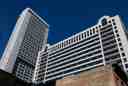
    The landmark right in front of you is a pair of towering, modern white high-rises: look up to spot the tall, grid-patterned building with hundreds of identical balconies and sleek windows that stretch dramatically into the San Francisco sky. Welcome to the mighty Hilton San Francisco Union Square! This place doesn’t just fill an entire city block, it commands it-soaring above you with the poise of a skyscraper that’s seen more than a few stories in its time. If you’d been strolling down these streets back in 1964, you’d have caught the grand opening of a building so futuristic, people called it a motel within a hotel-imagine driving your car right up to your room several stories in the air. Yes, ramps snaked right through the middle of the hotel! Architects wanted you to feel like you were getting the best of both worlds: high-rise glamour with classic roadside convenience. The Hilton was the 60th in Conrad Hilton’s global empire, and it sure made a splash. Its checkerboard facade cleverly hid complex earthquake bracing, a little architectural magic trick to keep everything steady in a wobbly city. No 13th floor, of course-San Francisco’s superstitions die hard, even in skyscrapers. But reach higher and you’d find floors set aside for nothing but humming mechanical wonders, and way up on the 16th, a hidden garden-the kind of secret oasis you’d expect from a hotel built for a city that loves a good surprise. But don’t think it was all leafy courtyards and poolside days. On special nights, two penthouse suites on the 19th floor transformed into party pads for 100 or more, complete with spiral staircases and sun meeting solarium. If you had 200 bucks burning a hole in your bell-bottoms and no rock stars beat you to it, you could have rented one. Speaking of rock stars, the Beatles themselves stayed here on their 1964 American tour, rock ‘n’ roll echoing in the marble hallways while chaos swirled outside as fans tried to sneak a peek. A little hotel trivia: scenes from the 1968 film “Petulia” and the screwball classic “What’s Up Doc?” featuring Barbra Streisand were filmed right in these very halls. Just think-your footsteps are echoing where movie crews (and maybe a Beatles wig or two) once scampered past. As the years rolled on, the Hilton grew-literally. In 1971, a second tower soared up, linked to its sibling by a “skybridge,” making it the tallest building in all of San Francisco outside the Financial District. And then, in the late 1980s, a third, 23-story tower joined the party, connected everything together and rewriting the skyline once again. The checkerboard windows went out, a new modern face went in, and the inside got a glitzy revamp. The 1987 renovations gave the place some serious swagger-giant ballrooms that could each seat 2,000, private dining rooms for secret meetings (or maybe mischievous mischief…), and 1,921 rooms, making it the West Coast’s biggest hotel. Picture hustling bellhops, echoing laughter, and the hum of conventions with attendees from all over the world. But San Francisco never lets any story be too simple. There have been shadowy mysteries here too. In the 1980s, government investigations whispered about shady visitors, secret meetings, and a Hilton vice president’s office with frequent, suspicious guests. Employees were even asked to destroy records before a federal antitrust probe. If these walls could talk, they’d whisper tales of power, intrigue, and more than a little drama. Not to be outdone by history, in the last decade this giant underwent another transformation with a $130 million facelift: quieter rooms with noise-canceling windows, shimmering new tower updates, and all the sparkle modern travelers demand. But even this glam giant faced hard times-Pandemics, vacant offices, a city in flux. In 2023, the property was surrendered to the bank, a far cry from its triumphant mid-century debut. And just when things seemed steady, a new chapter unfolded: In September 2024, the hotel’s employees went on strike, joining a citywide movement of workers demanding better deals. Union chants echoed through the lobby, and it was only on Christmas Eve 2024-talk about a holiday miracle!-that a new four-year contract finally brought peace back to this storied tower. So whether you’re gazing up at these concrete crowns for the first time, or imagining what it felt like when the Beatles peered out those windows, remember: the Hilton San Francisco Union Square isn’t just the city’s biggest hotel. It’s a living, breathing time machine-full of drama, laughter, protest, reinvention, and maybe, just maybe, the faint echo of a Beatles chord drifting through the air.

    Open eigen pagina →
  2. To spot the Bohemian Club, look for a six-story masonry building right on the corner, featuring a stately owl above its entrance and standing two blocks west of Union Square on…Meer lezenToon minder

    To spot the Bohemian Club, look for a six-story masonry building right on the corner, featuring a stately owl above its entrance and standing two blocks west of Union Square on Post Street-just keep your eyes peeled for the club’s mysterious owl symbol, which peeks out like it’s judging your fashion choices. Alright, are you ready for a little adventure into one of the city’s most mysterious and exclusive hideaways? Welcome to the legendary Bohemian Club! Standing outside now, look up-you might almost expect the giant owl of their secret wooded retreat to blink at you. But here at the city clubhouse, only the hush of secrets, laughter, and perhaps the echoes of a piano slip past the thick walls. Let’s travel back in time to 1872. Picture a smoky back room crowded with rowdy journalists, half-empty glasses of beer, laughter filling the air, and everyone trying to outdo the other with even wilder stories. The Bohemian Club started with these creative souls-writers, artists, and musicians-just looking for a place to let off steam after work. And yes, they sometimes forgot to file their articles for the San Francisco Chronicle. Imagine being so distracted by a good dinner that you simply forget about an important story-sounds like my kind of problem! But the sights and sounds here didn’t stay limited to just the “starving artist” type for long. Their circle began to grow-soon, entrepreneurs, businessmen, professors, and even military commanders joined the fun. The mood gradually shifted from wild tales to boardroom deals, although the official motto-“Weaving Spiders Come Not Here”-was meant to keep business matters outside. Clearly, some spiders just couldn’t help but sneak in through the cracks! The Bohemian Club isn’t just this city clubhouse-no, the real magic happens at Bohemian Grove, their private redwood retreat up in Sonoma County. Imagine a serene lake, towering ancient trees, and a bizarre annual ceremony called the Cremation of Care. Every summer, powerful men slip away from their business suits and worries to don flowing costumes, light up pyrotechnics, and-with much dramatic flair-burn an effigy of “Care” at the foot of a forty-foot-tall fake stone owl. It’s all part of letting go of daily stresses, at least long enough to put on two elaborate performances: the Grove Play (full of drama and orchestral might), and the cheekier, slightly scandalous Low Jinks. But let’s not forget the creative side that started it all. While many members might be CEOs or political heavyweights-in fact, some U.S. presidents were honorary members before ever making it to the Oval Office-artists and lovers of art have shaped the club’s soul. Painters, sculptors, musicians, actors, and writers helped establish the club as a hub of culture and creativity. No commissions are charged when artists sell their work to other members, making the club almost a secret gallery as well. So, while a private deal might be happening somewhere in a corner, someone else might be hunched over an easel, painting a new scene for one of their grand plays. Now, as you stand here, you might notice a bronze relief outside the building-a tribute by artist Jo Mora to Bret Harte, the legendary California writer known for his tales of gold rush adventure and razor-sharp wit. This memorial, complete with fifteen of Harte’s colorful characters, traveled with the club when their previous building came down, only to return proudly to this spot in 1934. It’s a little hint of the literary mischief that’s always been simmering inside. There’s a wonderful irony here-Oscar Wilde, when visiting in 1882, joked that he’d never seen so many “well-dressed, well-fed, business-looking Bohemians” in his life. The club’s own poet, George Sterling, scoffed at the idea that anyone could be a bohemian just because they liked a good party. True Bohemians, Sterling decided, needed to love the arts-and be poor! With the amount of power and silk neckties passing through these doors, you could say the Bohemian spirit here is a little fancier than most. So whether you’re here for business, mischief, or just a dash of spectacle and song, the Bohemian Club stands as San Francisco’s most curious stage-where every year, at secret camps and late-night dinners, work and worry go up in smoke, and only the stories are meant to last.

    Open eigen pagina →
  3. Look to your right and you’ll spot the grand façade of the Curran Theatre, with its tall arched windows, tan brick and white stone exterior, and a classic vertical neon CURRAN…Meer lezenToon minder

    Look to your right and you’ll spot the grand façade of the Curran Theatre, with its tall arched windows, tan brick and white stone exterior, and a classic vertical neon CURRAN sign glowing beside the entrance. Ah, you’ve made it to the historic Curran Theatre! Take a deep breath and imagine you’re here on opening night, February 1922-the air electric with excitement as the crowd gathers along Geary Street. Homer Curran, the man behind it all, stands at the doors, welcoming the city’s most eager theatergoers into his brand new palace of drama and music. The Curran’s never had another name, which makes it almost as loyal as your favorite old armchair! As you stand near those ornate doors, picture the ambiance when it opened as a “Shubert house,” echoing with footsteps of patrons dressed to the nines. Later, it was the proud home of the Theatre Guild’s dazzling productions and the headquarters for the San Francisco Civic Light Opera. Picture the sparkle of stars on stage, not just from the lighting, but the actual Hollywood kind-big names often led these shows, right here in San Francisco’s very own Broadway. One detail sure to make your inner detective tingle: look up to where rich green and gold curtains once gleamed, hiding the stage’s secrets until the moment of truth-then, five minutes before showtime, the first curtain would rise just a little, and everyone would hush in anticipation. Inside, originally, there were cozy movable loge chairs, like boxes at the opera, and a marble floor beneath your feet-though most audiences only ever felt the plush carpet under their boots. There was a time when you could check your coat in one of two elegant rooms, grab a drink at the new bar, and, if you were lucky, maybe sneak a call in one of the pocket-sized “telephone booths” up on the mezzanine. (Be honest: who was most likely to call their mother at intermission?) Overhead, a sparkling chandelier-crafted not in Paris, but right here by San Francisco’s Phoenix Day-bathed the lobby in golden light. And hidden in the walls, there’s a secret that would make even Sherlock Holmes raise an eyebrow: Curran installed a central vacuum system with little connection points near the floor, just waiting for an old-timey vacuum to plug in for some theatrical cleaning magic! But don’t get too caught up in the glamour-this place wasn’t just beautiful, it was busy. The Curran has sent more shows to Broadway than any other venue in the city. We’re talking debuts of “A Chorus Line,” “Beautiful: The Carole King Musical,” and “Wicked” before they wowed Broadway audiences. There were world premieres, wild experiments, and even the American premiere of “Oliver!” in 1962. At one point, “Phantom of the Opera” haunted this auditorium for a whopping five years-making this the longest run that spooky phantom’s had outside New York City! And when you step back in time to watch “All About Eve,” you’re staring at scenes filmed right inside these walls-as was an episode of “The Streets of San Francisco.” If only these walls could talk, they’d probably be vying for a Tony Award for Best Supporting Structure. But like every stage, the Curran went dark for a while. In 2015, it closed for major renovations: new seats, tech upgrades, and a hand-painted ceiling so skillfully crafted with steel wool, you’d believe it was real wood. During the renovation, audiences gathered for the “Under Construction” series, where ticket holders sat onstage, surrounded by the dust of history in the making. Can you imagine seeing theater while sitting beside caution tape instead of velvet ropes? At its reopening in 2017, the Curran sparkled again, with every detail lovingly polished-ready for jaw-dropping modern productions like “Harry Potter and the Cursed Child.” Even today, you’ll see a plaque inside honoring Arthur Mayer, whose love for this theater lasted nearly a century. Talk about stage presence! So, the next time you walk past, whether you hear the echoes of classic musicals or just the distant giggle of an usher from 1922, know you’re standing before a living legend-a place where magic, mischief, and music have danced together for more than a hundred years. And hey, if you feel a sudden burst of inspiration, maybe it’s just the ghost of a leading lady, handing you an invisible bouquet. Interested in a deeper dive into the architecture and interior, productions or the in popular culture? Join me in the chat section for an insightful conversation.

    Open eigen pagina →
  4. To spot the Westin St. Francis, just look straight across the western edge of Union Square for a grand, historic hotel with a distinctive, castle-like stone facade topped by green…Meer lezenToon minder

    To spot the Westin St. Francis, just look straight across the western edge of Union Square for a grand, historic hotel with a distinctive, castle-like stone facade topped by green cornices and American flags-right behind it, you’ll see a towering modern structure with wide, vertical stripes and glass elevators running up the side. Take in this sweeping view, and let your imagination whisk you back to the early 1900s, when the St. Francis was the new jewel of San Francisco, gleaming with pride. Built in 1904 for the grandchildren of Charles Crocker-one of the legendary railroad tycoons-it was meant to be called the Crocker Hotel, but instead took on the noble name of an old Gold Rush inn, the St. Francis. Now, if these walls could talk, they’d probably ask for royalties-the stories in here would make any Hollywood scriptwriter jealous. Picture those first guests, stepping into the ornate lobby, the air holding a faint scent of cigar and lavender water, marble floors shining beneath their feet. But let’s not forget the event that nearly brought the show to an end before it began: the infamous 1906 earthquake. Can you imagine? The ground roars, the chandeliers sway and clink, and terrified guests race for the marble stairs-broken, cracking, and collapsing as chaos reigns. In his bathrobe, manager James Woods tries to restore order while the guests flee outside into Union Square. Just fifty-five seconds, and the whole city spun upside down. Though fires gutted the hotel, its strong bones remained, ready for a speedy rebuild-so speedy, in fact, that a mini “Little St. Francis” was thrown up right in Union Square to house guests while workers restored the hotel. Fast forward to the Gilded Age’s wild parties and see a different crowd: film stars and presidents, socialites and soldiers. The rooms have played host to legends-novelist Sinclair Lewis, circus showmen the Ringling Brothers, Isadora Duncan with her swirling scarves, and actor Charlie Chaplin, perhaps tipping his hat to the bellhop. Art Hickman’s jazz band filled the Rose Room with swinging, brassy music. Not to be outdone, the kitchen produced culinary marvels, like Victor Hirtzler’s extravagantly fancy mousse-so delicious that it (allegedly) bankrupted the King of Portugal. One dish, one king, two bankruptcies-now that’s the power of food! Ah, but not every story here is delicious. In 1921, in the plush suites above, the hotel was rocked by scandal-the tragic Fatty Arbuckle affair. The headlines screamed as the beloved comedian faced trial three times in front of a nation gripped with gossip and outrage. All this unfolded just floors above the awestruck bellboys and society guests. Step through the decades and the St. Francis weaves itself into the very heart of San Francisco’s history. Opera singer Enrico Caruso ran here from the nearby Palace Hotel after the quake, clutching a photograph of President Roosevelt and a vow never to return. During World War II, the lobby filled with uniforms as the city became a gateway for the Pacific Theater, big bands jazzed up the Mural Room, and the shops became tiny billets for officers. In 1945, the world’s eyes turned to the St. Francis as diplomats from around the globe-France, the Soviet Union, Latin America-gathered here for the founding of the United Nations. Over the years, the St. Francis became the go-to place for the rich and famous: Cary Grant, Salvador Dalí (who once posed in his bathtub here with a lobster on his head-talk about shellfish behavior!), and even presidents-including JFK, Ronald Reagan, Gerald Ford, and Queen Elizabeth II. In fact, Ford was almost assassinated outside this very entrance back in 1975, saved by the quick reflexes of a bystander. The tension was enough to make even seasoned Secret Service agents sweat. From the marble lobby with its historic master clock to the famed coin-cleaning service (yes, they’ll give your pocket change a polish, in case you want your quarter to shine while tipping), the St. Francis has always found ways to blend tradition and modernity. Look closely and you might spot Ansel Adams’ classic photos on the wall-or relics in the lobby’s memorabilia collection, like vintage room keys, ancient dinner menus, and press clippings from every era. Even now, the story isn’t finished. Labor strikes and renovations come and go, but the Westin St. Francis stands strong-classic, bustling, and forever a canvas for San Francisco’s evolving tale. So go ahead-step inside where presidents dined, stars danced, and maybe, just maybe, the next great story is waiting to unfold.

    Open eigen pagina →
  5. In front of you, you’ll spot a large open plaza surrounded by trees and lined with tall buildings like Saks Fifth Avenue and Tiffany & Co.-just look for the tall stone column…Meer lezenToon minder

    In front of you, you’ll spot a large open plaza surrounded by trees and lined with tall buildings like Saks Fifth Avenue and Tiffany & Co.-just look for the tall stone column rising from the middle, crowned by the statue of a winged woman holding a trident, and you’ve found Union Square. Welcome to the beating heart of San Francisco-Union Square! Picture the scene on a sunny day: music from street performers mixes with the chatter of café tables, taxis honk in the background, and families pose for photos beneath the towering Dewey Monument at the square’s center. But believe it or not, if you’d been here not much more than 170 years ago, you’d be kicking sand in your shoes-a big, blustery sand dune instead of this lively city square! Let’s dial back to the year 1850. California had just become part of the United States, and San Francisco’s first American mayor, John Geary, looks out over these sandy slopes and declares, “Let’s make this a public park!” Soon afterward, crowds began gathering here for passionate pro-Union rallies led by the unforgettable preacher Thomas Starr King. The plaza quickly earned its name-Union Square-because it was a rallying ground for those supporting the Union cause in the American Civil War. Imagine fiery speeches echoing beneath the raw sky, banners waving, and crowds cheering until they’re hoarse. Time whooshes forward, and as the decades pass, the square transforms into more than a rectangle of grass and shrubs. Look up! That center column-the mighty Dewey Monument-was raised in 1903, soaring nearly 100 feet into the air, topped by a nine-foot-tall Nike, the Greek goddess of victory. She’s modeled after a real San Franciscan, Alma de Bretteville, who wasn’t just sculpted into legend; she wound up marrying a millionaire! The monument itself is a tribute to Admiral George Dewey and his naval heroes from the Spanish-American War-and a nod to President William McKinley, tragically assassinated just before its dedication. Union Square wasn’t just a fancy place to stroll; it was a retail wonderland, rivaled only by New York and Chicago. Picture elegant shoppers in hats and gloves, excited for a day out with the family-because for decades, “going downtown” meant Union Square. Locals would dress to impress for a full day of feasting, shopping, and maybe even a play at the neighboring theater district. Saks Fifth Avenue and Tiffany’s weren’t just buildings; they were San Francisco status symbols! And, believe it or not, underneath you is a piece of world history: the first underground parking garage ever built, just before America entered World War II! Imagine, the lawns and shrubs and even the towering Dewey Monument now perched on what amounts to the roof of a parking garage. The things you can hide underground-San Francisco always has a twist up its sleeve! In the movies, Union Square is a star too. Alfred Hitchcock filmed scenes for Vertigo and The Birds here-just imagine frantic actors dodging invisible flocks of birds! And in the 1970s, Francis Ford Coppola staged whispered, bugged conversations on these very benches in The Conversation. Art really does imitate life in San Francisco. Of course, times change. By the 1980s and ‘90s, the square lost a bit of sparkle as stores closed and the plaza became something of a hangout for folks down on their luck. There were wild New Year’s Eve parties-and sometimes just wild, riotous nights. But every time the city seemed down, it bounced back. Early 2000s renovations made the space even more welcoming: new pavers, outdoor cafes, and fresh art, like those painted heart sculptures you’ll see in the plaza’s corners. Today, you’re standing at the crossroads of history and hustle. Even as stores like Macy’s announce closures and the COVID-19 pandemic changed the landscape, Union Square still pulses with activity-strikes, concerts, protests, and joy. When the holidays arrive, an ice rink and a giant tree turn this spot into a winter wonderland. And every decade or two, someone declares Union Square “over”-only for San Francisco to fill it up again with life. Look around: from this very place, you can see Chinatown’s Dragon Gate, the French Quarter’s bustling bistros, cable cars rattling down Powell, and swanky shops all around you. Whether you’re here to shop, savor, people-watch, or snap a selfie with Victory herself-Union Square is always a square worth circling. Keep your eyes peeled and your laces tied; in this city, you never know when history will come whisking down the block! To expand your understanding of the events, public art or the economy, feel free to engage with me in the chat section below.

    Open eigen pagina →
  6. To spot the historic site of Forbidden City, look for the dark gray, ornate old building directly across the street-it sits between modern storefronts, right where the window…Meer lezenToon minder

    To spot the historic site of Forbidden City, look for the dark gray, ornate old building directly across the street-it sits between modern storefronts, right where the window displays have changed but the decorative architectural details above hint at its colorful past. Now, go ahead and imagine the scene here on a glamour-filled San Francisco night in the 1940s. You’d see a queue of people-some in crisp military uniforms, others swirling in their finest city outfits-waiting to ascend a narrow stairway above 363 Sutter Street. You’d catch a whiff of anticipation and maybe a trace of steak sizzling from the kitchen upstairs, and hear a distant thrum of drums and laughter beating through the building’s walls. If you peeked up at the right moment, you might make out the original sign for the Forbidden City nightclub, glowing like a secret invitation between the bustle of Union Square and the mystery of Chinatown. This was no ordinary club. Forbidden City was a world apart, opened on the second floor in 1938 by the larger-than-life Charlie Low-a man who wanted to create an “Oriental paradise” unlike anything San Francisco had ever seen. Inside, the décor tried to channel the grandeur of Beijing’s Forbidden City, but with a distinctly American twist: white tablecloths, Chinese and American “fusion” dishes, and a glitzy stage that would make even the Cotton Club jealous. The real magic, though, was the show. Picture the room packed with 300 people, the haze of cigarettes catching the colored spotlights, and the band launching into a swinging big-band tune. Suddenly, the curtains would part, and out would parade a line of dancers in silk cheongsams-then, in the next instant, they’d toss those off for the shimmer of sequins and tap shoes, leaping into tap numbers and ballads that seemed to turn every stereotype of the era on its head. This was the “Chop Suey Circuit”-the most famous of the twelve or so Chinese nightclubs that sprang up in Chinatown, but this one took the cake. Every single person on stage and behind the scenes was Asian American. At a time when Hollywood and Broadway shut doors tight to Asian performers, Charlie Low’s Forbidden City opened them wide. Jadin Wong, who once snuck out her window as a girl just to watch people dance, brought her rebel spirit here. Noel Toy, hired as a “Bubble Dancer” despite having never danced before, became the club’s sensation, draped only in ostrich feathers or inside a giant, opaque bubble-her act quickly tripled business and drew a three-page spread in Life magazine. Of course, things weren’t always as glamorous as they seemed. Many local Chinese found the club scandalous; some called it shameful, protesting, “Girls aren’t supposed to show their legs!” Charlie Low had to recruit dancers from as far away as Arizona and Hawaii, often asking them to take on more Chinese-sounding stage names to fit the “exotic” fantasy he was selling. And yet, performers here were pioneers-proving that Asian Americans weren’t just waiters and railroad workers, but incredible singers, comics, magicians, and dancers. Their shows were fast and funny; acts jumped from slapstick and cowboy spoofs to sultry ballads, with plenty of room for talented female impersonators like Jackie Mei Ling, and rising stars like Dorothy Toy and Paul Wing-the “Chinese Fred Astaire and Ginger Rogers.” The audience was as mixed as the menu: Hollywood stars, Bay Area locals, servicemen readying for the Pacific, travelers whose jaws would drop at the spectacle. On any given night, you might spot Humphrey Bogart, Judy Garland, or even Ronald Reagan applauding in the crowd. World War II brought wave after wave of soldiers here, desperate for a last night of fun before shipping out, and Forbidden City was ready with a whirlwind of music, dance, and what has to have been the most enduring sequence of dad jokes ever told in Mandarin and English. But times change. The rise of television and shifting tastes chipped away at the live entertainment scene. Charlie Low sold the club to the legendary dancer Coby Yee in 1962, who kept the party going until 1970-after which, the space morphed into a movie theater, then a tech classroom, and, well, today it’s waiting for its next reinvention. The walls aren’t talking, but if you stand quietly, maybe you’ll still hear the echo of a big band, the laughter of a crowded crowd, and the determination of a generation that stepped into the limelight and dared the world to watch. And if you ever get invited upstairs-well, just remember: the “babies” are still forbidden to say “yes.” But you can definitely say yes to a good story.

    Open eigen pagina →
  7. Alright, take a moment here and look up at the building in front of you-this is the modern home of the Wikimedia Foundation, the engine driving some of the world’s most remarkable…Meer lezenToon minder

    Alright, take a moment here and look up at the building in front of you-this is the modern home of the Wikimedia Foundation, the engine driving some of the world’s most remarkable online adventures in knowledge. It might look like an ordinary office, but from here, they help run Wikipedia-yes, the eighth most visited website in the world! If you could see the internet’s “Most Popular” leaderboard, Wikipedia would be up there, rubbing digital shoulders with the likes of YouTube and Google. And to think-all this began with a radical dream in the early 2000s. Let’s wind back the clock. Picture 2003: flip phones are the hottest thing, and social media is just a twinkle in the internet’s eye. In sunny St. Petersburg, Florida, Jimmy Wales-armed with his vision for free knowledge-launches the Wikimedia Foundation. Back then, Wikipedia itself was just a scrappy underdog, a spin-off from Bomis (a for-profit venture that, believe it or not, specialized in curated web portals-sort of like a digital map where you get lost anyway). Wales and his co-founder Larry Sanger had created Wikipedia in 2001 to supplement the more formal, but much slower-paced, Nupedia. But the community around Wikipedia exploded, with passionate volunteer editors-Wikipedians-diving in to write and edit hundreds of thousands of articles. They loved editing so much, you could basically see the servers sweating. Soon, questions arose: Who would pay for all those servers burning the midnight oil? And how would you keep Wikipedia ad-free, as an internet oasis where knowledge, not banner ads, ruled? The answer: set up a non-profit foundation, one that truly belongs to the world. Thus, the Wikimedia Foundation was born-a place to safeguard Wikipedia’s mission, host servers, own trademarks, develop software, but leave the writing and curating to volunteers like you and me. Fast forward to today-San Francisco, with its endless bridges and fog that could hide a thousand secrets, is the Wikimedia Foundation’s chosen home. They moved from Florida in 2007, drawn by Silicon Valley’s bright minds and its like-minded allies in the tech world. Picture the HQ as a digital beehive, buzzing with over 700 staff and contractors as of just last year, working to keep Wikipedia and fourteen sister projects humming 24/7, in hundreds of languages. And oh, these projects! There’s Wiktionary (for words), Wikiquote (for famous last words), Wikivoyage (for travelers without luggage), Wikibooks, Wikinews, and many more-enabling curious people on every continent to build and share free knowledge. What’s really wild is that Wikimedia doesn’t write the articles. Nope, that’s all volunteer power-over 350,000 active editors worldwide. The Foundation’s role is to keep the lights on, code running, and servers spinning. Speaking of servers, there are more than 500 humming away in places like Virginia and, thanks to a few hurricanes, not so much in Florida anymore. Earlier on, a single server handled it all-imagine asking one little computer to remember the plot of every Shakespeare play, recite all the digits of pi, and explain quantum physics, all at once. Wikimedia Foundation is also a master of surviving on love and, well, lots of small donations. You might’ve even seen those heartfelt banners when you visit Wikipedia: “We’ll get right back to the article, just as soon as we ask-could you chip in the price of a coffee?” Surprisingly, millions of people do, supporting the $255 million in net assets and a $100 million endowment-proof that people still believe in free knowledge. Tech giants like Google and philanthropists like George Soros, Amazon, and the Sloan Foundation have also chipped in. For a while, they even took Bitcoin-so if you notice Wikipedia articles mysteriously knowing too much about cryptocurrency, you know why! And all this transparency and collaboration? It’s not always smooth sailing. Some Board decisions spark fierce debates, editors occasionally dig in their heels, and yes, there’s the odd lawsuit or policy battle. But, like a good wiki page, the foundation survives through edits, updates, and plenty of discussion. They even fought Congress tooth and nail to keep the internet free from censorship laws, all while hosting Wikimania, their annual global conference for knowledge enthusiasts from Buenos Aires to Singapore. Every bit of Wikipedia and its kin is powered by open-source software-MediaWiki, born of countless tweaks and upgrades, free for anyone to use or adapt. The dream that began in a small Florida office grew into an international movement, one fueled not by profit, but by a wild faith in humanity’s desire to learn, to share, and to build together. So next time you lose yourself in a Wikipedia wormhole, remember: it all runs from here, in San Francisco, where the doors are (virtually) always open for anyone with a question, a passion, or an answer. Now, shall we move on before you start writing your own Wikipedia article about this tour? For further insights on the projects and initiatives, technology or the corporate identity, feel free to navigate to the chat section below and inquire.

    Open eigen pagina →
  8. Look for a grand stone building with tall arched windows and the words "Mechanics' Institute" etched above the entrance; it’s right in front of you across the sidewalk. If you…Meer lezenToon minder

    Look for a grand stone building with tall arched windows and the words "Mechanics' Institute" etched above the entrance; it’s right in front of you across the sidewalk. If you listen closely, you might just hear the echo of chess pieces clicking through time-welcome to the Mechanics' Institute Chess Club, the oldest chess club in the United States that’s been playing non-stop since the Gold Rush era. Imagine it’s December 1854. San Francisco’s streets are dusty, crowded with miners, merchants, and dreamers eager to strike gold-literally. Right here, in what was then a wild frontier town, a group of folks thirsty for brains as much as for gold gathered to spark their imaginations, forming the Mechanics' Institute. You probably wouldn’t expect the first official meeting spot for San Francisco’s biggest thinkers to outlive every saloon and dancehall around, but here it stands. This isn’t just your average spot for rookies and checkmates-pardon the pun. The club has been visited by chess legends from all walks of fame. In 1884, when Johann Zukertort, a big chess celebrity from Europe, strutted into town, the locals could hardly believe their luck. Rumor has it, you could almost see smoke rising from their heads as players tried to predict his next move. By the late 1800s, reporters like George H. D. Gossip were telling the world about the intense games happening right here, where a single pawn could start a story and a queen could crush dreams. Over the years, world champions strolled through those very doors-Emanuel Lasker, Bobby Fischer, even Anatoly Karpov-each one playing to an audience wide-eyed with awe (and maybe a little envy). In 2019, top grandmasters gathered here for a tournament so strong, even the pieces could’ve broken a sweat. Today, the club is still alive with the buzz of friendly rivalries, clattering chess clocks, and the quiet determination of children and old-timers learning new tricks. Whether you’re a chess whiz or only know the horsey piece goes in an L-shape, everyone is welcome here in this living, breathing piece of San Francisco’s brainy history. Makes you wonder-who’s planning the next brilliant gambit behind those doors right now?

    Open eigen pagina →
  9. Directly in front of you, you’ll spot Montgomery Street Station by its gleaming metal columns, the brick-patterned floor, and the vibrant swirl-patterned benches-look for the…Meer lezenToon minder

    Directly in front of you, you’ll spot Montgomery Street Station by its gleaming metal columns, the brick-patterned floor, and the vibrant swirl-patterned benches-look for the bright green exit signs hanging above and the sleek, silver BART trains sliding along the yellow-edged platform. Welcome to the beating heart of downtown San Francisco’s transit-Montgomery Street Station! Just imagine: you’re standing on ground that’s not only layered with history, but a place where thousands of hurried footsteps create their own daily symphony. This station, tucked beneath Market Street between Montgomery and Sansome, first opened its doors to BART riders in November of 1973, followed by the futuristic Muni Metro zipping in, back in 1980. Sandwiched right in the Financial District, Montgomery Street bustles almost as much underground as it does amid the skyscrapers above. Three underground levels make you feel like you’re starring in a secret agent spy movie-first, you hit the sprawling fare mezzanine with its domed, hexagonal “bubble tiles” (trust me, you’ll feel like you’re walking on a disco dance floor designed by an architect after drinking too much espresso). Head down, and you’ll find the Muni Metro on one level, and BART tucked even deeper, each with their own island platforms. If it sounds a little labyrinthine, don’t worry-seven street entrances and even secret passages from nearby office towers like One Sansome Street and 44 Montgomery help you pop up like a magician around Market Street. Imagine the frenzy here during rush hour, as people from all over the Bay Area funnel in-BART Red, Yellow, Green, and Blue lines all criss-cross here, whisking you to Oakland, Berkeley, or way out to the East Bay, while a rainbow of Muni Metro lines glide in from the city’s corners. Even AC Transit’s late-night 800 All Nighter drops sleepy souls here when the city’s quiet. Designers Skidmore, Owings & Merrill gave Montgomery Street Station and its neighbor Embarcadero their signature look, which you can still spot in the swooping tiles and handy, logical exits. The station even made a cameo in the 1971 film “The Organization”-so go ahead, channel your inner movie star as you wait for your train! Through the years, Montgomery Station has seen its share of modern twists and suspense. The bathrooms were shut tight after the September 11 attacks, only to triumphantly return in 2022 after a grand renovation-complete with an attendant to ensure nothing too wild happens. During the pandemic, entrances closed for months, echoing the city’s quiet downtown, and long lines of bright orange construction barriers became regulars as BART scrambled to add new canopies over escalators. These canopies (the envy of anyone standing in San Francisco’s famous drizzle) help keep escalators running smoothly, so yes, you can thank that stylish shelter above your head for not making you hike any stairs today. And beneath your feet, technology keeps whirring. As recently as 2024, high-tech “second-generation” faregates have been installed to keep up with the tides of daily commuters-plus, elevator faregates closed a loophole that was a favorite of the city’s sneakiest fare-jumpers. Montgomery is also a playground for bus fans-just above, you’ll find the Muni F Market and Wharves streetcars dinging by on their heritage tracks, plus a parade of bus lines swooping in from every corner of the city. Walk one block, and Mission Street offers even more connections, while the Salesforce Transit Center a short stroll away links you to the entire Bay Area and beyond. Montgomery Street Station is always changing-renovations and upgrades planned into 2027 promise to reshape this transit hub again and again. But as long as you hear that familiar “ding-dong” and see crowds hustling for the next train, you know you’re part of the timeless, whirlwind energy of San Francisco’s underground. Soak it in-you’re in the middle of it all!

    Open eigen pagina →
  10. Look ahead for a grand, historic tan building stretching nearly a block with “THE PALACE” sign perched on its rooftop-it’s right on the corner of Market and New Montgomery, across…Meer lezenToon minder

    Look ahead for a grand, historic tan building stretching nearly a block with “THE PALACE” sign perched on its rooftop-it’s right on the corner of Market and New Montgomery, across from the ornate Lotta’s Fountain. Welcome to the Palace Hotel-a place where San Francisco’s history still lingers in every polished marble corner and sparkling chandelier. Imagine yourself here back in the late 1800s. The original Palace Hotel was born in 1875 from the wild dreams (and shaky finances) of William Ralston, a daring banker with a taste for the spectacular. He bet everything on this luxury hotel, only for his fortunes to vanish overnight-he tragically drowned the very same day he lost his bank. Still, just two months later, the hotel opened with a flourish, dazzling everyone with 755 rooms, redwood-paneled “rising rooms”-those were incredibly fancy elevators for the time-and an open Grand Court, where horse-drawn carriages clattered over stone floors. They called it the Bonanza Inn, and for good reason-the Palace was the grandest hotel west of the Mississippi, towering over San Francisco and even stealing the spotlight from hotels in New York and Paris. Every suite had electric call buttons, private bathrooms, and bay windows that peeked over the bustling street. The chef, Jules Harder, dished up gourmet feasts while William “Cocktail” Boothby shook drinks for every notable guest who passed through. But just as legends rise, they can fall. On April 18, 1906, the earthquake hit at dawn, shaking San Francisco awake. The Palace Hotel survived the tremors, but the fires that followed roared through and left it gutted by afternoon. Among the startled guests that morning was the famous tenor Enrico Caruso-imagine him standing here, reportedly in his nightshirt, demanding attention with a signed photo of President Roosevelt in his hand! He swore, with the drama only an opera star could muster, never to return. While the Palace’s rubble was being cleared, a “Baby” Palace sprang up on Post Street to fill the void-a tiny two-story hotel that lived a brief, flashy life before the grand reopening of the new Palace Hotel, right here, in 1909. The new structure lost some of its exterior extravagance but gained a heart of golden luxury inside. The Garden Court, once a place for carriages, bloomed into a palm-filled wonder-so stunning, it’s still the city’s most famous dining room. Just off the lobby, you’ll find the Pied Piper Bar, home to a giant, gleaming painting by Maxfield Parrish. That painting has quite a story itself-it was almost auctioned off in 2013, but a citywide uproar saved it, and now it hangs here better than ever. The Palace isn’t just about opulence; it’s a time capsule for pivotal moments. King Kalakaua of Hawaii, after travels that exhausted his health, passed away in his suite here in 1891. President Warren Harding checked in-only to check out of this world, dying in Room 8064 in 1923. Woodrow Wilson championed world peace from the Garden Court, and the United Nations celebrated its grand beginnings right inside these walls in 1945. Even Soviet leader Nikita Khrushchev stood on this marble, stirring up excitement during his 1959 visit. Through grand parties and somber farewells, movie magic found a home here, too-Herbie, the Love Bug, once raced across the Garden Court during a chase scene. Literary heroes like Molly Murphy Sullivan have solved mysteries here, while pop stars and presidents have lunched together beneath the glass dome. Renovations, strikes, and changing hands followed. Ownerships shifted from Sheraton to Japanese Kyo-Ya group, from ITT and Starwood to Marriott, but the Palace stood tall, its ornate ceilings and iconic Garden Court gleaming through every twist of history. Even as recently as 2024, the halls echoed with the sound of workers rallying for fair treatment-a reminder that, for all its splendor, the Palace remains the beating heart of a real, ever-changing city. So whether you stop to imagine jewels and tuxedos twirling in the Garden Court, hear the distant clink of cocktail glasses, or feel the rush of history beneath your feet, remember-here at the Palace Hotel, San Francisco’s wild, wondrous story is always being written. To expand your understanding of the the original palace hotel (1875-1906), the "baby" palace hotel (1906-1907) or the the "new" palace hotel (opened 1909), feel free to engage with me in the chat section below.

    Open eigen pagina →

Veelgestelde vragen

Hoe begin ik de tour?

Download na aankoop de AudaTours-app en voer je inwisselcode in. De tour is direct klaar om te starten – tik gewoon op afspelen en volg de GPS-geleide route.

Heb ik internet nodig tijdens de tour?

Nee! Download de tour voordat je begint en geniet er volledig offline van. Alleen de chatfunctie vereist internet. We raden aan om te downloaden via wifi om mobiele data te besparen.

Is dit een groepsrondleiding met gids?

Nee - dit is een audiotour met eigen gids. Je verkent zelfstandig op je eigen tempo, met audiovertelling via je telefoon. Geen tourguide, geen groep, geen schema.

Hoe lang duurt de tour?

De meeste tours duren 60-90 minuten, maar jij bepaalt het tempo volledig. Pauzeer, sla stops over of neem pauzes wanneer je wilt.

Wat als ik de tour vandaag niet kan afmaken?

Geen probleem! Tours hebben levenslange toegang. Pauzeer en hervat wanneer je wilt – morgen, volgende week of volgend jaar. Je voortgang wordt opgeslagen.

Welke talen zijn beschikbaar?

Alle tours zijn beschikbaar in meer dan 50 talen. Selecteer je voorkeurstaal bij het inwisselen van je code. Let op: de taal kan niet worden gewijzigd na het genereren van de tour.

Waar vind ik de tour na aankoop?

Download de gratis AudaTours-app uit de App Store of Google Play. Voer je inwisselcode in (verzonden per e-mail) en de tour verschijnt in je bibliotheek, klaar om te downloaden en te starten.

verified_user
Tevredenheid gegarandeerd

Als je niet tevreden bent met de tour, betalen we je aankoop terug. Neem contact met ons op via [email protected]

Veilig afrekenen met

Apple PayGoogle PayVisaMastercardPayPal

AudaTours: Audiotours

Vermakelijke, budgetvriendelijke wandeltours met eigen gids

Probeer de app arrow_forward

Geliefd bij reizigers wereldwijd

format_quote Deze tour was een geweldige manier om de stad te zien. De verhalen waren interessant zonder te gekunsteld aan te voelen, en ik vond het heerlijk om op mijn eigen tempo te verkennen.
Jess
Jess
starstarstarstarstar
Tbilisi-tour arrow_forward
format_quote Dit was een prima manier om Brighton te leren kennen zonder je als toerist te voelen. De vertelling had diepgang en context, maar overdreef het niet.
Christoph
Christoph
starstarstarstarstar
Brighton-tour arrow_forward
format_quote Begon deze tour met een croissant in de ene hand en nul verwachtingen. De app gaat gewoon mee met je, geen druk, gewoon jij, je koptelefoon en gave verhalen.
John
John
starstarstarstarstar
Marseille-tour arrow_forward

Onbeperkte audiotours

Ontgrendel toegang tot ELKE tour wereldwijd

0 tours·0 steden·0 landen
all_inclusive Onbeperkt verkennen