
Monterey Audiotour: Werven, Wonderen & Historische Echo's
Een kanon galmde ooit over de stille kust van Monterey, geheimen door de mist van de geschiedenis sturend. Onder het heldere oppervlak van de stad dwalen fluisteringen van rebellie, verboden ontmoetingen en verdwenen fortuinen rond in verborgen steegjes en zonovergoten parken. Deze zelfgeleide audiotour nodigt je uit om door de historische straten en langs de meren van Monterey te dwalen, verhalen opgravend die de meeste reizigers voorbijgaan. Zet je koptelefoon op en laat de stad haar onvertelde hart onthullen. Wat veroorzaakte een middernachtelijke confrontatie bij het Huis van de Vier Winden? Waarom joeg een verdwenen meermonster kinderen angst aan bij Lake El Estero? Welke schandalige deal liet een permanente stempel achter op Monterey State Historic Park? Volg de voetsporen van visionairs en samenzweerders, voel elke wending in het verhaal van Monterey terwijl je van kasseien naar de waterkant loopt. Legendes komen tot leven tussen zilte zeelucht en oude adobe muren. Begin met luisteren en ontgrendel de echo's onder de kalme schoonheid van Monterey.
Tourvoorbeeld
Over deze tour
- scheduleDuur 30–50 minsGa op je eigen tempo
- straighten5.2 km wandelrouteVolg het geleide pad
- location_onLocatieMonterey, Verenigde Staten
- wifi_offWerkt offlineEén keer downloaden, overal gebruiken
- all_inclusiveLevenslange toegangOp elk moment opnieuw afspelen, voor altijd
- location_onStart bij Larkin Huis
Stops op deze tour
To spot the Larkin House, look on the southwest corner of Calle Principal and Jefferson Street for a cream-colored, two-story building with a flat-roofed veranda wrapping around…Meer lezenToon minder
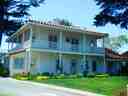
To spot the Larkin House, look on the southwest corner of Calle Principal and Jefferson Street for a cream-colored, two-story building with a flat-roofed veranda wrapping around most of it and clusters of green-trimmed doors and windows. Alright, explorer, imagine stepping out of the busy Monterey streets and peering into a world almost two centuries in the past! Right in front of you stands the remarkable Larkin House, the legendary brainchild of Thomas O. Larkin, built all the way back in 1835. Now, if these walls could talk, they’d probably have a New England accent mixed with a bit of Spanish flair… and might just brag about being California’s very first two-story house. Yep, you heard me-nobody in California had ever seen a home this tall before Larkin came along, which might’ve made the neighbors think he built it just so he could see their gardens from above! The story begins with Larkin himself, a Massachusetts man on the hunt for opportunity, who found himself in the heart of Monterey, the bustling capital of Alta California. Larkin wanted the cozy comforts of a New England home-but out here, the local sawmills couldn’t quite keep up. So what did he do? He invented his own solution by mixing two worlds: he built a New England-style wood frame, then smeared it with sturdy adobe, creating what we now call the Monterey Colonial style. That’s right, this house set a whole new fashion trend in architecture-move over, modern home magazines! Picture the sounds of restless hammers, saws, and voices as carpenters wrestled with redwood and adobe, determined to finish something nobody else had. Larkin’s design meant the house could have bigger windows-and a long porch that wraps around, perfect for watching stormy California nights without getting drenched. Even the humble chimney got its moment of glory here-it’s the first one of its kind in all of California. People walked by in awe, their footsteps crunching over gravel, whispering tales of the American consul who dared to mingle East Coast comfort with California’s rugged spirit. Today, you’re standing where history happened, in front of a home that became a National Historic Landmark, forever rooted in the story of Monterey. Now, let’s see if the next stop can top this marvel!
Open eigen pagina →Look for a bright, white-walled building with red-tile roofing and big windows, set at 559 Pacific Street-you'll see banners and a sign reading "Monterey Museum of Art" by the…Meer lezenToon minder
Look for a bright, white-walled building with red-tile roofing and big windows, set at 559 Pacific Street-you'll see banners and a sign reading "Monterey Museum of Art" by the entrance, just up a short staircase on your right. Welcome to the Monterey Museum of Art! If you’re looking for a place where California’s creative spirit comes alive, you’ve found it. Imagine you’re stepping into a time capsule that bursts with color and wild imagination-from golden age seascapes painted just a mile from here, to edgy photographs that challenge your very idea of art. Founded in 1959, the museum was created by a passionate community that wanted Monterey’s artistic heart to keep on beating loud and proud-and they weren’t shy about it either! They started as a chapter of the American Federation of Arts, but Monterey’s artists and art lovers quickly made this museum their own. Just think: around you, in these eight galleries and tucked into the administrative and curatorial offices, you’re surrounded by more than 14,000 pieces of art, each one with a story to tell. It’s not just paintings and sculptures here. The museum pulses with California’s history, celebrating everything from romantic early landscapes to bold, modern masterpieces. Perhaps the ghost of Armin Hansen, famous for capturing stormy seas, still lurks in a corner, grumbling if you skip over his canvases too quickly. Or imagine Edward Weston and Ansel Adams, pioneers of photography, secretly competing over whose shadowy black-and-white prints awe more visitors. If walls could talk, these ones would be boasting about the Carmel Art Colony’s golden days, full of wild artists and visionaries who helped shape what we know today as California art. And it gets even better: the museum doesn’t just keep its treasures locked away. Every month, families come here for Free Family Fun Days, filling the place with laughter, paint-splattered hands, and the occasional dance party. On First Fridays, the doors swing open for everyone-no charge-inviting locals to explore art, enjoy live music, and create something new together. In April, the museum throws a massive block party that takes over downtown Monterey-imagine a sea of people, art everywhere, music in the air, and creativity on every corner. And in December, Iluminado fills the galleries with shimmering installations that change and evolve all month, celebrating unity and wonder. You’re standing at the crossroads of past and present, surrounded by masterpieces from 19th-century icons like Jules Tavernier, E. Charlton Fortune, and M. Evelyn McCormick, all the way to American legends like Grant Wood and even contemporary stars like Wayne Thiebaud. So, take a deep breath and let your senses wake up-it’s time to wander into Monterey’s greatest gallery, where every painting, print, and photograph is waiting to spark a little magic in you!
Open eigen pagina →

Toon 8 stops meerToon minder stopsexpand_moreexpand_less
To spot the Vásquez House, just look for a charming two-story white adobe building with a red-tiled roof, wraparound balcony, and neatly kept gardens-standing right at 546 Dutra…Meer lezenToon minder
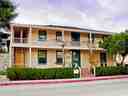
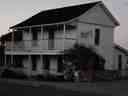
To spot the Vásquez House, just look for a charming two-story white adobe building with a red-tiled roof, wraparound balcony, and neatly kept gardens-standing right at 546 Dutra Street, across from Colton Hall. Now, let’s take you back in time! Imagine it’s the early 1800s-Monterey’s streets are dusty, and the air hums with the sound of Spanish and English voices blending together. Here, where you stand, the Vásquez House began its journey as a modest, single-story adobe-thick mudbrick walls shading a small family under a peaked tile roof. The structure was cozy, with just a couple of rooms and a kitchen, each boasting doors opening to a yard where chickens might peck the earth and citrus trees perfumed the breeze. But this wasn’t just any family home. Inside, a young boy named Tiburcio Vásquez was born in 1835. It’s said that Tiburcio was no ordinary child-sharp, charming, and able to entertain a crowd with poetry, music, and clever conversation. He grew into a man who loved fancy clothes and the swirl of dance, but, as legend has it, he also became one of California’s most notorious bandits. You might say he had a flair for style-and a knack for narrowly escaping the law! Here’s a good one: even when the local jail and courthouse-Colton Hall-sat just next door, Tiburcio was rumored to sneak back and visit his sister Dolores right here, perhaps tiptoeing past sleepy guards who had no idea how close a bandit had come to home. Over the years, this house has lived many lives. After Maria, Tiburcio’s mother, bought it from the town blacksmith in 1834, it endured remodels, upgrades (just imagine fitting out an old adobe to be earthquake-ready!), and was even expanded with a second story. In the roaring 1920s, woodwork joined adobe, and more rooms sprouted-though it never left its original spot. By 1939, Monterey made it official: this house was precious, crowned California Historical Landmark #351. When the city rescued it in 1949, spending the big bucks for preservation, the Vásquez House found new purpose as the home of the Parks & Recreation Department. Today you might hear office chatter instead of old-time songs, but those thick adobe walls still remember bandit tales, family dinners, and laughter echoing out onto Dutra Street. So take a moment-imagine Tiburcio, in his best hat and boots, dashing around this very spot, charming the crowd and eluding capture right under the sheriff’s nose. Now that’s history with a touch of mischief!
Open eigen pagina →To spot El Castillo de Monterey, look for a small wooden marker with a framed sign in the middle of a grassy, open patch at the top of a gentle slope, shaded by large Monterey…Meer lezenToon minder
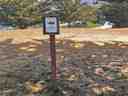
To spot El Castillo de Monterey, look for a small wooden marker with a framed sign in the middle of a grassy, open patch at the top of a gentle slope, shaded by large Monterey cypress trees-a humble reminder of a fortress that once stood watch over this very hill. Close your eyes for a moment and picture yourself right here, but not as a modern explorer-imagine the year is 1792. Back then, this hillside was alive with the thuds of hammers, the smell of fresh-cut wood, and the nervous chatter of soldiers as the Spanish Empire rushed to build their fort against the winds of Monterey Bay. The Castillo, called simply “The Castle” by the locals (well, the Spanish had a flair for drama), stood not as an ornate palace, but as a rugged defender: seven cannons pointing out, four waiting in reserve, all lined up behind a makeshift log barricade. You’d have seen soldiers bustling about, always watchful, peering over the bay, ready to defend the Presidio and port below-maybe hoping no one would ever actually test how prepared they really were! Well, that wish didn’t quite pan out. Over the years, the Spanish upgraded the fort-more earthworks, a wooden gun platform held steady by adobe bricks, and a barracks for the artillerymen who, rumor had it, always kept an eye on the bakery down the hill. The improvements kept coming, but the locals had a running joke: El Castillo was stubbornly “not-quite-finished.” Still, it held its head high on Presidio Hill, boasting sweeping views and just enough firepower to make invaders think twice. Then, in 1818, Monterey’s sleepy fort life got a jolt that no siesta could cure. Argentine pirates led by Hippolyte Bouchard sailed into the bay-cue dramatic music-and turned this quiet outpost into a battlefield. The defenders’ cannons thundered, the air filled with gunpowder and shouts in Spanish, but the pirates landed at nearby Point Pinos and outflanked them. El Castillo’s defenders were overwhelmed, cannons were turned against the town, and the pirates set Monterey ablaze before vanishing into the Pacific mist-one can almost hear the “Arrrgh!” echoing off these hills. By the 1820s, Mexico had claimed California, and the Castillo got swept up in revolutionary tides. In 1836, locals tired of the government-ranchers, Indigenous people, even some Americans-stormed the fortress, fired a single warning shot, and forced the surrender of the governor. That’s right, this fort fell to a single cannon shot. Talk about efficiency! Then, a few years later, came an honest-to-goodness case of mistaken identity: in 1842, American Commodore Thomas Jones, convinced the U.S. and Mexico were at war (pro tip: check your mail), charged in and took the fort, only to apologize and hand it back when he realized he’d jumped the gun. By 1846, the U.S. Navy was back, this time with official paperwork, and the stars and stripes waved over Monterey. They decided El Castillo was a little too cozy and built a new fort behind it. With all these takeovers, by 1880, the old fort had melted back into the earth. Archaeologists uncovered its secrets in the 1960s, and today, you stand where seven flags once waved, cannons flashed, and pirates danced. This simple, quiet marker before you hides all the layers of adventure, mistake, bravery, and a little bit of mischief that made El Castillo de Monterey the “castle” with more stories than walls. Want to take a selfie and say you visited a site that’s been Spanish, Mexican, American, pirate-occupied, and mistaken-for-the-wrong-war-all in one lifetime? Only in Monterey!
Open eigen pagina →To spot the First Theater in California, look just ahead for a rustic building with faded wooden beams, pale adobe walls, a shingled roof, and a cozy porch complete with a sign…Meer lezenToon minder
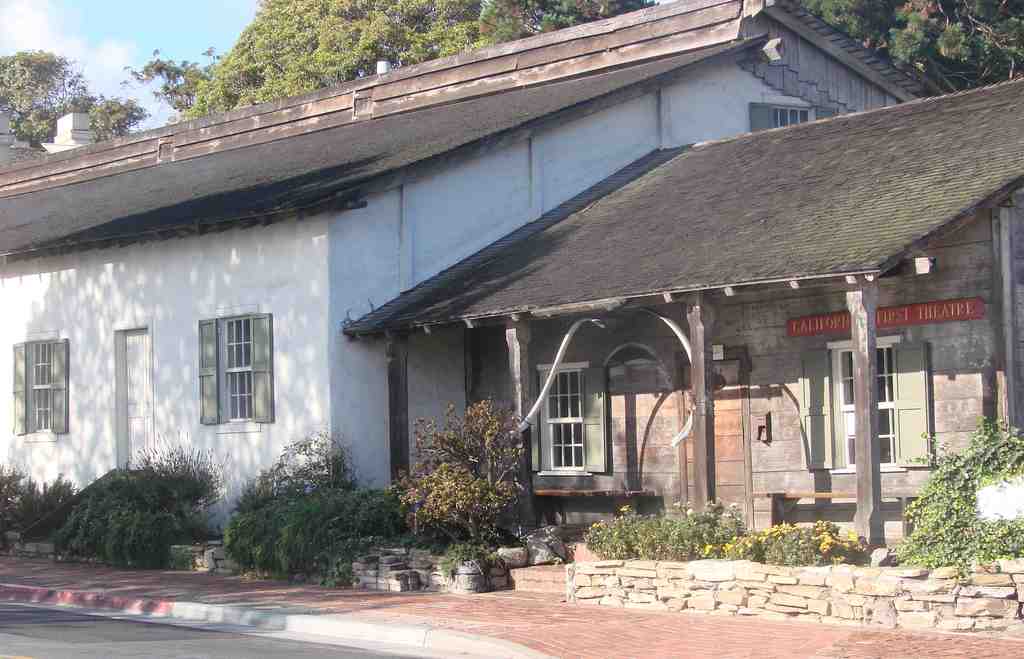
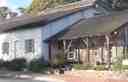
To spot the First Theater in California, look just ahead for a rustic building with faded wooden beams, pale adobe walls, a shingled roof, and a cozy porch complete with a sign that says “California First Theatre” right above the green shutters. Close your eyes for a moment-picture Monterey in the 1840s: salty sea air, muddy roads, sailors laughing their way back to shore, and this humble little building rising up through the chilly mist. Imagine the sound of boots stomping on well-worn wooden floors, as Jack Swan, a daring English seaman, turns a shipwreck’s planks into what would soon become California’s very own time machine-a place where stories would leap off the stage. First, this was the rowdiest stop a sailor could hope for! In 1846, Swan put his home-built boarding house to use, letting sailors prop their feet by the fire and swap tales for a mug of grog. On wild Monterey nights, this space was alive with laughter, singing, and the clink of glasses. The partitions between rooms could be raised or lowered-so it was perfect for noisy gatherings or a bit of privacy after a long night. But even the best parties get shut down sometimes: the local mayor, Rev. Colton, decided that all these saloons-including Swan’s-were getting a bit too much for polite company. But where do you turn when your tavern dreams are dashed? Why, the theater, of course! Swan wasn’t about to let Monterey be boring. In 1847, he expanded his boarding house, making a long, sturdy adobe rectangle. Suddenly, this place was echoing with completely new sounds: not the shanties of sailors, but lines from Shakespeare, jokes, and cheers. Four soldiers from Santa Barbara teamed up with Monterey locals, putting on the first ever paid theater shows in California right where you stand. They called it the Union Theatre-imagine the flicker of whale oil lamps, the makeshift stage with its quirky wooden curtain that swung up on hinges, and programs handwritten by candlelight. If you think a Broadway ticket is pricey, in 1848, it cost a whopping $5-a fortune back then! But it only took one successful show to make Jack Swan a legend. In the decades to follow, this building lived a dozen different lives. It was a whaling station, complete with a lookout tower, a drug store, a gift shop, and a cozy tea room. In the little wooden wing, Fred Smith kept a “curio shop,” crammed full of oddities and trinkets for curious passersby, while the main adobe quietly fell asleep, waiting for someone to wake its stage again. Wake it they did. In the early 1900s, inspired locals (and some famous names like William Randolph Hearst) bought the ramshackle theater and gave it to the state. After a heroic restoration, the doors flung open again in 1920, this time as a museum-imagine dusty artifacts, centuries-old relics, and the clatter of teacups as visitors sipped in the shadow of ancient stories. But the show truly went on in 1937: a new troupe took the stage, reviving old melodramas with a wink and a cheer, drawing crowds from San Francisco all the way down to Santa Barbara. For over half a century, the Troupers of the Gold Coast filled weekends with laughter, drama, and a little bit of mayhem. This place was known as the only “legitimate theater” for miles-a fact that surely brought a smile to Jack Swan’s ghostly face. Eventually, time called for another pause as the old building needed repairs, but the spirit of performance never faded. Today, the First Theater is coming back to life. Thanks to passionate volunteers and the Monterey State Historic Park Association, you can walk past its thick adobe walls just as sailors, gold prospectors, and actors once did. Maybe, just maybe, you’ll catch a hint of applause in the air-or the echo of a wooden curtain swinging high, ready for the next act.
Open eigen pagina →Look just ahead for a large, two-story white building with a wooden balcony wrapping around its upper floor-its sign reads “Patisserie,” making it easy to spot by the street…Meer lezenToon minder
Look just ahead for a large, two-story white building with a wooden balcony wrapping around its upper floor-its sign reads “Patisserie,” making it easy to spot by the street corner. Welcome to Monterey State Historic Park! Imagine yourself stepping into a patchwork quilt of California’s past, where adobe walls, creaking wooden doors, and hidden courtyards whisper the stories of centuries. Now, if the ground feels a bit bumpy, don’t worry-those are just the echoes of all the history packed into one spot. This historic park isn’t one single building-it’s a true treasure chest, with 17 different historic buildings scattered across Old Monterey. Think of it as California’s greatest time machine, minus the wild hairstyles. Close your eyes for a moment. Inhale the salty air. Now, open them and gaze at buildings just like the one in front of you-some made of humble adobe, others of sturdy brick or weathered wood, many with thick, cool walls that once protected their sleepy inhabitants from howling coast winds. Here, in the early 1800s, Monterey was nothing less than California’s capital. This is where fiery debates rumbled and hopeful dreams grew-where the state’s very first constitution was written, and where a wild, remote outpost became the California you know today. Take a stroll, and you may hear -because this was once a melting pot of Spanish settlers, Mexican ranchers, and New England traders, all living side by side. Picture Colton Hall, where in 1849, men in top hats and somber suits debated California’s fate, drafting a new constitution in both English and Spanish. Talk about covering all your languages! Just a stone’s throw away, you’ll see the Custom House, California’s very first public building, its adobe walls a silent witness to the day the American flag was raised in 1846. Let’s be honest, it must have been nerve-wracking-imagine being the first Californian told, “Surprise! You’re American now!”. Don’t miss the First Brick House-a pioneer’s dream, built when Gallant Dickenson decided regular old mud bricks just weren’t sturdy enough for all the storms (or perhaps the wild Monterey parties). He stacked handmade bricks to new heights but never finished the roof-he caught gold fever and sprinted off to the Sierra before the paint was dry! Here’s a tip: if you see a walkway paved with giant bones, you’ve stumbled on the Old Whaling Station. Its path is made of real whale vertebrae, a reminder that back in the 1850s, this was the HQ of California’s whalers. Can you picture the sound of barrels rolling, harpoons clanking, and sailors boasting of their catch over salt-splattered mugs? Look up to the Stevenson House, where a Scottish writer (Robert Louis Stevenson, yes, the “Treasure Island” guy!) once lay in bed sick, scribbling tales about the place he called “the Old Pacific Capital.” If you’re lucky, you might feel a draft of inspiration drifting through the window. There’s a bas-relief plaque of Stevenson himself, pen in hand, daydreaming of pirates-or maybe just a nicer mattress. Keep wandering, and you’ll arrive at Casa Soberanes, famous for its "Blue Gate." Local legend says the families who lived here loved mixing New England style with Mexican folk art (and probably had the finest blue paint in town). The garden paths here are edged with abalone shells and wine bottles, because why not let your garden sparkle as much as your historic home? And lurking nearby, you’ll find Casa del Oro, or “House of Gold.” A humble building with a golden past-first a hospital, then a gold dust exchange, and once, just for fun, a saloon. I guess if those adobe walls could talk, they’d ask for a raise! Each of these buildings played a special role in Monterey’s story, from the Sherman Quarters that housed a future Civil War general, to Doud House, where you can almost hear the laughter of early settlers drifting through its wooden halls. The Monterey State Historic Park is more than just a collection of pretty houses: it’s a living map of California’s journey from Spanish mission, to Mexican rancho, to the bear-flag-waving American state we know today. Every creak, every shadow, and every stone path holds a secret-keep your eyes and ears open, and Monterey just might share one with you.
Open eigen pagina →Right in front of you, you’ll see a U-shaped lake with still water reflecting the sunset and silhouette of trees all around-just follow the glare of the sun across the water and…Meer lezenToon minder
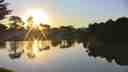
Right in front of you, you’ll see a U-shaped lake with still water reflecting the sunset and silhouette of trees all around-just follow the glare of the sun across the water and you’ll spot Lake El Estero in all its peaceful glory. Now, let me transport you to the heart of Monterey’s watery history! Imagine standing right here hundreds of years ago-if you sneezed too hard, you might have caused a flood! Back then, Lake El Estero was actually a wild lagoon, sloshing with brackish water that wandered in from three different streams. One stream curled down toward where the grand San Carlos Cathedral now stands, another drifted near the old courthouse, and a third followed today’s Del Monte Boulevard straight into the bay. The water just couldn’t settle down. If it wasn’t flooding a field, it was threatening the neighbors’ shoes! The local folks started getting creative. Let me tell you about our hero of the day from the good old 1840s, Walter Colton, a chaplain with the U.S. Navy and a part-time mud problem solver. In his journal, he dreamed up a plan to calm those floodwaters by cutting a channel from the lagoon to the bay. But nature had other ideas, and for a while, the floods became Monterey's least favorite annual festival. Fast-forward to 1874. Change chugged into town-literally. The Monterey and Salinas Valley Railroad came through and blocked the last natural stream to the bay. No more tides rushing in and out. With that, the old lagoon finally transformed into the freshwater lake you see before you, calm, quiet, and ready for action. The city of Monterey saw an opportunity to turn this lakeside patch into the community’s playground. In 1930, they unloaded eighty thousand cubic yards of mud to sculpt an aquatic park. Picture noisy tractors and determined workers, making way for fun and for flocks of birds. Speaking of birds, El Estero is like a high-class hotel for migratory visitors. Over 300 species have checked in! Picture summer breezes tangled with flapping wings, gulls calling overhead, great blue herons standing like statues, and ducks paddling below. Every spring and fall, a cast of characters arrives-western gulls, the California gull, mud hens, herons, and pelicans stopping by for a quick snooze before continuing their epic journeys. Now, don't get any ideas about tossing breadcrumbs-feeding the birds here is a no-no. They prefer their food organic and grown-to-order by the local plants. Life thrives below the shimmering surface, too. You’ve got western pond turtles, chorus-singing frogs, crayfish, and fish species like tule perch and blackfish, all weaving through underwater forests of bulrush and cattails. These reeds, by the way, are like cozy bird nurseries and safe spaces for baby fish. Of course, this beautiful park isn’t just for the birds-people flock here too! There’s a beloved baseball field alive with cheers on Sunday afternoons, a skatepark where wheels clack and scrape, and a playground that’s famous throughout California for being a barrel of laughs and more than a little bit mischievous. The Dennis the Menace Playground is not your average jungle gym. Designed by the comic’s creator Hank Ketcham with a bit of sculptor’s magic, this place is packed with giant slides, climbing walls, a suspension bridge, and a hedge maze-plus a real 1924 Southern Pacific steam engine! Once, kids clambered all over that engine, but these days it’s fenced off… for safety (and probably so Dennis himself doesn’t drive it away). Oh, and there’s a bit of a whodunit, too. The playground is home to a bronze statue of Dennis the Menace-when it's not going missing! Not once, but twice, someone made off with Dennis himself. After one daring theft, the original statue went on a cross-country adventure worthy of a cartoon strip, landing in a Florida scrap yard before coming home again. If you look across the lake, you might spot paddle boats shaped like giant white swans gliding by. Sometimes they’re filled with giggling families chasing curious ducks. Other times, you’ll see dedicated anglers casting a hopeful line-maybe today’s luck will come in the shape of a rainbow trout, freshly stocked by the Department of Fish and Wildlife. El Estero, with its blend of nature, history, and playful surprises, is a living part of Monterey’s heart. Some say the spirit of Dennis the Menace still zips through the maze, plotting his next playful escape. So, whether you’re birdwatching, relaxing, or planning your own caper, know that you’re standing at the crossroads of wild, wonderful history-where water, wildlife, and wild kids all cause a little splash.
Open eigen pagina →
Veelgestelde vragen
Hoe begin ik de tour?
Download na aankoop de AudaTours-app en voer je inwisselcode in. De tour is direct klaar om te starten – tik gewoon op afspelen en volg de GPS-geleide route.
Heb ik internet nodig tijdens de tour?
Nee! Download de tour voordat je begint en geniet er volledig offline van. Alleen de chatfunctie vereist internet. We raden aan om te downloaden via wifi om mobiele data te besparen.
Is dit een groepsrondleiding met gids?
Nee - dit is een audiotour met eigen gids. Je verkent zelfstandig op je eigen tempo, met audiovertelling via je telefoon. Geen tourguide, geen groep, geen schema.
Hoe lang duurt de tour?
De meeste tours duren 60-90 minuten, maar jij bepaalt het tempo volledig. Pauzeer, sla stops over of neem pauzes wanneer je wilt.
Wat als ik de tour vandaag niet kan afmaken?
Geen probleem! Tours hebben levenslange toegang. Pauzeer en hervat wanneer je wilt – morgen, volgende week of volgend jaar. Je voortgang wordt opgeslagen.
Welke talen zijn beschikbaar?
Alle tours zijn beschikbaar in meer dan 50 talen. Selecteer je voorkeurstaal bij het inwisselen van je code. Let op: de taal kan niet worden gewijzigd na het genereren van de tour.
Waar vind ik de tour na aankoop?
Download de gratis AudaTours-app uit de App Store of Google Play. Voer je inwisselcode in (verzonden per e-mail) en de tour verschijnt in je bibliotheek, klaar om te downloaden en te starten.
Als je niet tevreden bent met de tour, betalen we je aankoop terug. Neem contact met ons op via [email protected]
Veilig afrekenen met 


