
Buffalo Audiotour: Echo's van Innovatie en Kunst in de Koninginstad
Oprijzend uit het bakstenen en stalen hart van Buffalo, golven geheimen onder je voeten – hier hebben zelfs stille straten verhalen die weigeren te vervagen. Deze zelfgeleide audiotour leidt je door verborgen lagen van de ziel van de stad, en onthult veerkracht, hoop en verbazingwekkende ontdekkingen waar de meeste ogen alleen gevels zien. Wie beraamde een opstand onder de spitsen van de First Presbyterian Church? Welk rusteloos genie spookte door de schimmige gangen van Trico Fabriek Nr. 1? En waarom zorgde een mysterieuze brief er ooit voor dat het Roswell Park Cancer Center het middelpunt werd van een stadswijd schandaal? Volg de echo's van fel activisme, architectonische schittering en verhalen op het randje van geloofwaardigheid. Elke hoek pulseert met de fluisteringen van de geschiedenis, elk uitzicht belooft een frisse golf van verwondering. Klaar om het doorleefde oppervlak van Buffalo af te pellen en te onthullen wat de geschiedenis durfde te verbergen? Druk op play en laat de stad zichzelf onthullen.
Tourvoorbeeld
Over deze tour
- scheduleDuur 30–50 minsGa op je eigen tempo
- straighten4.6 km wandelrouteVolg het geleide pad
- location_onLocatieBuffalo, Verenigde Staten
- wifi_offWerkt offlineEén keer downloaden, overal gebruiken
- all_inclusiveLevenslange toegangOp elk moment opnieuw afspelen, voor altijd
- location_onStart bij Roswell Park Comprehensive Kankercentrum
Stops op deze tour
To spot Roswell Park Comprehensive Cancer Center, just look straight ahead for a massive, modern building of red-brick and beige with big block letters that proudly spell “Roswell…Meer lezenToon minder
To spot Roswell Park Comprehensive Cancer Center, just look straight ahead for a massive, modern building of red-brick and beige with big block letters that proudly spell “Roswell Park” at the top-it's at the end of a wide street lined with parked cars and leafy trees. Alright, take a deep breath of that crisp Buffalo air, because you’re now face to face with Roswell Park, a place where history, hope, and some serious scientific brainpower have been changing lives since 1898. Imagine for a moment what this corner of Buffalo looked like over a century ago: a young, energetic surgeon named Roswell Park pacing the creaky wooden halls of the old University at Buffalo School of Medicine, convinced that cancer research needed its very own fortress. Back then, only a few small rooms were dedicated to understanding cancer-but Park had a vision much bigger than the cramped quarters and dusty glass bottles on his shelves. Picture Park rallying the Buffalo community, saying that only a “deliberate well-planned, combined attack” would bring real progress against cancer. Soon enough, generous citizens-like Mrs. William Gratwick, who handed over a whopping $25,000-helped turn this dream into stone and mortar. By 1901, the Gratwick Research Laboratory rose at High and Elm, and Buffalo now had a one-of-a-kind research hub, dedicated solely to fighting cancer. Now, shift your gaze from that era of horse carts and stiff collars to the huge, gleaming complex before you. The Roswell Park campus now stretches across 28 acres of the sprawling Buffalo Niagara Medical Campus, with 15 interconnected buildings and over two million square feet. By 1998, it even had its own cutting-edge hospital building, linking research, clinical care, and education into one powerhouse. If you could peek inside, you’d see a buzzing hive of researchers in lab coats, doctors consulting on rare cases, patients and families walking through the doors with nervous optimism, and all the latest machines whirring and beeping. But this place isn’t just bricks and beakers. Roswell Park has a tradition of big discoveries. Ever heard of the PSA test that millions of men use for prostate cancer screening every year? That breakthrough started right here, in the 1970s. If you were to travel back in time to the 1940s, you’d catch Drs. Gerty and Carl Cori in their lab, unlocking the mysteries of how the body transforms sugar into energy-and later collecting the Nobel Prize for it. Not too shabby! There are stories of struggle and triumph around every corner. Dr. Thomas Dao once roamed these halls developing new treatments for breast cancer, challenging the status quo with alternatives to radical surgery. And if you think lasers are just for sci-fi movies, let me introduce you to photodynamic therapy: another Roswell Park first, using beams of light to zap certain cancers-and yes, it’s FDA-approved and used all over the world. Roswell Park isn’t just a city treasure-it’s a national leader. Today, it’s the only upstate New York institution with the National Cancer Institute’s top-level “comprehensive cancer center” status. The center’s even made history by teaming up with Cuban researchers to test advanced vaccines for lung cancer, and it keeps close ties with medical giants across the globe, from Australia to Poland to Nigeria. But perhaps most remarkably, behind these walls are stories of hope: adults and children receiving life-saving care, long-term survivors clinics for kids who’ve beaten cancer, and innovative treatments that once sounded like science fiction. Whether it’s leading New York in robotic surgeries, running one of the first childhood cancer long-term survivor clinics, or ranking in the country’s top 15 best cancer hospitals, Roswell Park keeps proving that science-plus a dash of Buffalo persistence-can move mountains. So, as you stand here and look up at those bold letters, remember: so many footsteps, discoveries, and bright ideas have passed through these doors. And each day, the story gets a little bigger, a little brighter, and a little more hopeful-for Buffalo and the world.
Open eigen pagina →In front of you stands the Trico Plant No. 1, a huge industrial building with bold red brick stripes and endless rows of windows framed in white-just look for the big “TRICO PLANT…Meer lezenToon minder
In front of you stands the Trico Plant No. 1, a huge industrial building with bold red brick stripes and endless rows of windows framed in white-just look for the big “TRICO PLANT 1” sign perched at the top corner, impossible to miss against the sky. Now, as you stand on this spot, imagine the year is 1920. The noise of Buffalo’s bustling city fades a bit as you take in this giant block of windows and brick, sunlight glinting off those endless metal-framed panes-this was once the epicenter of innovation, the home of windshield wipers! Yes, those humble gadgets on your car started a wild ride right here. The Trico Plant wasn’t always the swanky apartment building you might see today; it was born as a “daylight factory,” a clever name for a style obsessed with soaking machinery and workers in natural light, making the workday just a bit less gloomy. Let’s rewind even further-before the hum and clatter of windshield wiper assembly lines, this stretch of Ellicott Street boasted a grand old brewery, built by Christian Weyand in the 1890s. Picture barrels, ice blocks, and the aroma of beer wafting through the neighborhood, back when this area was bustling with German-American families. The ice house from that brewery is still tucked in among the factory walls, a little like history’s own surprise Easter egg. Oddly enough, the brewery found a second life-the same building where workers once stored beer barrels became the birthplace of Buffalo’s wiper empire, proving that both good beer and clear windshields are vital to civilization. The story of Trico starts with a rainy night in 1917. John R. Oishei, then the manager of the Teck Theater, found himself peering desperately through a blurry windshield, only to hit a bicyclist. The solution? Partner up with inventor John Jepson, who had created a nifty wiper blade. After renting a small workshop, Trico's business exploded when they landed contracts with classic carmakers like Cadillac, Packard, and Lincoln. By 1920, they needed a bigger space-and bought that now-silent brewery down the street, ushering in a new era. Oishei wasn’t just the factory boss. Imagine him: striding through the plant, the hum of hundreds of workers filling the air, sunlight pouring through those massive windows. At one point, Trico was the single largest employer in Buffalo, and this building buzzed with innovation. As production ramped up, the “daylight factory” style took over-the concrete skeletons rose, furnished with enormous glass walls that let sunshine flood the workspace, an engineering marvel for its day. That meant fewer accidents, better health, and yes, even happier workers-well, as happy as you could be spending your days making windshield wipers. This giant plant grew until it spanned a whole city block, with every nook and cranny dedicated to keeping America’s vision clear on the road. Oishei, driven by more than just profit, created the John R. Oishei Foundation, a beacon of generosity in Buffalo to this day-his fortune swept forward by those wipers was funneled into hospitals, community causes, and social uplift. Eventually, the hum of assembly lines stilled. After decades of growth, Trico pulled most of its business out in the late ‘90s, and the sleeping giant stood silent for years. There was drama too: developers wanted to breathe new life into the plant, but fate and disagreements got in the way. At one point, nearly all of it teetered on the edge of demolition. Community activists fought to save a piece of history, demanding a second look before the walls-and memories-came crashing down. Finally, as you see today, parts of the factory became new again, with lofts and innovation centers moving in, echoing with lives and dreams instead of factory noise. If you listen closely, you might just hear echoes of those roaring machines, clanging hammers, and the laughter of workers as sunlight streamed across their benches-maybe even the faint pop of a lost beer barrel, rolled from the brewery days. History here hasn’t faded away; it’s all layered above and below, waiting for you to imagine it. And remember: next time it rains and your wipers clear your windshield, you’re part of this quirky, extraordinary story!
Open eigen pagina →You’ll spot Canalside just ahead by looking for the lively green lawn filled with people enjoying bright blue play equipment, two tall whimsical sculptures perched above the…Meer lezenToon minder
You’ll spot Canalside just ahead by looking for the lively green lawn filled with people enjoying bright blue play equipment, two tall whimsical sculptures perched above the scene, and the elevated highway slicing across the city skyline behind them. Welcome to Canalside, where Buffalo’s wild, gritty, and glorious past meets today’s family fun and waterfront adventure! It’s hard to believe, but you’re standing at the very spot where, back in 1825, Buffalo opened the doors to the whole western United States. Imagine the air ringing with the clang of ships unloading goods, the shouts of sailors, the bustling of wagons, and maybe even a few questionable business deals happening in the shadows. The Erie Canal once ended right here, spilling a world of newcomers, dreamers, and scoundrels into Buffalo. Picture the scene in the 1800s: liquor flowed, fortunes flickered, and the song “Buffalo Gals” filled the air, celebrating the infamous Canal District’s wild women and rowdy nightlife. There were 93 saloons, 15 concert halls, and more dancing than a Saturday night wedding. But times changed-when canal traffic moved out and new immigrants (mostly Italian, especially Sicilian) moved in, the lively watering holes gave way to tight-knit families and rows of sturdy brick tenements. The neighborhood changed names too, becoming Dante Place, and some called it Little Italy. Trouble wasn’t far off, though. Fires, floods, and even explosions ravaged the old buildings. The most famous was in 1936, when an early-morning candle in a basement turned an entire building into toothpicks, drawing headlines and sparking new laws that triggered sweeping demolitions. By the mid-20th century, the old canal, now a stagnant ditch, was declared a health risk and filled in. The once-roaring district slowly disappeared, buried beneath grand urban renewal dreams-think highways, parking lots, the Memorial Auditorium, and eventually the mighty Buffalo Skyway overhead. If you’d come here in the 1960s, you’d have seen vacant lots where rowdy saloons once stood. The Buffalo Memorial Auditorium, where hockey fans screamed themselves hoarse, sat heavy and quiet after newer arenas pulled in the crowds. But Buffalo folks have a knack for bringing things back to life. In the late 1990s, fueled by a mix of nostalgia, civic pride, and maybe a little rivalry with other up-and-coming waterfronts, the city began digging deep-literally!-to unearth pieces of the old canal and its working roots. It wasn’t all smooth sailing-there were plenty of arguments, changes in plans, and even a notorious announcement about Bass Pro Shops which, let’s just say, never made it past the rumor stage. But by 2008, you’d find the sound of jackhammers mixing with local bands as the new Canalside began to grow-original canal features were restored, the Commercial Slip was once again flowing, and cobblestone streets hinted at 19th-century Buffalo. Fast forward to today, and Canalside is bursting with activity all year round. Where muddy water once pooled, canals now shimmer in the summer and freeze into a skater’s paradise in winter. You’ll find the Explore & More Children’s Museum brimming with families. With the whistle of the Buffalo Metro Rail nearby and the cry of seagulls overhead, dozens of events-from concerts to outdoor markets-fill the space. The LECOM Harborcenter hosts hockey games, and the mighty USS The Sullivans and USS Little Rock anchor the Naval & Military Park, just a stone’s throw away. Oh, and don’t miss Shark Girl-Buffalo’s own Instagram sensation-a grinning sculpture perched on her rock, waiting for your photo. And speaking of quirky art, those big figures you see sitting above you, looking like giant marshmallow people, are keeping Canalside playful and just a little bit mysterious. Future plans here keep getting bolder: new pavilions, historic street grids restored, markets, new buildings, apartments, even a gorgeous vintage carousel powered by the sun. Canalside’s not just a place to stroll-it’s where Buffalo’s past and future shake hands, sometimes sing a song, and definitely invite you to join the story. So take a look around, breathe deep, and enjoy the buzz-if you listen close, you might still catch a whisper of “Buffalo Gals” floating on the summer breeze. Intrigued by the reconstruction and redevelopment, attractions or the transportation? Make your way to the chat section and I'll be happy to provide further details.
Open eigen pagina →


Toon 8 stops meerToon minder stopsexpand_moreexpand_less
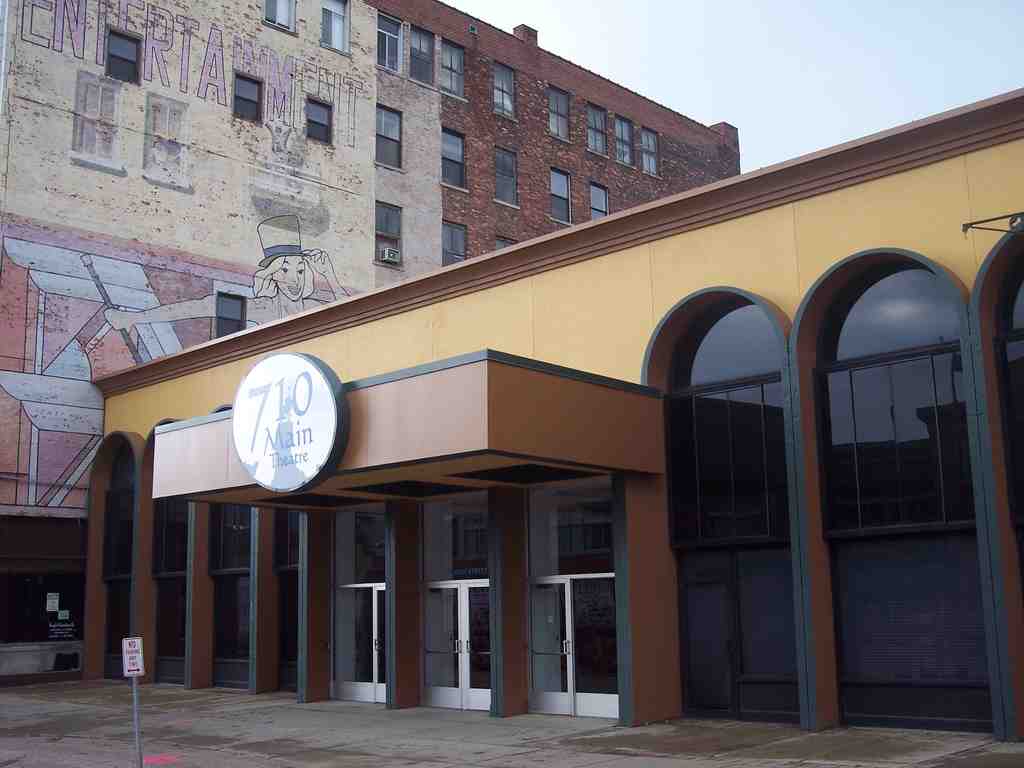
To spot Shea’s 710 Theatre, look for the tan-and-brown building with a row of tall arched windows and a big circular sign over the doors that boldly says “710 Main Theatre”-just…Meer lezenToon minder
To spot Shea’s 710 Theatre, look for the tan-and-brown building with a row of tall arched windows and a big circular sign over the doors that boldly says “710 Main Theatre”-just look for the happy lady tipping her hat on the mural next door and you’ll know you’re in the right place! Let’s step up to the curb and imagine Buffalo in the roaring 1920s, a time when jazz was playing, big hats were all the rage, and dreams of the stage were even bigger. It was here that a group of spirited locals-imagine them in classic flapper dresses and dapper suits-came together to create the Studio Arena Theatre, which was more than just a building…it was a spark! Way before there were smartphone selfies outside, Jane Keeler, a powerhouse drama teacher, and Lars Potter, president of the Buffalo Players, teamed up to turn their love for the arts into a new kind of community for the city. They began in a humble lodge meeting hall, squeezed up on the second floor, where actors and students would climb stairs dreaming of bright lights and applause. By 1934, the theater was on the move-literally! It packed up from Elmwood Avenue and Anderson Place to a concert hall above the Teck Theatre. Every move brought with it more energy, more buzz, and yes, more people brushing dust off their jackets before taking the stage. The Studio Theatre became a real force in Western New York, the only place in the whole area to bring professional drama, laughter, and tons of creativity to anyone in earshot. Fast-forward to the wild sixties, which brought a big change. Suddenly Buffalo had something rare: a resident professional theater, right here at what became 710 Main Street, when they moved into the former Palace Burlesque Theater. Imagine the curtain going up for the very first time in that transformed old nightclub! From then on, Shea’s 710 Theatre wasn’t just a venue-it was the beating heart of the city’s theater scene, hosting not-for-profit professional productions, world premieres, and legends-to-be. You know, the kind of place where you might have bumped into Glenn Close, Kathy Bates, or even a young Christopher Walken nervously pacing around backstage. One night, John Goodman could be a baseball hero; the next, Julianne Moore might be fighting tears in a moving drama. The theater has had its fair share of drama offstage, too. In 2008, the spotlight almost went out permanently when $3 million in debt forced the doors closed and the lights dimmed for what many feared would be the last time. But every good story has a comeback, right? Thanks to Shea's Performing Arts Center, the theater was revived as the 710 Main Theatre in 2012, ready for a new generation. They polished up those arched windows, laughed in the face of doom, and brought live theater-and applause-back to Main Street. Now, with artists from Broadway to Buffalo and nearly 500 local pros and students gracing its stage, this is no ordinary building. Behind that big round sign and those glassy arches, you’re standing in the shadows of some of the greatest performances the city has ever seen-and maybe, just maybe, catching a whiff of fresh paint, popcorn, and a little bit of showbiz magic. So take a bow yourself, you’ve found one of Buffalo’s most legendary landmarks!
Open eigen pagina →To spot Hallwalls, just look for a striking old stone church with two towering, pointy spires reaching toward the sky-if you see gothic architecture that looks like it belongs in…Meer lezenToon minder
To spot Hallwalls, just look for a striking old stone church with two towering, pointy spires reaching toward the sky-if you see gothic architecture that looks like it belongs in a mystery novel, you’re in the right place. Now, let’s step into the world of Hallwalls-where art, rebellion, and friendship come together under these soaring steeples! Can you imagine it? It’s 1974, and in a chilly converted ice warehouse in Buffalo, a gang of young, wild artists are up to something amazing. Charles Clough and Robert Longo-two pals whose friendship could have powered the entire city-decide to break down the barriers between their art studios. Instead of rivalry, they shape a new vision: Hallwalls, named for the literal hallway that joined their spaces. The idea? Simple. Make a space where artists from all walks of life can shake up the city, challenge what’s expected, and shine a light on Buffalo’s crumbling industrial bones. Fast forward, and Hallwalls fills with art-strange, dazzling, and bold. It wasn’t just paintings on walls: you’d find wild films, pulsing music, poetry that could make your grandma blush, and performances you’d never forget (even if you wanted to!). It didn’t matter if you were famous or just starting out-if your art had something to say, Hallwalls had a spot for you. Imagine sitting in the crowd, watching performers like Kathy Acker or the wild antics of The Kipper Kids, not knowing if the next act would make you laugh, cry, or just scratch your head. But it wasn’t all easy rides. As Hallwalls grew, the team wrestled with how to stay true to their anti-corporate, artist-first roots-“can you grow big without selling out?” became the question of the day. There were money troubles, heartaches, and even times when it seemed like the doors might close for good. But like a true Buffalo snowstorm, the people here just wouldn’t quit. Then, in 2006, Hallwalls found a new home-surprise!-inside this very old church, thanks to Ani DiFranco and Righteous Babe Records. Now, every visitor is swallowed up by towers of history while new art buzzes inside. Hallwalls even reaches the city by TV, runs wild poetry open-mics for Buffalo’s youth, and throws one mean literary festival called Babel, where Booker Prize winners grace the halls. So as you stand here, remember: Hallwalls is more than a building. It’s Buffalo’s beating heart for bold voices and brave visions-a little bit sacred, a little bit punk rock, and always welcoming the next great adventure.
Open eigen pagina →To spot the William Dorsheimer House, just look for a stately, three-story brick home with broad bands of gray sandstone crossing its ochre-brick façade, a mansard slate roof with…Meer lezenToon minder
To spot the William Dorsheimer House, just look for a stately, three-story brick home with broad bands of gray sandstone crossing its ochre-brick façade, a mansard slate roof with big, peeking dormer windows, and a corner address that stands out like a historic gem on Delaware Avenue. Now, take a moment to imagine yourself back in 1868, back when carriages clattered across Buffalo’s cobblestones and everything smelled just a bit more… “horse-powered.” Standing right here, you’d be staring up at the brand-new creation of a young architect who would soon become a legend-Henry Hobson Richardson. That’s right! This was his very first building in Buffalo, designed for William Dorsheimer, a top lawyer and ambitious Lieutenant Governor of New York. Clearly, Dorsheimer wanted a home with some political flair-just look at those bold, horizontal sandstone bands and the way the vertical stones frame the edges and windows, like a brick-and-stone power suit of the 19th century. As you gaze up, notice those incised decorations-little rosettes and triglyphs carved into the brick-tiny touches that say, “Yes, I’m stylish, but I’m not flashy… unless you count this marvelous mansard roof.” The shape and design owe a lot to French influence, which was quite the trend after the Civil War. Richardson, of course, wasn’t done-this house launched him into architectural superstardom. Later, he designed not just Buffalo’s colossal State Hospital, but also got the call to help create the State Capitol in Albany, and even made a few more homes for the city’s upper crust. Inside today, things look a bit different-a commercial remodel and an open-well staircase winding from the north entrance up to the third floor. Yet, you can almost feel the footsteps of politicians, artists, and dreamers echoing off those slate tiles and sandstone corners, a reminder of a time when Buffalo was booming and its buildings were as fearless as its people. Not bad for a house that’s over 150 years old and still standing tall, right? Keep your eyes open-you’re walking by history, one carefully-crafted brick at a time.
Open eigen pagina →To spot the First Presbyterian Church, just look across Symphony Circle for a grand stone church with a tall tower capped in green-you can’t miss its imposing Romanesque presence…Meer lezenToon minder
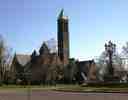
To spot the First Presbyterian Church, just look across Symphony Circle for a grand stone church with a tall tower capped in green-you can’t miss its imposing Romanesque presence rising above the leafy neighborhood. So here you stand, where centuries of Buffalo’s spirit echo off ancient stones and the tower keeps quiet watch over the circle. Imagine the year is 1812: Buffalo is barely a wild frontier town, a muddy little settlement clinging to New York’s western edge. The church’s first members couldn’t even afford their own building; they gathered wherever they could-schoolrooms, court houses, even taverns. Tough times, but nothing a determined congregation (and maybe a robust immune system) couldn’t handle. Picture Reverend Thaddeus Osgood, a sturdy traveling preacher braving rough trails-maybe dodging the odd runaway oxen-to bring neighbors together. Through war and fire, through housing sermons next to beer wagons and street carts, those early Buffalonians kept the faith. By 1824, they’d scraped together $874 for a humble wooden church-only forty by fifty feet! It was such a cozy spot, folks had to light evening services with their own candles, and the singers belted hymns from a tiny platform at the back. The building was so well-used that, after it outgrew the congregation, it went on to serve as a schoolhouse, a tenement, a cooper’s shop, and even an icehouse for a brewery, until, with a dramatic puff of irony, it burned down. But as Buffalo boomed with the Erie Canal-imagine ships appearing on the horizon, horns blaring and commerce roaring-the church kept pace. In 1827, a red brick church-nicknamed “Old First”-rose in Shelton Square. This was Buffalo’s answer to cathedrals: grand, white-trimmed, with a gleaming bell tower topped with a golden ball that would’ve given Rapunzel real estate envy. The bell-2,500 pounds of clanging authority-not only called the faithful to worship, it was the town’s fire alarm. Once, while warning of danger, it split apart! Fortunately, it was recast, not retired, and kept sounding through Buffalo’s growing pains. Inside “Old First,” families paid a pew tax and tossed on extra layers: imagine winter worship, oil lamps flickering, footwarmers filled with hot coals stashed under benches, and the occasional whiff of sand and lime as members hauled bricks to help with repairs. By the late 1800s, city noise and expansion had surrounded the church-and heated debate rang out over whether to move. The matter wound up in court, in newspapers, and, no doubt, in heated whispers during coffee hour. Eventually, the congregation chose this very spot, with generous land donated by Mrs. Avery in memory of her parents, and the vision for today’s spectacular edifice was born. The church before you, completed in stages by the celebrated architects Green & Wicks, opened its doors in 1889 and was truly revolutionary. Its Romanesque exterior, Byzantine-style sanctuary, and commanding tower instantly became neighborhood icons. On cold Sundays, Presbyterian families stomped off snow and gasped up at the new organ, which-after some passionate arguments-banished the old idea that organs were the devil’s work! History wove through every brick and beam. Theodore Roosevelt himself worshiped here during Buffalo’s biggest hour, brushing elbows with locals after President McKinley’s fateful assassination. Over time, chandeliers moved, windows were replaced by stain-glass masterpieces, and legendary organs came and went. Congregations merged and split and merged again, like some sort of ecclesiastical square dance; one even found a way back home after 173 years apart. Imagine the echoes of children’s laughter, the deep rumble of a newly built Schlicker organ-locally crafted right here in Buffalo-ringing out. Steaming cups in the parish hall, and heartfelt debates about the best way to keep draughts out of the chapel. Even pews have taken their lumps-some disappeared to make way for the Buffalo Philharmonic and never returned from the basement, victims of dry rot and humid summers. Today, as you stand under the church’s watchful tower, surrounded by stories of resilience, innovation, and the odd runaway chandelier, know you’re looking at a living piece of Buffalo’s oldest faith community. This place has survived war, fire, and fierce debate-not to mention thousands of winter blizzards. And every Sunday, somewhere inside, the spirit of those first candle-lit pioneers shines on.
Open eigen pagina →Look for a grand red-brick mansion with towering cream-colored Ionic columns out front and an impressive sweeping staircase-if you see a two-story porch with ornate iron railings…Meer lezenToon minder
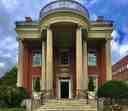
Look for a grand red-brick mansion with towering cream-colored Ionic columns out front and an impressive sweeping staircase-if you see a two-story porch with ornate iron railings above, you’ve found the Williams-Pratt House! Alright, time to stretch those legs and senses. Take in the sight of this stately mansion, its bold red brick glowing against the Buffalo sky, flanked by columns that look like they could double as launch pads for very refined rockets. Now, imagine it’s the late 1890s. The chill of Buffalo air swirls around fancy carriages on Delaware Avenue, as Charles Howard Williams and his wife Emma eagerly watch their lavish new home rise-designed by none other than Stanford White, the superstar architect from New York’s McKim, Mead & White. They spared no expense, bringing in iron railings from August Feine & Sons, fencing from John H. Williams Iron Works, and finishing touches destined to make everyone’s jaws drop-think gilded walls, glowing crystal sconces, and fireplaces so intricate you’d swear they were sculpted by elves. But every grand tale requires a little drama! In 1900, only a year after moving in, disaster struck. Imagine the panic: thick smoke creeping from Charles’s bedroom as fire devours the carved woodwork, embers scattering across those elegant floors, heat and chaos threatening the stately calm of this mansion. It wasn’t a total loss, but it left a literal scorched mark on the Williams-Pratt story (and Charles probably had a few sleepless nights). Now, fast forward! After Charles and Emma passed away, their daughter Jeannie and her husband Frederick Pratt moved in, and the place transformed into party central. The Pratts threw legendary bashes, but none topped the 1926 “Oriental Ball.” Picture this: every inch of the house and even the portico cloaked in rich, exotic fabrics; one room turned into a mystical Egyptian lounge for dancing, the other into a smoky East Indian den for well-dressed partygoers. The energy must have practically buzzed in the air-flappers and jazz, glittering gowns, maybe the occasional Charleston being attempted by a guest in an elaborate turban. Of course, every fortune has its twists. When the Depression hit, Jeannie lost much of her wealth, and after Frederick’s death, the house fell on hard times too. In 1938, the city took over for back taxes, and you might say this stately home went from champagne to hardtack sandwiches. But those veterans from the Grand Army of the Republic and the Spanish-American War wouldn’t let its history go quietly. They moved in, turning grand halls and marble staircases into meeting rooms (and, probably, the world’s most intimidating storage space). Even in the face of greedy developers in the 1950s, the house stood firm-veterans and city folk united to fend off demolition. The Williams-Pratt House refused to become just another gray office block, stubbornly insisting on dressing up in its three-story grandeur. In the late 20th century, businessman Paul Snyder took over before the house finally found new life as headquarters for the LiRo Group. So, as you stand before those stately columns, imagine the laughter, the music, and the echo of footsteps-some in silk slippers, some in boots, and all layered with the memories of a house that just refuses to be forgotten. Welcome to a piece of Buffalo’s living history!
Open eigen pagina →

Veelgestelde vragen
Hoe begin ik de tour?
Download na aankoop de AudaTours-app en voer je inwisselcode in. De tour is direct klaar om te starten – tik gewoon op afspelen en volg de GPS-geleide route.
Heb ik internet nodig tijdens de tour?
Nee! Download de tour voordat je begint en geniet er volledig offline van. Alleen de chatfunctie vereist internet. We raden aan om te downloaden via wifi om mobiele data te besparen.
Is dit een groepsrondleiding met gids?
Nee - dit is een audiotour met eigen gids. Je verkent zelfstandig op je eigen tempo, met audiovertelling via je telefoon. Geen tourguide, geen groep, geen schema.
Hoe lang duurt de tour?
De meeste tours duren 60-90 minuten, maar jij bepaalt het tempo volledig. Pauzeer, sla stops over of neem pauzes wanneer je wilt.
Wat als ik de tour vandaag niet kan afmaken?
Geen probleem! Tours hebben levenslange toegang. Pauzeer en hervat wanneer je wilt – morgen, volgende week of volgend jaar. Je voortgang wordt opgeslagen.
Welke talen zijn beschikbaar?
Alle tours zijn beschikbaar in meer dan 50 talen. Selecteer je voorkeurstaal bij het inwisselen van je code. Let op: de taal kan niet worden gewijzigd na het genereren van de tour.
Waar vind ik de tour na aankoop?
Download de gratis AudaTours-app uit de App Store of Google Play. Voer je inwisselcode in (verzonden per e-mail) en de tour verschijnt in je bibliotheek, klaar om te downloaden en te starten.
Als je niet tevreden bent met de tour, betalen we je aankoop terug. Neem contact met ons op via [email protected]
Veilig afrekenen met 


