
Pasadena Audiotour: Verhalen over Verborgen Bezienswaardigheden en Historische Straten
Een enkele boog in Pasadena veranderde ooit het lot van een stad, en schaduwen dwalen nog steeds achter de gouden gloed van de bakstenen gevels van Old Pasadena. Deze zelfgeleide audiotour pelt de lagen van de stad af en onthult verhalen en geheimen die verborgen liggen tussen bruisende boetieks en iconische hotels – verhalen die de meeste bezoekers nooit horen. Welk politiek schandaal bracht de grandeur van het Hotel Green bijna van de ene op de andere dag ten val? Waarom galmden jazzmelodieën door geheime kamers in The Hotel Carver lang na middernacht? Welk vreemd relikwie ligt vergeten in een rustige steeg, op slechts een steenworp afstand van de hoofdstraat? Beweeg van zonovergoten lanen door gangen van herinnering, en volg de voetsporen van rebellen, visionairs en verschoppelingen. Het verleden van de stad pulseert onder elke kassei en boog. Elke stop brengt een rilling van verrassing, een golf van verwondering en een gevoel van het ongeziene. Druk op afspelen en ontgrendel de onvertelde hoofdstukken van Pasadena – één echo, één wonder, één legende tegelijk.
Tourvoorbeeld
Over deze tour
- scheduleDuur 40–60 minsGa op je eigen tempo
- straighten4.7 km wandelrouteVolg het geleide pad
- location_onLocatieLos Angeles, Verenigde Staten
- wifi_offWerkt offlineEén keer downloaden, overal gebruiken
- all_inclusiveLevenslange toegangOp elk moment opnieuw afspelen, voor altijd
- location_onStart bij Hotel Green
Stops op deze tour
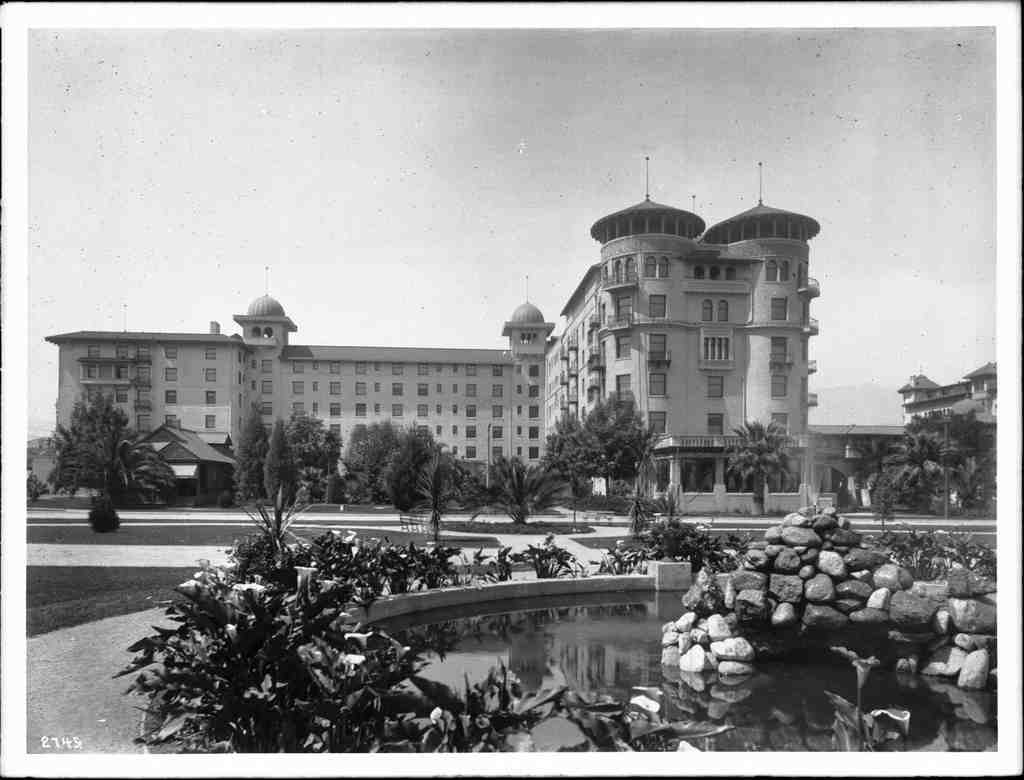
To spot the Hotel Green, look for a grand, castle-like building with round turrets and a wide, ornate facade, just beyond the lush gardens and stone fountain-if you see something…Meer lezenToon minder
To spot the Hotel Green, look for a grand, castle-like building with round turrets and a wide, ornate facade, just beyond the lush gardens and stone fountain-if you see something that looks a bit like it belongs in a fairytale, you’re in the right place! Welcome to the legendary Hotel Green! Can you smell the faint trace of garden roses and hear the splash of water from the fountain nearby? You’re standing where high society, hopeful artists, and a parade of Pasadena’s who’s-who once gathered under the sweeping arches and round towers of this magnificent structure. Picture it: the year is 1893, and Pasadena is buzzing about George Gill Green, a fellow with a knack for both remedies and real estate. What started as an unfinished hotel dreamed up by Edward C. Webster-whose luck sadly ran out-fell into Green’s hands. Not one to do things halfway, Green rolled up his sleeves, doubled the size, and put the finishing touches on this grand hotel. When it opened in 1894, folks must have felt like they were walking into a palace! The echo of footsteps once filled these halls as artists set up their paintings for show, societal debutantes practiced ballroom dances, and the very first Tournament of Roses was plotted right here in secret meetings of the Valley Hunt Club. As the parties got bigger, so did the hotel. In 1899, Green added the “Central Annex”-today lovingly called Castle Green. You can imagine the excitement on opening day: a thousand guests, laughter in the air, and the rustle of silk dresses as people strolled the garden paths. Did you know the Rose Parade used to pass right by on Raymond Avenue? From the hotel’s pedestrian bridge, guests enjoyed the best seats in the house, catching views of flower-covered floats as they drifted by. And just when people thought Pasadena couldn’t throw a bigger party, Green added a third wing in 1903, swallowing up an old building once used by Caltech-science meets spectacle! While the original hotel building from ‘93 was lost in 1935, Castle Green still stirs up that old magic, and sometimes even steps into the spotlight in movies like “Puppet Master” and “The Little Rascals.” So as you gaze at these towers, imagine the music, the gossip, maybe even the thump-thump of a nervous dancer’s feet-every stone here has a story. If the walls could talk, I bet they’d say, “Welcome to the grandest party in Pasadena!”
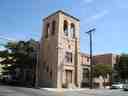
Open eigen pagina →To spot Friendship Baptist Church, look for a tall cream-colored building with a square tower and arched openings, tiled roof, and beautiful stained-glass windows right on the…Meer lezenToon minder
To spot Friendship Baptist Church, look for a tall cream-colored building with a square tower and arched openings, tiled roof, and beautiful stained-glass windows right on the corner. Welcome to the Friendship Baptist Church! Right in front of you is a slice of Pasadena’s past, standing strong and proud since 1925. Can you imagine, almost a whole century ago, when the church opened its doors for the first time? The sun would’ve glinted off these same tiles, and echoes of gospel music might have floated out those stained-glass windows. But this place’s story goes even further back to 1893, when a small congregation began to come together to share faith, hope, and stories. Things were different then. Pasadena’s streets were quieter, and the world outside felt a little bigger and more mysterious. Now, let your eyes wander up the tower-it’s like a lookout post for the soul! Architect Norman F. Marsh chose the Spanish Colonial Revival style, so you get touches of old Spain with a California twist. And that bell-gable? It’s practically begging you to imagine it calling neighbors to Sunday service. They say the real magic is inside, where laughter, tears, and amazing community moments echo to this day. In 1978, the church made history official by landing a spot on the National Register, sealing its fame forever. Just think, you’re standing where generations have gathered, and where so many found not just friendship, but family. How’s that for a great story to take with you?
Open eigen pagina →
Toon 11 stops meerToon minder stopsexpand_moreexpand_less
To spot Old Pasadena, just look in front of you at the busy intersection of Fair Oaks Avenue and Colorado Boulevard-you’ll see lively sidewalks, tall palm trees, rows of historic…Meer lezenToon minder
To spot Old Pasadena, just look in front of you at the busy intersection of Fair Oaks Avenue and Colorado Boulevard-you’ll see lively sidewalks, tall palm trees, rows of historic storefronts, and a parade of colorful buses, like the bright orange one making its way down the street. Welcome to Old Pasadena-the city’s beating heart and a place with more stories than a library after hours! Picture yourself standing where dreamers, scientists, artists, and all kinds of characters once gathered, along these very streets. The air might be filled with the bustle of traffic and the friendly chatter of folks out for a bite or some shopping, but relax-today there’s nothing to worry about except maybe not missing your next snack stop. Once upon a time, Old Pasadena was the proud “Athens of the West”-researchers from Caltech and NASA’s Jet Propulsion Laboratory brainstormed world-changing inventions here. Imagine, on a morning just like this one, brilliant minds from Beckman Instruments and Aerojet might have dashed past J.D. Hollingsworth’s old general store, excited by whatever the future held. But this was more than just a science hub-it was downright bohemian! The Pasadena Art Museum (now the Norton Simon) held Andy Warhol’s West Coast debut and the first ever Marcel Duchamp retrospective, shaking the art world and making locals question whether a Campbell’s soup can belonged in a museum or in their pantry. These bustling corners have seen everything: suffragists marching for the right to vote, passionate pacifists holding peace rallies, wild jazz clubs in the basements, and the first black-owned hotel in the area-Hotel Carver-where music curled through the night and luminaries like Einstein and Upton Sinclair might pass each other on the way to their next adventure. But every city has its ups and downs, and by the late 1940s, Pasadena’s glory had faded-picture a landscape of pawn shops, run-down hotels, and dodgy bars. Night would fall, and instead of art openings, you’d see head shops and adult bookstores lighting up the shadows. The 1970s nearly brought the wrecking ball to Old Pasadena, but local heroes from Pasadena Heritage said, “Not on our watch!” They fought to save these brick-fronted beauties, lobbying to keep history alive. Imagine the tension; every old brick was a battleground! Their fight paid off: Old Pasadena was declared a historic district in 1980, and a tidal wave of money-over $400 million!-poured in for a massive revival. Out went peeling paint, in came careful restoration, and slowly, the spirit of Old Pasadena came back to life. Most of the buildings along these streets are originals, lovingly restored to their jazz-age glory, many with apartments or offices above the shops. If the walls could talk, they’d sing show tunes from the Pasadena Playhouse or maybe whisper about a top-secret society of Masons gathering over at the old Dodsworth Building, whose cornerstone is now part of the Masonic Temple on South Euclid Avenue. Now, pause a moment-can you smell the aroma drifting from the sidewalk cafés? You’re standing at an intersection where the world converges. The Rose Parade snakes by every New Year’s Day; 1.5 million people cram the sidewalks cheering, sizzling with excitement. Just imagine camping out all night with thousands of others, just for a glimpse of the marching bands and flowery floats. Old Pasadena is not just a memory-today, it’s a living celebration of the best bits of the past and present. You’ve got a movie theater, comedy clubs, a bustling shopping mall, lively nightclubs, and, if you need to catch your breath, the Metro A Line light rail is just around the corner and will zip you straight into downtown LA. For trivia lovers, keep an eye out around Fair Oaks and Colorado, Colorado and DeLacey, and Colorado and Raymond-where the pedestrian scramble gives you a chance to cross in any direction (Tokyo-style!), just in case you need a shortcut to the world’s best cupcake. So take it all in: the street’s a little bit funky, a little bit fancy, and full of stories-all you have to do is look around and listen for echoes of the past. Now, shall we see what else is waiting down the road? Exploring the realm of the old pasadena today, transportation or the notable residents? Feel free to consult the chat section for additional information.
Open eigen pagina →In front of you is a large, elegant two-story house painted in warm brown, with a wide porch supported by white columns and triangular roof peaks above the windows-look ahead for…Meer lezenToon minder
In front of you is a large, elegant two-story house painted in warm brown, with a wide porch supported by white columns and triangular roof peaks above the windows-look ahead for a stately building nestled among trees that looks more like a storybook home than a typical school. Now, picture yourself standing here in Pasadena over a century ago, the air buzzing with excitement and the swoosh of skirts on the steps as girls rushed into Miss Orton’s Classical School for Girls. Back in 1890, when many schools here simply prepared students for local colleges like Stanford or Berkeley, Miss Anna Orton had a much grander idea. She believed girls deserved the same rigorous education as boys, so she opened the very first non-religious private girls’ school in the city-a daring move for its time! This building, with its crisp Victorian Colonial Revival style crafted by Frederick Roehrig, once echoed with lively debates and the scratching of pencils as young women learned Latin, math, and science. You’d see a single classroom in the early days, then a gymnasium-imagine the thunder of bouncing balls and the determined shouts of girls proving their strength. By 1900, a brand new dormitory let students from far and wide feel at home, and in 1908, Miss Orton’s own bungalow joined the scene, perhaps with the lovely smell of fresh-baked bread drifting from the kitchen. But drama struck! Between 1910 and 1925, the original classroom and gymnasium tragically burned down-don’t worry, no ghosts haunt the grounds, just the memory of quick-thinking teachers and determined rebuilding. They didn’t give up: a cheerful social hall rose in their place and spirited learning went on. The dormitory where you stand now is the last of the originals, honored on the National Register of Historic Places, and if these walls could talk, they’d spin tales of girls who became authors and pioneers, like Inez Asher, who grew up to write for books and television. So as you gaze up at the grand old building, imagine the laughter, ambition, and hope that once made these halls come alive. And remember-sometimes, the bravest classrooms aren’t the biggest ones, but the ones where someone first dared to dream!
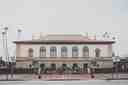
Open eigen pagina →To spot the Pasadena Convention Center, just look for a grand cream-colored building with an ornate red-tiled roof and blue-arched windows, sitting proudly behind a big set of…Meer lezenToon minder
To spot the Pasadena Convention Center, just look for a grand cream-colored building with an ornate red-tiled roof and blue-arched windows, sitting proudly behind a big set of stairs that's often bustling with people coming and going. So here we are, right in front of the Pasadena Convention Center! If you listen closely, you can practically hear the footsteps of the thousands who have crossed these steps over the years. This spot isn’t just one building-it’s a trio, but the star of the show is the Pasadena Civic Auditorium standing before you, bold and elegant since 1931. Imagine those early days when fans in dapper suits and glitzy dresses lined up for an evening out, hoping to glimpse a star. This auditorium has seen more drama, glitz, and tension than a season finale of your favorite reality show! From the 1970s to the late ’90s, it was the glamorous home of the Emmy Awards-yes, the very place where TV legends nervously clutched their envelopes under these grand arches and where camera flashes sparkled like stardust. Later, Hollywood hopefuls belted their hearts out here in the “Hollywood Week” episodes of the first, third, and tenth seasons of American Idol. Honestly, it’s almost impossible not to hum a tune while standing here. But don’t go thinking this old beauty is just for the famous! The auditorium has also been tested by the wild energy of “America’s Got Talent” audition rounds and the unforgettable moment in 1983 when Michael Jackson moonwalked across this very stage for the first time-an auditorium-shaking hush, then a roar that burst out the doors and might still echo if you listen carefully. And if you love a good bit of music history, imagine Louis Armstrong right here blasting his trumpet in 1951 for his live album “Satchmo at Pasadena.” Layered on top of all this, you’ve got the annual NAACP Image Awards, the glitz of the Miss Teen USA pageant, and countless musical performances and graduations. Every late spring, after Memorial Day, proud parents and nervous students flood these steps for local high school graduations-imagine the shouts, laughter, and camera flashes mixing with the scent of fresh flowers and new beginnings. Now, let’s widen the lens a little-right next door is the Exhibition Building, with over 31,000 square feet of space for everything from CatCon (yes, that’s a convention dedicated entirely to cats!) to giant tech expos and wild trade shows. Still not enough room? There’s a sprawling annex, and around the corner, the Conference Building has 20 meeting rooms-so if you suddenly think of a business idea mid-tour, you’re all set! So think of the Pasadena Convention Center not just as a set of buildings, but as a living, breathing storybook-its halls echo with music, laughter, nerve-wracking auditions, and standing ovations. Who knows-maybe you’ll feel a bit of that showbiz magic in the air as you walk on to your next stop!
Open eigen pagina →Right ahead, you'll spot Don Carlos Court-a charming cluster of seven small, white stucco cottages with red-tiled roofs, all cozied up around a neat courtyard walkway with trimmed…Meer lezenToon minder
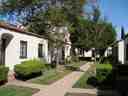
Right ahead, you'll spot Don Carlos Court-a charming cluster of seven small, white stucco cottages with red-tiled roofs, all cozied up around a neat courtyard walkway with trimmed hedges and a splash of sunshine. Now, take a step closer and imagine it’s 1927. The air is buzzing with the excitement of a growing Pasadena, and a crafty contractor named Clarence Hudson Burrell is laying the last tile on these adorable Spanish Colonial homes. Picture neighbors chatting by that quirky little birdbath-before the days of smartphones, the court itself was the neighborhood social network! These seven cottages aren’t just houses; they’re like a tiny village, nestled side-by-side, where everyone probably knew everyone’s business within a week…or an hour, if Mrs. Hernandez was out watering her garden. Feel the sun warming those gleaming stucco walls, smell the fresh grass, and listen for the lilting sound of birds dipping into the courtyard fountain. Each home was designed to invite lingering conversations and shared laughter, with front doors just steps away from one another. Legend has it, anyone who lost their keys could just shout across the courtyard for help-and the echoes are rumored to still carry secrets from almost a hundred years ago! These cozy homes-woven together by laughter and whispered stories-were so special, they landed a spot on the National Register of Historic Places in 1983. If you hear a faint giggle drifting by, don’t be scared…that’s just the spirit of community, alive and well after all these years!
Open eigen pagina →To spot the Evanston Inn, just look ahead for a large, white wooden building with a wraparound porch, tall windows, and lots of charming details-it's tucked right behind the big…Meer lezenToon minder
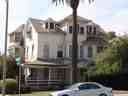
To spot the Evanston Inn, just look ahead for a large, white wooden building with a wraparound porch, tall windows, and lots of charming details-it's tucked right behind the big palm tree at the Evanston street sign. Now, step closer and imagine you’re back in 1897. This inn, standing proudly at 395 S Marengo Ave, was Pasadena’s answer to the “just right” amount of luxury-think of it as the Goldilocks of hotels. While the grand hotels were dazzling with gilded chandeliers, this place was cozy, filled with laughter, the smell of baking bread, and maybe a squeaky floorboard or two. The inn was built in styles called Queen Anne and Colonial Revival, so you’d see fancy shingling and wide porches just perfect for telling ghost stories at night. As more and more visitors followed the California dream, wings sprouted in 1898 and 1905, like the building itself was stretching to greet the newcomers. But here’s a twist-while others vanished or were replaced with concrete giants, the Evanston Inn is now the last wood-frame hotel left in Pasadena! After some tough years, it was given a new life in 2017 as Evanston Court, a housing development that made the preservation crowd break into dance. Honored with awards, this old inn still whispers stories from the veranda. If you listen closely, maybe you'll catch an echo of a bellhop running late, or the giggle of someone sneaking out past curfew. Quite the survivor, don’t you think?
Open eigen pagina →To spot Bryan Court, look for a cluster of cozy, cream-colored bungalows with green trim gathered around a lush courtyard, nestled just behind neat hedges and under shady trees…Meer lezenToon minder
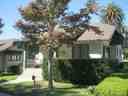
To spot Bryan Court, look for a cluster of cozy, cream-colored bungalows with green trim gathered around a lush courtyard, nestled just behind neat hedges and under shady trees right here on South Marengo Avenue. Now take a deep breath and imagine you’re stepping back in time to 1916, when Pasadena was a place of palm trees, horse-drawn wagons, and just the faintest buzz of modern inventions sneaking in. Picture D. M. Renton, the original builder, pacing the dusty plot here with a vision: not just houses, but a tiny village of seven charming, storybook cottages. The air smells of fresh stucco and cut wood, hammers ring out, and new porches appear ready for a neighborly wave. Each home wraps around the green heart of the court-where you’d half expect to see neighbors sipping lemonade, trading garden tips, or maybe gossiping about whose cat escaped onto the jerkinhead roofs last night! Renton wasn't just thinking practical-he wanted these little bungalows to feel like English cottages, transplanted straight from the countryside. Their gentle roofs and welcoming porches seem to whisper, "Stay a while." Over a hundred years later, the whispers of friendly gatherings and laughter still seem to linger in the courtyard at Bryan Court-a proud spot on the National Register of Historic Places, a secret Pasadena keeps close. Take another look and see if you can feel the community spirit still living here!
Open eigen pagina →To spot the Home Laundry, look for a two-story brick building with gabled roofs, cream-colored timber details, and a row of red awnings right in front of you on Arroyo Parkway-it…Meer lezenToon minder
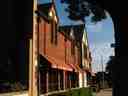
To spot the Home Laundry, look for a two-story brick building with gabled roofs, cream-colored timber details, and a row of red awnings right in front of you on Arroyo Parkway-it stands out with its Tudor-style flair. Welcome to the Home Laundry! Believe it or not, what you’re standing in front of isn’t a cozy old English cottage, but a ground-breaking laundry business from the roaring 1920s. Imagine Pasadena almost a century ago: horse-drawn carts clattering down the street, people in straw hats carrying bundles of clothes, and right here, the shiny new Home Laundry building opening its doors. Now, here’s the twist: the men behind this business weren’t ordinary soap-slingers-they were local big shots, with Daniel Linnard so famous he could fold a towel and have it make headlines nationwide, at least in hotel circles! The building itself feels almost magical, doesn’t it? See those intricate half-timbered lines, sturdy brickwork, and those fairytale gabled dormers peeking above? That’s the work of Marston, Van Pelt & Maybury, some of Pasadena’s favorite architects. And get this-the clever folks here made sure the offices stayed sharp and clean in the front, while all the whirring, steaming laundry action happened in back. If you listen closely, maybe you’ll hear the ghostly swish of suds and the clang of irons from a time when Pasadena’s finest linens came through these doors. Not only is this a one-of-a-kind Tudor Revival business building in the whole city, but since 1987, it’s been protected as a slice of Pasadena’s most spotless history. Now, who knew laundry could be so legendary?
Open eigen pagina →Look across Raymond Avenue for a huge, white, blocky building with tall, vertical windows and a sign that says “Royal Laundry” above the main doorway-it's hard to miss with all…Meer lezenToon minder
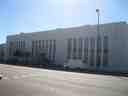
Look across Raymond Avenue for a huge, white, blocky building with tall, vertical windows and a sign that says “Royal Laundry” above the main doorway-it's hard to miss with all those soaring lines! You’re standing in front of what was once Pasadena’s most sparkling hotspot-well, for dirty shirts anyway! Imagine back in 1927, trucks rumbling up to deliver towering piles of laundry to this brand-new plant, designed by legendary architect Gordon Kaufmann. This place isn’t just big-it’s almost 72,500 square feet, like a castle for socks and shirts! Kaufmann designed it with a Spanish Colonial Revival style, but here’s the twist: the clean, modern touches you see? Those were the first signs he was moving into the modern era, shifting styles like a chameleon in a tumble dryer. Over time, the Royal Laundry Complex grew right along with the city. In 1930, they slapped on a snazzy, moderne annex with a tall pylon, and in 1939-drumroll, please-drive-up service! Imagine the honking horns as families swung by in their shiny new cars, kids waving socks like victory flags. By 1955, the building wore a glowing overhead sign, lighting up Pasadena with promises of fresh laundry. But as time marched on and laundry needs changed, the machines wound down. The complex was silent for a while-a ghostly, echoing space where you could almost hear the clatter of long-gone washers. Then, this industrial beauty got a second act! It was reborn as a headquarters for the Disney Store, so you might picture Mickey Mouse dashing through these halls (hopefully not losing his gloves in the spin cycle). In 2019, Bluebeam Inc. moved in, and the building buzzes with digital energy instead of soap suds. Don’t forget to look closely at those windowed walls-once filled with steam and sunlight-now they stand as silent witnesses to nearly a century of Pasadena’s changing tides. So next time you do laundry, remember: it might not be royal, but at least it's not 72,500 square feet!
Open eigen pagina →Look up! You’ll see a bold, bright orange sign with giant white letters spelling out “PUBLIC STORAGE CO.” perched high on the rooftop-it’s hard to miss above the building,…Meer lezenToon minder
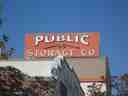
Look up! You’ll see a bold, bright orange sign with giant white letters spelling out “PUBLIC STORAGE CO.” perched high on the rooftop-it’s hard to miss above the building, towering against the sky. Now, let me whisk you back to 1926. Picture Fair Oaks Avenue bustling with travelers on the legendary Route 66-honk if you love history! Sixty feet above their heads, this very sign blazed a neon path, shouting out “Bekins Storage Co.” It was more than a rooftop ornament; it was a glowing landmark calling out to motorists, “Hey! Safe storage inside!” In its early days, the sign glowed with new neon magic in 1929, like Pasadena’s own slice of Times Square. Back then, rooftop signs were as common as a Model T Ford sputtering down Route 66. But over the years, Pasadena cracked down on giant rooftop signs. As others disappeared, this one stood strong-like it had a storage contract with destiny! Even when the name changed (from Bekins to A. American Storage, and now Public Storage), this sign kept its place in the skyline, watching decades roll by like travel trailers on an old highway. It’s the last big pre-World War II rooftop sign in the city, now protected by law-and listed on the National Register of Historic Places since 1997. Just imagine, if this sign could talk, it’d have enough stories to fill a hundred storage lockers.
Open eigen pagina →


Veelgestelde vragen
Hoe begin ik de tour?
Download na aankoop de AudaTours-app en voer je inwisselcode in. De tour is direct klaar om te starten – tik gewoon op afspelen en volg de GPS-geleide route.
Heb ik internet nodig tijdens de tour?
Nee! Download de tour voordat je begint en geniet er volledig offline van. Alleen de chatfunctie vereist internet. We raden aan om te downloaden via wifi om mobiele data te besparen.
Is dit een groepsrondleiding met gids?
Nee - dit is een audiotour met eigen gids. Je verkent zelfstandig op je eigen tempo, met audiovertelling via je telefoon. Geen tourguide, geen groep, geen schema.
Hoe lang duurt de tour?
De meeste tours duren 60-90 minuten, maar jij bepaalt het tempo volledig. Pauzeer, sla stops over of neem pauzes wanneer je wilt.
Wat als ik de tour vandaag niet kan afmaken?
Geen probleem! Tours hebben levenslange toegang. Pauzeer en hervat wanneer je wilt – morgen, volgende week of volgend jaar. Je voortgang wordt opgeslagen.
Welke talen zijn beschikbaar?
Alle tours zijn beschikbaar in meer dan 50 talen. Selecteer je voorkeurstaal bij het inwisselen van je code. Let op: de taal kan niet worden gewijzigd na het genereren van de tour.
Waar vind ik de tour na aankoop?
Download de gratis AudaTours-app uit de App Store of Google Play. Voer je inwisselcode in (verzonden per e-mail) en de tour verschijnt in je bibliotheek, klaar om te downloaden en te starten.
Als je niet tevreden bent met de tour, betalen we je aankoop terug. Neem contact met ons op via [email protected]
Veilig afrekenen met 


