Wolverhampton Audiotour: Echo's door de Tijd
Een stad die ooit werd geschud door revolutie en heropleving, verbergt haar geheimen in het volle zicht. Wolverhampton pulseert onder het alledaagse – waar legendes echoën binnen stadionmuren, gedurfde visies hangen in galerijzalen, en oude stenen fluisteringen van koningen en samenzweerders herinneren. Ontgrendel deze verhalen met een zelfgeleide audiotour door het levende hart van Wolverhampton. Ga verder dan de oppervlakte en ontdek felle rivaliteiten, stille schandalen en inspiraties die zelfs de lokale bevolking misschien mist. Welk schimmig middernachtelijk pact veranderde het lot van Molineux voorgoed? Welk mysterieus kunstwerk in de galerij heeft meer debat dan genot teweeggebracht? En waarom draagt een merkwaardig specifieke kerkbank in St Peter’s nog steeds sporen van een eeuwenoude commotie? Deze reis voert je door gotische bogen, onder oogverblindende doeken, en om hoeken die geladen zijn met de energie van dramatische wendingen. Het vertrouwde valt weg terwijl geheime geschiedenissen bij elke stap tot leven komen. Durf te beginnen. Wolverhampton is klaar om je te laten zien wat er schuilgaat onder het gebrul.
Tourvoorbeeld
Over deze tour
- scheduleDuur 40–60 minsGa op je eigen tempo
- straighten4.2 km wandelrouteVolg het geleide pad
- location_onLocatieWolverhampton, Verenigd Koninkrijk
- wifi_offWerkt offlineEén keer downloaden, overal gebruiken
- all_inclusiveLevenslange toegangOp elk moment opnieuw afspelen, voor altijd
- location_onStart bij Kunstgalerie van Wolverhampton
Stops op deze tour
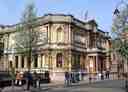
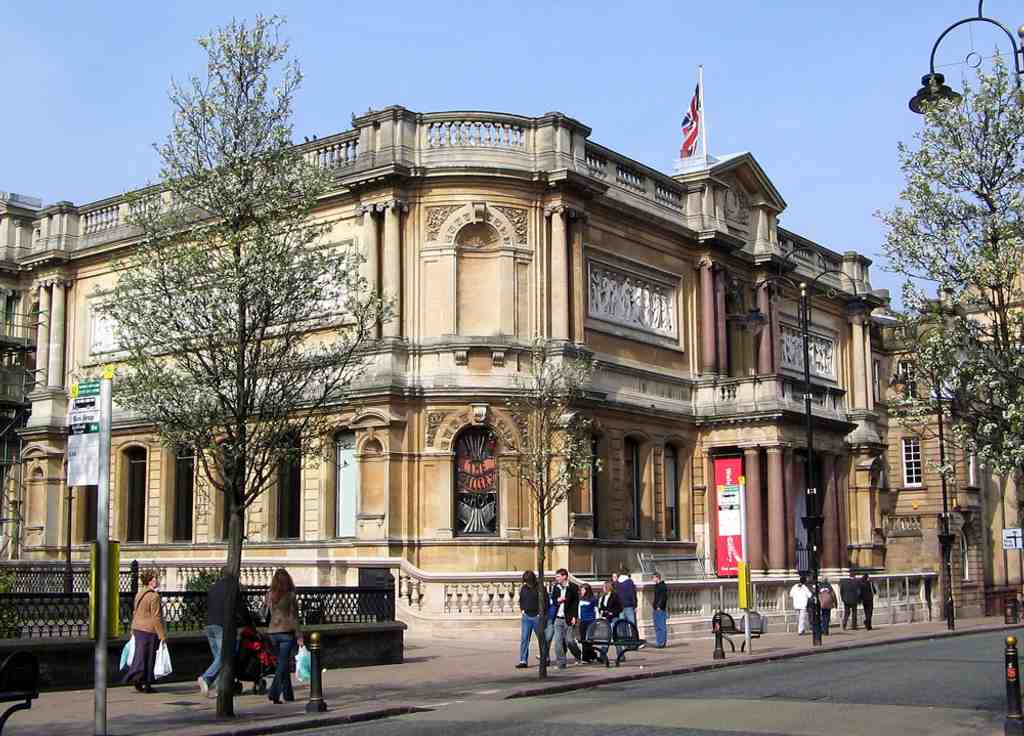
To spot Wolverhampton Art Gallery, look for a grand two-storey stone building on the corner, with impressive red granite columns marking the entrance and a carved frieze of…Meer lezenToon minder
To spot Wolverhampton Art Gallery, look for a grand two-storey stone building on the corner, with impressive red granite columns marking the entrance and a carved frieze of figures just above your head. Now that you’re here, pause and imagine the street in 1884-Victorians in top hats and big skirts bustling about as Wolverhampton’s grand new art gallery opens its doors to the world. This building, designed by Julius Chatwin and made from Bath stone, was funded by a local contractor named Philip Horsman, who wasn’t just great at laying bricks-he knew how to give a city something to be proud of! <sfx>soft sound of horse-drawn carriages passing</sfx> What really stands out here-apart from the glittering Bath stone and those six striking red granite columns-is the sculptural frieze right on the front, where you’ll spot sixteen characters lining up above the entrance: sculptors, painters, architects, potters, glassblowers, and more, all frozen in dramatic, creative poses. Makes you want to dust off your paintbrushes, doesn’t it? But this isn’t just any old building. It’s a Grade II* listed beauty, making it officially fancy and historically special. The gallery had a makeover in 2006, turning part of the Victorian grandeur into sleek new spaces for even more art. The true treasure, though, is what’s waiting for you inside: a collection of roughly 12,000 artefacts! From oil paintings to ceramics, toys to swords, and even a mighty impressive pop art display-you could say they’ve got everything from old masters to Andy Warhol. One story that’s bound to make you smile features Abraham Janssens’ giant painting, “Peace and Plenty Binding the Arrows of War.” Originally painted in 1614 for the Antwerp Guild of Old Crossbowmen, it wandered through Europe for centuries before ending up with a Mrs. Thornley of Birmingham, who sold it to the gallery in 1885. Today, it’s the only painting by Janssens in any public collection in Britain. Not bad for a gallery in Wolverhampton-take that, London! The gallery’s walls hold paintings from the likes of Gerard Dou, Jan van Huysum, and Frank Brangwyn, while gifts from local heroes-like Sidney Cartwright the toy king, Philip Horsman himself, and hardware tycoon Paul Lutz-helped turn this place into a jewel box of Victorian and Georgian art. There’s a special room just for Georgian splendour, where you’ll find portraits and shimmering enamels from centuries ago. And walk a little further, you’ll enter the Victorian rooms, filled with landscapes, mysterious narrative scenes, and examples of pottery and japanned ware that made Wolverhampton famous in the 1800s. Now, here’s a fun one: in the 1920s, the council snatched up a collection of 114 historic Japanese tsuba-sword guards-from a local auction for just £350, thanks to one determined councilor with a nose for treasure. It’s the sort of story that makes you want to peek into every display, just in case you spot a secret samurai relic. Pop art fans will be thrilled here, too. Every six months or so, they mix things up-so you might find Andy Warhol noodles with Peter Blake, Roy Lichtenstein, and David Hockney, all in one riotous room of colour and style. And there’s even a gallery dedicated to Northern Ireland, with thought-provoking artworks that capture the complex history and future of the region, bringing in voices and visions from artists like Willie Doherty and Siobhan Hapaska. <sfx>soft footsteps echoing in gallery halls</sfx> Today, Wolverhampton Art Gallery isn’t just a museum-it’s alive with interactive displays, hands-on education, and even Braille guides for the visually impaired. The Makers Dozen Studios next door hum with creativity, linking the old school of art to a new generation of West Midlands makers and dreamers. So, standing here among the chattering crowds and the busy city, you’re part of a long tradition-a place built and rebuilt, filled with surprises and stories, still growing after nearly a century and a half. Not bad for the first stop on our tour, eh? Now, ready to explore what comes next? If you're keen on discovering more about the the building, the collection or the permanent displays, head down to the chat section and engage with me.
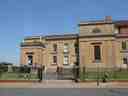
Open eigen pagina →To spot the Arena Theatre, look for a solid, three-story red-brick building with rows of big white-paned windows and white banners hanging down its front, just across the street…Meer lezenToon minder
To spot the Arena Theatre, look for a solid, three-story red-brick building with rows of big white-paned windows and white banners hanging down its front, just across the street on Wulfruna Street. Alright, let’s set the scene for a bit of Wolverhampton drama! Imagine it’s 1967: flower power is in full swing, and in Wolverhampton, a man called Philip Tilstone has a big, bold dream. He wants more than just stuffy lectures at the college-he wants music, drama and the thrill of live performance, not just for students, but for the entire city. With the help of his musical colleague Dr. Percy Young, they transform the idea of theatre for students into a genuine stage for all sorts of performers. Years roll by, and the Arena Theatre becomes an anchor for creativity: sometimes a stage for local students, sometimes a home for touring professionals. Kids from neighboring schools, local drama troupes, experimental dancers-everyone shuffles nervously backstage, ready to leap into the bright lights. The place hosts legends of the British theatre scene and world-famous groups: from the Royal Shakespeare Company booming through Shakespeare’s lines to wild shows from Kneehigh Theatre and even colorful dance companies from as far away as Johannesburg. But nothing stays perfect forever, does it? By the late 1990s, things are a bit cramped. The old theatre is bursting at the seams! So, the University and the National Lottery roll up their sleeves, throw two million pounds at the problem, and-after months of hammering and drilling-out pops a sparkling new Arena Theatre in 1999, complete with the Tilstone Studio. Today, the Arena Theatre dazzles Wolverhampton with more than 200 shows a year-music, art, drama, and maybe the occasional off-key kazoo solo if you’re lucky. So, as you stand here, know you’re on the threshold of a place that’s always kept the city buzzing with ideas, applause and just a bit of showbiz magic.
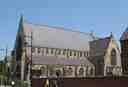
Open eigen pagina →Right ahead, you’ll spot a mighty, ancient church built in warm brown stone, its tall, ornate tower rising above the trees, with sharp spires and a big, round clock facing the…Meer lezenToon minder
Right ahead, you’ll spot a mighty, ancient church built in warm brown stone, its tall, ornate tower rising above the trees, with sharp spires and a big, round clock facing the square-so, just follow the sound of footsteps up toward the high steps and gaze above the evergreens to find St Peter’s Collegiate Church. Now, let’s take you straight into the heart of Wolverhampton’s wild, tangled story-right where you’re standing. Imagine it: a thousand years ago, this spot wasn’t just the centre of town; it was the gravity holding the whole community together. In fact, the name ‘Wolverhampton’ itself comes from Lady Wulfrun, who granted land here over a millennium ago. Legend has it the charter for her grand minster was found hidden “in the ruins of a wall”-making the church’s backstory feel almost like a medieval episode of ‘Antiques Roadshow,’ with an air of mystery and a whiff of old parchment. Back then, church wasn’t just about Sunday hymns; it was big business and politics! For centuries, St Peter’s was what you’d call a ‘royal peculiar’-answering straight to the king and not even the Archbishop of Canterbury could say otherwise. Imagine: the town itself, with much of its land and power in the church’s hands, run by a group of-let’s say-quite ambitious priests, often more interested in power than prayer. The college here saw its fair share of drama: absentee clergy, corruption, and power struggles so intense the whole system was shut down and reformed not once, but four times! It was dissolved, restored, and dissolved again, caught in a constant tug-of-war between the monarchy and ambitious churchmen. There’s a touch of comedy in those early power games. Peter of Blois, the first dean we know by name, was more a globe-trotting diplomat-poet than a parish priest-off in the courts of Sicily or arguing at the Pope’s palace while back home, Wolverhampton’s canons were apparently marrying each other’s sisters and hoarding land. Peter got so fed up with the corruption that he wrote to the Pope proposing to turn the whole mess into a strict monastery-though that wild idea lasted all of, oh, about 18 months before someone in London changed their mind. But through squabbles and scandals, St Peter’s kept growing, taking on new forms and faces. In the 13th century, Dean Giles de Erdington was more lawyer than vicar-forging deals, defending land, and even, at one point, suing a chaplain over a swampy marsh that stank up the parish. The market scene would have been busy right where you’re standing, with sheep bleating and market traders crying out under the shadow of the church steps. Even foreign intrigue found a home here: in the late 1200s, the dean was Theodosius de Camilla, an Italian with ties to the Pope! He was rarely spotted in Wolverhampton, leaving his cousin Andrew to manage everything, which mostly meant squeezing tenants for every last pig or penny. It wasn’t all bureaucratic tomfoolery, though-there were moments of real civic pride and community. When the town blossomed as a wool trading centre, St Peter’s prospered too, the source of music, trade, and, let’s be honest, the occasional town-wide argument over candle wax. Visually, the church you see today echoes all these eras. Its bold, Perpendicular style dates to the 1400s-handsome, upright, and a bit imposing, as if daring anyone to question its place at the town centre. It’s not a cathedral, but its choral music soars every week, and inside, the famous Father Willis organ is so important, locals launched a campaign to raise £300,000 just for its restoration. The repairs began in 2018, proving that St Peter’s is still a place where people unite over shared history-and maybe, just maybe, one more debate over who’s in charge. So look up at that clock, imagine the layers of laughter, plotting, singing, and prayer that have floated out these doors for a thousand years…and know you stand where Wolverhampton truly began. And remember: around here, you never know what story is hiding behind those ancient stones or between the pages of a lost charter. Seeking more information about the architecture, bells or the music? Ask away in the chat section and I'll fill you in.
Open eigen pagina →
Toon 10 stops meerToon minder stopsexpand_moreexpand_less
You’ll spot Molineux Stadium right in front of you-just look for the bold golden seats spelling out 'Wolves' inside a towering, modern stadium with sharp stands and flags waving…Meer lezenToon minder
You’ll spot Molineux Stadium right in front of you-just look for the bold golden seats spelling out 'Wolves' inside a towering, modern stadium with sharp stands and flags waving high on the roof. Alright, welcome to the legendary Molineux Stadium! Imagine the roar of the crowd rumbling through the air, the bright gold seating shimmering in the afternoon sun, and the sense of anticipation electrifying the whole street, even before you step inside. This is the heart and soul of Wolverhampton football-or as the locals lovingly call them, the Wolves. But let’s wind back the clock. In 1744, this land was bought by a chap called Benjamin Molineux. Little did he know back then, while sipping tea in his swanky mansion, he was planting the seeds for a future football fortress. Fast forward almost 150 years, his estate transformed into the ‘Molineux Grounds’, featured everything you could imagine-an ice rink, cycling track, a boating lake. But, of course, it was that rectangle of grass for football that ended up stealing the show. By 1889, the Wolves, always up for an upgrade, made this their home, breaking from Dudley Road for something a little fancier. The very first Football League match here? Wolves beat Notts County 2-0 in front of 4,000 fans who probably spent most of their time trying to get the mud off their shoes. In those early decades, Molineux was a true working-class theatre, eventually expanding with grandstands, tall floodlights, and a capacity that could rival a small city. One of the most unforgettable moments came in 1939, a record crowd-61,315 people, all packed in, shoulder to shoulder-watched Wolves play Liverpool. Now, this isn’t just a local stomping ground; Molineux hosted England international fixtures and some of Europe’s earliest club matches under dazzling floodlights. Those lights, by the way, cost a small fortune, but the spectacle they created drew fans from far and wide. BBC even showed off the action on the telly before televisions became cool. But it wasn’t all easy wins and glittering nights. There were tough times too-by the late 20th century, the stadium started to look a little rough around the edges. The stands were showing their age, attendances dropped, and the club was drowning in debt. Legend has it that at one point, the team and the stadium nearly disappeared faster than a pie at halftime. The city council and a handful of local heroes stepped in, though, saving Molineux from falling into ruin. Talk about a dramatic rescue-who needs Netflix when you’ve got real-life football cliffhangers? Things took a new turn in the 1990s. Sir Jack Hayward, a local legend himself, invested millions to modernise Molineux. Curtain up: no more standing terraces (thanks Taylor Report!), but four shiny all-seater grandstands. The Stan Cullis, the Billy Wright, the Sir Jack Hayward Stand, and the Steve Bull Stand, all ready for more drama, more goals, and probably a few more cases of nerves for the managers. In recent times, plans have come and gone for even grander expansions-dreams of reaching 50,000 seats someday, perhaps. Mixed in with those football fairytales, Molineux even moonlights as a rock venue; Bon Jovi wowed 34,000 here in 2003. Not bad for a place once built on pleasure gardens. So, as you stand here with the golden Wolves all around you, you’re looking at a living, breathing monument-one that’s seen everything from humble muddy matches to thundering European nights. Maybe you’ll hear the thud of a ball, the thunder of a goal, or just the steady heartbeat of Wolverhampton’s greatest pride. One thing’s for certain: from Benjamin Molineux’s estate to today’s football extravaganzas, this spot has never stopped being the main event in town. Wondering about the stadium, current redevelopment or the average attendances? Feel free to discuss it further in the chat section below.
Open eigen pagina →To spot the Molineux Hotel, look for a grand, red-brick mansion with tall sash windows and a fancy turret sitting proudly above the street, just beyond the line of trees and…Meer lezenToon minder
To spot the Molineux Hotel, look for a grand, red-brick mansion with tall sash windows and a fancy turret sitting proudly above the street, just beyond the line of trees and parked cars. Imagine yourself standing here in the 18th century, when this spot was the very edge of Wolverhampton, and a wealthy ironfounder named Benjamin Molineux (who liked to mix up the spelling of his name just to keep people guessing) decided he needed something a little more impressive than your average house. He built this mansion, complete with three storeys, five grand bays, and - later on - a Georgian wing so fancy it might make even a duke jealous. As the years passed, the Molineux family filled the house with laughter, secrets, and, let’s be honest, probably a lot of tea. By the 19th century, the house had its own belfry turret popping up like a Victorian hat. But things took a turn: the family moved on, the grounds turned into a pleasure park (try to imagine the sounds of carousels and picnics wafting through the air), and eventually it became a bustling hotel. After the party ended in 1979 and the building was left to sleep for years-haunted, perhaps, by old guests-fire nearly claimed it for good! Thanks to a heroic rescue and some English Heritage magic, it now houses the city archives, quietly storing the stories of Wolverhampton behind its red-brick face. So if you hear whispers of the past, don’t worry-it’s just the Molineux Hotel, remembering its glory days!
Open eigen pagina →To spot St Peter and St Paul's Church, look for a grand, sand-coloured building with tall rectangular windows, classical columns, and black iron gates right along the pavement on…Meer lezenToon minder
To spot St Peter and St Paul's Church, look for a grand, sand-coloured building with tall rectangular windows, classical columns, and black iron gates right along the pavement on Paternoster Row. Welcome! Take a deep breath and imagine the stories swirling around this place-because St Peter and St Paul’s isn’t just a church, it’s more like a time capsule that’s stubbornly survived centuries of Wolverhampton drama. Picture it’s the late 1600s-England is suspicious of Catholics, and the Giffard family, who owned the land here, are welcoming priests, monks, and secret worshippers through the back door, risking their necks for their faith. You might hear the whisper of skirts as sisters sweep the halls, or the hurried footsteps of a priest hiding from trouble. If you think that’s tense, just wait! After the Gunpowder Plot, things got even more dangerous. Two Catholics were actually executed in what’s now Queen Square. But the Giffards weren’t giving up. Throughout bloody riots and wild politics-from Titus Oates’ notorious lies and the execution of priests, all the way to the Glorious Revolution-the Giffard House’s chapel was a secret spiritual lifeline for Wolverhampton’s Catholics. Even when angry mobs stormed in and burned the priests’ vestments, the faith was kept alive here. By now, Wolverhampton’s nickname was “Little Rome”-not exactly a compliment, but definitely a sign that Catholics were standing strong. And those legendary family names-Giffard, Leveson, Whitgreave-sound like something from a novel, right? They stuck together, building houses up and down the street, secretly celebrating Mass, and even using a Recusant Chalice from the English Civil War that still makes its appearance in Mass today. Turn the clock forward to the 1700s and you’ll see a new Giffard House rise on this very spot, with Bishop John Milner, a major Catholic figure, calling it home. When he passed away, they buried him first in the orchard-now somewhere under the Ring Road, which just goes to show, things didn’t always go as planned in this city. The church building itself finally took shape in the 1820s, designed in the Greek Revival style by Joseph Ireland, and opened in triumph-though, at first, virtually hidden behind surrounding houses and with only one burglar-proof door. Someone once tried to rob the place, but as a local put it, “cracking into that place was like cracking into Newgate Prison,” with strong bars and practically no windows. Good security-bad for burglars! Fast forward to the 20th century and you find the church embroiled in another battle, this time against the bulldozers of “progress.” Twice, Wolverhampton City Council tried to knock it down: first in the 1960s to make way for a new Civic Centre, and again for the Ring Road, which cut off the parish from its own community. Imagine thirty years of threats, bodies being moved from the churchyard, dry rot closing the building, and Sunday Masses happening in a school hall with everyone hoping the authorities might blink. But the story ends with a twist worthy of the best British dramas. A defiant band of parishioners, local politicians, and history lovers stood firm-and the Secretary of State eventually saved both the church and Giffard House from demolition. In 2006, after a massive restoration led by a merry crew of craftsmen and some unexpected sums left in wills, the doors opened once more. Today, St Peter and St Paul is not only a Grade II* listed building and a proud Roman Catholic hub-it’s a symbol of Wolverhampton’s stubborn spirit. Listen, and you might almost catch the echo of old voices in these walls, keeping faith across centuries. Shall we wander closer? On to the next stop when you’re ready-after all, you never know what history’s hiding behind the next door! Yearning to grasp further insights on the threat of demolition (1962-1982), refurbishment (2006) or the parish? Dive into the chat section below and ask away.
Open eigen pagina →Right in front of you is the Old Town Hall: a grand, creamy sandstone building with arched windows, a central entrance topped by columns, and a bold clock sitting high above,…Meer lezenToon minder
Right in front of you is the Old Town Hall: a grand, creamy sandstone building with arched windows, a central entrance topped by columns, and a bold clock sitting high above, almost daring you to lose track of time. Now, let’s paint a picture with a splash of history and a pinch of drama. Imagine North Street in the late 1860s, a place bustling with change and thick with the smell of progress. The Red Lion Inn once stood here, likely serving up questionable ale and stories taller than the clock tower you see now, before it was swept aside to make room for this glorious new Town Hall. Local hero Henry Hartley Fowler, Wolverhampton’s mayor, decided the old town hall just wasn’t cutting it-after all, who wants to hold a council meeting surrounded by squeaky floorboards and the lingering smell of old pies? In 1871, the doors of this Renaissance beauty swung open, its sandstone walls sparkling in the autumn sun. Ernest Bates, the architect behind this masterpiece, wanted everyone in town to know this place meant business-hence the impressive 15-bay frontage, grand windows like eyes watching over the city, and a stone balcony from where the mayor could survey their realm or wave regally at whoever happened to be passing. Step inside (well, in your mind, anyway), and you’d find a dramatic domed hall leading to rooms filled with courtroom tensions, council debates, and, for a touch of suspense, 34 dank cells in the basement just waiting for wrongdoers. In the grand days of municipal pride, council meetings buzzed with town plans and politics, while law and order kept the underbelly in line-sometimes literally, in those cells. And let’s not forget celebrity visits! The Queen Mother herself graced these steps in 1969, bringing a little royal sunshine to an already sparkling address. Today, even as its official functions have come and gone, the Old Town Hall stands strong as the home of the Black Country Magistrates Court. Oh, and somewhere inside waits George Benjamin Thorneycroft-the first mayor-cast in formidable bronze, forever pretending he’s keeping an eye on things, just in case you get any ideas!
Open eigen pagina →Take a moment to imagine the electric buzz of Wolverhampton, the crackle of anticipation in the air, and the hum of radios tuning in all across the city. That’s the magic 107.7…Meer lezenToon minder
Take a moment to imagine the electric buzz of Wolverhampton, the crackle of anticipation in the air, and the hum of radios tuning in all across the city. That’s the magic 107.7 The Wolf once brought right from this very spot! The Wolf wasn’t just a radio station; it was the city’s pulse, serving up the latest tunes, local gossip, and the occasional unforgettable on-air blunder. If you’d stood here back in the day, you might’ve overheard a DJ spinning tracks, phones ringing off the hook for contests, and someone in the corner trying not to spill coffee on the equipment. Owned over time by Forever Broadcasting, The Wireless Group, and then UTV, The Wolf had more costume changes than a rock star! But all good stories have a twist. In 2012, UTV Radio decided to merge The Wolf with two other stations, The Wyre and The Severn. Picture the newsroom: whispers of change, a dash of excitement, and perhaps a little howl of nostalgia. At midday, March 26th, 2012, The Wolf hung up its headphones and became Signal 107. The name changed, but the energy lived on. Even now, you can almost hear the echoes of Wolverhampton’s favorite radio days-just don’t be surprised if your feet start tapping along!
Open eigen pagina →Directly ahead of you, framed by leafy trees, is a grand stone church in classic Neo-Classical style, with a soaring spire that seems to pierce the sky-just look up beyond the red…Meer lezenToon minder
Directly ahead of you, framed by leafy trees, is a grand stone church in classic Neo-Classical style, with a soaring spire that seems to pierce the sky-just look up beyond the red brick wall and you can’t miss St John’s Church standing tall and elegant. Alright, lean in, because you’re about to step into the swirling drama of Wolverhampton’s past-right on this very spot! Imagine the year is somewhere around 1760. You’re at the bustling, slightly muddy edge of an industrial town, where the air is thick with excitement and the clang of new machines. The people are multiplying faster than pigeons at a summer picnic, and religion is a hot topic-Methodists are popping up everywhere, and Catholics are getting sneakily creative, disguising their chapels as houses. The town is simmering with energy and more than a pinch of rivalry. St John’s Church, the impressive building before you, rose out of all this chaos thanks to a mix of pressure, persistence, and maybe just a little bit of good old-fashioned stubbornness. Designed-no one knows quite for sure whether it was William Baker or Roger Eykyn between 1758 and 1776-the church was built because the local Anglican scene was, quite honestly, a bit of a mess. The mighty St Peter’s Collegiate Church had such a unique setup-think of it as the “boss level” of church independence-that it answered to neither bishop nor diocese. Its deans and clergy, often living the good life far away, held on tight to some very profitable monopolies: if you wanted to be buried or sit in a pew, St Peter’s was getting your money! But then along came Dean Peniston Booth. Unlike his absentee colleagues, Booth actually settled in Wolverhampton (gasp!) and started feeling the heat as local folks, eager for change and more places to worship, nudged him for reform. The church scene was so squeezed that even John Wesley, the famous Methodist, came to stir things up in an inn-yard here, calling Wolverhampton a “furious town”-and I bet the horses weren’t even the rowdiest part! To keep up with the growing crowds, Booth eventually gave in, and St John’s was born-by an act of Parliament, no less! As you stand on this square, imagine the church rising on what was the southern edge of town, its fresh stone gleaming, its new spire reaching up as if to say, “Take that, St Peter’s!” It quickly became a spiritual relief valve, drawing people away from St Peter’s overcrowded pews. But Wolverhampton kept on growing, and soon more chapels had to pop up nearby-one of which, St Paul’s, sadly fell victim to progress (and a rather hungry ring road), and another, St George’s, is now a Sainsbury’s. Fancy a loaf of bread with your Sunday service? Now, every good church deserves a little music, don’t you think? St John’s has an organ with a backstory worthy of soap opera status. Built way back in 1684 by Renatus Harris, it was once a contender in the infamous “battle of the organs”-yes, that was a real thing! Imagine master organ builders in a musical duel, each hoping their pipes would carry the day. Though it didn’t win the prize, the organ journeyed to Dublin, then crossed the sea to land right here, filling St John’s with sound from 1762 onward. Over the centuries, it was tweaked and rebuilt, keeping pace with every wave of musical fashion and a colorful lineup of organists, from William Rudge to Hugh Smith, who still holds the keys today. Despite all the rivalry, reforms, and even near extinction when the old church structures dissolved in the 19th century, St John’s survived and became its own parish, standing strong well into modern Wolverhampton. Nowadays, it’s part of the Central Parish-a quiet witness to centuries of change, still gazing out across the square. So as you look up at that spire, you’re not just seeing stone and glass-you’re standing in the middle of a tale packed with intrigue, ambition, music, and more than a few surprises. If only these walls could talk-though, knowing church walls, they’d probably start with a hymn!
Open eigen pagina →In front of you stands a long, stone Gothic Revival church with high pointed arch windows and steep slate roofs, sitting proudly on the corner with crosses topping both…Meer lezenToon minder
In front of you stands a long, stone Gothic Revival church with high pointed arch windows and steep slate roofs, sitting proudly on the corner with crosses topping both gables-just look ahead for the ornate stonework and tall windows! Now, let’s step into the story of St Mary and St John Church, a real Wolverhampton original since 1855. Picture yourself standing in a city where almost everything seemed to be changing, except this majestic church rising up on the corner of Snow Hill and the Ring Road. Its architect, Charles Hansom, was something of a church superstar in his day, designing eye-popping buildings all across England-a bit like the 1800s version of a celebrity interior designer, but with better hats! The church began in 1851 and took four years to complete, using classic Gothic Revival features-think tall, arched windows, dramatic stonework, and a roof so steep you’d need hiking boots to climb it. By 1880, as more people flocked in, Hansom himself returned to extend the building. And just imagine the excitement in 1905 when the church was finally consecrated after 50 years of prayer and planning. The beautiful glass you see in the eastern end? That’s courtesy of Hardman & Co, who were famous for making windows that fill the space with light and color. Fast-forward to 2002, and a new chapter began when the Pauline Fathers took over, not just serving this parish but also tending to two others, keeping the spiritual engine running seven days a week. And here’s a fun touch of television glamour: In 1984, the BBC broadcast Midnight Mass live from this very spot-so if you ever feel a sudden urge to sing "O Little Town of Bethlehem," you’ll be in good company! Now that's what I call a stage with history AND great acoustics!
Open eigen pagina →Right ahead of you, you’ll spot St George’s Church by its tall, pointed spire rising above a square tower, standing with plain, pale stone walls at the busy roadside-just look…Meer lezenToon minder
Right ahead of you, you’ll spot St George’s Church by its tall, pointed spire rising above a square tower, standing with plain, pale stone walls at the busy roadside-just look past the trees and the nearby supermarket entrance. Now, imagine yourself arriving here in 1830, when carriages clattered over cobbles and the air buzzed with excitement for the grand opening of Wolverhampton’s newest church. Designed by James Morgan, St George’s Church was built in the Grecian style-think more ancient Athens than medieval England-with sturdy Doric columns and a powerful, symmetrical shape, all sheathed in Tixall stone that almost shimmers in the sunlight. The Staffordshire Advertiser praised its immense size, no less than 127 feet long and 67 feet wide, able to accommodate a small crowd of 2,038 people. While it might seem plain from the outside, inside it came alive with light streaming through a striking painted window above the altar, courtesy of a Birmingham artist named Henderson. Believe it or not, people flocked in not just for prayer but for the joy of community: the town’s charity school children had their own balcony seating behind the mighty iron pillars, which held up the galleries on every side. With over half the seats offered freely to the city’s poor, it was as much about generosity as grandeur! Fast forward, and the church’s elegant organ-built by F. H. Browne in 1897-would have sent music rippling up through that tall, airy nave. But history plays tricks. In 1978, worship gave way to consumerism and the old church became… a supermarket! That’s right-Shoppers browsed for bread and apples where sermons once soared. So, as you stand here, picture centuries of change swirling around this spire: faith, laughter, organ music, and, eventually, shopping trolleys squeaking over stone floors. Now, that’s what you call an unexpected twist in the church calendar!
Open eigen pagina →Look for a grand, imposing building right across the street, with tall stone columns and a classical triangular roof above the entrance, almost like something you’d expect on an…Meer lezenToon minder
Look for a grand, imposing building right across the street, with tall stone columns and a classical triangular roof above the entrance, almost like something you’d expect on an old coin-or the set of a very serious detective film. If these stones could blush, they’d be reddening with pride at all the stories they’ve collected! Imagine Wolverhampton in the late 1840s-a place on the move, where the Industrial Revolution’s clatter fills the air and medical care is still in its infancy. Rising from land once owned by a duke, this hospital opened its doors as the South Staffordshire Hospital, spreading hope brick by brick. It wasn’t long before its name grew longer too-first Wolverhampton and Staffordshire General Hospital, and finally, after much adding and expanding, it became the Royal Hospital in 1928. But trying to keep up with medical innovations was like playing a never-ending game of hospital hide-and-seek. Every time a new system came along, a new wing popped up-one for in-patients, another for out-patients, then a fever ward, and even an impressive King Edward VII Memorial Wing fit for royalty itself. Busy corridors once bustled with nurses in crisp uniforms-among them the legendary Matron Henrietta Hannath. She’d swoop through the halls, not just checking charts but teaching sick cookery-with a stern look that suggested illness dared not cross her path. Her leadership even stretched to military hospitals during World War I, and she returned here, medals shining. Though the hospital closed its doors in 1997, the story doesn’t end there. Plans for supermarkets fizzled, and today, the building waits for new life. For now, the Royal Hospital stands as a silent witness to Wolverhampton’s changing times-a bit battered about the bricks, but still dignified, like a retired champion boxer who saw it all and lived to tell the tale.
Open eigen pagina →Take a long look at the spot before you - the old Wolverhampton Power Station, once known officially as the Commercial Road Power Station. Hard to picture now, but for over 80…Meer lezenToon minder
Take a long look at the spot before you - the old Wolverhampton Power Station, once known officially as the Commercial Road Power Station. Hard to picture now, but for over 80 years, this place was absolutely buzzing with energy - quite literally! Imagine the smell of coal smoke swirling in the air, a low industrial hum, and the clatter of wagons unloading heaps of fuel right from the Wolverhampton Level canal, which runs just beside us. If you’d walked past on a chilly January night in 1895, you’d have seen the windows glowing for the first time as power surged through town, flipping the switch from gaslight to electric dreams. People in Victorian times must’ve thought they’d landed in the future. The first engines here - Marshall’s horizontal compound engines - were hooked up with thick ropes to enormous dynamos that filled the station’s halls. In 1898, Wolverhampton only needed about 318 kilowatts, which is less than a modern supermarket’s usage! But, by golly, the magic was new. They even installed a special Belliss engine for good measure, making sure the very first 208 customers could toast their bread electrically. Talk about the ultimate power breakfast. The power station just couldn’t sit still. By the early 1900s, trams were about to roll through the city, and that meant bigger boilers were needed. Cue the arrival of mighty Babcock & Wilcox behemoths, chunky enough to make any steam enthusiast drool. By 1908, Wolverhampton was cooking with 6 megawatts - enough oomph to keep the city lit and the trams gliding along smoother than a Saturday night dance. And don’t forget the refuse destructor over on Crown Street - they burned city garbage to drive special generators, proving that even back then, Wolverhampton was thinking “waste not, want not.” As the decades moved on, bigger machines landed. By 1923, there were a whole battery of turbo-alternators, capable of pumping out 22 megawatts of power at 400 volts. For those who wanted their electrons old-school, there was even a direct current generator! (Bet that made Thomas Edison proud.) In 1925, the sleepy DC plant was retired - time to let the new 7.5 megawatt turbo-alternators have their engine party. Come 1942, right in the middle of the Second World War, things really ramped up. Four massive boilers could churn out clouds of steam, feeding a 30-megawatt Brush-Ljungstrom turbo-alternator roaring at full blast. A huge, futuristic-looking Hennibique concrete cooling tower belched steam skywards, carrying away the heat from thousands of homes and factories. Ownership changed hands as fast as the flick of a light switch. First it was the town, then the West Midlands Joint Electricity Authority, and after World War II, nationalisation put it all under the British Electricity Authority. Wolverhampton’s power station didn’t just serve the city - by the 1950s, it supported 106 square miles, helping keep the lights on in villages and towns from Tettenhall to Bridgnorth. At its peak, it supplied a population of almost 200,000 people. That’s a lot of cuppas brewed and telly sets powered. When the coal age finally wound down, the power station switched off for the last time in 1976. No more clouds of smoke, no more mysterious hum in the dark. The buildings you see today have traded turbines for office chairs, as they’ve been given new life as commercial spaces. Still, if you imagine just for a second, you might hear the ghost of the old turbines whining away, refusing to be forgotten. So next time you flick on a light switch at home, spare a thought for this spot - the unlikely heart that powered Wolverhampton’s leap into the electric age. Not bad for a place built on a canal and a dream!
Open eigen pagina →
Veelgestelde vragen
Hoe begin ik de tour?
Download na aankoop de AudaTours-app en voer je inwisselcode in. De tour is direct klaar om te starten – tik gewoon op afspelen en volg de GPS-geleide route.
Heb ik internet nodig tijdens de tour?
Nee! Download de tour voordat je begint en geniet er volledig offline van. Alleen de chatfunctie vereist internet. We raden aan om te downloaden via wifi om mobiele data te besparen.
Is dit een groepsrondleiding met gids?
Nee - dit is een audiotour met eigen gids. Je verkent zelfstandig op je eigen tempo, met audiovertelling via je telefoon. Geen tourguide, geen groep, geen schema.
Hoe lang duurt de tour?
De meeste tours duren 60-90 minuten, maar jij bepaalt het tempo volledig. Pauzeer, sla stops over of neem pauzes wanneer je wilt.
Wat als ik de tour vandaag niet kan afmaken?
Geen probleem! Tours hebben levenslange toegang. Pauzeer en hervat wanneer je wilt – morgen, volgende week of volgend jaar. Je voortgang wordt opgeslagen.
Welke talen zijn beschikbaar?
Alle tours zijn beschikbaar in meer dan 50 talen. Selecteer je voorkeurstaal bij het inwisselen van je code. Let op: de taal kan niet worden gewijzigd na het genereren van de tour.
Waar vind ik de tour na aankoop?
Download de gratis AudaTours-app uit de App Store of Google Play. Voer je inwisselcode in (verzonden per e-mail) en de tour verschijnt in je bibliotheek, klaar om te downloaden en te starten.
Als je niet tevreden bent met de tour, betalen we je aankoop terug. Neem contact met ons op via [email protected]
Veilig afrekenen met