
Sheffield Audiotour: Sheffields Tijdloze Route
Onder het bruisende stadscentrum van Sheffield ligt een wereld van verdwenen forten, oorlogsgeheimen en plotselinge kleurflitsen – als je weet waar je moet kijken. Deze zelfgeleide audiotour verandert je wandeling in een stedelijk avontuur, en onthult verhalen die de meeste reisgidsen en voorbijgangers ontgaan. Wat dwong een heel kasteel om van het landschap te verdwijnen, en liet niets anders achter dan gefluister onder je voeten? Welke dappere zielen trotseerden de kansen tijdens een nacht van terreur in het donkerste uur van Fitzalan Square? Waarom ontketent de gedurfde blauwe boog van de Park Square Bridge wilde debatten onder de lokale bevolking over trams en superhelden? Voel eeuwen wegschillen terwijl je door stemmige rivieroevers, over imposante stalen bruggen en naar pleinen vol echo's van rebellie en vernieuwing wandelt. Elke stop bruist van drama en verborgen diepte. Klaar om verloren schaduwen en geheime routes te volgen waar Sheffields onvertelde verhalen tot leven komen? Je reis begint nu.
Tourvoorbeeld
Over deze tour
- scheduleDuur 40–60 minsGa op je eigen tempo
- straighten2.8 km wandelrouteVolg het geleide pad
- location_onLocatieSheffield, Verenigd Koninkrijk
- wifi_offWerkt offlineEén keer downloaden, overal gebruiken
- all_inclusiveLevenslange toegangOp elk moment opnieuw afspelen, voor altijd
- location_onStart bij Kasteel van Sheffield
Stops op deze tour
You’re almost at Fitzalan Square! Look ahead-you’ll spot an open space with a bold bronze statue right in the middle, raised high on a stone pedestal. To your right, you’ll see a…Meer lezenToon minder
You’re almost at Fitzalan Square! Look ahead-you’ll spot an open space with a bold bronze statue right in the middle, raised high on a stone pedestal. To your right, you’ll see a grand sandstone building with rounded rooftops and arched doorways. On the left, there are a few modern red-brick buildings with big windows. You can’t miss the statue; he’s towering over the square, keeping a watchful eye on everyone passing by. Now, imagine yourself standing here over a hundred years ago-cobblestones underfoot, the clatter of cab wheels, and street vendors calling out their wares. Fitzalan Square has always been full of life, with the thrum of people and trams passing through it every day. Back in medieval times, this spot was the market quarter, buzzing with shoppers and tradesfolk, long before online shopping was even a dream! The square is named after the old Fitzalan Market Hall, a massive building that stood nearby from the late 1700s until the 1930s. It got its name from the Fitzalan family-a branch of the powerful Howards, who basically owned half the city. I suppose if you own enough land, they’ll name a square after you. Not bad! Right in front of you stands the bronze statue of King Edward VII. He’s been here since 1913, replacing a clock and a cab stand-because apparently, he felt the need to keep an eye on punctuality himself. By the way, if he looks serious, it’s probably from having pigeons on his head for over a century. Behind the statue is the former head post office, a grand old building in pale stone. This place was busy with letters and parcels for 90 years, so you could say it was Sheffield’s answer to WhatsApp, just with a lot more walking. To your left is the White Building. Its creamy, detailed facade was actually designed to resist the city’s famous clouds of smoke and soot. The architects thought of everything! And the carvings? They’re little tributes to Sheffield’s legendary metal trades. Back in the early 1900s, there was the Electra Palace Cinema on the corner, where you could escape the drizzle and see the latest flicks. It’s now an amusement arcade, where the only drama is whether you’ve got enough change for another go. But let’s pause for a moment at the corner by High Street, where you’ll find the “Marples” building-or, at least, what stands there today. The Marples was once a grand hotel, a place that locals cherished. But on a night in December 1940-during the Sheffield Blitz-it became a place of tragedy. As bombs rained down, people crowded into the cellars for what they hoped was safety. One bomb hit directly, turning the hotel into rubble in seconds. Remarkably, seven men survived, found alive the next day under the collapsed roof. Talk about being due for a lucky break! So, as traffic and trams whiz past, and you hear the heart of Sheffield beating around you, imagine all the stories and secrets this place has seen. Welcome to Fitzalan Square-the crossroads of history, hustle, and a few very persistent pigeons.
Open eigen pagina →
Toon 12 stops meerToon minder stopsexpand_moreexpand_less
If you look just across the street, it’s hard to miss the Sheffield Old Town Hall. Imagine a grand, rectangular building of solid, time-weathered stone, with tall windows peering…Meer lezenToon minder
If you look just across the street, it’s hard to miss the Sheffield Old Town Hall. Imagine a grand, rectangular building of solid, time-weathered stone, with tall windows peering out like tired eyes from a long life of secrets. At its centre rises a clock tower, which proudly lifts its domed metal cap against the sky, showing off the time even if nobody’s inside to care anymore. That’s the heart of it-look for the big clock, the metal dome, and the old stone walls stretching out on either side. Now, let’s step into the story. Take a deep breath and picture the bustle of Sheffield in the 1800s, horse-drawn carts rattling over cobbles, the echo of boots, and maybe the odd shout of “order in the court!” wafting out of open windows. This Old Town Hall has watched Sheffield grow for more than 200 years and, truth be told, it’s had more makeovers than most reality TV stars. The earliest Sheffield town hall dates way back to 1637, just a glint in Sheffield’s historical eye. But by 1808, this grand building, designed by Charles Watson in a stylish neoclassical look, took centre stage. Picture smartly dressed judges sweeping beneath that clock tower, local leaders plotting the city’s future, and, quite possibly, a few mischievous secrets hidden in its underground passages. Yes, really! The courtrooms were even connected by tunnels to the old police offices next door, so prisoners could shuffle about quietly, away from the city’s curious eyes. Stand close and you might sense the buzz of the city council’s first elections in 1843, or the proud moment a sparkling new clock was hoisted into place above the main entrance. Can you imagine the noise and excitement when this place opened for its most important meetings-or maybe the panic when someone realised they were late and had to dash past that clock shouting, “Wait for me!”? By the 1970s, the city had outgrown this old hall, and, bit by bit, courts and council activities moved out, leaving the building a silent spectator to the endless dance of city life. It stood empty for years, waiting for new adventures. Some say it’s one of the most at-risk buildings in Britain, and there’s still a hint of mystery about what stories might be locked behind its old wooden doors. But don’t worry-it’s not all ghosts and echoes. Today, there are plans brewing to bring it back to life as a place for hotel guests, shops, and laughs once more. So, give a nod to Sheffield’s old storyteller. Who knows? Maybe its next chapter will be even more exciting! Now, ready for our next stop? Let’s wander on!
Open eigen pagina →Directly in front of you is Castle Square-one of the busiest crossroads in Sheffield! Notice the open plaza, the small trees, the shiny tram tracks cutting through, and, of…Meer lezenToon minder
Directly in front of you is Castle Square-one of the busiest crossroads in Sheffield! Notice the open plaza, the small trees, the shiny tram tracks cutting through, and, of course, those unmistakable blue-and-orange trams zipping by. If you look ahead, you’ll spot the Primark building taking center stage, with trams bustling back and forth right in front of it. If a tram happens to roll through just as you’re looking, don’t forget to keep an ear out for that familiar electric rumble! Castle Square is where Sheffield’s past and present collide, literally! Imagine the year is 1296. Instead of trams, you’d have found market stalls, lively horses, the shouts of traders, and maybe an apple rolling across the old cobbles. For centuries, this was the Market Place or the Shambles, crowded with people selling and buying everything you could imagine. They even built a market cross here in 1568-sort of the ancient version of a shopping mall logo-but it disappeared when a grand Fitzalan Market Hall took over. If you feel a bit of tension in the air, that's because this square once witnessed real drama! On a bombing-filled night in 1940, German planes roared above, and much of the area was damaged. For years, bombed-out patches stayed empty-a haunting reminder of the war. Fast forward to the 1960s: they tried to modernize with something that sounds straight out of a superhero movie-the “Hole in the Road.” It was an underground shopping labyrinth, crowned by a giant roundabout, and in the wall, there was a giant fish tank full of 20 very confused fish meeting hundreds of shoppers every week. Can you imagine someone popping to the shops and coming back with a loaf of bread and a story about the carp they just met? But time (and fashion) moved on. By the 90s, the “Hole” got filled in with rubble-the fish found new homes, and the trams claimed the space above. Today, all four lines of the Supertram cross right over your feet, making this place a true crossroads in every sense. So, next time you hear the ding of a tram or the bustle of Sheffielders crossing paths, imagine the clang of ancient market bells, the roar of WWII bombs, and the whispers of long-lost fish still swirling somewhere beneath your shoes. Let’s carry on-history’s next stop is right around the corner!
Open eigen pagina →Alright, you're standing just across the street from one of the city’s most striking buildings. If you look ahead, you’ll spot a grand, white, art deco building with tall arched…Meer lezenToon minder
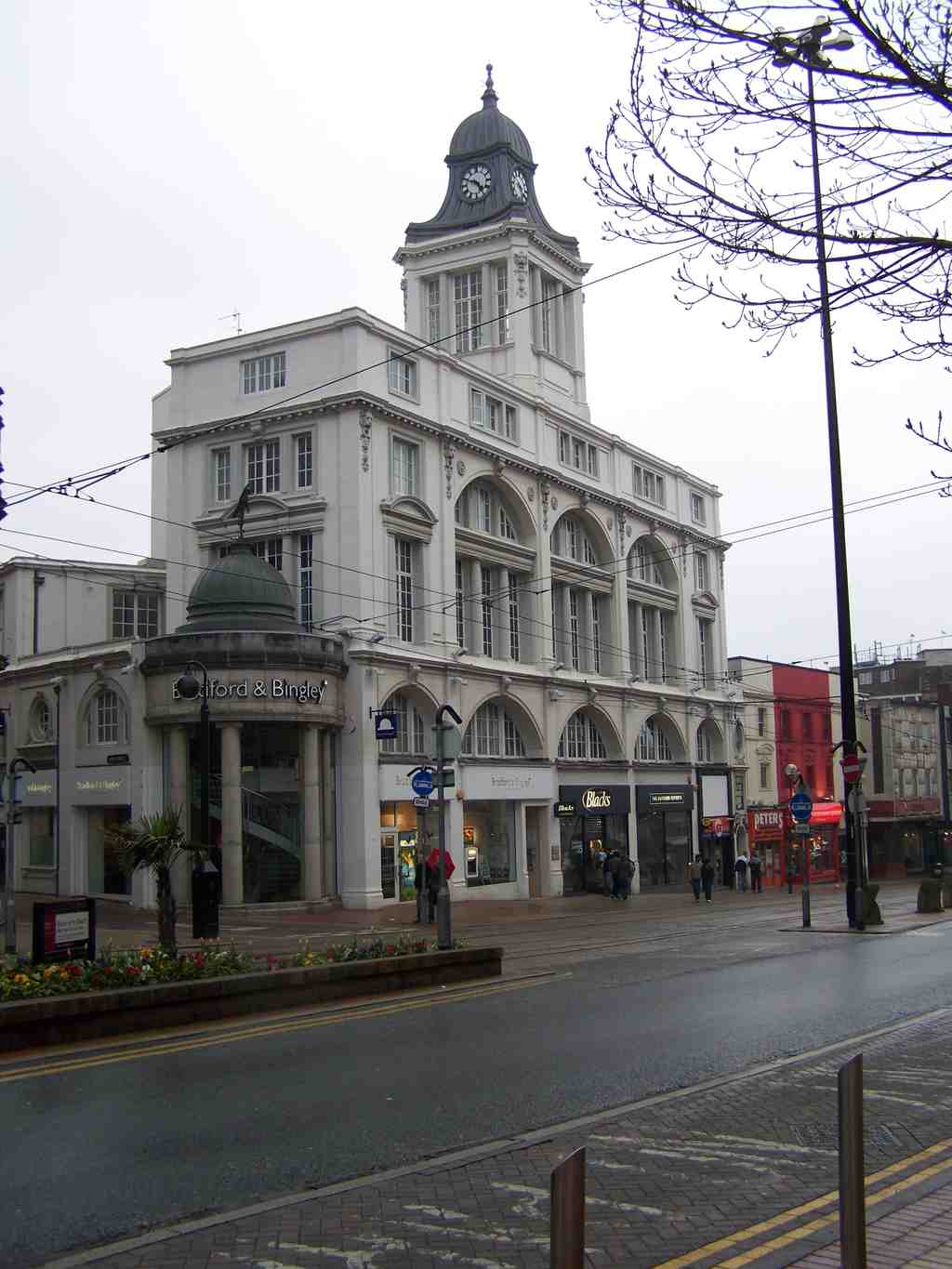
Alright, you're standing just across the street from one of the city’s most striking buildings. If you look ahead, you’ll spot a grand, white, art deco building with tall arched windows and a clock turret perched on top-like something you’d expect to find in a superhero comic rather than down the road from a Sainsbury’s Local! See those big windows at ground level and the “Blacks” store? That’s your clue. The entrance to the Crazy Daisy Nightclub was just there, tucked away in the basement beneath what is now a whole lot of regular shopping. Back in the day, the streets outside buzzed with excitement-perhaps not as tidy as now, but alive with people in their best disco gear, collars wide, hair wilder than a Sheffield windstorm. If you can, imagine the thump of a bass guitar shaking those pillars as you pushed open the doors. Down the steep, sweeping staircase you’d go, the air thick with anticipation, sweat, and cigarette smoke (it was the ‘70s, after all). The room filled with laughter, wild dance moves, and the echoing sound of the latest hits from the Human League… even before anyone knew who they were. The Crazy Daisy wasn’t just any club. At lunchtime, workers would pile in for a quick boogie-yes, you could literally dance your lunch break away before the afternoon shift! The décor? Pillars everywhere-perfect for dodging when your Saturday Night Fever moves got too risky. The bouncers had seen it all: disco shoes, new romantics, and the wildest hairdos in Yorkshire. Now, here’s a bit of Sheffield magic. In 1980, on that very dance floor, a young singer called Phil Oakey from The Human League scouted two schoolgirls. They were just out for a fun night, but Oakey strolled right up and asked them to join his band’s tour-no audition, no rehearsal, just pure disco destiny. Those two girls, Susan and Joanne, would help transform The Human League into international pop legends, all because of a night beneath those city lights. And as if fame wasn’t enough, even Sean Bean-yes, that Sean Bean-was a regular here, probably slipping past those pillars on his way to another adventure, long before the Lord of the Rings and Game of Thrones days. Today, the only dancing going on is probably someone doing a little shuffle while they wait in the Sainsbury’s queue. Not even a plaque to hint at the electric nights and music history made right under your feet. But if you pause for a moment, it’s easy to imagine the echoes of stomping feet and synth pop still rattling around down there, just out of sight. Ready to move on to the next stop, or shall we try to start an impromptu disco right here? I warn you-my dance skills are all left feet!
Open eigen pagina →Right in front of you is High Street, one of the city centre’s busiest veins! Take a look: it’s a wide, curving road lined with handsome historic buildings. If you spot the white…Meer lezenToon minder
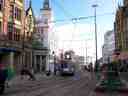
Right in front of you is High Street, one of the city centre’s busiest veins! Take a look: it’s a wide, curving road lined with handsome historic buildings. If you spot the white building with that clock tower standing tall above the shops - you’re already on target. Trams snake along their tracks down the middle of the street and the old stonework and architectural flourishes on the left and right give the whole place a sense of bustling history. On a good day, sunlight bounces off the glass, while crowds and city sounds fill the air - you can almost hear the echoes of centuries of shoppers and traders! Let’s go back in time, shall we? Just imagine: it’s the Middle Ages, and you’re strutting down this very street, probably dodging a few horses and carts (watch your toes!). Long before there were shops selling sandwiches and phones, High Street was known as Prior Gate. That’s because it was packed with properties linked to the grand Worksop Priory, thanks to a lord named William de Lovetot. If you think running into your neighbours today is awkward, imagine everyone knowing you got your house from a monk! The very first Master Cutler of Sheffield, Robert Sorsby, set up home here in the 1600s. By the late 1600s, High Street became the place to be - fancy stone houses with slate roofs, right at the heart of town, as posh as having the best front-row seat at a football match. But, believe it or not, for centuries this street was so narrow even the trams struggled to squeeze by. Sheffield’s most important buildings popped up here: the town hall sat by the church gates, while timber-framed houses leaned in close. There were endless wrangles - should we knock down the old houses and make the street wider, or leave it forever stuck in medieval times? Shopkeepers fought against city officials, in arguments that probably sounded like, “You can’t move my haberdashery!” The parade of buildings here is like a best-of album of Sheffield’s architects. That lovely clock-tower? It’s Kemsley House, a grade-two listed wonder, home to the Sheffield Star newspaper. The stonework around you has tales to tell - from French Gothic outfitters to the city’s first American elevator, which must have seemed as magical as a rocket ship in Victorian times. So as you stand here, squinting at the clock and maybe thinking about a coffee, just remember: every cobblestone and window pane along High Street holds a secret or two - and you’re now part of its ongoing story. Now, what do you say, ready to follow those tramlines and see what comes next? Don’t worry, the only thing you might bump into now is a tram, not a medieval monk!
Open eigen pagina →To find Victoria Hall, just take a look ahead and spot the building with that tall, striking brick tower topped by a pale dome. Its impressive entrance is lined with big, arched…Meer lezenToon minder
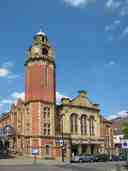
To find Victoria Hall, just take a look ahead and spot the building with that tall, striking brick tower topped by a pale dome. Its impressive entrance is lined with big, arched windows and fine stonework, with "Victoria Hall" written above the doors. The mix of reddish brick and lighter stone detailing on its corners really make it stand out from the more modern surrounding buildings. If you’re on Norfolk Street, you’re in the perfect place to see its main entrance-just look for the grand windows and those detailed carvings above them. Now that you’re standing here, imagine it’s the early 1900s. There’s a real buzz in the air. You might hear the clatter of horses and carts, kids laughing nearby, and the distant whistle of a train. And right in front of you is the Victoria Hall-Sheffield’s most important Methodist building. Picture people in fine hats and heavy coats, streaming up the steps for a bustling service, or a packed concert night, with streetlamps casting warm glows on the pavement. But the story of Methodists in Sheffield actually goes way back, almost 300 years! John Wesley himself-think of him as the rock star of the Methodist world-made a grand entrance in 1742 to spread his message. It wasn’t all peace and hymns though. The very first meeting house here ended up being attacked in a riot. Imagine churchgoers running for cover as Charles Wesley, John’s brother, tries to keep everyone calm. Local officials had to pay to build the next chapel, almost as an apology for that wild day. The Victoria Hall you see now rose in 1908, replacing an older chapel and making a bold new statement. The architect, William John Hale, blended styles on purpose-Gothic drama with some fancy Arts and Crafts touches. Look up at the tower: that’s a classic bit of Baroque flair. Even the walls have stories to tell-there are carvings of the Wesley brothers hidden in the details, so keep your eyes peeled! But here’s a twist-a secret behind all this beauty is a history of hard work and compassion. When people were out of jobs in the early 1900s, the Hall wasn’t just a place to pray; it was a place to get work, find breakfast for your kids, or hear a union activist speak up for your rights. During the First World War, soldiers and even a king and queen passed through these doors. King George V himself handed out medals right inside this very Hall! If these walls could talk, they’d probably need a drink of water first-because they’d have thousands of stories to tell about hope, music, laughter, and the never-ending Sheffield spirit. So, take a moment to imagine being part of it all, right here on Norfolk Street. And if you hear some ghostly organ music, don’t worry-it’s probably just an enthusiastic memory echoing through time. Shall we see what’s next?
Open eigen pagina →Alright, as you’re walking here, look for a cream-coloured stone building with magical, castle-like towers, tall pointy spires, and a door on the corner marked Norfolk Street. And…Meer lezenToon minder
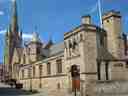
Alright, as you’re walking here, look for a cream-coloured stone building with magical, castle-like towers, tall pointy spires, and a door on the corner marked Norfolk Street. And if you spot the sky-piercing spire reaching up like a rocket - you’re in the right place! The Cathedral Church of St Marie almost likes to hide in plain sight, just off the bustling Fargate. But you can’t miss that 195-foot spire, the tallest in all of Sheffield: it’s like the cathedral is waving for your attention above the rooftops! Stand a moment and imagine stepping back to a time when England’s religious story was full of drama. This cathedral was once only a dream, when Catholic worship had to sneak behind closed doors. Picture the old Dukes of Norfolk letting locals quietly gather in secret chapels, tiptoeing to the altar so they didn’t get caught - you might almost hear a cautious creak on ancient floorboards! It wasn’t until the late 1700s that Catholics could worship in the open here again. Imagine the relief! The people of Sheffield clubbed together to buy an old house with a backyard, squeezed in a chapel behind it, and slowly saved up until there was enough for something grander. When the new church finally started rising, it was all hands on deck - from a generous duke to everyday folk giving what they could. And it turned out rather spectacular, don’t you think? Just look at those detailed carvings above the doorway, and the stained glass sparkling if the sun’s kind. Inside, it’s even more beautiful. Step in and the air seems to hush around you. Peer at the fine decorations, the side altars, the historic statues and colourful tiles. There are stories in every corner - tales of priests buried and reburied, secrets hidden in roofs, and even stained glass windows so precious that, during World War II, they were stored in a colliery shaft for safety. Unfortunately, the colliery flooded… but somehow, against all odds, the windows were found and rehung with barely a scratch - like the cathedral had its own lucky charm! So as you stand here, feeling the cool shade of those stone walls, remember how this place grew from whispers in dark cellars to a spire shouting over Sheffield’s skyline. It’s seen a fair bit of mischief, danger, and hope over the years. And hey, if you hear your footsteps echo, maybe you’re walking over the spot where Father Pratt was secretly buried by a loyal stonemason - now that’s a story worthy of a cathedral!
Open eigen pagina →As you stand here in front of the impressive Cutlers’ Hall, imagine the clatter and ring of metalwork from centuries past echoing up and down the street. This is the home of the…Meer lezenToon minder
As you stand here in front of the impressive Cutlers’ Hall, imagine the clatter and ring of metalwork from centuries past echoing up and down the street. This is the home of the Company of Cutlers in Hallamshire, the oldest club in Sheffield you probably haven’t joined-unless you’re especially handy with a knife and fork! Since 1624, this guild has looked after Sheffield’s blade-makers and metalworkers. Their leader is called the “Master Cutler”-not to be confused with a chef, though I imagine they’d make an excellent sandwich. The company’s motto is in French, “Pour Y Parvenir a Bonne Foi.” Don’t worry, you don’t need a French accent-just remember it means “To Succeed through Honest Endeavour.” So, success in Sheffield is apparently fueled by honest hard work-and the occasional sharp edge. The rules for this Company began with an old act of Parliament. Over the years, they added steelmakers to their ranks and even have the power to stop anyone anywhere in the UK from putting “Sheffield” in their company name-unless you ask very nicely! Members-called freemen-get to elect their Master Cutler every year. And they’re quite the team: two wardens, six searchers (who sound like a band of detectives), and a beadle who struts around on ceremonial occasions. Inside this grand hall, which is the third one constructed right on this historic spot since 1638, the company throws a big annual feast. Imagine the clinking of glasses, laughter bouncing from those marble walls, and the glint of steelware polished till it gleams brighter than a disco ball. Famous folks have been guests, and yes-since 2011, for the first time ever, the Master Cutler was a woman. Pamela Liversidge-breaking the glass ceiling and possibly sharpening it, too. So while you’re gazing at these imposing doors, remember you’re looking at the beating heart of Sheffield’s proud steel and cutlery tradition-a place built on honest work, sharp minds, and blades that mean business. Ready to slice through the next chapter of our journey? Let’s cut our way over to the next stop!
Open eigen pagina →To find Coles Corner, look for the bold, white curved building right at the corner ahead of you, with rows and rows of rectangular windows wrapping its rounded edge. At street…Meer lezenToon minder
To find Coles Corner, look for the bold, white curved building right at the corner ahead of you, with rows and rows of rectangular windows wrapping its rounded edge. At street level, you’ll spot bank signs like HSBC and glass shopfronts with a patch of bright flowers and palm trees along the pavement out front. The corner just where two busy streets meet is exactly where you want to be-stand right in the bend and you’re at Coles Corner. Now, let’s imagine we’re stepping back in time just a bit-though, sadly, I can’t give you a time machine, just my finest Sheffield accent if you like! Coles Corner might look modern and practical today, but once upon a time, this spot was absolutely buzzing with excitement. It was home to the famous Cole Brothers department store, a place so beloved that people practically wore out their best shoes coming here for a browse, a buy, or perhaps a sneaky look at the latest fashions. When Cole Brothers moved uphill to Barker’s Pool in 1963, the corner didn’t lose its spark-instead, it became a new kind of meeting point. Over the years, this spot has played host to banks, shops, coffee chains, even an Armed Forces Careers Office up top. But ask anyone in Sheffield and they’ll tell you: Coles Corner is really about memories. For generations, it was the classic place to wait for a date. Imagine the nerves-hands stuffed in pockets, eyes scanning the crowd, hoping the person matches their best photograph (or at least turns up on time). You can almost feel the energy buzzing in the air-even now, echoes of old love stories and a thousand hopeful hellos hang about. Some say it’s the most romantic corner in Sheffield, and is it any wonder that there’s a song and album named for it by Richard Hawley? There’s even a plaque from the Rotary Club to mark the spot, so those stories won’t ever be forgotten. Take a moment and soak it in. Who knows? Maybe years from now, you’ll be telling someone about your memorable stop at Coles Corner-just, maybe don’t keep your date waiting too long or you might end up in one of those stories yourself! Ready to pop to the next landmark?
Open eigen pagina →Look right ahead! The Sheffield Cathedral really grabs your attention with its striking mix of ancient and modern stonework. The tall, pointed spire rises like a needle into the…Meer lezenToon minder
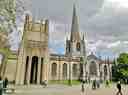
Look right ahead! The Sheffield Cathedral really grabs your attention with its striking mix of ancient and modern stonework. The tall, pointed spire rises like a needle into the sky, while the unique, chunky tower next to it almost looks like it’s from another time altogether. If you see tall pointed arches, large windows with beautiful stone frames, and grand doors, you’re in the right place-this is the heart of Sheffield’s spiritual life. Now, imagine you’re standing here in front of a building that’s been a part of Sheffield for over 800 years! The stone beneath your feet echoes with centuries of bells ringing, prayers whispered, and maybe the odd sheep wandering by in medieval times, before Google Maps was a thing. This grand place started out as a simple parish church way back around the year 1200. Fast forward to 1914, and suddenly, it's the main cathedral for the entire city-talk about a promotion! Just think: kings and commoners alike have gazed up at the same walls where you’re standing now. Sheffield Cathedral isn’t shy about showing off its history. Parts of what you see date back to the Middle Ages, while others were added in the swinging sixties. That odd jumble of styles? Blame history and a few fiery mishaps. In fact, this place isn’t just a house of peace; it’s seen its fair share of drama! In 1266, it was set on fire during a rebellious war, and in 1979 a raging blaze in the belltower had firefighters scrambling to save the spire. Picture water pipes bursting, bells melting, firefighters shouting and water flooding through the ancient choir stalls. And if you listen very closely, maybe you’ll hear echoes of the old bellringers’ records lost forever in the flames, or imagine the clang of medieval armor during ancient services. Don’t worry-the only thing you need to dodge today is the odd supertram rumbling past! So go ahead, drink in the mix of shadows and sunlight playing across those weathered stones. You’re looking at one of the few Grade I listed buildings in Sheffield-so unique and full of stories, it could probably write its own blockbuster movie. Ready to head to the next stop and see which tales await us there? For a more comprehensive understanding of the art and architecture, dean and chapter or the change ringing, engage with me in the chat section below.
Open eigen pagina →



Veelgestelde vragen
Hoe begin ik de tour?
Download na aankoop de AudaTours-app en voer je inwisselcode in. De tour is direct klaar om te starten – tik gewoon op afspelen en volg de GPS-geleide route.
Heb ik internet nodig tijdens de tour?
Nee! Download de tour voordat je begint en geniet er volledig offline van. Alleen de chatfunctie vereist internet. We raden aan om te downloaden via wifi om mobiele data te besparen.
Is dit een groepsrondleiding met gids?
Nee - dit is een audiotour met eigen gids. Je verkent zelfstandig op je eigen tempo, met audiovertelling via je telefoon. Geen tourguide, geen groep, geen schema.
Hoe lang duurt de tour?
De meeste tours duren 60-90 minuten, maar jij bepaalt het tempo volledig. Pauzeer, sla stops over of neem pauzes wanneer je wilt.
Wat als ik de tour vandaag niet kan afmaken?
Geen probleem! Tours hebben levenslange toegang. Pauzeer en hervat wanneer je wilt – morgen, volgende week of volgend jaar. Je voortgang wordt opgeslagen.
Welke talen zijn beschikbaar?
Alle tours zijn beschikbaar in meer dan 50 talen. Selecteer je voorkeurstaal bij het inwisselen van je code. Let op: de taal kan niet worden gewijzigd na het genereren van de tour.
Waar vind ik de tour na aankoop?
Download de gratis AudaTours-app uit de App Store of Google Play. Voer je inwisselcode in (verzonden per e-mail) en de tour verschijnt in je bibliotheek, klaar om te downloaden en te starten.
Als je niet tevreden bent met de tour, betalen we je aankoop terug. Neem contact met ons op via [email protected]
Veilig afrekenen met 


