Sheffield Audiotour: Een audioreis door het iconische hart van Sheffield
Onder de statige pilaren van Sheffield's Stadhuis en de door trams gerammelde High Street, zweven geheimen nog steeds in de open lucht—waar revolutie, oproer en het ritme van het dagelijks leven weerklinken onder waakzame stenen. Deze zelfgeleide audiotour nodigt je uit in het onvertelde hart van het stadscentrum, en leidt je voorbij ansichtkaartgezichten om legendes en schandalen te ontdekken die onder je voeten verloren zijn gegaan. Welke klok signaleerde een stortvloed die ooit varkens Barker's Pool deed afrennen? Welke daad van rebellie reduceerde de vroegste kapel van Victoria Hall in één nacht tot as? Wie weigerde twintig koppige jaren lang om Sheffield zijn geliefde High Street te laten verbreden? Stap door bruisende pleinen en stille bogen, voel de geschiedenis rimpelen onder Yorkshire steen en concertzaalkoepels. Elke hoek onthult drama, mysterie en momenten die de geest van Sheffield hebben gevormd—en die van jou terwijl je deze nieuwsgierige voetstappen volgt. Begin nu met verkennen en ontdek de ware verhalen die verborgen liggen waar de stadslucht zich wijd boven uitstrekt.
Tourvoorbeeld
Over deze tour
- scheduleDuur 40–60 minsGa op je eigen tempo
- straighten2.3 km wandelrouteVolg het geleide pad
- location_onLocatieSheffield, Verenigd Koninkrijk
- wifi_offWerkt offlineEén keer downloaden, overal gebruiken
- all_inclusiveLevenslange toegangOp elk moment opnieuw afspelen, voor altijd
- location_onStart bij Barker's Pool
Stops op deze tour
Ahead of you, look for a wide open space where the ground is paved with stone and the buildings seem to stand back and let the sky stretch above. Right in the centre, you’ll spot…Meer lezenToon minder
Ahead of you, look for a wide open space where the ground is paved with stone and the buildings seem to stand back and let the sky stretch above. Right in the centre, you’ll spot the tall, elegant Sheffield War Memorial. It soars up nearly nine stories, with four bronze figures at the base and a pole rising into the air-almost like it’s the city’s giant flag holder. To your left, you’ll see Sheffield City Hall, with its grand pillars and stately architecture, almost as if it’s holding up the sky by itself. Take a moment to look around-the space is open, echoing with footsteps and the distant chatter of city life. Welcome to Barker’s Pool-the open heart of Sheffield’s city centre! Here under your feet, and all around you, is a place where memories, water, and wild stories have flowed for centuries. Imagine it’s the year 1630. There’s a giant stone reservoir right where you’re standing. Every few months, the bellman would ring his bell, warning everyone it was time for ‘the big cleanse’-a tidal wave of water let loose to wash the city streets. Suddenly, buckets and mops would appear, kids would be ready, dogs would bark, and pigs-yes pigs!-would grunt as the water rushed down hills, cleaning everything and everyone in its way. Barker’s Pool isn’t named after swimming lessons or a giant shepherd dog, but might be named after Barker of Balme, from a deed way back in 1434. Historians believe this spot was called Balm Green, because lemon balm herbs once grew around here, making the air smell fresh, unless the pigs were having their bath day! And there’s more-imagine grand halls, bustling theatres, and musical concerts echoing out over the square. On your right, where the modernist John Lewis building stands, there used to be the impressive Albert Hall, famous for-well, brass bands, magic lantern shows, and people running for fire exits in 1937 when it tragically burned down. If you look up, the City Hall stands proud, built in 1932, on the spot where terraced houses once lined busy narrow streets. Barker’s Pool has reinvented itself time and again-a cinema hotspot, a parade ground, and now a peaceful square lined with Yorkshire stone, perfect for remembering, gathering, or dreaming of a flood of lemon-scented water rolling right at your feet. Ready to dive into the next stop? Let’s keep walking and see what else Sheffield has in store!
Open eigen pagina →You’re now standing in front of Sheffield’s famous High Street! To spot it, just look ahead for a wide avenue with tramlines running down the middle. On either side, you’ll see an…Meer lezenToon minder
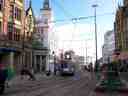
You’re now standing in front of Sheffield’s famous High Street! To spot it, just look ahead for a wide avenue with tramlines running down the middle. On either side, you’ll see an impressive variety of architecture: grand stone buildings with intricate carvings on your left, taller modern office blocks on your right, and a gleaming white building with a decorative clock tower a little further down. Oh, and if you listen closely, you might hear the gentle rumble of the tram gliding past you. High Street is really the beating heart of Sheffield’s city centre. Today it’s alive with shoppers, the clatter of feet, and maybe the whiff of fresh chips drifting from a nearby café. But if you stood here back in the 12th century, you’d find monks from Worksop Priory owning five properties on the north side! They called it Prior Gate then-makes you feel fancy just saying it, doesn’t it? The street became a hotspot for the city’s best shops and grandest homes, plus the local celebrity of his day, Robert Sorsby, Sheffield’s first Master Cutler, bought a house here in 1611. By the late 1600s, just eleven shops squeezed next to the churchyard, busy from Tuesday and Thursday markets. Imagine the crowds jostling for a bargain, and the stallholders calling out their prices. Now, here’s a little fun fact: for centuries, High Street was barely wide enough to fit a horse and cart-let alone the trams you see zipping by today! Local shopkeepers were so attached to their stores that it took Sheffield council twenty years just to agree on widening the street. Some things never change, eh? If you look up at the white clock tower on the north side, you’ve found Kemsley House, opened in 1913 for the Star newspaper. Next to it, Parade Chambers stands proud with its stonework so detailed, you almost expect the statues to blink at you. Step to your right and you’ll find elegant blocks built for gentleman’s outfitters, and the old John Walsh department store-once bustling, now just a memory. From ancient stone to shiny tram tracks and busy shops, High Street has always buzzed with life, drama, and the occasional stubborn shopkeeper. And I promise, the only thing you’ll be fighting for here today is the best spot for a selfie. Ready to journey on?
Open eigen pagina →Just ahead of you, look for a very grand building made of warm, reddish brick and pale stone. You can’t miss the tall, dramatic tower, topped with a rounded dome that pokes…Meer lezenToon minder
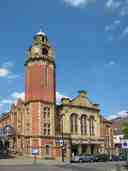
Just ahead of you, look for a very grand building made of warm, reddish brick and pale stone. You can’t miss the tall, dramatic tower, topped with a rounded dome that pokes proudly into the sky. The windows are large and arched, almost like something from a classic English movie-but don’t expect Mr Darcy to come strolling out! As you face the building, you’ll see THE VICTORIA HALL engraved above an impressive entrance with big glass doors. Now, get this: you’re standing in front of Sheffield’s own Victoria Hall, the beating heart of Methodism in the city. Imagine it’s the early 1900s-the streets bustling with crowds, the smoky air humming with the sound of industry. Back then, Methodists were on a mission, and this spot has been their stronghold since John Wesley himself came marching into town in the 1700s. The story starts with Wesley and his brother Charles, preaching with such fiery passion that their first chapel was burned to the ground in a riot! Talk about making an entrance. After a few ups, downs, and rebuilds, the current hall rose up in 1908, sparkling with new stone, designed to show everyone in Sheffield that this was a place that meant business-not just for worship, but for helping people down on their luck. It’s amazing to picture: inside those doors, thousands of young folks crowded into Sunday school, and during hard times, families would line up-kids in threadbare coats-hoping for a warm breakfast. Check out that tall tower. The architect, William John Hale, mixed all sorts of styles together-a bit of Gothic here, a little Arts and Crafts there, then he went wild and topped the tower with bold Baroque flourishes and intricate carvings of the Wesley brothers. Even the stonework wants to tell a story. During the First World War, soldiers trudged through those doors to find rest, and after the fighting ended, even King George V and Queen Mary popped in to welcome the troops home-imagine the majesty! The hall often buzzed with music, too, echoing with orchestra concerts before the big City Hall was built. Soak in that sense of history. Where you’re standing, movements began, people found hope, and heroes preached with such power the walls might have rattled! And don’t worry, the only riot likely today is if you try to cut the Sunday tea line. Ready for our next adventure?
Open eigen pagina →
Toon 12 stops meerToon minder stopsexpand_moreexpand_less
Alright, time to spot the next treasure! Look ahead for a tall, elegant building made of warm-colored stone. The showstopper is the spectacular spire shooting up into the…Meer lezenToon minder
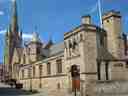
Alright, time to spot the next treasure! Look ahead for a tall, elegant building made of warm-colored stone. The showstopper is the spectacular spire shooting up into the sky-almost like it’s trying to poke a hole in the clouds. It’s the tallest spire in Sheffield, so if you follow it with your eyes, you can’t go wrong. There are other neat features: pointy turrets, stone carvings above the door, and a sense that the whole place is hiding a thousand stories, just around the corner from the Fargate shops. You’re now standing in front of the Cathedral Church of St Marie, Sheffield’s own Roman Catholic cathedral, and it’s like a secret gem hiding in plain sight. It might be tucked off the busy street, but this place is anything but quiet in spirit. Imagine the bell ringing from that sky-high spire, calling people in from chilly mornings for nearly two centuries. Back in the old days, this spot wasn’t even a cathedral yet! It was a little garden where brave Catholics worshipped in secret, sneaking through quiet alleys. You can almost hear the hush of their footsteps as they slipped into the house-chapel, hoping not to raise suspicion. Things weren’t easy-once upon a time, practicing the Catholic faith here meant risking big trouble, or even worse. Move closer, and take a moment to look up at the carvings and the glorious gothic windows-St Marie’s is like the set of a medieval movie, but real. There’s a story for every corner: The young priest Fr Pratt, who wanted so badly to see a church built here that, after he died, a determined stonemason made sure he was buried right where Pratt had dreamed-near the altar. And yes, if you step inside, there’s a plaque marking where Fr Pratt now rests. Fast forward to World War II-imagine a blast of sound and shattering glass as a bomb blew out the cathedral’s stained-glass windows. The precious pieces were hidden away in a mine for safekeeping, and later rescued from the mud so they could shine here again. There’s a little miracle in every ray of colored light that shines through the windows today. St Marie’s is full of memories, secrets, and maybe even the odd ghost or two. Step closer, soak it in, and try not to blink if you think you see a shadow cross the stained glass. Don’t worry-it’s probably just a pigeon.
Open eigen pagina →To spot the Crucible Theatre, look for a building with bold modern shapes-plenty of glass and metal, and a broad entrance with a canopy above it. You’ll see the words “SHEFFIELD…Meer lezenToon minder
To spot the Crucible Theatre, look for a building with bold modern shapes-plenty of glass and metal, and a broad entrance with a canopy above it. You’ll see the words “SHEFFIELD THEATRES CRUCIBLE” displayed proudly, usually in tall, striking letters just like the ones you see in the image. If you're facing Tudor Square, the Crucible will be right in front, standing out from its older, more decorative neighbors with its sleek lines and contemporary style. Just follow the gentle hum of excitement that always seems to hang in the air! Now, take a deep breath because you are standing at the very heart of theatre and sporting legend. This is the Crucible Theatre, a place so famous in the snooker world, it’s been called the "spiritual home of snooker". Imagine, right now, a sea of hushed fans and the soft click of snooker balls echoing through the auditorium. The Crucible opened its doors back in 1971. Its name? A nod to the crucible steel forged right here in Sheffield-think of roaring furnaces, sparks flying, and a city rewriting its destiny. This theatre was designed to be different, with seats wrapped close to the stage, so nobody is more than 20 meters from the action. It's a bit like having front row tickets, no matter where you sit. Trust me, if you sneeze in here, the actors might hand you a tissue. On its very first night, the Crucible showed off with child actors improvising, a Chekhov play starring Sir Ian McKellen, and a local brass band finishing things off-talk about variety! It’s hosted everything from explosive dramas to toe-tapping musicals and, of course, that nerve-racking World Snooker Championship every year since 1977. Every spring, top snooker players stand where you are, feeling butterflies in their stomachs, as the world holds its breath. The Crucible isn’t just famous for sport, though-it’s a creative powerhouse, where shows are designed and rehearsed right inside these walls. The stage has seen tears, laughter, gasps, and the occasional dropped snooker ball. And did you hear about the multi-million pound refurb they did? The place got a facelift between 2007 and 2009-just in time for more legendary moments. So, wherever you’re headed next, remember: this building is more than glass and steel. It’s buzzing with decades of performance, drama, and those heart-thumping snooker nights. Just think, the next legend could be sitting here... maybe plotting their winning shot-or just hoping for a decent cup of tea backstage!
Open eigen pagina →Take a look straight ahead-see that open space surrounded by modern glass and some rather grand old buildings? That’s Tudor Square, right in the heart of Sheffield. You’ll spot…Meer lezenToon minder
Take a look straight ahead-see that open space surrounded by modern glass and some rather grand old buildings? That’s Tudor Square, right in the heart of Sheffield. You’ll spot stone benches curving around some young trees, people weaving in and out, and just a little further on, those eye-catching arches in front of glass-they belong to the Winter Garden. But for now, keep your eyes here on the wide open plaza with theatres all around. Feel that? This isn’t just a square, it’s the centre stage of “Theatre Land!” No, no need to break into a musical number-unless you really want to! Imagine standing here back in the ‘80s, when this was pretty much just a half-empty car park-certainly not worth a dramatic curtain call. But then, in 1991, city leaders waved their magic wand (okay-a lot of hard work and city planning), and Tudor Square was born. The reason? Sheffield hosted the World Student Games, and the city needed a little sprucing up. This humble space went from ‘who parked there?’ to the beating heart of culture. Now, to your left and right, look for the grand Lyceum Theatre-check out the elegant Edwardian design. On the north side is the Crucible Theatre, home to nail-biting snooker championships since 1977, as famous for hushed drama as for tense cues. And if you listen very carefully, you might just catch echoes of applause from the Studio Theatre, tucked away nearby. Around the corner, the Library Theatre and Montgomery Theatre add even more drama to the picture. Tudor Square has seen celebration and transformation. In 2010, it had a major glow-up with £4 million of sparkle-okay, “regional development funds”-which set out to make this the real entryway to cultural Sheffield. So when the snooker comes to town now, or a show spills its audience out into the night, there’s a buzz in the air and laughter echoing across the smooth stone. So, whether you’re here for a show, a stroll, or maybe to spot a snooker star (cue the dramatic gasp), remember-Tudor Square is Sheffield showing off its liveliest, most creative side. Now, shall we take a bow, or press on to the next act?
Open eigen pagina →As you walk closer, keep your eyes peeled for a huge, curved building made almost entirely out of shimmering glass and warm, arching wood beams. It looks a bit like a giant…Meer lezenToon minder
As you walk closer, keep your eyes peeled for a huge, curved building made almost entirely out of shimmering glass and warm, arching wood beams. It looks a bit like a giant greenhouse crossed with a futuristic cathedral, stretching out in a long, bright tunnel. If you look ahead, you’ll see sunlight bouncing off those glass panels and, through them, a jungle of green-just waiting for you to step inside. Here we are at the Sheffield Winter Garden-trust me, you can’t miss it! This isn’t your average patch of lawn; this is one of the largest urban glasshouses in all of Europe. The glass walls and wooden arches look like giant waves frozen in motion. You can almost hear the city noise get quiet as you step closer. Inside are over 2,000 plants from every corner of the world. No need to book your plane ticket-just stroll through here and you can see Australian ferns, African palms, and even cacti that probably wouldn’t last long in Yorkshire’s drizzle! The Winter Garden stays toasty and never drops below four degrees Celsius. That’s warmer than my grandma’s living room! It was opened by Queen Elizabeth II herself in 2003-probably the only time the royal wave met the waving fronds of a bamboo plant. Design-wise, it’s a real show-off: the curving beams you see are made from larch wood, which was chosen because, unlike my hair after a rainy Sheffield day, it can handle getting older and still look very elegant. No chemicals needed, keeping the air clean for both the plants and your lungs. There’s a clever computer that runs the building’s brain, opening vents and turning on fans to make sure every fern and flower is comfy. Honestly, it’s probably smarter than I am! And the gardeners have no secret watering machines-just good old-fashioned hoses and watering cans. So, if you spot someone with a watering can looking a bit heroic, give them a nod. The Winter Garden was dreamt up as part of Sheffield’s big Heart of the City project: the same spark of ambition that brought us the Peace Gardens and Millennium Gallery. And speaking of sparks, this place has won awards-so you can say you visited an architectural superstar. Don’t be shy-wander inside, breathe deep, and see if you can spot something weirder than a banana tree growing in Yorkshire. Just make sure you don’t get lost in the ferns; I hear they can be sneaky. Ready to keep exploring?
Open eigen pagina →To spot the Millennium Gallery, look for a sleek, modern building made of concrete and glass on your left, with wide glass panels and bold red signs. The entrance features outdoor…Meer lezenToon minder
To spot the Millennium Gallery, look for a sleek, modern building made of concrete and glass on your left, with wide glass panels and bold red signs. The entrance features outdoor seating near the café, and you’ll notice neat rows of sculpted bushes and trees in square planters lining the pathway ahead. The building’s long, horizontal structure really stands out next to the more traditional city buildings. Alright, take a deep breath-you're now standing in front of one of Sheffield’s gems. Imagine this place bursting onto the scene back in 2001, all shiny and new, as part of a city transformation. The architects designed the building to be open and bright, with sunlight streaming through those vast windows. Even on a cloudy Sheffield day, the place still seems to glow. Inside, a world of art, craft, and history is waiting just beyond those doors. But you don’t have to go in yet-let’s soak in the atmosphere. Picture the excitement when it first opened, folks streaming in, amazed that this ultra-modern gallery had landed right in the heart of a city known for steel, not sculptures. There’s a bit of magic here, too. The famous Victorian thinker, John Ruskin, gathered treasures for Sheffield’s workers-hoping to inspire them with delicate watercolours, sparkling minerals, and even Roman coins. Did he know his collection would end up here, shining under gentle lights instead of hidden away in an attic? The Ruskin Collection has so many items, they have to rotate them, so if you ever hear a soft rumble inside, that might just be the curators sneakily swapping treasures around. And then there’s Sheffield’s metalwork, displayed in all its gleaming glory. Picture rows of knives, forks, and teapots as shiny as a disco ball at a very fancy dinner party. Some say you can spot your reflection in them if you look close enough-just try not to make a funny face in front of too many people. The Millennium Gallery isn’t just about the past. Modern artists and designers bring color and energy here, with ever-changing exhibitions that pull in curious minds from all over. Vivienne Westwood, underwater worlds, and wild new sculptures-anything can pop up behind those glass panels. So take a look around, feel the buzz, and if you listen closely, maybe you’ll catch the faint sound of clinking cups from the café inside, inviting you to step in and enjoy a slice of Sheffield’s creative soul. Fascinated by the ruskin collection, metalwork collection or the craft & design? Let's chat about it
Open eigen pagina →There it is right in front of you-Sheaf Square, Sheffield’s grand welcome mat! To spot it, just look for a wide open plaza with smooth stone steps curving like gentle waves around…Meer lezenToon minder
There it is right in front of you-Sheaf Square, Sheffield’s grand welcome mat! To spot it, just look for a wide open plaza with smooth stone steps curving like gentle waves around a sparkling fountain. There’s a large wall of flowing water to your left, and just beyond, you can’t miss the impressive stone arches of the railway station, standing like old guardians. On your right, you’ll see people sitting, chatting, and children running through the mist from the water features. Now, picture this: you’re standing at a historic crossroads, right where the River Sheaf, now hidden beneath your feet, used to flow out in the open. Centuries ago, this spot would have been alive with the hiss and clang of metal from the forges, back when the Pond Tilt Forge set up shop here in the 1700s. Imagine blacksmiths working so hard, they’d wish for a water feature to cool off-now, you get one as soon as you arrive in Sheffield. Fast forward to today, and Sheaf Square is the city’s front door. The railway station, Showroom Cinema, and even fragments of the old Howard Hotel watch over the square. There’s a real modern twist too-the steel sculpture known as The Cutting Edge gleams with futuristic flair, and if you listen closely, you might hear the faint, ghostly cheers from when the square first opened in 2006 with fireworks and street performers. It’s not just a meeting spot, it’s a place of arrival and anticipation. Think about how many people step off the train, see that dazzling fountain and steel sculpture, and know they’ve landed somewhere special. You’ve got history beneath your feet, a gateway to the city around you, and maybe just a tiny bit of water on your shoes if you stand too close to the fountain-consider it a Sheffield badge of honour. So take a breath, look around, and imagine the river running by, blacksmiths working, trains arriving, and the city stretching out to welcome you. Just don’t try to find the River Sheaf-it’s playing hide and seek underground! Ready for our next stop? Let’s go.
Open eigen pagina →You’re coming up to the Showroom Cinema now-head up toward the corner where the road bends and get ready for a treat. Look for a big, bold building with a real retro vibe, all…Meer lezenToon minder
You’re coming up to the Showroom Cinema now-head up toward the corner where the road bends and get ready for a treat. Look for a big, bold building with a real retro vibe, all clean lines and rows of wide windows. It’s got square shoulders, pale stone walls, and what looks like an old movie logo-a big swirling ‘S’-right by the entrance. Above, it says “SHOWROOM” in no-nonsense letters, with “CINEMA,” “CAFÉ,” and “BAR” flanking each side. It’s hard to miss! Right, imagine for a second that it's the 1930s. You’re standing outside what was once a buzzing car showroom-polished cars gleaming behind those long rows of glass, with city folks passing by in their hats and long coats. But hold onto your popcorn, because in the ‘90s, Sheffield had a much more creative vision for this place. They tore out the old engines and wheels and rolled in the magic of the silver screen. Suddenly, the air wasn’t filled with the scent of oil, but the smell of fresh popcorn and the low rumble of excited film fans lining up at dusk. Fast forward to today and you’re standing outside a real hub of Sheffield’s culture. Guardian readers once shouted that it was their favourite cinema. Oh, and don’t be surprised if you see local filmmakers darting into the café-this place doubled as the set for an Arctic Monkeys music video. That’s indie cinema cred right there. Inside, the halls are always lively. The Showroom’s hosted everything from digital art festivals to horror movie marathons-you’re never sure if the person next to you just watched a scary movie or actually spotted a ghost in the historic halls. Young filmmakers train here, building their dreams one frame at a time. On festival nights, the building gets tense with excitement-especially when Sheffield’s own horror festival, Celluloid Screams, takes over. You might hear the sound of a fake scream or two drift out-don’t worry, no need to call for help, unless you’re scared of popcorn monsters. And if walls could talk, they’d tell tales of digital pioneers, creative midnight brainstorms, and wild applause from audiences who’ve just fallen in love with cinema all over again. So next time you walk by, take a deep breath-you might just inhale a little history… or catch the scent of a good coffee brewing, whichever gets your heart racing!
Open eigen pagina →Take a look in front of you-see those four gigantic, shiny, metallic drums? They look a bit like enormous silver soup cans from the future, don’t they? With their curvy sides and…Meer lezenToon minder
Take a look in front of you-see those four gigantic, shiny, metallic drums? They look a bit like enormous silver soup cans from the future, don’t they? With their curvy sides and the odd nozzle-like structures on top, they’re hard to miss! Walk a little closer and you’ll notice how the sunlight bounces off the stainless steel panels, making the whole building feel a bit like a spaceship has landed here in Sheffield. If you spot the roof turrets gently moving, that’s not your imagination-they were actually designed to turn with the wind. Welcome to the former National Centre for Popular Music-Sheffield’s bold leap into the world of pop, rock, and all things musically eccentric! Imagine it’s 1999: -the city is buzzing with hope. Inside these drums, people wandered through exhibitions on music legends and high-energy gigs. The top floor, surrounded by that glassy roof, would flood with light, as if pop stardom was shining down just for you. But the story here isn’t just glitz and glam. The Centre was dreamed up in the 1980s, way before “Cool Britannia.” It opened as part of Britain’s Millennium celebrations, a £15 million project with help from the National Lottery. Everyone expected fans to flood in, with ticket prices fit for a family adventure. There were bustling bars, a quirky shop, a buzzing café, and even free exhibitions on the ground floor. But as the months rolled by, the crowds just didn’t flock here as expected. Behind the scenes, the tension was growing-the Centre was short on visitors and soon, the administrators had to be called in. There was a desperate struggle to keep the dream alive, from star-studded events featuring Madness and Paul Carrack, to last-ditch rescue relaunches. Imagine the echo of music from that final big gig-75 prizewinners in the audience, all hoping this was the moment things would turn around. But, in June 2000, the music faded and the lights went out. Afterwards, the building became a hub for live music before being taken over by Sheffield Hallam University as the students’ union, filled with laughter, debate, and a new kind of rhythm. As you stand here today, who knows what the next chapter will be? The drums are still standing, defiant as ever. Maybe one day, someone will bring the beat back. So, next time you see a giant tin can, remember: it just might have a story worth millions, whether it hits the charts or fades to a quiet outro. Now, let’s keep on rocking-on to our next stop! Wondering about the building, closure or the subsequent use? Feel free to discuss it further in the chat section below.
Open eigen pagina →Look ahead and a little to your right-you'll spot a long, low stone building with big rectangular windows, set off by an eye-catching brick corner. You can’t miss the tall,…Meer lezenToon minder
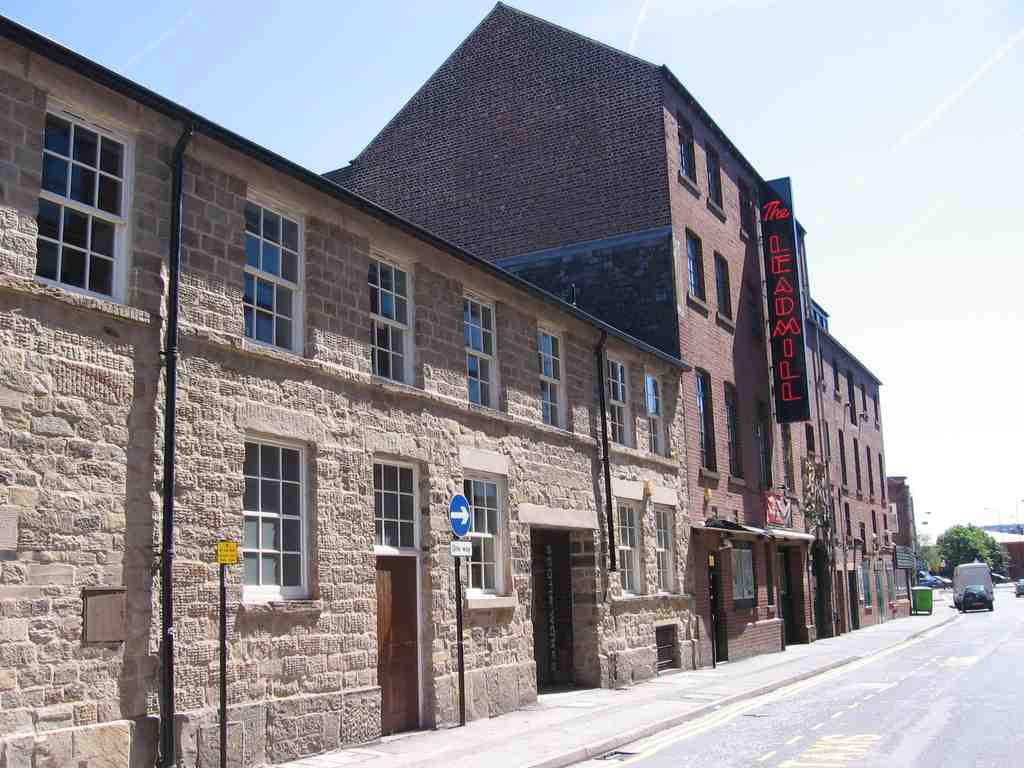
Look ahead and a little to your right-you'll spot a long, low stone building with big rectangular windows, set off by an eye-catching brick corner. You can’t miss the tall, vertical black sign glowing with red neon letters spelling “The Leadmill.” That sign is your beacon. The entrance sits just below, ready and waiting for the next crowd of music lovers and night owls. Now, as you stand in front of The Leadmill, take a deep breath and imagine a world where flour dust once filled the air instead of guitar rifts. This place started its life not as Sheffield’s nightlife icon, but as a flour mill-hardly the birthplace you’d expect for a rock and roll revolution! In 1980, when the doors reopened, the music was still a bit hushed-the venue didn’t even have a license to sell alcohol! Workshops, plays, and live shows filled the rooms instead. It wasn’t long before things changed and the Leadmill became the beating heart of Sheffield’s creative scene. Imagine Prince Charles, standing right where you are now in 1988, walking into the Leadmill, probably expecting dusty mill machinery, but instead declaring, “A building well restored!” By then it was already hosting wild theatre, bands, even pantomimes directed by a young Jarvis Cocker. Through the 1990s, the dance floor came alive, pulsing with house nights and raucous gigs-Arctic Monkeys sold out here faster than anywhere else. That dance floor got replaced in 2017, but rather than tossing the old one away, Leadmill sliced it into engraved souvenirs. Imagine taking home your very own piece of party history-beats a regular fridge magnet, right? The Leadmill’s got heart, too. When the pandemic hit, and even toilet rolls were scarce, the venue sold them at cost just to help out the community. And when times got really tough, fans from all over chipped in to make sure the music didn’t die. It’s not all smooth sailing-there’s a modern twist. In 2022, the owners got served an eviction notice. A real “dun, dun, dun!” moment in venue history. But the spirit of the place lives on in the community and the stories, the laughs, and the indie anthems that echo down Leadmill Road. You’ve just stood outside a true Sheffield legend. So, who knows? Maybe tonight’s gig is the next story people tell for decades. Ready for the next stop?
Open eigen pagina →You’re closing in on Site Gallery! As you walk down Brown Street, look for a long, sand-brick building with big arched windows near the center, an old-school triangular gable on…Meer lezenToon minder
You’re closing in on Site Gallery! As you walk down Brown Street, look for a long, sand-brick building with big arched windows near the center, an old-school triangular gable on the roof, and a simple white shopfront that says “Untitled”-a little nod to its history. The entrance isn’t flashy, so keep your eyes peeled for the wide glass doors and the gallery’s name on the sign. If you spot a window with colorful posters and some curious art on display, you’re in the right place. Alright, welcome to the Site Gallery! Imagine you’re standing at the gateway to a world where movies, digital doodads, and performances all merge into something a little magical. If buildings could talk, this one would probably tell you it knows a thing or two about reinvention-and maybe crack a joke about all the strange outfits artists have worn over the years. Back in 1978, Site Gallery started its life in another part of Sheffield as the “Untitled Gallery.” It wasn’t long before it made its home here, in what’s now called the Cultural Industries Quarter. Over the years, this place has hosted everything from wild film screenings to workshops where you can get your hands covered in paint, or even figure out exactly what a “new media installation” is-without having to Google it every five minutes. This isn’t your grandma’s art gallery where you tiptoe and whisper. No sir! Site Gallery buzzes with energy, sometimes literally-on festival nights, you might hear music, laughter, and the unmistakable whirring of projectors firing up. Whether it’s a national show or a world premiere, you never quite know what stunning or downright peculiar thing will pop up next. Inside, you might spot an artist giving a talk, visitors looking deep in thought (or possibly just confused), and even a shop stuffed with quirky art gifts. The gallery’s heart beats for experimental art, from glowing video screens to bold performance pieces. They’ve shown world-famous artists and bright young talents alike-sometimes before anyone else even knew their names. If you ever wanted to step through a door and find yourself thinking, “Whoa, I’ve never seen THAT before,” this is the place. Plus, they work closely with young people and schools through awesome programs and apprenticeships. Maybe you’ll overhear a group of teens debating if an abstract sculpture looks more like a spaceship or a pile of noodles. Who knows? The art here is meant to get you talking and wondering. So, as you stand outside, just imagine the buzz and creativity swirling around inside. Here, art is never silent-it’s always sparking conversation, making you laugh, or challenging you to see the world in a new way. Why not step in and see what oddball wonder they’re cooking up today?
Open eigen pagina →You’re now standing in front of the mighty BBC Radio Sheffield, the voice of South Yorkshire! Imagine the hum of activity just behind these walls-presenters gulping their tea,…Meer lezenToon minder
You’re now standing in front of the mighty BBC Radio Sheffield, the voice of South Yorkshire! Imagine the hum of activity just behind these walls-presenters gulping their tea, someone rushing to the studio ready to share local news or spin a favorite tune. Back in 1967, when Radio Sheffield first went live, you’d have found busy editors in a big old Victorian house in Broomhill. The broadcast day started early, but by evening, only the most devoted listeners tuned in for specialist shows: a bit of jazz, some folk music, or programs for Sheffield’s growing black and Asian communities. Outside, dusk would settle over quiet streets, but inside, the air buzzed with excitement as voices and music bounced through the airwaves. As the city’s skyline changed, so did the station-moving here to Shoreham Street, expanding across FM, DAB, and digital TV. You might not see the transmitters, but they’re out there: atop Holme Moss and Tapton Hill, pumping signals far and wide. Right now, as you stand here, 147,000 people across Yorkshire, Derbyshire, and Nottinghamshire could be tuning in, maybe listening to a traffic update or yell-dancing along to a classic. In the 1980s and 90s, evenings meant radio magic: specialist programmes from all over Yorkshire. There were even late night sessions so lively you’d expect someone to Shhhh! in case the neighbours complained. And in the archives-not far from here-lie audio treasures: news stories taped on old cassettes, the sounds of the steel strike and local bands from decades ago. Just imagine, all those memories, voices, and songs, captured and waiting for someone to press play again. So, next time you flick on the radio and hear “This is BBC Radio Sheffield,” you’ll know it’s much more than a station-it’s the city’s collective heartbeat, echoing every corner, pub, and pavement, including right here where you’re standing now. Seeking more information about the technical, programming or the presenters? Ask away in the chat section and I'll fill you in.
Open eigen pagina →You’ve made it to our grand finale: Sydney Works, right here on Matilda Street. Take a good look at this sturdy old building-you might not guess just by looking at it, but it’s…Meer lezenToon minder
You’ve made it to our grand finale: Sydney Works, right here on Matilda Street. Take a good look at this sturdy old building-you might not guess just by looking at it, but it’s been a real chameleon over the last century. Picture the early 1900s, and imagine the air loud with the clatter and clang of saws and hammers, a lively jumble of small workshops running along these walls. This was the City Saw Mills, and later, the famous Deakins Silversmiths took over, turning out shimmering treasures that probably ended up in fancy houses and gleaming shop windows. If you stand quietly and let your imagination run wild, you might just hear the ghost of a silversmith polishing a teapot somewhere around here. Fast forward to the 1970s-swapping the polish and the metal for inky fingers and the steady hum of printing presses. A bunch of idealistic printers filled the rooms, dreaming up leaflets and posters, all in a cloud of paper and possibility. And then, in 1982, came a real twist: Yorkshire ArtSpace moved in and filled the place with artists. Suddenly, everywhere you looked there were paint splatters, sculptures peeking around corners, and a bright, creative energy. This was ground zero for what would later be called the Cultural Industries Quarter. I bet those old saws and teapots never saw that coming! After 2001, there was a quiet spell, as the building’s heartbeat slowed and many rooms stood empty-except for a stubborn little recording studio, bravely keeping the music going. But just when you thought the story might be over, in 2005, Sydney Works reawakened as a buzzing hub for protestors during the G8 Finance Ministers’ meeting. Suddenly, this sleepy old building was echoing with debate, laughter, music, and more energy than it had seen in years! They even gave it a nickname-'Matilda'-and transformed it into a free-spirited social centre. Gigs, art shows, strong coffee, wild plans, and all kinds of people coming together-it must’ve been quite a party. But, as with every good story, came a dramatic ending. In 2006, after all that buzz, the occupants were shown the door, following a court order. If these walls could talk, I’m not sure if they’d laugh, cry, or start singing the chorus to “Hey Jude!” So here it stands today-a building that’s worn many hats, seen more than a few wild nights, and played even more roles than I have! As you walk away, take a moment to appreciate all the stories swirling in the air around Sydney Works. After all-if Sheffield is a storyteller, this place is one of its best chapters. And congratulations! You’ve finished the tour. You’re officially an expert on the City Centre’s most fascinating stops (plus, you definitely got your steps in). Thanks for exploring with me-Andy, your trusty virtual guide. Don’t forget to tell your friends about Sheffield’s hidden treasures. Maybe next time, I’ll bring a harmonica!
Open eigen pagina →
Veelgestelde vragen
Hoe begin ik de tour?
Download na aankoop de AudaTours-app en voer je inwisselcode in. De tour is direct klaar om te starten – tik gewoon op afspelen en volg de GPS-geleide route.
Heb ik internet nodig tijdens de tour?
Nee! Download de tour voordat je begint en geniet er volledig offline van. Alleen de chatfunctie vereist internet. We raden aan om te downloaden via wifi om mobiele data te besparen.
Is dit een groepsrondleiding met gids?
Nee - dit is een audiotour met eigen gids. Je verkent zelfstandig op je eigen tempo, met audiovertelling via je telefoon. Geen tourguide, geen groep, geen schema.
Hoe lang duurt de tour?
De meeste tours duren 60-90 minuten, maar jij bepaalt het tempo volledig. Pauzeer, sla stops over of neem pauzes wanneer je wilt.
Wat als ik de tour vandaag niet kan afmaken?
Geen probleem! Tours hebben levenslange toegang. Pauzeer en hervat wanneer je wilt – morgen, volgende week of volgend jaar. Je voortgang wordt opgeslagen.
Welke talen zijn beschikbaar?
Alle tours zijn beschikbaar in meer dan 50 talen. Selecteer je voorkeurstaal bij het inwisselen van je code. Let op: de taal kan niet worden gewijzigd na het genereren van de tour.
Waar vind ik de tour na aankoop?
Download de gratis AudaTours-app uit de App Store of Google Play. Voer je inwisselcode in (verzonden per e-mail) en de tour verschijnt in je bibliotheek, klaar om te downloaden en te starten.
Als je niet tevreden bent met de tour, betalen we je aankoop terug. Neem contact met ons op via [email protected]
Veilig afrekenen met