Gotenburg Audiotour: Geleerde straten, kunstzinnige lanen & verhalen langs het park
Gotenburg verbergt zijn stoutmoedigste rebellieën en wildste dromen achter waardige gevels en spiegelglas. Net voorbij de drukte hebben generaties revoluties beraamd in klaslokalen, hymnes gezongen die weerklonken tijdens crises, en gevochten voor zowel nobele als schandalige doelen. Dit is jouw zelfgeleide audioreis door straten waar visionairs scholen uit het niets bouwden, gemeenten mededogen omzetten in protest, en tradities onverwachte wendingen namen. Loop langs gewone bakstenen om verborgen drama te ontdekken dat de meeste bezoekers nooit te horen krijgen. Welk geheim deed de baanbrekende meisjesschool van Sigrid Rudebeck bijna voorgoed sluiten? Waarom leidde één enkele trommel ooit honderden door Stockholm, vragend om gerechtigheid? Welk verbazingwekkend wereldrecord vestigde de Smyrna Kerk met niets dan water en geloof? Beweeg je tussen historische zalen en levendige heiligdommen. Voel de hartslag van studentenopstanden en de naschokken van uitdagende preken. Zie Gotenburg niet als een stad, maar als een levend slagveld voor nieuwe ideeën. Druk op play om deze onvertelde verhalen binnen te stappen. Verborgen Gotenburg wacht op je.
Tourvoorbeeld
Over deze tour
- scheduleDuur 40–60 minsGa op je eigen tempo
- straighten2.8 km wandelrouteVolg het geleide pad
- location_on
- wifi_offWerkt offlineEén keer downloaden, overal gebruiken
- all_inclusiveLevenslange toegangOp elk moment opnieuw afspelen, voor altijd
- location_onStart bij Sigrid Rudebecks middelbare school
Stops op deze tour

Let’s go all the way back to 1869. Picture a modest apartment-four rooms, a chamber, and a kitchen-brimming with girls ready to learn. The founder, Sigrid Rudebeck herself, was a…Meer lezenToon minder
Let’s go all the way back to 1869. Picture a modest apartment-four rooms, a chamber, and a kitchen-brimming with girls ready to learn. The founder, Sigrid Rudebeck herself, was a reformist at heart and, honestly, a bit of a trailblazer. She saw a need for a school focused on the education of young women, in a time when that was far from the norm. So, she advertised in local newspapers for a “New School for Girls: with help from skilled teachers, yours truly intends to open an institution for girls, ages six to eighteen.” It sounded pretty formal, but basically, she was inviting every curious young girl in Gothenburg to come learn and thrive. The first graduation must’ve been packed, as Sigrid’s school had 3,000 students and 28 teachers in its very first year. They started the day with singing and Bible reading-let’s say, more classic than Spotify and “morning motivation.” Sigrid’s mission wasn’t just to stuff facts into heads. Her aim was to help these girls grow up to find their places at home and in society, to build both their minds and their hearts. Handicrafts were serious business, because as she saw it, a true woman knew how to “spread joy and comfort through useful work.” Of course, living with hundreds of energetic students and teachers meant you needed space-lots of it. So, in 1875, Sigrid packed up the whole enterprise and moved it here, to Bellmansgatan in Vasastaden, where the school still stands proud today. The new building was grand for the time: two floors, classrooms, living spaces for the teachers, even an apartment or two to rent out. The rent? A whopping 3,600 kronor a year. By 1885, they owned the whole thing, and when they ran out of room, Rudebecks did what any growing school does-they bought the neighboring houses. At its peak, the school sprawled across Bellmansgatan and nearby streets, with almost 90 rooms-classrooms, art studios, labs, even a breakfast room designed for hungry students. But it wasn’t always smooth sailing. In the 1880s, with money tight, Sigrid considered closing the school. Parents and friends, fearing Gothenburg might lose this beacon of learning, quickly rallied and raised funds to keep it afloat. You can almost imagine Sigrid at her desk, courage revived-“Not today, bankruptcy!” Over the decades, Rudebecks became known for being ahead of its time. It was one of Sweden’s first to teach domestic sciences-cooking and sewing-and, surprisingly, woodworking, for the girls! French was the first foreign language, because, as Sigrid believed, “it brings joy-while German grammar is a bit much for young minds.” Eventually, German and English also joined the menu. Rudebecks wasn’t just a school for facts and figures. It buzzed with tradition. Folk dancing before Christmas, welcoming parties for new students, and the annual rowing competition against Sam, their scholarly rivals, in the city’s canal-now that’s school spirit! Even today, these traditions live on, though I can’t vouch for the rowing technique. Famous alumni have stomped these halls, too: diplomats, ambassadors, economists, journalists, TV personalities, even a Buddhist monk! Don’t worry, enlightenment is optional, but enthusiasm highly encouraged. From the 1800s through two World Wars and beyond, Rudebecks weathered more storms-financial uncertainty, changes in education policy, debates over state funding. The entire school once marched through Stockholm in protest, led only by a single drum! Thankfully, they saved the school, no drum solo required. Though it started out as a girls’ school, Rudebecks opened its doors to boys in 1969, embracing a new era. Today, with around 450 students and a staff of 50, it remains one of Gothenburg’s top high schools, still independent, still guided by strong traditions and a passion for knowledge. So, as you stand here, listen for the echoes: debates from the early feminists, the laughter of folk dances, and maybe the steely silence before an exam. Only one question remains-what kind of legend will you be if you ever get the chance to walk these halls? Curious about the history, the school is expanded to include an upper secondary school or the gothenburg women's elementary school seminar at sigrid rudebeck's school? Don't hesitate to reach out in the chat section for additional details.
Open eigen pagina →If you look ahead, you’ll spot the Smyrna Church as a modern rectangular building, with a wall of mirrored windows and the name “SMYRNAKYRKAN” written in bold letters above - just…Meer lezenToon minder
If you look ahead, you’ll spot the Smyrna Church as a modern rectangular building, with a wall of mirrored windows and the name “SMYRNAKYRKAN” written in bold letters above - just follow the sunlight reflecting on the glass! Now that you’re standing here in front of Smyrna Church, let me tell you, this isn’t just any building - it’s a true hub of life, laughter, and a little bit of heavenly hustle! Back in 1922, imagine 123 brave souls gathering and founding a church that would grow to become the second largest Pentecostal congregation in Sweden. They wanted to create not just a place for worship, but a real force for good in Gothenburg. Talk about “go big or go home!” The first version of their church opened its doors in 1924, squeezing in 700 excited folks on Haga Östergata. Word spread, and soon, other congregations joined the movement, like Salem in 1935, and in 1942, with enough believers to fill even more pews than seats at a rock concert, they opened this church at Haga Kyrkogata 2. Just imagine the buzz then! On a special Sunday in 1951, 229 people were baptized here, making a record that stood for decades, only to be matched again in 2016. (That’s a lot of wet hair and happy faces.) Over the years, the Smyrna Church has become a home base for people from all walks of life. Today, their main vision rings out: to be an oasis for Gothenburg and the world, following Jesus and changing lives - no small mission if you ask me! The building used to be filled with not only worshippers, but the buzz of music rehearsals, café chatter, a radiostudio humming in the background, and a library full of wisdom. Downstairs there’d be the delicious aroma of coffee, and perhaps the odd clatter from the kitchens preparing for events and concerts. But Smyrna isn’t just about worshipping inside these walls. Their famous “Manna” food pantry at Frihamnskyrkan - their new home - distributes groceries to those in need, sourcing food right before its expiry from local stores. Picture volunteers bustling in, arms loaded, sorting fresh bread and veggies, all going out to hungry families across the city. And if you listen closely, you might hear the cheerful noise of children at a musical rehearsal, choirs harmonizing and a brass band tuning up, ready to win another Swedish championship title. Oh, and their spirit extends worldwide: helping hospitals in Congo, supporting schools in India, even earning a Nobel Peace Prize through their partners. Although they moved their main congregation to Frihamnen in 2023 (you know, church on the move!), this building still echoes with nearly a century of hope, music, and community. So as you stand here, take a breath, and imagine generations gathering, singing, and turning compassion into action - all starting from a friendly little idea in 1922. Now, who’s up for joining the choir next? Don’t worry, they won’t make you do a solo…unless you want to!
Open eigen pagina →To spot the Schillerian Gymnasium, just look ahead for a grand, yellow-brick building with dark horizontal stripes and an impressive, palace-like roof-it's right in front of you,…Meer lezenToon minder
To spot the Schillerian Gymnasium, just look ahead for a grand, yellow-brick building with dark horizontal stripes and an impressive, palace-like roof-it's right in front of you, stretching wide with three big arched doors in the center. Standing here, you’re at the doorstep of a school with more stories than a library and a facade that looks like it could hold back a small army of rowdy students! Imagine yourself back in 1868, when the very first thirteen students, all led by the stern but fair Principal Blomquist, filed through the doors. Back then, the school wasn’t in this magnificent building; it was shuffled around Gothenburg a bit like a teenager looking for Wi-Fi. The building you see now-designed by the clever architect Hans Hedlund-only arrived in 1887, giving everyone a much grander roof over their heads. If you think it looks a bit like a fortress, you wouldn’t be wrong. The city council in 1880 gave the green light for a massive construction, spreading over nearly 9,000 square meters, of which 2,000 were instantly swallowed up by this four-story brick beauty. Construction workers bustled about, the clang of hammers and the shouting of foremen filling the air as the frame rose higher and higher, making the neighbors jealous. But inside these walls, life has always been lively. Schillerian Gymnasium started as Göteborgs högre realläroverk-with just a “real” line, no Latin, so probably fewer toga parties. Through the years, the names changed as much as the hairstyles: from Vasa Högre Allmänna Läroverk to the current Schillerska Gymnasiet, named after its first long-standing headmaster, Axel Lewton Schiller, who had a mustache impressive enough to be in textbooks. Here, you’ll find not just classrooms but a church-like auditorium complete with pews, a stage, and an organ that can belt out melodies fit for a pipe dream. Walking the halls, you might hear students whispering about their next big theater performance, or plotting what to publish in the school paper, Schilldringar. Schillerian Gymnasium is a place for everyone: artists, actors, science whizzes, lawyers-to-be, and more. It’s even had its share of drama-like during the EU summit in 2001, when police and protestors clashed nearby and the news cameras turned on the school. Through it all, this building has stood stubborn and proud, hosting passionate debates, clumsy first dances, and the odd prank or two. Even now, you might catch a bit of hallway laughter or the squeak of auditorium seats as the next chapter of history unfolds. To delve deeper into the history, education or the schillerska student union, simply drop your query in the chat section and I'll provide more information.
Open eigen pagina →
Toon 9 stops meerToon minder stopsexpand_moreexpand_less
To spot Vasastaden, look for a grand, cream-brick stone building with rows of tall windows and a rounded corner tower topped with a pointed dome-right at the lively corner ahead…Meer lezenToon minder
To spot Vasastaden, look for a grand, cream-brick stone building with rows of tall windows and a rounded corner tower topped with a pointed dome-right at the lively corner ahead of you, surrounded by leafy trees and broad streets. Now, let’s take you back in time! Imagine you’re standing where cows once grazed and the only passersby might’ve been the odd sheep or a farmer whistling his favorite tune. Before these elegant stone buildings sprang up, this place was called Hagaheden, a sprawl of open fields and tiny homesteads. If you listen closely through the city buzz, you might almost hear an old cow mooing in the distance! But don’t worry, no cow crossings here anymore-just stylish streets and grand architecture. Back in 1861, the leaders of Gothenburg faced a challenge: How to turn these pastures into something as magnificent as Vienna or Paris? So, they held Sweden’s very first city planning competition, like the “Idol” of urban design, with hopeful architects sending in ideas. No one won first prize, but two scrappy proposals split second place-so they mashed them up and voilà, Vasastaden was born in 1866, thanks to a plan full of broad streets, leafy esplanades, and sturdy stone blocks. From 1868 right up until the Roaring Twenties, skilled hands built these homes, many drawn by star architect Johan August Westerberg. Picture the hustle: bricks clinking, laughter from workers, and the scent of fresh mortar mixing with rich earth. Today, five of these buildings are so important, they’re protected as historical treasures-like the Heyman Villa and even the mysterious “Tomtehuset,” or House of Santa! So as you stand here, look at the solid face of Vasastaden and feel the mix of elegance and history. It’s not just bricks and windows-it’s a living snapshot of how Gothenburg wanted to be grand, green, and a little bit European. And you didn’t even need a time machine, just good walking shoes!
Open eigen pagina →To spot Vasaplatsen, just look for a wide, green square with a tall stone monument rising in the middle and classic buildings with towers and balconies all around, right by busy…Meer lezenToon minder
To spot Vasaplatsen, just look for a wide, green square with a tall stone monument rising in the middle and classic buildings with towers and balconies all around, right by busy tram lines. Welcome to Vasaplatsen! Right now, you’re standing in a place that’s been buzzing with life, laughter, and the occasional grumpy commuter since 1897. Imagine the scene more than a hundred years ago-it was called Flygarns Haga, named after the legendary Police Commissioner Flygare, who once owned the land and ran a lively business here. Apparently, even in the 1850s, good real estate and a knack for side gigs could make someone pretty famous in Gothenburg! The square is bigger than a football field-6,500 square meters of stories and secrets. Take a deep breath; maybe you can still catch a whisper of old-time deals drifting on the breeze. Just south is Vasaparken, created in 1892, back when 16,000 kronor could buy you a whole park-those were the days! Locals used to call the hill beyond "Skojarebacken," or Rogue’s Hill. Makes you wonder what kind of mischief went on here, doesn’t it? And see that tall, triangular granite monument? That’s the Torgny Segerstedt monument, unveiled in 1955. On it are words about the freedom of birds, written during World War II-the kind of words so bold the government seized the newspaper that printed them! Vasaplatsen is a crossroads: a hub for trams, a witness to both joyful reunions and, yes, even tragedy, like the dramatic tram accident of 1992. Each piece of this square has its own story-just like everyone passing through.
Open eigen pagina →To spot the University Building, look ahead for a grand structure with red-brick walls, strong columns at the front entrance, and a stone base-it's standing proudly just across…Meer lezenToon minder
To spot the University Building, look ahead for a grand structure with red-brick walls, strong columns at the front entrance, and a stone base-it's standing proudly just across the park, usually flying Swedish flags. Alright, as you’re standing out here in front of the University Building in Vasapark, take in the sight of those tall, dignified columns and that deep, solid stone-it’s almost as if the building is flexing its academic muscles for all of Gothenburg to see. But believe it or not, this place came to life thanks to a mix of generosity, ambition, and, well, people getting a bit squished in their old digs. Let’s roll back to the smoky days of 1887, when the city council was in a heated debate-should Gothenburg have its own college or not? Picture a dramatic vote, 35 in favor, 15 against. It’s a win! The college opens up in a rather plain, rented building on Södra Vägen. The first class? Just 15 students! I’m guessing roll call didn’t take long. But the place was cramped, cold, and if you coughed, half the class probably caught it-somebody even called the building lacking in “dignity.” Ouch. So along comes the idea for a brand new home, fit for a real institution-and that’s when Oscar Ekman, a local businessman, stepped up and said, “I’ll pay for the whole thing!” That’s right, Ekman dropped the 1900s equivalent of a mega-million cheque: 450,000 kronor! All the university had to do was find a spot to plant it. The design, dreamed up by architects Ernst Torulf and Erik Hahr, borrowed a bit from southern Sweden’s prestigious Lund and Uppsala universities. The foundation stone was set in 1904, using that hefty Bohuslän granite for the bottom, topped by rich red bricks and grand granite trim. Top it all off with an auditorium that-fun fact-won a preservation award for a fantastic renovation nearly a century later. September 18, 1907, this building had its grand debut. Picture the street filled with parade-like excitement and the future king of Sweden snipping ribbons-it was the kind of scene that made people stand a little taller. Professors were installed, new doctors were celebrated, and Gothenburg’s academic crowd finally had the home they deserved. So here it stands today-a real-life monument to stubbornness, dreams, and one generous wallet. And-let’s be honest-the ghosts of underdressed students from 1891 are probably jealous about the state-of-the-art heating!
Open eigen pagina →To spot the Röhsska Museum, look for a large, striking red-brick building with a steep gabled roof, tall arched windows, and a pair of statue-flanked doors right at the corner of…Meer lezenToon minder
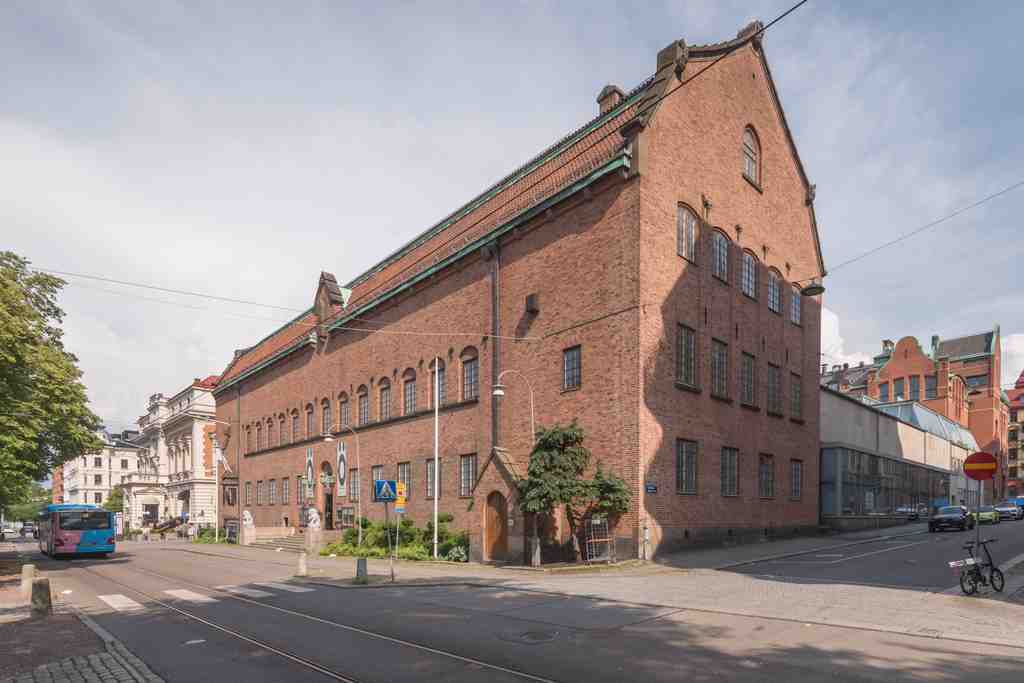
To spot the Röhsska Museum, look for a large, striking red-brick building with a steep gabled roof, tall arched windows, and a pair of statue-flanked doors right at the corner of the street-it's impossible to miss with its bold, castle-like presence! As you’re standing here in front of this grand building, take a moment to soak in its story-because trust me, it’s as full of twists and turns as a Swedish design curve! Picture yourself back in 1916, the year this museum first opened its doors. The world was changing fast, and so was Gothenburg. With the clatter of tram wheels against cobblestones and a city buzzing with industry, the Röhsska Museum rose from the heart of the city like a promise: a promise that art, craft, and beautiful design would always have a home here. But here’s where things get interesting! This museum wasn’t just another solemn house of paintings. Nope, it was a brand-new creature for Europe at the time-a palace dedicated to design, fashion, and crafts. The money didn’t come from the city’s coffers either, but from two very generous brothers: Wilhelm and August Röhss. They weren’t famous artists or designers, but savvy businessmen who loved craft and beauty so much, they put their fortunes-430,000 kronor combined-into a grand vision. Suddenly, Gothenburg found itself with the coolest new place in town, funded by pure passion and a sense of adventure! And you see these red bricks around you? They’re not just any bricks. The architect, Carl Westman, wanted the building itself to tell a story-to stand with a rugged sort of confidence, as if it nods at you and says, “Come in, you’re about to see something special.” If you peer closely, you might even spot some bricks with crowned patterns or upside-down initials (C W, for Carl Westman). It’s like a secret handshake for sharp-eyed visitors! Now don’t let the solid outer walls fool you-inside, the museum was a bustling hive of creativity right from the start. The collection grew and grew, from glittering European and Swedish handicrafts to mysterious treasures from China and Japan, and the city council even made it official as far back as 1904: “Collect, collect, collect!” And boy, did they deliver. By now, there are around 50,000 objects. That’s a lot of teapots, candlesticks, and-believe it or not-even a couple of 17th-century Chinese guardian lion statues. The originals are safe inside, but you can spot their twin guardians flanking the entrance, eternally keeping watch. The Röhsska Museum’s halls have seen everything from rare golden cups and medieval Limoges enamels to avant-garde design and fashion that could make even the coolest Instagram influencer do a double take. As you stroll into the present, you’ll find rooms devoted to everything from Japanese minimalism to glorious Swedish furniture and over-the-top silver gifts from CEO Falk Simon-whose donations were so valuable, they would cover several lifetimes of fika! Every year, the museum hosts not just regular exhibits, but wild, one-of-a-kind shows that might feature anything from futuristic Nordic fashion to the history of how people lived and decorated their homes, from medieval times up to the 1940s. But like all good stories, there have been bumps in the road. By the 2010s, the old building needed a serious spa day, and the workplace atmosphere had gotten more dramatic than a Swedish crime novel. So, from 2017 to 2019, the doors stayed closed while hammers rang and paint cans clattered. When the museum finally reopened, it was ready to shine again-more accessible and more inspiring than ever! So, next time you’re daydreaming at home and spot a quirky vase or a beautifully designed chair, remember: right here in Gothenburg, the Röhsska Museum has been telling the story of design, craft, and creativity for over a century. Who knows? Maybe the next design that stuns the world will come from someone who was once inspired on the very cobblestones where you’re standing! Wondering about the history, the museum building or the item collection? Feel free to discuss it further in the chat section below.
Open eigen pagina →To spot Kungsportsavenyen, just look straight ahead: you’ll see a long, tree-lined boulevard stretching out before you from the big Poseidon statue, running gently downhill and…Meer lezenToon minder
To spot Kungsportsavenyen, just look straight ahead: you’ll see a long, tree-lined boulevard stretching out before you from the big Poseidon statue, running gently downhill and disappearing into the cityscape with grand buildings flanking both sides. Now, take a good breath of that city air and imagine you’re about to stroll along Gothenburg’s very own parade avenue-locally known as just "Avenyn." If Gothenburg were a theatre, Avenyn would be the spotlight-lit stage, dazzling at 840 meters long and always hosting a grand performance of lively city life. Back in the mid-1800s, though, this bustling stretch was nothing more than gardens, greenhouses, and quiet plant nurseries-an unlikely birthplace for the city's proud boulevard. In fact, in 1865, one meeting at city hall reimagined these sleepy plots as the backbone of their big-city dreams. Picture a wide avenue stretching from the old city bridge, cutting a straight line through what used to be the Kristinelund estate-where the only traffic was people bent over tending cabbages! But oh, the drama started early! When the city fathers decided to call it "Kungsportsavenyen," the name itself caused a commotion. Some folks sniffed that "aveny" sounded far too foreign-almost as if Gothenburg was trying on fancy Parisian trousers. At one point, city leaders tried to rename it "Kungsportsgatan" instead, but property owners who didn’t want to change their addresses (and probably got tired of rewriting letters) protested loudly. In the end, tradition won, so “Avenyn” it remained-though people bickered about it as only Swedes can: politely, but incessantly. The first block, Kalmarehus, popped up like a proud first tooth in 1872, but it took until 1914 for the avenue’s very first shop to open-just imagine those empty sidewalks waiting for their first can of pickled herring to be sold at number 24. As the twentieth century rolled in, those generous sidewalks-originally people’s front gardens, can you believe it?-eventually all became public walkways, and the avenue stretched further and further, up past what’s now the bustling Valand tram stop. Speaking of trams, here’s a fun tidbit: stand in the middle of Avenyn and listen for the hum and rattle. Since way back, Valand has been a crossroads of blue trams-if you’re lucky, you might spot line 3, 4, 5, 7, 10, or even the fairy-tale-sounding Liseberg line gliding by. During the 1923 Jubilee Exhibition, the trams proudly rode all the way up to Götaplatsen, circling around like show horses after their big city parade. But Avenyn isn’t just about grand plans and city politics. Over the decades, it’s tuned itself to the rhythms of popular culture and music-rock bands penned odes to it, newspapers held music competitions on its stones, and all sorts of artists and daydreamers have made it their stage. As you look down the avenue, you’re gazing at layer upon layer of history-where Paris met Sweden, addresses changed and changed back, trams sang their metallic songs, and every weekend, someone’s first night out became a story for the ages. Welcome to the living, breathing heart of Gothenburg! Soak it in-but keep an eye out; if you look long enough, you might spot a marching band or a rock legend tuning up for the evening. To delve deeper into the history, valand tram stop or the in popular culture, simply drop your query in the chat section and I'll provide more information.
Open eigen pagina →To spot the landmark, look straight ahead for a majestic stone villa with grand arched windows, cream-colored details, and rich reddish-brown brickwork-this is the Wernerian…Meer lezenToon minder
To spot the landmark, look straight ahead for a majestic stone villa with grand arched windows, cream-colored details, and rich reddish-brown brickwork-this is the Wernerian Villa, rising proudly along Parkgatan. Alright, take a deep breath and let your imagination wander back in time, because you’re now standing in front of the magnificent Wernerian Villa-once the heartbeat of high society in Gothenburg! Just look at it: grand, symmetrical, bursting with elegant carvings and a dash of old-world swagger. You’re peering at a survivor; this villa is the best-preserved building from the 1880s in the city. Let’s rewind to 1883. Picture Carl Wijk, a wealthy merchant-his top hat slightly askew in the wind-eyeing this very plot of land. Wijk wanted more than a nice house; he wanted a true masterpiece. The first architect drew up plans for an enormous stone palace, but the Wiijks-seeking something both grand and personal-decided to go for a more intimate villa. Enter Adrian C. Peterson, a talented architect who must have had a good sense of humor, because he turned away from the dramatic palace plans and instead designed this stately home surrounded by a cozy garden. When construction began, locals would have heard the clang and thud of hammers and stone, curious about what would rise on this prominent street. The villa was completed in time for a grand summer move-in during 1889. Carl Wijk, his wife Emma, and their three children took up residence, and rumors quickly spread about the home’s twenty rooms and the latest wonders-electric lighting and even a backup gas system! It was the sort of place where the clink of fine crystal would mix with laughter across marble halls, and family dinners could be interrupted by a sudden *ding* as the new electric bells rang. This was a home for entertaining, and entertain it did! In 1898, none other than King Oscar II came to stay for dinner-a royal visit that set the local tongues wagging and left the neighbors peeking out their windows, hoping to spot the king’s carriage stopping on Parkgatan. But the atmosphere was also rich with emotion. After Carl’s passing in 1907, the villa-now echoing with the memories of countless events-passed to his son Carl Olof, affectionately called “little Calle.” The story takes a bittersweet twist: Calle moved to London, and his brother Hakon temporarily took over, ensuring the house never sat empty for long. The strong family bond lingered like the scent of old books and polished wood in its halls. In 1915, as if changing hands in a game of musical chairs, the villa was sold to Gustaf Werner-a man who clearly loved the house so much that he eventually gifted it in his will to the city of Gothenburg, with all its treasures and stories preserved. Werner insisted it remain as untouched as possible, and his two sisters, Hilda and Maria, carried on their quiet lives here. Maria even lived to an astonishing 104 years! Imagine, century-old secrets and whispered stories hiding in every corner. By 1950, the city took over and gently modernized the villa while lovingly restoring its grand tri-colored bricks, hand-carved details, and elegant garden. For decades, the space wasn’t just a home; it became a meeting ground for the West Swedish Chamber of Commerce, a center for photographic arts, and eventually a creative hub for architects-so, if you feel a sudden rush of inspiration standing here, you know why. And in 1968, the entire villa was protected as a historical monument, a decision that keeps this slice of the 1880s alive in modern Gothenburg. So go ahead-gaze up at the dramatic facade, the red and yellow Frankfurt bricks, and the swirling details in cement. Try to hear the echoes of lively dinner parties, the tap of well-shined boots, and the low laughter of a Gothenburg evening over a century ago. Who knows-you might even feel a little bit royal as you stand here, too!
Open eigen pagina →If you look straight ahead, you'll see a tall bronze statue of a man standing on a grand stone pedestal, framed by trees and flanked by two large stone spheres at either…Meer lezenToon minder
If you look straight ahead, you'll see a tall bronze statue of a man standing on a grand stone pedestal, framed by trees and flanked by two large stone spheres at either side-right at the beginning of Kungsportsavenyen. Step a little closer and let's meet John Ericsson, one of Sweden’s most inventive minds! Imagine it’s the late 1800s: horses clop along the avenue and the smell of coal fills the air. A group of excited locals are gathered at this very spot, and a hush falls as a new statue is unveiled with great fanfare. There stands John Ericsson in his bronze coat, forever looking ahead-not just because he likes the view of Kungsparken, but because he loved looking to the future. Ericsson was the Swedish inventor who gave the world the boat propeller and helped design the famous ironclad warship USS Monitor during the American Civil War. So, yes, you could say he made things move just a bit faster! But behind this tribute is a story full of drama and emotion. It all started with Claes Adelsköld, a railway builder who decided that Ericsson deserved a statue. Donations rolled in, and finally, Ingel Fallstedt, a sculptor from Denmark, got the job. At first, Fallstedt wanted to put Ericsson’s head on a column with a giant lion below-clearly thinking outside the box! The committee, though, wanted arms, legs… the full Ericsson experience. After some debate, a group of architects took over the pedestal design, letting Fallstedt focus on the statue itself. But creating John in bronze wasn’t easy. Fallstedt, who usually worked with other materials, was under a mountain of stress. In a studio in Denmark, he shaped and reshaped the statue, feeling the pressure to honor a national hero. Sometimes he was so anxious, you could probably hear the sculpting tools clattering to the floor. When he finally finished the statue and sent it off to the foundry, his exhaustion was absolute, and, sadly, he never saw the statue in its final place-his story ended in heartbreak, as many believed the statue “killed him” with the stress it brought. Still, when the unveiling day came and the cloth dropped, a rumble of applause swept through the crowd. Now, whenever you pass by, you’re looking at more than a work of art-you’re seeing the triumphs, struggles, and big dreams of people who wanted to change the world. And remember, every time you see a propeller, tip your hat to John Ericsson, Gothenburg’s master of invention.
Open eigen pagina →To spot the Great Theater, just look through the trees and you’ll see a grand, white stone building standing alone in the park, rising proudly three stories above the street with…Meer lezenToon minder
To spot the Great Theater, just look through the trees and you’ll see a grand, white stone building standing alone in the park, rising proudly three stories above the street with elegant windows and a regal façade. Now, let’s imagine you’re back in 1859, just outside those shining doors of the Great Theater, or Stora Teatern as the locals call it. Picture the fresh paint on this dazzling, thirty-meter-high stone marvel-the first grand stone building built outside the old Gothenburg city moat. The scene is alive with excitement: a parade of carriages, ladies fanning themselves, and gentlemen tipping their hats as everyone clamors for tonight’s premiere. The very first play to ever grace its stage was “Konung Carl den Tionde Gustaf,” an epic tale of a warrior king, full of passion and noble drama. Tickets cost as little as 75 öre, but hey, if you wanted a good seat for your top hat, you'd have to shell out 2:50 riksdaler! But this wasn’t the first attempt at a grand theater for Gothenburg. Decades before, back in 1814, the hopeful Laurentius Segerlind built a massive wooden theater that became Sweden’s second biggest-but unfortunately, box office success wasn’t exactly his strong suit. Poor Segerlind lost sixty thousand riksdaler, so if you ever fret about losing your wallet, just remember Segerlind and you’ll feel better! By the 1850s, the city was bubbling with dreams of a new cultural palace. Influential editors, ambitious businessmen, and creative minds like architect Bror Carl Malmberg came together. Malmberg, inspired by his German colleague’s Dresden theater, designed this building so its beautiful curves and detailing outside matched the excitement and drama happening inside. His genius was crowned by the magnificent round salon and the dazzling chandelier that at first was lit by sixty gas flames-imagine the flickering light, golden ornaments, and the lively sound of an orchestra warming up before the show. But hidden beneath all that glamour and applause, there was a bit of architectural mischief going on. The building was set atop thick Gothenburg clay-up to 30 meters of it! The foundation had to be especially creative, packed with timber piles and stone walls to keep the theater standing. Over the years, the ground shifted and creaked, sometimes causing dramatic (but unintended!) set changes. So, if the whole place ever seemed a bit tilted during a performance, well, it probably was! Inside, the theater became a haven for every kind of show. In its earliest years, troupes would travel from afar, bringing all sorts of plays-dramas, operas, farces, and comedies. A young man named August Strindberg, who would later become one of Sweden’s greatest writers, even got his start here. Sometimes, the place nearly collapsed-not literally, thankfully-but from financial strain, changing owners, and even plans to turn the grand salon into a movie theater. Yet, every time the city almost lost its beloved “Storan,” a group of citizens would rally, risking small fortunes and big reputations to save it. By the 1920s, the theater’s booming voice turned lyrical, hosting grand operas, enchanting musicals, and bold new artistic ventures-from “My Fair Lady” to original Swedish works. Thousands of performances echoed inside these walls, and stars graced its stage-some now legends of the Swedish arts. But as with any old dramatic giant, Stora Teatern faced more close calls. Floors and foundations needed saving, water tables dropped, and by the late 20th century, its main musical productions had moved to the brand-new opera house nearby. The old “Storan” got some snazzy renovations, including high-tech sound studios and fresh, modern restaurants-though, thankfully, not a ghost in sight, except perhaps the faint whisper of applause from the past. Today, Stora Teatern is protected as a treasured landmark, with its beautiful round salon still just as splendid as when the curtain first rose. As you stand here, surrounded by Kungsparken, it’s easy to imagine yourself swept up in velvet seats, the orchestra tuning, and the buzz of an excited crowd, waiting for that grand old chandelier to shine down. So, hats off to the theater that never quite stuck to the script-sometimes it was dramatic, sometimes a little shaky, but always, always ready for the next act!
Open eigen pagina →To spot The Belt Buckle Park, just look ahead for a dramatic bronze sculpture of two men locked in a fierce struggle, standing proudly on a stone pedestal right in front of a…Meer lezenToon minder
To spot The Belt Buckle Park, just look ahead for a dramatic bronze sculpture of two men locked in a fierce struggle, standing proudly on a stone pedestal right in front of a large open plaza with trees in the background. Welcome to the lively heart of the city-Belt Buckle Park! As you stand here, feel the pulse of Gothenburg’s past and present swirling all around. This spot didn’t always have its catchy nickname; it was only in 2003 that folks started calling it after the bold statue, “Bältespännarna,” created by Johan Peter Molin. Imagine it’s the mid-1800s: the city’s old fortifications are coming down, and in their place, parks like this one spring up, framing the city’s natural moat with greenery, laughter, and life. In 1863, this striking statue of two determined men wrestling for their belts-yes, you heard right-was planted here. Maybe they’d had one too many cups of coffee at a fika, and now they’re sorting out who pays the bill! Years passed, and by the late 1980s, a small round pond popped up nearby. In summer, it would sparkle with a fountain, while in winter, it magically turned into a mini ice-skating rink, sometimes called “Sponsringen” after a local sponsor who helped build it. Fast forward to 2013, and the park got a makeover: a smooth new fountain replaced the old, cherry blossom trees were planted, and cozy benches appeared-perfect for enjoying a warm bun or watching the world go by. Today, as children play and cyclists whiz past, you’re standing in a park shaped by dreamers, wrestlers, and everyone who loves a quirky story or two. What a perfect place to end our tour-a park where every day brings a new twist!
Open eigen pagina →
Veelgestelde vragen
Hoe begin ik de tour?
Download na aankoop de AudaTours-app en voer je inwisselcode in. De tour is direct klaar om te starten – tik gewoon op afspelen en volg de GPS-geleide route.
Heb ik internet nodig tijdens de tour?
Nee! Download de tour voordat je begint en geniet er volledig offline van. Alleen de chatfunctie vereist internet. We raden aan om te downloaden via wifi om mobiele data te besparen.
Is dit een groepsrondleiding met gids?
Nee - dit is een audiotour met eigen gids. Je verkent zelfstandig op je eigen tempo, met audiovertelling via je telefoon. Geen tourguide, geen groep, geen schema.
Hoe lang duurt de tour?
De meeste tours duren 60-90 minuten, maar jij bepaalt het tempo volledig. Pauzeer, sla stops over of neem pauzes wanneer je wilt.
Wat als ik de tour vandaag niet kan afmaken?
Geen probleem! Tours hebben levenslange toegang. Pauzeer en hervat wanneer je wilt – morgen, volgende week of volgend jaar. Je voortgang wordt opgeslagen.
Welke talen zijn beschikbaar?
Alle tours zijn beschikbaar in meer dan 50 talen. Selecteer je voorkeurstaal bij het inwisselen van je code. Let op: de taal kan niet worden gewijzigd na het genereren van de tour.
Waar vind ik de tour na aankoop?
Download de gratis AudaTours-app uit de App Store of Google Play. Voer je inwisselcode in (verzonden per e-mail) en de tour verschijnt in je bibliotheek, klaar om te downloaden en te starten.
Als je niet tevreden bent met de tour, betalen we je aankoop terug. Neem contact met ons op via [email protected]
Veilig afrekenen met