
Gothenburg Audiotour: Echo's van Kunst, Cinema & Korsetten in Annedal & Haga
Hoor het gekletter van cavaleriezwaarden en het gefluister van verdwenen weiden terwijl de rustige zijstraten van Gothenburg hun geheimen onthullen. Deze zelfgeleide audiotour ontdekt de stad achter de ansichtkaart – waar elk geelstenen gebouw een rebels verleden verbergt en elke zachte heuvel oude drama's fluistert die de meeste bezoekers missen. Waarom stormden cavaleristen ooit Upper Husargatan af in een wolk van urgentie? Wat ligt er onder de zonnige bakstenen van Nilssonsberg, vergeten toen boomgaarden van de ene op de andere dag verdwenen? Welke inwoner van Annedal veroorzaakte een schandaal dat zo stil en vreemd was dat de lokale bevolking er nog steeds over mompelt? Deze reis slingert door panoramische uitzichten en verwarde verhalen en neemt je mee langs paden waar rellen, heruitvinding en veerkracht de ziel van Gothenburg hebben gevormd. Elke stop zal je doen afvragen wat je ziet en wat eens was. De stad wacht. Stap nu in haar verborgen verhalen – en laat de geschiedenis met je meereizen.
Tourvoorbeeld
Over deze tour
- scheduleDuur 60–80 minsGa op je eigen tempo
- straighten6.0 km wandelrouteVolg het geleide pad
- location_onLocatieGothenburg, Zweden
- wifi_offWerkt offlineEén keer downloaden, overal gebruiken
- all_inclusiveLevenslange toegangOp elk moment opnieuw afspelen, voor altijd
- location_onStart bij Upper Husargatan
Stops op deze tour
To spot Upper Husargatan, look for a long row of tall, sandy-yellow apartment buildings with large glass windows and red rooftops, right by the busy intersection and roundabout in…Meer lezenToon minder
To spot Upper Husargatan, look for a long row of tall, sandy-yellow apartment buildings with large glass windows and red rooftops, right by the busy intersection and roundabout in front of you. Welcome to Upper Husargatan, a street that’s been making history-and a little bit of a ruckus-since 1876! Imagine yourself standing here over a hundred years ago; instead of the hum of cars and trams, you might hear the clatter of boots and the jingling of harnesses. The street’s name comes from the husars, Sweden’s dashing cavalry soldiers in shiny uniforms. The Kronprinsens husarregemente, that’s the Crown Prince’s Hussar Regiment, used to be stationed right where Husargatan meets Södra Allégatan. Before this grand line of buildings, you’d see riders trotting past, horses huffing out clouds in the chilly morning air, and perhaps somebody yelling, "Move aside! Cavalry coming through!" You might even imagine a bit of mystery-why so many troops? Was a royal visit near? Or were they just out for a splendid morning ride? Today, Upper Husargatan links the lively Skanstorget with Linnéplatsen, stretching out above the city like a spine of history. It’s a street that looks ordinary on the surface, but if you listen closely, you might just hear ghostly hoofbeats echoing against the walls. And let’s be honest, wouldn’t you love to see one of those proud hussars trying to navigate a modern roundabout? That’s Gothenburg’s spirit: where history trots beside the everyday.
Open eigen pagina →To spot Nilssonsberg, look for the rows of tall yellow-brick apartment buildings set on a small hill with sweeping views over the city skyline and harbor cranes in the…Meer lezenToon minder
To spot Nilssonsberg, look for the rows of tall yellow-brick apartment buildings set on a small hill with sweeping views over the city skyline and harbor cranes in the distance-it's right there in front of you! Okay, ready for a trip back in time? Imagine you’re standing where orchards once stretched under the care of gardener Åke Nilsson, who moved here in 1860. The air was probably filled with the fresh scent of earth and blossom, where cows grazed on what was known as Nilsson’s Meadow. Nilsson wasn’t just an ordinary guy-this patch of land, once called Spekeberget or Lilla Ryssåsen, ended up being named after him! By the late 1800s, the land was sold to Gothenburg for what today wouldn’t even buy you a small apartment, and soon it transformed into Skanstorget. Fast-forward to the 1970s, and imagine huge machines rumbling up the slope, making way for the bold yellow-brick buildings you see today. These aren’t your average homes; there are hundreds of apartments here, rising nine to eleven floors on top of the hill, designed by Lund & Valentin who must’ve had a fondness for views and sunny brickwork. So next time you walk past, think of Nilssonsberg as a place that’s grown from wild meadows to buzzing city life-a spot that’s seen cows mooing and kids moving in, all on the same ground. Don’t worry, the only thing you’ll be dodging now is the occasional swooping seagull, not a runaway cow!
Open eigen pagina →Look out over the skyline-directly in front of you, just beyond the autumn-tinted trees, clusters of brick and pale-colored residential buildings fan out along the sweeping…Meer lezenToon minder
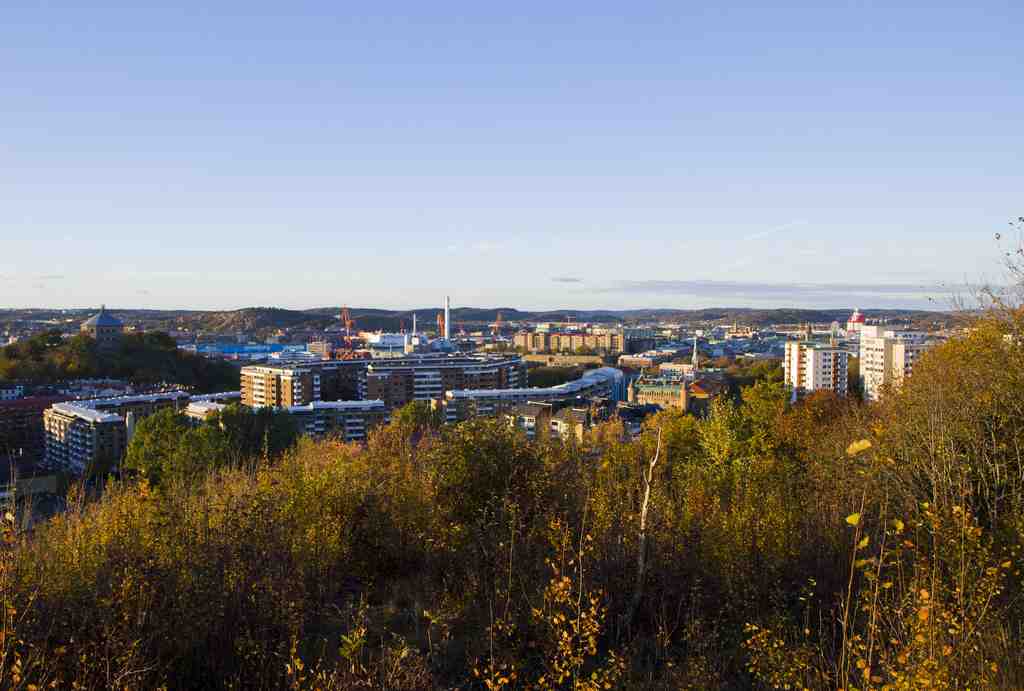
Look out over the skyline-directly in front of you, just beyond the autumn-tinted trees, clusters of brick and pale-colored residential buildings fan out along the sweeping valley, resting quietly between gentle hills and the city beyond; that’s Annedal! Welcome to Annedal, a neighborhood that’s seen more twists and turns than a squirrel on a caffeine rush! Imagine it: a couple hundred years ago, you’d be standing here not among apartments and city hum but surrounded by wild fields and grassy meadows, with the odd herd of cows chewing thoughtfully as the breeze rustled the tall grass. Back then, before the apartment blocks and the buzz of city life, this area was little more than open land and hillside, stretching out on the edge of the grand manor called Anneberg, named after Anna Hedvig-maybe the only person here with enough influence to have both a hill and a meadow named after her! By the late 1800s, Annedal started to hum with activity. Have you ever heard a whole neighborhood being ‘born’? Well, it kind of sounded like a lot of hammers and saws! The fields gave way to red-brick houses, cheerful three-story wooden buildings, and cobblestone lanes. It wasn’t just random people moving in-no, big ideas were taking root. Here, the very first “Änkehem” in Sweden opened its doors in 1909, giving widows a safe, dignified place to live when life threw them a curveball. But life in Annedal wasn’t always so tranquil. Around the 1960s, the city planners put on their hard hats, dreaming of modernity. There was a commotion as homes-many of them charming old landshövdingehus-faced the wrecking ball. Some called it “sanering,” but to locals who saw their beloved neighborhood being stripped of its character, it probably sounded more like, “Oh no, not my favorite bakery!” Yet, hope wasn’t lost! A handful of those proud, old red-brick houses managed to survive-like tiny islands of history amid the rising sea of 8-story apartment lamellhus that sprang up in their place. Hidden among the new builds, you still find echoes of history: Annedalsskolan, Robert Dickson’s dignified workers’ housing, and the legendary Annedalshuset at Brunnsgatan 14, now home to the Annedal Apartment Museum. If these walls could talk, they’d probably have a few stories-some with laughter, some with the occasional complaint about noisy neighbors. Annedal grew up as a neighborhood for workers-not all silk scarves and fancy dinners, but full of spirit and community. And surprise! It was also a place for groundbreaking institutions: the folkskoleseminariet (teacher training college) trained the teachers of tomorrow, and the Epidemisjukhus (the old infectious diseases hospital) stood ready for all kinds of medical drama. Oh, and don’t forget, just a little further south stands Annedalskyrkan, the majestic church that arrived fashionably late in 1910. The past is never too far away here. On these very streets, you’d once walk past neighborhoods named for fruits and trees-Äpplet (the apple), Oliven (the olive), Slånbäret (the sloe berry)-as if the city planners were making up for all the farmland they’d replaced. Even the hills have character: centuries ago, local kids dared each other to climb “Stora Bulleråsen”-the not-so-whisper-quiet hills bordering Landala and Annedal. Today, Annedal stands as both a memory and a modern home, no longer just a primärområde with a tongue-twisting name in the city records, but a living patchwork of Gothenburg’s dreams, dramas, and daily lives. So as you take in the view and breathe in the crisp air, think of all those layers beneath your feet-stories of Anna Hedvig, echoes of old wooden houses, dreams of better lives, and maybe, if you listen closely enough in the evening, the faintest ring of that old cowbell.
Open eigen pagina →


Toon 17 stops meerToon minder stopsexpand_moreexpand_less
To spot Konstepidemin, look uphill for a cluster of pale yellow buildings with greenish rooftops nestled among trees above the main road-the area sits atop a rise, set apart from…Meer lezenToon minder
To spot Konstepidemin, look uphill for a cluster of pale yellow buildings with greenish rooftops nestled among trees above the main road-the area sits atop a rise, set apart from surrounding apartments. Alright, imagine you’re walking up a little hill and suddenly stumble onto a patch of old stone pavilions with those distinct, mint-green rooftops nestled between bare-branched trees-feels a bit mysterious, right? That’s Konstepidemin. Today, it’s buzzing with artists at work, but once upon a time, these halls heard very different noises. Let’s wind things back to 1886, when instead of painters and musicians, it was doctors, nurses, and the haunting echo of hospital shoes along the stone corridors. This was Gothenburg’s epidemic hospital, built to care for the city’s sick during outbreaks-pretty dramatic, with a whiff of mystery! The building’s purpose shifted over the years, from an epidemic hospital to a busy psychiatric clinic for children. As the decades rolled on and the world changed, the hospital’s role slowly faded away. The last cries and laughter of kids faded with it, and the place fell mostly silent, with empty rooms staring out at the city below. Now, let’s skip to the smokey, neon 1980s: imagine a couple of artists too stubborn to give up the dream of finding somewhere to create. Studios elsewhere in Gothenburg were vanishing as the city hurried forward, knocking down the past to make room for something shiny and new. But then-in a lucky twist worthy of a detective movie-artists Robert and Jens stumbled over these empty pavilions. They had an idea nobody expected: why not fill the old hospital with the wild energy of painters, writers, musicians, and performers? Picture the excitement building and a flurry of activity as word spread. A fever for art, not illness, swept in. By 1987, Konstepidemin was born-a creative village of about 14 buildings and beautiful open spaces. Today, there are over a hundred studios, galleries, residency spots for visiting artists, and a cheerful bistro called Blå huset. Every month there’s “Epidemilördag”-open days with exhibitions, workshops, and performances where ideas spread even quicker than a cold during flu season! Stand here now and listen; if you imagine hard enough, you might just hear a violin tuning up, the scratch of a painter’s brush, and the lively hum of inspiration at work. Only in Gothenburg could a place once filled with worry and whispers transform so magically into a bustling laboratory of creativity. Who knows-maybe the building keeps a few arty secrets of its own! Wondering about the area, activity or the artists? Feel free to discuss it further in the chat section below.
Open eigen pagina →To spot the Göteborgs Naturhistoriska museum, look up the hill just above the busy intersection and tram hub-it's the grand brick building with the tall tower and green spire…Meer lezenToon minder
To spot the Göteborgs Naturhistoriska museum, look up the hill just above the busy intersection and tram hub-it's the grand brick building with the tall tower and green spire rising above the treetops, almost as if it’s keeping a careful eye over Slottsskogen park just below. Now, take a deep breath of that foresty air-because you’re standing on historic ground, right in front of a treasure chest of nature’s greatest hits and a dash of quirky Gothenburg humor! So, let’s rewind the clock all the way back to 1833, when the good people of Gothenburg decided, “Why not collect the wonders of the wild right here in our backyard?” Led by the ambitious Olof Fåhræus, who was equal parts science buff and customs boss, the city’s Royal Society of Sciences got the ball rolling on what would one day become this very museum. Back then, they started small-imagine two borrowed rooms overflowing with oddities in the old East India House. But as more and more animal specimens poured in, the rooms started feeling cozier than a hedgehog's burrow! The city finally agreed they needed a bigger shell, and after nearly a century of collecting everything from beetles to blue whales, the museum got its forever home up here on Olivedal Hill, perched above the city’s heartbeat. The building opened in 1923 and, believe it or not, the price tag set the city talking-a whopping 1,480,000 kronor, which back then was enough to make an elephant stampede! Speaking of elephants, the museum is home to one of the world’s most brilliantly stuffed pachyderms, crafted by the legendary conservator David Sjölander. This elephant didn’t just wander in-it came all the way from Angola, with a trunk so long and a hide so massive that it took three years, 80,000 steel spikes, and mountains of blue clay to get just right. Poor Sjölander, after years of working side by trunk-side with this gentle giant, finished his masterpiece... then promptly had a stroke two months later! (We’re guessing he just needed a VERY long nap.) But the elephant isn’t even the museum’s biggest celebrity. Nope, that title goes to the Malm whale, a young blue whale that, back in 1865, got itself stranded in nearby Askimsfjorden. Gothenburgians don’t do things by halves, so they stuffed the whale-an absolutely massive endeavor! A couple of times a year, you can even sit inside the whale and hear tales of ocean adventures echoing off its ribbed walls. No fishing tales, I promise-just real sea stories. And that’s only the start. Step inside and you’ll find over ten million specimens, from West Swedish critters to geological treasures. There are fossils and minerals, dioramas with scenes teeming with birds, beasts, and beetles. They even tracked the tug of the Solar System, building a planetary model-the Rymdpromenaden-at one two-billionth of its real scale. The “sun” is the yellow orb on the building’s wall; wander down the hill and you’ll stumble upon the tiny planets, dotting Slottsskogen like cosmic jellybeans, each one placed an astronomically precise walk away from the next. Over the decades, the museum has been alive with both bustle and debate. From its collection of scientific "type specimens" to long-running displays sparking conversations about ecology, human impact on Earth, and, on a more sensitive note, the ethical complexities of old anatomical collections. Even recently, folks here have grappled with how best to honor the past while respecting modern values-and that’s a topic that’s given museum staff, scientists, and city leaders more than a few sleepless nights. Inside, you’ll feel the blend of old and new: updated corridors and classic halls, the buzz of school groups mixing with quiet, wide-eyed wonder from visitors young and old. Need a break? There’s a cozy café right by the entrance, often full of families and friends fueling up for their own mini-expeditions through the wilds of science. So, whether you’re hoping to meet an elephant face-to-face, trace the story of a stranded blue whale, or just let your imagination run wild among ten million wonders, this museum is Gothenburg’s testament to the thrill of curiosity. And as you stand here, you’re sharing in nearly two hundred years of adventures. Just remember if you hear something big rumbling behind you-it’s probably just the next tram. Or maybe it’s the spirit of that mighty elephant, having a little fun with the visitors!
Open eigen pagina →To spot Olivedalsgatan, just look straight ahead for a long, narrow street lined with tall, yellow and brown brick apartment buildings, where tram tracks run between rows of…Meer lezenToon minder
To spot Olivedalsgatan, just look straight ahead for a long, narrow street lined with tall, yellow and brown brick apartment buildings, where tram tracks run between rows of parked cars, drawing your eyes toward the distant, misty hills. Now, as you stand here on Olivedalsgatan, picture yourself back in the late 1800s-no rumbling trams, no buzzing cars, just the crunch of gravel beneath your feet and the occasional clip-clop of a horse. This street, stretching a tidy 385 meters, once followed an avenue lined with leafy trees. The whole area gets its name from the vanished Olivedal estate, and rumor has it that estate owner Olof Melin named the place after his daughter, Olivia. Romantic, right? You might say Gothenburg has always had a flair for the dramatic…and a touch for family pride! Imagine, right at the southwestern tip, there stood a grand manor house, with elegant windows peeking out over quiet fields. If you listen closely, you might almost hear the laughter of Olivia Melin echoing across time, as she explores the gardens her father tended. The real twist? The original Olivedals allé actually ran thirty meters south of where you’re standing-so you’re stepping in the footsteps of a street that once ran parallel in a slightly different universe. So next time someone tells you a street is “just a street,” you can wink and say, “Not in Gothenburg!” Here, every stone and sidewalk has a little mystery, a lot of history, and maybe…a ghost or two of the Melin family keeping watch.
Open eigen pagina →Nordenskiöldsgatan is just ahead-look for a lively city street lined with tall brick and brownstone apartment buildings, balconies jutting out, and a cozy café with orange awnings…Meer lezenToon minder
Nordenskiöldsgatan is just ahead-look for a lively city street lined with tall brick and brownstone apartment buildings, balconies jutting out, and a cozy café with orange awnings at the corner, right across from the crosswalk and traffic lights. Let’s take a short stroll through time, shall we? Imagine you’re standing here in 1894-cobblestones underfoot, the clip-clop of horses echoing along Nordenskiöldsgatan, a brand-new street named in honor of the adventurous scientist Adolf Erik Nordenskiöld. He was like Sweden’s own Indiana Jones, famous for braving Arctic seas and finding the Northeast Passage! The city loved him so much they gave this whole street his name, like a giant thank-you card-except, you know, longer and harder to deliver. As you gaze up at the buildings and listen to the sounds of modern life, try to picture what this place felt like well over a century ago, when it started as a crossing right at the edge of Annedal, stretching its way past what’s now Sveaplan and cutting through major streets like Sveagatan and Linnégatan. Back then, who knew if you’d bump into a local baker or a budding explorer right here? Maybe even a scientist with snow in his beard, dreaming up his next big adventure! This street isn’t just a way to get from here to there-it’s a living memory of curiosity, courage, and a splash of Nordic ice. Now, on to more discoveries!
Open eigen pagina →To spot Kommendantsängen, look straight ahead for the grand, light-colored building with the green roof and turret rising above a cozy courtyard lined with cars and surrounded by…Meer lezenToon minder
To spot Kommendantsängen, look straight ahead for the grand, light-colored building with the green roof and turret rising above a cozy courtyard lined with cars and surrounded by tall, ornate buildings on both sides. Now, as you stand here, take a deep breath and imagine: once upon a time, this bustling pocket of Gothenburg was nothing but wild grassy fields. If you had strolled across here a few centuries ago, you might have dodged officer’s horses munching away, since this was royal land reserved as pasture for the cavalry. The whole area answered directly to the powerful commander posted at Älvsborg Fortress-that’s actually where the name Kommendantsängen comes from! But let’s rewind even further. Close your eyes and picture the year 1651. There’s no city noise or car horns-just the rustle of grass and the distant clopping of hooves. Back then, it was decided these lands would be part of Älvsborg’s royal farm, and for centuries after, the field passed through different names: “Commendants’ Meadow,” “Skansängen,” and even “The Colonel’s Meadow” depending on who was in charge. Fast forward to the 1800s-suddenly, there’s a bit of drama. After Gothenburg absorbs Majorna in 1868, the state insists on keeping rights to this patch. Talk about being possessive about your lawn! When the city finally bought the land in 1890 for 10,200 kronor, it opened up a new page in the neighborhood’s life. But before that, believe it or not, Kommendantsängen even served as a cholera cemetery-at its busiest, there were 1,706 graves, packed into the grass. When the graveyard was dug up in 1896, the land slowly gave way to the Gothenburg you see around you. The turn of the 20th century brought change-about twenty grand “landshövdingehus” or governor’s houses shot up, especially along the southern slopes of nearby Skansen Kronan. Imagine stately balcony railings, busy bakers at Asklund’s Steam Bakery, and workers hustling into the busy corset factory-yes, there was a time when this area helped hold up the city, quite literally! What about these buildings? The big yellow-brick house with the pointy green turret is Linnégatan 32A, also known as Villa Ideborg, and it’s the last of its kind left-built in 1898 with quirky balconies, garden space, and topped with decorative turrets and spires. It’s stood here weathering every twist in Gothenburg’s wild story. By the 1960s, most of the original wooden governor’s houses were torn down, making space for the sturdy stone residential blocks you see. The area kept transforming-new homes rose in the ‘80s, and the neighborhood became so valuable for the city’s story that much of it is now protected as a heritage area. Standing here, remember that Kommendantsängen is a stage where officers, bakers, corset-makers, and even cholera patients once took their turn. The past is always just beneath your feet in Gothenburg-sometimes literally! Now onward to our next stop-we’re on a roll!
Open eigen pagina →To spot Gothenburg’s corset factory, look for a sturdy four-story building perched on the hillside, with bold bands of red and yellow brickwork and large, arched windows peering…Meer lezenToon minder
To spot Gothenburg’s corset factory, look for a sturdy four-story building perched on the hillside, with bold bands of red and yellow brickwork and large, arched windows peering out over the street like curious eyes. Now, let’s step back in time-imagine you’re walking here in the late 1800s, when the air would have buzzed with the sounds of sewing machines and the rustle of fabric. This place, known as Göteborgs Korsettfabrik, was anything but ordinary. The factory sprang to life in 1898, right when Gothenburg was charging full-steam into the age of industry. Before that, the city was more about salty sea breezes and shipping, but suddenly it was churning with factories, and no one churned quite like this landmark on Kastellgatan 1. Picture a bustling hive where countless women stitched, sewed, and shaped corsets, stockings, curtains, and a whole catalog of other textiles-more threads intertwined here than you’d find in the best mystery novel. The building itself rises boldly, almost cube-like, its sun-flooded windows stretching tall because daylight was a worker's best friend long before fluorescent lighting crashed the party. But here’s a quirky twist: the plot was meant for a stately residence, but architect Gustaf Wickman (who, by the way, moonlighted as the brother of the factory owner-talk about keeping it in the family) transformed it into this grand terraced monument, using granite, red and yellow brick, and a bit of architectural show-off with its patterned masonry and strong stone base. The upper level, once a sunlit sewing room, doesn’t even have windows facing the street-only skylights above, beaming golden light onto rows of hard-working seamstresses below. Maybe the owners wanted Corset HQ to look just as fortified as neighboring Skansen Kronan; after all, when you’re selling support by the yard, it helps to look strong! There’s even a mysterious round extension at the back that once hid a special oven for ironing the corsets. And if you squint, you might just spot the beautiful spiral staircase inside-said to inspire a few dramatic twirls at lunchtime. So, as you stand here where couture and industry once met, take a deep breath and listen for the echoes of a thousand stitches. And hey, if you find yourself standing a little straighter, thank the corset makers-posture was always their specialty!
Open eigen pagina →Right in front of you is Skanstorget - look for a wide open square lined with tall, classic apartment buildings and a patch of green in the middle, making it stand out from all…Meer lezenToon minder
Right in front of you is Skanstorget - look for a wide open square lined with tall, classic apartment buildings and a patch of green in the middle, making it stand out from all the busy street activity and surrounding parking. Now, take a deep breath and step into the story of Skanstorget, a Gothenburg square with roots as tangled as the city’s cobblestone streets. Imagine you’re standing at a crossroads - not just of trams and traffic, but of history itself. Skanstorget's location is unique: it’s mostly Haga, but also nudges into Annedal and Kommendantsängen, as if it couldn’t quite decide where it belonged. And it’s named for Skansen Kronan, just a stone’s throw - or, if you’re athletic, maybe a frisbee’s toss - to the west. The year is 1739. The square is just a plain meadow at the edge of the city, sloping gently beneath the shadow of Skansen Kronan. Suddenly, it’s embroiled in drama! Enter Johan Staaf, a furir (think: ambitious, mustachioed guy with grand ideas) who persuades the city magistrate to give him the land east of the fortress. Convinced he’ll make a fortune, Johan decides to grow tobacco. Tobacco in Sweden? That’s what you call optimism! He fences off his patch with a gate and hires men, but now, the locals of Haga can’t graze their cows or water them in the nearby stream, because Staaf has dammed it. Picture a line of disgruntled townsfolk and slightly thirsty cows, jangling their bells in protest. But alas, Staaf’s dreams go up in smoke, thanks to storms, sickness, and bad luck. His tobacco plants rebel, his backers pull out, and when Staaf tries to sell the land back to the city, he only gets paid for the fence. The meadow falls back to the people, animals return, and the city’s boundary lines start to blur, sparking land disputes that last for years - because nobody could quite figure out where one border started and another ended. This, my friend, was not your average game of Monopoly! By the mid-1800s, a parade of characters takes over. There’s Martinsson the sailmaker, then Jacob Bygren the gardener, who turns the area into a leafy park complete with an impressive avenue. Imagine the clack of carriage wheels and the rustle of leaves as households slowly creep closer from Haga, chasing the edge of the city. Eventually, the land changes hands again: Nilsson the gardener buys it, and suddenly we have Nilssons äng - Nilsson’s Meadow - before the growing city takes over for good. By 1888, all this patchwork forms Skanstorget. The city is booming, traffic swirls, and new two-story wooden houses pop up along the north and south of the square. Each little block picks up a military-themed name: Grenadjären, Artilleristen, Sappören - as if they’re ready for a parade. The magic keeps rolling! In 1898, a great round market hall pops up right in the center, affectionately dubbed “Spottkoppen” (“The Spittoon” - now there’s a nickname to cherish). With 23 stalls, it becomes the heart of the market, echoing with laughter, shouts of vendors, and the buzz of daily life, all on bumpy cobblestones. Sadly, like many grand tales, the hall is gone by the early 1940s, but echoes of bustling trade remain. Don’t forget the drama of the late 1930s, when a local merchant, August Johansson, fought the law to sell garden furniture here - and won! There was even a cinema built in a grand six-storey building right at the southern corner. Every brick, every tree, every echo of market chatter tells a piece of Gothenburg’s story. Turn around, look up at Skansen Kronan’s proud outline, and imagine the children, once cramped in the streets, finally tumbling over grassy slopes and wide sand paths. Skanstorget isn’t just a square - it’s the beating heart of centuries of city life, full of ambitious dreams, community squabbles, and just enough mischief to keep it interesting.
Open eigen pagina →To spot the old Skansen movie theater, look for a wide building with big glass doors and a bright, curvy “skansen” sign above the entrance, standing out against the brick…Meer lezenToon minder
To spot the old Skansen movie theater, look for a wide building with big glass doors and a bright, curvy “skansen” sign above the entrance, standing out against the brick facade. Now, imagine yourself back on a chilly December evening in 1936. Crowds eagerly line up outside, scarves pulled tight and cheeks pink from the winter air. Under the glowing marquee, “skansen” lights up the street, promising an escape into a world of film and glamour. The doors swing open with a rush of warm air and the mingled scent of popcorn and excitement. For 50 years, Skansen was the place where locals came to laugh at comedies, gasp at thrilling adventures, or maybe steal a kiss during the scary parts. Every weekend, it buzzed with life-sometimes, the projector would hiccup, and the audience would groan in unison, only for everyone to cheer when the film buzzed back on. But in May 1986, after its final curtain call, Skansen closed its doors as a cinema. Was that the end? Not at all! In 1987, something magical happened: the theater transformed into Atalante, a stage for live dance and performance art. Today, when you stand here, you might hear echoes of laughter and applause from nights long ago, and if you listen closely, maybe the tap of dancers’ shoes too. This spot has never stopped entertaining Gothenburg-it's just changed its rhythm.
Open eigen pagina →To spot the Capitol, Gothenburg, just look for the cozy cinema entrance with its glowing neon red “Capitol” sign and green stars above the glass doors, facing straight onto the…Meer lezenToon minder
To spot the Capitol, Gothenburg, just look for the cozy cinema entrance with its glowing neon red “Capitol” sign and green stars above the glass doors, facing straight onto the street right in front of you. Welcome to the iconic Capitol! Picture yourself standing outside on a chilly night, the neon red sign buzzing and sparkling above you, inviting film lovers inside since 1941. Back then, people lined up in their finest clothes for the very first showing-“Cobra,” known in English as “Moon Over Burma”-eager to experience the magic in plush, velvet-covered armchairs colored like English roses. The cinema glowed with yellow walls, and terracotta panels as if the sun itself wanted to join the movie. If you squint just right, you might almost see those first visitors stepping under the theater’s cheerful neon marquee. But Capitol was never just about watching films-it’s been an ever-changing stage for Gothenburg’s secrets and stories. After its glamorous early days, the ‘70s brought a twist worthy of any dramatic script. The cinema transformed into “Nya Boulevard,” showing-let’s just say-some spicier films for grown-ups! The red chairs from this era might still be haunted by all the embarrassed laughter. More practically, the theater got a new aisle and more legroom, perhaps so you could more easily scoot out if the movie became too much! Then came 1988, with a rescue worthy of a blockbuster ending. Bio Capitol was reborn under new, passionate owners who adored film, reopening the doors for cinephiles of every stripe. It even hosted the famous Cinemateket film club, which filled the evenings with laughter, hushes, and the flicker of classic Swedish and international movies. During the ‘90s, they even squeezed in a tiny screening room-Lilla Capitol-just 18 seats, perfect for feeling like you had your very own secret cinema. But as every good film knows, there’s always a bit of tension. There were tough moments when it seemed like the credits might roll for the last time-funding ran low, the partnership with Cinemateket paused, and film projectors went quiet. Yet just as the popcorn started to go stale, in 2013, three plucky film lovers swooped in for the ultimate rescue mission. They re-lit the neon and reopened the doors, showing that very same premiere film from 1941 as a nod to Capitol’s roots. Today, Capitol blends the best of both worlds-digital projectors share space with old-school 35mm ones, and the program promises movies “culturally rich but always accessible.” And thanks to film clubs like De ungas val, even the city’s youngest movie buffs have a say in what’s on screen every Sunday. So, take a good look at that neon glow and the busy glass doors. Every time you step back in here-whether for a cult classic, a family matinee, or just for the feeling of sitting in a dark room with strangers-all those decades of cheers, whispers, scandals, and comebacks are alive all over again. At Capitol, there’s always a new scene waiting to begin.
Open eigen pagina →Ahead of you is a narrow cobblestone street lined with colorful, old buildings on both sides, stretching downhill-just look straight ahead and you can’t miss the charming rows of…Meer lezenToon minder
Ahead of you is a narrow cobblestone street lined with colorful, old buildings on both sides, stretching downhill-just look straight ahead and you can’t miss the charming rows of windows and slanted rooftops. Welcome to Husargatan, one of the oldest and most storied streets in all of Gothenburg. Imagine it’s the year 1852-horse hooves clop against the stones under your feet as Kronprinsen’s hussars, the daring cavalry unit, parade boldly down this very road. The name Husargatan, which was set in stone that year, is in honor of those soldiers, who were stationed nearby in a big, handsome barracks at the end of the street. Back then, the air would be thick with the scent of fresh timber, and you might hear the busy clatter of carpenters-because the street’s old name, Timmermansgatan, suggests a master timberman once made this his turf. When you stroll halfway down the street, you’ll notice something unusual: the sound and feel of your footsteps change, as asphalt meets clinker tiles underfoot. That’s thanks to a 1930s makeover, when Husargatan became the “main street” of Haga, with smoother paving and prouder, bustling storefronts. Picture the tension when city officials almost closed the crossing right in front of you-imagine the complaints! Luckily, tradition won out, so this crossing still connects past and present. So take a deep breath-can you smell a bakery or maybe hear laughter from a nearby café?-and step through the living history that is Husargatan.
Open eigen pagina →You’ll spot Schoolgatan as a charming, narrow cobblestone street lined with pastel wooden and brick buildings-just look down this peaceful lane to see its gentle curve and…Meer lezenToon minder
You’ll spot Schoolgatan as a charming, narrow cobblestone street lined with pastel wooden and brick buildings-just look down this peaceful lane to see its gentle curve and old-world character. Now take a deep breath and imagine the city nearly 200 years ago-Schoolgatan has seen it all. Back in 1852, they gave this street its studious-sounding name, but here’s a secret: before that, it was known as Sjömansgatan, named after a sailor who once lived nearby. Maybe that means you’re standing right where salty sea tales once floated in the air! Schoolgatan is one of Haga’s oldest streets, dating all the way back to 1798. The big reason for its name? Schoolgatan was the home of Östra Hagaskolan, a school that started all the way back in 1817, in a humble wooden house. A new schoolroom, called a lancaster hall, was added in 1827-imagine the laughter and chatter of young students echoing through the street. By the 1860s, the classes had spilled into bigger stone buildings. Books, chalk dust, and the passion to learn were everywhere. But Schoolgatan isn’t just about homework-it was also the setting for Albert & Herbert, a hilarious Swedish TV series about a father-and-son scrap dealer duo living right up the road at number 15. So if you get an itch to rummage for treasures or tell a dad joke, now you know why. Schoolgatan holds layers of laughter, learning, and a dash of mystery from every corner.
Open eigen pagina →Ahead of you stretches Landsvägsgatan-just look down the slope for a long street lined with tall, brick and stone buildings in soft brown and red shades, with little balconies and…Meer lezenToon minder
Ahead of you stretches Landsvägsgatan-just look down the slope for a long street lined with tall, brick and stone buildings in soft brown and red shades, with little balconies and a parade of parked cars along the curb. Now, picture yourself here in the late 1700s, before the pavement, before those cars-and maybe even before your morning coffee! Landsvägsgatan is no ordinary street; it’s one of the oldest in all of Haga, its origins going back to 1798. Once, this was the main road south, out toward the rolling farmlands of Västra Frölunda. Imagine carriages rattling by, farmers bickering about the price of eggs, everyone needing to pass a toll gate-maned by some rather serious-looking officials, right where Järntorget meets this street. It changed names more often than a chameleon changes color: first Tullgatan, then Stora Tullgatan, Tullportsgatan, Stora gatan, and Stora Slottsskogsvägen. A real identity crisis! All these names came from the city’s efforts to make sure no farmer, with pockets full of potatoes, could sneak into Haga or Masthugget without paying their toll. Eventually, the toll boom was pushed west in the 1830s, letting Landsvägsgatan finally shake off its “taxation station” reputation. So, as you feel the vibe of the street today, imagine the echoes of all that drama-city guards, grumbling traders, and even a few sneaky locals plotting their toll-dodging adventures. Not just any street-you’re walking a road built on centuries of hustle!
Open eigen pagina →To find Hagabion, just look for a cozy corner entrance set in a reddish-brown brick building, featuring a marquee with “HAGABION” in big white letters and a staircase leading up…Meer lezenToon minder
To find Hagabion, just look for a cozy corner entrance set in a reddish-brown brick building, featuring a marquee with “HAGABION” in big white letters and a staircase leading up from street level-trust me, it’s tough to miss! Alright, step right up, film lover! You’re now at the legendary Hagabion, the beating heart of Gothenburg’s indie cinema scene. Let’s take a stroll through time and picture the hustle and bustle of movie nights here over the decades. The story of Hagabion actually begins with a bit of a plot twist: before it landed in this striking brick building at Linnégatan, it lived a whole previous life in Haga, back when bell-bottom jeans were still groovy. Imagine it-back in the autumn of 1974, Gothenburgers first cozied up in a tiny theater on Skolgatan, where just 80 people could squeeze in. The air was thick with excitement and possibly the smell of popcorn as the very first screening rolled out: Costa-Gavras’ film “Gisslan.” But Hagabion knew how to keep things interesting! The films here were chosen to give Hollywood a run for its money-documentaries, international features, animation with a side of classic Disney, and not a blockbuster in sight. Its crowd soon outgrew the little venue, and in the early 1980s, with the kind of stubborn optimism only true film lovers possess, the Hagabion team packed up their reels and moved… right here, to Linnégatan 13. These walls you’re admiring once belonged to the Viktoriaskolan, built way back in the 1870s, silent for years until the laughter, sighs, and applause of filmgoers brought it roaring back to life. Major renovations in 1981 transformed classrooms into theaters: four rooms merged into the grand “Svarta salongen,” and the old gymnasium was reborn as a vegetarian café-the perfect spot to discuss whether French New Wave really is as deep as it seems! On the opening day at its new home, the cinema went all out, showing movies nonstop until the wee hours-imagine the determined cinephiles clutching coffee and watching films through to 2 a.m.! Attendance shot up: from 25,000 annually at the old location to a whopping 60,000 here at Linnégatan. To keep up with the demand, Hagabion added a third, adorably tiny theater room in the 90s where you and just a handful of friends could watch films on their way out of the schedule-a little like having your own private screening. But Hagabion isn’t just a place to watch movies; it’s an entire universe. It champions films from all corners of the globe-French on Wednesdays in spring and autumn with their Ciné Français series, Balkan movies, German autumns, Spanish-language gems, and even showcases for Hungarian films. During the infamous Gothenburg Film Festival, this place comes alive as a festival cinema, buzzing with schoolchildren on field trips and eager fans chasing rare, thought-provoking documentaries. Let’s not forget the atmosphere: Take a deep breath and you might smell fresh coffee from the attached café or catch the rustle of movie posters fluttering in the breeze by the door. Hagabion is volunteer-run by the Folkets Bio association, lending the place a kind of grassroots magic-you’re just as likely to run into a filmmaker as a teacher or a retiree in the café. And in case you’re wondering, those stairs you climbed? Generations have trudged up them to catch a film, rain or shine. So, what will you see next-an indie doc with no superheroes in sight, or an obscure animated masterpiece you’ll be telling friends about for years? That’s the thrill of Hagabion: wherever you’re from, whoever you are, there’s always a seat for you… and a movie you never expected to love.
Open eigen pagina →Right in front of you, look for the glowing neon green “BRÄUTIGAMS” sign above a bright, welcoming shop with checkered floors, elegant chandeliers, and shelves packed with…Meer lezenToon minder
Right in front of you, look for the glowing neon green “BRÄUTIGAMS” sign above a bright, welcoming shop with checkered floors, elegant chandeliers, and shelves packed with treats-if you smell marzipan, you’re in the right spot! Welcome to Bräutigams-where sugar, elegance, and a dash of royal flair once mingled in the very air! Imagine bustling Gothenburg in 1870: a sea of mustaches, top hats, and the clang of horse carriages. Into this humming city stepped Emil Bräutigam, fresh from Thüringen, Germany, his pockets full of ambition and maybe a forgotten biscuit or two. He opened a tiny sugar bakery, first bubbling with caramel and fudge over on Skolgatan, and soon, the aroma wafted down every street and alley. Emil even sold candies on weekends in the city squares, tempting passersby with sweets that would make your dentist wince in delight. As the family business grew, so did its reputation-at one point, the Bräutigams motto was “Only the best for the customers,” and they weren’t kidding around. By 1911, their work was so legendary, the Swedish royal court gave them the ultimate thumbs-up-they became official purveyors to the Crown. Not too shabby for a bunch of sugar-wranglers! In 1917, they moved into this stunning corner building, complete with sparkling chandeliers and a marble counter you could practically slide a cinnamon bun across. The building itself is the result of grand dreams and some serious muscle; it had to be specially reinforced just to hold the weight of all those ovens on the third floor. Through the decades, Bräutigams became the premiere hangout for Gothenburg’s high society. Picture the clink of fine china, piano music trickling through the air as house pianist Harry Persson filled the room with sweet melodies. The biggest challenge in here was resisting a second-or third-slice of cake. Even the interior was a work of art, designed by Otto Schulz in his first major commission-a space so lovely that even the pastries might have felt underdressed! Although the café closed its doors in 1993, echoing with memories and maybe a distant crumb or two, the Bräutigam tradition carries on today with its fifth generation-still crafting marzipan wonders, just without the clatter of teacups. So as you stand here, imagine the laughter, gossip, and sweet aromas that once danced through these doors. Who knew confectionery could stir up so much history? Now, who’s in the mood for a little marzipan adventure?
Open eigen pagina →Look straight ahead for a charming street lined with wooden buildings in soft, earthy hues, big bay windows, and bright awnings, with colorful flags stretching over the…Meer lezenToon minder
Look straight ahead for a charming street lined with wooden buildings in soft, earthy hues, big bay windows, and bright awnings, with colorful flags stretching over the cobblestone walkway-welcome to Haga Nygata. Imagine stepping onto this street in the heart of old Gothenburg, where every stone might whisper stories from over a century ago. In the 1800s, Haga Nygata was buzzing with life-perhaps a bit muddier and noisier, with wooden carts rumbling by and street vendors hawking their goods to passersby who were more interested in bread than mobile phones. The name “Haga Nygata” was officially nailed down in 1882, but before that, it played a bit of identity hide-and-seek, trying on titles like “Nygatan” and even “Nygatan in Eastern Haga.” Picture neighbors debating the street’s proper name over coffee-maybe arguing louder than the market criers nearby. At night, the glow of lanterns would light up wooden façades and echo off cobbles where children once dashed about, inventing games in every corner. Today, as people stroll by in the scent of coffee and cinnamon rolls, Haga Nygata still has that inviting, neighborly warmth. Take a deep breath and listen: it’s easy to imagine laughter and footsteps from days gone by, still woven into the heart of the street. And who knows-maybe the cobblestones remember who first tripped and dropped their pastry right where you’re standing!
Open eigen pagina →


Veelgestelde vragen
Hoe begin ik de tour?
Download na aankoop de AudaTours-app en voer je inwisselcode in. De tour is direct klaar om te starten – tik gewoon op afspelen en volg de GPS-geleide route.
Heb ik internet nodig tijdens de tour?
Nee! Download de tour voordat je begint en geniet er volledig offline van. Alleen de chatfunctie vereist internet. We raden aan om te downloaden via wifi om mobiele data te besparen.
Is dit een groepsrondleiding met gids?
Nee - dit is een audiotour met eigen gids. Je verkent zelfstandig op je eigen tempo, met audiovertelling via je telefoon. Geen tourguide, geen groep, geen schema.
Hoe lang duurt de tour?
De meeste tours duren 60-90 minuten, maar jij bepaalt het tempo volledig. Pauzeer, sla stops over of neem pauzes wanneer je wilt.
Wat als ik de tour vandaag niet kan afmaken?
Geen probleem! Tours hebben levenslange toegang. Pauzeer en hervat wanneer je wilt – morgen, volgende week of volgend jaar. Je voortgang wordt opgeslagen.
Welke talen zijn beschikbaar?
Alle tours zijn beschikbaar in meer dan 50 talen. Selecteer je voorkeurstaal bij het inwisselen van je code. Let op: de taal kan niet worden gewijzigd na het genereren van de tour.
Waar vind ik de tour na aankoop?
Download de gratis AudaTours-app uit de App Store of Google Play. Voer je inwisselcode in (verzonden per e-mail) en de tour verschijnt in je bibliotheek, klaar om te downloaden en te starten.
Als je niet tevreden bent met de tour, betalen we je aankoop terug. Neem contact met ons op via [email protected]
Veilig afrekenen met 


