
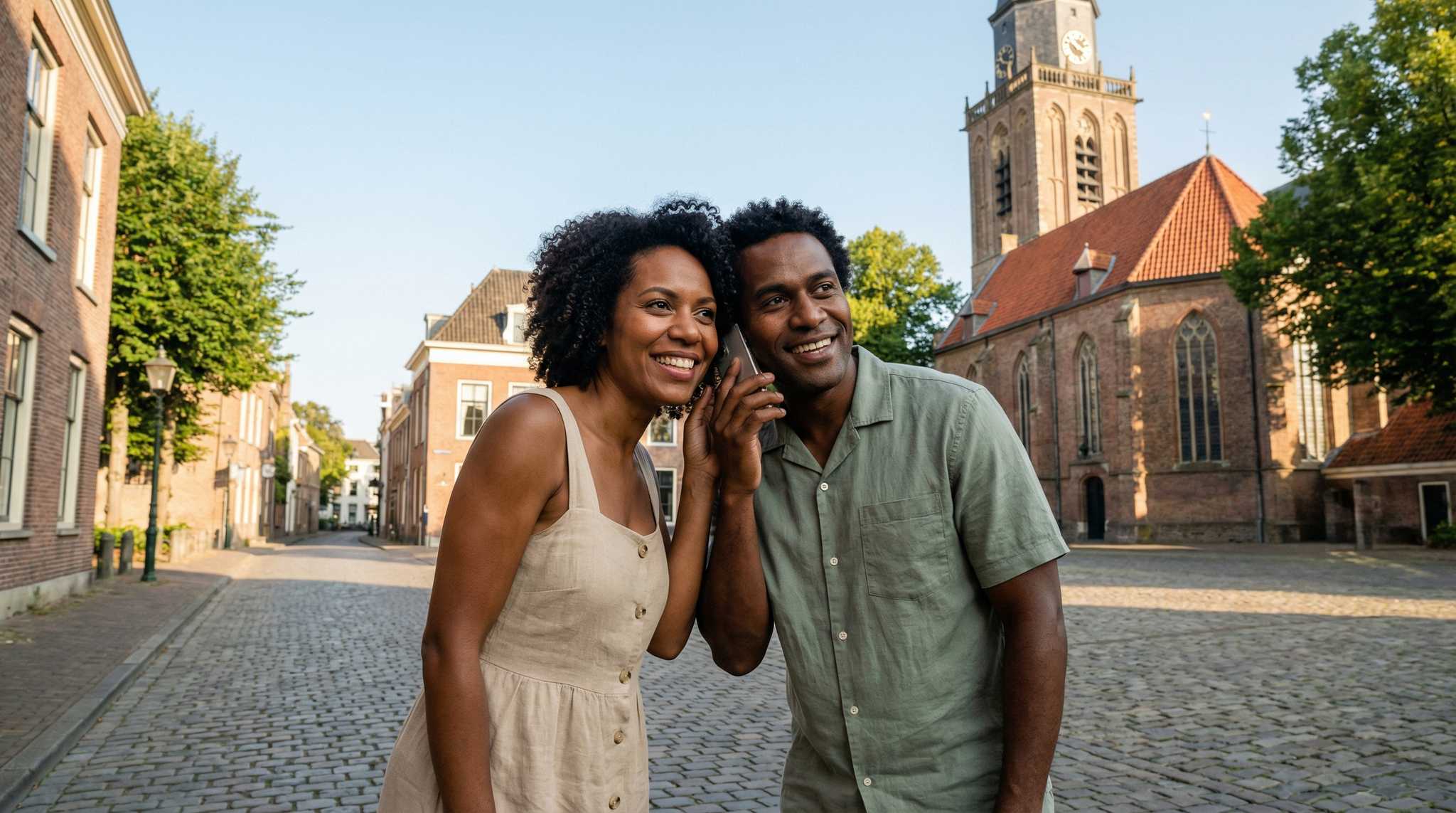
Audiotour Zutphen: Echo's van Torens, Kerken en Verborgen Geschiedenissen
Ontdek de charme van Zutphen tijdens een boeiende tour door het historische hart. Begin bij de Sint Walburgiskerk, waar prachtige middeleeuwse architectuur en sereen glas-in-lood een spirituele sfeer creëren. Wandel naar de nabijgelegen Brederenkerk, een verborgen juweel dat ingewikkeld vakmanschap en een rijke geschiedenis toont. Verken vervolgens de vredige Algemene Begraafplaats, een rustige plek die de verhalen vertelt van Zutphen's vroegere bewoners te midden van prachtige landschapsarchitectuur. Deze reis combineert cultuur, geschiedenis en reflectie en biedt een unieke blik in de ziel van deze betoverende Nederlandse stad.
Tourvoorbeeld
Over deze tour
- scheduleDuur 40–60 minsGa op je eigen tempo
- straighten3.7 km wandelrouteVolg het geleide pad
- location_on
- wifi_offWerkt offlineEén keer downloaden, overal gebruiken
- all_inclusiveLevenslange toegangOp elk moment opnieuw afspelen, voor altijd
- location_onStart bij Brederenkerk
Stops op deze tour
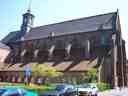
To spot the Breederenkerk, just look for a long, sturdy brick building with a steep, dark slate roof and a small square bell tower poking up like a watchful sentry-the tall,…Meer lezenToon minder
To spot the Breederenkerk, just look for a long, sturdy brick building with a steep, dark slate roof and a small square bell tower poking up like a watchful sentry-the tall, pointed Gothic windows and the arches at ground level are your clues! Now, take a step back and let your imagination wander-because where you’re standing now, people have been bustling about for nearly eight hundred years! Before there was ever a church on this spot, it was the home of counts and countesses, full of the clanging of armor and the busy sounds of a grand medieval court. Try to picture a grand hall from the 1200s, built by Count Otto II and later by Count Reinoud I of Gelre. Unfortunately for Reinoud, after a disastrous defeat at the Battle of Woeringen, his construction plans took a nosedive-literally half-built halls standing here like historical reminders that even the mighty can have bad days. Then, in 1293, a gracious lady named Margaretha decided to gift this land-and its awkward half-finished rooms-to a group of Dominican monks who’d just set up shop in Zutphen. Talk about a real estate upgrade! The monks used one old hall for sleeping, and finished the grand hall as their new church, now known as the Broederenkerk. You can still see their touch: the lower meters of the church walls use a fancier variety of stone-quality was key, even back then! It’s got that classic Gothic look-tall, elegant windows, arched brick doorways, and a ceiling so high you feel like you might sprout wings and fly. If the church seems extra well-preserved, you’re not imagining it! The Broederenkerk is one of the best-kept monastery churches in the Netherlands. Over the centuries, it was dressed up even more: in the 16th century, artists filled the white plastered walls with beautiful vault paintings. Stand quietly and you might almost hear, monks gliding past, their sandals whispering stories from long ago. But the Broederenkerk isn’t just a pretty face. It’s seen big changes-sometimes it was Catholic, sometimes Protestant, sometimes almost empty. After Zutphen was seized by Maurits of Nassau, the church was claimed for the city’s Protestant folks, and later for the Walloon congregation. When people finally stopped praying here, it fell silent… until, in 1983, the whole church became the town’s public library! If you love books, there’s a certain magic to reading where monks once drifted past carrying lanterns on chilly mornings. Now-look up at the roof and spot that dainty bell tower! Inside it hangs a famous bell known as the “poortersklokje” (the burghers’ bell). Imagine yourself in 1611, the streets growing dark, and suddenly -it’s the warning that the city gates are about to close, so hurry up if you’re not inside the walls! Even today, that bell tolls each evening as a nostalgic echo from the times of locked gates and sleepy guards calling out, “Anyone still outside?” Hidden in the church’s side aisle is a most unusual stone set right into the wall-a 17th-century guild stone from the Four Crowned Guild, the builders’ guild. Check out the carved shields showing hammers, axes, and saws, with four coronets perched above-like a medieval version of workplace badges! The inscription reads, “No one builds on sandy ground, but on the cornerstone Christ: patience conquers all.” I like to think the original builders would’ve approved of their church’s long run! Make sure to imagine those beautiful original wall paintings-now carefully restored-showing the city’s elite and the saints dear to the Dominicans. Don’t forget, at the back of the south aisle is Zutphen’s own time capsule: a giant book called the “Grote Zutboek.” It’s meant to stay shut until 2109, so no peeking! And so, the Broederenkerk stands-as a monument, a library, a reminder of Zutphen’s ever-changing story. Just imagine the thousands of voices it has heard and the secrets its stones could tell… if they ever decide to start talking!
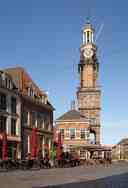
Open eigen pagina →To spot the Winery Tower, look up ahead and keep an eye out for a tall, brick clocktower rising proudly above the bustling market square, its elegant octagonal spire and big round…Meer lezenToon minder
To spot the Winery Tower, look up ahead and keep an eye out for a tall, brick clocktower rising proudly above the bustling market square, its elegant octagonal spire and big round clock face making it nearly impossible to miss. Alright, take a moment to really let your eyes wander up the tower’s warm, sandy stones and impressive architecture. You’re standing in front of the Winery Tower, or “Wijnhuistoren," a spot that’s been guarding Zutphen’s market square since way back in the early 1600s. But would you believe, the roots of this place go even deeper, all the way to around the year 1300, when an old cellar was first dug out for a sturdy, fortified house at the edge of the city’s defenses. Imagine the clatter of knights’ boots and the smell of roasting meat in a medieval tavern-this spot, originally a herberg called "Tho Vreden," was once a home to travelers, guards, and even the city government. By 1420, the city snapped up the building, and suddenly it had a new life: with clanging market weights, watchmen stumbling in on cold nights, and the walls echoing with the city’s latest gossip and proclamations. They even built medieval toilets and a stone staircase, you know, for a little extra comfort-though I bet it still didn’t smell like roses in there! Back in those days, there was a tall roof spire and a grand clock, giving Zutphen a brand new skyline. Can you picture local townsfolk, their faces turned up to check the time, sun beaming off the newly built clock? Years passed, and soon, the Wijnhuis and its tower fell into hard times, suffering through the tough days of Spanish occupation. But Zutphen wasn’t ready to give up on its landmark. In 1616, the city hired a master stonemason named Emond Helleraet. Imagine the clank, clank, clank of chisel on stone as he raised this grand new tower in front of the Wijnhuis, adding rich decorations in golden sandstone. By the 1640s, the octagonal spire was up, inspired by grand designs from Amsterdam-bringing a touch of big-city glamour to little Zutphen. Inside, the first-ever perfectly tuned carillon in the Netherlands began to ring out, made by the famous Hemony brothers-if you listen carefully, you can almost hear the soft music drifting over the cobbles. For centuries, the clock up there ruled the city’s time, long before telephones or Swiss watches. Time wasn’t always kind. In 1920, a fire swept through, destroying the carillon and the tower’s top. Imagine the crash of falling timbers and the smoke rising high. Yet, with true Zutphen spirit, the tower was restored and a new carillon added. Even the Nazis couldn’t fully extinguish its stubborn heart-though they tried, stealing the bells during World War II. The building was rebuilt once more, welcoming guests from museum goers to Italian diners. And now, you! So take a good look-the Winery Tower is more than just beautiful. It’s the beating, chiming heart of centuries of Zutphen history, always watching over the market, come rain, sun, or the odd city tour guide making cheesy jokes.
Open eigen pagina →
Toon 9 stops meerToon minder stopsexpand_moreexpand_less
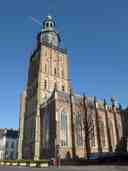
To spot Saint Walburga's Church, look up for its impressive tall tower with a green-topped cupola rising above a grand row of pointed arched windows set into its brick-and-stone…Meer lezenToon minder
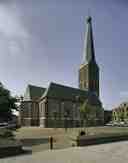
To spot Saint Walburga's Church, look up for its impressive tall tower with a green-topped cupola rising above a grand row of pointed arched windows set into its brick-and-stone walls-it's truly impossible to miss as you stand here at the 's-Gravenhof square. Now, imagine yourself walking these cobblestones nearly a thousand years ago. The story of Saint Walburga’s Church goes all the way back to the ninth century, when just a humble stone chapel stood here. That little building was the great-grandparent of this mighty church you see today! Over time, Zutphen grew, and so did the church, turning from a modest Romanesque structure into the grand basilica standing before you. It’s as if every century tried to outdo the one before, adding a new touch-a bit like builders playing the world’s longest game of architectural Jenga. Picture the scene around 1100, the air thick with the echo of hammering and chisel work, as stone masons raised the first great walls. By the early 1200s, the church was dramatically remodeled, becoming a Romano-Gothic basilica. The soaring tower was built and raised even higher over the years-at one point reaching a dizzying 107.5 meters! For a while, it was actually taller than the Utrecht Dom tower, until a bolt of lightning (the dramatic kind, the stuff of fairy tales!) struck in 1600. That trimmed the tower’s ambitions, topping it off at a mere 76 meters-but hey, that’s still a neck-aching height! This church was not just a building; it was a community hub, a spiritual center, and sometimes, a stage for a bit of drama. There’s plenty of that here! Remember the great fire of 1446? The church’s stone tower had to be heightened, and in the late 1400s, they added a spectacular spire-like putting a wizard’s hat on a giant! More chapels sprouted up around the choir, and big, bold transepts stretched out the church’s arms. Let’s stroll forward a little to the Renaissance. There was a time when the tower’s spire, the “peperbus” (that’s Dutch for “pepper pot”-I promise, it kind of looks the part!), gleamed atop the church. But on March 30, 1948, another fiery misfortune struck and the spire burned down. It sparked a “heated” debate (get it?) for decades about how best to rebuild it. Eventually, in 1970, a new spire rose-just like the old one-a phoenix atop stone wings. Now, let’s sneak a peek at the treasures within: you’d find a late 12th-century sarcophagus lid, iron chandeliers glittering like golden crowns, a bronze baptismal font from 1527, and grave slabs stretching from the 1400s to the 1700s, each with their own whispered stories. If you’re an organ fan, hold onto your hat! The church’s big Bader organ, built in 1639, is the largest Dutch organ from the late Renaissance and early Baroque periods. It was reshaped and expanded over the centuries, but recently restored to sound just like it did almost 400 years ago. If these pipes could talk, they’d probably play a tune just for you. And speaking of stories, did you know the church used to house one of Europe’s only three remaining chained libraries? Yes-books locked up tight so no one could run off with them, and believe me, the librarian was probably just as strict as your high school principal. For centuries, Saint Walburga’s was the heart of Zutphen. But in 1591, everything changed: the church became Protestant, and all the grand Catholic altars disappeared-over 40 of them, swept away by the tide of history. The crypt’s vault was demolished and the floor leveled, erasing secrets from below. Even the trees here have their stories. A mighty silver maple once grew beside the church-a leafy giant-until 2009 when it was declared too old and mighty for its own good. Still, it got a second act: its wood became a quartet of string instruments, which played their first concert right next to the church. Talk about a key change! As you gaze up at Saint Walburga’s Church, feel the weight and wonder of centuries pressing close around you. Every stone, every window, and every sound tells the story of Zutphen’s soul-rising, echoing, and somehow, remarkably, still singing today. Eager to learn more about the renaissance, eighteenth to twentieth centuries or the inventory? Simply drop your inquiries in the chat section and I'll provide the details you need.
Open eigen pagina →Straight ahead you’ll spot a tall, pointy-roofed tower made of reddish bricks, with a narrow arched gate at its base and a few quirky windows peeking out-just look left of the big…Meer lezenToon minder
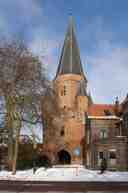
Straight ahead you’ll spot a tall, pointy-roofed tower made of reddish bricks, with a narrow arched gate at its base and a few quirky windows peeking out-just look left of the big tree and across from the brick villa. Welcome to the Drogenapstoren-once known as the Salt Gate, but far too interesting to stay salty for long! This impressive tower was built back in 1444 as Zutphen’s city gate. Imagine the sound of boots and horses echoing through that arched passageway, only for someone to wall it up just twenty years later-talk about an early retirement! The tower was soon forgotten… until a city musician, Tonis Drogenap, made it his home in the 1500s. And Drogenap wasn’t his real name-locals gave him the nickname, either because he was never seen without a mug in hand or because his purse was usually emptier than his cup. By the late 1800s, the townsfolk had another idea: “Let’s make it a water tower!” So up went a gigantic tank inside, full of water sloshing about. But as time marched on and plumbing improved, the city built a new water tower up the road and the Drogenapstoren returned to being-well-just a quirky old tower. Or so they thought. During World War II, a sudden explosion ripped through part of the tower. The invading soldiers didn’t realize it, but the blast destroyed a secret stash of weapons hidden by the resistance. Zutphen’s history sure knows how to keep things dramatic! You might notice the roof looks newer-the tower got a fresh pointy hat in the 1960s, though they skipped the fancy dormer windows. These days, someone actually lives right inside, living out that medieval tower dream. By the entrance, look for a bronze statue: not of Drogenap himself, but of his empty cloak and trumpet. Go on and peek through-yes, you can literally “step into his shoes!” And overhead, spot an old stone crest that once belonged to another gate, now proudly displayed after a long journey through Zutphen. So, ready to march onward? The city’s got more stories up its sleeve-and maybe even more musicians!
Open eigen pagina →To spot the Geelvinck Music Museum, look for a grand, symmetrical house with tall white-framed windows and a stately entrance right along the Zaadmarkt - it stands proudly in the…Meer lezenToon minder
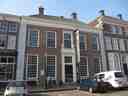
To spot the Geelvinck Music Museum, look for a grand, symmetrical house with tall white-framed windows and a stately entrance right along the Zaadmarkt - it stands proudly in the row of classic Zutphen facades. Alright, music lover, you’ve found yourself face-to-face with the Huis de Wildeman! Imagine you’re stepping back in time: the sun shines on this elegant building, its brickwork aglow, the crisp lines of late 18th-century architecture making it look like an aristocrat amongst the houses. If you listen carefully, maybe you’ll hear ghostly notes from a long-lost piano floating on the breeze-ah, there it is! From 2017 to 2019, this wasn’t just a house; it was a treasure trove for music history - the Geelvinck Music Museum. When its doors swung open, visitors were met by the legendary Sweelinck Collection, the largest group of historical pianos in the country. Some say, if you pressed your ear to the wood, you could almost hear the bygone conversations between composers and kings, keys tinkling, plucking chords straight from history itself. And here’s where it gets intriguing: inside, an entire room dared to challenge fate! Forget Beethoven’s birthplace in Bonn - Zutphen has its own wild theory! According to some, Ludwig van Beethoven's first earthly cries might have rung out not in Germany, but right here, in Zutphen, in 1772. Apparently, his parents’ music troupe passed through the town, and-no kidding-he might’ve been born just up the road in a French lodging house. So, next time you hum “Für Elise,” remember, you could be standing on Beethoven’s real home turf (or at least, a quirky alternate universe!). But the story doesn’t end there. The museum’s dazzling collection included a spinet from 1742, stately mahogany pianos, and even a piano once tickled by the fingers of Queen Marie Antoinette herself-imagine the music that room must have heard! There were pianos and instruments of every shape and sound, some still ready to be played. Even the air here must have vibrated with anticipation during festival time, when Zutphen hosted the annual Geelvinck Fortepiano Festival, and the notes raced up to the rafters. And don’t get me started on the curiosities! The museum showcased not just fortepianos but weird and wonderful inventions: a glass armonica, dulcitone, fysharmonium... all names that sound a bit like Harry Potter spells. Want more drama? Well, despite its grand past, the museum’s days here ended in a flurry of bad luck-leaky walls, damp woes, and a dash to rescue the precious collection before they floated away. By 2019, the doors closed and the music instruments were whisked to safer harbors, spreading their stories to Amsterdam and beyond. But don’t worry, the spirit of the Geelvinck Museum lives on-virtually, and in the echoes of music scholars still debating: was Beethoven a Zutphen boy or not? So, as you stand on the cobbles, take a moment: breathe in the centuries, let your imagination play a waltz, and maybe, just maybe, give the building your best Beethoven impression. You never know who might be listening!
Open eigen pagina →To spot the Nieuwstadskerk, just look for the tall, pointy spire rising high above the square, made of dark stone with slim arched windows and an elegant clock on one side-you…Meer lezenToon minder
To spot the Nieuwstadskerk, just look for the tall, pointy spire rising high above the square, made of dark stone with slim arched windows and an elegant clock on one side-you can't miss it towering above you! Now, stand right where you are and imagine the square before you buzzing with townsfolk, their chatter echoing against the brick walls of this magnificent church. This is the Nieuwstadskerk, or if you’re feeling a bit fancy, you can call it the Church of Saint John the Baptist. It was founded way, way back in the 13th century, during Zutphen’s big expansion-imagine the city spilling over into new neighborhoods, with workers clanging away, stacking up stones, and raising timber beams in what must have looked like a medieval construction zone. Officially, its first mention was as the Holy Mary Church in 1272, but don’t let that fool you; this church has worn many hats-and names! The main hall you see now, with its three long sections, was built in the 14th century. The choir at the back? That’s from 1459, and the two side aisles were added as the centuries rolled on in the 14th and 15th centuries. So, in a way, standing here is a bit like time traveling through different ages of architecture. Don’t forget to look up! That spire shoots 77 meters into the sky and is topped with a needle-sharp tip. It wasn’t always so lofty-the tower has five levels, but it only had three until it got a dramatic makeover in 1439. Inside hang ancient bells, one possibly as old as the church itself, another made by a famous bell maker in 1462, and yet another from 1565, still ringing out over the rooftops. Now, let’s add a dash of drama! In 1572, soldiers looted the church in a flurry of chaos under orders from Willem van den Bergh. Then, during the Reformation, the church changed hands and became Protestant-talk about a game of musical chairs! Fast forward to the rule of King Louis Napoleon, brother of THE Napoleon-he handed the church back to the Catholics, who dedicated it to John the Baptist in 1816. Today, the Kiwi-green trees outside wave at a building recognized as a national monument, and it’s still alive with music and community, thanks to a lovingly restored organ and the parish of the Twelve Apostles. So, while it’s easy to think of history as quiet and still, this church hums with stories, echoes, and just a hint of mystery-can you hear the bells?
Open eigen pagina →Right ahead of you, you'll spot a weathered old brick gate with rounded arches and a large central passageway - just look for the archway stretching over the path with chunks of…Meer lezenToon minder
Right ahead of you, you'll spot a weathered old brick gate with rounded arches and a large central passageway - just look for the archway stretching over the path with chunks of ancient wall on either side. Now, take a moment and imagine you’re standing before Zutphen’s very own medieval “front door” - the Spanjaardspoort! Back in the 1300s, this gate was the superhero of city defenses: the front line, watching for trouble and keeping the town safe. Right here, nearly 700 years ago, guards would pace back and forth, their boots crunching on the stones, scanning the horizon for anyone daring enough to approach. In the early 1400s, they beefed up the gate by adding two round towers, and in 1536, a mighty barbacane was built in front - a huge, circular defense with secret cannon chambers, like something out of a spy movie. Imagine cannons behind these walls, ready to boom at a moment's notice! Sadly, by 1857, the barbacane was knocked down, though archaeologists rediscovered it in recent times - proof that history likes to play hide and seek. As time marched on, the old Nieuwstadspoort was demolished, but what you see now - the iconic front gate and part of the shield wall - survived. For a while, an army barracks leaned protectively against this gate, until it was destroyed dramatically in World War II. These bricks have seen knights, cannon fire, marching armies, and whispering winds through the centuries. Today, they’re silent storytellers, reminding us just how tough Zutphen used to be at the city’s edge. And if you listen closely, you might still imagine the distant call of a medieval watchman echoing under the old arch!
Open eigen pagina →You’ll spot the Memorial to Sir Philip Sidney standing tall in front of you-a bronze statue of a man in shining armor, helmet in hand, perched on a sturdy stone pedestal set…Meer lezenToon minder
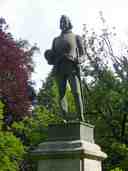
You’ll spot the Memorial to Sir Philip Sidney standing tall in front of you-a bronze statue of a man in shining armor, helmet in hand, perched on a sturdy stone pedestal set against a backdrop of leafy trees. Just look for the knightly figure keeping a silent watch over the park! Now, step a little closer-it’s story time, and this monument has more drama than a Shakespearean play! Here stands Sir Philip Sidney, not just any knight, but an English nobleman, poet, and all-around Renaissance superstar. Imagine the clang of armor as Sidney leads his men across the dew-speckled fields of Zutphen, the air thick with anticipation of battle. In 1585, Sidney marched with his uncle, the Earl of Leicester, on a mission to help free the Dutch from Spanish rule. The Netherlands were smack in the middle of a tug-of-war for independence, and Sidney stepped right into the thick of it-becoming the governor of Vlissingen and fighting shoulder to shoulder with his allies here. But fate, and perhaps a rogue Spanish musket, had other plans. On the muddy battlefield near Warnsveld, not far from where you stand now, Sidney was struck in the knee. Thousands of stories say he was offered water as he lay wounded, but seeing a dying comrade beside him, Sidney uttered the famous words, “Thy necessity is yet greater than mine,” and passed the drink along. Now that’s what you call chivalry-he put Camelot’s knights to shame! Sadly, he died of his wounds a month later, but not here. Despite wishes for him to be memorialized in Dutch soil, his body was sent back to England, to be buried in St Paul’s Cathedral-a true cross-Channel hero. It wasn’t until more than 300 years later, in 1913, that Zutphen decided it was time to honor this valiant Englishman. The statue you see, crafted by the Haarlem silversmith and sculptor Gustaaf van Kalken, was set atop a granite pedestal in the leafy Slingerbos park during a grand festival for Dutch independence-complete with speeches, anthems, and enough honorary committees to fill a small castle. The monument is a detailed work: Sidney stands in full armor, helmet in his right hand, his left gripping his sword, his leg turned like he’s about to step right off the pedestal and back into action. Notice the Sidney family coat of arms just below the inscription, “a spirit without spot,”-pretty dramatic, but, well, he lived up to the title. The base tells you more-Sidney is described as an “nobleman, poet, statesman, warrior for our freedom,” while on the back, you’ll find the names of the committee members who raised the funds to make this possible. Zutphen wasn’t the only place to remember Sidney. In 1923, Shrewsbury, his English hometown, unveiled a similar statue, and even Arnhem, where Sidney died, features a stone marker in his memory. When the sunlight hits the bronze and the trees rustle around, you can almost hear the echo of old battles and the solemn applause of a grateful city. Sir Philip may not have been buried in Dutch ground, but here he stands, forever guarding Zutphen-a true knight whose legend refuses to rust!
Open eigen pagina →In front of you, you’ll spot a towering, round brick structure with striking vertical lines, tall windows, and a silver dome at the top-just look up, you can’t miss it! Imagine…Meer lezenToon minder
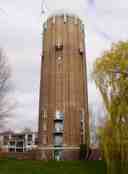
In front of you, you’ll spot a towering, round brick structure with striking vertical lines, tall windows, and a silver dome at the top-just look up, you can’t miss it! Imagine standing here in 1927, the air buzzing with excitement and the clanging of construction as Zutphen’s brand new Water Tower began to rise above the fields outside the city walls. Designed by the architect Hendrik Sangster and built by the “Hollandsche Maatschappij” (try saying that three times fast!), this giant replaced the old Drogenapstoren for storing the city’s water. It reaches a dizzying 46.2 meters high-the perfect height for a dramatic entrance in a fairy tale or, more realistically, for gravity-powered water flow! The real magic is inside: a reservoir holding a whopping 600,000 liters, enough for hundreds of households to drink, cook, and (most importantly) shower. But this isn’t just a relic. Back in 1984, someone had the wild idea, “What if people lived in the water tower?” Voilà-there are now cozy apartments tucked into the base, while upstairs, the water reservoir still quietly does its job. So next time you’re sipping a glass of Zutphen tap water, you might be enjoying a drop that took a scenic trip to the top of this tower and back. Just remember: if your water ever tastes like brick, you might be standing a bit too close!
Open eigen pagina →Right ahead, you’ll spot the General Cemetery Zutphen by following this peaceful tree-lined path-just look for the old gravestones peeking through a gentle sea of green, with…Meer lezenToon minder
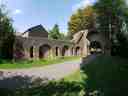
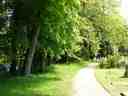
Right ahead, you’ll spot the General Cemetery Zutphen by following this peaceful tree-lined path-just look for the old gravestones peeking through a gentle sea of green, with sunlight filtering down and a quiet canal running to your left. Welcome to a place where history rests beneath the trees and every stone has a story! This isn’t just any cemetery-this one goes all the way back to 1829, designed by J.D. Zocher Jr., a landscape architect who liked his graveyards big, beautiful, and British-by which I mean the English landscape style. Picture it: instead of rows and rows of stern tombstones, you’re in what feels like a park, with shady linden and mighty oaks waving in the breeze. But here’s the dramatic part-this land was once a monastery. Zocher was tasked to transform it, and he surrounded the whole spot with a canal. That’s right, not just for scenic effect! The soil from digging the canal was used to lift up the cemetery, keeping it above the floodwaters of the IJssel and Berkel rivers. Graves that don’t get soggy-always a plus. Walk a little further and you’ll spot a wooden neoclassical gatehouse with real Doric pilasters-a fancy word for ancient Greek columns, and a much gentler welcome than the gates of Hades! On the left, you’ll see “Algemene begraafplaats MDCCCXXIX” (that’s 1829 in Roman numerals, if you want to impress your friends), and on the right, a comforting phrase about peace and rest. Why wood, you ask? Well, back in the 1800s there was a law requiring nothing solid to block the city’s cannons. So, if war ever arrived, the gatehouse could be taken down fast-talk about “open-door policy”! The cemetery expanded through the years, sometimes peacefully… sometimes with a divide. There’s a separate section for Roman Catholics-once cut off by a canal and reached by a dam, later with a bridge grandly named the Galileeënbrug (after the old monastery). If only all bridges could sound so epic! Now, among these peaceful groves stand a handful of national monuments: the cemetery itself, the wooden gateway, a tiny house for keeping coffins, and the brick gate built for the Catholic section. The brick gate got a stylish makeover in 2008-it’s now a home! And if you want a dash of emotion, pause at the war memorials. There’s a stone for the innocent people killed in a 1944 bombing, another for seven Dutch soldiers who fell resisting the Nazi invasion, and a solemn grave for a New Zealand pilot who crashed by the river in September 1944. Notable Dutch folks rest here too-professors, mayors, resistance heroes, and loyal royal staff. Each with stories stretching from the 19th century up to today. Take a moment-listen to the birds, catch the movement of the wind, and feel the layers of history beneath your feet. Zutphen’s cemetery isn’t just a place for endings, it’s a living memory, wrapped in green and quiet, with a few surprises in every corner.
Open eigen pagina →
Veelgestelde vragen
Hoe begin ik de tour?
Download na aankoop de AudaTours-app en voer je inwisselcode in. De tour is direct klaar om te starten – tik gewoon op afspelen en volg de GPS-geleide route.
Heb ik internet nodig tijdens de tour?
Nee! Download de tour voordat je begint en geniet er volledig offline van. Alleen de chatfunctie vereist internet. We raden aan om te downloaden via wifi om mobiele data te besparen.
Is dit een groepsrondleiding met gids?
Nee - dit is een audiotour met eigen gids. Je verkent zelfstandig op je eigen tempo, met audiovertelling via je telefoon. Geen tourguide, geen groep, geen schema.
Hoe lang duurt de tour?
De meeste tours duren 60-90 minuten, maar jij bepaalt het tempo volledig. Pauzeer, sla stops over of neem pauzes wanneer je wilt.
Wat als ik de tour vandaag niet kan afmaken?
Geen probleem! Tours hebben levenslange toegang. Pauzeer en hervat wanneer je wilt – morgen, volgende week of volgend jaar. Je voortgang wordt opgeslagen.
Welke talen zijn beschikbaar?
Alle tours zijn beschikbaar in meer dan 50 talen. Selecteer je voorkeurstaal bij het inwisselen van je code. Let op: de taal kan niet worden gewijzigd na het genereren van de tour.
Waar vind ik de tour na aankoop?
Download de gratis AudaTours-app uit de App Store of Google Play. Voer je inwisselcode in (verzonden per e-mail) en de tour verschijnt in je bibliotheek, klaar om te downloaden en te starten.
Als je niet tevreden bent met de tour, betalen we je aankoop terug. Neem contact met ons op via [email protected]
Veilig afrekenen met 


