AudaTours logoAudaTours

Ingolstadt Audiotour: Bruggen, Parken en Legendes van Mitte

Audiogids8 stops

In het hart van Ingolstadt slingeren oude parklanen onder stille bomen die ooit koninklijke intriges en geheime ontmoetingen beschutten. Achter mooie gevels bewaart de stad verhalen over rebellie, onopgeloste misdaden en de bizarre evolutie van orde en chaos. Deze zelfgeleide audiotour is uw sleutel tot verborgen hoekjes en vergeten verhalen, waardoor u verhalen ontdekt die weinigen ooit horen. Wandel op uw eigen tempo en laat elke bezienswaardigheid mysteries onthullen die de meeste bezoekers missen. Welk mysterieus incident in het Luitpoldpark hield de stad wekenlang in spanning? Waarom verdween een monument in het Klenze Park kortstondig zonder waarschuwing? Welk ongewoon relikwie ligt weggestopt in de kelder van het Beierse Politiemuseum, verbonden met een eeuwenoud schandaal? Volg de randen waar geschiedenis en geruchten vervagen – van door bomen beschaduwde paden tot grootse monumenten en met geheimen beladen zalen. Elke stap bruist van de spanning van ontdekking en de echo van momenten die Ingolstadt voorgoed veranderden. Duw de bladeren van de tijd terug en begin uw reis naar het verborgen verleden van Ingolstadt.

Tourvoorbeeld

map

Over deze tour

  • schedule
    Duur 30–50 minsGa op je eigen tempo
  • straighten
    3.4 km wandelrouteVolg het geleide pad
  • location_on
  • wifi_off
    Werkt offlineEén keer downloaden, overal gebruiken
  • all_inclusive
    Levenslange toegangOp elk moment opnieuw afspelen, voor altijd
  • location_on
    Start bij Luitpoldpark

Stops op deze tour

  1. To spot Luitpoldpark, just look for a wide, curving path winding beneath a bright, leafy canopy of tall trees, with their green leaves glowing in the sunlight all around…Meer lezenToon minder

    To spot Luitpoldpark, just look for a wide, curving path winding beneath a bright, leafy canopy of tall trees, with their green leaves glowing in the sunlight all around you. Welcome to Luitpoldpark, the very heart and green lung of Ingolstadt! Take a deep breath-can you smell the fresh grass and hear the gentle rustle of leaves overhead? Imagine winding your way along this 700-meter stretch of park that hugs the Danube’s edge and stretches all the way to Haunwöhr. What you see around you-peaceful paths, woodland in the west and open areas in the east-is the result of a grand vision from more than a century ago. In 1905, Wilhelm Donaubauer, architect and artist, was tasked by Ingolstadt’s Beautification Society (a real thing-why don’t we have clubs like that anymore?) to turn this spot into a paradise for locals, which he did with flair! The park was named after Prince Regent Luitpold, a sort of Bavarian VIP-so special, in fact, that parks all over Bavaria bear his name, but let’s agree this one’s the best. Its name first popped up in the newspaper in 1911, and by the 1920s this was the spot to be! Picture dapper folks in hats listening to music in the open-air pavilion, or sipping coffee at the beloved park café. Luitpoldpark quickly became the go-to escape for the hard-working people of Ingolstadt-the “Schanzer.” But the park’s story isn’t just sunshine and picnics. During World War II, bombs meant for a nearby railway line hit the park, leaving rubble where music and laughter used to ring out. The stately Roter Turm (Red Tower) and Fronte Gumppenberg were destroyed, and the café and pavilion were reduced to stones and memories. After the war, determined locals turned tragedy into rebirth. Garden plots popped up in the south, and the park began to heal. Fast-forward to 1998, and modern life barged in again. Ingolstadt’s third Danube bridge cut straight through the park-ouch!-dividing it, but not conquering it. They built a special “green bridge” to keep the sense of unity, because hey, nature always finds a way. There’s also a more somber layer to explore: the memorials. Here you’ll find monuments not just to the soldiers of two World Wars, but also to victims of National Socialism, fallen Jewish soldiers, and families who lost their homes. Some stones came from the park’s original memorial site and were given new life and new meaning by artist Dagmar Pachtner. So as you wander, you’re walking through not just a landscape, but a living memory. Modern Luitpoldpark is truly a park for everyone. Table tennis? Absolutely. Football? Bring your own ball! In winter, you can even go sledding here. Half-marathon runners dash through each May, and the park’s winding paths are magnets for cyclists and dreamers alike. Watch for old beeches, linden trees, and maples-plus, if you tune your ears, you might hear woodpeckers, or spot a darting squirrel. And don’t miss the wooden signs along the Biotop Nature Trail, perfect for unraveling the park’s wild side. Every footstep you take here echoes over a hundred years of laughter, loss, music, and quiet rebirth. Now, let’s see what stories the next stop in Ingolstadt has to tell!

    Open eigen pagina →
  2. You’re looking for a sleek, modern bridge with a gently curving deck and a handful of tall lampposts, stretching boldly across the river right in front of you-just follow the…Meer lezenToon minder

    You’re looking for a sleek, modern bridge with a gently curving deck and a handful of tall lampposts, stretching boldly across the river right in front of you-just follow the sound of traffic, and you can’t miss this wide, airy structure. Alright, here we are in front of the Glacis Bridge, and let me tell you-it’s not your ordinary old stone crossing! Built between 1996 and 1998, this is Ingolstadt’s youngest bridge for cars over the Danube, and every day, around 50,000 vehicles zip across it. Imagine being one of those cars-wheee! The name Glacis comes from the ring of ancient fortifications that once hugged the Old Town, which is now a leafy park. The coolest part? The people of Ingolstadt actually voted for the bridge’s name, so it was a bit of a local celebrity even before it officially opened. Functionally, it’s the westernmost car bridge in the city and connects major roads, including the famous Bundesstraße 13. Look closely: it’s made of steel and concrete, elegantly supported by steel cables-those cables are not just for show; they handle the everyday rumble of traffic above. Notice the waves in the pedestrian and bike paths, following the shape of the cables-talk about a bridge with a sense of humor! The design was so impressive, it won several awards for engineering and architecture in the late '90s. So as you stand here, you’re not just crossing a bridge, you’re walking over a modern piece of pride, shaped by history and even a little bit of democracy. Now, who knew bridges could be so stylish-and so popular!

    Open eigen pagina →
  3. Take a look at the mighty Baur Tower standing before you-it’s no ordinary brick-and-mortar! Imagine this spot nearly 200 years ago: cannon smoke in the air, soldiers on high…Meer lezenToon minder

    Take a look at the mighty Baur Tower standing before you-it’s no ordinary brick-and-mortar! Imagine this spot nearly 200 years ago: cannon smoke in the air, soldiers on high alert, and the sound of boots echoing through thick limestone halls. Built between 1828 and 1841, the Baur Tower was Ingolstadt’s ultimate “Don’t mess with us!” statement, protecting the city’s southern Danube bank as the western flank of the Reduit Tilly. Back then, its 4-meter-thick walls sheltered 58 vaulted casemates loaded with guns, making sure any enemy thought twice before dropping by uninvited. This fortress wasn’t just any old pile of bricks-it was designed by fortress mastermind Generalmajor Michael von Streiter, while the stunning, monumental classical facade was the handiwork of the famous Leo von Klenze. If you think this place seems familiar, it has a twin: the Turm Triva across the way. But here’s something fun-while the tower was only named after Carl von Baur, a Bavarian general, in 1911, it shared the honor with another building that sadly didn’t survive. Today, instead of cannonballs, you’re more likely to hear music floating from inside-the tower now hosts Ingolstadt’s municipal music school. And in summer, that oval courtyard behind these walls transforms into an open-air theater. From fortress to festival, Baur Tower knows how to put on a show!

    Open eigen pagina →
Toon 5 stops meerToon minder stopsexpand_moreexpand_less
  1. Look straight ahead for a massive, rounded, two-story stone building, with arched windows and a fortress-like feel - it curves gently and stands out in the middle of the open…Meer lezenToon minder

    Look straight ahead for a massive, rounded, two-story stone building, with arched windows and a fortress-like feel - it curves gently and stands out in the middle of the open park. Welcome to the mighty Reduit Tilly! Imagine, if you will, the year is 1828. King Ludwig I wants a structure so solid even an army would break a sweat trying to get in. Under the mastermind architect Leo von Klenze and fortress specialist Michael von Streiter, this semi-circular colossus rises along the Danube, its thick walls ready to shelter cannons, soldiers, and, in the ultimate plot twist, even the royal family and their crown jewels if Bavaria ever faced invasion! The echo you hear isn’t just your footsteps - it’s centuries of soldiers drilling inside those barrel-shaped rooms and whispers of secret escape plans. Named after General Tilly, Bavaria’s tough-as-nails commander from the Thirty Years’ War (the kind of guy you wanted on your side), this place means business. But don’t let the stern look fool you - today, it’s home to a fascinating World War I exhibition. And after decades of guarding the kingdom, the Reduit was spruced up for the 1992 garden show and now keeps watch over Klenze Park, trading the clang of weapons for birdsong and family picnics. Imagine the stories these walls could tell - and maybe, just maybe, a jewel or two is still hiding somewhere inside!

    Open eigen pagina →
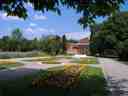
  2. Right in front of you, you’ll spot Klenze Park by its bright flowerbeds lining tidy gravel paths, and those distinctive old reddish-brick fortress walls peeking from behind a mix…Meer lezenToon minder

    Right in front of you, you’ll spot Klenze Park by its bright flowerbeds lining tidy gravel paths, and those distinctive old reddish-brick fortress walls peeking from behind a mix of trees-just follow the scent of summer flowers and listen for laughter drifting across the greenery. Welcome to Klenze Park, which locals simply call “Klenze”-but don’t worry, you don’t need to be on a first-name basis to enjoy it! Imagine standing here back before 1992: instead of blooming gardens, this whole area was filled with crumbling warehouses and industrial rubble, the only visitors being the occasional lost pigeon. Then, in a stroke of inspiration-and a few thousand wheelbarrows of soil-it all changed for the Bavarian State Garden Show in 1992. The park was named after Leo von Klenze, a royal architect who gave the local fortress its dramatic facades. You’re standing in a place practically built on history, as these grounds hold fortresses like the Reduit Tilly and Turm Triva. Today, they house parts of the Bavarian Army and Police Museums. From spring through summer, about 100,000 people wander these lawns each month-mostly energetic teens, but also families, friends, and visitors who have traveled from afar just for a taste of Klenze’s magic. At the river’s edge is a footbridge straight into the old town, and there’s even a floating stage-someone tried to create a city beach here once, believe it or not! In August, things get competitive with the Schanzer Fishermen’s Joust, where participants try to knock each other into the Danube. And if you’re here at the end of the school year? Get ready, because the Klenzefest transforms this peaceful park into a wild bash for students-with music, bands, and plenty of supervised fun. Yes, security makes sure it’s all fun and games, rather than wild wrestling matches with beer bottles. So, breathe in that fresh river air, listen for laughter, and maybe hum a tune-because Klenze Park is a lush patchwork of stories, celebrations, and a dash of youthful mayhem!

    Open eigen pagina →
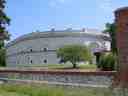
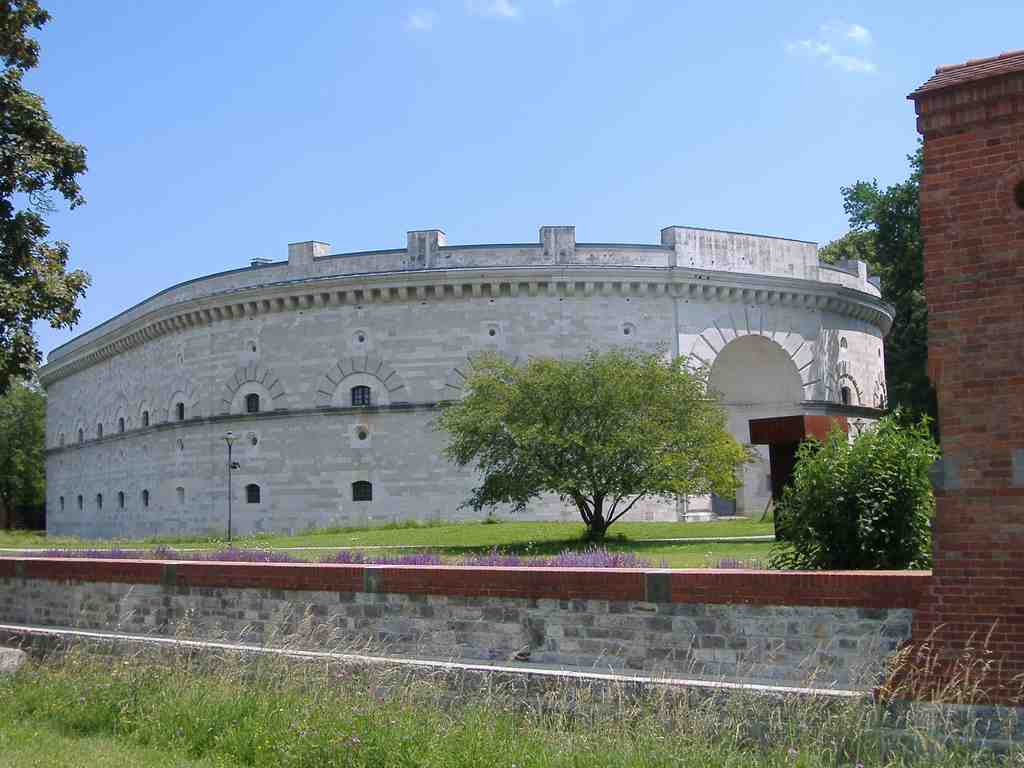
  3. Straight ahead you'll see a large, round white-stone fortress with small windows dotted all around its walls-look just past the trees and you can't miss its sturdy, commanding…Meer lezenToon minder

    Straight ahead you'll see a large, round white-stone fortress with small windows dotted all around its walls-look just past the trees and you can't miss its sturdy, commanding presence. This is no ordinary fortress-welcome to the Bavarian Police Museum, tucked inside the formidable Turm Triva in Klenze Park. If you think police museums are all lost whistles and old hats, think again! Imagine walking through these arched halls while the scent of old leather uniforms and polished boots lingers in the air. The museum first opened in December 2011, but the story inside stretches back over a century-right to the spark of the 1918 revolution. Here, you’ll discover police badges that glint like treasure, sleek old motorcycles standing ready, and uniforms that once marched through key moments of Bavarian history. You might even hear the echo of clicking heels as an officer patrols the halls. Past exhibitions have shown everything from historic documents and rare vehicles to cameras and typewriters once used by Bavaria’s finest. One thought-provoking show even explored the police’s complicated role during the dark days of the Nazi era-a reminder that courage and conscience sometimes come into sharp conflict. So, ready to solve the mystery of Bavarian policing? Step on in-but don’t try to handcuff your guide!

    Open eigen pagina →
  4. You’re now standing at the very spot where, over fifty years ago, Ingolstadt witnessed one of its most dramatic and fiery nights. Picture this: It’s the 2nd of March, 1972. Three…Meer lezenToon minder

    You’re now standing at the very spot where, over fifty years ago, Ingolstadt witnessed one of its most dramatic and fiery nights. Picture this: It’s the 2nd of March, 1972. Three trains are caught up in a tense dance between the Ingolstadt Nord and Ingolstadt Hauptbahnhof stations. On one side, there’s a long line of tank cars-fresh from the Shell refinery, filled to the brim with heating oil, petrol, and liquid gas. Oddly enough, they’re leaving without their rear safety lantern, which is a bit like leaving a barbecue party without dousing the flames. But hey, open fire was a big no-no at the refinery, so that lantern got left behind. The station’s feeling a bit jammed, and just then, a technical hiccup knocks the track counters out of whack. The railway boss, who’s probably already dreaming of his dinner, tries to sort things out manually. But-oops!-he flicks the wrong switch. Suddenly, the signal goes green for a freight train waiting its turn at Ingolstadt Nord, sending it rolling onwards, completely unaware that disaster awaits. Now imagine a 60 km/h train barreling through the night, suddenly smashing into a stationary tank train. The sound must have been thunderous. Fourteen tank wagons derail; some tumble down an embankment, nine burst into flames or explode, and soon, over 175 tons of refinery products are burning. One wagon flies into a former railway worker’s house and erupts in a fireball nearly 100 meters high. Flames, smoke, panic. Around you, chaos. A nearby school for guide dogs is destroyed, burning oil surges into the sewers lighting up cars parked on the streets. Firefighters, local industry crews, and even the German army rush in, battling a disaster that feels almost endless. Sadly, three lives are lost, and the city block is evacuated in the confusion. It’s a story of tragedy, error, and heroism, all sparked by one tiny missed detail-and a reminder that, sometimes, train timetables can really blow up in your face!

    Open eigen pagina →
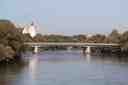
  5. In front of you is a simple, broad, grey steel bridge with sturdy concrete supports, stretching across the Danube river-just look straight ahead over the water and you can’t miss…Meer lezenToon minder

    In front of you is a simple, broad, grey steel bridge with sturdy concrete supports, stretching across the Danube river-just look straight ahead over the water and you can’t miss it! Now, let’s unravel the story of the Konrad-Adenauer-Brücke-you’re standing by Ingolstadt’s first permanent post-war crossing over the Danube! Imagine the year is 1948, the city is still patching itself together after World War II, and crossing the river is more of a balancing act than a stroll. Locals were hoping for a fancy stone bridge, but the city council-always mindful of the budget, maybe after one too many sausage-and-dumpling lunches-chose steel instead. The bridge finally opened in 1952 under the name Donaubrücke. There were grand ideas for a tram line running through here, but those tracks stayed in people’s dreams, not on the pavement. In 1977 the bridge was named after Konrad Adenauer, Germany’s chancellor, but by the 1990s, it was creaking under the weight of progress and Schwabian bread deliveries alike. The solution? A facelift between 2001 and 2002, swapping out the old superstructure for a new one, all for a cool 4.1 million euros. Today, it bridges not only the Danube but also Ingolstadt’s old town and lively Klenzepark, standing as a true connector-solid, unassuming, and always up for a strong traffic jam.

    Open eigen pagina →

Veelgestelde vragen

Hoe begin ik de tour?

Download na aankoop de AudaTours-app en voer je inwisselcode in. De tour is direct klaar om te starten – tik gewoon op afspelen en volg de GPS-geleide route.

Heb ik internet nodig tijdens de tour?

Nee! Download de tour voordat je begint en geniet er volledig offline van. Alleen de chatfunctie vereist internet. We raden aan om te downloaden via wifi om mobiele data te besparen.

Is dit een groepsrondleiding met gids?

Nee - dit is een audiotour met eigen gids. Je verkent zelfstandig op je eigen tempo, met audiovertelling via je telefoon. Geen tourguide, geen groep, geen schema.

Hoe lang duurt de tour?

De meeste tours duren 60-90 minuten, maar jij bepaalt het tempo volledig. Pauzeer, sla stops over of neem pauzes wanneer je wilt.

Wat als ik de tour vandaag niet kan afmaken?

Geen probleem! Tours hebben levenslange toegang. Pauzeer en hervat wanneer je wilt – morgen, volgende week of volgend jaar. Je voortgang wordt opgeslagen.

Welke talen zijn beschikbaar?

Alle tours zijn beschikbaar in meer dan 50 talen. Selecteer je voorkeurstaal bij het inwisselen van je code. Let op: de taal kan niet worden gewijzigd na het genereren van de tour.

Waar vind ik de tour na aankoop?

Download de gratis AudaTours-app uit de App Store of Google Play. Voer je inwisselcode in (verzonden per e-mail) en de tour verschijnt in je bibliotheek, klaar om te downloaden en te starten.

verified_user
Tevredenheid gegarandeerd

Als je niet tevreden bent met de tour, betalen we je aankoop terug. Neem contact met ons op via [email protected]

Veilig afrekenen met

Apple PayGoogle PayVisaMastercardPayPal

AudaTours: Audiotours

Vermakelijke, budgetvriendelijke wandeltours met eigen gids

Probeer de app arrow_forward

Geliefd bij reizigers wereldwijd

format_quote Deze tour was een geweldige manier om de stad te zien. De verhalen waren interessant zonder te gekunsteld aan te voelen, en ik vond het heerlijk om op mijn eigen tempo te verkennen.
Jess
Jess
starstarstarstarstar
Tbilisi-tour arrow_forward
format_quote Dit was een prima manier om Brighton te leren kennen zonder je als toerist te voelen. De vertelling had diepgang en context, maar overdreef het niet.
Christoph
Christoph
starstarstarstarstar
Brighton-tour arrow_forward
format_quote Begon deze tour met een croissant in de ene hand en nul verwachtingen. De app gaat gewoon mee met je, geen druk, gewoon jij, je koptelefoon en gave verhalen.
John
John
starstarstarstarstar
Marseille-tour arrow_forward

Onbeperkte audiotours

Ontgrendel toegang tot ELKE tour wereldwijd

0 tours·0 steden·0 landen
all_inclusive Onbeperkt verkennen