
Gera Audiotour: Verborgen Juwelen en Tijdloze Verhalen van Untermhaus
Een rivier splitste ooit het lot van Gera in tweeën – de oevers herbergden geheimen onder lagen steen en stilte. Ontvouw de pagina's van Gera's geschiedenis met deze zelfgeleide audiotour, glijdend door de kronkelende straatjes van Untermhaus waar verhalen blijven hangen die reisgidsen over het hoofd zien. Laat elk monument het verborgen drama en de over het hoofd geziene momenten van de stad onthullen. Wie stond er ooit terecht in de Sint-Janskerk terwijl menigten zich in gespannen stilte verzamelden? Welke verdwenen boodschap ligt versleuteld binnen de muren van het Cultuur- en Congrescentrum? En welk schandaal veranderde voorgoed het lot van Gera's geliefde podium? Volg voetstappen waar revolutionairen fluisterden en heersers wankelden. Dwaal van echo's van rebellie naar de gefluisterde gebeden in heilige zalen, dieper bewegend met elke stap. Elke stop daagt je perceptie uit en brengt je dichter bij de ware ziel van de stad. Ontdek Gera's ongeziene verleden. Druk op afspelen en laat de geheimen van de stad onder je voeten tot leven komen.
Tourvoorbeeld
Over deze tour
- scheduleDuur 40–60 minsGa op je eigen tempo
- straighten4.4 km wandelrouteVolg het geleide pad
- location_on
- wifi_offWerkt offlineEén keer downloaden, overal gebruiken
- all_inclusiveLevenslange toegangOp elk moment opnieuw afspelen, voor altijd
- location_onStart bij Hofwiesenpark
Stops op deze tour
To spot the Hofwiesenpark, look for sweeping green meadows broken up by winding paths and modern oval-shaped playgrounds and sporting areas-just follow the broad lawns and the…Meer lezenToon minder
To spot the Hofwiesenpark, look for sweeping green meadows broken up by winding paths and modern oval-shaped playgrounds and sporting areas-just follow the broad lawns and the sound of laughter coming from families and joggers enjoying the park. Welcome to Hofwiesenpark, Gera’s very own emerald escape! Picture yourself standing right on the edge where city life blurs into a patchwork of grass, trees, and playful ovals-a landscape that’s at once fresh and brimming with stories from centuries past. Imagine the scene not too long ago, when this whole area was just a wide, open field, mentioned as early as the 1630s and 1640s. Back then, city borders were tightly wound and drawn by things like the Mühlgraben canal and a rumbling railway line. On one side, the elegant Küchengarten with its baroque orangery tempted the wealthy elite, while on another, fields stretched all the way to the silvery Elster River. In fact, if you listen closely, you can almost hear the gentle rush of water mingling with the calls of blackbirds overhead. Now, fast-forward to the plans of 1934-imagine a giant city hall rising here! It never made it off the drawing board, but after World War II, the gentle fields were transformed by the energetic hands of the DDR. First came the Stadion der Freundschaft in the 1950s-still a centerpiece today-then a shiny indoor swimming pool in the seventies, plus an expanding network of halls and sports grounds. Even a school popped up next door, kids rushing in with clattering boots and wild laughter in the mornings. “Study hard!” the teachers shouted, “or you’ll end up having to mow all this grass yourselves!” Okay, maybe they didn’t say that, but it would have been true-there’s a LOT of grass. By the 1970s, this whole area was bustling: swimming competitions echoing off tiled pool walls, cheers erupting from football matches, and the whirring of bikes flying down the nearby road. Concrete and ambitions ran high-so much that the road called Am Stadion cut off the park’s dreams from the prestigious city center and old villa districts. But the true transformation-the magical stuff-arrived with the Bundesgartenschau of 2007. In the late 1990s, Gera won a bid to co-host this huge national garden festival. Suddenly, landscape architects were drawing up wild designs, city planners were dreaming up grand ideas, and a Europe-wide competition picked the vision that would change everything. The winners-Herr Kokenge and Herr Ritter from Dresden-imagined a park sculpted from the ground up, built around four curiously artistic ovals. Why ovals? Well, maybe circles were just too mainstream-or maybe, as some visitors say, it’s because the park is full of hugs and roundabout fun! Either way, artists and workers dug in, sometimes literally, as construction hummed through the air. By the time the big festival arrived in spring 2007, Hofwiesenpark had bloomed into a dazzling showpiece: a playground oval where kids still bounce and shriek; an event oval where music drifts out on balmy nights; and the sparkling Hofwiesenbad, just waiting for you to dip your toes. The old summer baths became a tropical exhibit called “Karibiko,” giving every visitor permission to dream of the Caribbean-even if it’s just in soggy sandals. The city cleverly reconnected once-separate spaces, bridging the park to riverfront villas and gardens with new footbridges. You could wander past glowing flowerbeds, through honey-scented air, and suddenly find yourself beside stately old mansions or shady green lawns where grand ladies once sipped tea. And what happened after the festival packed up its tents, you might wonder? The city didn’t let Hofwiesenpark slip away. The plants from the show were sent home with gardeners, and the park handed over for loving care to an integration company where nearly half the staff have disabilities-so it’s always tended with skill and pride. Every spring, there’s a great Hofwiesenparkfest to kick off the season, and locals fill the pathways. Of course, Mother Nature had her own plans: in 2013, floodwaters from the Elster barreled through, testing the park’s resilience but not its spirit. Workers rushed in, repaired what they could, and within weeks the laughter, music, and cheers rolled back in. Today, as you stroll over these well-tended ovals and grassy lawns, you’re wandering through living history-where royal gardens met gritty industry, where sports and festivals still beat at the heart of Gera, and where every flowerbed has its own story to tell. So, take a deep breath, wave hello to the joggers, and enjoy a walk where centuries-old pastures have finally met their future. And remember: If you ever get lost in the ovals, just follow the closest soccer ball-or ask a friendly duck for directions.
Open eigen pagina →To spot the SRH University of Applied Sciences, look for a grand, castle-like building with striking, dark stone walls, steep red roofs, and elegant, arched windows rising beside…Meer lezenToon minder
To spot the SRH University of Applied Sciences, look for a grand, castle-like building with striking, dark stone walls, steep red roofs, and elegant, arched windows rising beside the greenery. Standing here, right in front of this impressive building, you might feel like you’ve stumbled into a university for wizards-don’t panic, but you might bump into a student with a magical stethoscope! This is the SRH University of Applied Sciences, a modern hub with a story stretching back to 2006, when an idea was born on a sunny Gera summer: “Let’s train the health heroes of tomorrow.” By 2007, the state gave its blessing and the first students arrived, probably hoping for fewer exams and more coffee. The building you see, with its regal towers and majestic gables, once housed the Landeszentralbank’s Gera branch. In 2014, the sounds of shuffling bankers were replaced by the cheerful chatter of students as the university moved here from the Villa Hirsch. Architect David Chipperfield transformed the space-if you listen quietly, you can almost hear the echo of hopeful footsteps on opening day. SRH isn’t just about old walls, though. Today, over 1,500 students fill its bright halls, learning everything from computer science to psychology, and nutrition therapy to social work. Every lecture has the spark of a new era: future doctors and therapists sharpening their minds, students prepping to crack the world’s toughest health mysteries-and the occasional “oops” when someone gets lost looking for the cafeteria. Since the university renamed itself in 2016, it’s blossomed, offering Bachelor’s and Master’s degrees in more than 25 subjects, plus courses and workshops for doctors and nurses to keep their skills as sharp as that fancy architecture. So as you stand here, take a deep breath-no spells required-and imagine students bustling between classes, dreaming up solutions for tomorrow’s health challenges. The SRH University of Applied Sciences is where knowledge grows as surely as those sturdy old trees outside.
Open eigen pagina →Right in front of you, you’ll spot the Kitchen Garden by its wide, sunlit lawns, blooming flower beds, and the refreshing fountain bubbling at the heart of elegant pathways…Meer lezenToon minder
Right in front of you, you’ll spot the Kitchen Garden by its wide, sunlit lawns, blooming flower beds, and the refreshing fountain bubbling at the heart of elegant pathways flanked by grand yellow buildings-just look for the splashing water and the crowds gathered under shady trees. Now, take a deep breath and listen closely as the hidden history of this vibrant park comes alive around you. Imagine yourself centuries back, in the 1600s, when this spot wasn’t filled with strolling visitors or playful children, but was instead the bustling kitchen garden for Schloss Osterstein-the grand residence of the Reuss lords. Back then, it wasn’t just carrots and cabbages sprouting here; the garden was designed to impress, right from the very beginning. Picture neatly trimmed hedges, artful flower beds, and a grand summer house where nobles cooled off after inspecting the vegetable harvest-because if you’re a baron in a wig, why not have your tomatoes with a side of style? As you stroll closer to the fountain, let your mind’s eye drift to the early 1700s, when the impressive Orangerie appeared on the garden’s west side. Not only did citrus fruit and exotic plants grow here in glassy splendor, but there was even a tiny open-air theater in the north-imagine the whispers of secret plays and noble laughter drifting on the summer air. Of course, life-and gardens-change. After a ferocious city fire in 1780, part of the park was redesigned like an English landscape garden, all flowing lines and natural beauty, while the other part stuck to the strict geometry of the baroque age. The 20th century brought more drama: after the world wars, the gates swung open for the everyday people of Gera, and its name, character, and even its monuments shifted with the times. Picture a massive Stalin bust presiding here in the 1950s-a little over-the-top for morning walks-and, later, memorials to victims of fascism, always giving this peaceful place new layers of meaning. Fast forward to 2007-during the Bundesgartenschau, Gera’s big garden show splash! The Kitchen Garden was lovingly restored as a baroque pleasure garden, though not without critics muttering about the axed trees. A single entrance remained open for a while, to keep out rogue cyclists and muddy dogs, but the townsfolk weren’t having it-soon, more gates were unlocked, just as the garden has always opened up to change. Today, with the flowers blooming, fountains playing, and laughter echoing, the Kitchen Garden wears its rich, tangled history with pride-the perfect place to let your imagination wander through centuries of stories, and maybe even spot a ghostly baron checking on his kale!
Open eigen pagina →
Toon 10 stops meerToon minder stopsexpand_moreexpand_less
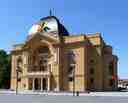
You can spot this grand theater by looking straight ahead for a large sand-yellow building crowned with a shiny golden statue and a distinctive black dome roof-it stands proudly…Meer lezenToon minder
You can spot this grand theater by looking straight ahead for a large sand-yellow building crowned with a shiny golden statue and a distinctive black dome roof-it stands proudly right across the wide, open square. Now, let your imagination set the stage! Picture yourself back in 1902, and in front of you is what was once one of the most advanced theaters of its time-a true jewel for Gera. Locals had worked together, fundraising penny by penny, until even Prince Heinrich XIV had to jump in to complete the budget. Talk about a community effort-1,103,760 marks, which today would make your wallet cry out for mercy! Legend has it that this very ground buzzed with chatter and excitement as citizens dreamed of a place worthy of their love for the arts. The Berlin architect Heinrich Seeling was brought in, tasked with creating something that would dazzle both eye and ear. What he gave them was a grand fusion: historicist flair blended with touches of Art Nouveau, a solid Neorenaissance façade, and every modern convenience known to early 20th-century technology. And oh, the entrance! Take a closer look-above those columns and portico, you’ll see busts of Schiller and Goethe, and not far off, mysterious faces from Greek mythology: Medusa, a Bacchante, even the dramatic Muse Melpomene. There’s a golden angel with a laurel branch too, looking like she just finished directing a choir of heavenly critics. Originally opened as the Fürstliches Hoftheater, it was more than just a pretty face. It boasted not only a flexible theater and a grand concert hall under one roof, but also cutting-edge stage tech, modern lighting, and fire safety features. Gera didn’t just want a building-they wanted a home for the muses. And if you wonder what that Latin inscription over the door says: Musis Sacrum-dedicated to the muses. Seems nobody wanted angry poetry spirits haunting the place! The curtain rose and rose again. In the roaring 1920s, it was a princely theater with a republican spirit. Under the wild and passionate Walter Bruno Iltz, the place shimmered with the premieres of bold new works. Avant-garde playwrights like Bertolt Brecht sent audiences into fits of debate; ballets filled the halls, and even a scandal or two danced on these boards-one play’s premiere brought threats against the director! Famous stars, daring directors, and brilliant dancers called this their stage home, including the remarkable Yvonne Georgi, at the time one of the youngest ballet masters in Germany. Imagine the thud of shoes against stage, the sweep of costumes, and the hush as the lights dim. But the building has endured more dramas offstage than any curtain could hide. In WWII, a bomb landed-but didn’t explode, sparing the grand house. In 1945, bombers returned and finally destroyed the backstage area. Yet, like the best show, the theater refused to close for long. By September-just months after Gera’s hardest days-it was alive again with Mozart’s Figaro. The applause must have sounded like hope itself. Through countless renovations, changing names, fires, and floods, the theater has always come back. Whether you visited in the green, white, and dark red years, or when modern restoration turned everything to sand ocher, or heard the new organ ring out its deep notes, this stage has never truly slept. Even the 2013 flood, which damaged so much below ground, didn’t keep the show from going on. And what a lineup of premieres! From epic poems turned into ballets, to children’s tales and bold new dramas, Gera’s theater means more than old stone and golden angels. It’s a living memory of the city’s resilience, its laughter and tears, and its ongoing passion for performance. Today, as one half of the Theater Altenburg Gera, it’s the only five-genre theater in Thuringia, hosting everything from opera to ballet to drama. So, as you stand here, take in those carved faces above the portico, feel the echo of footsteps, and imagine a thousand stories just waiting for the lights to dim and the music to swell. They say every building tells a story, but this one’s used to getting a standing ovation!
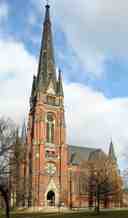
Open eigen pagina →To spot St. John's Church, just look for the enormous red-brick building with a towering black spire and pointed arches reaching up into the sky-it’s right ahead of you and…Meer lezenToon minder
To spot St. John's Church, just look for the enormous red-brick building with a towering black spire and pointed arches reaching up into the sky-it’s right ahead of you and impossible to miss! Welcome to St. John’s Church, the grandest church in all of Gera! As you stand here under the dramatic 70-meter spire, imagine a time long before smartphones or Wi-Fi-back around the year 1200-when the very first St. John’s Church was bustling with medieval life, candles flickering, and townsfolk whispering prayers beneath vaulted ceilings. But this isn’t the original church. Oh no, that one stood over on Johannisplatz-until it had a habit of, well, going up in flames. In 1450, it was torched during the Saxon Brothers’ War, and if that wasn’t enough excitement, the Hussites helped set it alight, too. The poor church rose from the ashes in 1488… just in time to get caught up again in the fires of the Thirty Years’ War. Picture the night of April 14, 1639: Swedish soldiers, chaos, and the sound of crackling fire ripping through the city. For centuries, that church was the final resting place of the noble Herren von Reuß-Gera, with a crypt deep beneath the ground filled with grand sarcophagi-if you feel a chill, it might just be their ghosts saying hello! Sadly, in 1780 another huge blaze swept through Gera, claiming the church one last time. Rebuilding plans came and went-unfortunately, Napoleon’s little detour through Jena cost the city so much money they had to tear down the old ruins for good. Talk about burning through your budget! Today, though, you're standing before the “new” St. John’s-built in 1885, thanks to the generosity of the local folks whose pockets were apparently still smoldering from history’s misadventures. Designed by Leipzig architects Constantin Lipsius and August Hartel, this neo-Gothic beauty was built out of red brick with black stone trim, rising at the edge of old Gera as the city boomed during the industrial age. By then Gera had around 30,000 people, most of them eager for a second church (the Salvatorkirche was struggling to keep up). It was quite an event when the church was consecrated-imagine streets packed with people, the echo of organ music rolling out over the city. A statue of Kaiser Wilhelm used to stand right out front-ready for royal parades-until, well, democracy had other ideas! And this church has felt the drama of modern history, too. It was battered by bombing raids in 1945, losing its roof and sparkling stained glass, but locals lovingly restored it in the 1970s. In 1989, when East Germany was brimming with change, the church became the heart of Thursday demonstrations for peace-so it’s seen both fire and freedom. Peek up at the bell tower, where the bells have their own story-bronze melted down for war, replaced again and again, most recently in 2010 with three brand new, beautifully inscribed bells funded by generous donations. And inside, listen for the mighty organ, with 57 stops and all sorts of clever musical tricks-if you hear the sound of magic and majesty, you’ll know why! So, while you gaze at its soaring spire, remember: St. John’s Church is Gera’s survivor, storyteller, and-if walls could talk-they’d surely demand another insurance plan!
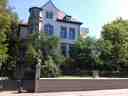
Open eigen pagina →To spot Villa Maurer, look ahead for a large cream-colored mansion with tall windows, a steep roof, and a prominent tower-like corner rising above a wrought-iron fence and lush…Meer lezenToon minder
To spot Villa Maurer, look ahead for a large cream-colored mansion with tall windows, a steep roof, and a prominent tower-like corner rising above a wrought-iron fence and lush greenery. Ah, welcome to the grand Villa Maurer-nowadays called Villa Victoria! You're standing before more than just a beautiful house; you’re at the crossroads of Gera’s glamorous-and occasionally quirky-history. Imagine it's the year 1900. This street, now bustling, is right at the edge of town, the air is crisp, and carriages sometimes rattle down the road. You can almost hear the. Emil Otto Maurer, an ambitious entrepreneur, stands here with dreams as grand as his mustache. Fresh from success in the combed wool business after the Franco-Prussian War, Maurer commissioned the renowned architect Carl Zaenker to build a residence fit not just for living, but for serious impressing. Villa Maurer didn’t start small and only got grander-before the Maurers even moved in, there was already construction dust everywhere, adding an extension just for a larger kitchen. After all, if you’re going to throw parties, you’d better feed your guests! The villa was finally finished in 1900, as proudly engraved in sandstone by the door. The Maurer family settled in a year later, and as you’d expect, the neighbors were just as grand-on one side, the stylish Villa Feistkorn; on the other, one of merchant Münch’s own splendid abodes. Inside, imagine polished parquet floors gleaming under your shoes, high ceilings adorned with delicate stucco, and windows of original glass always sparkling (except maybe after a wild party). Ascend the monumental wooden staircase-a real showstopper, with a 10-meter coffered ceiling overhead. Pull open heavy wooden sliding doors from room to room, the scent of old books and polished wood filling the air. If you peek in the dining room, you’ll find a stunning wooden coffered ceiling, just waiting to echo with laughter or maybe a dramatic toast. Now, if you look at the building’s face, you can't miss its signature: the squat, hexagonal corner tower reaching over the roof-its look might be missing a fancy old hat these days, but back then, it boasted a domed top, perfect for surveying the city below. Climb upstairs in your mind and gaze out those top windows-it’s said the view stretches to Schloss Osterstein and into the Vogtland hills, so you weren’t just sipping coffee, you were surveying your domain! The massive stone staircase you notice up front, with its ornate ironwork, was designed to impress every visitor, whether a business rival or a friend dropping by for cake. But this building’s magic truly grows with time. After Maurer’s time, the villa had many faces. It hosted artists, musicians, and even the city’s well-known actor Rudolf Weisker. Later, the sounds of children and dinner parties faded, replaced after World War II with new footsteps-those of intellectuals and creatives chosen by the Kulturbund, which moved in around 1972. The villa now buzzed with discussions of art, music, workshops, and roundtables. You might have heard. The Bertolt Brecht “Klub der Intelligenz” relocated here when their old place was torn down, and this house became a veritable beehive of ideas-and, let’s be real, probably some pretty fantastic debates about who made the best Strudel in Gera. Sometimes you’d spot an artist pacing the upper balcony, lost in thought, or an excited crowd pouring out to the wide, sunlit terrace after a heated discussion. Even during these decades, the villa’s garden, bordered by a sturdy old wall and its original iron railings, retained hints of its former elegance-a peaceful spot for a poet’s stroll or a quick debate about existentialism under the roses. After reunification, Villa Maurer was restored to the original family-a happy ending for the home after years of changing hands and buzzing activity. For a while, it echoed with the footsteps of lawyers instead of artists, until another careful renovation brought it full circle: once again, it opens its doors to culture and creativity. And just in case you’re wondering why it’s now Villa Victoria, that’s a nod to Empress Victoria, wife of Kaiser Friedrich III, whose memory lingers in the villa’s graceful architecture. So as the breeze rustles through the trees in the garden and the sunlight glints off the windows, remember: this house has seen parties and poetry, business and brainstorms, laughter and legacy. No matter who walks those grand stone steps, Villa Maurer-Villa Victoria-always keeps a little air of mystery and grandeur. Maybe, just maybe, if you listen carefully, you’ll catch the faint, inviting the next story to begin.
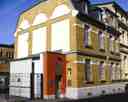
Open eigen pagina →To spot the Amthor Passage Memorial, look for the yellow-brick building with white details and barred windows, right at the corner behind a metal gate and a small orange…Meer lezenToon minder
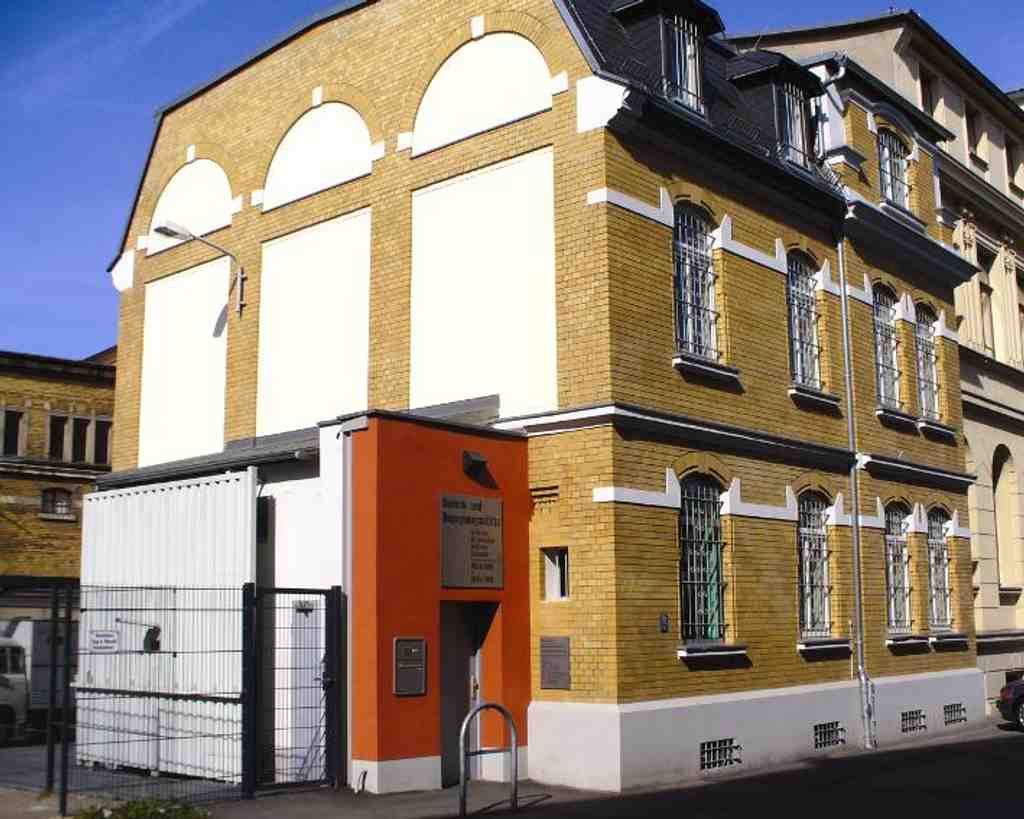
To spot the Amthor Passage Memorial, look for the yellow-brick building with white details and barred windows, right at the corner behind a metal gate and a small orange entryway-it's quite distinctive, so you can’t miss it! As you stand here, close your eyes for a second and imagine the sounds of heavy iron doors echoing down these corridors, keys jingling at the waist of a guard--this building holds secrets from more than 100 years of Gera’s history. You’re at the memorial for the Amthordurchgang, once a notorious prison, the yellow bricks you see were first laid way back in 1876. Local folks actually didn’t want a prison in the heart of their city-imagine dropping off bread nearby and thinking, “well, at least the neighbors are quiet… most of the time.” Early on, this place felt almost like a family operation; there were just three guards, their wives did the laundry and cooked meals for everyone inside. That sounds almost cozy-if you can ignore the barred windows and locks! But as you walk closer, you’ll be able to sense the layers of history pressed into these old walls. The prison doubled in size in the late 19th century, then transformed into something much darker during Germany’s years under Nazi rule. From 1933 to 1945, this place became a holding center for the Gestapo, who used these cells not just for criminals, but for anyone they decided to call an enemy. Imagine the fear, the footsteps echoing at night, the sense that freedom was just yards-yet a whole world-away. Then, just when you might think it couldn’t get any worse, after World War II the prison was handed over to new occupiers. One day in April 1945, Gera switched from American to Red Army control, and suddenly, this was a Soviet holding site. It was filled with people picked up for “political reasons,” or sometimes just because they owned property or had a certain job. They could wake up free in the morning and go to bed here at night, waiting in these cells, sometimes for years, sometimes marked for deportation or far worse. Fast forward to the days of East Germany-now, the Ministry for State Security, the infamous Stasi, ran the show. Don’t make a joke about the government, and especially don’t plan on escaping over the border. Between 1952 and 1989, more than 2,800 people sat in these cells for their “crimes against the state”-from daring to criticize the ruling party to joining a peace rally. And it wasn’t just anonymous prisoners-on a spring day in 1981, a young civil rights activist named Matthias Domaschk died here under mysterious circumstances, becoming a symbol for many, a reminder that not everyone who walked in those doors walked out again. When the Berlin Wall fell and the old East German regime collapsed in 1989, the doors here finally swung open for good. The prison closed, and after years of debate-and more than a little drama about bulldozers-a dedicated team kept this site from disappearing entirely. The cells may be gone, but the administration building and gatehouse survived, thanks to the stubborn determination of people eager to make sure none of this gets forgotten. You’ll find memories built right into this place: a staircase painted by artists, a memorial out front that plays tricks on your eyes-it looks like a moving silhouette as you walk by, a little wink from history to make sure you’re paying attention. Interactive exhibits bring you face-to-face with letters, newsreels and the stories of so many who passed through these doors. Standing here now, remember-this isn’t just a memorial. It’s a meeting point between the past and present, a space to reflect on justice, freedom, and the value of every life. When you move on, maybe you’ll feel just a bit thankful for open doors and open streets. And hey, no barbed wire souvenir shopping, alright? Let’s keep moving, the next stop is not far!
Open eigen pagina →To spot the Culture and Congress Centre Gera, look straight ahead for a large, modern cube-like building with a pale stone facade and lots of rectangular windows stretching across…Meer lezenToon minder
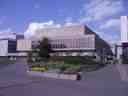
To spot the Culture and Congress Centre Gera, look straight ahead for a large, modern cube-like building with a pale stone facade and lots of rectangular windows stretching across its face. Now that you’re standing in front of Gera’s Culture and Congress Centre-known locally as the KuK-take a moment to let your mind travel back to the final years of the 1970s. Picture the city buzzing with the energy of change, construction dust swirling around as workers brought this monument of East German modern architecture to life. The KuK rose from the ground like a giant block of possibilities, its design a statement of confidence by architects and city planners who wanted something bold, multi-functional, and oh yes-big enough to make even the loudest polka band sound good. When it was completed in 1981, the grand opening was a showstopper itself, attended by party officials and beaming locals. Back then, people called it the “House of Culture”-the heart of socialist Gera, with a massive main hall able to seat 1,700 music lovers, hopeful dancers, or, every so often, political debates that could make your ears ring. As you look at that square facade, you might guess that the main hall would peek out somewhere, but here’s the genius-inside, the hall is set on a diagonal, thanks to architect Manfred Metzner, giving everyone an outstanding view and earful. At first glance, it may not look flashy, but this building holds stories in each corner. Imagine dancers’ soft footsteps echoing through the halls or the chaos of comedians cracking up an audience. Peek through those windows and you might see banners hanging for a folk music festival, a car exhibition, or even a magician about to pull a rabbit from a hat. KuK wasn’t just for fun though-big political events happened here too, like the 2002 PDS party convention, where the arguments were probably as colorful as the 1970s carpeting. Now, let’s slip back a few decades. Right inside the foyer, high above the crowds, stretches a massive limestone relief called “Song of Life.” This three-story masterpiece is one of the largest pieces of DDR-era public art-450 square meters! Imagine, 25 sculptors and one master stonemason all carving, hammering, and dreaming up 89 elements to make it come together. The lead artist, Jo Jastram, once even presented his work at the famous documenta in Kassel. You can almost hear the clink of chisels and the bustle of artists debating if that last bit of limestone really looks like a bird or just someone’s lunch. While most visitors remember the sweeping acoustics-planned by Gisela Herzog, a true magician of sound-others talk about the old bowling alley, sadly gone before the new millennium. But the real magic is in the walls: the echoes of shows like the classic East German Christmas TV extravaganza “Between Breakfast and Roast Goose.” Picture happy families, glittering costumes, dancers’ can-can kicks and, if you listen carefully, maybe you’ll catch a faint chuckle from a joke that landed just right. Oh, and the guests! Superstars like Frank Schöbel and even faraway legends: Harry Belafonte from the U.S. and Howard Carpendale from South Africa graced this stage. The house also kept its own troupes-youth ballet dancers and a sparkling amateur ensemble called “Brilliant”-who burst out onto television screens across East Germany. The KuK wasn’t left behind as the years sped by. In 2006, a wave of renovations began, step by step, like a determined grandma spring-cleaning. The old, tired lighting was swapped out for a “rain of light,” designed by clever students from Bauhaus University. Now, those 160 special lights in the foyer make the whole place twinkle, much more energy efficient and, let’s face it, less likely to start a fire-always handy during a magic act. And the future? There’s a big celebration on the horizon: in 2025, the KuK will host the national opening for the Day of Open Monuments. The city is already planning deeper renovations to ensure the KuK glows for its 50th birthday in 2031. So, as you stand here, feel the thrum of old shows, art, and history in the air. Even if you can’t dance like the youth ballet, I promise the KuK will always let your imagination run wild-just mind your toes if there’s a polka night! For further insights on the acoustics, architecture or the modernization, feel free to navigate to the chat section below and inquire.
Open eigen pagina →To spot the Gera City Museum, look for a stately grey building with a red tiled roof, white-framed windows, and a charming turret crowned by a spire, rising right in front of…Meer lezenToon minder
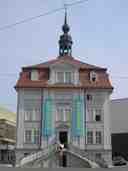
To spot the Gera City Museum, look for a stately grey building with a red tiled roof, white-framed windows, and a charming turret crowned by a spire, rising right in front of you-its dramatic staircase and inviting banners make it hard to miss. Now, as you stand here, imagine the air thick with the secrets of centuries past, as if the walls themselves have tales to whisper. You're not just looking at a museum-you’re staring into the heart of Gera’s history, housed in a building that has seen more twists and turns than a rollercoaster. Originally, this wasn’t a place people came to ponder the past, but a strict home for orphans and the mentally ill, built between 1724 and 1738 on the ruins of an even older hospital that burned down in the 17th century. Just picture the kids playing in the courtyard, a moment later replaced by the stern echo of prison guards' footsteps when the basement became a jail, and the upper floors a workhouse. Fast forward to 1824-the orphans moved in with local families, but the building’s gloomy side wasn’t over. For decades, those thick walls held prisoners and workers alike, and later, tenants tried to make it feel like home. But Gera’s citizens wanted something more uplifting. In 1878, with a bit of ambition and no shortage of local pride, Johann Christian Seydel and his fellow townsfolk said, “Let’s tell our own story!” Enter the city museum, collecting wonders from natural history to cultural treasures, and eventually finding a gallery-style home by 1914. But history isn’t always kind. The Nazis stormed through, clearing out so-called “degenerate art” in 1937-including works by Otto Dix and others. Then came World War II, and in 1945, the severest air raid left this grand house a burnt shell. The city’s hopes could have vanished with the ashes, but locals rallied. By 1950, a smaller house nearby filled in as a makeshift museum, prioritizing schoolchildren and memories, while dreams of restoration simmered. Finally, in 1956, the museum reopened here, and step by step, the city’s story was pieced together anew-prehistoric relics, tales of weaving mills, elegant old industry, even underground beer storage chambers called “Höhler.” After a major makeover in the early 2000s, the museum sparkles again, welcoming curious minds with fresh exhibitions and modern flair. So go ahead, step inside-the city’s whole adventure, from ancient settlers to industrial pioneers, is waiting for you. Just remember: this building has seen it all, and it’s got stories even Netflix can’t compete with!
Open eigen pagina →To spot the Gera Town Hall, just look for the tall white clock tower with the black pointed spire rising above a cluster of charming old buildings-right in front of you at the end…Meer lezenToon minder
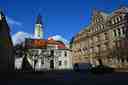
To spot the Gera Town Hall, just look for the tall white clock tower with the black pointed spire rising above a cluster of charming old buildings-right in front of you at the end of the square. Now, let’s step right into history! Imagine you’re standing on centuries-old cobblestones, just as townsfolk did as far back as 1254-when, legend has it, Gera already had its very first town hall. The story goes that the original building was a bustling beehive of city life, but, like all good drama, things didn’t run smoothly for long. In 1450, disaster struck during the Saxon Brother’s War-an angry firestorm left the first town hall nothing but smoldering timbers. No worries, though! The clever townsfolk salvaged what they could and, by 1487, they’d rebuilt anew, even before the ink dried on Gera’s first city charter. But take a moment-look up at that magnificent Renaissance tower. The current town hall was crafted between 1573 and 1575, likely by the same builder who created the famous Altenburg Rathaus. Imagine the excitement in the air when, in 1575, the very last touch-a golden sphere-was fixed atop the spire in a joyful celebration. The building’s gateway, carved by Nicol Teiner and friends, still shows off the double-headed eagle of the Holy Roman Empire, and the local coats of arms. Here’s a quirky bit: three stone men stare out from under the archway. Those aren’t spies-they’re the three mayors Gera used to have! Each ruled in a grand annual rotation-talk about job sharing. If you stroll toward the old gateway between Markt and Kornmarkt, you’ll spot the city's ancient pillory. Yes, right where you might now find a cozy restaurant people once lined up for... well, less pleasant reasons. Fast forward to 1780, and another twist of fate: Gera burned again, but this sturdy hall stood strong-walls blackened but unbroken. By 1784, it was lovingly restored, albeit with a sleeker new roof (the old gables didn’t make the cut). Then, in 1793, the sandstone rear annex was added, giving the building its grand back. And by the early 1900s, a fresh extension connected to Kornmarkt, with fancy passages inspired by the vanished Badertor gate. But wait, there’s more! Above your head, the 57-meter-high tower hides an 8-square-meter room-the “turmer’s parlor”-where, until 1939, a watchman kept guard. Today, it houses a tiny museum featuring views of old Gera. Brave enough for 161 steps? The view from the top is unbeatable. And if your ears are sharp, you might just hear the 37-bell carillon chiming, echoing Gera’s long, lively history through the air. Quite a story for a city hall, isn’t it?
Open eigen pagina →To spot the Salvatorkirche, look up to your left for a tall, creamy-white baroque church tower with a dark green onion dome and golden cross, rising behind leafy trees and next to…Meer lezenToon minder
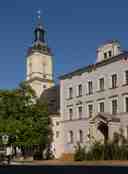
To spot the Salvatorkirche, look up to your left for a tall, creamy-white baroque church tower with a dark green onion dome and golden cross, rising behind leafy trees and next to a stately building. Welcome to the Salvatorkirche-the church that’s seen more drama than a soap opera! Here on the Nicolaiberg, if you close your eyes for a moment (but watch your step!), you might just catch the scent of charred wood and the whispers of centuries. Imagine: it’s the year 1333, and a small chapel dedicated to Saint Nicholas sits quietly atop this hill, perhaps offering tired beggar monks a simple meal and a place to rest. Fast forward a few centuries, and-bam!-the great city fire of 1686 turns it all to ash. Gone, just like that. The ruins sat here, a ghostly memory, until the locals decided it was time for something grander. In 1717, construction began on what you see before you now-a baroque beauty designed by David Schatz. But the church tower? That needed some extra funds, so folks held a lottery! (If only lottery winnings still built landmarks, right?) By 1780, disaster struck again as another huge fire swept through Gera. But this church is nothing if not stubborn-while others stayed down, the Salvatorkirche rose from the ashes just three years later, becoming the only standing church in Gera’s old town for decades. But wait, there’s more: beneath your feet lie the stories of counts and countesses. When the old St. John’s crypt became unusable, the last Lord of Reuß-Gera and his wife were laid to rest right here. The church hasn’t stopped evolving-a glorious Jugendstil redesign in 1903, a stunning glass mosaic by a Munich artist in 1907, and even a mighty organ with over 2,000 pipes, lovingly restored in recent years. So as you stand here, imagine the footsteps of townsfolk climbing those grand stairs, the lingering scent of incense, and music soaring from one of the largest playable Röver organs in the world-this church is living proof that the heart of Gera always finds a way to rebuild, renew, and ring out with life.
Open eigen pagina →
Veelgestelde vragen
Hoe begin ik de tour?
Download na aankoop de AudaTours-app en voer je inwisselcode in. De tour is direct klaar om te starten – tik gewoon op afspelen en volg de GPS-geleide route.
Heb ik internet nodig tijdens de tour?
Nee! Download de tour voordat je begint en geniet er volledig offline van. Alleen de chatfunctie vereist internet. We raden aan om te downloaden via wifi om mobiele data te besparen.
Is dit een groepsrondleiding met gids?
Nee - dit is een audiotour met eigen gids. Je verkent zelfstandig op je eigen tempo, met audiovertelling via je telefoon. Geen tourguide, geen groep, geen schema.
Hoe lang duurt de tour?
De meeste tours duren 60-90 minuten, maar jij bepaalt het tempo volledig. Pauzeer, sla stops over of neem pauzes wanneer je wilt.
Wat als ik de tour vandaag niet kan afmaken?
Geen probleem! Tours hebben levenslange toegang. Pauzeer en hervat wanneer je wilt – morgen, volgende week of volgend jaar. Je voortgang wordt opgeslagen.
Welke talen zijn beschikbaar?
Alle tours zijn beschikbaar in meer dan 50 talen. Selecteer je voorkeurstaal bij het inwisselen van je code. Let op: de taal kan niet worden gewijzigd na het genereren van de tour.
Waar vind ik de tour na aankoop?
Download de gratis AudaTours-app uit de App Store of Google Play. Voer je inwisselcode in (verzonden per e-mail) en de tour verschijnt in je bibliotheek, klaar om te downloaden en te starten.
Als je niet tevreden bent met de tour, betalen we je aankoop terug. Neem contact met ons op via [email protected]
Veilig afrekenen met 


