
Düsseldorf Audiotour: Kunstzinnigheid, Legendes en het Raadsel van de Oude Stad
Een enkele rode letter markeert het hart van Düsseldorf, waar eeuwenoude geheimen schuilen, net voorbij de neon gloed. Deze zelfgeleide audiotour duikt achter vliesgevels en oude deuren om verhalen te onthullen die de meeste reizigers over het hoofd zien. Welke dodelijke vete schudde ooit de klokkentoren van de Sint-Lambertuskerk? Waarom riskeerden rebelse kunstenaars aan de Kunstakademie schandalen voor hun wilde visioenen? Welke vreemde link verbindt een vergeten straathoek met de opvallende letter E die boven de skyline uittorent? Volg de verborgen aderen van de stad, waar kunst, politiek en kleine daden van rebellie samenkomen. Dwaal door geplaveide steegjes waar legendes blijven hangen en over het hoofd geziene meesterwerken in de schaduwen wachten. Ervaar Düsseldorf in een stroom van kleur, gefluister en plotseling licht, getransformeerd van ansichtkaartstad naar levend mysterie. Ben je klaar om die rode letter te volgen en de verhalen te ontrafelen die de lokale bevolking nooit vertelt? Het ware gezicht van de stad wacht – stap naar voren en begin.
Tourvoorbeeld
Over deze tour
- scheduleDuur 40–60 minsGa op je eigen tempo
- straighten1.7 km wandelrouteVolg het geleide pad
- location_onLocatieDüsseldorf, Duitsland
- wifi_offWerkt offlineEén keer downloaden, overal gebruiken
- all_inclusiveLevenslange toegangOp elk moment opnieuw afspelen, voor altijd
- location_onStart bij Ehrenhof
Stops op deze tour
If you’re looking for the Ehrenhof, keep your eyes peeled for a striking ensemble of brick buildings arranged in perfect symmetry around a grand courtyard, with a bold central…Meer lezenToon minder
If you’re looking for the Ehrenhof, keep your eyes peeled for a striking ensemble of brick buildings arranged in perfect symmetry around a grand courtyard, with a bold central fountain and a domed concert hall, the Tonhalle, commanding attention in the distance-look for the dome peeking between the buildings, and you’ll know you’ve arrived! Now, let’s take you back to 1926, when Düsseldorf decided to throw a party so big it was the talk of Germany: the GeSoLei exhibition, or the “Great Exhibition for Health Care, Social Welfare, and Physical Exercise.” Picture it: nearly 400,000 square meters of fairgrounds buzzing with over seven million visitors, all gathered along the banks of the mighty Rhine. The Ehrenhof wasn’t just built for show-it was the epicenter of this spectacular event, designed by Wilhelm Kreis, who must have liked rulers and symmetry as much as he liked bricks, judging by these monumental, expressionist walls. Take a breath; these buildings have stories to tell. Stand still for a moment, and you can almost hear the clatter of 1920s shoes on the stone. The gardens, all neat lines and clipped trees, were laid out to mirror the strict architectural symmetry, so neat you could play chess on them. You’ll notice everything is carefully arranged-the kind of place where even the pigeons might feel pressured to line up. But there’s drama beneath the calm. The Ehrenhof’s very name comes from palace courtyards where honored guests would be welcomed. In fact, Kreis took inspiration from ancient Rome, mimicking temples and triumphal arches, so you’re basically standing in the middle of a Düsseldorf answer to a Roman parade ground, minus the togas (unless you brought your own, in which case: respect). Back in 1926, on this very spot, there were bustling exhibition halls stretching for kilometers, and lively crowds marveling at the cutting edge of science and society. After the exhibition, the Ehrenhof became the city’s international calling card, showing that Düsseldorf was ready for the world stage after years of turmoil and even foreign occupation. The buildings have changed hats many times since then. During World War II, one of these addresses became a forced labor camp. Afterward, the halls turned to hosting everything from fashion weeks to heated arguments about how the city should be rebuilt, sparking the so-called “Düsseldorf architect dispute”-imagine late-night plotting and passionate speeches echoing through these very halls. Let your eye wander to the Tonhalle at the southern end, its great green dome gleaming. It was built originally not as a concert hall but as a giant planetarium, meant to wow the crowds with the wonders of the cosmos. Now it’s filled with music-sometimes, on a quiet day, you might even imagine you hear an orchestra warming up. Greeting you at the entrance stand bronze busts of four musical geniuses whose spirits seem to guard the tunes within. Wander further, and you’ll find quirky treasures, like a life-sized bronze rhino lounging in the grass-don’t worry, it’s friendlier than it looks-or a bench flanked by two mysterious stone cats guarding the museum entrance. Marvel at the vibrant mosaics, the statues of mythic figures, and if you look carefully, you might even spot some cheeky street art: in the 1970s and 80s, this was a hotspot for rebellious graffiti artists like Harald Naegeli and the so-called “Banana Sprayer.” Over the years, the Ehrenhof has hosted everything from naked photography art shows (blame the artist Spencer Tunick for that unique image) to royal ceremonies and riotous festivities, becoming not just an architectural gem, but the beating cultural heart of Düsseldorf. So whether you’re a history buff, an art lover, or just here for a sunny stroll, stop for a moment at the fountain, close your eyes, and listen-the stories are all around you, just waiting to bubble up like the water right before your eyes. If you're keen on discovering more about the layer, building ensemble or the tonhalle, head down to the chat section and engage with me.
Open eigen pagina →Look straight ahead for a grand, symmetrical building with a bold, baroque-style façade, crowned by an impressive dome over the entrance hall-if you spot a structure with giant…Meer lezenToon minder
Look straight ahead for a grand, symmetrical building with a bold, baroque-style façade, crowned by an impressive dome over the entrance hall-if you spot a structure with giant columns and a sense of old-time grandeur, that's the Kunstpalast! Now that you're standing right in front of the Kunstpalast, imagine yourself whisked back to the early 1900s-a time when Düsseldorf was buzzing with excitement, bold plans, and a little bit of competitive spirit. You see, the city didn't want to play second fiddle to art giants like Berlin or Munich. No, Düsseldorf was ready to make its mark! Inspired by the elegance of Paris’s Petit Palais, they dreamed up their very own palace for art-an extravagant hub where creativity would dazzle the Rhine. In 1902, the Kunstpalast made its spectacular debut, with politicians and artists gathering for the kind of opening ceremony that even the clouds might have parted for. Its walls were freshly built, polished stone gleaming with ambition, and a grand dome soared overhead-a copper-bottomed crown that watched over seven grand exhibition halls. If you had walked through those doors back then, you’d have been swept into a world of national art exhibitions, sculpted courtyards polished to Renaissance perfection, and galleries bursting with colors and brushstrokes. But this was more than just a pretty face. The Kunstpalast was engineered for drama-just look at that central courtyard, a stately garden haven hemmed in by stone walls and framed by grand arches. On either side, mighty exhibition wings stretched out as if the building itself was taking a deep, prideful breath. Sculptures and detailed reliefs watched over the entrance, keeping an eye out for mischievous art students and wandering gallery-goers alike. The story doesn’t end in turn-of-the-century splendor, though. The Kunstpalast quickly became an arena for some of Germany’s most exciting and sometimes contentious creative battles. Here, rival artists tried to settle old scores-sometimes with paintbrushes, sometimes with opinions louder than a herd of elephants at a parade. And in 1908, the world’s top chess players matched wits inside these walls, each move echoing across the marbled floors as the crowd held its breath. You could almost hear the ticking clocks and the hiss of anticipation blending in with the quiet hush of admiring visitors. As the decades rolled onward, the Kunstpalast morphed and adapted like a chameleon, dodging world wars, weathering political storms, and surviving plenty of creative reinventions. In the 1920s, Wilhelm Kreis, a master of transformation, redesigned the complex, giving it a new role as the heart of Düsseldorf’s garden-and-arts district, the Ehrenhof. The building grew, its gardens blossomed, and its events became grander-sometimes so popular that even local pigeons started scouting for season tickets. After more than a century, plenty of architectural tugs-of-war, and one very thorough makeover at the turn of the millennium-seriously, even the building had to sit through some modern renovations (imagine walls complaining about the noise!)-the Kunstpalast is still standing proud. Today, it is home to special exhibitions famous around the globe, a powerhouse for both classical masterpieces and edgy modern works. And just in case you’re wondering, yes, rumor has it that if you stand very still in the middle of the courtyard on a quiet evening, you can almost hear the faint applause of opening night, mingling with the joyful chatter of hundreds of artists and the excited giggles of art fans from days gone by. Now that’s a piece of history worth stepping in to admire-just try not to trip over any invisible paint tubes left behind by a particularly enthusiastic painter from 1912!
Open eigen pagina →You’ll spot the NRW-Forum Düsseldorf right in front of you-look for a long, single-story brick building with a low roof and rows of rectangular windows, often flanked by colorful…Meer lezenToon minder
You’ll spot the NRW-Forum Düsseldorf right in front of you-look for a long, single-story brick building with a low roof and rows of rectangular windows, often flanked by colorful banners waving proudly out front. Now, as you stand before this striking building, imagine you’re entering a place where art meets adventure, and the spirit of pop culture fizzes in the air! The NRW-Forum isn’t just a museum-it’s a playground for photography, pop, and digital dreams where the “now” is always in the spotlight. Right now, you’re on the famous Ehrenhof, sandwiched perfectly between the mighty Rhine River and the leafy Hofgarten. Take a deep breath… and you might just smell a whiff of creative energy floating over from its neighbors like the Kunstpalast or the Tonhalle. But this location wasn’t always buzzing with digital art and selfie enthusiasts. Picture Düsseldorf in 1926: workers clanging hammers, architects poring over blueprints, all building for the gigantic GeSoLei exhibition. The air thrummed with change. Wilhelm Kreis, the star architect of his day, cooked up the plans for an area that would host innovative exhibitions. Just two years after, the very building in front of you opened as the Reichsmuseum for Society and Economy-a brand-new kind of “museum of the present,” co-invented with someone who knew a thing or two about science museums, Oskar von Miller. Fast forward to the 1950s, and people flocked here to explore the Landesmuseum Volk und Wirtschaft, where the highlight wasn’t just dusty displays, but a walkable coal mine tucked downstairs! Imagine the squeals and laughter echoing from below. This was no ordinary museum-it explored how people, nature, work, and fun shaped the rapidly changing world of North Rhine-Westphalia. But as the years rolled on, the museum faced its own cliffhanger. With empty benches and a tight city budget in the 1990s, there was talk of shutting those iconic doors for good. Luckily, the city and state couldn’t resist the building’s charm and plotted a comeback. After a careful polish, the NRW Forum Kultur und Wirtschaft opened in 1998, buzzing with new energy! For a twist, exhibitions here ditched the old-school wall between “high” and “pop” art. Instead, they mashed up everything-cars, comics, high fashion, crazy photography, and more. Since then, the NRW-Forum has flipped the script on what an art center can be. Every visit could lead you from Andy Warhol’s wild imagination, to Superheroes, to how taking a great selfie says something deeper about who you are in the digital age. Don’t be surprised if you bump into a catwalk where you can strut your stuff or drop into a wild digital festival where visitors camp out overnight, switching from expert to amateur just for fun! And this place keeps on surfing the wave of change. In 2013, state funding dried up-a drama worthy of a soap opera-and fans rallied to “save the Forum.” The city stepped in, and Alain Bieber steered the ship into bold, new waters. These days, the NRW-Forum gleams as part of the Museum Kunstpalast, pumping out offbeat exhibitions, hands-on workshops, and even a lounge filled with cutting-edge video art. So, as you stand here, look at the crisp brickwork and those temple-like corners-built for exhibitions, not gods, but the gods of pop, photography, and the internet age. Just think: every time those banners flap in the wind, there’s a new story bouncing around inside. Whether it’s with a camera flash, a comic strip, or a whiff of glitter, the NRW-Forum keeps Düsseldorf’s creative heart thumping, louder than ever. Eager to learn more about the exit of the state of north rhine-westphalia, nrw forum 2.0 or the architecture? Simply drop your inquiries in the chat section and I'll provide the details you need.
Open eigen pagina →
Toon 11 stops meerToon minder stopsexpand_moreexpand_less
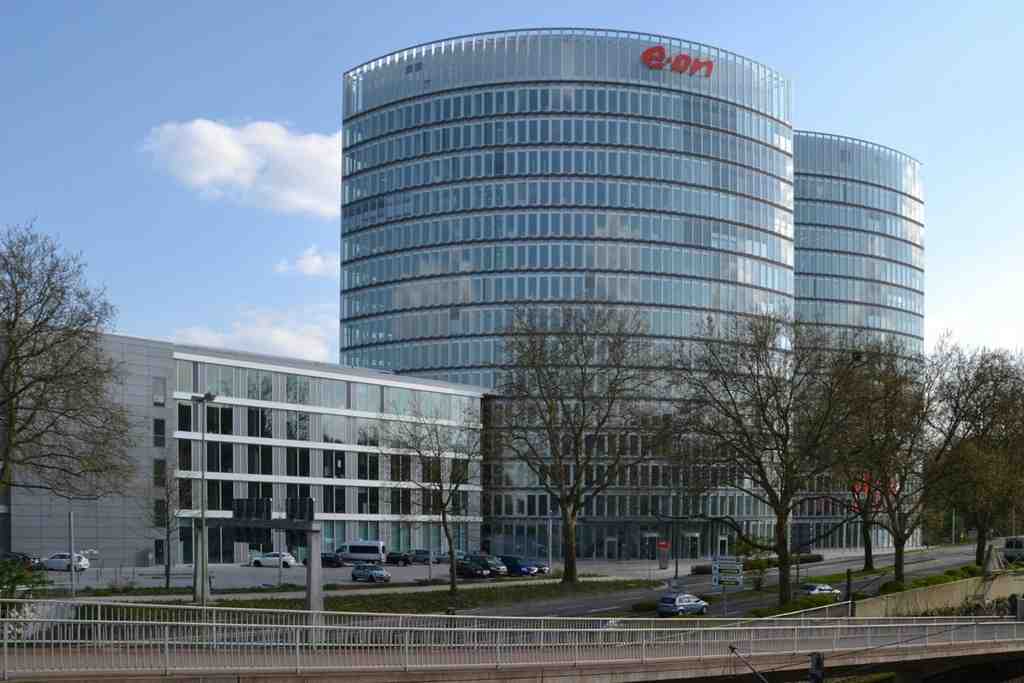
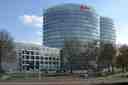
Right ahead, you’ll see a pair of sleek, rounded towers of glass and steel, with the red E.ON logo sitting proudly at the top-just look for these futuristic cylinders rising up…Meer lezenToon minder
Right ahead, you’ll see a pair of sleek, rounded towers of glass and steel, with the red E.ON logo sitting proudly at the top-just look for these futuristic cylinders rising up above the treetops. Now let’s dive into the incredible story of this towering giant! Imagine you’re standing in front of the very heart of one of Germany’s biggest energy powerhouses. It may look modern and still, but trust me-its history is anything but quiet. Behind those endless rows of windows, directors have made decisions that have shaped electricity and gas supplies for millions. The E you see belongs to the mighty E.ON, a company that began in 2000 with a thunderous handshake, fusing together the industrial titans VEBA and VIAG. Picture a boardroom echoing with clinking coffee cups and nervous laughter as leaders plot the creation of a new energy behemoth. E.ON’s early days were electric-literally! They combined the strengths of their new subsidiaries, like PreussenElektra and Bayernwerk, creating not just power for the people, but a market force that would soon stretch across borders. In 2001, executives took a deep breath and leapt across the Channel, grabbing the British company Powergen and then making a play for Ruhrgas, the largest German gas supplier at that time. The gas deal sparked controversy: rival companies marched to the courts, and ministers debated, but finally, Ruhrgas became E.ON’s trump card, giving them a 60% hold on the gas market. You might say, E.ON didn’t just light up rooms, they powered up countries! But with great power came great… well, regulation. The EU did not want a monopoly in their backyard. By 2009, E.ON had to split off 4800 megawatts of power, sell power plants, and even their mighty high-voltage network to keep the competition fair. They traded, swapped, and sold-sometimes even coal plants and hydroelectric stations changed hands at the stroke of a pen. Humor was in short supply, especially when E.ON tried to buy Spain’s Endesa in 2006. Imagine the drama-a Spanish opera, with German and Italian companies singing in high notes over 55 billion euros! The deal was blocked, yet E.ON somehow came away with a consolation prize: energy assets in Spain, Italy, and France worth around 10 billion euros. Even in defeat, they managed to switch on new lights elsewhere. Yet, not every story is about growth. In 2011, after the Fukushima disaster, Germany turned against nuclear power practically overnight. Seven of E.ON’s reactors shut down, and boardrooms filled with legal papers instead of energy plans. They went to court, fighting for compensation. With time, E.ON changed gears. By 2014, they announced they would say goodbye to fossil fuels, focusing instead on green power and smart grids. They spun off their conventional, old-fashioned energy business into a new company: Uniper. It’s almost a comedy of corporate identity-one company, two halves, and a few headaches! Their story has always been about reinventing themselves for a changing world, like a business in a never-ending costume party. Don’t be fooled by those glass walls-the life inside is anything but transparent. “Luxembourg Leaks” in 2014 revealed E.ON’s creative global tax strategies, and then there were the years they managed to legally wriggle around paying Germany’s green taxes, thanks to some clever legal footwork. But look-they’re art lovers, too! Their wallet opened for the Museum Kunstpalast, and their own art collection once boasted a real Jackson Pollock, auctioned in New York for over $11 million, nearly enough to turn the lights on for all of Düsseldorf. Today, E.ON concentrates on keeping the networks humming and the bill-payers happy, with operations stretching from Essen to Munich, to Hamburg, to Chemnitz. They even try their hand at sponsoring local culture, hosting charity art sales for the homeless. But, whether it’s weathering political storms, boardroom squabbles, or the applause of shareholders, these towers are living proof that the business of energy is never quiet, never dull, and always-like electricity itself-just a bit shocking. To delve deeper into the group structure, share and key figures or the technical systems, simply drop your query in the chat section and I'll provide more information.
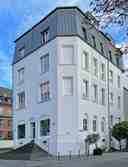
Open eigen pagina →Look for a crisp, white, four-story building with a distinctive gray mansard roof and arched entrances-positioned right at the corner, it stands out at the edge of the old town, a…Meer lezenToon minder
Look for a crisp, white, four-story building with a distinctive gray mansard roof and arched entrances-positioned right at the corner, it stands out at the edge of the old town, a little like a quiet giant watching over the intersection. Now, take a deep breath and imagine yourself rewinding a few centuries, because you’re standing on one of Düsseldorf’s most storied spots-the Eiskellerberg. Strangely enough, there’s only one address here, but oh, what an address it is! Today, most people simply stroll past this corner, but long ago, this very site was a buzzing focal point-layered with tales of chilling winter labor, artist dreams, royal treats, lost trees, and a few hungry painters. Picture the scene in the 16th century: this land you’re on was once a proud city bastion, thick with trees and overlooking the Rhine from its five-meter-high plateau. All was calm-until, as fate would have it, the French showed up between 1797 and 1799, fortifying Düsseldorf to the hilt and stripping away the peaceful groves. When the dust of these wars settled and peace returned by the early 1800s, the city’s old fortifications were torn down, and all those building stones and rumble piled up here, forming what people began to call the “Eiskellerberg.” Why such a cool name? Well, listen close, because buried underneath, in chilling darkness, lay a mighty ice cellar-the deep storage vaults where blocks of Rhine River ice were stacked, insulating the Düsseldorf court’s food and, more importantly, keeping the beer cold! In those days, it wasn’t unusual for the Rhine to freeze right over. Just imagine armies of workers sawing sheets of ice, dragging them up to these catacombs, and piling them so they’d last into the sunniest months. The funny thing is, this natural “deep freeze” didn’t just keep noble treats fresh; soon, brewers were lining up for the same service. Düsseldorf’s famous Altbier needed its frosty guardian angels! Seasonal laborers would work hard in winter, cutting and carrying ice not only from the river but from local ponds and lakes. And after sweating through all that, wouldn’t you want a cold drink too? In the late 1800s, Eiskellerberg boasted a scenic summer beer garden above the underground vaults-run by men with names like Meyer and Ahmer-where your pint of Altbier was never lukewarm. But the Berg’s tale doesn’t stop at ice and ale. In the late 19th and early 20th centuries, Eiskellerberg became an unexpected artistic sanctuary. A painter named Eduard Schoenfeld bought up some little houses here, even snagging a chunk of the city’s old ice cellar to turn into a freestanding studio building. This bizarre but exhilarating “Hungerturm,” or hunger tower, as locals nicknamed it, became a refuge for generations of artists-though mothers sometimes warned their children to hide the food if any “starving painters” came around! Imagine a grand old building, echoing with stories: there were studios flooded with northern light, a shop for art supplies, and plenty of dreamy, hungry painters working away. Some nights, the block must have echoed with laughter and the clink of beer glasses, other times, with the quiet concentration of artists turning blank canvases into color. Through wars, renovations, and the passing decades, Eiskellerberg became a home and incubator for all sorts of creative souls-painters, sculptors, architects, even today’s galleries and internet TV projects. You can practically still smell a mix of fresh paint, cold brick, and just a hint of Altbier if you take a deep breath. And if you peek into the ground-floor bar-the Eiskeller Weinbar-the old brick vaults have been lovingly revived, echoing the frosty cellars below. So here you are, standing where the past chills, cheers, and creates-all at once. Now, I can’t promise you’ll find any hidden ice blocks under your feet, but if you see a hungry artist wandering by, maybe offer them a sandwich. After all, it’s tradition!
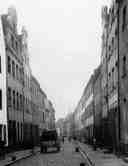
Open eigen pagina →To spot Ritterstraße, just look ahead for a narrow street lined with tall, old townhouses pressed close together, their facades stretching up on both sides to form a cozy,…Meer lezenToon minder
To spot Ritterstraße, just look ahead for a narrow street lined with tall, old townhouses pressed close together, their facades stretching up on both sides to form a cozy, cobblestone corridor through the heart of Düsseldorf’s Altstadt. Imagine yourself standing here a few centuries ago, the air cool and filled with the distant clatter of hooves on cobblestones, as Ritterstraße bustled with energy. This is no ordinary street-it's a living relic of Düsseldorf’s noble past! The name itself means "Street of the Knights," coming from the days when members of the Bergische nobility-the local aristocratic officials-made their homes here. Can you picture them in their finery, discussing grand matters behind these stout old walls? The atmosphere here is rich with stories. The buildings themselves, many dating back to the 17th and 18th centuries, form an unbroken row. Just a few steps in, look for numbers 2 and 4, two baroque masterpieces. These aren’t just pretty facades; they were lovingly restored in the 20th century and are protected as historical monuments. On Number 2, peeking toward the Rhein, you’ll see the proud coat of arms of the Goltstein family-imagine a golden eagle perched in glory from a family improvement back in 1694. But that’s not the only symbol. On another side, there’s Düsseldorf’s ancient city crest, featuring the mighty Bergische Lion clutching an anchor, and the numbers 16•S•P•Q•D•97-letters and digits that nod to the city’s proud Senate and people in 1694. Feeling hungry? Well, Number 2 also features a small ox over the door, signifying that this was once the home of a butcher’s guild. Talk about a beefy bit of history! And above the gate, you’ll spot another family crest-the builders were quite keen on their banners. Beneath these ornate roofs, actual lives unfolded-like at Number 4’s entrance, where you’ll find a shield and a lion’s helmet, more noble signatures. Then there’s Number 6, built with special approval from the Elector Philipp Wilhelm for his court painter Johannes Spilberg, who moved in back in 1687. Every building here hides a secret. Let’s walk further. At Number 8, a stately townhouse from 1890 stands, complete with a dramatic mansard roof and intricate window details. There’s even an original painted ceiling inside, and with each footstep, you can almost hear the echo of its residents moving about their daily lives. Turn your gaze to Numbers 12 and 14-the former Ursuline convent, built around 1700 with help from local royalty. Though the chapel was destroyed in the Second World War, the old convent façade still stands tall and dignified, now part of the St.-Ursula School complex. Ah, but there’s a spot of courtroom drama too at Numbers 16 and 16a: Palais Schaesberg once held the city’s appeals court and later became a school auditorium. Just opposite, in the early 1400s, stood a monastic hospital run by the Knights of the Cross. The street also has its tales of hardship and hope. From 1850 onwards, parts of it became a home for orphaned boys and the poor-Sisters from the St. Anna-Stift ran kitchens, shelters, and even an “Armenküche” or soup kitchen in the cold winters of the late 19th century. During darker days, the rear buildings housed workers and, tragically, the young Hilarius Gilges, who was taken and killed by the Nazis in 1933. His memory endures on a square nearby. But today, Ritterstraße is a bustling stretch once more, and while most buildings have new lives-from lively schools to quiet homes-the feel of history clings to every brick and window. As you walk, listen for those echoes of knights, merchants, artists, and schoolchildren-the true spirits of Ritterstraße, passing secrets down through the ages.
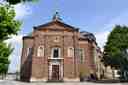
Open eigen pagina →To spot the Old Town from where you’re standing, just look ahead for a beautiful, reddish-brown brick building with statues set in alcoves and a charming wooden door topped by a…Meer lezenToon minder
To spot the Old Town from where you’re standing, just look ahead for a beautiful, reddish-brown brick building with statues set in alcoves and a charming wooden door topped by a cross-tipped spire-this marks the edge of Düsseldorf’s historic heart, inviting you toward the lively and legendary Altstadt. Ah, welcome to the Old Town-Düsseldorf’s beating historic heart and, frankly, the stage for more stories than a grandma with a photo album! Imagine, just beyond these bricks and bustling lanes, you’re stepping into one of Düsseldorf’s oldest streets, already alive and kicking back in 1288 when the city got its official charter. The oldest building here is the St.-Lambertus church, rising up with its unique twisted spire like a guardian from the past. But this isn’t just a place for old stones-every inch has a tale (and sometimes even a scandalous night out). Let your senses wander. Picture the street centuries ago, echoing with the sound of horseshoes, the call of market vendors, and the scent of fresh bread wafting from hidden bakery windows. Back in those early days, the market square and the very first town hall were just west of the church. Every significant moment, from city expansions to destructive events-like the great gunpowder tower explosion of 1634 that rocked the neighborhood, or the bombings of the Seven Years’ War and the First Coalition War-left their marks on these stones. Look left and right as you stroll: some houses on one side are brand new, but others have secrets dating back to the 1600s, their cellars built in a style fit for medieval mysteries. On your right, facing away from the river, most of these buildings are newer. The last gasp of truly old architecture was gone by 1990, replaced by offices and shops, but if you look on the left, you’ll see buildings rooted firmly in the 17th century. In fact, back in 1644, there was a bustling Carmelite convent nearby, which later became a hospital operated by the Cellite Sisters and eventually transformed into luxury apartments-a true tale of transformation, from holy prayers to posh living. One building, with its flashy old red-brick front, has a cellar that’s seen more late-night stories than the average pub. Now, the fun doesn’t stop at architecture. House number one-the so-called Douvenhaus-used to be home to the famous Achenbach family before serving up wisdom and wine as the “Zum Rosenkränzchen” tavern. This wasn’t just your average watering hole: writers, poets, and artists all gathered here, probably arguing over who had the best mustache or the grandest ideas. Imagine sitting among the likes of Hedda Eulenberg, Friedrich Maase, or Gustav Krumbiegel, the air thick with smoke, laughter, and, perhaps, the odd piano tune. House number three could tell you a tune or two-it’s where composer Norbert Burgmüller was born. Down the street, house number seven ran a pharmacy as far back as 1565 (and honestly, some of the remedies might have been more “interesting” than effective). Over at house nine, the Redinghoven family brewed up plans-and later, quite a bit of beer when it all became part of the Schösser brewery empire in the 19th century. At one point, their beer hall here was so popular it could practically claim half the city’s party memories. Further along, seventeenth-century owners were already tinkering with real estate-buying, demolishing, and expanding houses to shape the streets we stroll today. Sometimes, they did it just to make a nicer front for the church, changing narrow alleys into broad walkways. And don’t forget the breweries! These streets were home to Düsseldorf’s legendary old Altbier breweries, especially the Schösser brewery, which once owned nearly every building you can see on the right. Their beer hall survived war and would reopen to cheers and clinking glasses, hosting everyone from royalty to rowdy local societies (truly, Düsseldorf always knew how to celebrate). So as you take a breath and soak in the atmosphere, remember: every brick, every stone, and every door you see has been shaped by centuries of laughter, loss, change, and community. Whether you’re here for the history, the calm, or just a cold Altbier, the Old Town’s spirit still buzzes through these streets-sometimes, if you listen carefully, you may just hear whispers of centuries gone by, or maybe the distant sound of a party getting started. Shall we wander further and see what else is waiting down the next cobbled lane? Want to explore the course, schlösser brewery or the references in more depth? Join me in the chat section for a detailed discussion.
Open eigen pagina →Just ahead of you, towering proudly yet slightly twisted, you’ll spot St. Lambertus by its tall, dark, and unmistakably crooked spire rising above the old town skyline-look for…Meer lezenToon minder
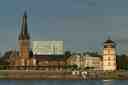
Just ahead of you, towering proudly yet slightly twisted, you’ll spot St. Lambertus by its tall, dark, and unmistakably crooked spire rising above the old town skyline-look for the church with the dramatic tilt that gives it a rather mischievous charm. Now that you’re standing in front of St. Lambertus, let me pull you straight into its story-a place where legends, royals, and ancient secrets all mingle together in the heart of Düsseldorf. Imagine the scene centuries ago: the Rhine shimmers nearby and sturdy stone walls rise above the cobblestones, their shadows cool and mysterious. The church before you is one of the oldest treasures in the city center and absolutely packed with tales. Travel all the way back to 1159-yes, that far-when a document from Pope Adrian IV formally recognized a much older, simpler chapel at this very location. But locals already whispered of church services and Romanesque prayers before then, when medieval knights might’ve stopped for a blessing. In 1209, the original chapel was upgraded to parish church status, meaning the bells would’ve rung out for weddings, funerals, and every drama imaginable in village life. If you look around and imagine the clash of steel, the year 1288 was a wild one. That’s when, amid the chaos of the Battle of Worringen and Düsseldorf being raised to city status, this spot, St. Lambertus, got a big upgrade: it became a collegiate church, awarded new riches and relics, and linked even more deeply to the powerful Berg duchy. Duke Adolf and his family, including ambitious Margarete of Ravensberg-Berg, poured money and devotion into making Düsseldorf a major pilgrimage spot-for every holy relic they could claim, there was a grand procession. In fact, among these were the bones of St. Apollinaris, carried all the way from Remagen to rest right here. By 1394, the church looked recognizable: built in sweeping brick Gothic style, filled with roaring organ music and candlelight flickering on precious shrines. During a service, forty priests would have recited prayers at a dozen altars, their voices mingling with the smoky scent of incense. And underneath your feet? The city’s very first cemetery lay here, dating back at least to 1303, with generations quietly resting under the bustling Stiftsplatz. St. Lambertus became home to the bones of royals, too-Duke Wilhelm the Rich among others, whose Renaissance tomb right in the chancel is a jewel of Düsseldorf art. Imagine the noble company: queens, duchesses, even Jülich-Kleve-Berg’s own chancellor, all interred amid the prayers and politics. The church has faced some wild storms-literally. In 1606, heavy winds damaged the building, and then in 1634 a nearby gunpowder tower exploded, shaking the stained glass and showering the church with trauma it would take decades to heal. The elaborate high altar, carved confessionals, and soaring side chapels that decorate the church now largely date from that era of renovation and resilience. Now, about that famously crooked tower-nobody can resist asking about it! In 1815, after a terrible fire, architect Adolph von Vagedes rebuilt the spire, but the wood was too fresh, and as it dried, the tower twisted. Some say the Devil himself, in a fit of rage, tried to rip the church away, only to twist the spire and leave it as you see today. The citizens grew so fond of their leaning landmark that after World War II, when rebuilding the roof, they insisted it stay charmingly askew. Düsseldorf’s answer to Pisa! St. Lambertus is dedicated to St. Lambert, a martyr from Liège-while relics of St. Apollinaris, Düsseldorf’s city patron since 1394, lie honored within. Even the organs in St. Lambertus are extraordinary: the grand, French-Romantic style one in the tower, and a beautiful Baroque case one in the choir, both crafted by Rieger Orgelbau, fill the church with resonant music to this day. Now, if you’re lucky, maybe the bells will ring for you-seven bronze voices, cast in 1987, harmonizing with one ancient bell all the way from 1462. Imagine the sound soaring over the rooftops, announcing joy or sorrow to every citizen below. So, as you stand by its leaning shadow, know that St. Lambertus has seen more than 800 years of faith, drama, and celebration, and today, it’s still the beating heart of old Düsseldorf. Intrigued by the building, organs or the bells? Make your way to the chat section and I'll be happy to provide further details.
Open eigen pagina →In front of you, you’ll spot the remains of the old Düsseldorf Castle-just look for the tall, round stone tower peeking up by the riverside, standing alone where the castle once…Meer lezenToon minder
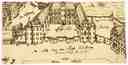
In front of you, you’ll spot the remains of the old Düsseldorf Castle-just look for the tall, round stone tower peeking up by the riverside, standing alone where the castle once proudly stretched across the square. Now, close your eyes for a moment and imagine it’s the late 1200s. The air is thick with the smell of wood smoke from hearth fires, and the only thing louder than the bustling market is the clanging of blacksmiths next door. Right where your feet stand, a formidable stronghold once rose from a tiny island at the mouth of the Düssel River, built by the Counts of Berg. Picture sturdy sandstone blocks, watchful guards, and a castle that’s seen more battles and parties than your favorite fantasy TV series. By the mid-1500s, after surviving a couple of blazing infernos-the first in 1492, then another in 1510-Düsseldorf Castle was reborn as a dazzling Renaissance residence under Wilhelm the Rich. Imagine grand halls, gleaming marble, and a shiny new round tower with columns worthy of an Italian palace. Walk through time, and you’d bump into Jan Wellem, the extravagant prince who spruced up the whole place at the end of the 1600s. Thanks to Jan and his love for all things grand, the castle played host to balls, banquets, and even the odd royal tantrum. I’m sure if you listened closely enough you’d hear a ghostly echo of champagne corks popping and classical music drifting over the Rhine at midnight. Here’s a twist: in the early 1700s, they built Europe’s first stand-alone art gallery right up against the castle’s southern wall. This gallery became a sensation with its stunning collection of Renaissance and Baroque masterpieces; imagine art lovers from around the world flocking here, wide-eyed at works that would inspire artists for centuries. But it wasn’t all feasts and masterpieces. Siege warfare arrived in 1794, when French troops bombarded the city. As cannonballs rained down, a devastating fire swept through the castle and much of Düsseldorf burned in a single terrifying night. Yet, like a stubborn candle flame, the castle bounced back-Napoleon himself stopped by and ordered part of it restored (although he did forget to leave a bottle of champagne that time). Throughout the 1800s, the old castle’s jobs list looked like a very ambitious resume: it held the Prussian state mint, the prestigious Düsseldorf Art Academy, and even the local parliament. Artists, politicians, and coin minters all shared these halls-can you imagine the lunchroom conversations? Sadly, disaster struck once more in 1872. A monstrous fire ripped through the castle overnight, sending everything-collections, studios, and centuries of stories-crashing down in thunder and smoke. Only the round tower, forged by that Renaissance architect with the impressively Italian name, survived. In 1896, the last standing part of the southern wing was finally torn down, leaving this lonely sentinel as the only hint of what had stood here before. As you look down at the paving stones on Burgplatz, you’ll notice a subtle outline traced in different colors. Those stones quietly whisper the original footprint of the castle, showing just how vast it once spread. Step back and look up at the tower. If you listen carefully, perhaps you’ll catch a flutter of silk-because local legend says the headless Lady in Black roams here at night, her gown rustling in the wind, endlessly searching the ruins for peace. So, whether you’re feeling the drama of medieval battles, the glamour of royal parties, or just the thrill of a good ghost story, Düsseldorf Castle is proof that, sometimes, what remains says more than what’s gone.
Open eigen pagina →Right ahead of you, you’ll spot an open, cobblestone square stretching toward the river, with a tall, round, white-and-brown tower-the Schlossturm-standing proudly to one side and…Meer lezenToon minder
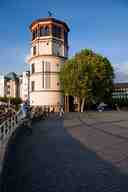
Right ahead of you, you’ll spot an open, cobblestone square stretching toward the river, with a tall, round, white-and-brown tower-the Schlossturm-standing proudly to one side and a generous ring of trees and bustling locals all around. Welcome to Burgplatz, where Düsseldorf’s story changes shape with every century. Imagine standing here hundreds of years ago when this spot wasn’t an easygoing square, but the heart of a young, fortress-guarded city. Picture the thick air, full of the clatter of market stalls and the shouts of boatmen down by the Rhine. If you listen closely right now, you might hear the distant hum of conversation and the occasional bicycle bell, just as travelers and townsfolk have gathered here for centuries. This square takes its name from the mighty castle that once stood guard just behind you. Back in the late 1200s, Düsseldorf was only a fishing village, but things took a dramatic turn after the city won its rights in 1288. Imagine the medieval excitement-suddenly, a bustling hub needed protection and taxes had to be collected. “Let’s build a castle right by the river!” someone must have said, and the Burgplatz was born. As the decades rolled on, the modest fort grew into a grand residence. During the grand wedding of Johann Wilhelm and Jakobe von Baden-Baden in 1585, the castle reached new heights of elegance. For a while, this square was the dazzling center of a princely court-think balls, fireworks, extravagant paintings, and maybe a few powdered wigs gone askew after a night of celebration. But nothing lasts forever. After the death of Düsseldorf’s star prince, Jan Wellem, and his widow’s swift departure for Italy, the excitement faded away faster than a spilled pint at a local pub. The castle suffered not one, not two, but several devastating fires-almost as if it had a suspiciously flammable personality. In 1795, a French army set fire to it. Art students and artists moved in for a while, giving the place a dash of bohemian flair, but a final blaze in 1872 ruined even their ambitions. By 1892, only the sturdy Schlossturm was left-now standing before you as the last quiet witness to this saga. Here’s where the Rhine decided to join the action. As the old walls disappeared, the square opened wide to the water. Sailors could tie up their boats, cargo unloaded, and, with the flood defenses improved, the locals could enjoy river views without the occasional surprise swim. Burgplatz became more and more a living room for the city. Picture that large stone staircase-wide, welcoming, and now a popular summer hangout-drawing people down toward the water, the sounds of laughter, music, and chatter mixing in the soft evening breeze. Of course, the square hasn’t always been this friendly. For a while, it was swallowed up by roads and parked cars-up to 40,000 grumpy engines a day. People wondered if the Burgplatz would ever recover its charm. But in the 1990s, a bold plan buried the noisy road underground, giving this space back to walkers, partygoers, and jazz lovers. Suddenly, the city seemed to remember why it loved the river so much. Take a look around: you’ll notice a lively tree grove to the north, café tables spreading across the square, and, if you hunt for it, the famous Radschlägerbrunnen fountain, which celebrates the city’s tradition of cartwheeling kids (and grown-ups who still think they’re kids). Over on the river’s edge, a great mosaic adorns the wide staircase, while stones with heartfelt engravings quietly honor those lost to AIDS. With every season, Burgplatz transforms-hosting concerts, sports, the Carnaval, and more. Locals debate everything here: skate nights, alcohol bans, and, I kid you not, even whose bakery made the best bread. The only thing that doesn’t change is the square itself, always waiting for the next chapter, and the next wave of people ready to make memories. So soak it all in-the river, the history, and the spirit of Düsseldorf on full display.
Open eigen pagina →To spot the Düsseldorf Memorial, look for the stately cream-colored building with gold stone arches around the windows and a tall green door to your right, marked by the year…Meer lezenToon minder
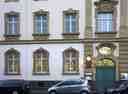
To spot the Düsseldorf Memorial, look for the stately cream-colored building with gold stone arches around the windows and a tall green door to your right, marked by the year "1900" above the top center window and signs next to the arched doorway. You’re now standing outside the Düsseldorf Memorial-an ordinary-looking building with some extraordinary stories inside! Take a moment and imagine the faint echo of footsteps on these old cobblestones as if every step is whispering the city’s secrets. It’s a peaceful spot today, but behind these thick walls lies a history full of drama, courage, and a bit of detective work that would make even Sherlock Holmes sweat. This building wasn’t always a place to remember. Back in the roaring 1920s, and into the darkest years of the Nazi era, these rooms were buzzing with police business-some a bit less “law and order,” and a bit more sinister. Offices, interrogation rooms, even cells-many people were dragged in, interrogated, or held here by the Gestapo. If these walls could talk, they’d tell chilling stories of spies, escape plans, and silent acts of bravery. After the war, people knew these rooms had witnessed too much suffering to ever forget. But instead of tearing everything down and starting fresh, Düsseldorf made the courageous move to remember. It took a while-the first ideas for a memorial came up just after the war, but it wasn’t until the 1980s that the city, along with activists, young people, churches, and survivors, got together and said, “Let’s open our eyes.” In 1987, the memorial was born-part museum, part research institute, part gut-punch to forgetfulness. The museum inside is a multi-layered time machine. In one moment, you might hear the clatter of typewriters and see files stacked high as you’re taken back to the time when the Gestapo ran the show-plotting, investigating, and, yes, persecuting Jews, Sinti, Roma, and anyone unlucky enough to end up on a list. Later, as the city was bombed, the basement-still open for visits-became a crowded air-raid shelter, full of shouts, prayers, and, probably, a few nervous jokes to break the tension. After Germany was liberated, the question was: how do you turn a place of fear into one of learning and honor? Düsseldorf answered by filling the building with stories-stories of hidden resistance, forbidden friendships, young people standing up to injustice, and, heartbreakingly, the lives lost to Nazi terror. The latest permanent exhibition focuses on what it meant to be a child or teenager growing up in Nazi Düsseldorf. Through photos, diaries, and objects, you step into their shoes-maybe dreaming about your favorite football team one day, and then forced to grow up fast the next, because of politics and danger. Every year, about 30,000 visitors come here. School projects, special exhibitions, even walking tours-nothing boring or distant. In fact, the memorial even runs a modern event center, named for Beatrice Strauss, a Jewish teacher deported to Minsk in 1941. Her memory lives on, right next to town hall and the iconic Jan Wellem equestrian statue-like a friendly but wise neighbor always ready to share a lesson. And here’s a quirky detail: the memorial isn’t just a place to feel sad. It’s a buzzing hub, publishing books, researching unsolved mysteries from the past, and making sure no one’s story is lost. Even the air raid shelter is open, reminding us that ordinary spots in the city hide extraordinary stories. Whether you walk past with a heavy heart or leave inspired by acts of courage and kindness, this place invites you to keep history alive-one memory, one story, and yes, even one joke at a time. Just remember, the past is only ever as far away as these footsteps echoing behind you. Eager to learn more about the memorial in the historic town hall, origin or the concept and tasks? Simply drop your inquiries in the chat section and I'll provide the details you need.
Open eigen pagina →
Veelgestelde vragen
Hoe begin ik de tour?
Download na aankoop de AudaTours-app en voer je inwisselcode in. De tour is direct klaar om te starten – tik gewoon op afspelen en volg de GPS-geleide route.
Heb ik internet nodig tijdens de tour?
Nee! Download de tour voordat je begint en geniet er volledig offline van. Alleen de chatfunctie vereist internet. We raden aan om te downloaden via wifi om mobiele data te besparen.
Is dit een groepsrondleiding met gids?
Nee - dit is een audiotour met eigen gids. Je verkent zelfstandig op je eigen tempo, met audiovertelling via je telefoon. Geen tourguide, geen groep, geen schema.
Hoe lang duurt de tour?
De meeste tours duren 60-90 minuten, maar jij bepaalt het tempo volledig. Pauzeer, sla stops over of neem pauzes wanneer je wilt.
Wat als ik de tour vandaag niet kan afmaken?
Geen probleem! Tours hebben levenslange toegang. Pauzeer en hervat wanneer je wilt – morgen, volgende week of volgend jaar. Je voortgang wordt opgeslagen.
Welke talen zijn beschikbaar?
Alle tours zijn beschikbaar in meer dan 50 talen. Selecteer je voorkeurstaal bij het inwisselen van je code. Let op: de taal kan niet worden gewijzigd na het genereren van de tour.
Waar vind ik de tour na aankoop?
Download de gratis AudaTours-app uit de App Store of Google Play. Voer je inwisselcode in (verzonden per e-mail) en de tour verschijnt in je bibliotheek, klaar om te downloaden en te starten.
Als je niet tevreden bent met de tour, betalen we je aankoop terug. Neem contact met ons op via [email protected]
Veilig afrekenen met 


