

퀸시 오디오 투어: 보석 도시의 웅장함의 메아리
퀸시의 우아한 벽돌 외관 아래에는 라이벌 밀주업자들이 충돌하고 이민자 선구자들이 운명을 개척했던 골목길을 통해 비밀이 흐릅니다. 셀프 가이드 오디오 투어를 통해 도시를 여행하며, 서리 낀 창문 뒤와 자갈길 아래 숨겨진 이야기들을 풀어보세요. 가이드북을 넘어 대부분의 방랑자들이 간과하는 순간들을 발견해보세요. 단 하룻밤의 화재와 분노로 도심 전체 블록이 재건될 수밖에 없었던 이유는 무엇일까요? 사우스 사이드 독일 지구의 어떤 그림자 같은 회의가 지역 반란의 결과를 바꾸었을까요? 그리고 오클리-린제이 센터 내부의 스캔들은 어떻게 도시의 정치 전당에 메아리를 남겼을까요? 강변의 웅장함에서 비밀스러운 안뜰로 에너지가 이동하는 것을 느끼며, 아웃사이더와 인플루언서 모두의 발자취를 따라가 보세요. 각 거리 모퉁이가 드라마로 당신을 이끌고 새로운 눈으로 보게 하는 퀸시의 움직임을 발견하세요. 과거는 이곳에서 살아 숨 쉽니다. 재생 버튼을 누르고 퀸시가 숨겨진 심장을 드러내도록 하세요.
투어 미리보기
이 투어에 대하여
- schedule소요 시간 30–50 mins나만의 속도로 이동
- straighten4.3 km 도보 경로안내 경로 따라가기
- location_on
- wifi_off오프라인 작동한 번 다운로드, 어디서든 사용
- all_inclusive평생 이용언제든지 다시 재생 가능
- location_on빌라 캐서린에서 시작
이 투어의 정류장
Right in front of you, you’ll spot a big, modern building with huge windows lined across its gray, boxy front-just behind the sign that reads “Oakley-Lindsay Center.” Let’s step…더 보기간략히 보기
Right in front of you, you’ll spot a big, modern building with huge windows lined across its gray, boxy front-just behind the sign that reads “Oakley-Lindsay Center.” Let’s step back to 1995, when Quincy decided to dream big and build the Oakley-Lindsay Center-an $8 million investment that now serves as the region’s bustling convention hub. Picture grand halls, the sound of footsteps echoing in a space large enough to hold 3,500 people, and a marquee out front flickering with words about concerts and rodeos. This epicenter fills a special spot between St. Louis and Iowa City, drawing event-goers from the tri-state area for everything from proms and seminars to rock concerts featuring the likes of Destiny’s Child or Skillet. But the Oakley-Lindsay Center isn’t just about fun times and high notes-its walls were the background for real drama in 2008, when the Mississippi River threatened Quincy with a historic flood. The center became the sandbag central, the heart-pounding headquarters where neighbors shoveled and stacked over a million sandbags together to save their city. The tension was so high, it caught national news. One day, right in the thick of it, the center hosted none other than presidential hopeful Barack Obama, who showed up, sleeves rolled up, pitching in like everyone else. Step inside, and you could catch the latest theater production-the Quincy Community Theater brings the stage alive with 500 seats and year-round performances. Whether you’re here for a boxing match or to cheer on your favorite band, the Oakley-Lindsay Center stands as a symbol of Quincy’s energy and community spirit-a place where big things really do happen right on Gardner Expressway, just steps from the mighty Mississippi. Ready to delve deeper into the location, facilities or the events? Join me in the chat section for an enriching discussion.
전용 페이지 열기 →Look for a large, square red-brick house with tall, thin windows framed in white, and a big arched blue door right up the center-sitting behind neatly trimmed bushes beneath a row…더 보기간략히 보기
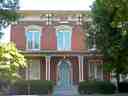
Look for a large, square red-brick house with tall, thin windows framed in white, and a big arched blue door right up the center-sitting behind neatly trimmed bushes beneath a row of trees. Now, before you stands what was once the Morgan-Wells House-an Italianate beauty with a splash of mystery and more than a few life changes under its roof. Back in 1853, a pork packer named J.E. Norwood started things off by building the first part, probably never guessing just how many lives would parade through this place. In 1860, Edward Wells showed up and decided the house needed a bit more ‘oomph,’ so he expanded it, wrapping his new fanciness right around the old. After a while, a big-hearted banker named Lorenzo Bull took over and, in a move that could warm anyone’s heart, handed the home to the Cheerful Home Association in 1901. Suddenly, those polished floors echoed with the laughter and footsteps of children-it became Illinois’s very first licensed children’s home, making history by opening its arms to kids in need. And just for a twist, the YWCA scooped it up in 1933 for only ten dollars-yes, less than a pizza! Fast forward, and in 2016, progress came knocking as the building made way for the local newspaper’s new offices. Though the house is gone, just imagine the dinners, secrets, and hugs that made this site unforgettable.
전용 페이지 열기 →

8개 정류장 더 보기정류장 적게 보기expand_moreexpand_less
To spot the S.J. Lesem Building, look on your left for a tall, brick building with white decorative window frames, corner accents, and a big yellow awning marking the entrance…더 보기간략히 보기
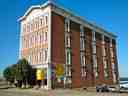
To spot the S.J. Lesem Building, look on your left for a tall, brick building with white decorative window frames, corner accents, and a big yellow awning marking the entrance right up at the street corner. Let’s have some fun with a little time travel. Imagine it’s 1871-horses clop along the street, and busy folks in top hats and long skirts hurry past this very building, freshly erected for the Lesem Brothers’ booming dry goods business. The block buzzed with trade as Wholesale Row, but now, only this building stands, a sort of “last survivor” of four proud neighbors. The S.J. Lesem Building is pretty stylish, right? Those arched windows and iron columns weren’t just for show-they shouted to Quincy’s shoppers: ‘You’re in for some serious business!’ After S.J. Lesem & Co. moved out, things got a bit… spooky, perhaps? The Quincy Casket Company moved in, making this place home for coffins and maybe an occasional creaky floorboard or two, from 1912 all the way to 1977. With its robust brick pilasters, white-capped windows, and an iron-crowned cornice, the building has watched fashions (and fortunes) rise and fall. Now, it’s more than a part of local trivia-it’s officially on the National Register of Historic Places, proof that Quincy knows how to respect style and a good story, no matter how many lives a building’s led.
전용 페이지 열기 →To spot the Robert W. Gardner House, look for a grand red-brick mansion right ahead with tall, elegant windows framed by pale blue trim, a stately porch, and a decorative roofline…더 보기간략히 보기
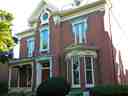
To spot the Robert W. Gardner House, look for a grand red-brick mansion right ahead with tall, elegant windows framed by pale blue trim, a stately porch, and a decorative roofline that seems to crown the building with ornate flair. Imagine it’s 1873, and you're strolling up to this newly built house-a masterpiece of the Second Empire style with just a whisper of Italian charm. Back in the day, no one knew who crafted the blueprint or swung the hammer, but they sure had good taste: original walnut woodwork and a staircase so finely restored, you could almost picture the swish of gowns and the clack of boots on those steps. And let’s not forget Robert W. Gardner himself, the clever inventor who tinkered away here and came up with the steam engine speed governor-a little gadget that made trains far less likely to give your mustache an unscheduled trim. The house has watched generations go by, and today, it carries Gardner’s name as a museum of architecture and design. Standing outside, you get a sense of both mystery and admiration-the secretive nameless hands who built it, and the spark of invention that shaped its legacy, both looking on as Quincy continues to turn the pages of its own story.
전용 페이지 열기 →Look up at the impressive stone building here-doesn’t it look just a little fancy for sending a postcard? That’s because this isn’t your average post office. Rising before you is…더 보기간략히 보기
Look up at the impressive stone building here-doesn’t it look just a little fancy for sending a postcard? That’s because this isn’t your average post office. Rising before you is the U.S. Post Office and Courthouse, proudly standing here since 1887, with its limestone exterior glowing in any weather and those bold arched entrances almost inviting you to waltz inside in your finest nineteenth-century attire. Back in 1885, architect Mifflin E. Bell wanted to break away from the ordinary-so he borrowed inspiration straight from New York City royalty, modeling this place after Richard Morris Hunt’s Vanderbilt House. Imagine the whispers around town at the time: Quincy had never seen French Renaissance Revival style, especially not with fancy pointed gables and dormers poking from the ornate roof. This grand old station even earned the name Orville H. Browning Station. Over the years, it’s seen justice delivered, love letters mailed, and, I’m guessing, a fair share of dramatic queues on tax day. As you admire the details, picture judges striding past the same stones, lawyers secretly practicing their arguments, and postal clerks knowing everyone in town by name. Listed on the National Register of Historic Places since 1977, it’s practically Quincy’s royal palace-but with better stamps.
전용 페이지 열기 →To find the Ernest M. Wood Office and Studio, look ahead for a compact, one-story beige building accented with dark brown trim and geometric lines, right on the corner-it stands…더 보기간략히 보기
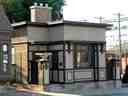
To find the Ernest M. Wood Office and Studio, look ahead for a compact, one-story beige building accented with dark brown trim and geometric lines, right on the corner-it stands out with its flat roof and strong Prairie style features. As you stand here, imagine yourself in Quincy back in 1912, when Ernest M. Wood, the local star architect, rolled up his sleeves to design this very office, inspired by none other than Frank Lloyd Wright and his iconic Prairie style. Look at the beige stucco walls and those sharp, horizontal lines; Wood was making a statement-geometry never looked so classy! He blended innovation with nature, letting the building stretch wide rather than tall, almost hugging the earth. The cypress trim was stained just right to give it that timeless look, and if you could peek inside back then, you’d spot his secret weapon: a bank vault! Apparently, he loved designing banks so much, he wanted a little security on site for his blueprints. Fast-forward to the 1980s, and you’d find craftsmen restoring the skylights, dusting off those beautiful stained glass windows, and fixing the built-in bookcases-imagine the rays of the setting sun streaming through, painting rainbows on the office walls. Though Wood retired in 1938, his masterpiece still buzzes with life as an office. Now, as you stand here, take in the simple elegance and remember: in architecture, sometimes less really is more-unless you count how many geometric shapes are on this facade!
전용 페이지 열기 →To spot the South Side German Historic District, look ahead for rows of brick and stone buildings with arched windows and colorful trims, especially where the street corners come…더 보기간략히 보기
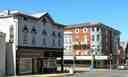
To spot the South Side German Historic District, look ahead for rows of brick and stone buildings with arched windows and colorful trims, especially where the street corners come alive with historic facades-one with a white front and red accents, and another with blue-trimmed bay windows. Welcome to the South Side German Historic District, where Quincy’s roots go deep and the buildings have more stories than a German fairytale. Imagine it: you’re walking down these streets just south of downtown, surrounded by the sturdy brickwork and steep rooftops shaped by generations of German immigrants. Long before these blocks were famous for cozy restaurants or casket shops (don’t worry, you’re not in a ghost story!), this was “Calftown”-named for all the residents who kept calves in their backyards. If you ever wondered what it smelled like here in the 1800s, you can bet it wasn’t spaghetti! Let’s jump to 1857-a time when three brothers, the Dicks, launched their legendary Dick Brothers Brewery on 9th and York. Imagine the *clink* of barrels and the *froth* of beer as this brewery grew to become one of the Midwest’s biggest, even outselling the mighty Anheuser-Busch for a while! At its peak, 70,000 barrels a year rolled out, making Quincy the toast of the region. Sadly, Prohibition crashed the party, and by 1951, after wars, laws, and tough times, the brewery faded into history. But its storied brick walls still stand, now hosting art studios and dreams of a revival-if those walls could talk, they might just hiccup! Turn the corner and you’ll find the Eighth Street Business District-the heartbeat of Calftown, alive with the ghosts of the State Street Theater’s movie crowds (you can almost hear the popcorn popping), old churches where hymns still echo, and Gem City College where you could learn how to fix a watch or style some hair. Here, history hasn’t just been preserved, it’s been lived. From the abolitionist bravery of Dr. Richard Eells-who once sheltered runaway slaves in his brick house-to Quincy’s oldest cemetery overlooking the Mississippi, every brick and beam whispers a story. Whether it’s spaghetti dinners, beer barrels, or freedom seekers, this district invites you to savor not just the food, but the layers of life that make Quincy unforgettable.
전용 페이지 열기 →To spot the John Wood Mansion, look for a striking white house with four massive, round columns standing proudly at the front and a tall brick chimney rising above the…더 보기간략히 보기
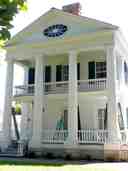
To spot the John Wood Mansion, look for a striking white house with four massive, round columns standing proudly at the front and a tall brick chimney rising above the roof. Alright, welcome to the grand finale! Just picture it-the year is 1838, horses clop by on dusty roads, and John Wood, a real jack-of-all-trades, is sweating away at his very own homemade lathe, turning those enormous columns you see in front of you. This Greek Revival home was a bold statement, rising out of what was once prairie, not far from where Wood and his family lived in a quirky two-story log cabin. When John Wood wasn’t busy founding Quincy and Adams County, he was making sure this 14-room masterpiece would turn heads-he even had the whole mansion scooted a block east to make room for an even fancier home. Imagine candlelight flickering in those original rooms as parties hummed and laughter echoed through time. Later, Wood himself would become Illinois’ 12th governor, stepping into history when fate intervened. Today, thanks to the Historical Society, you can tour inside and see original family treasures-and if you come in December, you might catch a magical candlelight tour. And don’t forget, this mansion has been named one of Illinois’ 200 Great Places. Not too shabby for a place that once had all its columns hand-carved by the man himself!
전용 페이지 열기 →

자주 묻는 질문
투어는 어떻게 시작하나요?
구매 후 AudaTours 앱을 다운로드하고 교환 코드를 입력하세요. 투어를 바로 시작할 수 있습니다 - 재생을 탭하고 GPS 안내 경로를 따라가시면 됩니다.
투어 중 인터넷이 필요한가요?
아닙니다! 시작 전에 투어를 다운로드하면 완전히 오프라인으로 즐길 수 있습니다. 채팅 기능만 인터넷이 필요합니다. 모바일 데이터 절약을 위해 WiFi에서 다운로드하시는 것을 권장합니다.
이것은 가이드가 안내하는 단체 투어인가요?
아닙니다 - 이것은 셀프 가이드 오디오 투어입니다. 폰을 통해 오디오 나레이션을 들으며 나만의 속도로 독립적으로 탐험합니다. 투어 가이드도, 단체도, 일정도 없습니다.
투어는 얼마나 걸리나요?
대부분의 투어는 60-90분이 소요되지만, 속도는 전적으로 본인이 조절합니다. 원할 때 언제든지 일시정지하거나, 정류장을 건너뛰거나, 휴식을 취하세요.
오늘 투어를 끝낼 수 없으면 어떻게 하나요?
괜찮습니다! 투어는 평생 이용이 가능합니다. 원할 때 언제든지 일시정지하고 다시 시작하세요 - 내일, 다음 주, 또는 내년에도. 진행 상황이 저장됩니다.
어떤 언어를 이용할 수 있나요?
모든 투어는 50개 이상의 언어로 이용 가능합니다. 코드를 교환할 때 원하는 언어를 선택하세요. 참고: 투어 생성 후에는 언어를 변경할 수 없습니다.
구매 후 투어는 어디에서 이용하나요?
App Store 또는 Google Play에서 무료 AudaTours 앱을 다운로드하세요. 교환 코드(이메일로 전송됨)를 입력하면 라이브러리에 투어가 나타나며, 다운로드하여 시작할 수 있습니다.
투어가 마음에 들지 않으시면 환불해 드립니다. 문의: [email protected]
안전한 결제 


