AudaTours logoAudaTours

플래그스태프 오디오 투어: 전설과 랜드마크의 메아리

오디오 가이드8 정류장

한때 북쪽 기차의 기적 소리는 천둥보다 크게 울려 퍼지며, 봉우리 그림자 아래 플래그스태프를 야망과 음모의 교차로로 만들었습니다. 이 셀프 가이드 오디오 투어는 번화한 거리와 유서 깊은 장소를 거닐며 대부분의 방문객이 접하지 못하는 숨겨진 드라마, 유령 이야기, 정치적 대결을 드러냅니다. 잘 알려지지 않은 길을 몇 걸음 벗어나면 플래그스태프의 비밀스러운 역사가 당신의 발아래 펼쳐집니다. 웨더포드 호텔의 악명 높은 포커 테이블에서 누가 자신의 삶과 명예를 걸었을까요? 오르페움 극장에서 사라진 공연이 정말로 한밤의 반란을 촉발했을까요? 플래그스태프 역의 벽에 그려진 그림 속에 어떤 비밀 코드가 숨겨져 있었을까요? 권력 다툼이 끓어오르고 스캔들의 메아리가 네온사인 사이에서 번뜩이는 벽돌길을 따라 걸어보세요. 모든 발걸음마다 새로운 얼굴, 오래된 불화, 잊혀진 속삭임이 되살아나며, 당신이 상상하지 못했던 플래그스태프를 보게 될 것입니다. 플래그스태프는 지도상의 단순한 정거장이 아닙니다. 지금 여정을 시작하고 도시의 가장 흥미진진한 실제 이야기를 풀어보세요.

투어 미리보기

map

이 투어에 대하여

  • schedule
    소요 시간 60–80 mins나만의 속도로 이동
  • straighten
    2.3 km 도보 경로안내 경로 따라가기
  • location_on
  • wifi_off
    오프라인 작동한 번 다운로드, 어디서든 사용
  • all_inclusive
    평생 이용언제든지 다시 재생 가능
  • location_on
    플래그스태프 역에서 시작

이 투어의 정류장

lock_open 3개 무료 미리보기 · 5개 구매 시 잠금 해제

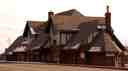
  1. Look straight ahead at the station, a striking building with a cross gabled dark shingled roof, sturdy red brick and white plaster walls, and an old fashioned Amtrak sign near the…더 보기간략히 보기

    Look straight ahead at the station, a striking building with a cross gabled dark shingled roof, sturdy red brick and white plaster walls, and an old fashioned Amtrak sign near the top right peak. It is wild to think about, but this city actually started out as a rugged camp called Antelope Spring! The story of how it got its permanent name shows the raw ambition of those early settlers claiming this wild land. On July Fourth, eighteen seventy six, a scouting group known as the Second Boston Party literally stripped a massive ponderosa pine tree down to its bare trunk just to use it as a makeshift flagpole to celebrate the United States centennial. It was a bold, aggressive stake in the earth that transformed an anonymous spring into the permanent town of Flagstaff. Now, there is a competing legend that says a surveyor climbed a tall pine in eighteen fifty five and tied a flag to it for Independence Day. Either way, that pioneer spirit defined the town. Soon after the flagpole went up, the Atlantic and Pacific Railroad crashed into this wilderness, bringing raw, dangerous progress. They built a wooden depot in eighteen eighty six that quickly burned to the ground... a disaster that eventually paved the way for the sturdy nineteen twenty five brick and stone station you see today. That nineteen twenty five depot was built by the Atchison, Topeka and Santa Fe Railroad. The engineers designed it in a Tudor Revival style. That is an architectural style that mimics an old English manor with decorative exposed timber frames on the upper walls, specifically meant to handle Northern Arizona's demanding, high altitude winters. At six thousand nine hundred and two feet above sea level, this is one of the highest train stations in the entire Amtrak system! This station became the beating heart of a remote community that forced its way into existence. Just across San Francisco Street is the older eighteen eighty nine solid red sandstone depot, which served as a busy freight hub. Timber was the absolute lifeblood here, an industry built on grueling manual labor. Settlers and massive Baldwin Steam Engines, like the famous locomotive nicknamed Two Spot, hauled endless logs out of the surrounding forests to feed the bones of a growing nation. Today, the building shares its space with the Flagstaff Visitor Center, packed with Route 66 memorabilia. If you peek inside, there is a miniature train running continuously on a track suspended from the ceiling. It is also a global hub for train enthusiasts, thanks to a live Virtual Railfan camera mounted outside that broadcasts passing passenger and freight trains to viewers all over the world. They even use this depot to kick off local community events like the annual Flagstaff Chocolate Walk. The railway brought relentless growth, transforming a lonely flagpole in the woods into a booming frontier hub. We are going to head away from the tracks now and walk toward the site of a humble chicken farm that eventually became something entirely unexpected. Let us make our way over to our next stop, the or-fee-uhm Theater, which is just a six minute walk into town.

    전용 페이지 열기 →
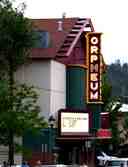
  2. Look for the building with the striking metal corrugated siding shaped into those distinctive green ridges, the steep sloped roof, and that towering neon sign vertically spelling…더 보기간략히 보기

    Look for the building with the striking metal corrugated siding shaped into those distinctive green ridges, the steep sloped roof, and that towering neon sign vertically spelling out or-fee-uhm. I am so thrilled to share the incredible story of this place with you! Today it is a beloved concert venue, but the or-fee-uhm Theater actually started out as a bizarre agricultural experiment. A local pioneer named John W. Weatherford initially fenced this very lot to raise chickens, hoping to supply his nearby hotel guests with fresh eggs. But the harsh winters forced him to artificially heat the coop, an absolute financial disaster that ended with him hosting a massive town wide chicken dinner sale to clear the lot for entertainment. In nineteen eleven, he replaced his failed poultry farm with the Majestic Opera House, bringing the very first movies to Flagstaff. Things went perfectly until the early hours of January first, nineteen fifteen. Just hours after a packed crowd of New Year revelers left the building, a record breaking snowstorm dumped over five feet of snow, causing the roof and walls to completely cave in under the crushing weight. Weatherford was totally desperate to salvage his livelihood from the ruins. While his frustrated business partners abandoned him, Weatherford reportedly paid a young boy to crawl directly into the dangerous, collapsed wreckage to retrieve his prized movie projector. It is humbling to consider the hidden sacrifices of unnamed people, like that brave kid navigating crushed beams and unstable rubble. That single terrifying act of childhood bravery was the only thing that kept this frontier dream alive. Weatherford stubbornly refused to give up, tapping into that true frontier grit, and rebuilt a much grander one thousand seat venue in nineteen seventeen, naming it the or-fee-uhm. The new theater soon found its most vital champion when a woman named Mary Costigan stepped up to take full control of the operation in nineteen twenty. She transformed the theater into a bustling community hub for war bond sales and fundraisers, eventually making history in nineteen twenty five as the first woman in Arizona to own and operate a radio station, broadcasting directly from this building. Over the decades, this place has seen everything from quiet scientific victories, like astronomer Clyde tom-baw privately celebrating his discovery of the planet Pluto here in nineteen thirty, to a terrifying amount of paranormal activity. Late night janitors have repeatedly spotted a shadowy figure gliding through the aisles long after the doors were locked. But the real story here is the sheer willpower of a community refusing to let its history die, recently banding together to urge the city to buy the building and save it from the wrecking ball forever. Now, let us head just a one minute walk down the street to see John Weatherford's most prominent surviving legacy, the stunning Weatherford Hotel.

    전용 페이지 열기 →
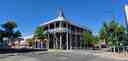
  3. Look to your right and spot the towering three-story red brick building, defined by its massive wrap-around wooden balconies and the distinctive domed cupola sitting like a crown…더 보기간략히 보기

    Look to your right and spot the towering three-story red brick building, defined by its massive wrap-around wooden balconies and the distinctive domed cupola sitting like a crown on the roof. This is the Weatherford Hotel. Early Flagstaff was a rough frontier settlement that had a terrible habit of going up in flames. After a particularly disastrous series of blazes in 1897, the city passed a strict ordinance, meaning a local municipal law, requiring all buildings in the business district to be constructed entirely of brick, stone, or iron. That intense demand for survival forced the town to harden its edges, transforming fragile wooden camps into a permanent, resilient city. John W. Weatherford, a merchant and local Justice of the Peace, saw this forced evolution as an incredible opportunity. Originally, he and his brother just wanted to build a simple general store. But after being bought out by a prominent local family, Weatherford pivoted to a massive, highly ambitious vision. He would build a grand luxury hotel. He brought that dream to life with elegant style, opening the doors on New Year's Day in 1900. The town had matured from a rugged outpost into a true destination, and the Weatherford became its most prominent social hub. It drew truly remarkable guests. The artist Thomas muh-ran spent his nights here working on stunning western sketches that helped popularize the magnificent Grand Canyon. The famous western author Zane Grey even wrote his novel The Call of the Canyon in the third-floor ballroom. But survival out west was rarely a straight line. In 1929, another fire damaged that gorgeous three-sided balcony and the original roof. The hotel began to severely decline, struggling to compete with newer lodgings. Weatherford lost ownership by 1933 and died heartbroken a year later in Phoenix. With that mid-century decline came some seriously dark legends. Local lore says a newlywed couple staying in Room 54 during the 1930s met a grisly end. Some say the husband got caught in a hunting blizzard and was presumed dead, leading his distraught wife to hang herself, only for the surviving husband to return and end his own life in grief. Others claim it was a violent murder-suicide. Today, Room 54 is a storage closet, but people still report hearing angry voices inside. Down in the basement, employees have even reported the heavy footsteps of a murdered bootlegger... an illegal alcohol smuggler from the Prohibition era... heavily pacing the floorboards. The entire hotel almost met the wrecking ball in 1975. Thankfully, a man named Henry Taylor, who loved Zane Grey's writing, walked into the dilapidated building and bought it to save it. He and his wife Pamela fought for decades to fund the restoration, running it as a state rehab facility and a youth hostel just to keep the lights on. Their tireless dedication ultimately paid off. To celebrate the building's one hundredth anniversary in 1999, Pamela created a giant pinecone out of a garbage can and string lights, lowering it from the roof at midnight. The Great Pinecone Drop was an absolute hit and is now a massive annual street celebration. From destructive fires to grand ballrooms, this place fought incredibly hard to stand its ground. Now, let us walk just two minutes away to another grand hotel, one born not from a single man's ambition, but funded by the collective wallet of the entire community... the Hotel Monte Vista.

    전용 페이지 열기 →
5개 정류장 더 보기정류장 적게 보기expand_moreexpand_less
  1. Look for the blocky reddish-brown masonry building crowned by a massive skeletal metal sign spelling out Hotel Monte Vista in bright yellow letters. Having just left the…더 보기간략히 보기

    Look for the blocky reddish-brown masonry building crowned by a massive skeletal metal sign spelling out Hotel Monte Vista in bright yellow letters. Having just left the Weatherford Hotel a couple of minutes ago, we have arrived at another monument to this town's incredible ambition. Back in the mid 1920s, tourism was surging, and locals realized they desperately needed first class accommodations. So, in April 1926, everyday citizens and prominent figures like novelist Zane Grey pooled their money in a massive fundraising campaign. In just one month, they raised 200,000 dollars, which is roughly 3.5 million dollars today, to build this place themselves. Originally called the Community Hotel to honor the taxpayers who funded it, the property was renamed Monte Vista, meaning mountain view, by a 12 year old schoolgirl who won a local naming contest. The Monte Vista quickly became a beacon of local pride and frontier innovation. Right there in Room 105, Mary Costigan, the theater owner we met earlier, made history. In 1927, she became only the second woman in the entire world granted a commercial radio broadcasting license, moving her station here to send out a 100 watt signal for three hours every day. But a frontier settlement always casts a shadow, and the Monte Vista holds some deeply dark local lore. The most infamous story centers on Room 306. In the early 1940s, legend claims a man brought two women up to that room from Flagstaff's nearby red light district, which was an illicit neighborhood known for illegal brothels and saloons. The story goes that these two women were brutally murdered and thrown from the third story window to the street below. To this day, male guests staying in Room 306 frequently report waking up with the terrifying sensation of unseen hands covering their mouths and throats. Yet, paranormal investigators and historians point out a glaring issue with this grisly tale. A double murder of that magnitude would have been front page news, but absolutely no historical evidence corroborates the crime. It seems the hotel's close proximity to the red light district simply fueled a dark mythology that refuses to die. This place perfectly captures how a rugged community willed itself into a modern destination, building a glittering facade while carrying the ghosts of its rougher, untamed edges. Now, we are going to leave these energetic downtown streets behind. We are taking an 8 minute walk toward a quiet, historic home where we will uncover a story of profound personal resilience. Let us head over to the Brannen-duh-vyne House.

    전용 페이지 열기 →
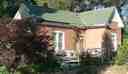
  2. Look to your left for a sturdy rectangular brick house sitting securely on a rugged stone foundation topped with a steeply pitched charming roof. That is the Brannen-duh-vyne…더 보기간략히 보기

    Look to your left for a sturdy rectangular brick house sitting securely on a rugged stone foundation topped with a steeply pitched charming roof. That is the Brannen-duh-vyne House, built in 1892. The building is a beautiful example of vernacular Queen Anne architecture, which just means it takes those fancy, highly decorative Victorian styles and scales them down into something practical for a rugged pioneer town. This home perfectly captures that classic frontier grit, where people built their lives around shifting opportunities and relentless drive. You see, Flagstaff was once split in two. But when the railroad moved its depot east to avoid a steep hillside, an ambitious merchant named P.J. Brannen immediately followed the tracks and built a sturdy store right across from the new station, anchoring this brand new neighborhood. A few years later, a man named Thomas duh-vyne moved into this house. Born to Irish immigrants, he started out doing grueling work as a brakeman for the logging train. But his physical career ended abruptly when a devastating train accident cost him his leg. Rather than letting the loss defeat him, Thomas duh-vyne pivoted his career and found new ways to thrive. He took a job with the local electric company and soon threw himself into politics, winning two highly successful terms as county treasurer. He eventually moved away, and his young son Andrew, who toddled around these very floors, grew up to be the famous Hollywood character actor Andy duh-vyne. Tragically, Flagstaff still claimed Thomas in the end. He returned for a town celebration in 1926, contracted severe food poisoning, and passed away a month later. Today, this historic home is an Airbnb, known for a totally different kind of history. Guests frequently report eerie sounds and even sightings of a ghost... specifically, an apparition of a young woman in a yellow dress wandering through the dining room. Well, whether you believe in ghosts or just the lingering memory of pioneer resilience, this town is full of surprises. Now, let us head to our next stop. We are going to walk about six minutes to First Baptist Church, a sanctuary that had to be dragged through the dusty streets to finally find its home.

    전용 페이지 열기 →
  3. Look to your right for a striking church with a steeply pitched roof built from rough stone, easily spotted by its tall pointed steeple and a beautiful arched wooden doorway. This…더 보기간략히 보기

    Look to your right for a striking church with a steeply pitched roof built from rough stone, easily spotted by its tall pointed steeple and a beautiful arched wooden doorway. This is the First Baptist Church, but its story actually begins on wheels! Back in 1926, the congregation was known as the Glad Tidings Chapel Car, and it operated entirely out of a converted Pullman passenger railcar. Picture a dedicated teenager named Harrold Harper serving as the caretaker, carefully rubbing down the golden oak pews, dusting the fine Estey organ, and polishing the ornate pulpit inside a train car before every single service. Talk about devotion in a tight space! Eventually, they decided to move their mobile church to a permanent location. When the congregation tried to haul the heavy railcar slowly down Beaver Street, the agonizing move was halted first by a sudden snowstorm and then by mechanical failures. It turned into a hilarious Flagstaff comedy, with residents entirely unsure if the church would ever actually reach its destination! They eventually outgrew the train car, which Reverend Dixon later dismantled by hand, pocketing a literal ton of brass screws in the process. By 1939, this community forged ahead with unyielding spirit to build the permanent home you see right here. Designed in the Gothic Revival style, an architectural tradition known for steeply pitched roofs and tall pointed arches meant to draw the eye toward the heavens, it is deeply rooted in local earth. The volunteers built a rustic foundation of black malpais volcanic rock, and framed the edges with red Moenkopi sandstone. They finished it in just seven months! The project was saved by a final donation of one thousand dollars in 1939, which is about twenty-two thousand dollars today. Money was still so incredibly tight that when the church finally opened, they had no pews, no organ, and no bell! This beautiful stone building shows exactly what a determined frontier town can achieve together. Now, we are going to visit another congregation nearby that built their sanctuary while facing much heavier social burdens. Let us take a short three minute walk over to Our Lady of Guadaloupe Church.

    전용 페이지 열기 →
  4. Look across the street at that dark, rugged stone building with its striking white square bell tower and steep pyramidal roof. This beautiful structure was actually born out of…더 보기간략히 보기

    Look across the street at that dark, rugged stone building with its striking white square bell tower and steep pyramidal roof. This beautiful structure was actually born out of deep racial segregation in the 1920s. At the time, the city's main Catholic parish used reserved seating that favored white residents, leaving minorities feeling entirely unwelcome. Hispanic and Basque locals, like pioneer Emily Garcia Alonzo, were frequently turned away at the doors of Anglo establishments. To escape this mistreatment, the Hispanic community rallied to build their own sanctuary, with local sawmill workers funding the construction directly through their weekly payroll deductions. The sheer scale of their hidden sacrifices is written in these walls. Families sold homemade tamales and enchiladas to buy that same dark volcanic malpais stone we saw at our last stop. The parishioners laid every heavy block by hand. The total cost was sixteen thousand dollars, which is about two hundred and seventy five thousand dollars today, aided by a land donation and a small religious grant. A prominent architectural firm had drawn up professional blueprints, but they were abandoned. Instead, Reverend Edward Albouy drew the plans himself and personally oversaw the heavy labor. When the doors opened in 1926, the interior was completely bare. The only artwork was a solitary picture of Our Lady of Guadalupe, hand drawn by Jesus Gil, the devoted caretaker and bell ringer, until wooden statues were finally donated a decade later. Over the years, the basement became a vital hub for weddings and quinceañeras, traditional coming of age celebrations for fifteen year old girls, and was eventually renovated into an arts center honoring the neighborhood's roots. This sacred space almost vanished recently. In 2016, police caught two men who had smashed the outdoor shrine, throwing statues into the street and starting a fire. The men confessed they caused the destruction and lit the blaze simply because they were freezing outside. Though regular Sunday masses stopped in 1997, the church still glows with hundreds of paper lanterns for a special Mariachi Mass every December. Let us walk about eight minutes to our final stop, South Beaver Elementary School, where these painful lines of segregation were finally erased.

    전용 페이지 열기 →
  5. On your left look for a long two-story rectangular building constructed entirely of dark textured volcanic rock with a prominent central entrance featuring wooden double doors.…더 보기간략히 보기

    On your left look for a long two-story rectangular building constructed entirely of dark textured volcanic rock with a prominent central entrance featuring wooden double doors. Just eight minutes ago we were at Our Lady of Guadaloupe Church, which is exactly where this building's complex story begins. Built in 1935 by federal relief programs, South Beaver Elementary was initially constructed as a segregated school for Hispanic students. Local resident Jesse Dominguez recalled the jarring transition, remembering how non-Anglo children from neighborhoods near the church were physically marched out of their old classrooms and relocated directly to this newly designated campus. The reality of racial segregation was incredibly harsh, but the Hispanic community immediately rallied to support their children. The driving force behind creating this school was Dr. Ralph Oliver Raymond, a local physician who fiercely championed minority education. During historic snowstorms, he would personally deliver bags of beans and rice to the impoverished surrounding neighborhoods, embodying the kind of community action that ensured these families survived. Later, Native American children from the Navajo, Hopi, Havasupai, and Tohono O'odham nations were also integrated into these classrooms. These young students traveled from a federal dormitory, where they slept in large open wings filled with tightly packed bunk beds. But here is where Flagstaff showed its true grit. In 1952, a full two years before the Supreme Court legally mandated school integration across the entire country, local leaders took decisive action. Superintendent Sturgeon Cromer and principal Wilson Riles proactively transferred African-American students from the closing Dunbar School right here into South Beaver to learn alongside the Hispanic students. It was an incredible, early triumph of integration. We see that same powerful, full-circle progress in a local educator named Mr. Garcia. His grandfather immigrated to work the local sawmills, and Garcia himself grew up facing the region's intense discrimination, yet he eventually returned to this exact building to serve as its principal. For decades, the school thrived. They even partnered with Northern Arizona University to pioneer hands-on environmental science programs. Despite becoming the district's first magnet school, which is a public school that offers specialized courses to draw diverse students from across the city, a massive enrollment drop forced South Beaver to close in 2010. That controversial closure broke deep, multi-generational community ties. Fortunately, the university purchased the property in 2015. Because the distinctive Malpais stone facade is listed on the National Register of Historic Places, the exterior must be strictly preserved. Today, these enduring stone walls house an intensive program for adult English learners. From painful origins to a beacon of ongoing education, this neighborhood has relentlessly pushed forward through shared determination. As our tour concludes, take a moment to reflect on the incredible journey and the remarkably resilient people who forged the vibrant identity of Flagstaff.

    전용 페이지 열기 →

자주 묻는 질문

투어는 어떻게 시작하나요?

구매 후 AudaTours 앱을 다운로드하고 교환 코드를 입력하세요. 투어를 바로 시작할 수 있습니다 - 재생을 탭하고 GPS 안내 경로를 따라가시면 됩니다.

투어 중 인터넷이 필요한가요?

아닙니다! 시작 전에 투어를 다운로드하면 완전히 오프라인으로 즐길 수 있습니다. 채팅 기능만 인터넷이 필요합니다. 모바일 데이터 절약을 위해 WiFi에서 다운로드하시는 것을 권장합니다.

이것은 가이드가 안내하는 단체 투어인가요?

아닙니다 - 이것은 셀프 가이드 오디오 투어입니다. 폰을 통해 오디오 나레이션을 들으며 나만의 속도로 독립적으로 탐험합니다. 투어 가이드도, 단체도, 일정도 없습니다.

투어는 얼마나 걸리나요?

대부분의 투어는 60-90분이 소요되지만, 속도는 전적으로 본인이 조절합니다. 원할 때 언제든지 일시정지하거나, 정류장을 건너뛰거나, 휴식을 취하세요.

오늘 투어를 끝낼 수 없으면 어떻게 하나요?

괜찮습니다! 투어는 평생 이용이 가능합니다. 원할 때 언제든지 일시정지하고 다시 시작하세요 - 내일, 다음 주, 또는 내년에도. 진행 상황이 저장됩니다.

어떤 언어를 이용할 수 있나요?

모든 투어는 50개 이상의 언어로 이용 가능합니다. 코드를 교환할 때 원하는 언어를 선택하세요. 참고: 투어 생성 후에는 언어를 변경할 수 없습니다.

구매 후 투어는 어디에서 이용하나요?

App Store 또는 Google Play에서 무료 AudaTours 앱을 다운로드하세요. 교환 코드(이메일로 전송됨)를 입력하면 라이브러리에 투어가 나타나며, 다운로드하여 시작할 수 있습니다.

verified_user
만족 보장

투어가 마음에 들지 않으시면 환불해 드립니다. 문의: [email protected]

안전한 결제

Apple PayGoogle PayVisaMastercardPayPal
전 세계 여행자들에게 사랑받고 있습니다

수천 개의 투어, 시작됐어요.
의견도 넘쳐납니다.

App Store와 Google Play에서 4.8. 자꾸 다시 읽게 되는 리뷰들을 모았어요.

starstarstarstarstar
관광객처럼 느끼지 않으면서 Brighton을 알아가는 훌륭한 방법이었습니다. 내레이션에 깊이와 맥락이 있었지만 과하지 않았습니다.
starstarstarstarstar
크루아상을 한 손에 들고 아무 기대 없이 시작했습니다. 앱이 그냥 자연스럽게 함께해 주는 느낌이에요, 부담도 없고, 그냥 나와 이어폰과 멋진 이야기들.
download 앱 받기

이어폰을 꽂고.
밖으로 나가세요.

무료 다운로드. 모든 도시에 투어가 있어요. 60초면 시작 — 계정도, 카드도 필요 없어요.

Download on the App StoreGet it on Google Play
starstarstarstarstar_half
4.8
AudaTours app icon
headphones
약 4분 첫 투어 시작까지
public
1,000+ 전 세계 도시
all_inclusive
AudaTours
Unlimited

모든 투어. 모든 도시. 구독 하나로.

3335 투어2280 도시140 국가50+ 개 언어