
엘진 오디오 투어: 역사의 심장부에 울려 퍼지는 혁신의 메아리
엘진의 고요한 스카이라인 아래, 빅토리아 시대의 벽돌과 아르데코 유리 사이로 비밀이 물결치고, 모든 가로등 아래에서 야망, 혁명, 스캔들의 속삭임이 맥동합니다. 이 셀프 가이드 오디오 투어를 통해 도시의 잊혀진 맥박을 찾아보세요. 유서 깊은 홀과 그림자 진 구석을 탐험하며 일반적인 가이드북에는 없는 이야기를 풀어보세요. 엘진 타워 빌딩을 뒤흔들며 하룻밤 사이에 지역 정치의 흐름을 거의 바꿀 뻔했던 충격적인 사건은 무엇이었을까요? 수십 년 동안 학생과 교직원을 괴롭히며 엘진 아카데미 복도에 남아있는 미해결 미스터리는 무엇일까요? 제일 보편주의 교회의 종은 왜 마을을 거의 분열시킬 뻔했던 기이한 불화의 메아리를 울릴까요? 우뚝 솟은 첨탑 아래와 세월의 흔적이 묻어나는 복도를 거닐며 도시의 진정한 정신이 드러나는 것을 느껴보세요. 평범한 길에서는 찾을 수 없는 흥미와 놀라움으로 가득 찬 역사의 드라마를 곳곳에서 느껴보세요. 엘진의 숨겨진 유산으로 향하는 문이 삐걱거리며 열립니다. 안으로 들어와 들을 준비가 되셨나요?
투어 미리보기
이 투어에 대하여
- schedule소요 시간 30–50 mins나만의 속도로 이동
- straighten4.3 km 도보 경로안내 경로 따라가기
- location_on
- wifi_off오프라인 작동한 번 다운로드, 어디서든 사용
- all_inclusive평생 이용언제든지 다시 재생 가능
- location_on엘진 타워 빌딩에서 시작
이 투어의 정류장
Look for the tallest building in downtown Elgin with striking Art Deco details, soaring up fifteen stories and watched over by eagle statues and a copper clock jutting out over…더 보기간략히 보기
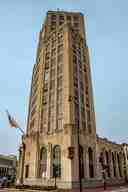
Look for the tallest building in downtown Elgin with striking Art Deco details, soaring up fifteen stories and watched over by eagle statues and a copper clock jutting out over the corner of Chicago Street-believe me, you can’t miss it! Picture yourself standing here in the late 1920s, with the scent of fresh concrete mixing with hope as workers in coveralls put the finishing touches on Elgin’s brand new skyscraper. Back then, Elgin was buzzing with optimism-just look up, and imagine the clang of hammers and the low drone of construction. The building in front of you was finished in May 1929, at a staggering cost of $800,000, and people from all over the city craned their necks to marvel at it-some even joked they got neck cricks from admiring the new “Home Banks Building.” The Home National Bank had decided their old offices just wouldn’t cut it for the bustling city anymore, so they ordered this sparkling Art Deco tower. Imagine the grand opening: polished marble, fireproof and burglar-proof vaults gleaming, and shiny doors swinging open for businessmen in sharp suits and secretaries with arms full of paperwork. This was the hub of finance and optimism for Elgin’s bustling downtown, known as Fountain Square. But then, just months after those grand doors opened, the Great Depression hit. Picture the eerie quiet-where laughter and clinking coins once echoed on marble floors, now whispers of worry filled the air. By 1932, the Home National Bank had collapsed, and only a fraction of its plush new offices were filled. Yet, life didn’t give up on this building. First National Bank of Chicago took over, occupancy crept back up, and life carried on-even through those lean years. People still came to Walgreens on the ground floor to buy a pack of gum or a chocolate bar, clinging to tiny normalcies. After World War II, the city’s factories spun and clattered with the sound of progress, and Elgin’s industries brought new hope to the Tower. In the 1950s, you’d have found almost every office buzzing with business once again, the hum of typewriters and muffled phone calls drifting down the corridors. But, of course, life in Elgin, like the best sitcoms, had its ups and downs! The 1960s brought trouble-the legendary Elgin National Watch Company closed, new highways skirted around the city, and shoppers packed their cars for the shiny, air-conditioned malls in the suburbs. Sears and JC Penney left for greener pastures, and the once-crowded central tower sometimes felt like a forgotten castle. Yet, just when it seemed the Tower might fade into obscurity, a cast of local heroes stepped forward. Families like the Williams and, most dramatically, William Stickling, took ownership and poured their hearts (and quite a bit of money) into restoring the building’s Art Deco shimmer. In 1999, brilliant lights were installed outside to show off its lines and sculptures, so the tower could once again stand tall at night, like a jewel on Elgin’s skyline. After Stickling’s death, his charitable foundation took over and continues to care for the building-proof that sometimes, when a city loves one of its landmarks enough, there’s always another chapter. And here’s a twist worthy of a mystery novel: in 2014, the wooden interior of one of the elevators was destroyed by arson, filling this old tower with the scent of smoke and a rush of sirens. But the building couldn’t be kept down for long! In 2016, Capstone Development bought it, turning its storied halls into apartments, so the next generation could chase dreams right where history was made. Look at the eagles perched atop those columns, feel the weight of stories in every stone, and imagine the clock’s hands spinning through the decades. Elgin’s Tower Building is more than just architecture-it’s a survivor, a beacon, and a very fancy old friend who’s finally getting the attention it deserves. Would you trust a bank with a building this impressive? Well, at least you’d know you’d never be late-just check the clock on the corner!
전용 페이지 열기 →To spot the Elgin Downtown Commercial District, just look ahead for the striking corner building with a pointed turret and red brick walls-it stands right where Spring Street…더 보기간략히 보기
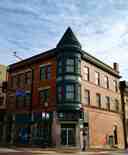
To spot the Elgin Downtown Commercial District, just look ahead for the striking corner building with a pointed turret and red brick walls-it stands right where Spring Street meets the bustling crossroads. Now, take a deep breath and let yourself travel back through time! You’re standing in the living heart of Elgin’s history, surrounded by walls that have seen more stories than a library after hours. Imagine the sound of horses’ hooves on cobblestone as we step into the 1870s, when the oldest buildings were new and shopkeepers hurried to open their doors. The air smells like fresh bread and sawdust, while children’s laughter dances with the clang of a distant bell from one of the churches or perhaps the whirr from the old power station. Shops built two or three stories high line the street, dressed in fanciful Italianate and Queen Anne styles-rounded bays, ornate trim, and the occasional mystery turret, perfect for spying on your neighbors (or at least, keeping an eye on the competition). As you stroll, peek at grander buildings from the 20th century, with bold Colonial and Renaissance Revival flair, showing off a little civic pride. With 94 buildings in total-76 original enough to make any history buff swoon-the district buzzes with stories old and new. It’s no wonder this entire scene got a spot on the National Register of Historic Places in 2014. Just don’t blink-who knows which century you might land in next!
전용 페이지 열기 →
7개 정류장 더 보기정류장 적게 보기expand_moreexpand_less
To spot Elgin Academy, look ahead for a sturdy three-story brick building with lots of tall windows and a white cupola perched on top-it's framed by bare trees and sits…더 보기간략히 보기
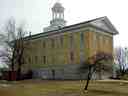
To spot Elgin Academy, look ahead for a sturdy three-story brick building with lots of tall windows and a white cupola perched on top-it's framed by bare trees and sits prominently on a grassy corner. Alright, traveler, let’s spin the tale of Elgin Academy-the grand, yellow-brick building right in front of you, crowned by that stately white cupola, standing like a sentinel over the city for more than 160 years. Imagine it’s the 1850s. Horse hooves clatter down the street as students march up this very hill, books in hand, ready to unlock the secrets of Latin and science. This spot became the beacon for young minds when Elgin was just a wee town, barely older than a toddler, and the state decided it needed a serious place for learning. Old Main, the building you see here, opened its doors in 1856 and cost a whopping $19,000-a small fortune back then. Yet, for as grand as it looked, the very first diploma didn’t leave these halls until 1872. Laura Davidson, granddaughter of Elgin’s founder, was the trailblazer who set the bar. And she had quite the legacy: after marrying Nathaniel Sears, she and her new family became the Academy’s own set of fairy godparents, building gyms, halls, and even an art gallery in the decades to come. Wartime didn’t pass Elgin Academy quietly. Imagine the sound of boots on wood and patriotic cheers, as 153 students and associates-future generals, colonels, and privates-marched off to the Civil War. Their names are inscribed on the base of two real Union cannons that guarded the campus, a constant reminder of courage and sacrifice. By 1900, this place had everything: football and basketball teams, a lively student newspaper, and eager young minds chasing their dreams-some days, probably just chasing each other down these halls. For a twist worthy of a mystery novel, the Academy once teamed up briefly with the University of Chicago and later with Northwestern, trading in a bit of local flavor for the hustle and bustle of big university life. Now… imagine 274 students in wool uniforms heading to their College Prep or Business classes. Fast-forward, and Elgin Academy boomed with new halls, a gym, tennis courts, and even a dorm for girls starting in the 1940s (folks, that was a pretty big deal at the time). But every good story has its dramatic turn-and here, it came in the 1970s when Old Main was closed and student numbers dwindled to just 85. Yet, the Academy dusted itself off, added kindergartners, then preschoolers, and bounced back up to 425 students. The Hilltoppers, as they’re known (these buildings really are on a hill, so no one had to stretch their imagination for that one), cheered on their teams, the fearless Foxman mascot leading the way. All the while, students racked up state and national titles in science, academic bowls, and sports, showing everyone in Illinois that Elgin Academy was still a force to be reckoned with. But here’s the bittersweet ending: after welcoming generations of students, teachers, and champions, the Academy closed its doors in 2024. The building now stands as a museum, keeping those memories alive for curious explorers like you. So as you look at Old Main, imagine the echo of chalk on blackboards, the laughter of students plotting their next mischief, and maybe, just maybe, the proud gaze of all those who built this place brick by brick.
전용 페이지 열기 →Right in front of you, you’ll see a unique, yellow-brick building with a tall conical tower on the left and a sixteen-sided, tent-like roof-look to the corner lot where Villa and…더 보기간략히 보기
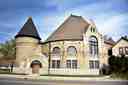
Right in front of you, you’ll see a unique, yellow-brick building with a tall conical tower on the left and a sixteen-sided, tent-like roof-look to the corner lot where Villa and Dupage Streets meet to spot its clockwork charm. Welcome to the First Universalist Church, where history ticks away as quietly as the pocket watches it was built to honor! Imagine you’re here in the year 1892: horse-drawn carts click-clack by on the cobblestone, and proud new bricks are being laid on this very corner. The architect George Hunter, a man with his head in the clouds and his heart shaped like a wristwatch, decided his church should look just like a giant pocket watch-now that’s what I call keeping the faith on time! The Universalists had been here since 1866, back when their first building, Unity Hall, stood right on this site. That same year, the National Watch Company factory opened nearby-both were new kids on the block, but quickly became the heartbeat of Elgin. Silvanus Wilcox, a church member, even gave some of the land for the factory. Thanks to the growing congregation, the Universalists needed a new space by 1890, and Hunter’s playful design came to life. Step back and take it in: those sixteen sides, the big arched stained-glass windows still catching the sun, and the tower rising like an old-fashioned watch snap. The pulpit inside? It sits right where the “12” would be on a watch’s face. The roof itself swoops down like the cover, as though you could flip it open to wind the gears of time. Inside, the church sang out with a $3,000 tracker pipe organ from John W. Steele & Sons-quite the extravagance for the time, and only one of ten of its kind! Wealthy factory donors helped make it possible. This building buzzed with community life: new churches got started here, and townsfolk came for events and gatherings. You might catch a whiff of pipe smoke, hear a hymn echo off the arches, or spot a parade of hats and bonnets as the crowd rushed in on Sunday mornings. After the famous Elgin factory vanished in 1966, this whimsical church stood as a time capsule-one of Elgin’s last reminders of its watchmaking heyday. Even today, it’s a loving echo of a city where every second counted. And hey, if you ever wonder what time it is, just look at the church-Elgin’s most stylish timepiece!
전용 페이지 열기 →To spot the Elgin Historic District, look ahead for a cluster of charming old houses and grand churches surrounding a leafy park-you’ll see a bronze World War I soldier statue,…더 보기간략히 보기
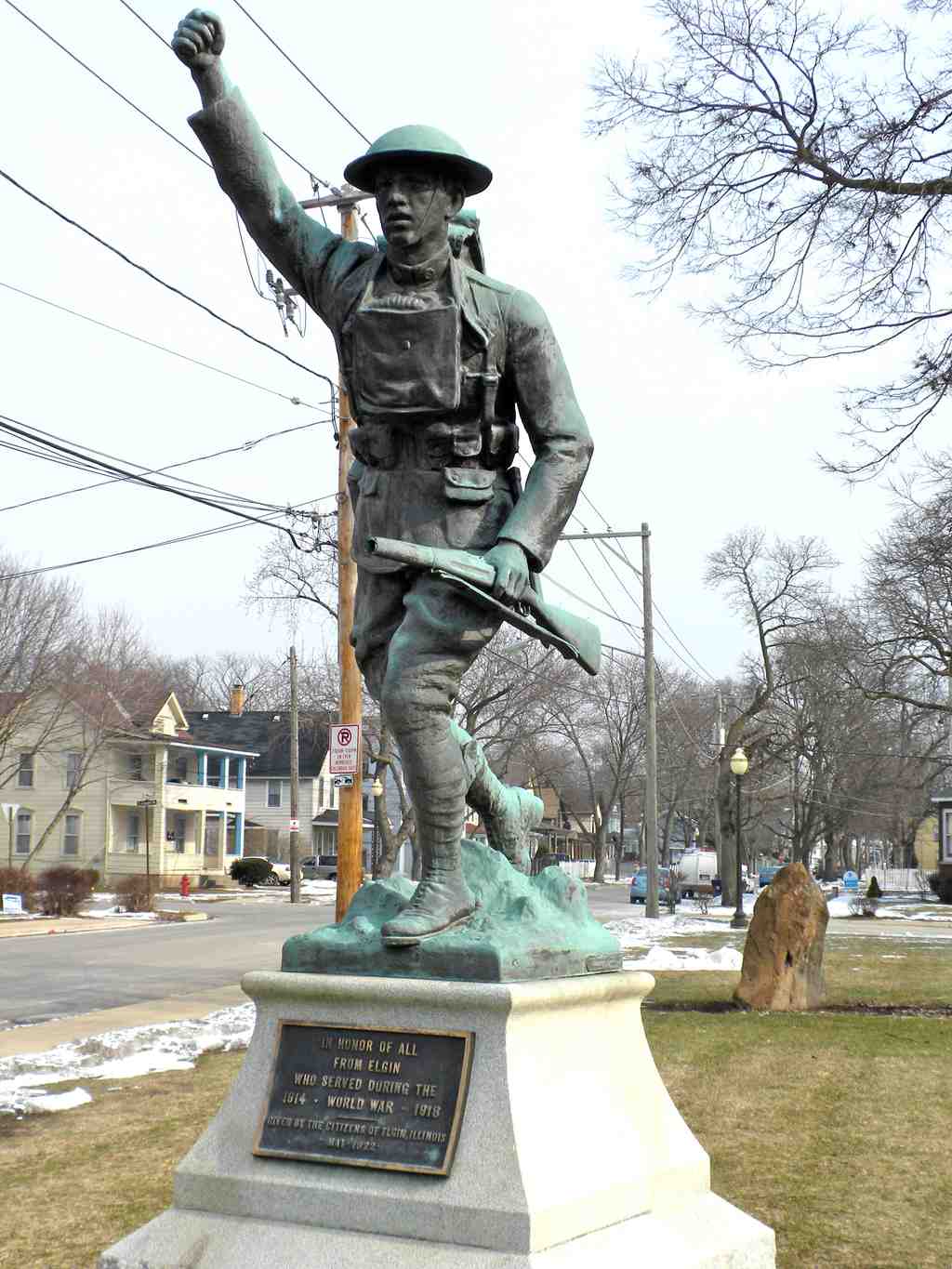
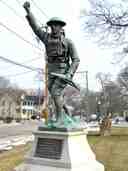
To spot the Elgin Historic District, look ahead for a cluster of charming old houses and grand churches surrounding a leafy park-you’ll see a bronze World War I soldier statue, hand raised in salute, standing proudly at the intersection. Now that you’re right here at the heart of Elgin’s oldest neighborhood, travel back with me to 1835. Imagine this spot as a patchwork of wild prairie, tall grass, and the hopeful echo of wagon wheels-James Talcott Gifford, Elgin’s restless founder, built a tiny cabin just within sight. Let’s add a little drama: the first nights must have sounded like a symphony of nature and uncertainty. Two years later, Elgin’s first dam splashed to life, and by 1842, the plots for the town were drawn up-one for Gifford, one for progress. Gifford wasn’t resting though; by 1850, he’d built a solid cobblestone house that looked just like the stately homes back in his native New York, right here for you to see. As you walk this district, you’ll find the echoes of Elgin’s booms and busts. In the 1850s, the railroad rang through town-trains whistled, cows mooed, and almost overnight, Elgin became Chicago’s fridge, sending off waves of fresh milk and butter. Picture the mighty Gail Borden Jr., brainy and just a little bit stubborn, setting up the world’s largest condensed milk factory right here. You could practically smell sweet milk in the air. Don’t miss Elgin Academy, founded in 1856 to make sure brains grew along with businesses. By the late 1800s, Elgin was the home of THE pocket watch, as thousands worked elbow-to-elbow at the Elgin National Watch Company, each tick and tock carrying stories of precision and pride. This neighborhood became a living museum of American stories-art museums popping up, churches booming with hymns, and in 1924, a masonic temple big enough for a thousand secret handshakes. The district absorbed wave after wave of newcomers: German immigrants built their own stony church, publishers brought in books by the truckload, and artists made Academy Place glitter. If these old walls and cobblestones could talk, they’d whisper about neighbors gathering for ice cream socials, debate club banter, and perhaps even a pocket watch or two running a little late. Congratulations! You’ve just strolled through nearly two centuries of Elgin’s finest moments, right here in this unforgettable district.
전용 페이지 열기 →
자주 묻는 질문
투어는 어떻게 시작하나요?
구매 후 AudaTours 앱을 다운로드하고 교환 코드를 입력하세요. 투어를 바로 시작할 수 있습니다 - 재생을 탭하고 GPS 안내 경로를 따라가시면 됩니다.
투어 중 인터넷이 필요한가요?
아닙니다! 시작 전에 투어를 다운로드하면 완전히 오프라인으로 즐길 수 있습니다. 채팅 기능만 인터넷이 필요합니다. 모바일 데이터 절약을 위해 WiFi에서 다운로드하시는 것을 권장합니다.
이것은 가이드가 안내하는 단체 투어인가요?
아닙니다 - 이것은 셀프 가이드 오디오 투어입니다. 폰을 통해 오디오 나레이션을 들으며 나만의 속도로 독립적으로 탐험합니다. 투어 가이드도, 단체도, 일정도 없습니다.
투어는 얼마나 걸리나요?
대부분의 투어는 60-90분이 소요되지만, 속도는 전적으로 본인이 조절합니다. 원할 때 언제든지 일시정지하거나, 정류장을 건너뛰거나, 휴식을 취하세요.
오늘 투어를 끝낼 수 없으면 어떻게 하나요?
괜찮습니다! 투어는 평생 이용이 가능합니다. 원할 때 언제든지 일시정지하고 다시 시작하세요 - 내일, 다음 주, 또는 내년에도. 진행 상황이 저장됩니다.
어떤 언어를 이용할 수 있나요?
모든 투어는 50개 이상의 언어로 이용 가능합니다. 코드를 교환할 때 원하는 언어를 선택하세요. 참고: 투어 생성 후에는 언어를 변경할 수 없습니다.
구매 후 투어는 어디에서 이용하나요?
App Store 또는 Google Play에서 무료 AudaTours 앱을 다운로드하세요. 교환 코드(이메일로 전송됨)를 입력하면 라이브러리에 투어가 나타나며, 다운로드하여 시작할 수 있습니다.
투어가 마음에 들지 않으시면 환불해 드립니다. 문의: [email protected]
안전한 결제 


