AudaTours logoAudaTours

본머스 오디오 투어: 바다에서 하늘까지

오디오 가이드15 정류장

본머스의 활기찬 거리에는 중세 성인들의 그림자가 왕실의 속삭임과 갑작스러운 스캔들의 메아리와 뒤섞여 있습니다. 이곳 유명한 부두 스카이라인 아래, 익숙한 돌 아래에는 고대의 비밀이 숨겨져 있습니다. 이 셀프 가이드 오디오 투어는 솟아오른 교회 첨탑, 번화한 광장, 숨겨진 구석구석을 지나며 대부분의 방문객이 놓치는 이야기들을 드러냅니다. 당신의 발걸음이 속도를 정하는 동안 극적인 사건들과 잊혀진 순간들을 풀어보세요. 성 베드로 교회 근처에서 왕자가 흔적도 없이 사라진 이유는 무엇일까요? 성심 교회 한가운데에는 어떤 금지된 의식이 여전히 남아 있을까요? 어느 폭풍우 치던 밤, 누가 더 스퀘어의 포장도로에 그 기묘한 흔적을 남겼을까요? 매 순간 아드레날린이 솟구치는 것을 느껴보세요. 성스러운 땅, 논쟁의 여지가 있는 지역, 그리고 반란군과 통치자 모두가 밟았던 길을 가로지르세요. 미스터리와 음모의 렌즈를 통해 본머스가 변화하는 모습을 지켜보세요. 지금 재생을 눌러 도시 표면 아래에서 이야기가 타오르는 층들을 벗겨내 보세요.

투어 미리보기

map

이 투어에 대하여

  • schedule
    소요 시간 40–60 mins나만의 속도로 이동
  • straighten
    4.8 km 도보 경로안내 경로 따라가기
  • location_on
  • wifi_off
    오프라인 작동한 번 다운로드, 어디서든 사용
  • all_inclusive
    평생 이용언제든지 다시 재생 가능
  • location_on
    본머스 유대인 공동체 회당에서 시작

이 투어의 정류장

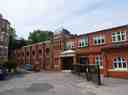
  1. To spot the Bournemouth Community Hebrew Congregation, look for a sturdy red-brick building with a squat square tower topped by a black dome, and a long row of arched windows…더 보기간략히 보기

    To spot the Bournemouth Community Hebrew Congregation, look for a sturdy red-brick building with a squat square tower topped by a black dome, and a long row of arched windows running along the left side-it's right here on Wootton Gardens. Welcome! Imagine it’s 1911. The air is buzzing with excitement as the cornerstone is laid by Albert Samuel, the brother of a famous politician. This very spot would soon become the spiritual home for Bournemouth’s Orthodox Jewish community! The congregation dates back to 1905, but when they finally built this synagogue, they didn’t just want four plain walls-they went for style! Take in the swooping roofline, horseshoe-arched windows, and a tower with a square dome, all in a flamboyant Art Nouveau twist on the Moorish Revival look. That arcade of windows looks almost like a palace from a storybook, doesn't it? In the 1950s, the buzzing here would have been from builders expanding the building, adding a graceful barrel-vaulted interior and a ladies’ gallery. Step into the ‘60s and local legend has it, master craftsmen from Florence created a glorious mosaic Torah Ark inside-echoing the fabled Temple of Solomon and its ancient pillars, Boaz and Jachin. Today, the building wears its 2019 Grade II listing like a medal-though the congregation is planning a move. Imagine all those stories, songs, and celebrations echoing through these walls!

    전용 페이지 열기 →
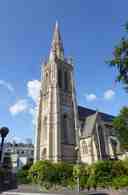
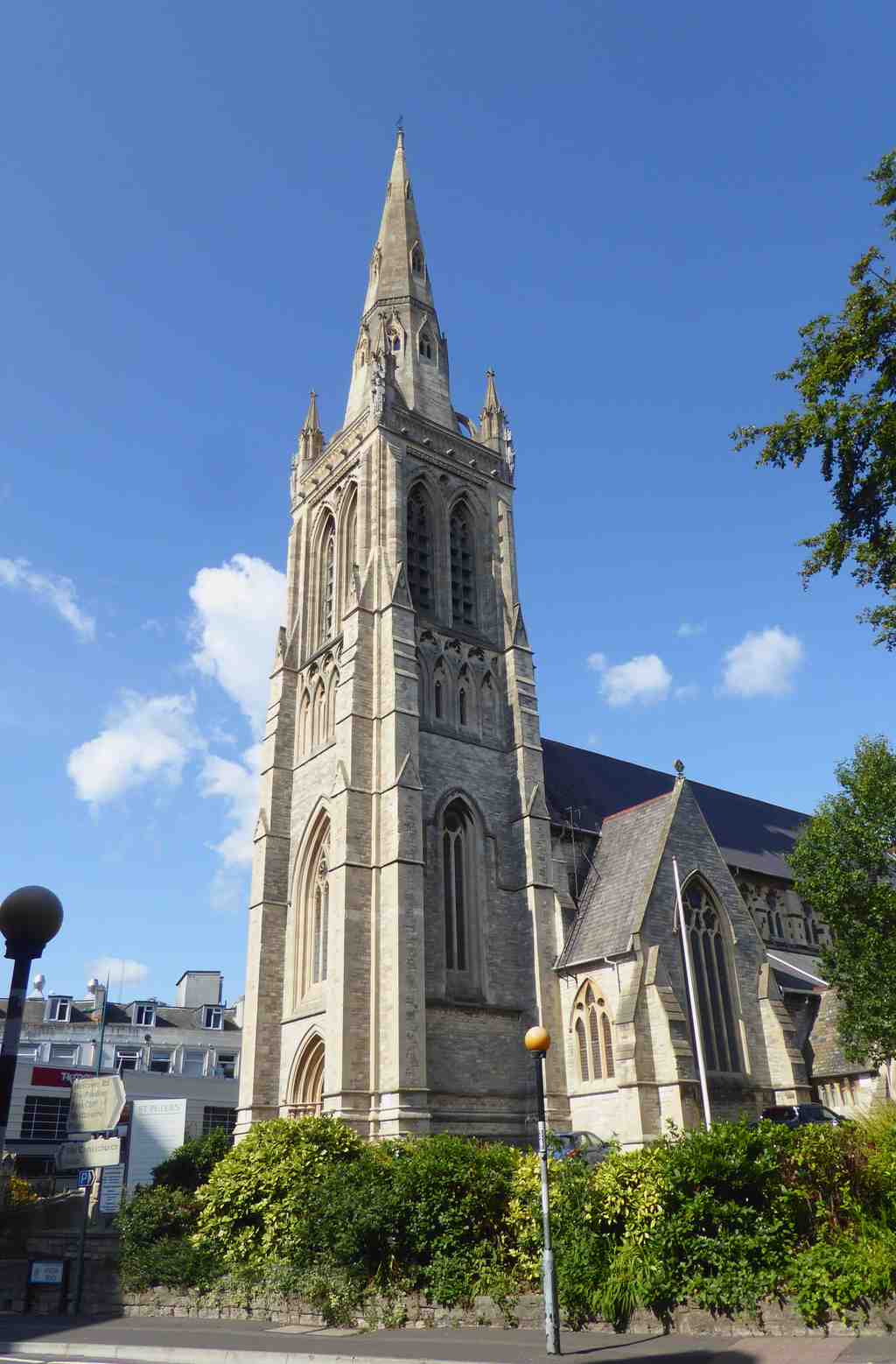
  2. Look up ahead and you can’t miss St Peter’s Church - just follow the towering 200-foot spire made of pale stone, surrounded by tidy shrubs and gothic windows that reach up to the…더 보기간략히 보기

    Look up ahead and you can’t miss St Peter’s Church - just follow the towering 200-foot spire made of pale stone, surrounded by tidy shrubs and gothic windows that reach up to the sky. Alright, take a deep breath and let’s step back in time for a second-imagine Bournemouth as a little seaside settlement in the 1800s. Right where you’re standing, the air was thick with the clatter of building tools and the chatter of hopeful townsfolk, all determined to raise a church grand enough to match their growing home. That’s how St Peter’s began its journey in 1855, thanks to an ambitious vicar with a name as fancy as his vision: Reverend Alexander Morden Bennett. He wrangled together the finest Gothic Revival architects he could find, including George Edmund Street, who later designed London’s Royal Courts of Justice-no pressure! But the money wasn’t exactly pouring in-they had to build this masterpiece piece by piece, each bit funded by proud public donations, like a very slow-moving crowdfunding campaign. First the north aisle in 1855, then up and up: they pressed on through the decades, adding a beautiful clerestory with a hammerbeam roof, a stunning chancel, and grand eastern transepts. You can still see their hard work in every pointed arch and carved stone. Look up at the spire-it didn’t grace the skyline until 1879. But once it appeared, it turned into a beacon for the town, guiding lost souls, tired travelers, and anyone who liked a good gothic silhouette on the horizon. St Peter’s has been at the heart of Bournemouth’s story every step of the way. But it’s not just a building full of beautiful stones and stained glass. It’s witnessed tears and laughter, hope and history. Did you know the famous author of Frankenstein, Mary Shelley, is buried here? And yes, if you like a dash of spooky, they say her husband’s heart is buried with her too! Talk about a love that never dies. The remarkable graves outside read like the ultimate guestlist: you’ve got the likes of four-times Prime Minister William Ewart Gladstone, Sir Hubert Parry, the man who gave us "Jerusalem," and Lewis Tregonwell-the town’s own founding father. Step inside (if you get the chance) and you’ll find yourself surrounded by incredible works by Victorian masters-look out for stained-glass windows and beautiful frescoes by Clayton and Bell, and an interior so rich, it’s often called one of the finest Gothic Revival spaces in England. On sunny mornings, the light pours through the windows, setting the whole nave aglow with color-a natural disco before disco was even a thing! Imagine the sound of the choir, boy choristers in crisp white robes, voices echoing off the ancient stone, while the grand organ rolls through the air like thunder. That choir has been singing for over 150 years. In its heyday, they sang every single day, keeping spirits high during some pretty tough times, including wars and the dark days of the 2020 pandemic. Speaking of the pandemic, the churchyard you see, once wild and overgrown, found new life when volunteers came together to clear it. Over just one summer, they transformed it into a peaceful heritage and wildlife trail-proof that the spirit of community is still alive and well, even in challenging times. Of course, any church this old collects a few creaky secrets and stories! There was the time they rebuilt the spire in 2023, stone by stone, standing tall with the help of the National Churches Trust and the Wolfson Foundation. And once upon a time, the bells themselves were recast to honor a recovering vicar-so when they ring out now, you’re hearing the echo of Bournemouth’s gratitude and love for its past. Today, St Peter’s is more than just a church. With a lively community café, exhibitions, and music always filling the air, it’s a place for everyone-locals, visitors, history buffs, and the odd aspiring ghost hunter. So, as you look up at that mighty spire, remember: this isn’t just a landmark. It’s a living chapter book, packed with music, memory, and a touch of Victorian drama. And lucky you-you get to soak it all in right here! Curious about the clergy, music or the bells? Don't hesitate to reach out in the chat section for additional details.

    전용 페이지 열기 →
  3. To spot the Sacred Heart Church, just glance ahead for a large, beautiful stone church crowned with a tall, pointed spire and a big round window-it's right on Albert Road, beside…더 보기간략히 보기

    To spot the Sacred Heart Church, just glance ahead for a large, beautiful stone church crowned with a tall, pointed spire and a big round window-it's right on Albert Road, beside the Bournemouth Daily Echo building and across from the Norfolk Royale Hotel. Now, as you stand here on the pavement with the breeze from the sea and the distant sound of traffic, let’s step back into the extraordinary story of this church. Imagine Bournemouth over 150 years ago-not as the lively resort town you see today, but as a quiet, sandy hamlet where the River Bourne trickles towards the sea, and the most exciting thing is probably the arrival of a new guesthouse. You could almost hear the wheels of horse buses as the very first Catholics-mostly well-heeled visitors escaping the London winter-trundled into town looking for a place to worship. Back then, without a proper church, Masses popped up wherever they could: in hotel assembly rooms, behind the Belle Vue Hotel which is now the Pavilion Theatre, in private chapels in grand houses, and even a makeshift wooden chapel thrown together by two Jesuit priests from London. Imagine a chilly morning, the sound of a harmonium donated by Mrs Brymer, and a single drill sergeant-Maurice O’Connell-sometimes being the only permanent Catholic for miles. But Bournemouth was growing fast, thanks to the new railway, and soon there were enough visitors for a real church. Lady Herbert of Lea and an enthusiastic Mr O’Connell helped secure the land right here, and by 1870, a proper wooden chapel rose up. Baptisms, weddings-big occasions for this small but hopeful community-followed. By 1873, under the direction of priest and architect, the stone nave of the church you see began to appear, stretching up in the then-popular French Gothic style. The new church opened in 1875, dazzling with yellow and white bricks, Bath stone around the windows, and stained glass showing the four gospel writers. It was a social place: Baroness von Hügel gave the glittering brass altar rails, and you might have seen a young Rafael Merry del Val here-before he grew up to become a Cardinal and one of the Pope’s closest advisors! (If only the Sunday school teachers had known.) But things really took off towards the close of the 19th century. The Empress of Austria herself sent her daughter to Mass here, while Lady Georgiana Fullerton-descended from dukes and a passionate advocate for the poor-worshipped here for years. Her devotion helped create homes and schools for sick and needy children, and her friends, like the Baroness von Hügel and Catholic nuns, helped educate generations of Bournemouth girls. As the church expanded to fit the growing flock, the architect A.J. Pilkington added a new nave, clerestory, and tower by 1900-just in time to hold a midnight Mass and ring in the twentieth century. If only they’d finished the tower as planned, it would’ve been the talk of the south coast! Instead, the bell from the famous Whitechapel Foundry rang out alone for a hundred years. This building has been a silent witness to so many stories. French poet Paul Verlaine taught at the local school and visited the presbytery, while Bournemouth’s most creative types-like Aubrey Beardsley-came for spiritual solace at their lowest moments. Even the novelist Adeline Sergeant and the comedian Tony Hancock had their turn in the Sacred Heart spotlight; Hancock’s jokes, however, were a bit too spicy for the WWII troops. He was, well, politely shown the door. The church survived the bombs of the Second World War, when a devastating raid shattered much of the town-leaving Sacred Heart with structural scars that were later lovingly repaired. And not all its visitors were glamorous! The legendary J.R.R. Tolkien and his wife were regular faces at Mass, and their daughter Priscilla read one of his own poems here 50 years after The Lord of the Rings was first published. In recent decades, Sacred Heart has continued to grow and adapt-cleaned and restored, the bells have multiplied, and it’s still the radiant heart of the Catholic community in Bournemouth. So, as you stand here listening beneath the tall spire, think about how many footsteps-celebrity, noble, and everyday faithful-have crossed this threshold. This church has stood through wars, royal visits, and even a comedian’s worst gig! And every brick and bell holds another chapter of Bournemouth’s story, echoing out across the years.

    전용 페이지 열기 →
12개 정류장 더 보기정류장 적게 보기expand_moreexpand_less
  1. Take a look up ahead for the tall sandstone church with its elegant spire and pointed arches-St Stephen’s Church stands proudly right before you, crafted from beautiful Purbeck…더 보기간략히 보기

    Take a look up ahead for the tall sandstone church with its elegant spire and pointed arches-St Stephen’s Church stands proudly right before you, crafted from beautiful Purbeck and Bath stone. Let’s step back to the late 1800s. Picture workers in dusty clothes hauling great blocks of golden stone, while a foreman shouts, “Careful with that corner!” The air’s alive with the promise of something grand. St Stephen’s was built as a memorial-Alexander Morden Bennett, the very first vicar of St Peter’s Church, was so well-loved that he inspired this place of worship as a tribute. Renowned architect John Loughborough Pearson brought his vision to life in phases: the main nave first, then the chancel, and finally, after a bit of patience (and, let’s be honest, probably some strong tea), that wonderful tower completed in the early 1900s. It’s now Grade I listed, so you’re gazing at true British heritage-posh, but with a heart! But here’s a royal twist: in 1888, something quite extraordinary happened in this very church. Imagine the hush as Oscar Bernadotte of Sweden, son of the King himself, nervously waits at the altar. The grand organ lets out its first, soul-stirring note and Ebba Munck af Fulkila glides down the aisle. You almost expect someone to say, “Don’t drop the ring!” An international wedding right here in Bournemouth-talk about a headline! The church is steeped in Anglo-Catholic tradition-a little mysterious, with clouds of incense and quiet prayers whispered under stone arches. Over the years, dedicated vicars and musicians have kept the spirit of St Stephen’s alive. Fancy yourself a music buff? This church is home to a unique William Hill organ, so glorious that you half expect angels to hum along. Standing here, listen for imaginary footsteps echoing on ancient stone, as another service begins and history quietly breathes all around you. St Stephen’s is not just a place to visit-it’s a living story waiting for you to step inside.

    전용 페이지 열기 →
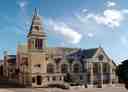
  2. Look ahead for a grand, curved building of sandy stone with tall windows and a central tower-the Bournemouth Town Hall almost looks like it’s presiding over the crossroads like…더 보기간략히 보기

    Look ahead for a grand, curved building of sandy stone with tall windows and a central tower-the Bournemouth Town Hall almost looks like it’s presiding over the crossroads like the mayor at a very official tea party! Now, take a moment to stand in front of this impressive building, and let me whisk you back through time-after all, this place was making headlines before Bournemouth had decent WiFi! Picture this: long before this grand façade rose up, you’d be standing in the middle of a thick, shadowy woodland known as “Bruce’s Wood.” Owned back in the 1800s by Patrick Craufurd Bruce, a man with more forests to his name than shoes in his closet, it was the kind of place you’d expect to bump into a deer, or maybe a lost poet searching for inspiration. Eventually, solicitor George Durrant took over, renaming it Branksome Estate and parceling out bits of land like slices of the world’s most exclusive cake. For a short while, this very spot was home to a boarding house called The Glen. But the real twist comes when Dr. Alfred Meadow, a man with ambitious dreams and a very impressive moustache (I’m assuming), arrived to create a spa hotel. But not just any spa hotel-he wanted to treat serious diseases like tuberculosis, bronchitis, and asthma, inspired by the famous healing springs in Mont-Dore, France. To kick things off in style, the foundation stone was laid in 1881 by none other than King Oscar II of Sweden and Norway-a royal start for this unlikely British landmark. When it finally opened as the Mont Dore Hotel in 1885, people must have gazed up at its long curved front, portico entrance, and dramatic roofline and thought: “That’s not just a hotel, that’s a palace with holiday vibes!” Picture the busy porters, elegant guests strolling in, and maybe someone sneaking a second dessert as a harp plinks in the lobby. But the story, much like the building, takes a sharp turn. During the First World War, this posh hotel swapped luxury for bravery. It was transformed into a hospital for wounded British Indian Army soldiers. The halls echoed not with laughter, but with the clack of nurses’ shoes and the soft words of hope. The staff worked tirelessly-including a fundraising drive in 1916 that helped build a real destroyer-HMS Phoebe! The hospital’s generosity even reached as far as Russia, commemorated by a flag gifted from the Russian Empire. By the end of the war, the building then cared for recovering officers, before Bournemouth Borough Council bought it in 1919. Dust off your top hat, because in 1921 it reopened as the Town Hall-reborn again as the pulsing heart of the town’s decisions and dramas. They even added a council chamber with a boldly bowed front, perfect for councilors who like a bit of stage presence. The honor roll of visitors includes Queen Elizabeth II-who probably approved of the turret-topped roof-and even a secret Cold War bunker beneath your feet, built in the 1980s. I mean, if James Bond ever needed to hide out, he’d do well to pick here, right? Inside, you’ll find portraits of Captain Lewis Tregonwell and Sir Merton Russell-Cotes, local legends immortalized in paint, watching over the council chamber as history continues to unfold. So as you look up at this fine old building, think of its shifting roles: woodland, hotel, hospital, government HQ, and maybe, just maybe, a future site for your own legendary selfie. Now that’s what I call character!

    전용 페이지 열기 →
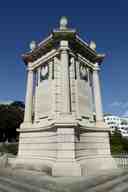
  3. Look for a sturdy, light stone monument with tall, classical columns and four urns perched on top, standing majestically on a raised platform right before you in the…더 보기간략히 보기

    Look for a sturdy, light stone monument with tall, classical columns and four urns perched on top, standing majestically on a raised platform right before you in the gardens. Now, take a deep breath and let history wash over you as you stand before the Bournemouth War Memorial. Imagine it’s the year 1921-Bournemouth is still feeling the heavy shadows left behind by the First World War. The town wanted a way to remember those brave souls who never made it home, so they chose this very spot, nestled between the Town Hall and St. Andrew’s Church, to build something special. Designed by Albert Edward Shervey, the deputy architect for Bournemouth, this monument was more than just stone-it was a symbol of hope and remembrance. But here’s the fun twist: guarding this memorial are two rather legendary lions! One is awake and roaring as if to say, “I am always on watch!” while the other is sleeping, perhaps dreaming of peace. Shervey borrowed this idea from the famous Canova’s lions that stand guard in Rome. But don’t try waking the sleepy lion-he’s been practicing his napping skills for over a century! The stone is cool to the touch, the air here often tinged with the hum of distant traffic mixing with birdsong. If you listen closely enough, you might just hear echoes from the past-stories of courage, sacrifice, and the unbreakable spirit of a seaside town determined never to forget.

    전용 페이지 열기 →
  4. In front of you is an open, paved space lined with shops and crowned by a quirky, round building with a clock on top-just look for the café with umbrellas and people gathered…더 보기간략히 보기

    In front of you is an open, paved space lined with shops and crowned by a quirky, round building with a clock on top-just look for the café with umbrellas and people gathered around. Welcome to The Square, the very heart of Bournemouth! Take a deep breath-imagine the buzz and chatter as you stand where, centuries ago, there was only silence broken by the gentle trickle of a stream. Picture the 18th century: Decoy Pond House stood right here, and travellers crossed the Bourne Stream on a skinny wooden plank that creaked with every step. This was the wild edge between Poole and Christchurch, long before Bournemouth’s streets bustled with shoppers. A little hidden secret: the River Bourne still flows quietly under your feet, slipping beneath the paving stones as if it’s playing hide-and-seek with the modern city. Now, glance up-see that clock perched on top of the café? Back in 1925, Bournemouth’s tram shelter was built here with that very clock, a gift from Captain HB Norton, who must’ve hoped everyone would always be on time for the tram. Later, the clock moved to the middle of the roundabout and became affectionately known as the "Leaning Tower of Bournemouth." Tick-tock-a little less Pisa, a little more seaside charm! Of course, nothing here stands still for long. In 1992, The Square shed its roundabout and grew into the bustling, people-friendly place you see today. The clock tower found a new home atop the Obscura Café-which once held a giant camera obscura, swirling shadows and light into secret pictures for curious visitors. Look around at the stores: famous names like Sports Direct, M&S, Primark, and more are gathered like a collection of well-dressed friends waiting for you. And if you listen closely, you might almost hear the composer Hubert Parry’s first lullabies drifting across the square-he was born just next door. So, what will you discover here: a sunny café table, a new favourite shop, or just the surprising story beneath your feet? In Bournemouth’s Square, the past and present love to mingle-as do all its visitors.

    전용 페이지 열기 →
  5. Picture the year 1875. Bournemouth was eager to make a name for itself-a sparkling, fashionable destination. And so, rising in the heart of town, was a glowing glass-clad palace…더 보기간략히 보기

    Picture the year 1875. Bournemouth was eager to make a name for itself-a sparkling, fashionable destination. And so, rising in the heart of town, was a glowing glass-clad palace inspired by London’s own Crystal Palace. It shimmered in the sunlight, earning the grand title “Crystal Palace of the Summer and Winter Gardens.” If you squint hard enough, maybe you can see nineteenth-century locals sipping lemonade or discussing the latest in Victorian swimwear! The venue could fit 4,000 people-and that’s before festival seating was a thing. But all those shiny glass windows couldn’t quite pay the bills. Exhibitions came and went, closing and opening with all the reliability of the British summer sun. Then, in 1893, someone had one of Bournemouth’s greatest ideas: “Let’s fill the place with music!” From then on, the Winter Gardens became a beacon for composers and musicians. If you’d been around back then, you might have seen musical legends like Edward Elgar, Hubert Parry, or even Jean Sibelius, swishing their batons in the air, conducting the splendid Bournemouth Municipal Orchestra. By 1895, Bournemouth was proudly the first municipal town in England to regularly provide music in such grand style. The orchestra called this home until 1929, turning every rehearsal into a headline event. All the while, out-of-towners could read advertising promising “delightful grounds in the very bull’s eye of alluring Bournemouth.” No pressure! By the 1930s, the original crystal palace was ready for a makeover. Gone was the glass, in came a brand-new brick hall, which-believe it or not-was first designed as a bowling centre. World War II changed those plans; instead of strikes and spares, the hall echoed with music and laughter once again. Its acoustics were so good, musicians said even the high notes sounded better. After the war, bands, comedians, and fans flooded in; the renowned Bournemouth Symphony Orchestra called it home until 1979. But the real legends started rolling in during the swinging sixties and seventies. The Beatles played here in 1963-imagine hearing “She Loves You” just before it took over the world! The Rolling Stones came to town, their supporting act missing the gig because of a van breakdown. Jimi Hendrix wowed crowds in ‘67, Elton John and Queen brought down the house in the ‘70s, and Pink Floyd made the walls vibrate until the seagulls complained about the noise. The stage also saw wrestling matches, glittering comedians like Bob Hope and Morecambe and Wise, and even anxious football fans plotting to save AFC Bournemouth in 1997. But nothing lasts forever-by the early 2000s, the big stars preferred bigger arenas, and Bournemouth’s theatre scene was a bit too crowded. The curtain came down: the Winter Gardens closed in 2002 and was demolished in 2006. Today, the site’s waiting for its next big act. Will it be restaurants, an entertainment centre, or maybe the world’s fanciest car park? Who knows! Just remember: when you walk across this ground, you’re stepping over echoes of music, cheers, and applause that have been rolling through Bournemouth for nearly 150 years. And that-trust me-is a tough act to follow.

    전용 페이지 열기 →
  6. In front of you, you’ll see a lush, green park with winding paths, a gentle river, stone bridges, and scattered flower beds-just look ahead for the open lawns, old trees, and a…더 보기간략히 보기

    In front of you, you’ll see a lush, green park with winding paths, a gentle river, stone bridges, and scattered flower beds-just look ahead for the open lawns, old trees, and a picturesque stream to spot Bournemouth Gardens. Welcome to the heart of Bournemouth’s natural charm-Bournemouth Gardens! Just imagine it’s the 1800s: there’s the gentle flow of the River Bourne, grand old buildings peeking through the trees, and the lingering scent of freshly planted flowers. Picture architects Benjamin Ferrey and Decimus Burton busily sketching out how the gardens would wind along for nearly three kilometers, making this a green ribbon right through town. At first, these beautiful spaces were private-a real treat only for the lucky few. Then, in 1859, the gates opened to everyone, and the people of Bournemouth gained their very own green oasis. As you stroll along, listen closely. The gardens are alive, not just with nature, but with history. There’s a hint of mystery and a touch of drama here too-imagine the great tram crash of 1908 when a tram jumped the rails, tumbling into the gardens and causing chaos. It was a dramatic day, but don’t worry, today it’s much safer for a stroll-or even a game of tennis at the centre just around the corner! The gardens are actually divided into enchanting sections: Upper, Central, and Lower. The Upper Gardens are a tree collector’s dream, with mighty redwoods reaching for the sky, and themed European, Asian, and North American gardens. Down by the Lower Gardens, you’ll find a classic bandstand and magical winter lights during Christmas. The river meanders through it all, ducks paddle by, and maybe-if you’re lucky-a squirrel might eye you up for a snack. With centuries of stories under its branches and never a dull moment, Bournemouth Gardens is the perfect place to pause, relax, and soak in the blend of history, laughter, and natural beauty all around you. Don’t forget-the biggest drama now might just be a pigeon chasing your sandwich!

    전용 페이지 열기 →
  7. Right in front of you stands a grand cream-colored building with old-fashioned windows, a bright “Royal Bath Hotel” sign glowing in blue at the top, and a covered entrance jutting…더 보기간략히 보기

    Right in front of you stands a grand cream-colored building with old-fashioned windows, a bright “Royal Bath Hotel” sign glowing in blue at the top, and a covered entrance jutting out toward the road-look for the large portico with the hotel’s name above the doorway to spot it! Ah, the Royal Bath Hotel-a true star of Bournemouth’s seafront! Imagine yourself stepping back to 1838: George Tapps-Gervis has just opened these grand doors, and crowds have gathered, not just to stay at Bournemouth's very first hotel, but to celebrate Queen Victoria’s coronation. The place buzzed with excitement and seaside glamour. Fast forward a bit, and you’ll find the hotel stretching wider in 1878, its extension designed by Christopher Crabb Creeke-he clearly knew how to make something both elegant and roomy. But not every story here is fit for a postcard. In 1979, a huge fire roared through the east wing, sending guests dashing and firefighters racing to battle the flames. Even after that, there’s never been a dull moment: from a daring robbery to moments of tragedy and even a mysterious stabbing, this hotel sometimes feels like it’s straight out of a mystery novel! Not all its tales are dark-it's also hosted lively comic conventions, making it a place where costumes and laughter fill the fancy halls. And here’s a fun twist for your visit: the Royal Bath is now undergoing a million-pound makeover, with all 208 bedrooms and its grand dining hall getting spruced up by 2026. So, as you stand here, soak up the glamour, a bit of scandal, and more than a few tales worth a toast in the bar!

    전용 페이지 열기 →
  8. Just ahead and up the steep, grassy cliff face, you’ll spot a pair of tracks climbing sharply upward with a little blue carriage halfway along-this is the East Cliff Railway,…더 보기간략히 보기

    Just ahead and up the steep, grassy cliff face, you’ll spot a pair of tracks climbing sharply upward with a little blue carriage halfway along-this is the East Cliff Railway, standing out against the sandy slope. Now, take a look at this grand old lift-imagine it’s 1908, the air is crisp, and the promise of an easy ride from the breezy beach to the bustling clifftop fills everyone with excitement. That’s what the East Cliff Railway brought to Bournemouth over a century ago! Electric from the very beginning (quite the modern marvel at the time), it used a big, humming motor at the top station to pull its pair of cars-one going up, the other down, each holding 12 eager passengers. The wooden-bodied cars, shining under the sun, were later replaced by sleek aluminium models, not only for comfort but just in case the other two cliff railways-yes, there are three-needed a swap! Legend has it that drivers and attendants worked in perfect harmony, the sea breeze ruffling their caps as families piled on board, excited for a view over the waves. Just think, at its steepest, that railway track is nearly 70 percent incline! That’s like a theme park ride, Bournemouth-style, and without the loop-the-loops. But every legend has its twist-one rainy spring day in 2016, the ground below grew soggy, and with a rumble, part of the cliff gave way. The lift was wounded, cars removed by crane, and the charming little toll house at the bottom was lost. Since then, the railway has waited quietly, as engineers and dreamers debate whether it’ll one day carry sun-seekers once more-like a hero in a deep seaside slumber

    전용 페이지 열기 →
  9. If you’re searching for the Russell-Cotes Art Gallery & Museum, look towards the top of the East Cliff-you can’t miss the grand building with its beautiful curved glass windows,…더 보기간략히 보기

    If you’re searching for the Russell-Cotes Art Gallery & Museum, look towards the top of the East Cliff-you can’t miss the grand building with its beautiful curved glass windows, tall turrets, and lush gardens bursting with color right in front. Now, let’s step back in time-imagine the sea breeze at your back as you stand outside this fairy-tale mansion, its round towers like something straight out of a storybook. The year is 1897, and Merton Russell-Cotes, a proud hotel owner, wants to give his wife Annie the ultimate birthday present. Not just flowers, not just a nice dinner-no! He commissions the architect John Frederick Fogerty to design and build this dazzling house, a palace where every nook is filled with the Art Nouveau style that was the height of fashion. When it’s finally finished in 1901, you can almost picture Annie standing on one of these sweeping balconies, utterly stunned. But here’s where the tale takes an unexpected twist. Annie and Merton aren’t just show-offs; they’re deep collectors, globe-trotters, and passionate about art and history. They fill the house with fascinating treasures, especially from Japan, and paintings galore. It’s almost as if every feathered lampshade and every painting waits for an audience. By 1907, Annie does something truly generous-she hands over East Cliff Hall, as the house was then called, with all its wonders, to the people of Bournemouth. Merton adds his beloved art collection too, and in return, the town gives them a charming reward: honorary freemen status, which meant they could graze their sheep on Bournemouth’s cliffs (though, between you and me, no one’s seen any runaway sheep here yet). The couple keeps living in part of the house, and the collection grows and grows. One special room is transformed into the Sir Henry Irving Museum, dedicated to their famous actor friend who once stayed the night-imagine the drama, candlelit stories, and perhaps a little ghostly giggle drifting down the halls. After Annie and Merton’s passing, the house officially becomes a museum, opening to the public in 1922, so everyone could step into their world of art and adventure. Even today, you can explore quirky exhibition rooms, challenge the kids with detective trails, and unwind in the cozy café. And if you listen closely inside, you might just hear the soft echo of those extravagant parties-or the nervous squeak of someone discovering a painting of a bat! The building now needs a little TLC for the next hundred years, but its magic remains. So take a deep breath-can you smell the flowers and the stories woven into these walls? This isn’t just a museum; it’s Bournemouth’s grand gift, wrapped in adventure and a touch of mystery.

    전용 페이지 열기 →
  10. Right in front of you, you’ll spot a big, modern glass building with jagged rooflines, set at the very edge of the sand-just look towards the sea, and you can’t miss its vast…더 보기간략히 보기

    Right in front of you, you’ll spot a big, modern glass building with jagged rooflines, set at the very edge of the sand-just look towards the sea, and you can’t miss its vast windows reflecting the sky. Now, let me take you back in time! Imagine it’s 1999, and Bournemouth is all abuzz. This bold, chunky building, nicknamed The Waterfront, has just risen like a gigantic glass-and-steel sandcastle on the seafront. Inside: restaurants with sea views, and-wait for it-a brand-new IMAX cinema promising to deliver movies so big you could almost feel sea spray from the screen! The only trouble? The grand opening of the cinema was a bit like waiting for popcorn that never pops. It was delayed for years, and when it finally opened in 2002, the 3D magic just didn’t work-so much for ducking from flying asteroids! In the end, you got 2D films on the world’s biggest screen, which is a bit like getting plain vanilla when you’ve been promised triple chocolate with sprinkles. Businesses came and went, but after some tough times and technical hiccups, the whole place went quiet. With only a few film nights a week, you could almost hear the seagulls snickering. People soon started grumbling about the building, saying it blocked the beautiful seaside view-and in 2005, a TV show even had it on their most wanted list for demolition. Council meetings got lively, legal battles started brewing, and everyone argued over who should get stuck with the bill. Eventually, the council bought the building for a ‘bargain’-and yes, that’s seven million pounds worth of bargain! By 2012, consensus was clear: time for a dramatic curtain call. Out came the wrecking balls, and The Waterfront was finally demolished in 2013. As bricks fell, some of the cinema seats found a new home at the Shelley Theatre-so at least they kept their starring role! Now, this patch of land has a playful spirit again, with Smuggler’s Cove mini-golf welcoming pirates of every age. From splashy blockbusters to crazy golf, The Waterfront has certainly had quite the plot twist!

    전용 페이지 열기 →
  11. If you’re looking for the scene tied to the 2023 Bournemouth beach incident, just glance ahead to the water-you’ll spot boats moored along the harbor, framed by a quiet palm tree…더 보기간략히 보기

    If you’re looking for the scene tied to the 2023 Bournemouth beach incident, just glance ahead to the water-you’ll spot boats moored along the harbor, framed by a quiet palm tree and a walkway, placing you right on the edge of this historic waterfront. Now, let me sweep you back to the summer of 2023-but don’t worry, you don’t need sunscreen for this story! Bournemouth beach is usually the heart of British seaside fun, famous for its golden sands, classic pier, and a vibe that can compete with any European hotspot. Imagine the sun shining, families spreading picnic blankets, and the ice cream vans sounding their sirens to eager kids. But on May 31st, at exactly 4:07pm, something truly unexpected happened. Ten people, out of hundreds enjoying the waves, suddenly got trapped in the water. Emergency services rushed in, sirens slicing through the salty air while crowds looked on in shock. On the shore, courageous strangers dropped their fish and chips and jumped in to help-some gave CPR, their wet clothes clinging in the chilly afternoon wind. The day wasn’t just another busy Wednesday: it turned tragic. A 17-year-old boy from Southampton and a 12-year-old girl from High Wycombe were pulled lifeless from the surf; others were shaken, but survived. Over the next hour, the beach, normally home to laughter and sunbathers, took on a different sound-hushed voices, lifeguard whistles, and the urgent thrum of police radios. What made it all the more mysterious was how sudden and unexplained it felt. No one had been jumping off the pier, no jet ski had crashed through the waves. There were no villains here, just nature flexing its muscles in the form of a dreaded rip tide-that sneaky beach current that can grab you before you even realize you’re in trouble. Rumors spread quicker than beach towels. Was it a boat? Was it a dare gone wrong? Dorset Police acted fast. Not only did they urge the public to stop filming TikToks near the tragedy, they also set their sights on the Dorset Belle-a bright blue pleasure boat you might have seen bobbing in these very waters. The Dorset Belle, built in 1974 in Poole and having sailed Cardiff Bay before its triumphant return to Bournemouth in 2021, was impounded at Cobb’s Quay as investigators searched for any clue. But it soon became clear: the boat had nothing to do with it. In fact, as the days ticked by, every possible human explanation melted away, leaving investigators scratching their heads at this “anomaly of nature.” Turns out, sometimes the greatest force on the beach is the ocean itself. In 2024, after months of interviews and evidence, an inquest ruled the deaths were accidental-caused by a rip tide, fierce and unpredictable. The coroner made it clear: lifeguards and beachgoers had done everything possible, but sometimes, nature has the last say. Even after the investigation closed, echoes of that day lingered. The council paused all pleasure boat trips from the pier. In September, an enormous illuminated arch was set up for the Arts by the Sea Festival-15 meters high, glowing by night like a neon gateway to memory. Some found it beautiful, but others-especially the victims’ families-said it was too close, too soon. The council listened and the arch came down, its lights winking out over the sand. Now, as you stand here, imagine the swells and sounds of everyday joy. But also feel the seriousness that still lingers-a reminder that even on the sunniest days, the sea keeps its secrets, and history can change in a single moment. So next time you dip your toes in, respect those waves and don’t forget: in Bournemouth, every grain of sand has a story.

    전용 페이지 열기 →
  12. Gaze up the green, grassy cliff in front of you-see those tracks running steeply down the slope, like a secret path from the beach huts below to the grand hotels above? That’s the…더 보기간략히 보기

    Gaze up the green, grassy cliff in front of you-see those tracks running steeply down the slope, like a secret path from the beach huts below to the grand hotels above? That’s the West Cliff Railway, just waiting to catch your eye! Now imagine it’s 1908: ladies with big hats, men in crisp suits, and children bursting with seaside excitement all gathered at the very spot where you stand. Suddenly, a wooden car glides smoothly down the rail, powered not by coal or puffing steam, but by the mighty force of electricity-a real marvel of the age! The West Cliff Railway, or as locals fondly call it, the West Cliff Lift, is no ordinary railway. It’s a double-track funicular, only 145 feet long, but boy, does it tackle a steep hill-over a 70% gradient! Each of its two cars carries up to 12 passengers, shuttling sun-seekers and day-trippers between the busy promenade and the windy cliff top. For decades, it’s been the magic carpet carrying families from sandcastles by the water’s edge up to fish-and-chip shops and evening bandstands above. Early on, drivers at the top station kept watch, while a helpful attendant waited below to greet holidaymakers, tickets in hand. In the ‘60s, out went the old wooden carts and in came shiny new aluminium carriages, all so they’d match the other cliff railways in Bournemouth. The tracks have been relaid, motors swapped, and nowadays, it’s a snazzy electronic control that keeps everything running as smooth as melting ice cream on a sunny Bournemouth day. And here’s a neat bit-the West Cliff Railway is part of a cliff-crawling trio, with cousins at East Cliff and Fisherman’s Walk, all opening their doors between April and October. So, next time you’re longing for sea air, just hop aboard, listen for the gentle hum, and whoosh! You’ll be up the cliff before you can say “stick of rock.” Thanks for riding with me today-let’s hope your own journey is full of ups, not just downs!

    전용 페이지 열기 →

자주 묻는 질문

투어는 어떻게 시작하나요?

구매 후 AudaTours 앱을 다운로드하고 교환 코드를 입력하세요. 투어를 바로 시작할 수 있습니다 - 재생을 탭하고 GPS 안내 경로를 따라가시면 됩니다.

투어 중 인터넷이 필요한가요?

아닙니다! 시작 전에 투어를 다운로드하면 완전히 오프라인으로 즐길 수 있습니다. 채팅 기능만 인터넷이 필요합니다. 모바일 데이터 절약을 위해 WiFi에서 다운로드하시는 것을 권장합니다.

이것은 가이드가 안내하는 단체 투어인가요?

아닙니다 - 이것은 셀프 가이드 오디오 투어입니다. 폰을 통해 오디오 나레이션을 들으며 나만의 속도로 독립적으로 탐험합니다. 투어 가이드도, 단체도, 일정도 없습니다.

투어는 얼마나 걸리나요?

대부분의 투어는 60-90분이 소요되지만, 속도는 전적으로 본인이 조절합니다. 원할 때 언제든지 일시정지하거나, 정류장을 건너뛰거나, 휴식을 취하세요.

오늘 투어를 끝낼 수 없으면 어떻게 하나요?

괜찮습니다! 투어는 평생 이용이 가능합니다. 원할 때 언제든지 일시정지하고 다시 시작하세요 - 내일, 다음 주, 또는 내년에도. 진행 상황이 저장됩니다.

어떤 언어를 이용할 수 있나요?

모든 투어는 50개 이상의 언어로 이용 가능합니다. 코드를 교환할 때 원하는 언어를 선택하세요. 참고: 투어 생성 후에는 언어를 변경할 수 없습니다.

구매 후 투어는 어디에서 이용하나요?

App Store 또는 Google Play에서 무료 AudaTours 앱을 다운로드하세요. 교환 코드(이메일로 전송됨)를 입력하면 라이브러리에 투어가 나타나며, 다운로드하여 시작할 수 있습니다.

verified_user
만족 보장

투어가 마음에 들지 않으시면 환불해 드립니다. 문의: [email protected]

안전한 결제

Apple PayGoogle PayVisaMastercardPayPal

AudaTours: 오디오 투어

재미있고, 경제적이고, 자유로운 셀프 가이드 워킹 투어

앱 체험하기 arrow_forward

전 세계 여행자들에게 사랑받고 있습니다

format_quote 이 투어는 도시를 보는 정말 좋은 방법이었습니다. 이야기들이 너무 대본처럼 느껴지지 않으면서도 흥미로웠고, 나만의 속도로 탐험할 수 있어서 좋았습니다.
Jess
Jess
starstarstarstarstar
Tbilisi 투어 arrow_forward
format_quote 관광객처럼 느끼지 않으면서 Brighton을 알아가는 훌륭한 방법이었습니다. 내레이션에 깊이와 맥락이 있었지만 과하지 않았습니다.
Christoph
Christoph
starstarstarstarstar
Brighton 투어 arrow_forward
format_quote 크루아상을 한 손에 들고 아무 기대 없이 시작했습니다. 앱이 그냥 자연스럽게 함께해 주는 느낌이에요, 부담도 없고, 그냥 나와 이어폰과 멋진 이야기들.
John
John
starstarstarstarstar
Marseille 투어 arrow_forward

무제한 오디오 투어

전 세계 모든 투어의 잠금을 해제하세요

0 투어·0 도시·0 국가
all_inclusive 무제한 탐험