루가노 오디오 투어: 은행 전설과 예술적인 랜드마크 공개
반란군이 도시의 운명을 다시 쓰기 위해 아래에 모였을 때, 루가노 위로 하나의 종이 울렸습니다. 엽서 같은 풍경 너머에는 파스텔톤 광장을 통해 흐르는 비밀 동맹, 예술적 음모, 그리고 조용한 금융 권력의 거미줄이 숨겨져 있습니다. 성당, 다채로운 박물관, 상징적인 기관들을 누비는 이 셀프 가이드 오디오 투어를 통해 루가노의 겹겹이 쌓인 역사를 풀어보세요. 붐비는 길에서 벗어나 서두르는 방문객들이 놓치는 이야기들을 만나보세요. 루가노 대성당의 프레스코화 아치 아래에서 무엇이 폭동 직전의 상황을 촉발했을까요? 누가 자정 전에 문화 박물관 문을 통해 귀중한 유물을 밀반입했을까요? 왜 평범해 보이는 코르너 은행 금고가 여전히 티치노 엘리트들 사이에서 속삭임을 보내는 걸까요? 구불구불한 길과 햇살 가득한 테라스를 따라가다 보면 수세기가 당신 주위에서 충돌합니다. 한 걸음 한 걸음마다 이 스위스-이탈리아 보석에 드리워진 새로운 드라마와 예상치 못한 빛이 드러납니다. 루가노의 숨겨진 심장 소리에 귀 기울일 준비가 되셨나요? 재생 버튼을 누르고 도시의 비밀스러운 역사 속으로 들어가 보세요.
투어 미리보기
이 투어에 대하여
- schedule소요 시간 40–60 mins나만의 속도로 이동
- straighten3.4 km 도보 경로안내 경로 따라가기
- location_on
- wifi_off오프라인 작동한 번 다운로드, 어디서든 사용
- all_inclusive평생 이용언제든지 다시 재생 가능
- location_on루가노 대성당에서 시작
이 투어의 정류장
To spot Lugano Cathedral, look for a striking white stone façade and a tall bell tower with a clock-it's right up the hill at the top of the steps, standing out against the…더 보기간략히 보기
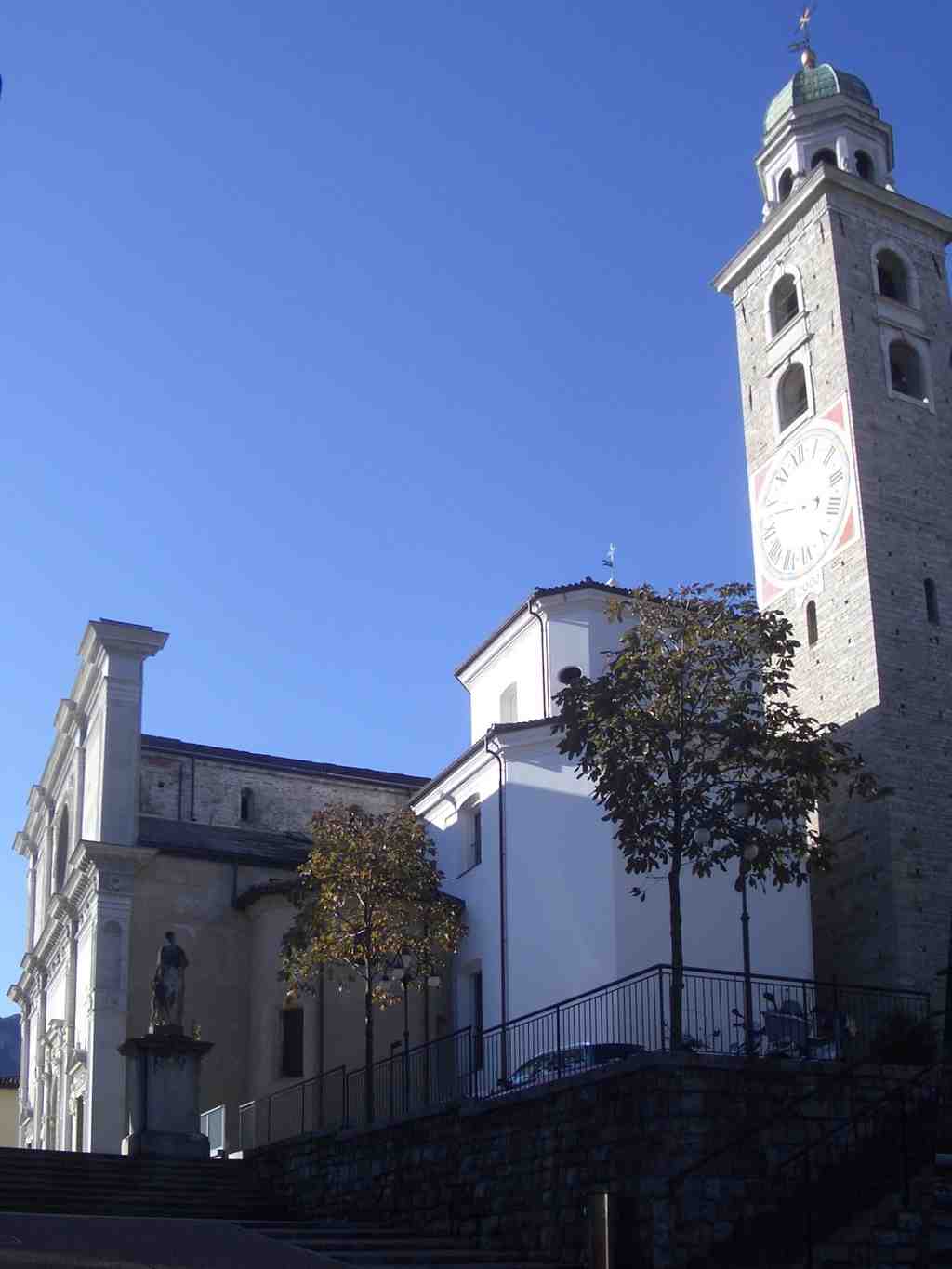
To spot Lugano Cathedral, look for a striking white stone façade and a tall bell tower with a clock-it's right up the hill at the top of the steps, standing out against the sky. Welcome to the heart of Lugano’s spiritual and architectural history! You’re now standing before the Lugano Cathedral: imagine the cool air of centuries humming around you as you gaze up at its impressive white stone and marble façade, pieced together like a puzzle in the 1500s. The church has been here since at least the year 818-that’s well before people even started saying “middle ages”! Back then, its entrance faced the other way, and if you could peek under your feet, you’d discover the remains of the ancient church’s apse, still sleeping below the stones. By the 15th century, folks decided the church needed expanding-clearly, medieval crowds weren’t keen on tight spaces! The entrance moved, the roof came down, and up went the magnificent groin-vaulted ceiling. Step closer to the main portal, and picture the chisels at work, crafting cheeky puttoes, birds, and even lions popping out at visitors. You’ll see angels carrying torches like something out of a Roman victory parade-because the designers wanted this place to look like a grand entrance to another world. If your eyes wander up the bell tower, you’ll notice its lower half is Romanesque-solid and old, like a medieval castle. The top, though, has a Baroque flourish and a lantern topped with a little green dome, the creation of Costante Tencalla. Inside, after a big makeover in the early 1900s (bye-bye Baroque chapels, hello fancy frescoes by Ernesto Rusca!), the walls shimmered with new color. This cathedral became the bishop’s seat only in 1888-so for more than a millennium, it’s been shifting and adapting just like Lugano itself. Take a deep breath and listen; sometimes it almost feels like the clock on the tower ticks a little louder with all this history. Now, ready to step into the next chapter of Lugano’s story?
전용 페이지 열기 →Take a look around you-standing before the Banca del Sempione, you’re not just gazing at a bank, but entering a story that began way back in 1960, when rock’n’roll was shaking the…더 보기간략히 보기
Take a look around you-standing before the Banca del Sempione, you’re not just gazing at a bank, but entering a story that began way back in 1960, when rock’n’roll was shaking the world but Swiss banking was all about calm and order. Imagine polished marble floors, whispers of Italian and Swiss dialects, and sharp-suited bankers who could probably count your heartbeats if you stood still long enough! With its headquarters here in Lugano, Banca del Sempione does what the Swiss do best: manage money. Lots of it! In fact, about 3.1 billion Swiss Francs, which is a mountain of chocolate coins if you ask me. But the real hidden vault here is the people behind the bank. Over half of it is owned by the Donelli family from Italy, industrial tycoons who know a thing or two about both banks and, well, business dynasties. Another slice belongs to the Gattei Group, while the Danisi family's Filofibra Group holds just under 12%. That means this bank isn’t just about numbers-it’s a tale of families, heritage, and a touch of Italian flair. So next time someone says banks are boring, you can say, "Well, you haven’t stood in front of Banca del Sempione!" And with that, let’s keep exploring-no need to open your own Swiss account…unless you really want to.
전용 페이지 열기 →This story starts way back in 1926. Picture a tiny finance company called Società Commerciale Ceresio SA, dreaming big and smelling of fresh ink and ambition. In 1933, they…더 보기간략히 보기
This story starts way back in 1926. Picture a tiny finance company called Società Commerciale Ceresio SA, dreaming big and smelling of fresh ink and ambition. In 1933, they decided their name needed a bit more flair, so they switched to SA Privata Finanziara-what a mouthful, right? But things moved fast. By 1936, they were handed a real bank license and became Banca Solari SA, now ready to play with the big kids. As time passed, family business drama entered the scene. In 1964, Walter Blum joined, and by 1967, it was named Banca Solari & Blum SA. Maybe it wasn't exactly the sort of family reunion you’d expect at Christmas-unless yours involves merger agreements and discussions over securities! Then the 1990s came along with the perfect twist. In 1991, two Lugano legends-Banca Solari & Blum SA and Banca Privata Edmond de Rothschild SA-merged into a banking powerhouse. I imagine the deal was sealed over some serious coffee and maybe a biscotti or two. Their new merged name was almost as long as your grocery list: Banca Privata Solari & Blum SA (Gruppo Benjamin e Edmond de Rothschild)! Don’t worry, they shortened it in 1998 to the much simpler Banca Privata Edmond de Rothschild Lugano SA. By 2008, this boutique bank had 80 employees juggling almost 5 billion Swiss francs for their clients-no pressure! And just to keep things exciting, in 2013, they took over Sella Bank AG, expanding their influence even further. So as you stand here, imagine the decades of deals, handshakes, and perhaps even a little drama behind those doors. Who says banking can't be thrilling?
전용 페이지 열기 →
11개 정류장 더 보기정류장 적게 보기expand_moreexpand_less
As you stand in front of PKB Privatbank, take a moment to soak in the air of quiet confidence that seems to radiate from these modern walls. Now, close your eyes and imagine it's…더 보기간략히 보기
As you stand in front of PKB Privatbank, take a moment to soak in the air of quiet confidence that seems to radiate from these modern walls. Now, close your eyes and imagine it's the late 1950s in Switzerland-a time of fine suits, classic cars, and the solid tick-tock of Swiss clocks in the air. Founded in 1958 in Zürich as the Privat Kredit Bank, PKB began life quietly, but with a spark of ambition-after all, in Switzerland, banks are about as common as cows, but not all of them specialize in making your secrets (and your savings) feel at home! As you listen, picture this: bankers dashing between Zürich, Lugano, and Geneva, managing fortunes and secrets with equal care. You might wonder: what makes PKB special? Well, when it comes to bonds, they're not just part of the crowd-they’re true market makers, standing tall among the country’s elite when it comes to the Swiss franc bond market. But PKB is no Swiss hermit; it’s got branches in Zürich and Geneva, and even reaches into Milan, courtesy of their subsidiary, Cassa Lombarda. If you ever find yourself in Panama, you might just bump into a PKB branch-talk about taking “Swiss reliability” global! With over 400 employees across the group, more than 200 right here at PKB, there's always someone ready to tackle your financial puzzles, whether you're a titan of industry or just someone betting on the next great chocolate bar investment. And behind all this? The Trabaldo Togna family-visionaries who keep the bank rock steady. With Luca Venturini steering the ship as CEO and Umberto Trabaldo Togna, the family patriarch, presiding over the board, the PKB Group manages around 12 billion CHF. And if you’re a fan of bank stability (who isn’t?), their capital ratio is nearly double what’s required. Maybe it’s all those Swiss vitamins, or just generations of good banking genes! So, as you look up at PKB Privatbank, remember: behind every number is a story, and this one’s as much about people, ambition, and family as it is about francs and figures. Now, shall we see where Swiss banking excellence heads next?
전용 페이지 열기 →But 2010 brought change. Like the dramatic finale of a corporate soap opera, a management buy-out handed the bank’s fate to new hands-and Axion Swiss Bank was born. The Ticino…더 보기간략히 보기
But 2010 brought change. Like the dramatic finale of a corporate soap opera, a management buy-out handed the bank’s fate to new hands-and Axion Swiss Bank was born. The Ticino Cantonal Bank became the star shareholder, holding a hearty 80%. The rest lies with Axion’s own sharp-suited managers, who clearly believed in the place enough to put their money where their meetings happen. By 2015, Axion was feeling ambitious, scooping up the Lugano branch of Société Générale Private Banking. Now with 66 employees and a cool 1.46 billion Swiss francs under its watch as of 2020, this bank is a reminder that Lugano is where tradition and reinvention meet-sometimes over an espresso and sometimes over a spreadsheet. After all, in Switzerland, even the banks get a bit of a makeover!
전용 페이지 열기 →Right in front of you, rising from a circle of steps in the middle of the lawn, you’ll spot a tall, grey stone obelisk topped with a metallic flourish-almost like Lugano’s very…더 보기간략히 보기
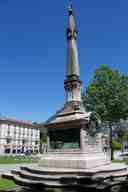
Right in front of you, rising from a circle of steps in the middle of the lawn, you’ll spot a tall, grey stone obelisk topped with a metallic flourish-almost like Lugano’s very own needle pointing into the blue sky. Let’s turn the clock back-waaay back-to February 1798. Imagine yourself in a bustling square much like this one, but instead of cafés and tourists, it’s filled with anxious townsfolk, and the air buzzes with rumors and tension. Suddenly, by the dark stillness of the night, whispers turn into shouts as from across the lake, Cisalpine forces silently slip in from Campione d’Italia. But Lugano is not ready to lie down without a fight. Sixty local volunteers, led by the spirited Pietro Rossi, stand their ground in a battle that lasts barely an hour but feels like a lifetime. Despite being outnumbered, the Lugano defenders hold the line, their courage sending their enemies running for the hills. By the next afternoon, the victorious people gather right here, plant a “tree of freedom” in the square, and cheer for the independence of Lugano-winning their right to be “free and Swiss!” Forget superhero movies, this was real-life heroism at its best. Fast forward a century, and the city decides their historic courage deserves something grander than just a tree. So they transform their old religious obelisk-in fact, it started out here in 1743 with a cross and holy relics-into a monument for freedom. Out goes the cross, and in comes a bold new look, designed by Otto Maraini, with local craftsmen from as far as Zurich pitching in. It’s like Lugano’s version of “extreme statue makeover!” The monument you’re standing in front of is more than just a pretty column. Notice the three wide steps at its base, the sturdy new pedestal, and those magnificent bronze plaques on either side. One shows the fierce February battle in the city’s arcaded streets-watch out for Luigi Vassalli's signature if you spot it. The other plaque, by Ampellio Regazzoni, brings to life the planting of the freedom tree, a moment of joy and hope that echoed around Ticino and inspired whole regions to demand their own independence. As you move around the monument, you’ll spot coats of arms of both Lugano and Switzerland-carved right into the stone as if to guard the memory of that day. And somewhere within its base, a secret stash from 1899 lies: a time capsule with newspapers and photographs, waiting for future Lugano citizens to uncover. By the way, the cost for this celebration? Over 20,000 Swiss francs-a bill that the city happily shared with both the federal government and donations from all across Ticino and beyond. Now, that’s what I call a group project! The grand unveiling in May 1898 brought city officials and townspeople together, cheering as the square was renamed “Piazza Indipendenza.” And in a delicious twist, architect Otto Maraini later joked that maybe, just maybe, it was time to put the old cross back on-some traditions are hard to shake! So, as you look up at this proud, weathered obelisk, imagine the echoes of hope, courage, and-who knows?-maybe a few nervous giggles from those volunteers, wondering if anyone brought a snack for after the revolution.
전용 페이지 열기 →Look for a life-sized stone statue of a bearded man in a floppy feathered hat, tunic, and cloak, boldly raising an arrow in his right hand-he’s easy to spot just ahead, with the…더 보기간략히 보기
Look for a life-sized stone statue of a bearded man in a floppy feathered hat, tunic, and cloak, boldly raising an arrow in his right hand-he’s easy to spot just ahead, with the leafy trees behind him and standing proudly by the lake. Now, imagine the early morning sunlight shimmering across Lake Lugano, and there it is before you: Vincenzo Vela’s Tell Monument, a monument with a tale as gripping as one of those old Swiss legends you might hear in the mountains. Close your eyes for a second-almost two centuries ago, the bustling site behind you was nothing like it is today. In 1855, right on this spot, there was the brand-new Hôtel du Parc, replacing an old monastery, and the owners, brothers Filippo and Giacomo Ciani, wanted something dramatic to greet their guests. “Let’s ask my friend Vincenzo,” Giacomo whispered-a young, ambitious sculptor, just 25! What could possibly go wrong? So, Vincenzo picked up his chisel, dreaming of Swiss freedom and wild heroism. In 1856, his sculpture of Wilhelm Tell, the mythic archer and symbol of independence, was unveiled right here by the water, shocking and inspiring all who passed. Picture it: Tell in mid-action, his right arm flung skyward, arrow in hand, crossbow at his side, and no sign of an apple or his famous son Walter-Vela skipped those so Tell looked even more heroic! Even his clothes speak of the land, a knotted tunic like a Ticinese shepherd, topped off with a feather in his hat and a cloak spilling over his shoulders. But oh, the drama that followed! In 1887, unknown vandals struck by night, mutilating parts of the statue. The years weren’t kind either: by the turn of the century, Tell was blackened, battered, and lost his crossbow. The city had to rescue him when the promenade was widened, and in 1914, after heated debates-should Tell, Swiss hero, glare at Italy or at Switzerland?-they restored him and placed him here, still facing north, his back to Italy just as the artist wanted. Standing here, you meet not just a statue but a survivor-scarred, celebrated, sometimes criticized, but always ready, arrow in hand, to shout for Swiss freedom at the edge of the lake. One thing’s for sure: nobody ever accused Wilhelm Tell of lacking direction! Intrigued by the description, interpretation or the reception? Make your way to the chat section and I'll be happy to provide further details.
전용 페이지 열기 →Here you are standing in front of Cornèr Bank, one of Lugano’s shining business icons. It was founded back in 1952 by Vittorio Cornaro-imagine men in sharp suits, the gentle…더 보기간략히 보기
Here you are standing in front of Cornèr Bank, one of Lugano’s shining business icons. It was founded back in 1952 by Vittorio Cornaro-imagine men in sharp suits, the gentle rustle of papers, and the click-clack of shoes on marble floors. Cornèr Bank has always been a family affair: it’s still run by the Cornaro family today, passing the baton across generations, with Vittorio Cornaro (son of Paolo) now at the helm. But don’t let its classical beginnings fool you. Cornèr Bank is the James Bond of banks, always ahead of the curve. In 1975, it became the very first bank in Switzerland to introduce the Visa card-so you could say it dealt Switzerland its first credit ace. Later, they led the charge with Mastercard, and by 2007, more than 900,000 Cornèrcards were zipping through wallets nationwide. That’s nearly a million wallets feeling much lighter! As tech evolved, so did the bank. They were among the pioneers to offer mobile payments like Fitbit Pay-so if you ever want to pay for your coffee with a flick of the wrist, thank Cornèr Bank for the magical moment. Today, they’re not just in Lugano but in Alain, Zurich, overseas in Liechtenstein, London, and even sunny Nassau. Now, let’s see if their vault has enough room for all your Swiss chocolate shopping sprees!
전용 페이지 열기 →You’ve made it to stop number 9: Banca del Ceresio, a true Lugano legend. Take a good look at this elegant building-around here, the stories are as rich as the clients. Picture…더 보기간략히 보기
You’ve made it to stop number 9: Banca del Ceresio, a true Lugano legend. Take a good look at this elegant building-around here, the stories are as rich as the clients. Picture the scene: it’s 1958, and the world is getting back on its feet after the chaos of World War II. Two brothers, Gianbattista and Alberto Foglia, open this bank to continue the proud banking tradition of their father, Antonio Foglia. Now, Antonio wasn’t just any banker-he was the president of the Milan Stock Exchange after the war. You could say finance ran deeper in this family than espresso in an Italian café. The Banca del Ceresio quickly became famous, especially when it dived into the mysterious and wild world of hedge funds in the early 1960s. Back then, most Swiss banks looked at hedge funds the way a cat eyes a bathtub-suspiciously. But not the Foglia family! They forged a strong bond with none other than George Soros, the legendary investor. In fact, the Foglias didn’t just know Soros; they sat on the boards of his famous Quantum Group of Funds. By 2008, this bank was responsible for over ten billion Swiss francs. So, while it might look peaceful now, just remember: behind these doors, financial adventures-as thrilling as any mountain climb-have taken place.
전용 페이지 열기 →Fast forward to 2019: like a dramatic season finale, Banca Arner merged with Geneva Swiss Bank-GS Banque-and transformed into ONE swiss bank. Imagine two mighty rivers joining to…더 보기간략히 보기
Fast forward to 2019: like a dramatic season finale, Banca Arner merged with Geneva Swiss Bank-GS Banque-and transformed into ONE swiss bank. Imagine two mighty rivers joining to create something even grander! So, as you stand here, know that this isn’t just a bank; it’s the result of daring moves, bold fusions, and a bit of Swiss flair. And, if you’re wondering, unfortunately, they don’t hand out free gold bars at the door. I checked. Shall we move along to the next stop?
전용 페이지 열기 →Look to your right for a striking, modern green stone building that almost hovers above the ground, boldly geometric and impossible to miss behind a row of young trees. Alright,…더 보기간략히 보기
Look to your right for a striking, modern green stone building that almost hovers above the ground, boldly geometric and impossible to miss behind a row of young trees. Alright, time to step into the world of art and some good old Lugano drama! Imagine it’s 1892, and there’s a big idea swirling in the warm Swiss air-someone dreams of building a grand art museum for all of Canton Ticino. Bells ring from nearby churches and somewhere, maybe a stonemason drops his hammer in surprise. Fast forward just a year, and a certain Antonio Caccia gifts not just art, but an entire villa-Villa Malpensata-which sets this whole creative adventure in motion. Now, don’t picture dusty old paintings hiding in the attic! The original Museo Civico di Belle Arti opened in 1912, and from there, art seemed to leap from one historic villa to another, like guests at a lively party that just didn’t want to end. As you stand in front of MASI, let the cool, sleek lines and the green facade pull you right into today’s world-where tradition and cutting-edge design shake hands (or maybe take a selfie). MASI was officially born in 2015 when two important museums, the Museo Cantonale d’Arte and the city’s Museo d’Arte, merged. Like two superheroes finally joining forces! But here’s the plot twist: the museum has not one, not two, but three different locations-all bursting with treasures. One of its homes is this very spot, inside the Lugano Arte e Cultura (LAC) center. Another sits in the dignified old Palazzo Reali, newly polished and ready for eight glorious exhibition halls. There’s even a third, mysterious location with a modern art collection so bold, you might just need sunglasses. Inside, you won’t find boring displays! Marvels range from Swiss masters, Italian innovators, and even international celebrities like Degas and Renoir. The museum has been animated by Picasso exhibits and avant-garde wonders, from Monet to William Wegman’s imaginative canines. Today, MASI pulls in over 100,000 visitors-imagine the buzz, the hum of busy footsteps on marble floors. MASI isn’t just a museum; it’s an adventure through history, a puzzle of moving parts, and-if you listen closely-maybe even a whisper of Antonio Caccia’s satisfied sigh.
전용 페이지 열기 →Look to your right and spot a small, elegant round temple with eight columns and a domed roof, perched just two steps above the sidewalk-inside, you’ll see a bronze bust gazing…더 보기간략히 보기
Look to your right and spot a small, elegant round temple with eight columns and a domed roof, perched just two steps above the sidewalk-inside, you’ll see a bronze bust gazing out at you. Welcome to the Washington Temple, the most surprising mini-monument to American independence on Swiss soil! Can you hear the hush of Lake Lugano behind you and maybe imagine a seagull or two gliding overhead? Let’s set the scene: It’s the mid-1800s, and you’re standing on what was once the lush garden of Villa Tanzina, owned by the mysterious and wildly adventurous Abbondio Chialiva. This wasn’t just any villa-it was built back in the 1700s by Count Tanzi, but by the 1830s, it had fallen into the hands of Chialiva, who was a political rebel and world traveler. Forced to flee his native Piedmont because he was mixed up with the Carbonari revolutionaries, Chialiva ended up in Mexico, where he struck it rich before bringing his fortune-and a taste for drama-back to Lugano. Right here, Chialiva built a decorative temple around 1850, maybe at first for a graceful nymph statue or some Greco-Roman muse. But in a twist worthy of a plot from a Netflix series, he changed his mind and placed a bust of George Washington inside in 1859. And why? Well, three years earlier, just a short stroll from here, artists had put up a grand monument to Swiss freedom-fighter William Tell. Chialiva saw his new temple as the perfect counterpart: two monuments side by side, honoring bold figures in the great saga of liberty. By the 1860s, the villa became famous in travel guides for its "little temple with the Washington bust," and soon enough, the English Nathan family bought the villa, adding their own chapter to its story. But the biggest shake-up was yet to come. In the early 1900s, Lugano was growing, and city planners wanted to turn the villa’s park into a public promenade. The villa was demolished in 1907, but-lucky you-the city left this quirky gem standing. Now, let’s fast-forward to a dark and stormy night in October 1908. Picture the glint of moonlight, the shuffle of mischievous feet… A gang of pranksters-some local, some German-speaking-snuck up to the Washington bust, yanked it off its pedestal, and hurled it straight into Lake Lugano! The next morning, signs in three languages appeared, cheerfully claiming Washington had "left for the presidential elections." It took the bumbling police a whole month to round up these cheeky culprits, who called the whole thing a “harmless student prank.” They were fined, scolded, and ultimately let off pretty lightly-after all, their real protest was about Swiss identity and whether Washington belonged here at all! After the drama, divers fished Washington’s bust out of the lake-good thing he can’t catch a cold-and he was restored to his post, where he’s been quietly watching generations of strollers and joggers ever since. The temple itself was spruced up in 2020, thanks to the local Freemasons, so you get to see it in all its classical glory today. Step up, imagine the echoes of Chialiva’s rebellion and a burst of laughter from those long-ago pranksters, and enjoy this most peculiar piece of Lugano’s monumental history!
전용 페이지 열기 →Directly in front of you stands a grand, pale villa with a row of shuttered windows and an ornate balcony above the entrance, just beside it you’ll spot a cluster of colorful…더 보기간략히 보기
Directly in front of you stands a grand, pale villa with a row of shuttered windows and an ornate balcony above the entrance, just beside it you’ll spot a cluster of colorful flags waving in the breeze-this is Museo delle Culture, nestled behind the leafy shadows along the street. Take a deep breath and picture this: you’re standing in front of Villa Malpensata, a stately building whose elegant design dates all the way back to the mid-1700s, when the Caccia family decided that Lugano’s lakeside deserved a centerpiece worthy of being gazed at for centuries. Imagine the gentle sound of footsteps echoing on the villa’s stone steps and the crackle of gravel under carriage wheels from its earliest days. Today, this villa is filled with extraordinary treasures from faraway lands-Asia, Oceania, Africa-because, believe it or not, this is Switzerland’s own window to the wonders of the wider world. The Museo delle Culture, or MUSEC as it’s now called, has had a bit of a wanderer’s life itself. Founded in 1989, it first lived in the Heleneum, a stunning villa built to look like Versailles’ Petit Trianon, right on the edge of Lake Lugano. Picture masked balls, glittering chandeliers, and secrets whispered behind gilded doors-okay, maybe that’s just me being dramatic, but it definitely had character! But like any traveler on a quest for adventure (and a bit more elbow room), MUSEC moved here to Villa Malpensata in 2017. The museum’s new home was carefully restored in 2014; now, the terraced gardens cascade towards the south, and the entrance itself seems to invite you in for a secret rendezvous with the art of the world. Now, let’s talk about what’s inside: the roots of the museum go back to the extraordinary collection of Serge Brignoni, a Swiss artist whose passion for the art of distant cultures took him from the South Seas to Southeast Asia. From the 1930s through the 1980s, Brignoni scooped up everything from vividly decorated masks to mysterious wooden sculptures, things that were not only beautiful but packed with the untold stories of generations. He must have had quite the overstuffed suitcase, because his collection is now the museum’s heart-a true testament to the connection between creativity, tradition, and curiosity. The artifacts he brought back are full of wild colors, bold expressions, and decorations that practically bounce with life. But Brignoni’s treasures are just the tip of the ice-berg-or perhaps, the tip of the totem pole! Wander just a little further inside and you’ll find Japanese photographs painted by hand from the 1800s, Chinese opera costumes and painted masks, and even the results of expeditions to West and Central Africa: massive boats, documentary films, and theater puppets that burst with hyper-expressive color, thanks to Claude Everlé’s travels. Truly, this place is like a never-ending adventure book, and every gallery turn is a page flip. If you listen closely, you can almost hear the past: laughter from children’s workshops, the low hum of conference talks, or the quiet concentration of artists and researchers at work. The museum isn’t just a place to look-it’s a living hub, hosting exhibitions for modern artists, travel photography that captures the romance and mystery of exploration, and hands-on workshops for people of all ages. And if you’re intrigued by tucked-away secrets, the museum’s storage rooms are so packed with wonders, you can actually book a guided tour to peek behind the scenes. So here you are-outside Villa Malpensata, the heart of Lugano’s dialogue with the vibrant, creative, and sometimes downright mysterious cultures of our world-where every piece tells a story and every story takes you a little further from home. Not bad for a day out in Lugano, is it?
전용 페이지 열기 →Look to your right for a grand, cream-colored building with striking blue awnings, elegant balconies, and a classic Parisian palace vibe-this is the Splendide-Royal Hotel. Here…더 보기간략히 보기
Look to your right for a grand, cream-colored building with striking blue awnings, elegant balconies, and a classic Parisian palace vibe-this is the Splendide-Royal Hotel. Here you are at the glorious Splendide-Royal Hotel, standing just steps from Lake Lugano-a place where the very air feels like it’s holding its pinky up. Imagine the year 1902: local workers and architects are transforming the former Villa Merlina, famed for extravagant gardens that probably grew plants fancier than my haircut, into the hotel you see now. Designed to mimic grand French baroque palaces, the Splendide soon became a magnet for Europe’s elite. The Fedele family expanded this place to 125 beds, and soon the hallways echoed with laughter from the likes of Sophia Loren, Ella Fitzgerald, and even U.S. President George H. W. Bush-so if the wallpaper looks extra shiny, it’s from brushing shoulders with legends. Over the years, a new wing was added, crystal chandeliers kept sparkling, and today, there are 88 luxurious rooms (55 of which gaze lovingly at the lake), two saunas, and a spa. Picture elegant banquets, secret meetings, and perhaps a misplaced caviar spoon or two! This isn’t just a hotel-it’s where Lugano gets its extra dash of glamour!
전용 페이지 열기 →
자주 묻는 질문
투어는 어떻게 시작하나요?
구매 후 AudaTours 앱을 다운로드하고 교환 코드를 입력하세요. 투어를 바로 시작할 수 있습니다 - 재생을 탭하고 GPS 안내 경로를 따라가시면 됩니다.
투어 중 인터넷이 필요한가요?
아닙니다! 시작 전에 투어를 다운로드하면 완전히 오프라인으로 즐길 수 있습니다. 채팅 기능만 인터넷이 필요합니다. 모바일 데이터 절약을 위해 WiFi에서 다운로드하시는 것을 권장합니다.
이것은 가이드가 안내하는 단체 투어인가요?
아닙니다 - 이것은 셀프 가이드 오디오 투어입니다. 폰을 통해 오디오 나레이션을 들으며 나만의 속도로 독립적으로 탐험합니다. 투어 가이드도, 단체도, 일정도 없습니다.
투어는 얼마나 걸리나요?
대부분의 투어는 60-90분이 소요되지만, 속도는 전적으로 본인이 조절합니다. 원할 때 언제든지 일시정지하거나, 정류장을 건너뛰거나, 휴식을 취하세요.
오늘 투어를 끝낼 수 없으면 어떻게 하나요?
괜찮습니다! 투어는 평생 이용이 가능합니다. 원할 때 언제든지 일시정지하고 다시 시작하세요 - 내일, 다음 주, 또는 내년에도. 진행 상황이 저장됩니다.
어떤 언어를 이용할 수 있나요?
모든 투어는 50개 이상의 언어로 이용 가능합니다. 코드를 교환할 때 원하는 언어를 선택하세요. 참고: 투어 생성 후에는 언어를 변경할 수 없습니다.
구매 후 투어는 어디에서 이용하나요?
App Store 또는 Google Play에서 무료 AudaTours 앱을 다운로드하세요. 교환 코드(이메일로 전송됨)를 입력하면 라이브러리에 투어가 나타나며, 다운로드하여 시작할 수 있습니다.
투어가 마음에 들지 않으시면 환불해 드립니다. 문의: [email protected]
안전한 결제