AudaTours logoAudaTours

오비에도 오디오 투어: 오비에도의 숨겨진 이야기 오디오 어드벤처

오디오 가이드15 정류장

뾰족한 첨탑과 돌 아래, 오비에도는 수세기 동안의 비밀을 숨기고 있습니다. 왕실 학자들, 용감한 반란군, 사라진 성인들의 속삭임이 모든 명판과 스테인드글라스 창문 사이에서 울려 퍼집니다. 이 셀프 가이드 오디오 투어를 통해 자신만의 속도로 돌아다니며, 대부분의 방문객이 그냥 지나치는 극적인 실화와 숨겨진 장소들을 발견할 수 있습니다. 광장에서 대성당 회랑으로 건너가며 시간을 거슬러 여행할 준비가 되셨나요? 전설적인 왕은 왜 대성당 문 뒤에서 한밤중의 대결에 모든 것을 걸었을까요? 대주교들조차 두려워했던 황금 방 안에는 어떤 어두운 미스터리가 숨어 있을까요? 왕립 연구소 밖에 있는 희미한 비문은 오랫동안 묻혀 있던 어떤 스캔들을 나타낼까요? 햇살 가득한 광장에서 그림자 진 유물 보관소로 이동하며, 왕자들, 음모가들, 경건한 순례자들의 발자취를 따라가 보세요. 각 정류장마다 오비에도의 스릴 넘치는 과거의 또 다른 층이 벗겨지며, 오래된 불화가 다시 불붙고, 보물이 반짝이며, 예상치 못한 영웅들이 나타납니다. 호기심이 당신을 부릅니다. 오비에도의 비밀에 빠져들어 보세요. 다음 장은 모든 돌의 가장자리에서 기다리고 있습니다.

투어 미리보기

map

이 투어에 대하여

  • schedule
    소요 시간 40–60 mins나만의 속도로 이동
  • straighten
    2.3 km 도보 경로안내 경로 따라가기
  • location_on
  • wifi_off
    오프라인 작동한 번 다운로드, 어디서든 사용
  • all_inclusive
    평생 이용언제든지 다시 재생 가능
  • location_on
    아스투리아스 왕립 연구소에서 시작

이 투어의 정류장

  1. If you look up along the stone walls here in Plaza Porlier, you’ll spot a large, old metal plaque set into the brownish bricks. It’s got a royal-looking crown carved at the top…더 보기간략히 보기

    If you look up along the stone walls here in Plaza Porlier, you’ll spot a large, old metal plaque set into the brownish bricks. It’s got a royal-looking crown carved at the top and a cross inside a round crest in the middle. The words underneath-though a bit faded-say “Real Instituto de Estudios Asturianos.” If you’re ever lost, just aim for this dignified plaque; it’s impossible to miss with that shiny crown keeping watch over the entrance. Welcome to the Royal Institute of Asturian Studies! Or, as the locals like to call it-RIDEA. This building might not look like it holds magical secrets, but inside, it’s bursting with the story of Asturias. It was founded back in 1946, when people wore funny hats and important moustaches. Ever since, every Asturian historian worth their salt has passed through these doors, making history almost as lively as a football match at El Molinón. If you listen closely, you might imagine the echo of old scholars arguing passionately about how to best preserve the traditions, science, and art of Asturias. Their goal? Simple: to keep the spirit of Asturias burning bright, from its wild mountains to its strong cider. This place is no ordinary club-oh no. Even the Prince of Asturias couldn’t resist and accepted the honorary president title in 1991. It was only fitting that the King himself gave the Institute the “Royal” seal the next year. They’re that important! Inside, they keep wonderful treasures: scribbled notes from famous Asturians like Jovellanos, ancient books, and some quite mysterious manuscripts-if these walls could talk, you’d probably get a few juicy secrets. Every now and then they open their archives to the public, letting you peek behind the curtain at 75 years’ worth of priceless Asturian history. So, as you gaze up at that regal plaque, imagine the centuries swirling around you. Who knows, maybe one day they’ll make a plaque for you too-The Heroic Tourist Who Conquered Oviedo, One Landmark at a Time!

    전용 페이지 열기 →
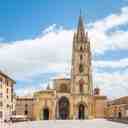
  2. Look straight ahead-see that towering spire stretching up like a finger trying to tickle the sky? That’s the Oviedo Cathedral. Its pale stone glows golden in the sunlight, and all…더 보기간략히 보기

    Look straight ahead-see that towering spire stretching up like a finger trying to tickle the sky? That’s the Oviedo Cathedral. Its pale stone glows golden in the sunlight, and all those pointy arches and lacy carvings make it look almost like a castle for giants. The entrance is right in the center, surrounded by intricate details-look for the rose-shaped window above the door and dozens of stone figures peering down at you as if you’ve just entered a medieval tale. As you stand in front of Oviedo Cathedral, imagine stepping back in time. The year is 781 and King Fruela I has just decided to plop down a church right here-imagine the sound of hammers on stone and the smell of wet earth all around you! By the time his son, Alfonso the Chaste, took over, Oviedo had gone from “sleepy mountain village” to “boom town capital.” The cathedral grew, changed, and stretched higher and higher with every new bishop who wanted to leave his stamp-literally, some put their coats of arms right on the walls. Don’t be fooled by all this serious stonework: this place saw pilgrims, princes, and even the occasional plot twist. Secret tunnels? Check. Hidden treasures? Oh, absolutely. The Cámara Santa, tucked away inside, is like a secret treasure box holding relics so famous that even kings wanted to peek. Picture pilgrims arriving, dusty and bone-tired, staring up at this cathedral hoping for a miracle-or at least a soft bench to sit on. Through the centuries, storms raged, fates changed, and architects argued over plans-some insisted on pointy Gothic arches, others wanted fancy Renaissance dramatics. The result? This wild mix of styles, all bundled together in one unforgettable building. The best part? The bell tower, added by Cardinal Francisco Mendoza de Bobadilla in the 1500s, soaring above you. On a windy day, you can almost hear echoes of ancient bells rolling over the city rooftops. So take a second. Let your eyes travel up, up, up, and imagine all the stories these stones could tell: secrets, songs, battles, and blessings-all waiting, right in front of you, just outside the entrance to Oviedo’s magnificent cathedral. And hey, if a stone angel winks at you, promise me you’ll wink back!

    전용 페이지 열기 →
  3. Directly in front of you, you’ll spot a grand stone building with a golden-brown façade that almost glows when the sunlight hits it-a bit like a giant toasted marshmallow, if you…더 보기간략히 보기

    Directly in front of you, you’ll spot a grand stone building with a golden-brown façade that almost glows when the sunlight hits it-a bit like a giant toasted marshmallow, if you ask me! The main entrance has two strong columns and a richly decorated arch, crowned by a coat of arms and some very fancy carvings. There are tall windows with elegant balconies on the upper floor, and if you look up, you’ll see the details that set this Baroque part apart from the simpler lower walls. The museum is perched up on the top level of the cloister, right above the Gothic base, so all you need to do is glance slightly upward to admire the contrast between eras. Now, let’s dive into the story behind this mysterious building. Imagine: it’s the heart of Oviedo, and you’re standing where centuries of history have stacked up like layers in a giant historical sandwich. The Museum of the Church of Oviedo was dreamt up by Archbishop Gabino Díaz Merchán in the 1980s and finally opened its doors in 1990. Not that long ago-so it’s sort of a youngster among its ancient surroundings! Here’s the fun part: to enter, you use the side door of the Cathedral, called the Door of Forgiveness. Sounds pretty grand, right? As you step inside and up into the Baroque part of the cloister, keep your eyes peeled for whispers from the past. This museum isn’t your ordinary collection of dusty relics. Instead, it holds dazzling treasures from the cathedral and from over a hundred parishes around Asturias. Each piece traveled here for safekeeping, many with their own mysterious or legendary stories. Can you imagine the secrets they could tell if they started talking? The highlight of your visit: you get to enter the Cámara Santa, the cathedral’s Holy Chamber. Here, under watchful eyes, are the two most famous crosses in Asturias-the Cross of Victory and the Cross of the Angels. One is the symbol of all Asturias, and the other of Oviedo itself. And if that isn’t enough sparkle for you, there’s also the Agate Box and the Holy Ark, packed with precious relics, including the Holy Shroud itself-yes, the very one believed to have wrapped Jesus after the crucifixion. So stand quietly for a moment and imagine all those hands throughout history-priests, pilgrims, royalty-carrying these relics through wars, fires, and floods, all the way to this very spot. Now that’s a treasure hunt worthy of a museum, don’t you think?

    전용 페이지 열기 →
12개 정류장 더 보기정류장 적게 보기expand_moreexpand_less
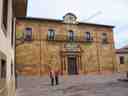
  1. As you’re coming up, look for a quiet, rectangular plaza lined with buildings in rich, honey-colored stone, and a grand entrance with two thick columns and ornate carvings right…더 보기간략히 보기

    As you’re coming up, look for a quiet, rectangular plaza lined with buildings in rich, honey-colored stone, and a grand entrance with two thick columns and ornate carvings right ahead. That's the Bishop’s Palace, one of the square’s main stars. On the left, spot a smaller building flying the Asturian, Spanish, and Vatican flags. Welcome to La Corrada del Obispo! Take a moment to imagine the centuries of footsteps on this stone. If you listen closely, you might hear echoing from history. This isn’t just any old plaza-it's Oviedo’s historic heart, right where the town’s stories come alive. Long ago, in the year 1521, most of Oviedo was swallowed by flames, including the original bishop’s palace. But like a hero in a story, it rose again in the 1500s, only to be wrecked once more in the 1930s and rebuilt carefully afterward. The only bit left of that old palace is the elaborate doorway you see, topped with four coats of arms-good luck spotting them all! To your right stands the imposing wall of the famous Cathedral’s cloister. In the 1700s, people felt the cathedral needed a little extra flair, and added a whole new floor with a dramatic Baroque entrance facing right into this very square. You could say the cathedral was a bit competitive with the bishop’s palace-nothing like a good old-fashioned neighborly rivalry. Picture this plaza packed with excited townsfolk in 1808. The air is tense as someone steps onto the balcony above the arched door to shout out big news: Asturias has declared war on France. Right here, history changed, and folks felt their hearts race at the sound. And just think, under your feet once ran old alleyways, and the plaza was once smaller, boxed in by houses-one of which even saw the birth of a famous lawyer! Over the years, it grew into the broad space you’re standing in now, ringed by memories, legends, and maybe, just maybe, a ghostly bishop or two popping in to make sure their palace is still the grandest spot in Oviedo. Ready to move on, or want to soak up a little more of that plaza magic?

    전용 페이지 열기 →
  2. As you’re getting closer, keep your eyes peeled for a stretch of old, polished wooden cabinets filled with books behind glass, neatly lining the wall. There are inviting armchairs…더 보기간략히 보기

    As you’re getting closer, keep your eyes peeled for a stretch of old, polished wooden cabinets filled with books behind glass, neatly lining the wall. There are inviting armchairs and a sturdy wooden table settled right in front, all glowing under warm lights. This isn’t just any reading room-it’s the Library of the Archaeological Museum of Asturias, just ahead of you. Now, let me drag you back through time (no time machine required-just a little imagination). Standing here, you’re at the very heart of centuries’ worth of curiosity and discovery. This library is more than just a quiet spot to read about old bones and dusty ruins; it’s been a treasure chest of Asturian stories since the mid-1800s. When the monks and nuns left and the state took over old church buildings, someone had the bright idea to save art, books, statues-anything that whispered secrets about Asturias’ past. Back then, it started small, almost like an academic club’s secret stash. Picture nervous curators and scholars in long coats, arguing in the glow of candlelight over dusty manuscripts, determined to guard everything precious that they could find. By 1878, the collection was growing so fast, it outgrew its new shoes-first a chapel, then a room at a teacher’s college, and now here, within the museum’s walls. Here’s the fun part: as the library moved around, it kept getting bigger, like an old suitcase barely shutting as you pack more holiday souvenirs. And every librarian who worked here had their own tale-some had a knack for sorting chaos into order, others simply had passionate love affairs with old paper and ink. Even today, it’s more than a library. Researchers, students, archaeologists-they all come to this sunlit room in search of answers, or maybe just a good story buried in the stacks. If you were looking for mysterious treasures or lost kings, this would be the place to start. You can almost hear the echo of footsteps from scholars past-some searching for knowledge, some just hoping to find a bit more space for one more fascinating book. So, while you stand here and soak it all in, remember: this is the beating heart of Asturias’ history, packed in parchment, waiting for the next curious mind. And hey, at least here, you don’t need a shovel-just a love for stories and maybe a good lamp! Exploring the realm of the objetivos, historia or the espacio físico? Feel free to consult the chat section for additional information.

    전용 페이지 열기 →
  3. Right ahead of you, you’ll see the Monastery of San Vicente de Oviedo, looking proud and sturdy. Notice its thick, golden stone walls, standing tall like a fortress, and that…더 보기간략히 보기

    Right ahead of you, you’ll see the Monastery of San Vicente de Oviedo, looking proud and sturdy. Notice its thick, golden stone walls, standing tall like a fortress, and that square bell tower on the left, its window open to the sky. The front is simple, almost square, marked by a huge wooden door with metal bars, and just above, a round stained-glass window looks out over Oviedo like a quiet watchful eye. To find it, just look for the building that seems like it could hold secrets from a thousand years ago, set back a little from the street with a smooth stone plaza before it. Imagine stepping into a time machine and traveling back to the year 761. No phones, no noisy cars-just the wind whistling between empty hills, and two monks, Frómista and Máximo, arriving at this lonely, wild place with a spark of hope and a little courage. They weren’t just building a church-they were planting the very first seed of Oviedo, hoping one day it would grow into a city. Picture Frómista, the older monk, looking around what was then just wilderness, wondering if his nephew Máximo was brave enough not to run away at the first wolf howl at night. Together, they built the original church here, dedicated to Saint Vincent, a Christian martyr. They probably never imagined buses and cafes would one day fill the air where they once heard only silence and birds. Now, that old charter of theirs-the famous document called the Monastic Pact of Oviedo-claims this whole project kicked off with nothing but faith, a handful of serfs, and some serious optimism on November 25, 781. Though some say this story might be a bit exaggerated (you know, medieval monks were the original spin doctors), one thing’s for sure: you’re standing where Oviedo was born. Later on, this place was rebuilt in the Romanesque style, thick walls and small windows designed to stand up to storms and… maybe even an invading army or two. That square cloister behind these walls? It’s so important, it’s officially a National Historic and Artistic Monument. These days, it’s full of ancient treasures in the Archaeological Museum of Asturias-so yes, there’s more inside than just holy secrets. So while you’re here, listen to the echo of those first builders, every footstep a whisper from the past. And don’t worry-if you spot Frómista and Máximo, be sure to thank them for the city!

    전용 페이지 열기 →
  4. You’re now right in front of Oviedo’s City Hall, standing at the heart of Oviedo in Constitution Square, where the city’s big decisions are made and-let’s be honest-the paperwork…더 보기간략히 보기

    You’re now right in front of Oviedo’s City Hall, standing at the heart of Oviedo in Constitution Square, where the city’s big decisions are made and-let’s be honest-the paperwork never sleeps! Take a moment and imagine: it's the early 1600s, the air is heavy with whispers of plagues, pilgrims, and potato stew recipes nobody wants to share. In 1622, a creative fellow named Juan de Nava drew the plans for this building, and almost 50 years later, in 1671, the city finally had its home for politics, debates... and probably the occasional heated argument about whose turn it was to sweep outside. Back in the day, city life pulsed around here. And surviving a war wasn’t just for movies-this poor building took quite a hit during the Civil War! By 1940, they’d spruced up the outside and added a clock tower. If only the council meetings ran as precisely as that clock! Today, inside those historic walls, are 27 councilors, representing four political parties, each one convinced they can run the city better than the rest. The star of the show? Mayor Alfredo Canteli, and yes, he’s still got his seat-lucky guy. His team is made up of government councilors and a few delegated officers, each with their own corner of city duties...and their own keys to the break room, I bet. Right now-if the wind’s just right-you might catch snatches of city discussions, or maybe the hum of office life inside. But from the outside, it just looks like a classic piece of Oviedo, standing strong, keeping the secrets of centuries of city drama. If only those stones could talk! Or maybe it’s better they can’t-Oviedo’s city gossip would never end... Ready to keep moving? The next stop awaits!

    전용 페이지 열기 →
  5. As you’re coming up, take a look straight ahead-Fontán Square is right in front of you. The first thing you’ll spot is the rectangle of colorful buildings wrapping around the…더 보기간략히 보기

    As you’re coming up, take a look straight ahead-Fontán Square is right in front of you. The first thing you’ll spot is the rectangle of colorful buildings wrapping around the space. The houses are painted in warm reds, mellow greens, and soft yellows, all with neat dark trims. Most of them have charming little balconies, some dotted with flowers. The square is open and inviting, with busy outdoor cafés and rows of solid stone columns circling the inside-if you hear lively voices and see people milling about, you’re definitely in the right place. Now, close your eyes for a second and imagine this: hundreds of years ago, you’d be ankle-deep in water right here. Fontán Square started life as a natural lagoon, where springs bubbled up from the earth, turning this whole area into a watery playground for Oviedo’s nobles. Farmers used to wade over from outside the city, baskets in hand, to sell their milk, cheese, and even chickens right where you’re standing. And soon enough, the clang of the blacksmith’s hammer and shout of the crafters joined the mix. If you’re wondering about the name “Fontán,” it comes from those very springs-it simply means “big fountain.” But there’s a twist. All that water was pretty, but eventually it wasn’t exactly... clean. In 1523, the lagoon was drained, and over the centuries, new buildings and markets took its place. For a long time, this spot was even Oviedo’s version of a pop-up theater-imagine actors bellowing lines while locals perched on benches, with the smell of cheese, hay, and maybe even a stray chicken or two in the air. It wasn’t until 1885 that the great covered market you see next door was built, making Fontán the perfect spot for the hustle and bustle Oviedo is famous for. Oh, and a little local joke: you might notice a fountain here, but it’s so low to the ground, you’d have to bend down just to get a sip. Locals loved to tease anyone acting a bit too proud, saying, “Send them to drink from the Fontán fountain-nothing like a bit of bowing to keep egos in check!” Even a famous poet poked fun at it back in the 1930s. So look around, take a deep breath-can you almost hear the laughter from the old market, or imagine the noble ladies trying not to get their shoes muddy? Fontán Square is Oviedo’s living history-a place that’s always been for the people, whether they brought cheese, drama, or just a good appetite. Ready to keep exploring? There’s plenty more Oviedo magic where this came from!

    전용 페이지 열기 →
  6. To spot the Payment Management Palace of the Duke of the Park, look ahead for an imposing, cream-colored building with a wide, elegant façade. What gives it away instantly are the…더 보기간략히 보기

    To spot the Payment Management Palace of the Duke of the Park, look ahead for an imposing, cream-colored building with a wide, elegant façade. What gives it away instantly are the tall black shutters on the upper windows, lined up like soldiers on parade. Notice the strong pillars and detailed stonework along the ground-those vertical lines and sturdy corners will help you recognize the palace as you approach from the plaza. Take a moment here and imagine yourself stepping into the bustling Oviedo of the early 1700s. This was a palace built for real nobles-dukes and marquises who wanted to show everyone just how important they were. The Palace of the Duke of the Park, also called Palacio del Fontán, rises up in classic baroque style and was the work of a master architect, Francisco de la Riva. If this palace looks familiar, it’s because his designs inspired other grand mansions around town, like the Palacio de Camposagrado. Everything here is about making a statement! The palace has a grand, square footprint, with a lush garden tucked away inside-a secret space made for quiet strolls, or maybe for noble gossip. Don’t miss the main entrance: those thick, fluted columns frame a doorway so grand, you half-expect a march of musicians to come bursting out. The balconies above look ready for a dramatic royal wave, maybe even the odd surprise serenade from an admirer below-though in these days, I’d keep the love songs quiet. Peer up and notice the beautifully carved stones showing off the family crests. Those you see now are actually replacements from 1901, but don’t worry-they're no less grand. And if you wander behind, the palace has a hidden courtyard, with arched walkways held up by sturdy columns. Here’s a quirky detail for you-take a close look at the stable building angled next to the palace. Its doorway is carved with crests and flanked by heads of horses and jockeys. Clearly, the owners wanted everyone to know they had fine tastes and maybe even finer horses! So, as you stand here, picture the carriages coming and going, nobles in silk shoes, and the endless stories these old stones could tell-some historic, some just plain gossip. Now, ready to carry on to our next stop? Or would you rather try giving your most noble royal wave from the balcony? Just don’t let anyone catch you-it’s tougher to look dignified with pigeons as your audience!

    전용 페이지 열기 →
  7. Look ahead for a building that truly wants to be noticed-it’s tall and grand, with creamy white stone wrapping around rounded corners and huge windows peeking out like curious…더 보기간략히 보기

    Look ahead for a building that truly wants to be noticed-it’s tall and grand, with creamy white stone wrapping around rounded corners and huge windows peeking out like curious eyes. At the very top, you can’t miss the big copper dome, shining a little like a crown, and the large letters proudly spelling “Banco Herrero.” There’s even a clock above the entrance, so if you’re running late for the next stop, at least you’ll know exactly how late! Now, picture yourself standing in front of this impressive building on Calle Fruela. Imagine it’s 1911-horses clop down the street, men in hats and women in long skirts pass by, and everyone glances up at this brand-new bank, a true sign that Oviedo is growing and buzzing with life. Banco Herrero was born that year, thanks to a very ambitious local named Policarpo Herrero Vázquez. Actually, his legacy lasted three generations-this place was almost like the family treasure chest, with every new Herrero in charge passing the keys along, like the world’s most responsible game of “pass the parcel.” You’d never believe how far this bank tried to stretch its arms. They opened branches in Madrid, Gijón, Avilés, you name it-a bit like if Oviedo’s local bakery decided to sprinkle Asturias with croissants! But life isn’t always sweet. In the ’80s, Banco Herrero gobbled up Banca Masaveu, another Asturian bank, and was later bought by bigger sharks-first La Caixa, then Banco Sabadell. In a twist fit for a detective novel, Banco Herrero vanished as its own official company in 2002, right after being absorbed by Sabadell. But don’t worry-the spirit lives on under the name SabadellHerrero. It’s a bit like a superhero with a new costume! If the building looks a little familiar, you might have seen it in the film “Luz de domingo”-yes, it’s had its moment in the spotlight as well. And as you stand here, listen… can you almost hear the ringing of old coins, or the excited whispers of hopeful business owners lining up at these doors more than a hundred years ago? The Banco Herrero isn’t just a bank; it’s survived the drama of family sagas, financial thrillers, and even movie roles. Not bad for what started as just a local dream… and maybe the only bank where generations of presidents shared the same family dinners! Ready for the next stop?

    전용 페이지 열기 →
  8. Right in front of you is the General Meeting of the Principality of Asturias. If you look ahead, you’ll spot a rather dramatic entrance-modern, with solid wooden details and…더 보기간략히 보기

    Right in front of you is the General Meeting of the Principality of Asturias. If you look ahead, you’ll spot a rather dramatic entrance-modern, with solid wooden details and imposing geometric shapes. The building’s design almost looks like it’s inviting important discussions inside. Picture large glass windows catching the light and a flag or two standing proudly by the doors. You’ll know you’re at the right place if you see something that feels both official and a little mysterious, almost as if some big decisions are made just behind those walls. Imagine you are stepping inside-don’t worry, we’ll keep this a virtual adventure! The air is hushed and serious, but with a crackle of excitement, like the seconds before a big announcement. Welcome to the heart of Asturian democracy: the Junta General del Principado de Asturias! This is not just any building-it’s the supreme house of representation for all the people of Asturias. Every four years, citizens choose the people who come in here to debate, argue, laugh (quietly), and sometimes, maybe even nap-hey, those sessions can get long! These members, all forty-five of them, have one mission: to make laws, keep an eye on the government, and approve the all-important budget. That’s right, these folks decide where every euro in Asturias goes-wouldn’t you like to have that responsibility? Life inside the chamber can be dramatic. The members, called deputies, are grouped by the parties or coalitions they belong to. Debates can get so lively you can almost imagine little paper airplanes zooming overhead! If a deputy doesn’t play nice or changes teams, they go to the ‘mixed group’-think of it like the school lunch table for whoever doesn’t fit anywhere else. Drafting proposals, checking what the government’s up to, and sometimes arguing over the order of the day-everything happens under the sharp eyes of the president of the Junta, who sits up front. They control the flow, call for votes, and make sure no one tries to sneak snacks in during the session. Committees study special topics, while the full meeting, known as the Pleno, gets every deputy together for the big moments. Imagine everyone voting, raising their hands, and every decision echoing through Asturias. Now that you’ve stood where the laws of Asturias are made, how about we move on? Who knows-maybe after today, the next big political decision will feel just a little bit closer to home!

    전용 페이지 열기 →
  9. You’re almost at the Field of San Francisco, one of Oviedo’s most beloved parks. To spot it, look ahead for a wide, green space filled with lush grass, curving pathways, and a…더 보기간략히 보기

    You’re almost at the Field of San Francisco, one of Oviedo’s most beloved parks. To spot it, look ahead for a wide, green space filled with lush grass, curving pathways, and a beautiful iron gazebo just up the hill on your left. There’s a good chance you’ll see some tall palm trees set among old oaks, and maybe even a proud peacock strutting across the lawn. That classic streetlamp by the path and the sense of calm in the air? You’ve found it. You’re standing in the heart of Oviedo’s green lung, the Field of San Francisco. Imagine, for a moment, that the gentle breeze through these trees has carried the secrets of nearly 800 years. Where you stand now was once the backyard veggie patch of a monastery. In the 1200s, a nobleman handed over these fields to the friars, and life here started growing - literally! Monks, bustling gardens, and the soft splash of spring water filled the air. The friars, no strangers to teamwork, dug channels for fresh water and carved paths for travelers, turning this wild patch into a sanctuary. But don’t get too comfy - back in the 1500s, you might have found yourself dodging 3,000 rowdy soldiers, all here for military drills. For a place known for peace, there’s been no shortage of action. Walk around and you’ll spot grand walkways like the Paseo del Bombé and the leafy Avenida Italia. Everywhere you turn, there’s a quiet surprise. The statue of Mafalda, the famous cartoon character, lounges on a bench. Stop by the monument to José Tartiere, who’d likely give you a friendly nod if he could. The park’s memory stretches out along Calle Uría, where, once upon a time, an enormous oak called the Carbayón towered over everything until it was cut down in the 1800s. People were so sad, they put up a plaque in its memory - it’s probably one of the fanciest tree funerals ever. While this field invites lazy strolls and daydreams, it’s also witnessed battles, parades, and the laughter of generation after generation. So go on - wander the winding paths, listen for whispers of the past, and maybe, just maybe, that peacock will show off his feathers for you too. Want to explore the historia, equipamientos or the puntos de interés in more depth? Join me in the chat section for a detailed discussion.

    전용 페이지 열기 →
  10. Just ahead, you’ll spot something unusual on your right-a spot marked with a commemorative plaque on the pavement. If you look for a small crowd or maybe just a bit of open space…더 보기간략히 보기

    Just ahead, you’ll spot something unusual on your right-a spot marked with a commemorative plaque on the pavement. If you look for a small crowd or maybe just a bit of open space in the busy city street, you’re in the right place. Imagine a massive tree stretching across your view, its thick trunk almost wider than some cars, with heavy branches twisting above old lamp posts and cobblestone paths. That’s what this site once looked like, back when the legendary Carbayón stood tall right here. Alright, let’s paint the scene: Imagine yourself in 19th-century Oviedo. The city is just starting to buzz with the energy of new trains, carriages, and city plans. But at the very edge of the Campo de San Francisco, there’s something that dwarfs all this excitement-a colossal oak tree, known as El Carbayón. Not just any tree-this old fellow had a trunk nine meters around, two main bodies shooting upward like huge towers, and a leafy crown that seemed to give shade to the whole street. For centuries, El Carbayón was the pride and symbol of Oviedo, watching over the comings and goings of townsfolk, lovers, and plenty of street dogs looking for a cool spot. In fact, people from Oviedo still call themselves ‘carbayones’ thanks to this very tree. But, as with any good drama, change was coming. The city was growing, roads were being built, and the train station opened up. Suddenly, the great oak was… well, right in the middle of progress. It started to annoy the traffic on Calle de Uría. And to make things worse, poor Carbayón had grown old and infested with woodworms. So, in 1879, the city was split! Should they keep their ancient guardian, or make way for a shiny new Oviedo? After heated debates, votes, and probably a few mustaches twirled in deep thought, it was decided-the tree must go. It took just 192 pesetas to pay for the job, and on a day people still remember, El Carbayón was felled. Imagine the tension in the air-some wept, some cheered, and some probably just grumbled about the traffic as usual. Even though the old oak is gone, its legend lives on. There’s a plaque here, marking exactly where it once stood, and just nearby in the Campoamor Theater gardens, you can find El Carbayín, a young oak planted in memory of its mighty ancestor. So next time you hear someone from Oviedo called a ‘carbayón’, you’ll know they’re not being compared to an old oak tree… Or maybe they are, and that’s a pretty cool thing. Shall we carry on to our next stop? I promise, no trees will get in our way!

    전용 페이지 열기 →
  11. Look straight ahead and you can’t miss it-the grand, light-colored stone facade with the words “Teatro Campoamor” gleaming in gold above the doors. Notice the tall, elegant…더 보기간략히 보기

    Look straight ahead and you can’t miss it-the grand, light-colored stone facade with the words “Teatro Campoamor” gleaming in gold above the doors. Notice the tall, elegant windows that stretch skyward on the upper floors and the three sets of arched doors on the ground level, perfectly framed by lantern-style street lights. The building is both solid and graceful at once, like it’s ready for a night at the opera or a royal event-because, quite often, it is! Now, as you stand in front of this magnificent building, just imagine the bustling excitement from 1892, when the curtain first rose right inside. The Campoamor Theater was born from a need-a stage big enough and grand enough for all the operas and theatre the city’s new wealthy crowd longed to see. Before this, performances were squeezed into the old Fontán Theatre. But Campoamor arrived with drama, located right where the old convent of Santa Clara once stood. Picture the mayor at the time, José Longoria Carbajal, determined to gift Oviedo something extraordinary. The project took years-life rarely goes as quickly as a one-act play. Finally, in 1883, the shell was finished. Then, the city named it after the famous Asturian poet, Ramón de Campoamor. He couldn’t make it to the opening show, so-here’s a twist even a theater audience would love-he sent his brother and a thousand pesetas to be shared with Oviedo’s poorest residents. The city handed out that money, 250 pesetas at a time, to each of the four parishes. That’s what you call a standing ovation for generosity! Opening night in 1892 featured the opera “Los Hugonotes” by Meyerbeer-imagine the music spilling out on a September evening. Over the years, Lucia di Lammermoor graced the stage, and the ovation tradition continued-making this the oldest continuous opera season in Spain, after Barcelona’s Gran Teatro del Liceo. But every good theater knows drama! In 1934, during the Revolution, the building suffered terrible damage. Only the main facade stubbornly survived, standing tall and proud amid the ruins. After the war, the theater rose from its ashes, opening once again with “Manón” in 1948-back to life, brighter than ever. Renovations continued, from backstage trickery to a sparkling new stage, lush modern lighting, roomy orchestra pits, and all the behind-the-scenes magic you’d expect from a theater that’s seen over 130 years of ovations, near-misses, comebacks, and costumes. These days, about 1,491 seats welcome guests on five grand levels. And if you happen to wander by after sunset, don’t miss the theater glowing with special lights funded by the Hidrocantábrico foundation. And here’s the encore: each fall, Oviedo’s red carpet moment arrives with the Princess of Asturias Awards-stealing the spotlight and filling the city with whispers and excitement. So, stand tall, take a bow, and don’t be surprised if the spirit of an old opera or two follows you to your next stop! Fascinated by the historia, actualidad or the capacidad? Let's chat about it

    전용 페이지 열기 →
  12. To spot the Convent of Santa Clara, look ahead for a long, rectangular stone building with two floors. The ground floor is lined with repeating arches, almost like a corridor of…더 보기간략히 보기

    To spot the Convent of Santa Clara, look ahead for a long, rectangular stone building with two floors. The ground floor is lined with repeating arches, almost like a corridor of shadows, while the upper floor is dotted with iron balconies above each arch. It’s set behind a small, leafy courtyard that’s a bit sunken from street level, with elegant greenery and benches inviting you to pause. The convent blends in with its surroundings but gives itself away with those graceful Baroque arches and sturdy stonework. Alright, you made it! Imagine yourself standing here in front of a building that’s been keeping secrets for centuries. In the 1200s, a group of fearless Franciscan nuns picked this spot-then the edge of Oviedo-to build their peaceful retreat. You won’t find the original Romanesque doorway or all the carved capitals here; legends say they wandered off to another palace in Llanera, perhaps for a quieter life. But what you do see now is the ever-stoic porter’s lodge and the remains of the cloister, which survived expansions, renovations, and a pretty dramatic makeover by an ambitious architect in the 1960s. The façade you’re facing on Covadonga street stands on a tall stone base, as if it’s bravely pushing back against the city’s hilly terrain. Check out those chunky stone columns rising up-Baroque with a touch of drama! In the center, there’s a shell-shaped niche cradling a statue of Saint Clare herself. If you squint, you might make out a weathered coat of arms above her, a symbol of the order watching over all who pass by. Now, here’s a fun detail: in the 18th century, workers hurried to finish the cloister before lunch, using only simple units-palms and feet. No fancy rulers for these folks! The three preserved sides of the cloister are pure rhythm, all smooth lines and proud arches. And let’s not forget that strange twist; in the 1800s, the convent’s vegetable garden was auctioned away and ended up as a metal factory, so Saint Clare went from prayers to pistons next door. You see, life in Oviedo is always full of surprises! Feel the cool shadow in the cloister, listen to the distant hum of the city. If these stones could talk, they’d whisper about the footsteps of nuns, architects, iron workers, and maybe even a mischievous guide or two. And now, with your tour nearly complete, take a moment. The Convent of Santa Clara stands as a calm island in a fast-moving city, a reminder that history is never as quiet as it looks. Ready for the next adventure? Let's keep walking!

    전용 페이지 열기 →

자주 묻는 질문

투어는 어떻게 시작하나요?

구매 후 AudaTours 앱을 다운로드하고 교환 코드를 입력하세요. 투어를 바로 시작할 수 있습니다 - 재생을 탭하고 GPS 안내 경로를 따라가시면 됩니다.

투어 중 인터넷이 필요한가요?

아닙니다! 시작 전에 투어를 다운로드하면 완전히 오프라인으로 즐길 수 있습니다. 채팅 기능만 인터넷이 필요합니다. 모바일 데이터 절약을 위해 WiFi에서 다운로드하시는 것을 권장합니다.

이것은 가이드가 안내하는 단체 투어인가요?

아닙니다 - 이것은 셀프 가이드 오디오 투어입니다. 폰을 통해 오디오 나레이션을 들으며 나만의 속도로 독립적으로 탐험합니다. 투어 가이드도, 단체도, 일정도 없습니다.

투어는 얼마나 걸리나요?

대부분의 투어는 60-90분이 소요되지만, 속도는 전적으로 본인이 조절합니다. 원할 때 언제든지 일시정지하거나, 정류장을 건너뛰거나, 휴식을 취하세요.

오늘 투어를 끝낼 수 없으면 어떻게 하나요?

괜찮습니다! 투어는 평생 이용이 가능합니다. 원할 때 언제든지 일시정지하고 다시 시작하세요 - 내일, 다음 주, 또는 내년에도. 진행 상황이 저장됩니다.

어떤 언어를 이용할 수 있나요?

모든 투어는 50개 이상의 언어로 이용 가능합니다. 코드를 교환할 때 원하는 언어를 선택하세요. 참고: 투어 생성 후에는 언어를 변경할 수 없습니다.

구매 후 투어는 어디에서 이용하나요?

App Store 또는 Google Play에서 무료 AudaTours 앱을 다운로드하세요. 교환 코드(이메일로 전송됨)를 입력하면 라이브러리에 투어가 나타나며, 다운로드하여 시작할 수 있습니다.

verified_user
만족 보장

투어가 마음에 들지 않으시면 환불해 드립니다. 문의: [email protected]

안전한 결제

Apple PayGoogle PayVisaMastercardPayPal

AudaTours: 오디오 투어

재미있고, 경제적이고, 자유로운 셀프 가이드 워킹 투어

앱 체험하기 arrow_forward

전 세계 여행자들에게 사랑받고 있습니다

format_quote 이 투어는 도시를 보는 정말 좋은 방법이었습니다. 이야기들이 너무 대본처럼 느껴지지 않으면서도 흥미로웠고, 나만의 속도로 탐험할 수 있어서 좋았습니다.
Jess
Jess
starstarstarstarstar
Tbilisi 투어 arrow_forward
format_quote 관광객처럼 느끼지 않으면서 Brighton을 알아가는 훌륭한 방법이었습니다. 내레이션에 깊이와 맥락이 있었지만 과하지 않았습니다.
Christoph
Christoph
starstarstarstarstar
Brighton 투어 arrow_forward
format_quote 크루아상을 한 손에 들고 아무 기대 없이 시작했습니다. 앱이 그냥 자연스럽게 함께해 주는 느낌이에요, 부담도 없고, 그냥 나와 이어폰과 멋진 이야기들.
John
John
starstarstarstarstar
Marseille 투어 arrow_forward

무제한 오디오 투어

전 세계 모든 투어의 잠금을 해제하세요

0 투어·0 도시·0 국가
all_inclusive 무제한 탐험