
왕족과 유물의 속삭임: 그라나다 심장의 시대를 초월한 태피스트리
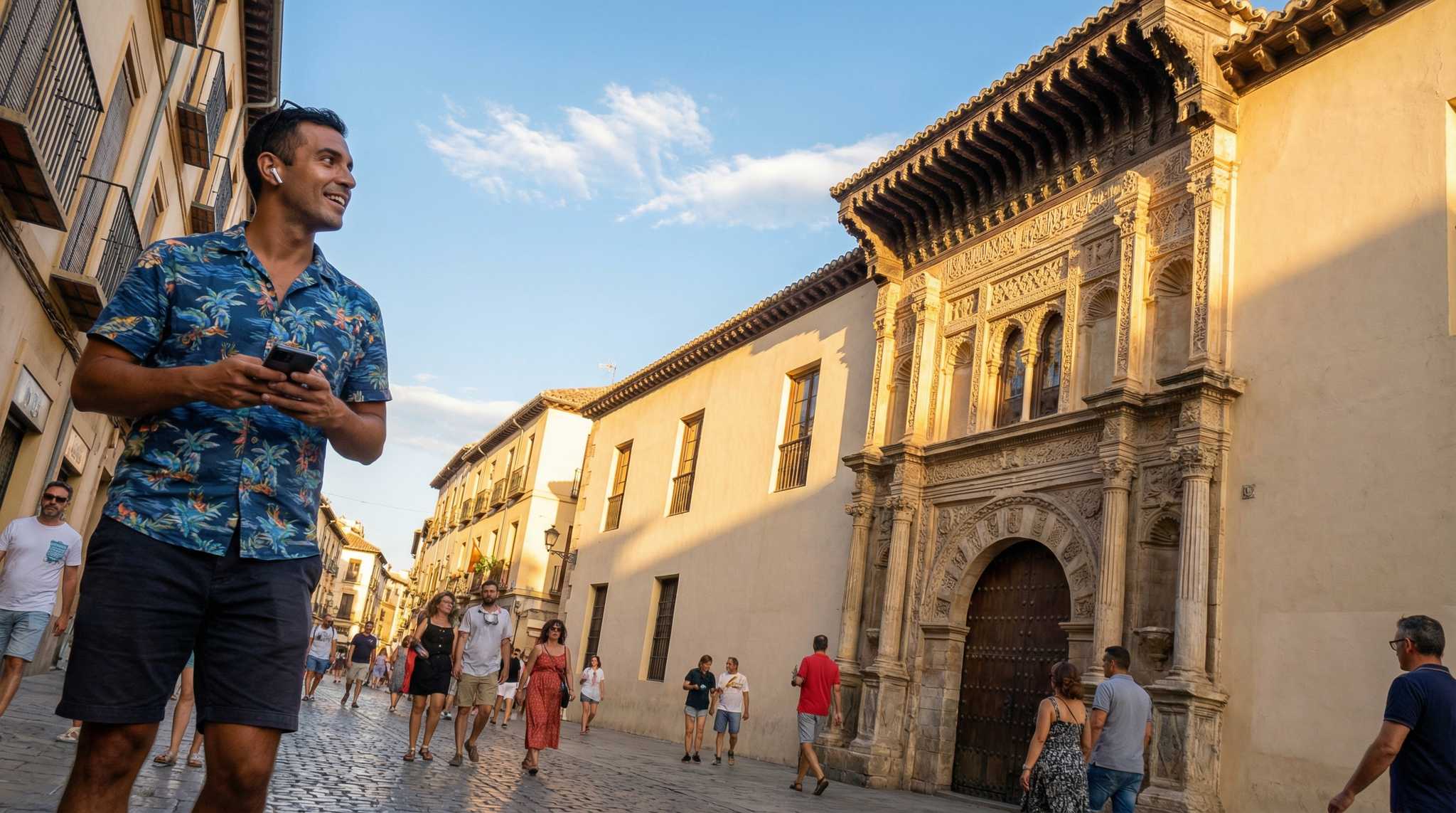
그라나다의 돌들은 비밀에 젖어 있습니다. 그림자 진 말굽 아치 아래를 걷거나 체크무늬 파사드를 지나면 고대 상인들의 메아리, 속삭이는 재판관들, 반항적인 학자들의 소리가 들리는 듯합니다. 이 셀프 가이드 오디오 투어는 도시의 겹겹이 쌓인 역사를 벗겨내어 다른 여행자들이 그냥 지나치는 숨겨진 이야기와 장소들을 드러냅니다. 도시가 숨죽인 채 지켜본 가운데 도서관 전체가 불타버린 비극은 무엇이었을까요? 누에바 광장 한복판에서 왕권을 도전하기 위해 모든 것을 걸었던 사람은 누구였을까요? 그리고 왜 수십 년 동안 석탄 먼지가 도시의 가장 웅장한 관문에 끈질기게 달라붙어 있었을까요? 번화한 광장에서 고요한 안뜰로 거닐며 발밑에서 역사의 맥박을 느끼고, 잃어버린 영광, 저항, 그리고 갱신의 장면 속으로 빠져들어 보세요. 그라나다는 발걸음마다 변모합니다. 재생 버튼을 누르고 도시의 묻힌 이야기들이 어떤 가이드북보다 더 깊이 안내하도록 하세요. 각 돌 아치 너머에는 흥미진진한 세상이 기다리고 있습니다.
투어 미리보기
이 투어에 대하여
- schedule소요 시간 40–60 mins나만의 속도로 이동
- straighten3.4 km 도보 경로안내 경로 따라가기
- location_on
- wifi_off오프라인 작동한 번 다운로드, 어디서든 사용
- all_inclusive평생 이용언제든지 다시 재생 가능
- location_on코랄 델 카르본에서 시작
이 투어의 정류장
If you’re just approaching the Madrasa of Granada, look straight ahead and you'll spot a striking building covered in neat, grey-and-white checkerboard stonework. The windows are…더 보기간략히 보기
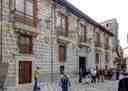
If you’re just approaching the Madrasa of Granada, look straight ahead and you'll spot a striking building covered in neat, grey-and-white checkerboard stonework. The windows are framed with delicate, swirling baroque decorations, and the wooden balconies and heavy wooden doors give away its old age. The main entrance has an impressive stone arch-it looks so inviting, you half expect a professor in robes to step right out! The façade is long, stretching along Calle Oficios, so keep your eyes peeled for its unusual geometric pattern and elegant iron railings above. Alright! Take a moment to imagine this spot nearly 700 years ago. The air is buzzing with the chatter of young scholars, perhaps a whiff of parchment ink-maybe even a secret recipe for baklava floating in from the bazaar! This building was once the brainy heart of Granada: the Madrasa Yusufiyya. Back in 1349, Sultan Yusuf I had a big idea-why not build a place dedicated to learning right in the heart of this bustling city? He wanted to train smart new scholars in topics like Islamic law, the Arabic language, and a bit of medicinal wisdom on the side. If you got top marks, you might even end up as a government official! Or at least get invited to all the best poetry readings. Just imagine the scenes: students arguing about grammar by candlelight, teachers like Ibn Marzuq booming out lessons, philosophers dreaming up wild ideas, maybe even a few slackers sneaking off to the silk market instead of studying. But Granada’s story took a sharp turn. After the Spanish conquest, things got complicated. For a short while, the madrasa carried on, still teaching quietly. But one day, a crowd gathered in Bib-Rambla square to watch something heartbreaking-the great library of the madrasa was tipped out and set aflame. Imagine the crackling as centuries of wisdom became smoke in the sky. After that, the building wore many hats-a city hall, a textile warehouse, and finally, after much neglect and a few emergency repairs, a proud monument once again. Today, it’s part of the University of Granada and home to the Royal Academy of Fine Arts. So if you feel a cool breeze here, maybe that’s not just the Andalusian air-it’s the sigh of old scholars, still debating life’s mysteries. Now, onward to our next stop-but don’t try out any pop quizzes on the locals, unless you want to start your own class right here!
전용 페이지 열기 →To spot the Royal Chancery of Granada, look straight ahead for a grand, sand-colored building that dominates Plaza Nueva. It’s got a strikingly symmetrical façade with rows of…더 보기간략히 보기
To spot the Royal Chancery of Granada, look straight ahead for a grand, sand-colored building that dominates Plaza Nueva. It’s got a strikingly symmetrical façade with rows of windows, each one topped by its own carved stone crown. The entrance stands out with its double columns, and there’s a balcony above where two flags flutter gently in the breeze. Look up for the clock tower perched in the center, and a row of stone pinnacles outlining the roof like chess pieces guarding a castle. Okay, just imagine: It’s the early 1500s. The streets are buzzing with news-Granada is about to get its own royal courtroom, where the most serious matters will be judged. And you’re standing right in front of the building they built for it! This isn’t just any courthouse. The Royal Chancery was the supreme court for the whole south of Spain, established by those legendary rulers, the Catholic Monarchs-Ferdinand and Isabella. Picture stern judges inside, cloaks sweeping as they pass, delivering justice on everything from farmland quarrels to royal disputes, and maybe pausing for the occasional siesta. Wouldn’t you, after all those cases? Through its doors, you would have found bustling halls full of lawyers, clerks, and locals whispering stories and secrets. History tells us people came from areas south of the River Tagus, hoping for a fair hearing. During the 1500s, Spain was expanding, and so was its legal drama-there was competition with its northern rival, Valladolid, and even new courts springing up in places like Seville and the Canary Islands. Talk about courtroom drama, right? King Carlos I wanted a courthouse that looked powerful-so he started building this mighty palace in 1531. Master builders and sculptors made sure everything, from the stone lions on the gates to that grand clock, was fit for royalty. Even the legendary architect Diego de Siloé left his mark in the courtyard inside. But time changes everything. By the 1800s, the once-mighty court started losing power. The world was becoming more modern, and the echo of gavels slowly faded out. Finally, in 1834, the old court was dissolved with a rustle of paperwork as new laws swept in. Today, this building is still about justice, serving as the home of the Higher Court of Andalusia. But if you listen carefully, maybe, just maybe, you’ll catch the whispers of ancient tales swirling around those stone hallways. Just don’t try to settle an argument with your friend here-I’m not sure the judges appreciate debate over who buys the next round of tapas!
전용 페이지 열기 →

12개 정류장 더 보기정류장 적게 보기expand_moreexpand_less
Imagine the sound of horses’ hooves clapping on cobblestone. Right in front of you stands the Real Maestranza de Caballería de Granada, a club so elite it started all the way back…더 보기간략히 보기
Imagine the sound of horses’ hooves clapping on cobblestone. Right in front of you stands the Real Maestranza de Caballería de Granada, a club so elite it started all the way back in 1686. Just picture a group of gentlemen-blue jackets, white collars, fancy hats with feathery plumes-gathering under the watchful protection of the city’s patron, the Virgin of the Triumph. If you ask me, that outfit alone would make anyone feel like a knight in shining… okay, maybe not so shiny, but definitely eye-catching armor! Now, don’t be fooled-this isn’t just some social club. Over centuries, Spain’s royal family-kings, queens, princes, and even some fierce ladies-have all led or joined the Maestranza. In fact, the first “lady knight”-the Marquess of Caicedo-signed up in 1916, and since then, Spain’s queens have proudly joined the ranks. I bet those meetings had more sparkle than a flamenco dancer’s dress! Leadership here is a whole production: a chief knight, noble judges to check your family tree, secretaries scribbling away, and even an official “door opener.” I guess knocking was too mainstream for these folks! Listen closely and you might imagine the clink of ceremonial swords, the rustling of heavy velvet coats, and the hush as the Grandmaster walks in for a meeting. Take a look at that coat of arms-two galloping horses, golden background, crossed spears, and the motto, Pro republica est tud ludere videmur. It sounds very serious, but between you and me, I think they just wanted an excuse for some fancy riding and elegant parties. So, next time you see someone wearing blue and white with a feather in their cap, you’ll know you’re looking at Granada’s very own knights-just try not to challenge them to a joust, or you might get a polite invitation to tea instead. Fascinated by the historia, junta rectora de 1945 or the árboles genealógicos de parentescos? Let's chat about it
전용 페이지 열기 →Alright, look straight ahead-yes, that massive stone facade towering above you! The Granada Cathedral is hard to miss, sandwiched right between the older yellow and orange city…더 보기간략히 보기
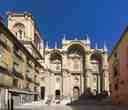
Alright, look straight ahead-yes, that massive stone facade towering above you! The Granada Cathedral is hard to miss, sandwiched right between the older yellow and orange city buildings. Its entrance is a huge triumphal arch, with three large arched portals and a series of dramatic pillars, all carved in creamy stone. If you see a front that looks ready for a parade-with statues and grand doors below-it’s the cathedral! Now, step closer and let your imagination travel back in time. Picture this: you’re standing on what was once the bustling heart of a Muslim city, right on top of Granada’s old mosque. Suddenly, in the 1500s, everything changes! The hum of the marketplace falls silent and the sound of chisels and hammers fills the air as workers begin raising a new monument: Santa María de la Encarnación, or as you know it now, the Granada Cathedral. This isn’t just any cathedral-it’s a masterpiece that stretches up in five staggered naves instead of the usual three. The original architect, Enrique Egas, started off dreaming big, but Diego de Siloé took it to a whole new level. Imagine his surprise when, instead of the typical flat apse, he designed a perfectly round main chapel-now that’s going in circles for a reason! Let your eyes climb up the facade, and look for marble medallions and a gorgeous marble relief above the door. Right at the top, lilies in stone nod toward the Virgin’s purity. And oh, if you could step inside, you’d see a dome that looks like the night sky: gold stars scattered across deep blue, with light pouring through stained glass onto the kneeling statues of Queen Isabella and King Ferdinand-the power couple of Spain, forever watching over the city. The cathedral took nearly two centuries to finish, so it’s actually older than many legends. It was meant to have two soaring towers, but only one stands-a bit like a building that forgot its hat. The left one, called the Tower of Saint Michael, keeps everything steady, like the responsible sibling at a party! Inside, famous artists like El Greco and Alonso Cano added their magic. And just imagine all the secret whispers and royal footsteps echoing through the halls over the centuries. So, as you stand here, surrounded by history, art, and a bit of architectural mystery, remember: Granada’s Cathedral isn’t just a monument. It’s a living storybook-one that took nearly 200 years to build, and more than a few shocks, surprises, and probably a little head-scratching along the way. Ready to march onward like a historic explorer? Let’s continue our adventure!
전용 페이지 열기 →Look ahead and you’ll spot a striking bronze monument rising from the center of a busy plaza. It’s surrounded by a shallow fountain and bordered by patches of green plants. The…더 보기간략히 보기
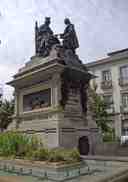
Look ahead and you’ll spot a striking bronze monument rising from the center of a busy plaza. It’s surrounded by a shallow fountain and bordered by patches of green plants. The monument is easy to spot-it’s quite large, square at the base, and topped with two dramatic human figures. The main action happens up high: one figure, a regal queen on her throne, and the other, a man bowed respectfully-these are Queen Isabella and Christopher Columbus, frozen in a tense moment of history. The scene looks almost like a play on a stone stage. Here we stand in front of the Monument to Isabella the Catholic, or, if you’re feeling formal, the Monumento a Isabel la Católica y Colón. Now, imagine yourself back in the hustle and bustle of 15th-century Spain. The air is thick with anticipation, the streets echo with rumors of impossible voyages, and at the heart of it all, Queen Isabella listens as Christopher Columbus lays his wild plans before her. In bronze, Columbus leans in, pitching his dream of sailing west across the ocean, while Isabella-crown shining, expression wise-sits on her throne, judging if she should trust this man and his wild promise. Now, here’s where things get dramatic-and a bit comical, too. You’d expect a grand celebration for such an epic meeting, right? Well, the city of Granada wanted to mark the 400th anniversary of Columbus’s first trip to America with an enormous arch filled with Aztec, Arab, and Renaissance designs. But, guess what? They didn’t have the cash! The plans fizzled out, so they held a contest for a more affordable monument. The contest was a flop-no one won. Enter Spain’s Prime Minister, who stepped in and handed the job to the famous sculptor Mariano Benlliure. Ta-da! Problem solved. But the drama didn’t end there. The monument was supposed to be unveiled with royal fanfare on a specific date, but Queen regent Maria Christina decided she was too busy (or maybe just avoiding the party). The people of Granada were not amused. Instead of a royal ceremony, there were riots, fireworks-well, actually fires-barricades, and, finally, a good old-fashioned hometown unveiling with no royals in sight! If that’s not spirit, I don’t know what is. Despite all the chaos, the monument stood strong. It was even supposed to include a third figure-Boabdil, Granada’s last Moorish king-but he didn’t make the final cut, probably because the artist said, “Let’s not make this any more complicated!” So, as you look up at Isabella and Columbus, imagine the tension in the air-the future of two worlds hanging by a thread, and a city so excited they couldn’t wait for royal approval. Who knew history could have so much spark and a dash of slapstick?
전용 페이지 열기 →Look ahead now-you’ll spot the Casa de los Tiros right in front of you! It's that tall, fortress-like building with stone walls that almost glow golden in the sunlight. You can’t…더 보기간략히 보기
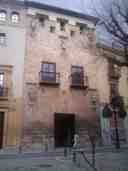
Look ahead now-you’ll spot the Casa de los Tiros right in front of you! It's that tall, fortress-like building with stone walls that almost glow golden in the sunlight. You can’t miss its tough personality: on the narrow facade, five heroic stone statues strike bold poses above two iron balconies. See the straight, vertical structure and the big, old wooden door right at street level? That’s your entrance to adventure! And if you look up, you’ll catch those curious square gaps along the roofline-those are former artillery slots, so keep an eye out, just in case anyone starts firing old cannonballs for fun. Standing here, you might feel like you’ve stumbled into a medieval movie set. This house was built in the 1500s and looks tough for a reason-it was once part of Granada’s old city walls, defending the Realejo neighborhood. The building’s name, Casa de los Tiros, comes from the cannons and old weapons once perched on top. Just imagine the echo of footsteps on cobblestones and the tense silence of a city on guard. A line of strong knights and heroes stands above you-actually, look at those five muscular statues on the facade! That’s Hercules, Theseus, Mercury, Jason, and Hector, all ready for battle. The building almost dares the city: you’ll see a carved sword plunging through a heart on the large lintel above the entrance. The words say, “The heart rules.” There’s a rumor that even the bronze door knockers are attached to little hearts-because you should always knock with love, even if you’re a hero. Past that big wooden door sits a high entrance hall, painted with strange creatures and fierce animals fighting. The garden behind is full of orange and pomegranate trees, cypress, and even a special laurel said to be planted by a famous poet. If you hear chirping birds or the splash of a fountain, know you’re experiencing the quieter side of Granada’s battles. And don’t forget the Cuadra Dorada-inside, the “Golden Room” glows with painted ceilings and legendary wall murals. The place dazzled noble families and poets for centuries, and if you stand still, you might just hear the hushed gossip of old Spanish noblewomen as they plot out their next party or poetry reading. Rather more relaxed than those sword-wielding heroes out front, don’t you think? Ready to imagine Granada’s secrets echoing through these stone walls? Fascinated by the historia, el edificio or the el museo? Let's chat about it
전용 페이지 열기 →You’re getting close now. To spot the Sephardic Museum, look for a cozy, humble house nestled into the Realejo district, which is Granada’s old Jewish quarter. As you approach,…더 보기간략히 보기
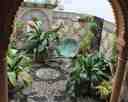
You’re getting close now. To spot the Sephardic Museum, look for a cozy, humble house nestled into the Realejo district, which is Granada’s old Jewish quarter. As you approach, you’ll notice Moorish arches framing a small entry, decorated with Spanish tiles, and right inside there’s a hidden courtyard garden full of leafy plants, patterned tilework, and an old stone fountain-a scene so peaceful, you might think you’ve wandered into someone’s secret oasis. The museum is tucked right here, behind unassuming doors, so keep your eyes open for a little spot that invites you to step away from the bustling street and into a piece of living history. Alright, take a deep breath and stand still for just a moment. Listen carefully-can you imagine the gentle music of water trickling from an ancient fountain? The sound would have echoed through these very streets centuries ago, where the Sephardic Jews of Granada built their community. This isn’t just a museum-it's a miniature time machine, trying its best to keep a whole culture alive between its four walls. Inside, it feels like you’ve stepped into someone’s home, not a grand palace or fortress, but the kind of place where families gathered to share stories, cook together, and celebrate what made their lives unique. Everyday objects fill the rooms: candlesticks, kitchen pots, woven baskets, even delicate books-each one humming quietly with stories of faith, resilience, and daily life. Look for maps that show how Jewish Granada once bloomed here, with its shops, trades, and places of worship all woven into the city’s fabric. Granada’s Jewish community gave the city some of its brightest minds. Samuel Ibn Naghrillah, for instance, wasn’t just a scholar-he designed public baths, proving you can truly change the world one good soak at a time! And there’s Judah ibn Tibbon, who must have been the ultimate multitasker: poet, politician, doctor, translator… The man probably made a mean cup of coffee, too. But it wasn’t all easy-there’s a thread of tension here, too. Picture it: in 1492, the Catholic Monarchs signed the decree expelling Jews right here in their hometown. Centuries of laughter, learning, and hope-and yet, the spirit of this community never fully left Granada. Fast forward to 2013, when this museum first opened, just as Spain decided to welcome the descendants of expelled Sephardic Jews back with citizenship. Talk about a homecoming. Before you leave, check out the “ceramic kitchen”-it’s like the Spanish version of a celebrity chef’s set, except everything is made from rich, hand-painted ceramics. And don’t miss the tiny courtyard, alive with plants and warmth, waiting for you to take it all in. So, ready to time travel? Step inside and let each object, and each corner, whisper its stories to you. And who knows-maybe you’ll even find the quietest spot in Granada, right here in the heart of the old Jewish quarter.
전용 페이지 열기 →As you approach, look for a large open plaza with a patterned stone floor stretching out in front of you. On one side, you’ll see a grand stone building with detailed windows and…더 보기간략히 보기
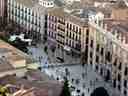
As you approach, look for a large open plaza with a patterned stone floor stretching out in front of you. On one side, you’ll see a grand stone building with detailed windows and flags-a perfect example of historic Spanish architecture. The other sides are lined with tall, traditional buildings packed tightly together, their balconies facing the square. If you spot groups of people wandering or pausing for a coffee, you’re right where you need to be: this is the lively heart of Plaza Nueva. Alright, pause for a moment, let your senses soak in the atmosphere-can you hear footsteps echoing on the stone and maybe the distant laughter of someone enjoying a sunny afternoon? Plaza Nueva might be called "New Square," but don’t let that fool you; it’s actually one of Granada’s oldest public spaces. Imagine this rectangular plaza with its chessboard tiles stretching out as far as 4900 square meters-talk about a giant outdoor living room! Now, beneath your feet, the River Darro is actually flowing secretly in an underground channel. So, you’re walking on a bridge without even realizing it. Watch out for invisible fish! If you look toward the impressive stone building with decorative pillars and flags, that’s the Real Chancillería, built in the 1500s. It’s the only major building here that hasn’t had a dramatic makeover in centuries, so it’s basically the plaza’s wise old storyteller-and trust me, it’s seen plenty. Just picture dramatic court scenes and public announcements echoing through the square. Plaza Nueva is where the buzz of the city comes together: romantic strolls, heated debates, musicians hoping someone will toss a euro their way, and those mysterious, swirling tales of the past. On one side, the street called Cuesta de Gomérez pulls steeply upward - that’s the path to the legendary Alhambra. Back in the day, Plaza Nueva was created by covering the wild river below, knocking down old houses, and giving Granada a place grand enough for celebrations... and the occasional gossip. As the setting sun warms these old walls and the air fills with the scent of fresh coffee from nearby cafés, you’re sharing a space where history and daily life mix together seamlessly. So, take a slow spin, listen to the sounds, and maybe imagine what secret stories might still drift beneath your feet, where the Darro flows silently by. Let’s keep exploring before you end up as part of a local legend!
전용 페이지 열기 →To spot the Cadí Bridge, look ahead for a big stone structure rising like a forgotten watchtower by the hillside, one side of it squared off, the other curving into a worn arch.…더 보기간략히 보기
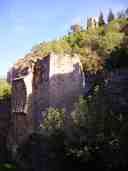
To spot the Cadí Bridge, look ahead for a big stone structure rising like a forgotten watchtower by the hillside, one side of it squared off, the other curving into a worn arch. It stands out with its slightly yellowed sandstone blocks and lots of little holes, all perched right at the edge of a lush and rather wild patch of greenery, close to the river Darro. Welcome to the old Cadí Bridge! Now, I know what you’re thinking: "Andy, that doesn’t look much like a bridge." Well, today you’ve found the ghost of a bridge-what’s left is a lone tower with six sides, and the stub of an arch that looks like it should be holding up some lost medieval highway. Take a deep breath; you might catch a whiff of damp stone and earth, and if you listen, you’ll hear the rush of the Darro trickling below. This bridge was part of the heartbeat of Moorish Granada, linking the city with the magical Alhambra just up the hill. Now only this massive chunk survives, topped with old cut stone, looking like it’s waiting for the rest of its body to catch up. Fun fact: there’s a tiny, mysterious door halfway up-just big enough for a secret agent or a wizard’s apprentice. The arch underneath is a horseshoe shape, tucked with fancy colored stones, and if you peer up, you’ll see strange grooves and notches. These once held giant wooden beams for a barricade-because crossing the bridge back then wasn’t always an open invitation. Imagine the clatter of horses, the shouts of traders, and maybe an argument or two about tolls! For centuries, people argued about whether this was really the famous bridge from the old stories, or actually just part of a defensive wall above the river. Whichever it was, you can feel the mystery in the air, and it’s part of the Alhambra’s enchanted domain today. So give the strong old walls a smile-they’ve seen more history, legend, and drama than most of us could ever dream of. And if a passing shadow seems to dart into that little door, well, maybe it’s just another visitor from the past.
전용 페이지 열기 →To spot the Maristán Nazarí, look for a large, open ruin with old stone walls and wild grass in the foreground. The building in front of you has parts of its upper structure…더 보기간략히 보기
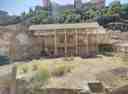
To spot the Maristán Nazarí, look for a large, open ruin with old stone walls and wild grass in the foreground. The building in front of you has parts of its upper structure protected by a modern metal roof, and behind it, you’ll see the green hill rising up toward the stony towers of the Alhambra. The Maristán sits tucked into the slope, its faded walls showing the scars of time and many makeovers-nature and history blending right before your eyes. Imagine yourself here in the 14th century, when the air was thick with mystery and perhaps, just a hint of disinfectant. This was Granada’s grand hospital, founded by Sultan Muhammad V-an early attempt to give care to poor and sick Muslims… and, rumor has it, some people who had totally lost their marbles! But wait-plot twist! This place didn’t just serve one purpose. After healing the city, it became the royal Mint in the fifteenth century. Picture coins clinking where patients once murmured! Soon enough, the Maristán reinvented itself again, this time as a wine warehouse. Now imagine: instead of medicine, the smell of grapes and barrels fills the air. If only these walls could talk (or at least pour a glass). By the 19th century, things got even weirder. The building became a prison, and later, a noisy communal home. Residents squeezed together, the stories overlapping like Granada’s own layers. The heart of the Maristán was its rectangular layout with four arms, all circling a central courtyard. In the middle, a magical pool once reflected sunlight up onto the galleries-guarded by two fierce marble lions. Want to see the lions? You’ll have to visit the Alhambra; they’ve been relocated for a comfier retirement. But as you stand here, imagine those noble guardians once keeping a silent watch while water trickled through the old bath system. Under your feet, ancient walls curve where water-lifting carts went by, echoing Granada’s centuries-old hustle. Disease, currency, wine, and whispers of prisoners-if a building ever needed a therapy session, it’s this one! So take a moment, and let your imagination roam across the centuries. Every crumbling stone has a secret to tell.
전용 페이지 열기 →Take a look right ahead-see that impressive stone building with the intricate, almost lace-like carvings all around the doorway? That's your target! The tall, elegant door is…더 보기간략히 보기
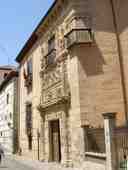
Take a look right ahead-see that impressive stone building with the intricate, almost lace-like carvings all around the doorway? That's your target! The tall, elegant door is framed by an explosion of Renaissance decoration, and above it, two balconies perch like guards, peeking out over Carrera del Darro. When the sun’s out, those carvings really come alive, shadows deepening in the grooves, like the stone itself is whispering secrets from centuries gone by. Hard to miss, right? So, here you are at the Archaeological Museum of Granada! Imagine stepping into a place where the air buzzes with stories from thousands of years ago. Just behind those beautifully carved walls, time is layered like a giant historical sandwich-each hall packed with treasures from the Stone Age to the times of knights and arches. Originally built in the 16th century as the Castril Palace, it’s almost as if the walls have gotten used to keeping secrets-Renaissance secrets, that is. If you listen closely, maybe you’ll catch a ghostly murmur from a knight who once strolled through the grand patio. The façade, built in 1593, is like Granada showing off its finest suit-about four centuries out of fashion, but looking pretty sharp if you ask me. Inside, the museum’s halls come alive with tools chipped from stone, odd pottery fragments, Roman coins, even Visigothic and Muslim treasures. Each piece was once touched, used, maybe even lost by someone long before GPS and mobile apps. Close your eyes and picture the clang of a bronze sword, the quiet thrill of ancient coins slipping through a merchant’s fingers, or the warm bustle of a medieval marketplace just beyond these gates. So, brave explorer, are you ready to wander through Granada’s deep, mysterious timeline? Careful-some of these artefacts just might stare back. And if the suits of armor creak at you in the hallway, just say you’re with Andy, and you’ll be fine.
전용 페이지 열기 →To spot the Cuesta de los Chinos, look for a winding stone path sliding up between old brick and stone walls, surrounded by overgrown greenery. The path feels secret and sunken,…더 보기간략히 보기
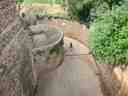
To spot the Cuesta de los Chinos, look for a winding stone path sliding up between old brick and stone walls, surrounded by overgrown greenery. The path feels secret and sunken, flanked by tall, silent fortress walls and old trees whose skinny branches reach overhead. If you look down the path, you’ll see a gently sloping trail that seems to snake between history and nature, almost hidden-except for the occasional group of walkers making their way up or down. You might even hear your own footsteps echo on the stones, mingling with the whispers of old Granada. Congratulations, you’ve made it to your final stop: the legendary Cuesta de los Chinos! Now, don’t worry-you haven’t entered a secret level of your tour, but you are standing on one of Granada’s oldest and most mysterious routes. It stretches almost a kilometer, winding between the Albaicín and the Alhambra, crisscrossing the Darro river. Just imagine sneaking up this path centuries ago, hearing the clatter of horses at the mills, or maybe a sneaky king escaping into the night. Yes, really-a king! The official name is Cuesta del Rey Chico, because, according to legend, Queen Aixa helped her son, King Boabdil, escape this way to join his rebel friends. Family drama really takes on another level when there are palaces and secret escapes involved! This wasn’t always a place for legends, though. Over time it’s been called the Hill of the Mills for its working watermills, and even the Hill of the Dead-don’t worry, that’s just because it once led to the cemetery in the 19th century. Today, walk beside the crumbling palace walls of the Alhambra on one side and the lush gardens of the Generalife high above on the other, while a tiny stream keeps you company, carrying palace water down the hill. It's like a meeting of wild nature and silent stone. Keep walking and you’ll see old bastions from the Christian era, hidden doors, and silent watchtowers above you. At one point, you’ll spot the legendary Puerta de Hierro and on the left, a little alleyway-locked now, but once a “secret passage” right to the Generalife Palace. This path is history’s own rollercoaster: it zigzags past towers and an ancient aqueduct, winding towards the famous Tower of the Seven Floors. Legend has it, there’s still magic in the air-Washington Irving thought so, and he’s the guy who wrote “Tales of the Alhambra,” after all! So take a breath here-listen to the echoes bouncing off stone and leafy branches, feel the pull between old Granada and the palaces above. And maybe, just maybe, imagine what it’d feel like to make a daring escape under the cover of darkness. Don’t worry, your only challenge now is deciding which story to tell your friends when you get home! Thanks for joining me on this adventure. What a journey, right?
전용 페이지 열기 →
자주 묻는 질문
투어는 어떻게 시작하나요?
구매 후 AudaTours 앱을 다운로드하고 교환 코드를 입력하세요. 투어를 바로 시작할 수 있습니다 - 재생을 탭하고 GPS 안내 경로를 따라가시면 됩니다.
투어 중 인터넷이 필요한가요?
아닙니다! 시작 전에 투어를 다운로드하면 완전히 오프라인으로 즐길 수 있습니다. 채팅 기능만 인터넷이 필요합니다. 모바일 데이터 절약을 위해 WiFi에서 다운로드하시는 것을 권장합니다.
이것은 가이드가 안내하는 단체 투어인가요?
아닙니다 - 이것은 셀프 가이드 오디오 투어입니다. 폰을 통해 오디오 나레이션을 들으며 나만의 속도로 독립적으로 탐험합니다. 투어 가이드도, 단체도, 일정도 없습니다.
투어는 얼마나 걸리나요?
대부분의 투어는 60-90분이 소요되지만, 속도는 전적으로 본인이 조절합니다. 원할 때 언제든지 일시정지하거나, 정류장을 건너뛰거나, 휴식을 취하세요.
오늘 투어를 끝낼 수 없으면 어떻게 하나요?
괜찮습니다! 투어는 평생 이용이 가능합니다. 원할 때 언제든지 일시정지하고 다시 시작하세요 - 내일, 다음 주, 또는 내년에도. 진행 상황이 저장됩니다.
어떤 언어를 이용할 수 있나요?
모든 투어는 50개 이상의 언어로 이용 가능합니다. 코드를 교환할 때 원하는 언어를 선택하세요. 참고: 투어 생성 후에는 언어를 변경할 수 없습니다.
구매 후 투어는 어디에서 이용하나요?
App Store 또는 Google Play에서 무료 AudaTours 앱을 다운로드하세요. 교환 코드(이메일로 전송됨)를 입력하면 라이브러리에 투어가 나타나며, 다운로드하여 시작할 수 있습니다.
투어가 마음에 들지 않으시면 환불해 드립니다. 문의: [email protected]
안전한 결제 


