빌바오 오디오 투어: 아반도의 스카이라인 이야기와 숨겨진 보석
유리, 강철, 고딕 양식의 첨탑이 빌바오의 하늘을 뚫고 솟아 있지만, 아반도는 가장 특별한 비밀들을 지상에 간직하고 있습니다. 비스카야 같은 현대적인 타워들은 한때 반란의 메아리가 울리고 음모가 속삭이던 교회들 옆에서 빛나고 있습니다. 이 셀프 가이드 오디오 투어는 아반도의 숨겨진 면모로 여러분을 안내하며, 바쁜 여행자들이 종종 놓치는 이야기와 명소들을 드러냅니다. 잊혀진 이야기들로 고동치는 거리를 느끼고, 자신만의 방식으로 예상치 못한 것들을 발견하세요. 한밤중에 쿠차방크의 웅장한 홀을 그림자처럼 드리웠던 침묵의 스캔들은 무엇이었을까요? 어떤 비밀 협약이 산 비센테 데 아반도 교회를 역사적인 도박의 무대로 만들었을까요? 이 번화한 거리에서의 한 순간이 왜 지역 정치를 영원히 바꾸어 놓았을까요? 모든 발걸음이 여러분의 시각을 바꿀 수 있는 도시를 탐색하며, 솟아오르는 야망에서 조용한 계시로 나아가세요. 각 랜드마크는 풀리기를 기다리는 도시 미스터리의 한 장처럼 펼쳐집니다. 진정한 아반도를 잠금 해제하고 도시의 비밀 흔적을 따라갈 준비가 되셨나요?
투어 미리보기
이 투어에 대하여
- schedule소요 시간 40–60 mins나만의 속도로 이동
- straighten2.5 km 도보 경로안내 경로 따라가기
- location_on
- wifi_off오프라인 작동한 번 다운로드, 어디서든 사용
- all_inclusive평생 이용언제든지 다시 재생 가능
- location_on비스카야 타워에서 시작
이 투어의 정류장
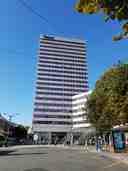
Look for the tallest building around with shimmering, purple-tinted glass panels and white grid lines, standing boldly between the leafy trees and the wide avenue-this is the…더 보기간략히 보기
Look for the tallest building around with shimmering, purple-tinted glass panels and white grid lines, standing boldly between the leafy trees and the wide avenue-this is the Bizkaia Tower, and you really can’t miss it! Now, take a deep breath and imagine the hustle and bustle of Bilbao nearly sixty years ago. It’s 1969, the world is changing fast, and here, right on this epic spot, the Bizkaia Tower is about to open to eager spectators on Gran Vía. Crowds gather, craning their necks upward as 21 stories of modern ambition stretch to 88 meters high-at that time, it’s the absolute king of Bilbao’s skyline! Designed by star architects Enrique Casanueva, Jaime Torres, and José María Chapa, this was the “it” place: a glimmering glass curtain wall, colored windows giving the façade a playful, ever-changing mood, and volumes and heights that make you want to keep on staring. For decades, few other skyscrapers would even dare rival it. But before this glass giant arrived, another building owned the ground-since 1903, the Banco de Vizcaya’s fancy headquarters sat here, designed by José María de Basterra, until the time came to make way for the future. The brand-new tower drew inspiration all the way from Copenhagen’s SAS tower by Arne Jacobsen, so you could say this building carries a bit of Danish design magic, too. From day one, this was where the money flowed! The tower became the headquarters of Banco de Vizcaya, and you’d see sharp-suited bankers zipping in and out, their minds on numbers and new deals. As the city grew, so did the ambitions inside: in 1988, the bank merged into BBV, and later on, all the big decisions for BBVA, one of Spain’s banking giants, were made right inside these walls. Of course, things never sit still for long. Fast-forward to the early 2000s, and the “glass king” wasn’t just a bank fortress anymore. The world shifted, office spaces emptied, and-here’s a twist-BBVA tried to sell the building for 125 million euros. But the place had picked up a little unwanted guest: asbestos! It took a major clean-out before new suitors could even dream of taking over. Several deals fell through, and the tower’s fate hung in the balance like a high-wire act. Yet the Bizkaia Tower isn’t scared of a makeover. In 2018, the building got snatched up by new investors and, like a superstar getting ready for a comeback tour, underwent a massive facelift! They stripped its façade, restored its colors, and brought back that vibrant, nearly-pink shimmer it had proudly flaunted when first unveiled. All 1,116 windows were swapped out, letting the tower dazzle once more on sunny Bilbao days. But things got even busier inside! The lower floors welcomed an enormous Primark-so if you forgot your socks for this walk, now you know where to dash. Upstairs, a high-tech European entrepreneurship hub set up shop, buzzing with new ideas and hopeful future moguls. The local government, always keen to make the most of prime real estate, moved hundreds of their own staff to these top floors-though with the twists of bureaucracy, who knows where everyone’s desks will ultimately land! There was even a point when a famous sculpture, “Elogio del hierro III” by Eduardo Chillida, graced the entrance, greeting visitors with serious steel charisma-now it lives by the Museum of Fine Arts, but you can still feel echoes of Bilbao’s creative spirit tugging at you as you stand here. Just think: from global banking deals to tech startups, from high fashion shopping to government intrigues, Bizkaia Tower is like a vertical slice of Bilbao’s ambition and resilience. So, as you gaze up at the rows of colored windows reflecting the city life below, picture all the drama, hope, and laughter that’s soared through these floors for more than half a century. Not bad for a building that started as a home for bankers and wound up becoming one of Bilbao’s proudest modern landmarks. If only these walls could talk-they might just ask you for a loan… or offer you a job!
전용 페이지 열기 →You’re standing right in front of one of Bilbao’s most dynamic lifelines: Line 1 of the Bilbao Metro. Imagine it’s November 11th, 1995-a chill in the air, crowds gathering a…더 보기간략히 보기
You’re standing right in front of one of Bilbao’s most dynamic lifelines: Line 1 of the Bilbao Metro. Imagine it’s November 11th, 1995-a chill in the air, crowds gathering a little nervously, wondering if the city’s big gamble would pay off. All eyes are on the newly finished stations, sleek and futuristic. The president of the Basque Country, lehendakari José Antonio Ardanza, stands ready to cut the ribbon and, with a flourish, the city’s first metro line is born. This was much more than just trains and tunnels. Suddenly, Etxebarri, the heart of Bilbao, the Right Bank of the estuary, and even the comarca of Uribe were all stitched together. People living miles apart were suddenly only a ride away from each other-or, as I like to think, one metro nap from missing your stop! The network didn’t sit still. In 1996, Gobela station popped up between Areeta and Neguri, much like mushrooms after a rainy day. Then in 1997, three brand new stations-Santutxu, Basarrate, and Bolueta-sprang up on the Bilbao side, making sure no one felt left out. Perhaps the most dramatic chapter came in 1999, when construction began on the mighty San Mamés Interchange, connecting Line 1 with trams, Renfe trains, and even the city’s intermodal station. Suddenly, switching from train to tram was as easy as switching TV channels when there’s football on three at once! But the story didn’t stop there. Etxebarri station joined the family in 2005, and in 2011, the often-temporary station of Ariz opened-so provisional that conductors had more headaches than football referees in a derby match! Eventually, Basauri station took the baton, handling all the switches and turns needed. And don’t blink, because in June 2020, Ibarbengoa station and its big park-and-ride lot burst onto the scene, ready to whisk more commuters out of their cars and onto the tracks. So, as you stand here, remember that you’re on a spot where over 25 years of ambitious tunneling, expanding, and connecting has kept Bilbao moving with style-and a little bit of local flair. Would you look at that: the metro’s not just a train, it’s a journey through the city’s ever-changing heartbeat!
전용 페이지 열기 →Right in front of you stands the Church of the Sacred Heart, and wow, it’s quite a sight! Built at the end of the 19th century, this Catholic temple is a bold mix of tradition and…더 보기간략히 보기
Right in front of you stands the Church of the Sacred Heart, and wow, it’s quite a sight! Built at the end of the 19th century, this Catholic temple is a bold mix of tradition and a splash of architectural flair. Picture the late 1880s in Bilbao: the city’s abuzz with change, and the Jesuits - never ones to miss a trend - decide it’s time to build their own temple. The perfect spot? Right next to the recently founded San Ignacio Residence, on the corner where Calle Canciller Ayala meets Alameda de Urquijo. Construction kicks off in 1889, and, believe it or not, the basics were up and ready within a year. Some construction projects could really take a hint! Now, look up and you’ll see a neo-Gothic drama playing out in stone and brick. Architect José María Basterra and Madariaga - a Bilbao local - didn’t go for something plain. Oh no. He gave this church a wild, freewheeling neo-Gothic style, mixing stone with vivid brick for a real eye-catching effect, and painting the inside in dazzling, “wakes-you-up” colors. Warm reds, oranges, greens, and blues splash across the paramentos, arches, and vaults. No wonder the place has a hint of “exotic East” - it’s practically a stained-glass rainbow inside. The main nave soars 20 meters high, stretching 40 meters long, and is painted a dreamy sky-blue, practically begging you to look up and check if you’re indoors or floating in the clouds. The side aisles? They’re vivid green, scattered with painted stars - like someone sprinkled a handful of the night sky across the ceiling. At the heart of the church is the main altar, honoring the Sacred Heart, flanked by two altars: one for Christ of the Agony, and one for the Holy Family. And here’s a twist - all the church’s furniture is modern, but arranged in that distinct neo-Gothic vibe, making the past and present shake hands right before your eyes. Oh, and a bit of a plot twist: in 2014, when the church turned 125, it got a major makeover. Years of Bilbao’s relentless weather had taken their toll - but just in time for the anniversary, the church got spruced up inside and out, once again shining brightly over the city. Not too shabby for a building that’s seen three centuries and survived without losing its colors!
전용 페이지 열기 →
11개 정류장 더 보기정류장 적게 보기expand_moreexpand_less
Take in the sight of the Palace of Ibaigane, standing tall like a noble guardian on the street. It might look straight out of a fairy tale, but it’s all real-and ready for a good…더 보기간략히 보기
Take in the sight of the Palace of Ibaigane, standing tall like a noble guardian on the street. It might look straight out of a fairy tale, but it’s all real-and ready for a good story! Built in 1900, this neo-Basque gem was the dream home of Ramón de la Sota, a powerful shipping magnate. Imagine arriving here over a century ago, with horse-drawn carriages rattling down the street, and elegant parties filling the palace with laughter under sparkling chandeliers. But change was in the air! Designed by Gregorio Ibarretxe, this palace cleverly mixed classic Baroque inspiration with the proud Basque flair of the late 19th century. Not just a pretty face, Ibaigane has seen drama too-in 1918, star architect Ricardo Bastida gave it a modern makeover. Then, after the Spanish Civil War, it swapped glamour for grit when it was seized and turned into a military headquarters-a rather shocking sudden career change, if you ask me! In 1979, with democracy blooming again in Spain, the palace was finally returned to its rightful owners. But the biggest transformation came in 1986, when Athletic Club swooped in and made it their beating heart. Since 1988, this is where Athletic Club’s biggest moments are planned, official meals with rivals are shared, and maybe even a few secret football strategies are whispered through these historic halls. You’re standing before a building that survived wars, changed hands, and now celebrates the beautiful game-where every brick has a tale to tell!
전용 페이지 열기 →Directly in front of you, you’ll spot two giant, sleek towers of blue-tinted glass rising above the river-just look up, and the reflections on their shimmering façades will catch…더 보기간략히 보기
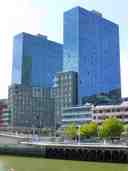
Directly in front of you, you’ll spot two giant, sleek towers of blue-tinted glass rising above the river-just look up, and the reflections on their shimmering façades will catch your eye. Welcome to Isozaki Atea-or, as it’s known in English, the Isozaki Gate! Now, as you stand here beside the river, try to picture yourself standing before a massive doorway to the twenty-first century. Designed by the renowned Japanese architect Arata Isozaki, along with local architect Iñaki Aurrekoetxea, this striking complex is much more than just a pair of glass towers. Look closely: there are actually seven buildings here, but those two twin towers are the real stars, stretching 82 meters high with twenty-three stories each. That’s roughly the height of twenty giraffes stacked on top of each other, but don’t try this at home-giraffes hate paperwork. You might be surprised to learn that this futuristic spot was once home to a rather dull old customs warehouse-hardly the kind of thing to get your sightseeing senses tingling. Private initiatives had tried to bring new life to the area, but none could quite pull it off. Meanwhile, the city had a bigger puzzle: how do you knit together the bustling daily life of the city center with the old industrial heart along the river? To make things trickier, the nearby footbridge, Zubizuri, designed by Santiago Calatrava, didn’t quite solve the connection. Bilbao always turned its back on the river like a moody teenager. There was even a pesky fourteen-meter height difference between river and city to overcome-like Bilbao’s own city-sized hurdle race. Cue the hero’s entrance-Isozaki's design! The solution wasn’t just towers, but a monumental staircase, almost fifty meters wide, inspired by grand European plazas like you’d find in Rome. Now, instead of keeping apart, the riverfront and the city center are connected by this bold new gate-a true entranceway to modern Bilbao. And those two glass towers? They’re not just pretty faces. With 317 apartments and loads of commercial space, they’re home to UNESCO Etxea and several cultural organizations. And the price of living here? Well, let’s just say if you find spare change in the couch, keep checking-it could take a while to reach 800,000 euros. Of course, it wouldn't be a Bilbao building without a touch of drama! Remember that Zubizuri bridge? Isozaki’s new plans meant cutting into Calatrava’s creation-and the famous architect took the city to court, furious at the changes to his work. The city stood its ground (and saved on a few expensive glass repairs), but in the end, a judge said Calatrava’s rights had been damaged-though the bridge connection stayed. Since then, Isozaki Atea has stood as Bilbao’s sparkling invitation to the future, bridging the divide between the industrial and the everyday. As you look up at those glass surfaces, you’re not just seeing skyscrapers-you’re looking right at the city’s new face, where international visions and local pride meet above the river.
전용 페이지 열기 →To find the Church of San Vicente de Abando, look for a grand Renaissance stone building right in front of the Albia Gardens, topped with an elegant bell tower that quietly peeks…더 보기간략히 보기
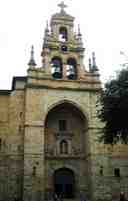
To find the Church of San Vicente de Abando, look for a grand Renaissance stone building right in front of the Albia Gardens, topped with an elegant bell tower that quietly peeks above the neighboring modern constructions. Picture yourself standing here in bustling Bilbao, with the city’s hum swirling around you. Imagine stepping back in time, over 400 years ago, when this was just the tiny anteiglesia of Abando, its heart beating right where the peaceful Albia Gardens rest today. Now, before you stands the majestic San Vicente de Abando, a place whose stones have witnessed centuries of prayers, secrets, and-let's be honest-a few impatient wedding guests. Let’s go all the way back to the late 12th century. The very first church here, built in 1190, was a Gothic creation-think tall arches, mysterious shadows, and knights probably running late for mass. This original house of worship was funded by the noble lords of Ayala and Salcedo, whose generosity set off a chain of church building that would last for centuries. Fast forward to 1549, and the townsfolk decided it was time for an upgrade: enter Juan de Arratia and a team of stonemasons ready to leave their mark. They got to work, replacing the medieval church with the Renaissance marvel you see today, finally wrapping things up by the mid-1600s. Well, good things take time-and apparently a few generations! You’re looking at what may be the finest example of a columned Renaissance "hall church" in the entire Basque Country. Step a little closer and look up: eight mighty cylindrical columns, so smooth you might be tempted to give one a hug (just watch out for the parish priest). These columns rise up to support a forest of vaults overhead, each webbed with stone ribs, locking together like puzzle pieces and bathing the nave in filtered, almost magical light. The church is perfectly rectangular-no hiding spots or secret corners for misbehaving choir boys-just 37.9 meters long and 28 meters wide, pure and symmetrical. But the drama isn’t only inside. Peer at the main façade, built in 1556 from solid Axpe and Arrigúnaga stone. The old Gothic side door is still here too, tucked away amidst later additions and topped by a small sculpture of Our Lady of Sorrows, perhaps keeping an eye out for tardy parishioners. Unmistakably perched above the main door, you’ll see a stately neo-baroque bell tower and spire added in 1901-designed by José María Basterra in a moment when Bilbao’s architects decided that “bells and whistles” should be taken literally. Step inside with your imagination: five golden altarpieces gleam, although they’re newer, designed in a rich but slightly theatrical style-let’s just say the original artists couldn't have imagined so much gold leaf! The main altarpiece, the work of local craftsman Juan Blas de Hormaeche, mixes neoclassical flair with baroque drama. Meanwhile, tucked away in various chapels and nooks, you’ll find treasures like statues by Higinio Basterra, a bronze relief of Lost Souls by Lorenzo Fernández de Viana, and a heartbreakingly beautiful Virgin Dolorosa, carved to dress in mourning for centuries of parish grief. The church has its tales of both tragedy and gratitude, such as the plaque inside honoring the survivors of the Steamship Fernando, wrecked off Portugal in 1943-when a shipwreck earned its own prayer niche, you know Bilbao was closely tied to the sea. If the air feels a little learned, you might be sensing the presence of Antonio de Trueba, the famous Basque writer whose remains rest within these walls. And by the baptismal font, it’s easy to imagine the little feet of Sabino Arana-a founding father of Basque nationalism-being dipped in centuries past, as sunlight poured through modest rounded windows. So here, at San Vicente de Abando, you’re not just seeing bricks and mortar; you’re standing at the crossroads of medieval hope, Renaissance ambition, maritime gratitude, artistic devotion, and the endless stories of Bilbao’s heart. And remember, if you hear the bells after you leave, that’s just San Vicente reminding you to come back and visit-he’s a bit clingy, but only in the best way!
전용 페이지 열기 →Alright, take a good look at this marvel in front of you - the La Equitativa Building, standing proud on the bustling corner where Alameda de Mazarredo meets Colón de Larreátegui.…더 보기간략히 보기
Alright, take a good look at this marvel in front of you - the La Equitativa Building, standing proud on the bustling corner where Alameda de Mazarredo meets Colón de Larreátegui. The year is 1932: picture yourself in Bilbao's golden era of change, hearing the sound of footsteps echoing along the grand avenues of the Ensanche, while trams rattle by and the air buzzes with excitement. The architect behind this building, Manuel Galíndez, must have been thinking, “Why settle for ordinary when you could build something extraordinary?” And extraordinary it is! Designed as both the headquarters for La Equitativa insurance company and as a place for people to live, it’s a real two-for-one deal. If only modern apartment hunting were that easy! Notice the building’s signature rationalist style - strong lines, intelligent symmetry, and a certain “no-nonsense” attitude. There’s a clever trick to the layout: right at the sharp corner, the main staircase rises, acting almost like the spine of the whole structure, while the tower above shoots skyward, outgrowing the rooftop and puncturing the skyline. That tower isn’t just showing off, either - it houses a row of windows that face the corner, like the building is keeping an eye on both streets at once. Smart! You’ll spot the most decorative flare facing Alameda de Mazarredo: the proud tower, a clock (because punctuality matters), a flagpole, and even the goddess of Equity herself. And inside those galleries? Beautifully tiled walls that would do any Instagram feed proud today. If you peer around the corner to Colón de Larreátegui, you’ll see the rounded edge, designed for more sunlight and a better view - and isn’t that what life’s all about? The ground floor was for offices (probably full of insurance agents perfecting their “serious face”), while the upper floors housed residents living high above the bustling city. So take a moment and imagine yourself in the 1930s, negotiating your premiums or brewing your morning coffee right here, at Bilbao’s very own corner of fairness, style, and a dash of architectural swagger.
전용 페이지 열기 →To spot the Plaza del Ensanche, look for an open square just ahead, bordered by wide streets and dominated on one side by the striking, modernist Edificio Ensanche-a large, pale…더 보기간략히 보기
To spot the Plaza del Ensanche, look for an open square just ahead, bordered by wide streets and dominated on one side by the striking, modernist Edificio Ensanche-a large, pale stone building with tall windows and an impressive central atrium. Picture standing here in the 1940s-Bilbao buzzing with optimism, and architect Germán de Aguirre drawing up plans for this unique building, which first opened as a busy market. Imagine local families crowding around fresh produce stalls, voices rising and falling amid the aromas of cheese and baked bread. Over time, though the market days grew quieter, the building was reborn more than once: now it houses everything from city offices to a photography center and even the headquarters for designers, wood crafters, and the beloved local newspaper. The central atrium? It hosts lively art exhibitions, surprising pop-up fairs, and the kind of events where you half expect to see a magician pulling a rabbit from a hat just beside someone discussing urban planning. And below ground, another transformation is underway-a new parking garage is being carved into the earth, with two extra floors, 200 underground spaces, and soon, more green areas and a new pedestrian street up above. So as you stand here, you’re in Billy the Builder’s dream-always under construction, always reinventing itself, and always ready for the next chapter.
전용 페이지 열기 →Right ahead, you’ll spot Jado Square by its grand multi-story building with mansard rooftops and ornate balconies, plus that eye-catching fountain with three proud lion statues…더 보기간략히 보기
Right ahead, you’ll spot Jado Square by its grand multi-story building with mansard rooftops and ornate balconies, plus that eye-catching fountain with three proud lion statues surrounded by trees and wooden benches. Welcome to Jado Square! You’re standing in one of Bilbao’s grandest little corners, right in the heart of the Ensanche. It’s not just another plaza-imagine stepping into 1948, when city architect Germán Aguirre Urrutia dreamed up this wide-open space. In those days, horses were probably jealous of these future 3,200 square meters made just for people like you. Fast forward to 2007, and the square got a complete makeover, adding lush gardens, cozy benches, and a quirky mix of birch, lime, and sweetgum trees. Don’t miss the three lions showing off around the fountain-rumor has it they’re the true kings of Bilbao! Now, take a stroll and spot the impressive house designed by architect Gregorio Ibarreche for the mighty Sota family, who also had the Ibaigane Palace built close by-clearly, someone liked prime real estate! And if you look the other way, you’ll see the bronze sculpture called “Maternity” by Lorenzo Frechilla del Rey, adding a touch of warmth since 1966. Metro Moyua isn’t far for your next leap across the city-but for now, enjoy Jado Square’s calm buzz and leafy green charm.
전용 페이지 열기 →Let’s roll the story back to 2007. Three big Basque savings banks - BBK, Kutxa, and Caja Vital - had a wild idea: “Why not join forces and become even stronger?” The idea was like…더 보기간략히 보기
Let’s roll the story back to 2007. Three big Basque savings banks - BBK, Kutxa, and Caja Vital - had a wild idea: “Why not join forces and become even stronger?” The idea was like a game of cooperative Jenga - everyone knew it should work, but one wrong move, and the whole thing could tumble. In 2008, their first official attempt to unite was made. Dreaming up the name “Euskadiko Aurrezki Kutxa eta Bahitetxea” - try saying that three times fast! - the goal was a new united super-bank called “KUTXA.” Bilbao wanted to host the financial action, while San Sebastián would be in charge of the social side and the computers. The champagne nearly popped, but alas - Kutxa’s board just wasn’t quite ready to say “I do,” and the whole plan fizzled. It’s proof that even bank mergers have commitment issues. Fast-forward to June 2011. The energy among banking bosses must have been electric - or maybe just fueled by too much coffee - because this time, they meant business. They cooked up the slightly less tongue-twisting name “Banco Bilbao Bizkaia Kutxa, S.A.U.” By September, all three - BBK, Kutxa, and Caja Vital - agreed on a “cold fusion.” It sounds dramatic, but really, it meant keeping their independence while working together through a brand-new entity called Kutxabank. The stakes were high: BBK would hold the majority, Kutxa and Caja Vital would have significant slices, and everyone hoped for a recipe for financial success. The official Kutxabank title arrived just in time for the holidays, on December 22, 2011, and on January 1, 2012, Kutxabank opened for business. That’s one way to kick off a new year! But Kutxabank didn’t just stay in the Basque Country. Through its offshoot, BBK Bank CajaSur, it began spreading into Andalusia and Extremadura, and even dabbled in international banking with branches in France. (The French adventure ended in 2018 - it turns out, Paris is for lovers, but not so much for this Basque banker.) If you’re wondering about its power - as of the end of 2024, Kutxabank managed a whopping 66,224 million euros in assets, ranking eighth in Spain. It had 641 offices, 5,456 staff members, and a reputation for being the country’s most solid bank, earning top marks in European solvency tests for six years running. Not bad for a merger with a rocky start, right? Oh, and about those old bank names - through most of the 2010s, you’d still see BBK in Vizcaya, Kutxa in Guipúzcoa, and Caja Vital in Álava. But now, the one Kutxabank brand leads the charge. All roads (and euros) point back to here. So next time you pass a Kutxabank branch, remember: under that crisp logo lurks enough history, ambition, and boardroom suspense to fill a vault!
전용 페이지 열기 →Right in front of you, you’ll spot a bold, rectangular palace that looks as if it were carved from stone especially for royalty-with a richly-decorated facade, a big shield…더 보기간략히 보기
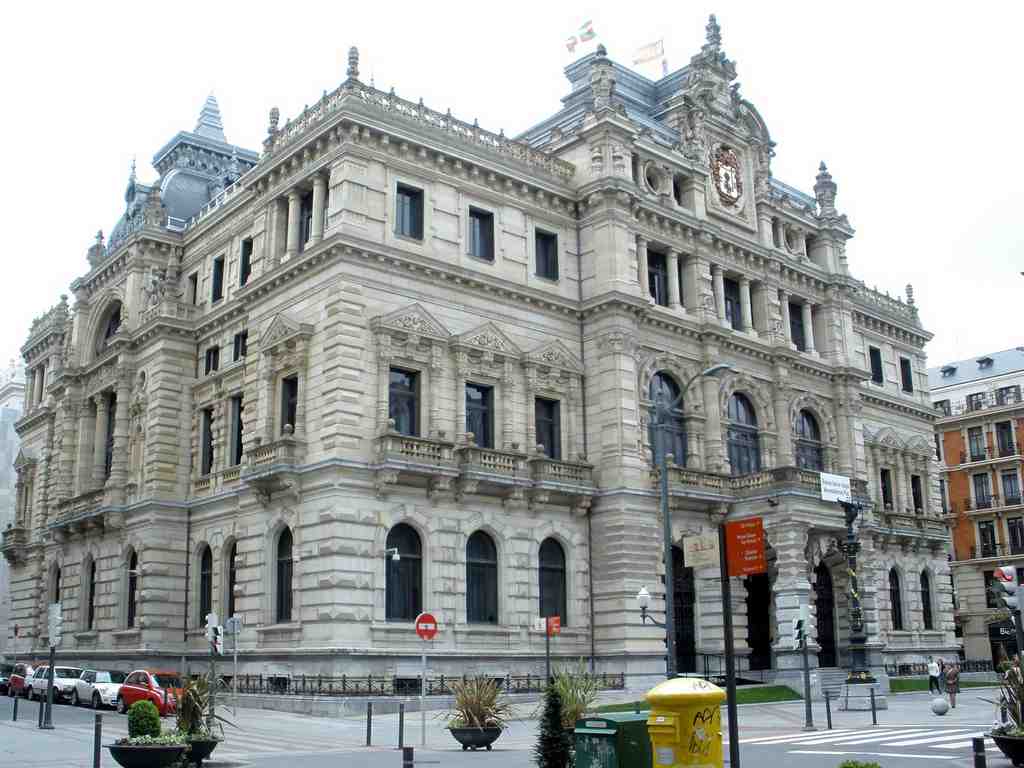
Right in front of you, you’ll spot a bold, rectangular palace that looks as if it were carved from stone especially for royalty-with a richly-decorated facade, a big shield topping the entrance, and grand balconies above arches along Gran Vía. Now, let your eyes wander over this solid and majestic building-yes, you’re not hallucinating, that’s really diamond-cut stone sparkling in the light, almost like the palace wants to dress up for a party every day! Back in the late 1800s, architect Luis Aladrén Mendivil designed this place to impress everyone, mixing and matching historic styles like a chef who couldn’t decide on just one dessert. The outside alone is a buffet of amazing details: porches, balustrades, sculpted coats of arms, and ornamental touches everywhere you look. Inside, the grand staircase splits and organizes the building, leading up to rooms bursting with furniture, paintings, and colorful ceilings. Here’s something fit for a royal soap opera: inside the Salón del Trono, two gigantic murals by José Echenagusia Errazquin show epic moments from Basque history-these are so iconic, they still get printed in textbooks! And don’t miss the tale of Eugenia de Montijo, the Empress of France, who gifted a pair of vases to the palace-if only all our visitors were so generous. The Palace of the Provincial Council of Vizcaya has been mixing power, art, and just a touch of royal flair, for over a century.
전용 페이지 열기 →Looking ahead, you’ll spot Plaza de Federico Moyúa by its sweeping elliptical shape, ringed with classic buildings and the neat, geometric flowerbeds at its center-just follow the…더 보기간략히 보기
Looking ahead, you’ll spot Plaza de Federico Moyúa by its sweeping elliptical shape, ringed with classic buildings and the neat, geometric flowerbeds at its center-just follow the curve of the road and you can’t miss its sense of grandness right in the heart of Bilbao! Take a deep breath-imagine you’re standing here in the 1940s as workers bustle around, laying stones for José Luis Salinas’ fresh new design for Bilbao’s central plaza. This space was named in honor of Federico Moyúa, a twice-serving mayor with a knack for guiding the city through thick and thin-though, rumor has it, he never had to deal with today’s traffic jams! The plaza itself became the city’s heartbeat, a spot where elegant English and French gardens tickle your nose with the subtle scent of flowers, and finely crafted steel streetlights gleam even through Bilbao’s drizzle. Picture it: for decades, people circled round and round on foot-some say so often that their shoes wore grooves into the pavement-until, in 2017, two daring crosswalks were unveiled, finally letting locals cut straight across. Just a few years back, in 2018, hopes were high for Moyúa to become a car-free haven, but with every passing year, the dream played hide-and-seek, almost like the plaza’s own little mystery novel. Look around at the grand palaces and hotels: the stately Carlton, the evocative Chávarri Palace, or Casa Montero just down the way, and the Aurora, all telling tales of old Bilbao. Whispered stories linger, too, of the vanished eagle once perched atop the taxation building, retired in 2017-a feathered nod to changing times. Grab the metro at Moyúa, or watch buses zip to the airport, and you’ll feel the plaza’s pulse, ever restless, ever alive. Plaza Moyúa truly is a crossroads-of history, humor, and the very soul of the city.
전용 페이지 열기 →Look for a grand, turreted mansion with red-and-cream stonework, perched elegantly on the chamfered corner of Plaza Moyúa-its unique roofline and fanciful masonry give it away…더 보기간략히 보기
Look for a grand, turreted mansion with red-and-cream stonework, perched elegantly on the chamfered corner of Plaza Moyúa-its unique roofline and fanciful masonry give it away right on the plaza. Ah, the Chávarri Palace-doesn’t it look like something a chocolate magnate from Belgium wished for as a child? This splendid building was dreamed up in 1888 for brothers Víctor and Benigno Chávarri, designed by Atanasio de Anduiza and based on plans from Belgian architect Paul Hankar. The architects didn’t hold back; they gave it multicolored stone walls, twisting wrought iron decorations, and windows galore, as if they couldn’t decide between circles or rectangles-so they picked both. At first, this mansion was just a swanky family home. Imagine powdery mustaches, canvas shoes squeaking, as early Bilbao’s high society whisked in for elegant parties, staring in awe at the painter José Echenagusia Errazquin’s lavish interior artwork. But stop! The party didn’t last forever. In 1943, as the city’s destiny shifted, giant trucks rumbled up, and new officials started marching inside. The palace became the official seat of the Civil Government of Vizcaya, and builders set about with hammers and saws, reshaping it to fit its new, powerful role. Still today, it serves as the home for the Subdelegation of the Government, watching over the city through its grand array of balconies, dormer windows peeking like curious old relatives from above. Quite a leap from a cozy home to Bilbao’s official nerve center-no wonder it has so many eyes (and windows)!
전용 페이지 열기 →Built with sturdy stone, classic brick, and a skeleton of iron and wood, Casa Montero isn’t shy about showing off. Notice those swirling lines and wavy balconies, especially on…더 보기간략히 보기
Built with sturdy stone, classic brick, and a skeleton of iron and wood, Casa Montero isn’t shy about showing off. Notice those swirling lines and wavy balconies, especially on the second and third floors-they break all the usual rules about boring straight buildings. The entrance, on Alameda de Recalde, is like a crown jewel: decorated, detailed, and flanked by fancy carvings that probably made the neighbors jealous. Imagine residents here over a century ago, gliding across the tiles, peeking out bay windows, enjoying a home that was the talk of the town. So if you hear whispers of Bilbao’s glorious past or the giggle of an architect breaking the rules, that’s Casa Montero working its charms. Thanks for joining me on this whirlwind walk through Abando-remember, every corner in Bilbao has a story worth discovering!
전용 페이지 열기 →
자주 묻는 질문
투어는 어떻게 시작하나요?
구매 후 AudaTours 앱을 다운로드하고 교환 코드를 입력하세요. 투어를 바로 시작할 수 있습니다 - 재생을 탭하고 GPS 안내 경로를 따라가시면 됩니다.
투어 중 인터넷이 필요한가요?
아닙니다! 시작 전에 투어를 다운로드하면 완전히 오프라인으로 즐길 수 있습니다. 채팅 기능만 인터넷이 필요합니다. 모바일 데이터 절약을 위해 WiFi에서 다운로드하시는 것을 권장합니다.
이것은 가이드가 안내하는 단체 투어인가요?
아닙니다 - 이것은 셀프 가이드 오디오 투어입니다. 폰을 통해 오디오 나레이션을 들으며 나만의 속도로 독립적으로 탐험합니다. 투어 가이드도, 단체도, 일정도 없습니다.
투어는 얼마나 걸리나요?
대부분의 투어는 60-90분이 소요되지만, 속도는 전적으로 본인이 조절합니다. 원할 때 언제든지 일시정지하거나, 정류장을 건너뛰거나, 휴식을 취하세요.
오늘 투어를 끝낼 수 없으면 어떻게 하나요?
괜찮습니다! 투어는 평생 이용이 가능합니다. 원할 때 언제든지 일시정지하고 다시 시작하세요 - 내일, 다음 주, 또는 내년에도. 진행 상황이 저장됩니다.
어떤 언어를 이용할 수 있나요?
모든 투어는 50개 이상의 언어로 이용 가능합니다. 코드를 교환할 때 원하는 언어를 선택하세요. 참고: 투어 생성 후에는 언어를 변경할 수 없습니다.
구매 후 투어는 어디에서 이용하나요?
App Store 또는 Google Play에서 무료 AudaTours 앱을 다운로드하세요. 교환 코드(이메일로 전송됨)를 입력하면 라이브러리에 투어가 나타나며, 다운로드하여 시작할 수 있습니다.
투어가 마음에 들지 않으시면 환불해 드립니다. 문의: [email protected]
안전한 결제