
안코나 오디오 투어: 대성당, 캔버스, 그리고 고대 광장을 지나
한때 안코나의 번화한 거리 아래에는 로마 원형극장의 메아리가 울려 퍼졌고, 그 비밀은 햇살 가득한 광장에서 불과 몇 걸음 떨어진 곳에 묻혀 있었습니다. 이 도시는 숨 막히는 아드리아 해 전망 그 이상을 품고 있습니다. 모든 돌멩이마다 사라진 제국, 대담한 예술가, 정치적 음모의 이야기를 속삭입니다. 안코나를 통해 셀프 가이드 오디오 투어를 떠나보세요. 대부분의 방문객이 간과하는 구석구석을 파고들며 역사와 예술의 층을 벗겨내고, 도시의 영혼을 형성한 이야기들을 발굴해 보세요. 국립 고고학 박물관의 어떤 귀중한 유물이 대담한 강도 사건 이후 사라졌을까요? 카부르 광장에서의 왕실 스캔들은 왜 이탈리아 전역에 충격을 주었을까요? 프란체스코 포데스티 시립 미술관의 어떤 예상치 못한 그림이 수십 년간의 불화를 촉발했을까요? 안코나의 구불구불한 골목과 웅장한 공간을 거닐어 보세요. 매번 돌아서는 길마다 드라마, 발견, 그리고 경이로운 순간이 찾아옵니다. 새로운 눈으로 도시를 바라보고 숨겨진 이야기들을 밝혀내면서 도시의 맥박을 느껴보세요. 숨겨진 안코나를 찾아 떠나는 여정을 시작해 보세요.
투어 미리보기
이 투어에 대하여
- schedule소요 시간 40–60 mins나만의 속도로 이동
- straighten2.1 km 도보 경로안내 경로 따라가기
- location_on
- wifi_off오프라인 작동한 번 다운로드, 어디서든 사용
- all_inclusive평생 이용언제든지 다시 재생 가능
- location_on카부르 광장에서 시작
이 투어의 정류장
Look for a wide, sunlit square lined with trees and grand buildings, with a statue of a man standing tall at its center-Piazza Cavour is easily spotted by the prominent monument…더 보기간략히 보기
Look for a wide, sunlit square lined with trees and grand buildings, with a statue of a man standing tall at its center-Piazza Cavour is easily spotted by the prominent monument in the middle and the open paths radiating out from it. You’re now standing in the heart of Ancona’s city life, at Piazza Cavour-a place with more stories than a mischievous grandparent! Take in the scene: wide avenues fan out around you, shaded by rows of old trees and punctuated by the imposing statue of Camillo Benso, Count of Cavour, staring off sternly as if daring the pigeons to come any closer. Let's wind the clock back to the late 1800s. Ancona’s city planners, riding a wave of optimism after the unification of Italy, wanted to stitch together the growing neighborhoods from the 19th and 20th centuries. Inspired-some might say sneakily-by a vision dreamt up back in the papal days by an engineer named Bevilacqua, they decided that this spot would become the beating heart between “old” and “new” Ancona. The piazza was carefully mapped out, finally greenlit in 1862, and swung open to the public with great fanfare in 1868. At the center they placed Cavour’s statue-crafted by the famous Aristodemo Costoli-because what better way to impress your neighbors than plopping a giant statesman right where everyone’s eye lands? If you imagine the sound of city horses and bustling traders from the past, you might just hear a ghostly in the air. Fun fact: those reliefs on the statue's pedestal? They capture two major moments from Cavour’s life-the Paris Congress and the proclamation of the Kingdom of Italy. Think of them as Instagram shots from the 1800s, but in bronze. Originally, the plaza was all about grandeur and military precision. It was planned together with Corso Garibaldi, the elegant boulevard leading right up to it, designed to show off Ancona’s new “first-class fortress” status. The piazza once lay at the city’s very edge, backed up against the old walls and marked by a grand entryway called Porta Cavour. Step forward a few decades and the scene shifts again-in the early 1900s, city architect Guido Cirilli jazzed it up by adding garden beds shaped like a star, planting palm trees that gave the square its exotic edge (and a tiny taste of the tropics-no sunscreen required). The statue, tried its luck at being relocated, but in the end, it kept its prime spot in the middle. The city’s appetite for expansion gobbled up those old walls in the 1920s, sending Porta Cavour to demolition heaven and stretching the square eastwards. Suddenly, Piazza Cavour was not just a backdrop for processions and proclamations but transformed into a lively bridge between the old quarters and the fresh “Rione Adriatico,” complete with leafy paths and shady benches. Imagine sitting on a stone bench, the famous platans and lime trees rustling above you, while a friendly breeze carries snippets of conversation and the occasional flamboyant pigeon coo. Look around at the stately buildings: the elegant arcaded Terni and Società Anonima palaces with their fossil-filled footpaths, the grand Palazzo delle Marche, once a railway headquarters, and monumental structures like the Palazzo delle Poste and Palazzo del Popolo. Each side of the square tells its own tale, layering the history from once-formal Italianate gardens to the liberty-styled benches of the 1920s, and even a chic little 1930s fountain perching on stone spheres like four marble scoops of gelato. Yet for all its grandeur, Piazza Cavour has weathered its fair share of ups and downs-imagine a classic movie montage, with the square bustling, then facing neglect, then springing back to life. Over the years, it saw elegant benches removed, dramatic protests about vanishing palm trees, and passionate debates about historic lamp posts and flowerbeds. But don’t worry-recent restorations have brought back its shine, with plenty of original benches and a thoughtful nod to both design and accessibility. So as you wander, pause to soak up all these details. Piazza Cavour isn’t just a crossroads of city streets-it’s a crossroad of eras, styles, and stories, echoing with laughter, politics, and the shuffle of feet from every walk of Ancona life. And if you see a particularly opinionated pigeon eyeing that statue, just know-Cavour’s seen it all before! Interested in a deeper dive into the palaces, vegetation and furnishings or the the 2016 restoration? Join me in the chat section for an insightful conversation.
전용 페이지 열기 →To spot the Herb Market, look for the large, ornate iron-and-glass structure with big arched windows and a clock right above the main entrance-it’ll be standing proudly along the…더 보기간략히 보기
To spot the Herb Market, look for the large, ornate iron-and-glass structure with big arched windows and a clock right above the main entrance-it’ll be standing proudly along the upper part of Corso Mazzini. Alright, imagine you’re back in 1926, right where you’re standing now-but instead of cars and cell phones, you hear the shouts of vendors, the laughter of neighbors, and the clattering of horse carts. The air smells of fresh herbs, vegetables, and the salty snap of seafood, all swirling beneath the high, filigree ironwork overhead. This is the Herb Market, a masterpiece of liberty style, designed by Federico Federiconi with a bit of dramatic flair-it’s made from solid iron and cast-iron beams and, would you believe it, even has recycled metal from old Austrian warships. One of those ships, the SMS Erzherzog Franz Ferdinand, actually shelled Ancona on the very first day of Italy’s entry into World War I, only for its metal to end up here helping locals pick out the freshest basil. That’s what I call a twist of fate! Pause for a moment-can you picture the lower floor, like an indoor piazza, bustling while sunlight pours in from the glazed walls, and a balcony above where you might spot curious shoppers peeking down? Even the ground beneath your feet is storied: Roman mosaics were found right under Corso Mazzini, a secret patchwork of ancient art beneath the everyday buzz. As if the market didn’t have enough history, it’s getting a major restoration set to finish for its 100th birthday, mixing old charm with new life-soon it’ll be a vibrant spot with bars, restaurants, and events, not just fish and fennel. So, next time you see a salad, remember… it might owe its freshness to a building built from the bones of a battleship and the dreams of an engineer with a very creative shopping list.
전용 페이지 열기 →To spot the Church of San Domenico, just look up the wide steps to the end of the square for a grand white stone façade with intricate columns and a bell tower peeking over its…더 보기간략히 보기
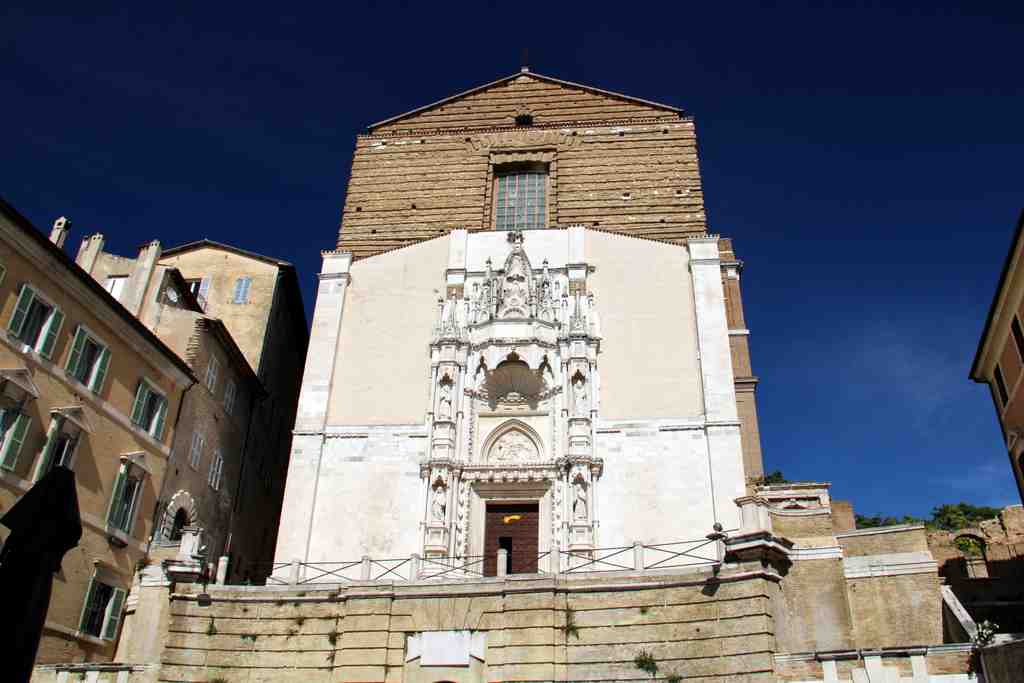
To spot the Church of San Domenico, just look up the wide steps to the end of the square for a grand white stone façade with intricate columns and a bell tower peeking over its right side-it’s standing proudly like the boss of Piazza del Papa! Take a breath and listen-because if these stones could talk, you’d hear tales of ambition, heroes, and a bit of architectural drama. You’re now standing before San Domenico, planted firmly at the summit of a staircase, watching over one of Ancona’s most beloved piazzas. Today, it’s a famous face, but its story isn’t as smooth as this bright white façade might suggest! Let’s wind the clock back to 1763, when a certain Carlo Marchionni, a man with a dream and some marvelous sketches, imagined a new San Domenico to replace the old medieval church that stood a bit to the left. Imagine the noise as stones tumbled and workers buzzed-with the sound of “out with the old, in with the new!” echoing across the square. But, as with every good Italian drama, there’s a twist: before the façade could be finished, in swept the French, eager to claim not just monuments but coffee breaks and piazzas. Suddenly, San Domenico became… a barracks! Yes, soldiers replaced singers, and prayers made way for parade drills. For nearly 20 years, the upper part of the church’s front gaped wide open and unfinished, like a cake that someone forgot to frost. It wasn’t until 1816, after the republic was out and the old order returned, that the church was given back to its original purpose-though its architectural scars were left behind. Now, step closer and feel under your feet the shaken ground-because in 1930, Ancona felt the mighty rumble of an earthquake. The church’s topped-off ambition had to be braced with reinforced concrete and brick lining to patch the cracks and keep everything standing tall. But the drama wasn’t over; World War II brought the scream of bombs, blowing holes through the roof, shattering stained glass, and erasing some of its treasured artwork. One particularly beloved statue, the Incoronata, which had survived the move from the old church centuries earlier, was lost, along with masterworks by Gioacchino Varlè and Andrea Lilli. But you know Italians-where there’s a tragedy, there’s a comeback. After the war, the people of Ancona rolled up their sleeves and got to work. A fresh handful of artists, Mentore Maltoni and Vittorio Morelli among them, created new statues and paintings so that the walls would never feel empty. Those wounds turned into stories; every pillar and painting inside now whispers of struggle and hope. Outside, take a good look at the Istrian stone of the lower façade. It’s a patchwork of strong verticals-columns and pilasters, some plump and some slender-intertwined with the delicate flourish of leafy capitals and that mysterious star at the top. The grand central portal welcomes you with Corinthian strength and a shell motif that stretches its curves like it’s trying to show off. Don’t miss the bell tower peeking from the right-hand side; its square base, round drum, and little cross at its head have outlasted fire, war, and time itself. Imagine for a second the lively 18th-century crowds: parishioners in their Sunday best, French soldiers stomping boots, and later, townsfolk rebuilding brick by brick with hope in their hearts. If you could step inside, you’d find more treasures: dazzling paintings by the likes of Guercino and once, Tiziano himself, among sculpted angels who look ready to burst into song at any moment. So there it stands: battered, beloved, always a centerpiece, and never quite finished-a bit like all of us, really. Go ahead, snap a photo, and thank San Domenico for being a patient survivor in the grand drama of Ancona’s history. And if a pigeon lands nearby, just remember-no French troops in sight!
전용 페이지 열기 →
11개 정류장 더 보기정류장 적게 보기expand_moreexpand_less
As you walk forward, look for a long, rectangular square with elegant old buildings on both sides, a large staircase and monument at the far end, and the grand white facade of the…더 보기간략히 보기
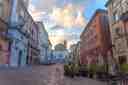
As you walk forward, look for a long, rectangular square with elegant old buildings on both sides, a large staircase and monument at the far end, and the grand white facade of the Church of San Domenico towering above-you're in the right spot if you see café tables scattered across wide, cobbled paving. Welcome to Piazza del Plebiscito, or as the locals affectionately call it, Piazza del Papa! Take a good look around-this isn’t just a square, it’s practically the beating heart of old Ancona, and trust me, if these stones could talk, you’d hear centuries of drama, intrigue, and a bit of papal pride echoing between these walls. Imagine the year is 1418: the air is thick with dust from the demolition of the old church of Sant’Egidio, replaced by what’s now the stately Palazzo del Governo to your left. This very piazza was once known as Piazza Grande-picture residents from every neighbourhood converging in this spot, their voices mingling in a lively tapestry of market gossip and city affairs. Now, lift your gaze to the center, where Pope Clement XII raises his marble hand as if blessing the whole city-or maybe just making sure you don’t spill your espresso. His statue has been here since 1738, a token of gratitude from the townsfolk for bringing Ancona back to life by reviving the city’s port. Originally, this impressive monument was meant to stand majestically atop a grand arch at the harbor, greeting sailors-but, legend has it, those plans were sunk by the fear that the arch would collapse under all that marble weight! So, Pope Clement ended up right here in the piazza’s heart, and the locals quickly dubbed this place Piazza del Papa. But don’t let the tranquil scene fool you-this square has seen its share of excitement. In the 1400s, it was already the main crossroads of Ancona’s three old districts, and in the centuries since, it's hosted public executions, secret revolutionary gatherings, and more than enough debates over who makes the best lasagna. Just imagine: in 1532, after a failed uprising, three young rebels lost their heads (literally) here, and their legacy lives on in the nearby “Fountain of the Decapitated.” Look closely at the stone faces carved above the fountain and see if you spot those brave-well, now headless-defenders of Ancona’s freedom watching you. As you stroll around, notice how the square is multi-layered, connected by staircases and ramps that zigzag up to the church. That’s no accident-the dramatic levels were part of an 18th-century face-lift meant to make this piazza feel like a true stage for the city’s most important moments. Just above, the Church of San Domenico looms with its unfinished facade, a silent monument to changing tastes and turbulent times. Inside, priceless treasures await, with works by Titian and Guercino-art so beautiful, you might just forget to look at anything else. And to your left, the Palazzo del Governo stands proud, with its distinctive tower topped by a 16th-century clock. If you visit at noon, you might catch the sweet chime of a historic carillon ringing out over the rooftops-a sound that has marked the middle of every Ancona day for centuries. As you explore, imagine the piazza packed with stalls from the old herb market, or buzzing with the San Ciriaco fair before its move in the 1970s. Today, Piazza del Papa is still a vibrant gathering point, filled with laughter and clinking glasses in the evening, as the city’s past and present blend together. Don’t blame me if you suddenly crave a gelato or a bit of local gossip-after all, this is where Ancona comes alive! Exploring the realm of the church of san domenico, government palace and civic tower or the statue of clement xii? Feel free to consult the chat section for additional information.
전용 페이지 열기 →Right in front of you towers a grand neoclassical building with elegant cream-colored columns and a triangle pediment above-you’ll know it’s the Theatre of the Muses when you spot…더 보기간략히 보기
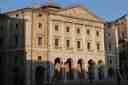
Right in front of you towers a grand neoclassical building with elegant cream-colored columns and a triangle pediment above-you’ll know it’s the Theatre of the Muses when you spot the row of archways at street level and the sculpted figures gazing down from above. Let me whisk you into the story of this magnificent place, where the drama hasn’t just stayed on stage! Picture Ancona nearly 200 years ago: the city is flourishing and there’s a hunger for art and spectacle-that’s when the people decide it’s time to build a new theater to dazzle citizens and nobility alike. In 1827, after five years of anticipation and some top-tier fundraising from its wealthiest families (who, rumor has it, became city nobles in exchange-nothing like a box seat and a noble title, right?), this theater threw open its doors with a flourish. The architect Pietro Ghinelli went for neoclassical grandeur, while Giacomo De Maria sculpted the majestic scene above you-nine muses, Apollo the artsy god, and Palemone the sea-god, all caught up in a mythic tableau about inspiring the artists of Ancona. Right from the beginning, this wasn’t just a quiet place for a polite clap or two; instead, it thrummed with excitement, innovation, and more than a bit of Ancona’s drama. When it opened, Rossini himself was on the program-his operas filled the hall with soaring music and transported the audience to worlds grander than their own. The place was so packed with music, poetry, and high society that the Casino Dorico, a club previously just for the most dashing of nobles, made its headquarters here for glittering balls, poetry duels, and, let’s be honest, more than a few late-night shenanigans. Wars and disasters, of course, have a nasty habit of barging in on art. In 1943, during World War II, an air raid bombed a chunk of the building, halting the performances and casting the theater into silence for an astonishing 59 years. Restoration plans kept bouncing around-some people wanted modern concrete, others wanted classic splendor, and let’s just say the debates could’ve filled their own tragic opera. While the original main hall was lost, the noble stairway, entrance, and reception rooms survived. During this long downtime, only the Casino Dorico’s elegant rooms-done up Art Deco style, thank you very much-kept bustling with cultural life, no longer just for nobles but for everyone in Ancona. Finally, after endless planning, side-eyeing architects, and debates that probably needed their own interval, the theater came roaring back to life in 2002, with a modern hall built inside its old walls. That opening night was something-conductor Riccardo Muti led the orchestra, and the city collectively held its breath and then burst into cheers (except for Muti, who had a bone to pick about the railings blocking people’s views-don’t worry, they fixed it!). Even the fire curtain-by artist Trubbiani-was treated like a star, painted with a scene of triumph. Since then, the Theatre of the Muses has reclaimed its spot as the cultural heart of the city, hosting opera, ballet, jazz, and even talent shows with all the gusto it deserves. Legends like the tenor Franco Corelli have been honored here, while generations of Ancona’s people-whether in jeans or tuxedos-continue to fill the seats, eager for spectacle, laughter, tears, and the joy of a night at the theater. Maybe that’s why, if you listen to the city, Ancona seems to sing just a little bit louder when the lights in the theatre are shining bright.
전용 페이지 열기 →To spot the Church of the Blessed Sacrament, just look straight ahead for a tall, light-brick church with a unique spiral-topped bell tower rising just above the surrounding…더 보기간략히 보기
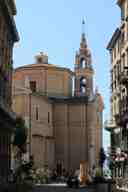
To spot the Church of the Blessed Sacrament, just look straight ahead for a tall, light-brick church with a unique spiral-topped bell tower rising just above the surrounding buildings-it's nestled right opposite the grand Theatre of the Muses, steps away from the bustling port. Now, take a moment and soak up the view. You’re standing outside a church that has been at the very heart of Ancona’s story, a place where time has layered centuries of change like the bricks of its walls. Imagine it’s the 1500s: merchants and sailors, cloaks billowing, filling the street in front of this very spot, glancing up at the sober, carefully set facade-still here today, the last survivor of that first church built in 1538. The inscription above the door whispers of a secret friendship with Rome’s own San Giovanni in Laterano, as if the church is carrying a little piece of Rome’s grandeur right here to the Adriatic. Step inside with your mind’s eye and picture the space being transformed in the 1700s. The air is thick with the scent of fresh plaster and the sound of hammers as architect Francesco Maria Ciaraffoni dreams up a new arm, a bright, octagonal dome, and-most show-stopping of all-a bell tower that looks like a giant corkscrew pointing towards the sky. That fancy top, called a Borrominian spire, was inspired by a famous spire in Rome. Talk about architectural jealousy! You might even imagine Ciaraffoni shouting, “If Rome can have a spire that spirals, so can Ancona!” Years later, a devastating earthquake knocked the whimsical tip right off-don’t worry, it was patched up later, though not quite as stylish as before. It’s like getting a haircut and then desperately trying to fix it with a hat! The church didn’t just sit here looking pretty. In 1908, it swallowed up a whole other parish-San Marco-which is a bit like merging two football teams and only keeping one name. That’s how “San Marco in the Blessed Sacrament” was born, though for locals it’ll always be the “Parish of the Blessed Sacrament,” because old habits die hard. World War II left its mark, too. The right-side neighbor building was flattened, suddenly giving the church a bit more elbow room, but ruining Ciaraffoni’s original symmetry plan. There it stands today, looking surprised to be unexpectedly exposed. But step inside again-imagine a Baroque wonderland. One single, grand nave, with light pouring down from the dome. Ten larger-than-life stucco apostles seem to gossip along the walls, masterpieces by Gioacchino Varlè, inspired by Rome once again. Not all the apostles made it: some, like San Simone and San Taddeo, have mysteriously vanished over the years. The frescos up in the dome? Ancona’s beloved Francesco Podesti painted them in his old age, a last, glorious flourish before he checked out of the art world. And here’s a plot twist-a real treasure, a set of four radiant tapestries designed from Peter Paul Rubens himself, woven in Brussels, and only rolled out for special occasions. Scenes blaze with color, centuries old but so well preserved they look almost newly spun. Nowadays, they’re kept safely in the city museum, just in case you’re tempted to sneak one home for your living room. So as you stand in front of this quietly extraordinary church, think of the layers of history, the stories of survival, loss, and splendor, and imagine how many secrets the old bricks could tell if only they could talk... or at least whisper over a cup of anise-flavored coffee at the café nearby!
전용 페이지 열기 →To spot the Church of Sant'Agostino, look for a grand brown stone building with a striking sculpted marble portal filled with statues and intricate designs, right at street level…더 보기간략히 보기
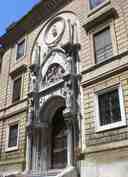
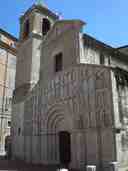
To spot the Church of Sant'Agostino, look for a grand brown stone building with a striking sculpted marble portal filled with statues and intricate designs, right at street level in the midst of more modern facades. Ah, you’re standing before the Church of Sant'Agostino - well, technically the ex-church, but don’t worry, it still has plenty of stories to tell, and it’s not shy about its dramatic past! Imagine the year 1341: this spot was a lively crossroads where pilgrims gathered, their dusty sandals trudging toward Rome or hugging the wild Adriatic coast. The Augustinians built their sanctuary here and named it Santa Maria del Popolo, a beacon for travelers and the faithful alike. For a moment, picture the crowded little square, a swirl of languages, the air thick with excitement, hope, and probably a lot of tired feet. But let’s talk about that incredible portal in front of you. It’s not just a doorway; it’s a masterpiece carved in the 1400s by the talented Giorgio Orsini from Šibenik - Giorgio da Sebenico if you want to sound local - who blended the elegance of Gothic style with a touch of Renaissance flair. You’ll spot statues of august characters: Saint Monica, Saint Nicholas of Tolentino, Saint Simplician, and the blessed Agostino Trionfi. They’re keeping a watchful eye, perhaps wondering what took you so long to visit! In the lunette above, Saint Augustine does his best dramatic gesture, tossing out heretical books and heroically lifting the Sacred Scriptures - almost as if he’s saying, “Enough of these bestsellers, it’s time for the classics!” Did you know the church’s portal was actually completed by other artists after Giorgio’s time? You’ll notice extra bas-reliefs at the sides, added in a flurry of creativity in the 1490s by Michele di Giovanni from Milan and Giovanni Veneziano. So, the next time you can’t finish a group project on time, just remember: teamwork can still make centuries-old magic! Fast forward to the 1700s, and a star architect named Luigi Vanvitelli gave the whole building a Renaissance reboot - stretching out the nave, overhauling the interior, but wisely sparing the stunning gothic portal you’re admiring now. He did, however, wall up the central rose window and pop the bust of God the Father where everyone could see. Talk about a “facelift”! But history isn’t always gentle. After the unification of Italy in the 1800s, the church was stripped of much of its original grandeur - transformed into military barracks and remodeled until only the portal and some wooden doors remained. The once-mighty bell tower was chopped down, the inside chopped up, the rest swallowed by apartments, and then partly destroyed during WWII. The soul of Sant’Agostino was scattered - paintings now hang in Ancona’s art gallery, bits and bobs found homes all over town. If you peek around today, the rear section is even used as an orthopedic lab! And for a dash of modern intrigue, the complex once housed the Admiral Guglielmo Marconi Museum, honoring the wizard of radio, with submarine simulators, Morse code stations, and kits for building your own radio - a church that’s seen both saints and science! So, in front of this storied portal, you’re standing at the crossroads of faith, creativity, war, reinvention, and just a hint of high-frequency radio waves. Not bad for an old entrance, is it? Let’s move on to our next stop - adventure awaits!
전용 페이지 열기 →To spot the Church of Santa Maria della Piazza, simply look for a striking stone facade covered in rows of tiny arches and a tall bell tower rising just behind; it stands out…더 보기간략히 보기
To spot the Church of Santa Maria della Piazza, simply look for a striking stone facade covered in rows of tiny arches and a tall bell tower rising just behind; it stands out among Ancona’s city buildings. You’re standing in front of one of Ancona’s most spellbinding treasures-no joke, this church is packed with more stories than a gossiping grandmother! Imagine yourself in the ancient Porto district, with salty breezes drifting up from the old marshland and the busy marketplace once filling the square just outside. Right here, where you stand, locals haggled over herbs and fresh fish, and great ceremonies for the city’s leaders took place as Ancona’s lively community swirled around this very piazza. Now, take a good look at the church’s intricate face. Built between the 11th and 12th centuries, it’s Romanesque at its finest-proudly sturdy, with three naves under a robust wooden ceiling. On the stone below your feet, you’ll spot rows of blind arches, each creating deep shadows in the sunlight, and right in the center, the Virgin Mary carved in Byzantine relief, watching over the church’s ancient portal. There are two more treasures in stone here-a proud peacock and the Archangel Gabriel-looking down as if they’re judging your choice of travel shoes. But not everything you see is original. In 1690, the top of the facade came tumbling down during an earthquake. Picture stones crashing and dust billowing-a sound I imagine would have been quite dramatic, something like. The collapsed bit was recreated in brick, crowned with a big rectangular window. If this all looks a bit patchwork to you, you’re not mistaken-the church’s appearance changed with each catastrophe and each wave of careful restoration. Oh, and that stunning entrance isn’t just decoration; the portal is a masterpiece in its own right, surrounded by a wreath of carved vines. There’s a secret: the sculptor, Maestro Leonardo, actually left his autograph on the inside frame, as if to say, “Yes, I made this-pretty good, huh?” And just around the right side, a smaller door shows off a Gothic sculpture of the Visitation, added on a whim a few centuries after the original church went up. Step inside and you’ll spot another marvel under your feet-glass panels in the floor. Through them, layers of colorful mosaics peek out, swirling and glittering with ancient Christian symbols. Below lies the astonishing key to the church’s mystery: Santa Maria della Piazza was built atop a fourth-century paleochristian church! Imagine the hush and flicker of early candles as the faithful prayed in secrecy, mosaic floors echoing with ghosts of their footsteps. These ancient mosaics, some created after the chaos of the Gothic-Byzantine wars, were already being restored and admired centuries before the Romanesque church was even a sketch on parchment. There are even older secrets below-ruins of city walls dating back to the Greeks, crumbling beneath layers of later Roman and Byzantine stonework. You’ll spot remnants: the well possibly used for baptisms or maybe just washing very muddy feet, pieces of porphyry columns, and the faint outline of where the city’s bishop once sat. Scholars have spent years scratching their heads, whispering excitedly that this basement basilica might be the original sanctuary of Santo Stefano-Ancona’s very first cathedral. There’s an altar niche just the right size for venerated relics and a grave for a man named Stefano. Was this the very place Christians gathered while persecution still loomed and the city’s walls were still fresh from the quarry? The mystery hums in the air, waiting for each visitor’s imagination to join the centuries-old speculation. Of course, all of this splendor almost vanished under layer after layer of later “improvements”-stucco smothered the walls, baroque altars cramped the spaces, and fake ceilings hid the old beams until one day, a team of ambitious restorers in the twentieth century peeled it all back to reveal the church’s original Romanesque heart. Renovations in 1980 opened those glass windows in the floor, finally letting the sunlight fall on ancient mosaics and faded walls once more. So, whether you’re snapping photos of arches and peacocks or just wondering how Maestro Leonardo managed to get his signature in there, remember: every stone of Santa Maria della Piazza is stacked with stories, jokes, and more than a little ancient drama. Now, how about that for a piazza with personality? If you're curious about the description, archaeological area of the early christian basilica or the is the early christian basilica the ancient church of santo stefano?, the chat section below is the perfect place to seek clarification.
전용 페이지 열기 →To spot the Francesco Podesti Civic Art Gallery, look for a long, elegant yellow building with rows of tall windows topped by ornate stone arches-right here along the narrow…더 보기간략히 보기
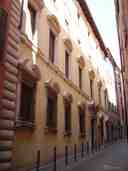
To spot the Francesco Podesti Civic Art Gallery, look for a long, elegant yellow building with rows of tall windows topped by ornate stone arches-right here along the narrow cobbled street. All right, take a look at this splendid façade-you’re standing before Palazzo Bosdari, once a noble residence, now home to Ancona’s greatest treasure chest of paintings and stories. It all began in 1884, when a certain Francesco Podesti-Ancona’s own art champion and a bit of a local superhero with a paintbrush-convinced the city to gather its best works in one place. He loved art so much, he just couldn’t keep it to himself! Inside these walls, masterpieces by legends like Titian, Crivelli, Lotto, and Guercino have mingled with the creations of local stars from the Marche region. Imagine a party where everyone from the 14th to the 19th century shows up-now that’s a guest list! But drama has always visited this gallery. After its birth, many of the original works came from old churches and noble families. It first opened in a different building-the old convent of San Domenico-and bounced from place to place like a painting with wanderlust. Picture Ancona in World War II: bombs fell, and a man named Pasquale Rotondi bravely hid the most precious paintings in a fortress, saving them from destruction. A bit like Indiana Jones, but with less running and more oil paint. By the 1950s, thanks to a passionate man named Pietro Zampetti, the surviving art finally found its way home to Ancona after years in far-off Urbino. Eventually, in 1973, the collection settled where you’re standing now-this very palace, with its mysterious medieval bones and the whisper of Renaissance secrets behind every window. Palazzo Bosdari isn’t just ancient stone-it was built up by the Bosdari family from Dalmatia in the 1500s, dramatically reshaped by architect Pellegrino Tibaldi. And from 2016, it grew even bigger, swallowing up the next-door Palazzo Bonomini to stretch out like a well-fed cat. The collection also blossomed to include modern art-works by celebrated sculptors and painters like Getulio Alviani, Corrado Cagli, and Enzo Cucchi standing shoulder to shoulder with centuries-old depictions of saints and madonnas. Of course, there’s always a twist in every grand story, and this gallery has had more closings and openings than a very confused door. From 2011, she was closed for years of noisy, dusty restoration. Then-just as the paintings were getting comfortable again-another big renovation kicked off in 2023, and now visitors must wait until autumn 2025 for the grand reopening. Don’t worry, the art is still safe, just taking a little vacation (and maybe enjoying the quiet). Inside, when the doors finally open, you’ll walk through 3,800 meters of space, past paintings rescued from bombs, walls where fragments of medieval sculpture sleep, and even modern metal “rhinoceroses” by Valeriano Trubbiani. There’ll even be plans for a glass-walled restoration lab-so you might someday see the magic happen, brushstroke by brushstroke! So here you stand outside, at the edge of Ancona’s river of art and adventure, where centuries collide and every painting has a secret. Makes you want to practice your best ‘art critic’ face for when the doors swing open, doesn’t it? If you're curious about the palazzo bosdari, artists or the gallery of works, the chat section below is the perfect place to seek clarification.
전용 페이지 열기 →You’ll spot the Church of San Francesco alle Scale right in front of you-just look above the sweeping staircase for a striking white stone façade, crowned with a richly detailed…더 보기간략히 보기
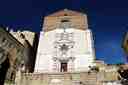
You’ll spot the Church of San Francesco alle Scale right in front of you-just look above the sweeping staircase for a striking white stone façade, crowned with a richly detailed Gothic-Renaissance portal that stands out against the brick upper half. Standing where you are now, you’re on the very same Piazza San Francesco where, centuries ago, people gathered to witness the birth, and several rebirths, of this extraordinary church. Imagine it’s the year 1323. The city is abuzz as the humble Franciscan friars and Bishop Nicolò degli Ungari begin work on a church dedicated to Santa Maria Maggiore. In those days, this area was very different, but little did the townsfolk know that in 1447, a monumental staircase would sweep up across the entire square, changing its name-and the church’s destiny-forever. If these steps could groan, they’d have stories to tell of everything from prayerful pilgrims to people huffing and puffing, wishing there was an elevator! It wasn’t long before the church got a fashion-forward facelift worthy of Renaissance Instagram. Enter Giorgio Orsini da Sebenico, a masterful architect-sculptor, who brought magic in 1454 to the very portal you see before you. He’d just worked in Venice, and if you look up, that intricate entrance might remind you of something extravagant you’d expect by the Doge’s Palace-except here, all those flowery Gothic elements are just being show-offs, flaunting their beauty for decoration rather than any boring structural reason. Up close, spot twenty carved portrait heads peeking from the stone, like a lineup of local celebrities frozen in time, and four little niches each holding statues of Franciscan saints including Saint Clare and Saint Anthony of Padua. You might think it’s a Renaissance competition for best spiritual fashion statement-these saints look ready for a heavenly runway! Above the door, see a stunning relief of Saint Francis receiving the stigmata, while a huge stone shell and a dramatic semi-hexagonal canopy float high up-it's a cocktail of creativity, local stone, and a pinch of artistic ego. Inside, the story goes even deeper: masterpieces by Nicola di Maestro Antonio and a grand painting from Lorenzo Lotto once gazed over the faithful. Yet, the centuries refused to leave the church alone. In the late 1700s, it was raised and stretched taller, only to lose its graceful medieval chapels. Not long after, during the Napoleonic whirlwind, the stairs were mostly destroyed hunting for water (whoops, turned out to be a real drain-literally and architecturally!). Later still, the church got carved up with new floors and pointy windows straight through its grand façade, becoming, for a time, a civic hospital-imagine getting your tonsils out surrounded by faded frescoes and old saints! If you think that’s dramatic, in 1944 World War II bombings toppled its bell tower and wrecked the convent. But against the odds, from 1953 onwards, the church was lovingly restored-floors were removed, the original light spilled back in, and the revived portal now glows with its warm, precious Istrian stone. Inside, see if you can sense the resilience. It’s survived war, water-hunters, and modern “remodeling”-if only our homes could bounce back so stylishly! So, in front of you stands a church that’s equal parts survivor, fashion model, and history book. Now, onward to our next landmark-where the next chapter of Ancona’s story awaits!
전용 페이지 열기 →To spot the Palazzo degli Anziani, just look for the imposing rectangular brick building perched dramatically above the street, with several tall, pointed arches at street level…더 보기간략히 보기
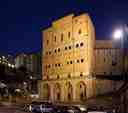
To spot the Palazzo degli Anziani, just look for the imposing rectangular brick building perched dramatically above the street, with several tall, pointed arches at street level and rows of arched windows stacked up its sloping facade-trust me, this historic fellow really looms over the square! Now, as you stand before this storied giant, close your eyes for a moment and try to picture the layers of history packed into its bricks. Imagine it’s the Middle Ages and the plaza is buzzing: the air smells of salt from the nearby sea, merchants shout their wares, and the grand building before you is the throbbing heart of Ancona’s power. Built way back in 1270-yes, you heard right, 1270-this was the city’s powerhouse, where the all-important Council of Elders gathered to govern. They weren’t just any elders, mind you; these were the six big shots from each city district, deciding the fate of Ancona while arguments and deals echoed through the halls. But our story dives deeper. If you could peel back layers of brick, you’d find bones even older than medieval times. Local tales, whispered for centuries, claim that the first version of this palace was built way back in the year 425 AD for none other than Galla Placidia, regent of the Western Roman Empire. Talk about VIP origins! Imagine Roman officials hustling up and down what must have been grand imperial corridors-until the place was trashed in 839 by invading Saracens. Next, let your gaze wander toward the walls next to the building, along via Rupi Comunali. Here, archaeological remains of the late-ancient palace sit quietly-remnants of a base tower and even a tiny Byzantine oratory, hinting at sacred mysteries just out of reach. These areas open to the public only on special days, a tease for history-lovers and secret-seekers alike. Fast-forward to the Middle Ages: the palace you see was crafted by the hand of Margaritone d’Arezzo, its chalky white arches on the port side and several layers of structures stacked to fit the hillside like a medieval layer cake. If you count windows, arches, and doors, you might get dizzy-there were once six floors facing the port and only three toward the hill! The ground floor stored everything from stone cannonballs to city records, and guards patrolled the upper stories, ready to keep any pirates or grumpy neighbors at bay. But no building in Italy escapes mischief for long. In 1348, a fearsome fire ripped through Ancona. Picture flames licking through the plaza, people running, shouts echoing. The palace was badly damaged, and city business had to pack up and move elsewhere, leaving the great Council chamber empty and echoing. Under the rule of the popes, the palace was revived and remodeled-arches bricked up, windows sprouting elegant triangular tops, and, eventually, a bell and six-hour clock. The city’s mayor must have had quite the arm just ringing folks to order in the morning. Let’s not forget famous visitors and treasures: scenes from the Bible carved right onto the facade (some still here, others tucked safely in museums), and a painting commissioned from Francesco Podesti, depicting the city’s boldest oath. The palace has seen council meetings, heroic wartime commemorations (look for the plaques!), and even the birth of the Adriatic-Ionian Initiative-cheered by some of Europe’s most important diplomats. Today, after surviving war, flames, and more renovations than an unlucky kitchen, the Palazzo degli Anziani has returned to its roots: city council meetings echo under its ancient roof, and if these walls could talk, oh, the stories they’d tell. So give the old palace a respectful nod-it’s survived more drama than your favorite binge series!
전용 페이지 열기 →Right in front of you is a grand, rectangular Renaissance palace with stately brick walls, crisp white stone frames around every window, and a tall arched entrance topped by…더 보기간략히 보기
Right in front of you is a grand, rectangular Renaissance palace with stately brick walls, crisp white stone frames around every window, and a tall arched entrance topped by flags-just look past the leafy branches for the building with the green dome peeking over the roof. Now, as you stand before the National Archaeological Museum of the Marche, let’s stir up the soul of this extraordinary place. Imagine the steady ring of chisels and the shuffle of parchment--because even the building itself, Palazzo Ferretti, is a kind of artifact, built in the 1500s and packed with secrets from almost every chapter of Marche history. But don’t let these classic windows fool you; inside, this museum is a time machine that covers over 300,000 years! It all began in 1863, shortly after the region had joined the Kingdom of Italy. A handful of passionate patriots-think Indiana Jones in a stylish 19th-century hat-decided that the only way to protect the Marche’s treasures from vanishing overseas was to gather everything under one roof. Initially, the collection started off modestly, squeezed into a building where the museum’s founder, professor Ciavarini, literally taught class. You’ve heard of “taking work home,” but he had entire archaeological collections in his classroom! As the years spun on and the museum’s collections swelled-sometimes thanks to hunting down ancient relics, sometimes from daring rescues-they needed more and more space, hopping from building to building like a growing family upgrading their house every other year. Each move brought new discoveries: artifacts from Picene Iron Age tombs, Gallic invaders, Greeks who named Ancona, and Romans who turned it into a bustling port. The highlights? An unrivaled collection from the Picene civilization and some seriously mysterious treasures, like a goddess figurine carved from a stalactite and a prehistoric “Venus” that probably makes the Venus de Milo a little jealous even today. Fast-forward to the roar and rumble of the Second World War--when curators feverishly packed up smaller treasures in crates, but left the bulky ones behind. A bomb accidentally tumbled the museum’s bell tower down, smashing open these crates: for a moment, it looked like history itself was lost under piles of rubble. After the war, though, came the painstaking job of rescue and restoration, with new discoveries and more layers of local culture added every decade. By 1958, the museum landed here, in the grand Palazzo Ferretti, with its winding staircases and frescoed ceilings. These days, the museum holds a staggering 190,000 objects-ancient jewelry, weapons, ceramics, bronze statues, tools from when people first learned to farm and herd goats, and even artifacts from the fabled “amber road” that once connected the Baltic Sea to the Mediterranean. It’s a local hero, too, fighting the smuggling of ancient finds and winning battles to bring precious items back to the region (like the famous golden bronzes found in the mud, which are now safe and sound in the museum’s care). If you’re lucky, you might catch swirling restoration work or the buzz of new exhibits coming to life. Soon, visitors will even be able to explore the museum’s treasure-laden storage rooms, like browsing through a library of secrets. And rumor has it the rooftop terrace will reopen as well-a perfect place to gaze across Ancona and imagine that you too are standing guard over the region’s oldest stories, just as the founders of this museum once did. If you're curious about the the role of the museum in the protection of the regional archaeological heritage, museum maps and tour itineraries or the prehistoric section, the chat section below is the perfect place to seek clarification.
전용 페이지 열기 →To spot the Palazzo Ferretti, simply look for a grand stone building with elegant arched windows and a small balcony flying both the Italian and European Union flags, right on the…더 보기간략히 보기
To spot the Palazzo Ferretti, simply look for a grand stone building with elegant arched windows and a small balcony flying both the Italian and European Union flags, right on the corner where the street opens up-keep your eyes on the impressive façade with its sculpted stonework and tall, imposing presence on your left. Now, as you stand in front of these stately walls, let’s travel back in time to the days when noble families strutted their stuff not on Instagram, but with palaces like this! This spot was the pride of the powerful Ferretti family, perched at the foot of Guasco Hill and keeping a careful eye on Ancona’s bustling port below. It was here, in the fifteenth century, that the original Ferretti residence began to grow, like a Renaissance version of “Extreme Home Makeover,” slowly morphing into the masterpiece you see now. But life in old Ancona was anything but peaceful. In 1535, a certain Cardinal Accolti crashed the party, banished the Ferretti clan, and turned Ancona into a strict outpost of the Pope’s power. Imagine: noble families in exile, plots thickening, and a city under the shadow of a harsh ruler. But all good stories have a comeback. When the Ferrettis finally returned, they wanted everyone to know they were back-not just with a big “We’re Home!” banner, but by building a palace fit for emperors. Count Angelo di Girolamo Ferretti wanted a showstopper, something to rival the grand buildings of Rome and Florence. For the grand design, he called on the superstar architect Antonio da Sangallo the Younger, but the final masterpiece was actually carried out by Pellegrino Tibaldi, a creative genius who worked on some of Ancona’s most beautiful buildings. Tibaldi and his students threw themselves into the palace’s decorations-imagine hand-carved, painted ceilings; frescoed walls dancing with mythical gods, heroic legends, and wild, swirling grotesques. Rooms had catchy names like the “Hall of Emblems,” the “Hall of Myths,” and even the “Room of St. Charles,” filled with scenes from ancient legends. It was like walking into a Renaissance Netflix series, but with more frescoes and less binge-watching. Upstairs, the main hall’s ceiling was transformed into a fantasy world by painter Federico Zuccari-hundreds of square meters covered in quirky “grotesque” frescos with magical landscapes and monuments. Later on, in the 1700s, the Ferrettis became marquises and hired none other than Luigi Vanvitelli, one of Italy’s most famous architects, for a luxurious upgrade: a new wing, a grand staircase, a rooftop garden with sweeping sea views, and statues everywhere you turned. Despite being battered by the bombs of World War II, the palace always bounced back-proving it had more comebacks than a rock band on a farewell tour. In 1958, Palazzo Ferretti became home to the National Archaeological Museum of the Marche, now guarding the region’s treasures: from mysterious prehistorical tools to shimmering Roman helmets, from Greek pottery to the jewels of the ancient Piceni people-the richest collection of its kind in Italy. So, as you gaze up at this historic giant, imagine all the laughter, secrets, danger, and drama that have played out behind these walls. And next time someone asks you about treasure in Ancona, you can say you found it-right here at Palazzo Ferretti.
전용 페이지 열기 →Take a deep breath and look up-here we are, standing before the majestic Ancona Cathedral, dedicated to San Ciriaco, perched high on Colle Guasco. Imagine, for a moment, the wind…더 보기간략히 보기
Take a deep breath and look up-here we are, standing before the majestic Ancona Cathedral, dedicated to San Ciriaco, perched high on Colle Guasco. Imagine, for a moment, the wind whipping around this ancient hilltop, the cries of seagulls overhead, and the blue of the Adriatic stretching beyond. It’s not just a church you’re seeing-it’s a time capsule with more plot twists than a medieval soap opera! Let’s roll back the centuries. Picture the 4th century BC, when Greek settlers from Syracuse arrived here and decided that the best way to keep their ships safe was to build a grand temple to Aphrodite. You can almost hear the chisel against the stone as columns rose, their massive foundations set right here, under your feet. This ancient temple watched over both city and sea, so much so that legends say even the poet Catullus and the grumpy satirist Juvenal wrote about it. I guess you could say that before Tripadvisor, poets gave the reviews! As centuries spun forward, Ancona became Roman, and Aphrodite turned into Venus. By the time Christianity swept in, the hill still held the mighty temple-until a huge earthquake in 558 AD brought it crashing down. What did early Ancona Christians do? Waste some prime real estate? Never! They built a basilica dedicated to San Lorenzo, parts of which you can still see in the crypt and the mosaic remnants under the floor. Walking here really is like playing a spiritual version of Jenga, with layer after layer of history below. Now, imagine the year 1015. Ancona is growing, buzzing as a maritime power. The old cathedral outside the walls didn’t feel safe anymore (invading Saracens have a way of making people want to relocate), so the basilica on Colle Guasco became the city’s new cathedral. Soon after, the relics of San Ciriaco were carried here in grand procession. You can almost hear the chanting and the hum of the crowd packed along these narrow streets. But Ancona still wasn’t satisfied! By the 12th century, it got a medieval makeover-a rare Greek-cross plan, with arms stretching in all directions, topped by a soaring cupola. That’s not something you see often west of the Adriatic! And to add some dramatic flair, they built an impressive portal guarded by mighty lion statues. Legend says these stone lions were so fierce, even pigeons marched around instead of landing on their backs. By the 13th century, the new dome pushed up above the skyline like a medieval astronaut's helmet-one of Italy’s oldest-and sculptors added angels raising their hands skyward. Over the next few centuries, Renaissance artists snuck their magic in too, like Piero della Francesca, who painted inside, though sadly his work has been lost to time (and maybe a bit of hasty restoration). This cathedral has seen almost everything: fires, more earthquakes, wartime bombings, and epic restoration projects. During World Wars, it lost and regained its copper roof, and the plucky townsfolk always rebuilt. In 1999, the whole town threw a millennium party to celebrate a thousand years since the cathedral became Ancona’s spiritual heart. Even Pope John Paul II dropped by-now that’s VIP status! Inside, you’ll find sacred relics, like the memory stone of Saint Stephen, and miracles tied to the Madonna “Queen of All Saints.” Below, centuries of construction, destruction, and renewal wait patiently for every visitor’s footsteps. And if you listen close, it’s almost as if the whispers of old stonemasons, bishops, and seafaring merchants float on the breeze. So, here you are at the end of our journey, where every stone, every carving, every lion-laden portal is a chapter in Ancona’s epic. One day maybe someone will add your visit to the legend-just don’t try to out-roar the stone lions! Exploring the realm of the description, prodigy of the madonna del duomo or the the image of the duomo in art? Feel free to consult the chat section for additional information.
전용 페이지 열기 →

자주 묻는 질문
투어는 어떻게 시작하나요?
구매 후 AudaTours 앱을 다운로드하고 교환 코드를 입력하세요. 투어를 바로 시작할 수 있습니다 - 재생을 탭하고 GPS 안내 경로를 따라가시면 됩니다.
투어 중 인터넷이 필요한가요?
아닙니다! 시작 전에 투어를 다운로드하면 완전히 오프라인으로 즐길 수 있습니다. 채팅 기능만 인터넷이 필요합니다. 모바일 데이터 절약을 위해 WiFi에서 다운로드하시는 것을 권장합니다.
이것은 가이드가 안내하는 단체 투어인가요?
아닙니다 - 이것은 셀프 가이드 오디오 투어입니다. 폰을 통해 오디오 나레이션을 들으며 나만의 속도로 독립적으로 탐험합니다. 투어 가이드도, 단체도, 일정도 없습니다.
투어는 얼마나 걸리나요?
대부분의 투어는 60-90분이 소요되지만, 속도는 전적으로 본인이 조절합니다. 원할 때 언제든지 일시정지하거나, 정류장을 건너뛰거나, 휴식을 취하세요.
오늘 투어를 끝낼 수 없으면 어떻게 하나요?
괜찮습니다! 투어는 평생 이용이 가능합니다. 원할 때 언제든지 일시정지하고 다시 시작하세요 - 내일, 다음 주, 또는 내년에도. 진행 상황이 저장됩니다.
어떤 언어를 이용할 수 있나요?
모든 투어는 50개 이상의 언어로 이용 가능합니다. 코드를 교환할 때 원하는 언어를 선택하세요. 참고: 투어 생성 후에는 언어를 변경할 수 없습니다.
구매 후 투어는 어디에서 이용하나요?
App Store 또는 Google Play에서 무료 AudaTours 앱을 다운로드하세요. 교환 코드(이메일로 전송됨)를 입력하면 라이브러리에 투어가 나타나며, 다운로드하여 시작할 수 있습니다.
투어가 마음에 들지 않으시면 환불해 드립니다. 문의: [email protected]
안전한 결제 


