
아그라 오디오 투어: 아그라 투어
왕실 강변 궁전에는 지하 미로가 숨겨져 있습니다. 웅장한 붉은 벽 그림자 아래에서 황제들은 즉위했고 죄수들은 탈출을 모의했습니다. 소용돌이치는 돔 아래에서 속삭이는 기도마다 권력이 바뀌었습니다. 이 셀프 가이드 오디오 투어는 아그라의 격동적인 심장부를 안내하며, 대부분의 사람들이 알아차리지 못하는 장대한 경쟁과 비밀스러운 건축적 경이로움을 드러냅니다. 금지된 사랑이 샤 자하니 마할을 거의 산산조각 낼 뻔한 이유는 무엇일까요? 아그라 요새의 사암 아치 아래에서 어떤 음모가 펼쳐져 하룻밤 사이에 왕조를 위협했을까요? 자마 모스크의 고대 안뜰 중앙에 있는 대리석 연못은 무엇이 그렇게 특이할까요? 우뚝 솟은 문에서 고요한 안뜰과 무성한 아케이드로 걸어가 보세요. 모든 돌에 여전히 울려 퍼지는 전투, 배신, 왕실의 야망을 통해 잃어버린 발자취를 따라가 보세요. 아그라를 엽서가 아닌, 음모와 잊혀진 꿈으로 형성된 살아있는 서사시로 경험해 보세요. 하얗게 칠해진 홀 아래 비밀이 남아있는 곳에서 여정을 시작하세요. 아그라의 진짜 이야기는 바로 다음 모퉁이에 있습니다.
투어 미리보기
이 투어에 대하여
- schedule소요 시간 30–50 mins나만의 속도로 이동
- straighten3.0 km 도보 경로안내 경로 따라가기
- location_on
- wifi_off오프라인 작동한 번 다운로드, 어디서든 사용
- all_inclusive평생 이용언제든지 다시 재생 가능
- location_on샤 자하니 마할에서 시작
이 투어의 정류장
You see, the Mughal Emperor Shah Jahan wanted to put his own stamp on this redstone building, so he decided to spruce it up with some of his pizazz! He transformed the existing…더 보기간략히 보기
You see, the Mughal Emperor Shah Jahan wanted to put his own stamp on this redstone building, so he decided to spruce it up with some of his pizazz! He transformed the existing structure, adding a large hall, side rooms, and even an octagonal tower that faces the beautiful river. Now, let me tell you, this palace used to be quite the sight! The walls were a spectacular combination of brick masonry and red stone, but they were all covered in a thick, white plaster. And to top it off, they painted the plaster with vibrant floral designs. It was like a giant coloring book! From where we stand, you can spot a lovely white marble dalan, which has five arches with nine cusps each. It's supported by double pillars and protected by a Chhajja, which is like an extended roof. Oh, and don't forget to check out the western bay, where they used to have a gate called Ghaznin. But there's more! Beneath our feet, there's a whole underground world. Yep, this palace has subterranean apartments in multiple stories. They're like hidden gems waiting to be explored! So, my friend, let's take a moment to appreciate the Shah Jahan Mahal for what it once was - a dazzling blend of red stone, white plaster, and colorful paintings. Now, let's head to our next stop and keep this adventure going!
전용 페이지 열기 →Ah, the Jama Mosque in Agra, what a beauty! This 17th-century mosque is a real gem in the heart of the city. It was built by Jahanara Begum, the daughter of none other than the…더 보기간략히 보기
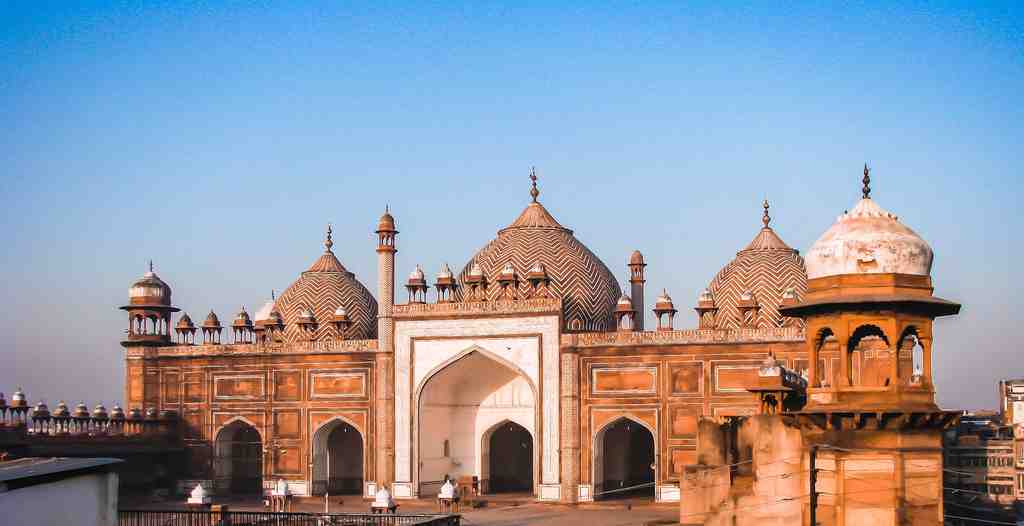
Ah, the Jama Mosque in Agra, what a beauty! This 17th-century mosque is a real gem in the heart of the city. It was built by Jahanara Begum, the daughter of none other than the legendary Mughal Emperor Shah Jahan. And let me tell you, when it comes to architecture, the Mughals really knew how to make a statement! Now, picture this: As Shah Jahan was ruling the empire, he decided that Agra needed a brand new mosque. But not just any mosque, mind you. This one had to be grand and magnificent. So, he gave the order for construction to begin in the year 1637. The princess Jahanara Begum, being the amazing daughter that she was, asked her father if she could personally fund the mosque. And you know what? The emperor granted her wish! What a daddy-daughter team, right? Now, here's the interesting part. Originally, the mosque was supposed to be built alongside the Yamuna River. But you know how things sometimes change? Well, attention was diverted towards completing another little masterpiece you might have heard of - the Taj Mahal. So, the plan shifted, and the Jama Mosque found its new home near the Agra Fort. We don't know if it was because the riverfront area was deemed more residential or if they were worried the mosque would overshadow the Taj's own mosque. Who knows? Regardless of the change in location, the construction finally began in 1643, and after a little delay caused by the land purchase, the mosque was finally completed in 1648. Phew! Five lakh rupees and a lot of hard work later, the Jama Mosque stood proudly in all its glory. Now, let's talk about the mosque itself. It's primarily made of stunning red sandstone, with hints of white marble adding that extra touch of elegance. The mosque covers an area of 1200 square meters, and let me tell you, it's quite a sight to behold. The prayer chamber, my friend, is a true masterpiece. It has five entrance archways, and the central one, well, let's just say it's something special. It's set within a high pishtaq, which features those beautiful Persian inscriptions praising the rule of Shah Jahan. Sound familiar? Yep, just like the Taj Mahal! The prayer chamber is crowned by not one, not two, but three bulbous domes. And believe me, these domes are no ordinary domes. They're decorated in a stunning herringbone pattern with red and white stone, and topped with lotus-flower finials. Talk about attention to detail! And hold on, there's more! The sahn, the courtyard, is enclosed on two sides, featuring these beautiful arcades with axial gates. In the center, you'll find a cool little pool for ritual ablutions. Gotta cleanse the soul, right? Well, my friend, that's the Jama Mosque in a nutshell. A true testament to the Mughal architecture and a place that will leave you in awe. So, shall we move on to our next stop, the Agra Fort? Just keep following me, and we'll make our way there in no time!
전용 페이지 열기 →
3개 정류장 더 보기정류장 적게 보기expand_moreexpand_less
Ah, the Moti Masjid, also known as the Pearl Mosque! This stunning mosque is a real gem within the Agra Fort. Built by the Mughal Emperor Shah Jahan, it's the perfect place to…더 보기간략히 보기
Ah, the Moti Masjid, also known as the Pearl Mosque! This stunning mosque is a real gem within the Agra Fort. Built by the Mughal Emperor Shah Jahan, it's the perfect place to show off his love for marble. Now, picture this: a mosque entirely made of white marble. It's like walking into a dream! Shah Jahan wanted to add his personal touch to the Agra Fort, so he went all out with the Moti Masjid. He even went as far as dismantling some structures within the fort just to make room for this beauty. Construction began in 1646 and lasted until 1653, making it a relatively late addition to the Agra Fort. But hey, better late than never, right? And when Shah Jahan saw the finished mosque, he was so impressed that he brought his two sons to see it two years later. Talk about proud parenting! The Moti Masjid is surrounded by high walls and sits on a raised platform. It faces the Yamuna river, providing a picturesque view. Speaking of views, the outside walls are covered in red sandstone, while the inside is adorned with beautiful marble. It's like the mosque has a secret fashion statement going on! Once you step inside, you'll find a courtyard with arcades lining the edges. In the center, there's a tranquil ablution pool - perfect for some peaceful reflection. And on the western side of the courtyard, you'll find the main prayer hall. It's a grand structure with seven entryways and a roof boasting three domes and some chhatri. Now, what's a mosque without a little bit of shimmer? The front of the hall is shaded by a deep chhajja (eave) and adorned with stunning Persian inscriptions in black marble. Shah Jahan sure knew how to make a statement! But that's not all. The interior of the prayer hall is a sight to behold as well. Shah Jahan kept things elegant and simple with undecorated marble. And the design of the Moti Masjid was heavily influenced by another marble mosque he built at the Ajmer Sharif Dargah. Clearly, he had a thing for marble! So, step into this architectural masterpiece and experience the tranquility and beauty of the Moti Masjid. It's definitely a shining pearl within the Agra Fort!
전용 페이지 열기 →This architectural beauty was built by none other than Shah Jahan, who had quite the knack for building stunning structures. The Nagina Masjid is made of pure white marble, giving…더 보기간략히 보기
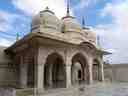
This architectural beauty was built by none other than Shah Jahan, who had quite the knack for building stunning structures. The Nagina Masjid is made of pure white marble, giving it an irresistible charm. Now, here's a fun fact for you - "Nagina" means "gem" in Hindi. So, you could say that this mosque is a real gem in Agra Fort. See what I did there? One of the interesting things about Nagina Masjid is its simplicity. It doesn't go overboard with excessive decorations, but rather focuses on a clean and elegant design. Inside, you'll find three bays separated by simple pillars, with arches above. The central arch is the star of the show, with its nine cusps. This private mosque was actually built for the ladies of the Royal family. Talk about exclusive! They could enjoy a stunning view of the road from the balcony, which runs towards the Hathi Pol on the northern side of the Masjid. Now, let me tell you a little secret. Down the road from the Nagina Masjid, there used to be a luxurious bazaar known as Mina Bazar. It was a shopping paradise for the royal ladies, who could stand in the balcony and shop to their heart's content. What a convenient shopping experience, right? So, as you explore this wonderful mosque, take a moment to imagine the royal ladies strolling through the bazaar, all while basking in the beauty of the Nagina Masjid.
전용 페이지 열기 →

자주 묻는 질문
투어는 어떻게 시작하나요?
구매 후 AudaTours 앱을 다운로드하고 교환 코드를 입력하세요. 투어를 바로 시작할 수 있습니다 - 재생을 탭하고 GPS 안내 경로를 따라가시면 됩니다.
투어 중 인터넷이 필요한가요?
아닙니다! 시작 전에 투어를 다운로드하면 완전히 오프라인으로 즐길 수 있습니다. 채팅 기능만 인터넷이 필요합니다. 모바일 데이터 절약을 위해 WiFi에서 다운로드하시는 것을 권장합니다.
이것은 가이드가 안내하는 단체 투어인가요?
아닙니다 - 이것은 셀프 가이드 오디오 투어입니다. 폰을 통해 오디오 나레이션을 들으며 나만의 속도로 독립적으로 탐험합니다. 투어 가이드도, 단체도, 일정도 없습니다.
투어는 얼마나 걸리나요?
대부분의 투어는 60-90분이 소요되지만, 속도는 전적으로 본인이 조절합니다. 원할 때 언제든지 일시정지하거나, 정류장을 건너뛰거나, 휴식을 취하세요.
오늘 투어를 끝낼 수 없으면 어떻게 하나요?
괜찮습니다! 투어는 평생 이용이 가능합니다. 원할 때 언제든지 일시정지하고 다시 시작하세요 - 내일, 다음 주, 또는 내년에도. 진행 상황이 저장됩니다.
어떤 언어를 이용할 수 있나요?
모든 투어는 50개 이상의 언어로 이용 가능합니다. 코드를 교환할 때 원하는 언어를 선택하세요. 참고: 투어 생성 후에는 언어를 변경할 수 없습니다.
구매 후 투어는 어디에서 이용하나요?
App Store 또는 Google Play에서 무료 AudaTours 앱을 다운로드하세요. 교환 코드(이메일로 전송됨)를 입력하면 라이브러리에 투어가 나타나며, 다운로드하여 시작할 수 있습니다.
투어가 마음에 들지 않으시면 환불해 드립니다. 문의: [email protected]
안전한 결제 


