

츠비카우 오디오 투어: 화음, 유산, 숨겨진 보물
츠비카우의 솟아오른 첨탑과 자갈길 아래에는 돌과 노래로 빚어진 혁명, 천재성, 배신의 속삭임과 같은 비밀들이 남아 있습니다. 도시의 심장부를 통과하는 셀프 가이드 오디오 투어를 시작하세요. 웅장한 파사드와 숨겨진 구석구석을 지나며 현지인조차 모를 이야기를 발견해 보세요. 한밤중 봉기 동안 성모 마리아 교회 아래 벽에 어떤 섬뜩한 메시지가 새겨져 있었을까요? 젊은 로베르트 슈만의 금지된 사랑은 어떻게 아직도 조용히 회자되는 스캔들을 불러일으켰을까요? 어떤 유물이 한밤중에 대학에서 조용히 제거되었고, 왜 다시는 나타나지 않았을까요? 항의와 시의 메아리를 통해 츠비카우의 맥박을 추적하고, 과거의 그림자가 길을 안내하게 하세요. 각 정류장은 드라마와 발견을 드러내며, 발걸음마다 도시에 대한 당신의 시야를 재구성합니다. 지금 츠비카우 역사의 깊이를 잠금 해제하세요. 비밀들이 기다리고 있습니다.
투어 미리보기
이 투어에 대하여
- schedule소요 시간 30–50 mins나만의 속도로 이동
- straighten2.1 km 도보 경로안내 경로 따라가기
- location_on
- wifi_off오프라인 작동한 번 다운로드, 어디서든 사용
- all_inclusive평생 이용언제든지 다시 재생 가능
- location_on츠비카우 지방법원에서 시작
이 투어의 정류장
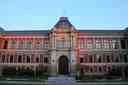
To spot the District Court of Zwickau, look for a grand, symmetrical building with red-brick and stone details, rows of large arched windows, and a crested coat of arms perched on…더 보기간략히 보기
To spot the District Court of Zwickau, look for a grand, symmetrical building with red-brick and stone details, rows of large arched windows, and a crested coat of arms perched on the roof above an impressive entrance. Alright, so here you stand before the District Court of Zwickau-a building that practically shouts “serious business” before you even step inside! Imagine the buzz around this place in the late 1800s: men in long coats, townsfolk rushing a bit nervously past, and the tense hush before a big verdict. Let’s take a journey through its story-don’t worry, no jury duty required! Back in the old days-before 1879, in fact-if you wanted justice in Zwickau, you’d head to the so-called “Gerichtsamt.” This was the original place where court matters happened. But then came a huge change: sweeping Reichsjustizgesetze, or justice laws, swept through Saxony in 1879. Suddenly, the Gerichtsamt disappeared, and boom, the Amtsgericht, or District Court, was born. It wasn’t just any old court-it was the busiest in the region, with seven judges dealing with the fates of over 83,000 people around Zwickau and beyond. The court’s reach spread wide, touching towns with lyrical names: Auerbach, Niederhaßlau, Pölbitz-each sending their minor dramas to these doors. This elegant building, with its precise symmetry and proud coat of arms, watched decades fly by and systems change. Throughout the 20th century-witness to world wars and boundary shifts-its courthouse work didn’t slow down. After World War II, things got shuffled again. In the morass of postwar Germany, district boundaries shifted. Suddenly, the courthouse was out, and the “Kreisgericht” or district court took over in 1952. But you know Zwickau-never down for long! After German reunification in 1992, the Amtsgericht Zwickau made its return, now stronger than ever. Today, it’s the central execution court for all of Saxony. So whether you’re here for a dry legal case or just to admire the architectural detail, remember: behind these walls, stories have been decided that shaped the whole region. Now, wasn’t that a case worth investigating?
전용 페이지 열기 →To spot the Zwickau Mountain School, look ahead for a large, weathered, rectangular building with plain tan walls, rows of equally spaced windows, and a slightly protruding center…더 보기간략히 보기
To spot the Zwickau Mountain School, look ahead for a large, weathered, rectangular building with plain tan walls, rows of equally spaced windows, and a slightly protruding center section-all capped by a snow-dusted roof. Now, picture yourself standing outside this building on a wintry Zwickau morning, the crunch of snow under your boots, and a chill in the air, making every breath just a little crisper. You’re gazing at the historic Zwickau Mountain School, but don’t let its quiet appearance fool you-this place has been a hub of human drama, coal dust, ambition, and serious mustaches since 1862! Let’s rewind to a time when the air was thick with coal smoke and Zwickau’s buzzing mines needed a new generation of clever, practical leaders. Back in the mid-1800s, the local mining boom was so intense that even the town’s official coal-watchers got worried they’d run out of experts! After a shaky start with an earlier school in Bockwa, determined mine officials wrote to the royal mining board in Freiberg in 1860, with a message that essentially said: “We need a school, and fast-before we all end up digging in circles!” Thanks to their neighborly persistence (and probably a few strong cups of coffee), by 1862, the first students were in class. Classes here were never about stuffing your head with random facts; no, students were taught to understand the important things, and practice until they were as sharp as a new pickaxe. From Monday to Thursday, later shifting to Tuesday through Friday (hey, even miners liked a long weekend), students tackled everything from German and neat handwriting to the mysteries of mineralogy and the excitement of arithmetic. Bergschule students learned to draw, calculate, and-even more thrillingly-visit real mines during their holidays! Of course, it wasn’t all sums and stones. In 1870, war swept through the land, and many students swapped their schoolbooks for military boots. The school, like a slow-burning furnace, never completely went out, though: by 1872, determined scholars could now officially postpone their draft to finish their mining studies-talk about dedication! By the time the school turned 40 in 1902, a grand flag was commissioned, one side green with the Saxon crest, the other fiery red displaying the Bergschule’s own insignia. You can almost hear the flutter of banners and the clinking of celebratory mugs. The school’s story didn’t get any duller. When the roaring twenties rolled around, it was reformed by a quirky club of mining associations from across Saxony-and even students from Bavaria joined the class, each paying a handsome 300 marks. Later, all the Bergschulen in Germany were brought under one big umbrella during the Reich, but the Zwickau Mountain School kept its own spirit-especially when, during World War II, it was considered so essential that most of its students were kept out of the army. Think of it: a school that quite literally kept people underground for their own safety! But the real twist came in 1945, when the Americans arrived on Zwickau’s western doorsteps. For a while, the whole city was split in two-like a cake at a very tense birthday party-and no one knew quite what would happen next. Soon, the Soviets moved in, and suddenly the new rulers wanted the coal business running full speed. With coal so desperately needed, they reopened the Bergschule almost right away, and the classrooms buzzed again, now filled with new dreams and a few nervous glances. After the war, the school bounced between private and public hands, shifted its name more times than a secret agent, and moved into this building in 1949. There were fresh starts, new dormitories, and a whole parade of subjects added to the curriculum-like legal rights for miners and even electrical engineering, so you wouldn’t get shocked by more than just your grades. Sometimes, students would even go abroad, making new friends while trying to remember what “Grubenrettungswesen” means in French. Sadly, by 1965 it was time for one last change. The legendary Bergschule was merged into new institutes, but the tradition lives on through Zwickau’s university today. In the end, the story of the Bergschule is one of people determined to dig deep-not just for coal, but for knowledge, community, and maybe a good story to tell after class. So if these walls could talk, they’d probably sigh, cough up a little coal dust, and tell you that every great achievement starts with a single step… and maybe a quick glance at your safety helmet! Fascinated by the admission requirements and curriculum, school or the structure? Let's chat about it
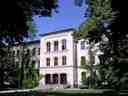
전용 페이지 열기 →To spot the West Saxon University of Applied Sciences Zwickau, just look for the large, elegant cream-colored building with tall windows and a pointed spire at the top, framed by…더 보기간략히 보기
To spot the West Saxon University of Applied Sciences Zwickau, just look for the large, elegant cream-colored building with tall windows and a pointed spire at the top, framed by leafy trees-you really can’t miss the inviting staircase leading up to its main entrance! Welcome, adventurer, to the heart and brain of applied science in Zwickau! As you stand before this grand edifice, take a deep breath-go on, do it-and imagine you’re catching a faint whiff of chalk and engine oil, the scent of hundreds of years of study and invention all mixing in the air. You’re facing what today is known as the West Saxon University of Applied Sciences Zwickau, or as the locals call it with love, the WHZ. Now, if this university could talk, it would have one heck of a story to tell. You’d probably have to buy it a coffee, though-a lot has happened here since the days when students wore robes and probably complained about the food, too! The roots of higher education in Zwickau actually stretch all the way back to 1290 when a Latin school first opened its doors in town. Yes, 1290! Back then, young minds learned Greek, Hebrew, and Latin, no doubt with quills and inky fingers. The Renaissance swept through, and none other than Georgius Agricola, the “father of mineralogy,” taught here between 1519 and 1522-perhaps where students first learned that rocks are way more interesting than they sound. As you look up at this proud building, try to picture a different Zwickau-a bustling city full of coal dust and the clamor of industry in the 19th century, with steam engines chugging away as the demand for technical know-how exploded. The industrial revolution meant that simply learning on the job wasn’t enough anymore, so the town founded a Sunday School for tradesmen in 1828, followed by the legendary Bergschule Zwickau in 1862, a school for miners that later evolved into an engineering institution. You could say Zwickau’s destiny was written in coal dust and ambition! But wait, there’s more drama ahead. Fast-forward to 1897, and you’ll find two clever engineers, Paul Kirchhoff and Leander Hummel, founding Zwickau’s first official engineering school-with a bit of pomp and even an appearance by the King of Saxony himself! Soon, this place became a breeding ground for automotive geniuses and technical masterminds. Through the maze of two World Wars and ever-changing borders, the institution morphed, merged, and multiplied. By the 1980s, it was booming as a Technical University, but then-plot twist-the winds of political change arrived with reunification, and both the technical and pedagogical colleges were dissolved. Yet, like any great hero, the university refused to fade away and was reborn in 1992 as the modern WHZ, rising anew with its feet planted firmly in both tradition and innovation. Today, this university is a hive of nearly 3,000 students, and its influence stretches all across West Saxony and beyond. Students now come here not just for technology and engineering, but for business, health, applied arts, languages, and so much more. If you listen closely, you can almost hear the buzz of students debating over coffee, the click of laptops, and the whirr of prototype engines deep in the labs. But this is way more than homework and late-night pizza. The WHZ has its own Formula Student racing team, and yes, these students have built electric racecars that have zipped into global rankings! Imagine the roar of the virtual crowd as their car whizzes past the finish line-third best in the world, at one point! Now, that’s what I call a “study break.” And this campus isn’t just about intense research and technical wizardry, either. From design studios in Schneeberg where textile artists weave their magic, to music instrument builders serenading the world from Markneukirchen, WHZ is all about nurturing diversity-and making sure family and academia can thrive together. Plus, they even have their own university choir-so if you ever find yourself humming among these halls, you’re in good company. So as you stand here, think of all those generations of thinkers and tinkerers, designers and dreamers, miners and makers, who walked up these steps before you. Who knows-maybe the next big invention or piece of music will be inspired right here, where history and innovation walk side by side. And if you hear a faint echo of a racing car or a Latin lesson in the breeze, just smile. In Zwickau, learning always has a little extra horsepower!
전용 페이지 열기 →
6개 정류장 더 보기정류장 적게 보기expand_moreexpand_less
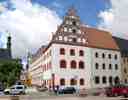
To spot the Dünnebierhaus, look for a bright white building with a striking step-shaped gable and orange-red window frames right ahead-it definitely stands out from its…더 보기간략히 보기
To spot the Dünnebierhaus, look for a bright white building with a striking step-shaped gable and orange-red window frames right ahead-it definitely stands out from its neighbors! Welcome to the Dünnebierhaus, a building that looks like it just popped out of a fairy tale with its elaborate stepped gable and bold colors! As you stand here, imagine it’s the year 1480. Craftsmen in cloaks hustle past the busy streets, and Nicol Römer, a respected citizen, proudly oversees the construction of his bold, late-Gothic house. For centuries, this house has watched Zwickau’s stories unfold-joyful and sorrowful, loud and whisper-quiet. Fast forward a few hundred years: a cheerful colonial goods merchant named Dünnbier arrives, bringing not just coffee beans and the alluring aroma of roasted coffee, but also a sense of adventure-and maybe a few spirited parties, thanks to his lively liqueur factory. Can you almost smell the coffee and hear the clink of glass bottles as Dünnbier’s workshop bustles inside these walls? But even fairytales have their dark chapters. In 1980, the Dünnebierhaus was in danger-part of it had to be taken down! Yet, just like any good hero, it returned strong: carefully rebuilt by 1984, the building now gleams much as it did 500 years ago, complete with that eye-catching gable. Today, it’s known as the wedding house, where couples begin their own stories-proving that some places are just meant for happily ever afters! Keep an eye out for wedding parties-there’s always a little magic in the air around here.
전용 페이지 열기 →To spot the Robert Schumann Monument in front of you, look for a large bronze statue sitting thoughtfully on a chair atop a sturdy granite pedestal with "Robert Schumann"…더 보기간략히 보기
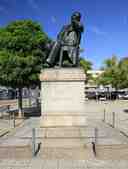
To spot the Robert Schumann Monument in front of you, look for a large bronze statue sitting thoughtfully on a chair atop a sturdy granite pedestal with "Robert Schumann" inscribed on the base-it’s hard to miss, as it stands prominently in the square with a dreamy expression gazing into musical history. Alright, you’ve made it-here you stand in front of the Robert Schumann Monument, and imagine for a moment the echoes of music and applause that have rippled through this spot for more than a century. The statue before you isn't just any monument-it's Robert Schumann himself, larger than life, cast in bronze and lost in a world of melodies, right in the heart of Zwickau's Hauptmarkt. Leaning to the side, elbow propped and head resting on his hand, Schumann looks like he’s just been struck by a burst of musical inspiration-or maybe he’s just wondering where he left his piano. Either way, it’s a pose every dreamer might envy. Let’s rewind the clock-back to 1885, when the idea for this monument was just a twinkle in the eyes of Zwickau’s music lovers. A committee formed, and their first mission? Gather enough money to turn inspiration into cast metal. People reached deep into their pockets, donating so much that within five years, they’d collected a whopping 35,000 Reichsmark. Even Schumann’s wife, Clara, was told about the project. She respectfully declined to chip in-well, composers’ families have budgets, too! Fast-forward to the year 1901. Picture a sparkling summer’s day. An enormous crowd gathers: nearly 100 honored guests, over 100 musicians, hundreds of singers, and even Schumann’s three daughters. The mayor chooses the northeast corner of the Hauptmarkt for the grand unveiling, and suddenly, as the cloth falls away from the statue, sunlight glints off the bronze-and Zwickau’s favorite son is immortalized. Joseph Joachim and Carl Reinecke, old friends and maestro musicians themselves, are there to celebrate, music filling the square. But even a statue with a prime seat isn’t immune to change. Soon after its unveiling, rumors ripple through the city: Should Schumann stand higher? Would he prefer a more peaceful backdrop? Before long, debates swirl, and with political tempests, the statue is on the move. Under the shadow of the Nazi regime, it’s shifted to Robert-Schumann-Platz in 1938-just in time for Schumann’s birthday again. As war brings air raids, a bombing in 1945 sends deadly fragments flying through the square-yet the stately figure of Schumann survives, battered but stubbornly upright. Next stop: postwar Zwickau, with a ruined square and a city rebuilding. The Soviets order another move, and in 1947, the monument is placed by Schwanenteich, steps added back for good measure. By 1948, a Robert-Schumann Week brings music and crowds here once more, and for decades, the city ponders a return to the original heart of town. During East German times, the statue is even taken away for restoration-a quick spa visit to clean up battle scars, shed some environmental dirt, and get Schumann gleaming again. Then comes the reunification of Germany-the 1990s, when old dreams are dusted off and reimagined. By the city’s 875th anniversary in 1993, Schumann is returned close to his original spot, the move paid for by public donations, and the mayor himself unveils the reborn monument to international fanfare. Every year, Schumann’s birthday is still celebrated right here-even Monopoly Zwickau has a miniature version of him! In recent times, the statue’s been dressed up for jazz and rock festivals, cleaned and waxed to a shiny black sheen (no more green patina for Schumann), and even surrounded by little posts and chains for protection-after all, even the grandest composers need a little personal space. So, as you stand here, think of the music, the festivals, the spirited debates, and all the gentle hands that have kept this memory alive. Maybe you’ll feel the magic, or maybe you’ll just feel inspired to take a thoughtful pose yourself-you never know when a great theme might strike!
전용 페이지 열기 →
자주 묻는 질문
투어는 어떻게 시작하나요?
구매 후 AudaTours 앱을 다운로드하고 교환 코드를 입력하세요. 투어를 바로 시작할 수 있습니다 - 재생을 탭하고 GPS 안내 경로를 따라가시면 됩니다.
투어 중 인터넷이 필요한가요?
아닙니다! 시작 전에 투어를 다운로드하면 완전히 오프라인으로 즐길 수 있습니다. 채팅 기능만 인터넷이 필요합니다. 모바일 데이터 절약을 위해 WiFi에서 다운로드하시는 것을 권장합니다.
이것은 가이드가 안내하는 단체 투어인가요?
아닙니다 - 이것은 셀프 가이드 오디오 투어입니다. 폰을 통해 오디오 나레이션을 들으며 나만의 속도로 독립적으로 탐험합니다. 투어 가이드도, 단체도, 일정도 없습니다.
투어는 얼마나 걸리나요?
대부분의 투어는 60-90분이 소요되지만, 속도는 전적으로 본인이 조절합니다. 원할 때 언제든지 일시정지하거나, 정류장을 건너뛰거나, 휴식을 취하세요.
오늘 투어를 끝낼 수 없으면 어떻게 하나요?
괜찮습니다! 투어는 평생 이용이 가능합니다. 원할 때 언제든지 일시정지하고 다시 시작하세요 - 내일, 다음 주, 또는 내년에도. 진행 상황이 저장됩니다.
어떤 언어를 이용할 수 있나요?
모든 투어는 50개 이상의 언어로 이용 가능합니다. 코드를 교환할 때 원하는 언어를 선택하세요. 참고: 투어 생성 후에는 언어를 변경할 수 없습니다.
구매 후 투어는 어디에서 이용하나요?
App Store 또는 Google Play에서 무료 AudaTours 앱을 다운로드하세요. 교환 코드(이메일로 전송됨)를 입력하면 라이브러리에 투어가 나타나며, 다운로드하여 시작할 수 있습니다.
투어가 마음에 들지 않으시면 환불해 드립니다. 문의: [email protected]
안전한 결제 


