
산살바도르 오디오 투어: 기념비적인 순간과 기억을 통한 여정
화산 봉우리가 활기찬 거리를 지키는 도시, 산살바도르는 울려 퍼지는 환호와 다채로운 색상 뒤에 숨겨진 수많은 이야기를 간직하고 있습니다. 이 셀프 가이드 오디오 투어는 대부분의 여행자들이 찾지 못하는 길을 따라가며 전설적인 경기장과 즐거운 박물관의 비밀을 풀어보도록 초대합니다. 경기장 개조가 왜 동네 전체를 뒤흔들었을까요? 챔피언만을 위한 무대에 올라 스캔들과 노래를 불러일으킨 사람은 누구일까요? 거품으로 가득 찬 미로 어딘가에 묻혀 있는 구조된 테디베어의 이상한 이야기는 무엇일까요? 거대한 경기장 좌석에서 서커스처럼 밝은 박물관, 그리고 혁명적인 대결의 메아리로 이동하며 각 정류장마다 도시의 에너지가 변화하는 것을 지켜보세요. 스포츠, 볼거리, 어린 시절의 경이로움으로 가득 찬 대로를 따라가며 산살바도르가 살아 숨 쉬고, 꿈꾸고, 스스로를 재창조하는 모습을 발견하게 될 것입니다. 도시에서 가장 활기찬 공간을 탐험하고 그들의 눈부신 숨겨진 드라마를 밝혀낼 준비가 되셨나요? 걷기 시작하세요. 산살바도르의 진정한 심장이 바로 앞에 기다리고 있습니다.
투어 미리보기
이 투어에 대하여
- schedule소요 시간 30–50 mins나만의 속도로 이동
- straighten3.8 km 도보 경로안내 경로 따라가기
- location_on
- wifi_off오프라인 작동한 번 다운로드, 어디서든 사용
- all_inclusive평생 이용언제든지 다시 재생 가능
- location_on호르헤 "엘 마히코" 곤살레스 경기장에서 시작
이 투어의 정류장
For an easy spot, look for the massive oval stadium with bright blue running tracks and white stands splashed with red, yellow, and blue-this landmark almost glows under the San…더 보기간략히 보기
For an easy spot, look for the massive oval stadium with bright blue running tracks and white stands splashed with red, yellow, and blue-this landmark almost glows under the San Salvador sun! Welcome to the legendary Estadio Jorge "El Mágico" González! You’re standing on the edge of pure sporting history-and possibly on ground that’s heard more cheers than a pack of clapping seals at a circus. When this stadium first opened its doors in 1932, it was built to impress for the 1935 Central American and Caribbean Games. Back then, San Salvador buzzed with excitement. Imagine the crowd: vibrant flags, the clatter of noisemakers, and the hot smell of pupusas blending with fresh-cut grass! The stadium stood as the “Estadio Nacional Flor Blanca,” proudly named after its neighborhood-Colonia Flor Blanca. Over the decades, this place became the heartbeat of Salvadoran sport. From heated football matches to concerts with the ground shaking beneath thousands of dancing feet, the stadium watched heroes rise and history unfold. But like all great venues, it needed a facelift now and then. In 2002, the stadium celebrated its 70th birthday with the sort of grand makeover even Hollywood stars would envy! Stands doubled in size to fit 30,000 lively fans, modern track facilities were added, and seats were upgraded to coddle spectators’ tired feet-a comfort athletes only dream about. Ah, but here’s where things get magical. In 2006, the stadium was renamed for El Salvador’s own football treasure, “El Mágico” González, a player so clever with his feet that defenders probably checked under their beds for him at night. Naming the stadium after him was a way of turning every match here into a little bit of magic-just don’t expect your own soccer skills to suddenly improve by osmosis! But wait-there’s more! Renovations have kept coming, like a footballer who refuses to hang up his boots. In 2021, thanks to a hefty $22 million loan, the stadium was set for new stands, a sparkling new pitch, and a museum dedicated to “El Mágico” himself. There’s talk that the seats are so fresh, you might hear them squeak with excitement! This isn’t just a stadium. It’s a stage for drama: fierce championships, unforgettable music tours, even the Dutch reality show “Wie is de Mol?” filmed here-because apparently, even TV detectives know a good landmark when they see one. So take a moment and imagine the roars, the songs, maybe even a dramatic last-minute goal. Right here, the spirit of El Salvador’s sport lives on. Now, who’s ready for the next stop? Don’t worry-I promise I won’t ask you to run a lap!
전용 페이지 열기 →Look for a bright blue entrance with playful cartoon images on a wall under a large tree-if you spot a real airplane nose sticking out to the left, you’re definitely at the Tin…더 보기간략히 보기
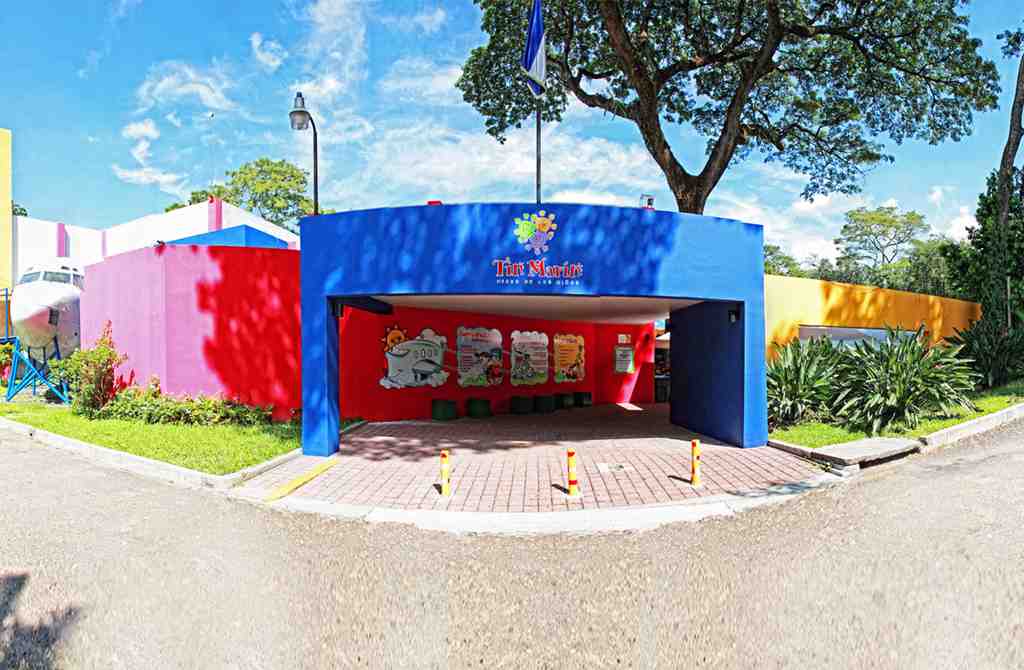
Look for a bright blue entrance with playful cartoon images on a wall under a large tree-if you spot a real airplane nose sticking out to the left, you’re definitely at the Tin Marín Children’s Museum! Welcome to the happiest spot in San Salvador, where if you’re not careful, you might just trip over a giant bubble or accidentally join a circus of giggling children! The Tin Marín Museum, right here beside Cuscatlán Park, might look like a burst of paint on the city’s canvas, but it’s also a place where curiosity runs wild-like a puppy in a room full of tennis balls. Imagine the sound of laughter and little footsteps echoing behind these walls, because that’s the daily soundtrack at this magical place. Believe it or not, this museum wasn’t always a fairground of creativity and play. Back in 1998, a team of dreamers from all walks of life got together, scratching their heads and wondering, “Why don’t Salvadoran kids have a cool, hands-on place to learn...and, well, make a bit of a mess?” Instead of another snooze-worthy museum, they decided to invent a place where learning happened by poking, prodding, mixing, and sometimes even getting a little wet. That’s how Tin Marín was born in 1999 with a mission: to raise a generation of Salvadoran children who are just as creative as they are clever. Every year, more than 180,000 children and their families march, skip, and even hop through these doors. Inside, there are 32 interactive exhibits that feel more like action-packed movie sets than displays. Science and technology? There’s an exhibit where you can feel the pulse of energy, and another where you can discover how volcanoes are like steaming pressure cookers. And if you ever wondered what it’s like to be a firefighter for a day, this is your chance-put on a helmet, ring the alarm, and rescue your teddy bear from imaginary flames. But Tin Marín is more than just play. It’s on a mission to help children learn about art, health, the environment, and some really important life lessons. Ever tried shopping for healthy food in a pretend supermarket? Here, you can! Or maybe you want to venture inside a giant mouth and battle cavity monsters-brave enough for that? At Tin Marín, you can enter a planetarium, become a reporter in a playful TV studio, or build a fantasy city with blocks. The spirit of inclusion is everywhere. Since 2012, Tin Marín has made sure that every child, no matter what challenges they face, can explore freely-the whole place is accessible, and they even won a “Disability Award” for being one of the most inviting, open-armed museums in the region. And if you’re from a school or a rural area, don’t worry: Tin Marín Mobil brings the fun to your own backyard, rumbling into town like a science circus on wheels. Perhaps the most legendary story to echo through these halls is about the volunteers-thousands of young people have donned bright T-shirts and become guides, leading children through colourful worlds, making sure nobody gets lost in Burbujalandia (that’s the bubble zone!) or naps too long on the famous bed of nails. Did you know the United Nations has recognized this museum for its work on “Ciberespacio,” the first exhibit in Central America tackling the risks of the internet? Or that if you step on the giant floor map, you could cover half the length of El Salvador in two big jumps? The Tin Marín Children’s Museum is a living, breathing playground for minds of all ages-and if you listen closely, between echoes of joyful shrieks and the chirping of mariposas in the butterfly garden, you might just hear the heartbeat of El Salvador’s future. So, go ahead-take a deep breath, and let your curiosity lead the way. Just try not to be surprised if you end up covered in bubbles or find yourself building the next great Salvadoran invention!
전용 페이지 열기 →

5개 정류장 더 보기정류장 적게 보기expand_moreexpand_less
Look to your right for a long, shiny black wall-about the size of a city bus-with names inscribed in pale letters stretching as far as the eye can see. Now, you’re standing in…더 보기간략히 보기
Look to your right for a long, shiny black wall-about the size of a city bus-with names inscribed in pale letters stretching as far as the eye can see. Now, you’re standing in front of San Salvador’s Monument to Memory and Truth, a place that feels both quiet and powerful at the same time. Imagine you’re here in Cuscatlán Park, sunlight shimmering on the smooth, black granite wall. This isn’t just any wall-it stretches an incredible 85 meters, and carved into it are the names of over 25,000 people who lost their lives or disappeared during the country’s long and haunting civil war. Each name on this monument whispers a story of bravery, loss, or hope-yes, hope! The idea for this wall came from a report written in 1993, right after the war, when people wanted to honor the memory of their loved ones and make sure the world never forgot what happened. It took the dedication of many families and organizations to bring this memorial to life-a real teamwork exercise, if you will, except a bit more meaningful than passing a football. As you look at the wall’s polished surface, you might even see your own reflection mingling with the names, connecting past and present. This is a space for remembering, healing, and hoping for peace, where silence somehow speaks louder than words. And, let’s be honest, even the trees lining the path seem to stand still in respect.
전용 페이지 열기 →Just ahead of you, you’ll spot Cuscatlán Park by its wide, open paved entrance framed by leafy green trees and lively crowds, with people wandering between playgrounds and shady…더 보기간략히 보기
Just ahead of you, you’ll spot Cuscatlán Park by its wide, open paved entrance framed by leafy green trees and lively crowds, with people wandering between playgrounds and shady pathways on your left and right. Welcome to the beating green heart of San Salvador-the legendary Cuscatlán Park! As you stand here, take a deep breath. Smell that? It's a mix of fresh-cut grass, blooming flowers, and, if you focus hard enough, maybe a whiff of someone's picnic sandwiches. Imagine back in the 1930s, this place didn’t look quite so inviting. In fact, it was just a patch of land south of the hospital, mostly ignored-except, perhaps, by a few ambitious city planners and, I’m guessing, the local stray cats. Now, here’s a dash of mystery: the word “Cuscatlán” comes from the ancient Náhuat language, meaning “Land of Necklaces”-kuskat means necklace, tan means land. So, as you stroll under these trees, picture yourself walking across a giant necklace, each path a shimmering bead, each tree a bright gemstone. Not many parks can make you feel like royalty with every step, right? Back in 1935, plans were written up for a new botanical garden, but that idea wilted faster than a plant in a heatwave. The city’s Board of Development took over, determined to turn this rough patch into something special. Their first challenge? Giving it a good clean-since the area had long been used by patients from nearby hospitals, it wasn’t exactly ready for birthday parties and kite-flying contests. For two slow years, workers added cement railings, plotted out gardens, and carved new drains and pipes. Progress was slow, like a snail on vacation. The big moment finally came in February 1939. The president himself, during an annual, very official speech, announced the birth of Parque Infantil Cuscatlán. When March 1st arrived, the city celebrated the grand opening-a park built for children and families in the very core of the capital. Over the decades, Cuscatlán Park became much more than grass, trees, and walkways. And oh boy, it’s got attractions for every taste! There’s the iconic Monument to Memory and Truth-try to spot it as you wander. The National Exhibition Halls put on art shows both inside and out; El Trébol cultural center offers a space for concerts and creative minds-so never be surprised if you suddenly hear a trumpet or drumroll. There’s an auditorium with space for 300 eager concert-goers, a sand pool for young diggers, basketball and football courts, picnic spots, shady pergolas, and a gym for urban athletes and future parkour champions. In fact, I dare you to find a park in the region with cooler features-or better trash sorting, thanks to those eco-friendly bins. Families stroll, the kids race along the trails, and cyclists pedal past. Lost your Wi-Fi signal? No worries-this park’s got you covered, literally: there’s free high-speed internet hiding in the shade. It’s also the meeting home of Scout Group 51, the “Huellas de Cuscatlán,” and often hosts wild music events and dazzling festivals, especially during the city’s patron saint celebrations. But don’t think this place just sits quietly all year-nope! In a massive renewal led by the president and the city’s mayor, the park recently opened its gates as a first-class urban oasis, the kind you’d see in cities across the world. The mayor even called it “the best public space in the country and the region”-a bold claim but, hey, just look around! It's buzzing from sunrise to sunset, lit up with modern LED lights, dotted with police patrols for your safety, and fully accessible. And perhaps the best news for any explorer on two legs (or four, if you’ve brought your leashed pup): entrance is absolutely free! Food, fun, and furry friends are welcome, though I’m sorry to report, drone pilots and dogs-on-pergolas will have to find other hobbies. Parking’s available by the Tin Marín Museum for just a dollar an hour, and if you need help, there are special assistance points, security teams, and all the signs you could ever want. So what do you say? Wander these necklace-like paths, watch families laugh in the sun, or perhaps imagine the hum of the grand opening over 80 years ago. Cuscatlán Park isn’t just a park-it’s the living, playing, music-filled heart of a city that believes its future can truly sparkle brighter than its past. For further insights on the characteristics, reopening or the ticket price, feel free to navigate to the chat section below and inquire.
전용 페이지 열기 →To spot the Rosales National Hospital, look for a grand, two-story white building with tall windows, squared panels all over its facade, and distinctive rooftop towers with…더 보기간략히 보기
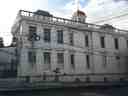
To spot the Rosales National Hospital, look for a grand, two-story white building with tall windows, squared panels all over its facade, and distinctive rooftop towers with ironwork railings running along the top-it's right across the street in front of you. Now, let me take you back in time as you stand under the shadow of this magnificent hospital. Imagine the bustling city of San Salvador at the end of the 1800s-needing a proper place to care for the sick, something bigger, more modern, and, hopefully, less likely to collapse with a sneeze during an earthquake! Enter Dr. Ramón García González, who had a wild idea: "Let’s build a new hospital, and we'll fund it with a lottery!" It sounds like a plot twist, doesn’t it? This "Lotería del Hospital" became such a hit that it eventually turned into the National Lottery of Beneficence-so if you ever lose at those scratch cards, you can blame him! But this was never just any old hospital. Thanks to a generous local, José Rosales, who left his estate for this purpose, the project found its financial heart. The blueprints came from Joseph Albert Touflet, a French military engineer living in El Salvador, who imagined a building that could withstand tremors and time. The real magic? The entire structure was made up of prefabricated metal pieces built in Belgium-like a gigantic set of medical Lego-then shipped across the ocean to El Salvador. Of course, in true adventure fashion, someone must have gotten their shipping notes mixed up because the pieces ended up in Salvador de Bahía, Brazil, instead of San Salvador! Eventually, they were assembled piece by piece, right on José Rosales’s donated land. When the building opened in 1902, the city proudly showcased it as a beacon of progress. Its pressed-metal panels and flexible design gave it a modern edge, while earthquake safety made sure nothing fell apart during a midnight rumble. The hospital, once nicknamed the “House of the Sick,” quickly became the country’s main medical center, with top-of-the-line bacteriology and chemistry labs opening by 1905. The building is so cherished that in 1989, the government declared it a National Monument and it even wears the “Blue Shield” of the Hague Convention, a symbol of its international cultural value. As you stand here, you might see workers restoring old panels or roofs-there’s a new debate over how to best preserve such a historic gem. When you walk away, know you’ve stood outside a building that’s not just bricks and walls, but dreams, drama, and the generous hope of a whole city.
전용 페이지 열기 →To spot the Salvadoran High School, just look straight ahead for a wide, light-turquoise building with two long rows of classrooms and a big sign on top that says “DIOS UNION…더 보기간략히 보기
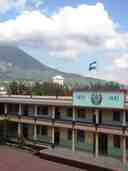
To spot the Salvadoran High School, just look straight ahead for a wide, light-turquoise building with two long rows of classrooms and a big sign on top that says “DIOS UNION LIBERTAD” between the years 1821 and 1881, with the Salvadoran flag waving proudly above. Alright, take a deep breath and soak in the energy of this place-here you are, standing before one of the oldest and most important schools in all of El Salvador! If you close your eyes and listen closely, you might almost hear the echo of hundreds of footsteps, laughter, and school bells drifting out over the years. Let’s rewind to the year 1881. Back then, San Salvador was a much quieter place, and this school, the Liceo Salvadoreño, was just getting started thanks to a determined archbishop named Adolfo Pérez y Aguilar. Picture him marching up to the government and saying, “We need a school for boys!” (No pressure, right?) His idea won everyone over, and by December, it was official-the school was born. In the early days, the Liceo was in a wooden house-a completely different world compared to this concrete courtyard you see now! The school grew quickly. In 1888, after that persistent archbishop got promoted by the Pope himself, the building started filling up with more and more students. There were challenges, though-just imagine trying to fundraise for more teachers every time new students arrived. There were even mysterious moments when, for reasons unknown, religious groups from faraway places almost took over but backed out at the last minute. Who knew running a school could be so dramatic? But the real plot twist came in 1924, when the Marist Brothers arrived, ready to shake things up with their fresh ideas and big hearts. Their founder, Saint Marcellin Champagnat, dreamed of schools being gentle, nurturing places-kind of like if your favorite grandmother and a super cool teacher teamed up to run things. At first, nobody really knew what to expect from these Marists. But pretty soon, families all over town were lining up, hoping to send their kids here, because the school’s reputation soared for turning out good people and smart students. By 1930, the first Marist graduates marched out the doors, ready to change the world. Just two years later, they needed even more space, so they set about buying new land and building anew. People must’ve thought: “Wow, this school really is going places!” And they were right! The modern building you see today began in 1952, with the first brick laid by the local bishop, and if you could travel back, you’d see a crowd holding their breath as the construction started, dust swirling in the air. The architect was none other than Napoleón Duarte, who went on to become president of all El Salvador. No wonder the design is presidentially impressive! Fast forward, and this place was buzzing with nearly 500 students by 1954. Not to mention, the parents got seriously involved-creating a parent association to keep an eye on things (and probably sneak in a few bake sales!). Over the years, more spaces were added: the charming Jardín Guirola, built in honor of two beloved students, and the massive Champagnat Gym, where generations have played and cheered. The school’s central courtyard saw big moments-and by big, I mean Papal-visit big. In 1983, Pope John Paul II came by. And that’s not the only brush with history-Oscar Romero, El Salvador’s soon-to-be saint, was ordained as a bishop right here, with applause shaking the rooftops. Of course, the school had its trials, too. In 1986, a tremendous earthquake struck the city, and the building suffered-but with powerful community spirit, everyone pulled together and rebuilt. Over time, change kept coming. What started as a boys’ school finally welcomed girls in 2001 (about time, don’t you think?), and celebrated its first co-ed graduation just over a decade ago! Even the pandemic couldn’t keep this school down. For more than a year, classrooms went quiet and computers glowed at home. But step-by-step, the laughter and lessons have returned, and today, the halls are once again alive, filled with around 2,500 students, three main buildings, energetic teachers, and an alumni association that just won’t quit. So as you look around and feel the breeze, remember-this isn’t just a school. It’s over a century of memories, challenges, and proud moments, all wrapped up in these walls and the joyful sound of learning that, thankfully, never seems to fade.
전용 페이지 열기 →
자주 묻는 질문
투어는 어떻게 시작하나요?
구매 후 AudaTours 앱을 다운로드하고 교환 코드를 입력하세요. 투어를 바로 시작할 수 있습니다 - 재생을 탭하고 GPS 안내 경로를 따라가시면 됩니다.
투어 중 인터넷이 필요한가요?
아닙니다! 시작 전에 투어를 다운로드하면 완전히 오프라인으로 즐길 수 있습니다. 채팅 기능만 인터넷이 필요합니다. 모바일 데이터 절약을 위해 WiFi에서 다운로드하시는 것을 권장합니다.
이것은 가이드가 안내하는 단체 투어인가요?
아닙니다 - 이것은 셀프 가이드 오디오 투어입니다. 폰을 통해 오디오 나레이션을 들으며 나만의 속도로 독립적으로 탐험합니다. 투어 가이드도, 단체도, 일정도 없습니다.
투어는 얼마나 걸리나요?
대부분의 투어는 60-90분이 소요되지만, 속도는 전적으로 본인이 조절합니다. 원할 때 언제든지 일시정지하거나, 정류장을 건너뛰거나, 휴식을 취하세요.
오늘 투어를 끝낼 수 없으면 어떻게 하나요?
괜찮습니다! 투어는 평생 이용이 가능합니다. 원할 때 언제든지 일시정지하고 다시 시작하세요 - 내일, 다음 주, 또는 내년에도. 진행 상황이 저장됩니다.
어떤 언어를 이용할 수 있나요?
모든 투어는 50개 이상의 언어로 이용 가능합니다. 코드를 교환할 때 원하는 언어를 선택하세요. 참고: 투어 생성 후에는 언어를 변경할 수 없습니다.
구매 후 투어는 어디에서 이용하나요?
App Store 또는 Google Play에서 무료 AudaTours 앱을 다운로드하세요. 교환 코드(이메일로 전송됨)를 입력하면 라이브러리에 투어가 나타나며, 다운로드하여 시작할 수 있습니다.
투어가 마음에 들지 않으시면 환불해 드립니다. 문의: [email protected]
안전한 결제 


