
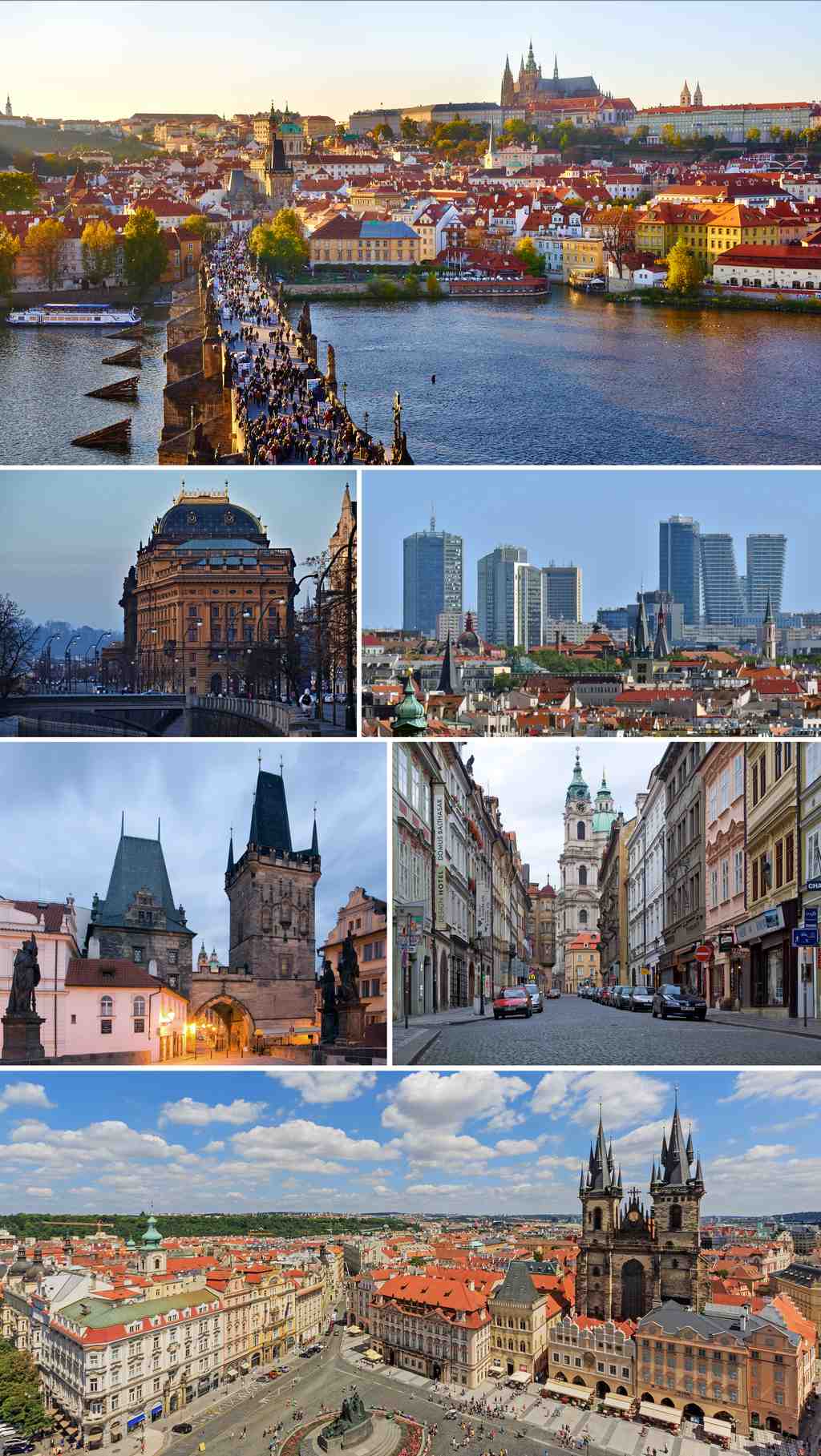
Look around at the expanse of gray cobblestones beneath your feet, the ring of pastel-colored facades enclosing the space, and the sharp gothic spires piercing the skyline above.
You are standing in the heart of Praha, or Prague as you know it, a city that has spent the last eleven centuries trying to decide if it wants to be the center of the universe or just a very well-kept secret. The locals call it Praha, but where does that name actually come from? Well, linguists and historians have been arguing about it over pints of beer for generations. The most poetic theory ties back to a legend about a mythical princess named Libuše. She was a soothsayer who reportedly stood on a cliff overlooking the Vltava river and proclaimed, I see a city great, whose glory will touch the stars. She told her people to go into the forest and find a man hewing the threshold of a house-in Czech, a prah. And thus, the city was named for that humble threshold.
There is a slightly less romantic theory that suggests the name comes from the word pražit, meaning to burn or parch, implying the original settlers simply scorched the forest to clear some space. But let’s stick with the threshold idea. It fits better. Prague has always been a threshold between East and West, a meeting point of cultures.
By the fourteenth century, this wasn't just a trading post; it was the capital of the Holy Roman Empire. Emperor Charles IV, a man with a serious building addiction, decided Prague should rival Rome and Paris. He founded the New Town, which is actually quite old now, and established one of the oldest universities in Europe here in 1348. He wanted this city to be the Praga Caput Regni-Prague, Head of the Kingdom.
But history here hasn't all been golden ages and gothic spires. This city has a habit of finding itself in the middle of Europe's messiest conflicts, from the Protestant Reformation to the Thirty Years' War. In the twentieth century alone, it went from the capital of a new democracy to a Nazi protectorate, then a Soviet satellite state following the invasion in 1968. You might notice that despite all that turbulence, the buildings are remarkably intact. Unlike Berlin or Warsaw, Prague wasn't flattened during the Second World War. It suffered damage, certainly-Americans actually bombed parts of it in 1945 by mistake, thinking they were over the German city of Dresden-but the medieval core survived largely unscathed.
Today, Prague is the thirteenth largest city in the European Union and acts as a massive economic engine. It is statistically one of the richest regions in Europe, with a GDP well above the EU average. It is a place where you can walk through a thousand years of architecture without ever leaving the city limits. They call it the City of a Hundred Spires, though a mathematician in the nineteenth century counted them and got to one hundred and three, and today the count is likely five times that number.
It is a city that feels permanent, carved from stone, just as the traveler Ibrahim ibn Yaqub described it back in the tenth century.
Take a moment to appreciate that you are standing in a place that refused to be destroyed. When you are ready, we can head to the next stop just a few steps away.




