
예레반 오디오 투어: 문화, 공원, 숨겨진 전설의 모자이크
예레반에서 과거는 잠들지 않습니다. 돌담과 청동 조각상에서 솟아나고, 푸른 공원과 번화한 광장에서 외칩니다. 엽서 같은 풍경 너머에는 소수의 여행자만이 발견할 수 있는 이야기의 미로가 기다리고 있습니다. 도시의 구불구불한 거리를 따라 셀프 가이드 오디오 모험을 떠나보세요. 조용한 교회는 비밀스러운 유물을 지키고, 상징적인 조각상들은 전설적인 영화의 장면들을 멈춰 세웁니다. 현지인들이 속삭이지만 좀처럼 공유하지 않는 이야기들을 밝혀내세요. 재난 속에서 조라보르 수르프 아스트바차친 수도원의 수도사들은 왜 모든 것을 걸고 단 한 권의 책을 지켰을까요? 우뚝 솟은 기념비 아래에서 아르메니아의 운명을 바꾼 자유 광장을 습격하도록 저항하는 군중을 촉발시킨 것은 무엇이었을까요? 그리고 '남자들' 조각상을 영화 세트장의 실제 스캔들과 연결시킨 기이한 장난은 무엇이었을까요? 한 걸음 한 걸음마다 신념과 분노, 우정과 반란의 충돌이 드러나며, 용기가 공기 중에 맴도는 곳에서 발자국이 울려 퍼집니다. 예레반이 매 순간 놀라움으로 펼쳐지는 것을 볼 준비를 하세요. 지금 바로 여정을 시작하세요. 기억이 눈앞에 기다리는 곳을 걸어보세요.
투어 미리보기
이 투어에 대하여
- schedule소요 시간 40–60 mins나만의 속도로 이동
- straighten6.3 km 도보 경로안내 경로 따라가기
- location_on
- wifi_off오프라인 작동한 번 다운로드, 어디서든 사용
- all_inclusive평생 이용언제든지 다시 재생 가능
- location_on조라보르 수르프 아스트바차친 교회에서 시작
이 투어의 정류장
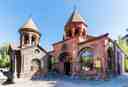
If you’re looking for the Zoravor Surp Astvatsatsin Church, glance ahead for a building proudly displaying Armenia’s iconic rose tufa stone. Its warm, reddish-brown walls stand…더 보기간략히 보기
If you’re looking for the Zoravor Surp Astvatsatsin Church, glance ahead for a building proudly displaying Armenia’s iconic rose tufa stone. Its warm, reddish-brown walls stand out, topped by two pointed, conical roofs-one larger and centered, the other off to the left. Broad arches frame the windows and the entrance, and you’ll spot a carved cross above the main door. Its calm and sturdy presence sits just where the trees start to part, as if inviting you in. Now, imagine yourself a few centuries back, standing right in this busy district of Old Yerevan. Horses would clop past, dust swirling in the hot air. In front of you rises the Zoravor Surp Astvatsatsin Church, second oldest in the whole city-older than some of your favorite action movie quotes! But don't let the plain stone fool you; this church has more stories tucked in its walls than a library with a leaky roof. Originally called Surp Astvatsatsin, or Holy Mother of God, it earned the nickname "Zoravor"-which means "Powerful"-because it once protected a special 13th-century Bible. Just picture it: priests and monks, whispering prayers, worried that invaders-or an earthquake-might snatch away their precious book. This site has always been a sanctuary. Long ago, there was a chapel holding the tomb of Ananias the Apostle, and people truly believed it was a safe haven. The entire complex, built in the 1600s thanks to generous locals, was like a fortress of faith, with thick walls and a lively community. Imagine the laughter from the monastic school as children scurried to lessons, their voices echoing against the stone. Don’t get too comfortable, though. In 1679, an earthquake hit, shaking this whole area, and the monastery collapsed. It must have felt like the world was ending-can you feel the ground tremble beneath your feet? But just like in a good comeback story, the people of Yerevan rolled up their sleeves and rebuilt this church in 1693. They even added the beautiful khachkars-look along the outer walls for these old cross-stones, each one with its own secret patterns and legends. For years, the church changed roles-a bit like an actor playing many parts. During Soviet times, it paused its religious duties, but eventually, in the 1970s, the church was returned to its original purpose and got a full makeover. The walls and roof were patched up, a choir space was added, and Saint Ananias Chapel was brought back to life. If you listen closely, maybe through the doorway you’ll hear the quiet murmur of prayers or the faint, solemn ring of a church bell-echoing down through centuries right to this moment. Welcome to Zoravor Surp Astvatsatsin, where the stones themselves seem to hum with faith, courage, and a little bit of mystery. And yes, the walls really have seen it all-even earthquakes! Ready to walk further into Yerevan’s secrets?
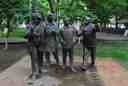
전용 페이지 열기 →Keep your eyes straight ahead and look just off the footpath, under the shade of the trees. You’ll see four life-sized bronze figures, frozen mid-chat-each with their own quirky…더 보기간략히 보기
Keep your eyes straight ahead and look just off the footpath, under the shade of the trees. You’ll see four life-sized bronze figures, frozen mid-chat-each with their own quirky pose, as if they’ve just wandered out of a lively story. One looks thoughtful with a finger to his lips, another stands with hands in his coat pockets, while the others seem caught in the middle of a joke or an argument. They’re not just statues-they look like old friends waiting for you to join in! Now, let’s step into the world of The Men! You’re not just in a park-you’re on the set of one of Armenia’s most beloved films. These four gentlemen standing together, almost whispering secrets through time, are the stars from Edmond Keosayan’s famous 1972 movie, “The Men.” Sculpted by Davit Minasyan in 2007, each figure has a story to tell: Mher Mkrtchyan, Avetik Gevorkyan, Armen Ayvazyan, and Azat Sherents, still making the crowd smile, just as they did decades ago on screen. Imagine the city around you buzzing in the early 70s. There’s laughter in the air, a secret plan, maybe even a bit of mischief-just like in the film. You might feel like these bronze friends could come to life at any moment and pull you into an adventure across Yerevan. And if they start walking, you’d better keep up-they’re experts in friendship and fun! So go ahead, walk up closer. Listen. Maybe, just maybe, you’ll hear the echoes of jokes shared and heartfelt stories told on chilly Yerevan nights. One thing’s for sure: you’re standing right next to a slice of Armenian joy. And don’t worry-they won’t judge if you’re tempted to strike a pose and join the group.
전용 페이지 열기 →Look straight ahead-you’ll spot a grand, curving building rising from an open, wide square. This is the famous Opera Theatre, and right in front of it is Freedom Square. Look for…더 보기간략히 보기
Look straight ahead-you’ll spot a grand, curving building rising from an open, wide square. This is the famous Opera Theatre, and right in front of it is Freedom Square. Look for the two statues sitting on either side, guarding the space like wise old friends. The square itself feels open, like a giant’s marble floor, perfect for imagining crowds gathered here, voices echoing off the stone. Now, let’s step into the story of Freedom Square-Azatut’yan hraparak. Maybe it’s quiet right now, but imagine it jam-packed, echoing with the voices of tens of thousands, feet stomping and banners waving. This square has been the heart of so many turning points in Armenia’s history that if the paving stones could talk, they’d probably never stop. Once called Opera Square, or Theatre Square, this spot is the neighbor to the Yerevan Opera building you see right in front of you. On your left and right, keep an eye out for two big bronze statues-one of the legendary Armenian writer Hovhannes Tumanyan and one of the composer Alexander Spendiaryan. These two have been enjoying front row seats to Armenia’s unfolding drama since 1957. Not a bad gig, right? If you wander east, you’ll find Swan Lake-don’t expect actual swans with ballet shoes, though! It’s an artificial lake shaped like Lake Sevan, and it’s become the perfect spot for daydreamers and movie buffs. Now, just beyond the lake, there’s a monument to Arno Babajanyan, a composer who could turn even a rainy Monday into a musical adventure. Freedom Square isn’t just sunlight and statues. For decades, it’s been the pulse of Armenian democracy-a place where hope and frustration spilled out into the open. Since the Karabakh movement in 1988, crowds have flooded here, people standing shoulder-to-shoulder to shout for change or demand justice. Sometimes, the government tried to quiet the crowd and block off the square. Spoiler: it never worked for long. You can almost hear echoes of megaphones and chants rising up. Oh, and underneath all your footsteps is a massive underground parking lot-because even in the middle of history, finding a parking spot is pure gold. So, as you stand in the open air, surrounded by memory and music, take a moment to listen. Maybe you’ll catch a whisper of the crowds, the rumble of change-Freedom Square almost dares you to dream a little louder.
전용 페이지 열기 →

12개 정류장 더 보기정류장 적게 보기expand_moreexpand_less
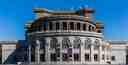
Look straight ahead-there’s no mistaking it. Rising before you is a massive, round building, shaped almost like a grand crown beside the city’s heart. Notice those tall, elegant…더 보기간략히 보기
Look straight ahead-there’s no mistaking it. Rising before you is a massive, round building, shaped almost like a grand crown beside the city’s heart. Notice those tall, elegant columns lining the upper part, with arches and huge windows on the front. The stone is a cool, dignified gray, and the steps seem to invite you up to join in some mysterious concert or secret show. If it feels like everyone in town is facing the same way, it’s because this is the iconic Opera Theatre. Now, take in the dramatic atmosphere. Imagine a cold January day, almost a hundred years ago. The city buzzes with excitement, people wrapped in heavy coats, eyes fixed on this brand-new theatre. It's January 20th, 1933, and on this very stage, the first notes of Alexander Spendiaryan’s opera “Almast” are about to soar through the air. The Opera, as locals call it-no fancy name needed-is the jewel box of Yerevan’s music scene. Designed by architect Alexander Tamanian (who, rumor has it, never missed a deadline, except maybe for dinner), the building took years to complete. Construction began in 1930, and, like any opera, there was plenty of drama before the final act: each part opened in stages, with the very last stone set in 1953. Inside, there are two grand concert halls-the Aram Khachaturian Concert Hall can hold 1,400 guests waiting for the sweep of strings or the pounding of drums, and the Opera and Ballet National Theatre has room for 1,200 to gasp at twirling ballerinas. On this stage, legends were born-famous singers, conductors, artists, and even painters helped fill the halls with music and magic. Imagine Gohar Gasparyan hitting stunning high notes, painters like Martiros Saryan creating colorful backdrops, and everyone hoping their costumes don’t catch on the giant velvet curtains. The Opera has seen it all-over 200 operas and ballets from Armenia, Russia, and around the world. They even staged “Anush” by Armen Tigranian, a piece so popular it practically became the country’s own musical national anthem. Laughter, tears, applause, and once, a lost tuba that miraculously turned up just before showtime-it all happened here. Oh, and here’s a modern mystery for you: in May 2024, English National Ballet is performing “Giselle” right here for the first time. Just imagine the excitement as dancers from London whirl under these grand arches! So, as you stand here, let the music of the past swirl around you, feel the thrill of the curtain about to rise, and maybe picture yourself as the star-just don’t trip over the invisible stage props.
전용 페이지 열기 →You’re almost there! If you look slightly to your left along Sayat-Nova Avenue, you’ll spot a low, modern building with a colorful mosaic running right above the big glass…더 보기간략히 보기
You’re almost there! If you look slightly to your left along Sayat-Nova Avenue, you’ll spot a low, modern building with a colorful mosaic running right above the big glass windows. That’s your sign-those cheerful puppet-like figures in yellow hats lined up under a bright painted sun aren’t just decorations, they’re the parade calling you in! The building itself is almost hugging the sidewalk, with a lot of playful energy. If you see old wooden signs up above and a few balloons and bright letters near the benches, you’re at the right place. Now, picture this: it’s 1935, and Yerevan is still a small city growing into itself. Suddenly, on a quiet street, a group of artists and dreamers decide the city needs more than politics and stone-kids (and adults) need magic, laughter, and a little bit of puppet mayhem! So, the Hovhannes Tumanyan Puppet Theatre is born-opened by the unstoppable Sofia Bejanyan and her band of puppet-loving friends. Their only competition? String tangles and accidental nose-dives (trust me, puppets aren’t known for their grace under pressure). The very first director, Varia Stepanyan, somehow wrangled not just marionettes, but the whole show into gear. And in 1938, they named it after the famous writer Hovhannes Tumanyan-a master of stories, perfect for a theatre where everything talks with a squeaky voice. The theatre had its ups and downs; in the 1950s, it went dark for nearly seven years. But, rather than leave puppets weeping in the attic, Yervand Manaryan swooped in like a hero and put them back on stage in 1957. Every corner you see here, every window and bench, sits on a hundred puppet adventures-think flying carpets, accidental pie fights, heartfelt tearjerkers, and, of course, grumpy ogres whose biggest weakness seems to be tickles. Inside, you’ll find the Pavlos Boroyan Puppet Museum, which is really a puppet paradise-more noses, mustaches, and string-tangled legs than you could count in a month! So, stand here for a moment and listen-can you almost hear the giggles, the clacking of puppet shoes, and the whispers of a thousand tiny wooden voices? That’s the heart of Armenian theatre, right at your feet. Just promise you won’t get too attached to the puppets… they tend to steal the show-and sometimes your hat!
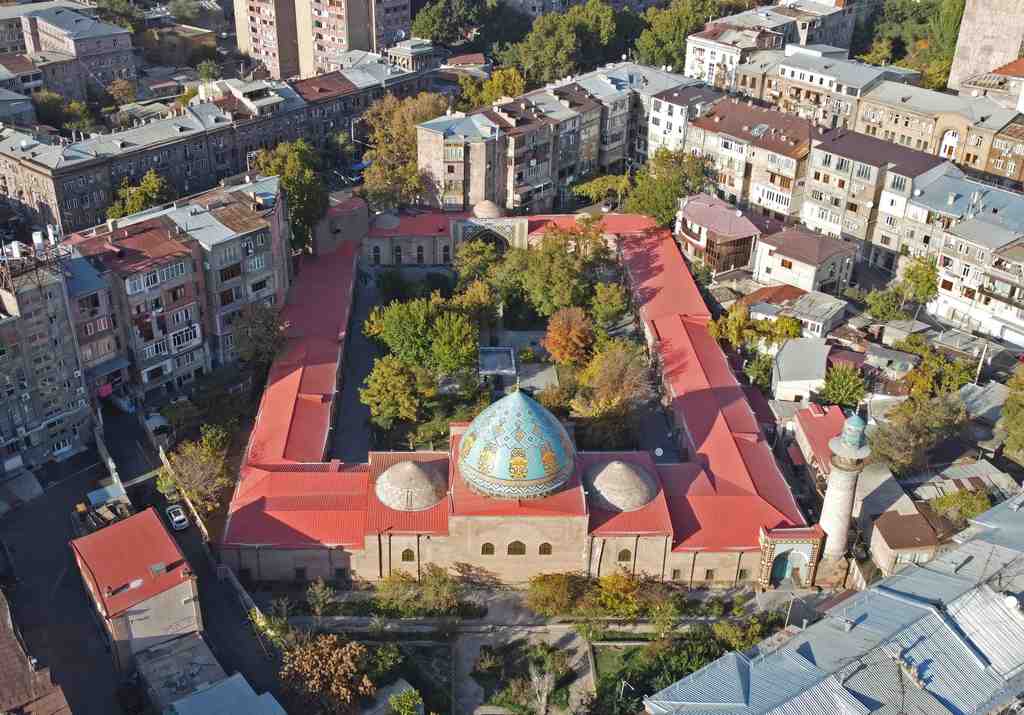
전용 페이지 열기 →To spot the Blue Mosque, just look ahead for a large rectangular complex with vivid red roofs. Right in the center, there’s a beautiful turquoise dome covered with elegant…더 보기간략히 보기
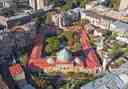
To spot the Blue Mosque, just look ahead for a large rectangular complex with vivid red roofs. Right in the center, there’s a beautiful turquoise dome covered with elegant patterns-almost like a crown for the whole building. To the right, you’ll also see a tall, round minaret topped with blue tiles. The entrance is a decorative arch on the southern side, inviting you down a few steps from street level. Now imagine yourself standing in front of this stunning mosque. Take in the gentle sunlight reflecting off that blue-tiled dome, and the whisper of wind through the courtyard’s leafy trees. This is the Blue Mosque of Yerevan-built back in 1765, when the city sounded a little different, with the call to prayer floating above the rooftops. At the time, it was the beating heart of the city’s Persian community, the biggest mosque among eight here in old Yerevan, and the main spot for Friday prayers. Its name might sound mysterious: Gök Jami to Turkish speakers, Kapuyt mzkit to Armenians, and Masjid-i Juma to Persian worshippers-it takes a lot of names to be this memorable! Picture the crowds arriving, the vibrant hustle of children running to lessons, and the soft echo of footsteps on the tiled floors as scholars and poets gathered inside. By the 19th century, the mosque’s minaret reached higher than any building in Yerevan-if you wanted to find your friends in the bazaar, you just had to look for the minaret! But here’s a twist worthy of any good drama: after Soviet rule arrived, the mosque was transformed. The call to prayer fell silent, and instead, the Blue Mosque held the city’s history museum-its arches echoing not with sermons, but with laughter, music, and the wild ideas of Armenia’s most creative minds. The courtyard became a secret oasis, sheltered by giant elm and plane trees. Writers like Yeghishe Charents and artists like Martiros Saryan sipped tea here, writing new stories for Yerevan’s future beneath the cool shade. Even though years have passed and the city has changed, the Blue Mosque stands as a link to centuries past. Thanks to careful restoration and support from Iran, it’s once again a place of peace for Yerevan’s Muslim community-and for any curious visitor who wants to step into its story. Take a look at the patterns on that dome, and think of all the hands-Armenian, Persian, Russian-that have helped care for this place. Who knows, maybe if you listen closely, you’ll hear a secret or two from the artists and poets who once called this courtyard their favorite hideout! To delve deeper into the names, architecture or the efforts to list as a world heritage site, simply drop your query in the chat section and I'll provide more information.
전용 페이지 열기 →On your right, you’ll notice a grand, old-fashioned building with tall columns rising in front, and glossy black stone pillars marking the entrance. Above the doorway, look for…더 보기간략히 보기
On your right, you’ll notice a grand, old-fashioned building with tall columns rising in front, and glossy black stone pillars marking the entrance. Above the doorway, look for golden Armenian letters gleaming in the sunlight-yes, that’s the Hakob Paronyan State Musical Comedy Theatre. The trees out front cast dancing shadows over the entrance, so keep an eye out for those rippling leaves and the big schedule board near the steps. Now, as you stand in front of this cherished landmark, imagine it’s June 1942, and the whole city is buzzing with excitement. Back then, people dressed in their finest, clutching paper tickets, eagerly waiting to be swept into a world of laughter and song. This theatre isn’t just a building-it’s a stage for the spirit of Yerevan. It’s named after Hagop Baronian, a legendary Armenian satirist who knew how to make laughter flow even in tough times. Over the years, famous artists like Shara Talyan and Vardan Ajemian made this place come alive with music and comedy that filled even the darkest wartime years with a spark of hope. On festival nights, you can almost feel the shiver of anticipation from actors behind the thick velvet curtains, hoping their jokes land and their songs soar. Believe it or not, this stage has traveled farther than most actors-Paronyan Theatre’s shows have delighted audiences from Armenia all the way to England, the USA, and even Iran. By the way, in 2009, the theatre’s director, Yervand Ghazanchyan, was honored with the “Best Presentation Award” at the Artavazd Festival. Not bad for a theatre named after a man who believed in finding the comedy in life’s messiest moments! So, take a deep breath and maybe even peek through the doorway. Who knows? You just might hear the echo of an old punchline floating through the marble halls, ready to make someone smile all over again.
전용 페이지 열기 →Take a look ahead! Republic Square is right in front of you. You’ll spot it easily-think of a grand open space surrounded by glowing, majestic pink and yellow stone buildings. At…더 보기간략히 보기
Take a look ahead! Republic Square is right in front of you. You’ll spot it easily-think of a grand open space surrounded by glowing, majestic pink and yellow stone buildings. At night, like now, the yellow lamps light up the scene and the buildings shine, almost like a movie set. If you see a large open roundabout with a detailed stone pattern in its center and banks of arched windows shining gold, you’re in the right place. That’s Republic Square, the beating heart of Yerevan. Now, imagine you’ve arrived here in the 1920s. The square is still taking shape, stones clinking, hammers echoing. Alexander Tamanian-our city’s super star architect-had a vision: a square so grand, any capital in the world would envy it. He paired tradition with style, using pink and yellow tuff so the buildings around you seem to glow, even on cloudy days. Five giants circle you-the Government House, National Gallery, Marriott Hotel, and former ministries, all covered in delicate Armenian carvings and impressive arches. In the center, you’ll see a pattern that looks strangely familiar-almost like a giant Armenian rug made of stone, right under your feet. You might wonder how many secret stories have walked across these stones. Speaking of mysteries, during a renovation in 2003, workers dug deep and found forgotten cellars, and even medieval water pipes hidden below-so if you ever lose your water bottle here, there’s a chance it could end up in a thousand-year-old pipe. Back in Soviet times, the square had a bit of an identity crisis. It was known as Lenin Square, complete with a towering copper statue of Lenin himself. Every year, crowds gathered here for parades-just imagine the sound of music and marching boots echoing around you. When Armenia gained independence, Lenin hit the road, and the square finally became Republic Square-belonging, once again, to the people. Legend has it, this is the city’s “architectural highlight”-and looking around, who can argue? Today, people gather here for celebrations, concerts, protests, and, if you time your walk just right, the famous musical fountains on a summer evening. Take a moment to let it soak in-you’re standing where history, architecture, and the everyday pulse of Yerevan all come together. Now, let’s get ready for our next adventure! Eager to learn more about the architecture, surrounding buildings or the other landmarks? Simply drop your inquiries in the chat section and I'll provide the details you need.
전용 페이지 열기 →Look straight ahead and you can’t miss it: the National Gallery of Armenia is a grand stone building, glowing from within, especially at night. The front is lined with tall,…더 보기간략히 보기
Look straight ahead and you can’t miss it: the National Gallery of Armenia is a grand stone building, glowing from within, especially at night. The front is lined with tall, arched windows and large columns, and you’ll spot huge, bold banners hanging down between them. If you hear the gentle splash of water, that’s the fountain in front reflecting the golden lights of the building, dancing on the surface like little fireflies celebrating art. Now, as you stand here, let your imagination stroll back through time. The National Gallery of Armenia is the country’s greatest treasure chest for art. It opened its doors in 1921, but at first, it had barely any art to show. Imagine a museum opening with nothing but a half-eaten sandwich on a shelf. But the people of Yerevan pulled together - they bought art from Armenian painters, welcomed donations, even went on artifact scavenger hunts! Soon, the walls couldn’t hold all the creativity bursting out. Step inside today and you’ll find over 40,000 artworks - a collection so grand it almost needs its own zip code. Picture ancient Egyptian statuary watching you from one corner, medieval Armenian frescoes from ancient churches peeking around another, and porcelain so delicate you’re almost afraid to breathe near it. You might even hear the echo of artists cheering their masterpieces being displayed for the first time. The gallery isn’t just about paintings, it’s a symphony of history-silver-covered manuscripts, altarpieces, and even old furniture that’s seen more dinner parties than you or I ever will. There’s a touch of mystery here too: some pieces were once hidden away in places like the Armenian Cultural Center in Moscow, rescued and brought home during dramatic times. And don’t forget, this place isn’t just preserving Armenian heritage - it’s sending Armenia’s creative soul flying around the globe, sharing it with curious visitors everywhere. So, as you stand here in front of this majestic giant, just remember: you’re at the crossroads of centuries, on ground where brushstrokes and bronze have whispered stories for generations. Ready to take a deep breath and dive in? Don’t worry, you don’t need a fancy hat or a monocle-just your eyes wide open and maybe a little space in your heart for a bit of wonder. For a more comprehensive understanding of the description, armenian art or the western art, engage with me in the chat section below.
전용 페이지 열기 →Take a look straight ahead-you can’t miss it! The History Museum of Armenia stands proud right in Republic Square, with its creamy limestone facade. Just look for a big,…더 보기간략히 보기
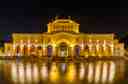
Take a look straight ahead-you can’t miss it! The History Museum of Armenia stands proud right in Republic Square, with its creamy limestone facade. Just look for a big, castle-like building with tall arches that look almost like doorways to the past. The grand entrance is framed by these arches, with flags and banners hanging above, giving the whole front a feeling of importance and story. And if you hear the joyful splash of water, that’s the fountain dancing just to the right of the entrance. Now, let's step back nearly a century. Imagine it’s 1920. This building is brand new and full of curiosity, as if it’s waiting to be filled with secrets from Armenia’s ancient world. Today, the museum is one of Armenia’s greatest treasure chests, holding over 400,000 objects from every chapter of Armenian history. Archaeological finds, coins, old documents-and enough artifacts to make Indiana Jones jealous! Honestly, if a single coin out here rolled away, you’d probably trip over another rare ancient treasure by accident. It all started with the dream of a handful of people, and now you’re here at the very heart of Armenian memory. If these walls could talk, you’d hear stories of bronze swords clashing, kings declaring new cities, and maybe even a donkey or two complaining about wooden carts from the 14th century BC! This museum once boasted so many treasures that it actually gave birth to other museums-like the National Gallery of Armenia and the Museum of Literature. Things are always changing inside, with new finds added from archaeological digs happening right now. Picture an ancient clay pot, still smelling faintly of the earth, or the cool shimmer of a Roman coin that once passed through so many hands it probably needed a vacation. But just when you think you’ve seen it all, you realize this museum isn’t just about Armenia-it’s a meeting point for the whole ancient world. There are traces of Egypt, Rome, Persia, and more-almost like a time traveler’s airport lounge. So, take a moment. Breathe in the aroma of history, the distant whisper of ancient voices, and the silent gleam of bronze untouched for centuries. Alright, history lover, are you ready to step into the museum, or should we imagine what it’s like to be an ancient treasure hunter for just a bit longer? Wondering about the collections, exhibitions or the gallery? Feel free to discuss it further in the chat section below.
전용 페이지 열기 →Take a look just ahead: you’ll notice a long green stretch curving gracefully along the city, flanked by wide tree-lined paths and dotted with benches. That’s no ordinary city…더 보기간략히 보기
Take a look just ahead: you’ll notice a long green stretch curving gracefully along the city, flanked by wide tree-lined paths and dotted with benches. That’s no ordinary city park-it’s Yerevan’s legendary Circular Park, stretching out before you like a big, leafy embrace! If you look to your left and right, you’ll see the park gently sweeping along the streets, weaving its way around the downtown blocks. The easiest way to spot it? Keep an eye out for walking paths winding around flowerbeds, fountains sparkling in the sun, and statues peeking out from behind the trees, almost like they’re playing hide-and-seek with you. This isn’t just a park-it’s a living timeline carved right into the heart of Yerevan. Standing here, you’re at the doorstep of a park that’s nearly 2.5 kilometers long-the same length as about 25 football fields lined up one after another! Locals call it the Youth Park, and it’s been one of the city’s favorite spots for generations. Picture this: back in the day, bold city planners dreamed up a green belt to wrap around downtown, giving people a place to stroll, chat, and-if you ask the kids-sneak in a little ice cream or two. Each step you take here is like turning a page in a storybook, because the Circular Park isn’t just about grass and benches. It’s home to an entire parade of statues, each with its own character and tale to tell. You’ll meet proud knights, thoughtful poets lost in thought, and even scheming chess masters who, let’s face it, probably have a move or two in mind for you. Don’t be surprised if you find yourself saying hello to the likes of Aleksandr Griboyedov, Andranik Ozanian, Vardan Mamikonian, and Yeghishe Charents-though I can’t promise they’ll say hello back unless you’re especially charming. And just when you think you’ve seen it all, there’s more: the Benefactors’ Walkway, opened in 2012. Imagine six wise benefactors lined up like a welcoming committee, each commemorated for their generosity to Armenia. It’s like an Armenian version of the Oscars, with statues instead of golden trophies! That’s not all. Scattered throughout the green, you’ll spy monuments to friendship, rebirth, and the waiting spirit of Armenia. The “Friendship between Carrara and Yerevan” monument celebrates sister cities, while the “Rebirth” monument promises, with a flourish, that Yerevan’s spirit is always ready for a comeback-yes, even after a long Monday. Now, as you walk along this crescent-shaped park, listen for the laughter of children, the cheerful whistles from songbirds, and maybe, just maybe, the whisper of a statue plotting its next move in eternal chess. If you linger here long enough, you might catch both sunrise and sunset looking equally magical through the branches. So take a stroll-or even a victory lap-around Yerevan’s greenest ribbon, and let the city’s stories find you. After all, who says a walk in the park can’t be a real adventure?
전용 페이지 열기 →




자주 묻는 질문
투어는 어떻게 시작하나요?
구매 후 AudaTours 앱을 다운로드하고 교환 코드를 입력하세요. 투어를 바로 시작할 수 있습니다 - 재생을 탭하고 GPS 안내 경로를 따라가시면 됩니다.
투어 중 인터넷이 필요한가요?
아닙니다! 시작 전에 투어를 다운로드하면 완전히 오프라인으로 즐길 수 있습니다. 채팅 기능만 인터넷이 필요합니다. 모바일 데이터 절약을 위해 WiFi에서 다운로드하시는 것을 권장합니다.
이것은 가이드가 안내하는 단체 투어인가요?
아닙니다 - 이것은 셀프 가이드 오디오 투어입니다. 폰을 통해 오디오 나레이션을 들으며 나만의 속도로 독립적으로 탐험합니다. 투어 가이드도, 단체도, 일정도 없습니다.
투어는 얼마나 걸리나요?
대부분의 투어는 60-90분이 소요되지만, 속도는 전적으로 본인이 조절합니다. 원할 때 언제든지 일시정지하거나, 정류장을 건너뛰거나, 휴식을 취하세요.
오늘 투어를 끝낼 수 없으면 어떻게 하나요?
괜찮습니다! 투어는 평생 이용이 가능합니다. 원할 때 언제든지 일시정지하고 다시 시작하세요 - 내일, 다음 주, 또는 내년에도. 진행 상황이 저장됩니다.
어떤 언어를 이용할 수 있나요?
모든 투어는 50개 이상의 언어로 이용 가능합니다. 코드를 교환할 때 원하는 언어를 선택하세요. 참고: 투어 생성 후에는 언어를 변경할 수 없습니다.
구매 후 투어는 어디에서 이용하나요?
App Store 또는 Google Play에서 무료 AudaTours 앱을 다운로드하세요. 교환 코드(이메일로 전송됨)를 입력하면 라이브러리에 투어가 나타나며, 다운로드하여 시작할 수 있습니다.
투어가 마음에 들지 않으시면 환불해 드립니다. 문의: [email protected]
안전한 결제 


