
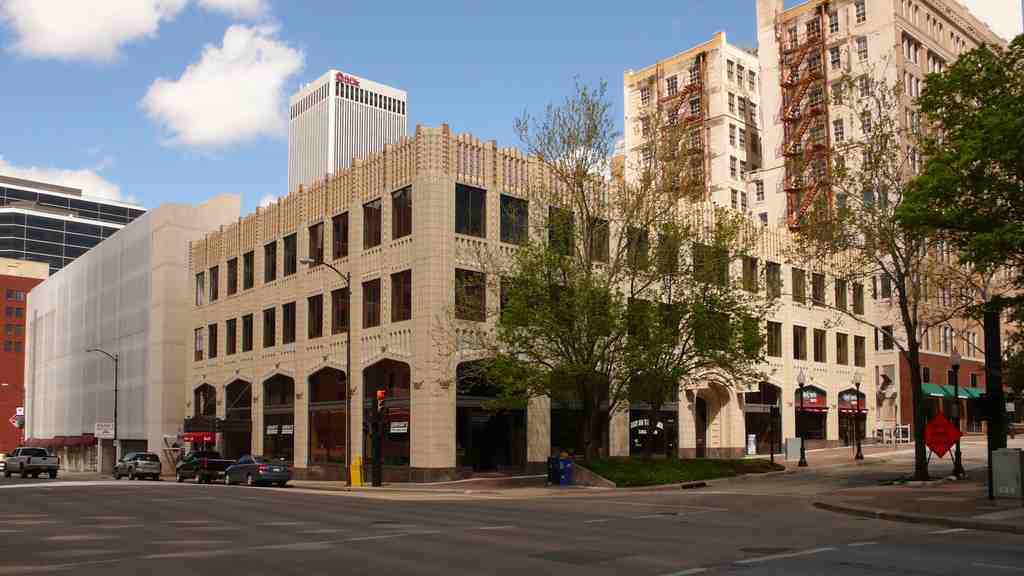
Look to your left for the cream-colored terra cotta building shaped as a neat three-story block, marked by grand Tudor arches along the ground floor and striking vertical zig-zag patterns rising to its roofline.
What you are looking at is a literal half-finished dream. This is the Pythian Building, or as it was originally known, the Gillette-Tyrrell Building. Back in 1929, two wealthy oilmen named J. M. Gillette and H. C. Tyrrell had a vision that matched the roaring optimism of the era. They hired architect Edward W. Saunders to create something spectacular. Saunders designed a soaring thirteen-story tower that beautifully blended sleek modern style with regional influence. The blueprints called for three floors of bustling retail and office space, topped by ten floors of a luxurious hotel, all crowned by an elegant rooftop ballroom where high society could dance the night away.
They broke ground and actually built the vertical steel supports for those magnificent hotel floors. But then came the devastating blow of the Great Depression. The oil business slowed, investors pulled their money, and construction ground to a sudden, permanent halt. This building is a glaring monument to the boom and bust cycle that defined early Tulsa. Gillette did not just lose his towering hotel, he lost his entire fortune in the financial collapse, including his beloved countryside estate.
If you check your app you can really see the harsh reality of that economic crash. The structure simply stops at three floors, as if sliced off mid-thought.
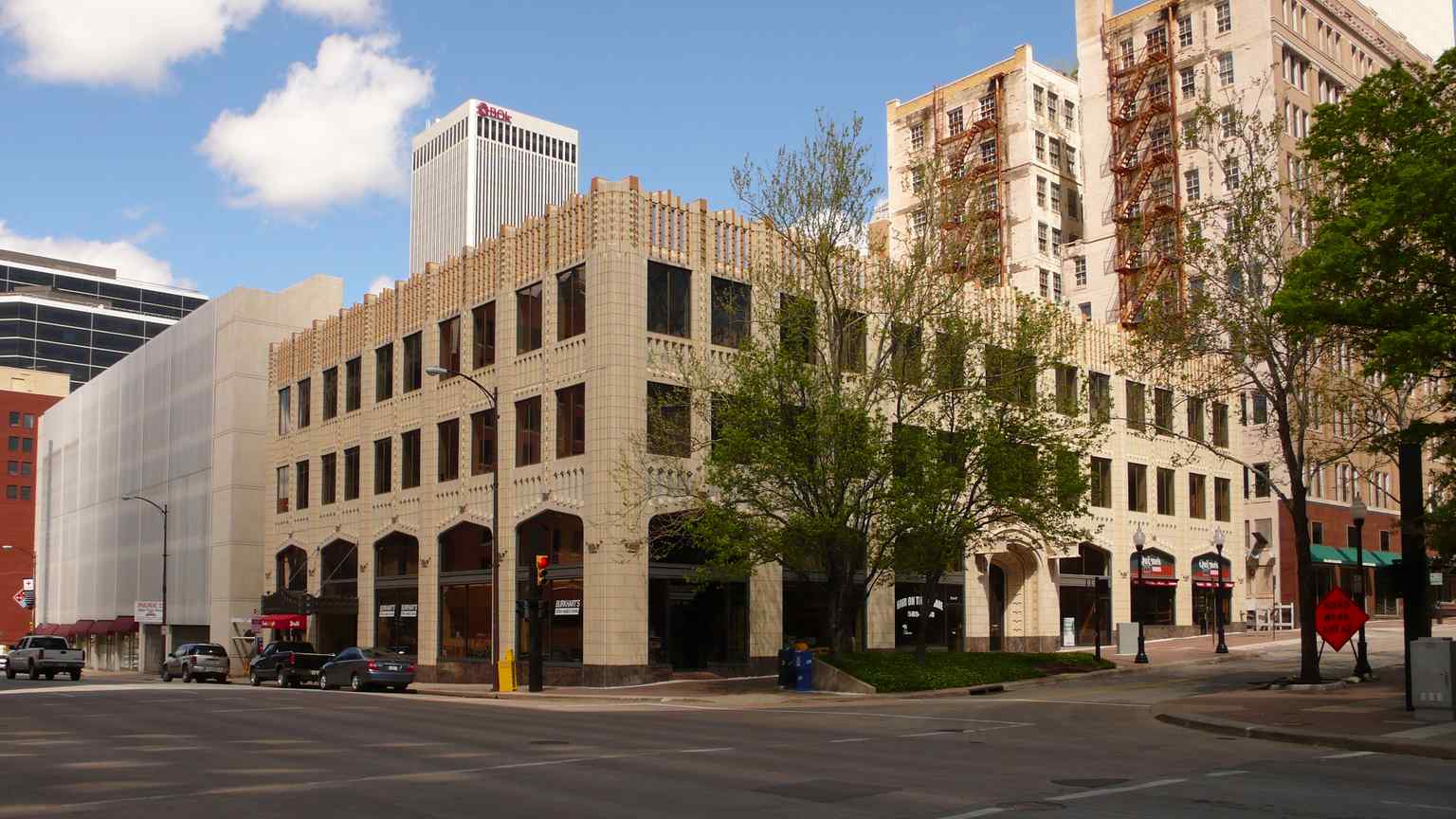
In 1931, the unfinished shell was bought by the Knights of Pythias, a large national fraternal organization dedicated to charity and community building. They scrapped the hotel plans completely but made a brilliant decision. They kept Saunders' striking Art Deco decorative flourishes. Take a peek at your screen to admire those diamond zig-zag patterns running up the thin vertical piers. They are accented with vibrant blue, green, and burnt sienna terra cotta. Even the intricate geometric floor tiles inside were designed to echo Indigenous textile motifs, preserving a fragment of that original ambitious dream.
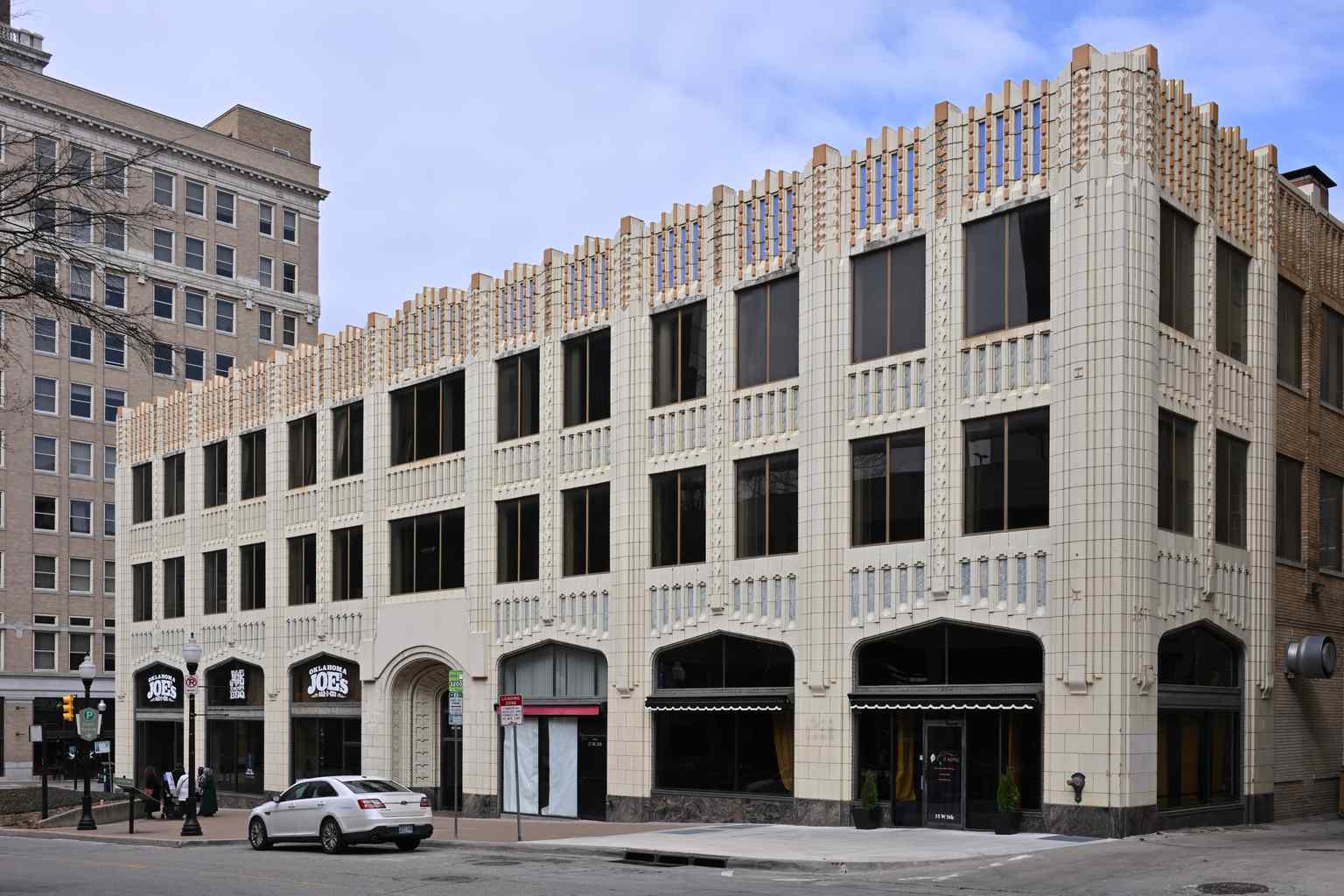
Decades later, the building changed hands a few times, eventually falling under the ownership of Maurice Kanbar the eccentric inventor of SKYY Vodka, who bought up a third of downtown Tulsa in the early two thousands. After a bitter legal dispute over his portfolio, local developer Stuart Price stepped in, bringing this property and millions of square feet of downtown real estate back into local hands. Price championed a movement to draw young professionals back into the urban core, aiming to restore the vibrant energy those original oilmen had envisioned nearly a century ago.
It makes you wonder what our skyline would look like if the roaring twenties had just roared a little longer.
But some grand architectural dreams in this city did get completed, even if they were hiding their own secrets. We are heading to the First Place Tower next, which is about a four-minute walk away. Oh, and if you want to peek at that stunning lobby here, the building is open Monday through Friday from 9 AM to 5 PM, and closed on weekends.






