
セントチャールズ オーディオツアー:芸術、遺産、隠れた名所の響き
かつて川船の轟音が革命のささやきと混じり合った街、セントチャールズは、そのレンガの通りの下に物語を隠しています。オールドセントチャールズ橋の摩耗した石の一つ一つ、そして歴史地区のあらゆる影が、解き明かされるのを待つ秘密を抱えています。 このセルフガイドオーディオツアーは、何世紀にもわたる伝説と伝承を紐解く旅へとあなたを誘います。大胆な脱走劇、裏舞台での政治的駆け引き、そして混雑した歩道ではほとんどの訪問者が見過ごしてしまう奇妙な出来事など、語られざる物語を発見してください。 ミズーリ州の権力の中枢に衝撃を与えた反乱を引き起こしたのは誰だったのか?ある地域の運命を変えながら、初代州都庁舎をすり抜けた影の人物とは?なぜ地元の人々は、橋の鐘が真夜中に鳴る音についてひそひそと語るのか? 川沿いを歩き、秘密の会合に足を踏み入れ、新たな視点と研ぎ澄まされた感覚でセントチャールズを発見してください。この街の真の顔が、あなたを待っています。 旅を始め、忘れ去られた物語があなたの足元で蘇るのを聞いてください。
ツアーのプレビュー
このツアーについて
- schedule所要時間 30–50 mins自分のペースで進める
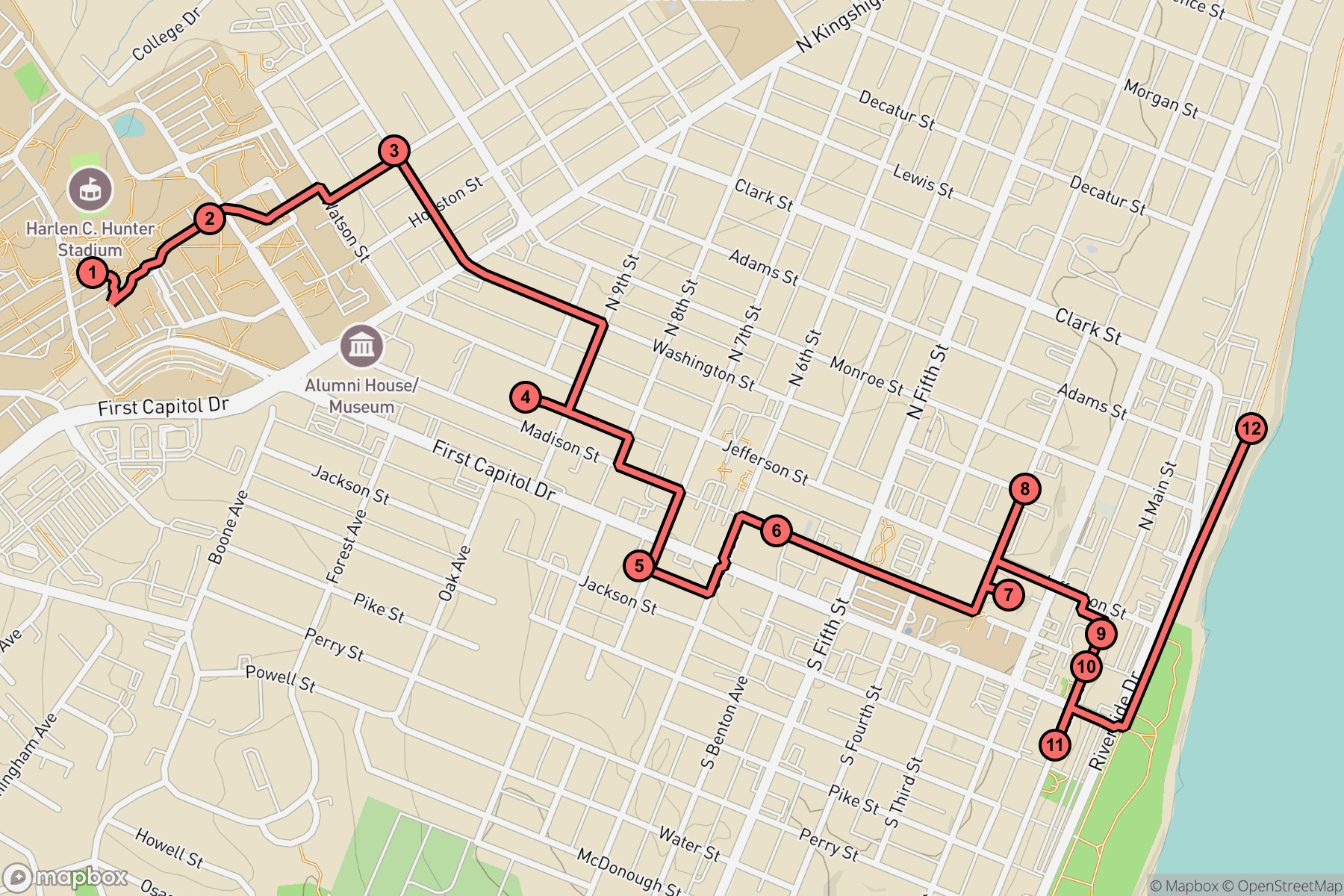
- straightenウォーキングルート 4.0kmガイド付きパスに沿って進む
- location_on
- wifi_offオフライン対応一度のダウンロードでどこでも使える
- all_inclusive無期限アクセスいつでも、ずっと再生可能
- location_onJ. シャイデッガー芸術センターから開始
このツアーのスポット
You’re standing right in front of the J. Scheidegger Center for the Arts-one of St. Charles’ most dazzling jewels and, honestly, a place that probably has bigger backstage secrets…もっと読む折りたたむ
You’re standing right in front of the J. Scheidegger Center for the Arts-one of St. Charles’ most dazzling jewels and, honestly, a place that probably has bigger backstage secrets than your local coffee shop! Opened in 2008, this sparkling complex is the pride of Lindenwood University, and it’s about the size of two football fields stacked together-138,000 square feet of pure creativity. All of this came together thanks to a generous $2 million gift from Jerry Scheidegger, a guy who was so helpful, they literally carved his name into the building. Now that’s leaving a mark! Feel the excitement just outside as students rush between dance studios and the main entrance buzzes with theater-goers on a performance night. Inside the main Lindenwood Family Theater, you’ll find 1,200 plush seats waiting for everything from Broadway musicals to major speeches. It’s equipped with high-tech wizardry-think more lights, sounds, and special effects than a magician’s birthday party. If you wander over to the Emerson Black Box Theatre, it’s a cozier spot-just 250 seats and the stage moves around, so every show feels new. This is where experimental plays and creative performances try out their wildest ideas. And if you’re an art lover, the Boyle Art Gallery glows with pieces from local students to international artists. Even the walls get to show off a little. Education here is just as lively. Imagine students rehearsing next door with Steinway grand pianos, costume designers sewing up the next Shakespearean masterpiece, and TV crews bustling around an HD studio, ready for their moment on the air. Big names have pranced these stages too-Hal Holbrook, Liza Minnelli, Glen Campbell, and Patti LaBelle all left their mark. So whether you’re performing your debut, learning your craft, or simply soaking up the art, the J. Scheidegger Center buzzes with possibility-and probably more leftover glitter than anywhere else in Missouri.
専用ページを開く →You’re standing before Lindenwood Hall-though if you’d been here in 1857, you’d need to watch out for mud instead of concrete! The core of this striking building, known back then…もっと読む折りたたむ
You’re standing before Lindenwood Hall-though if you’d been here in 1857, you’d need to watch out for mud instead of concrete! The core of this striking building, known back then as Sibley Hall, first rose from the red Missouri earth just before the Civil War. Picture its original three stories, bold and rectangular, all red brick and promise, while the area buzzed with the hum of student chatter and the occasional runaway horse. Over time, Lindenwood Hall grew, donning impressive brick wings-a little expansion here in 1881, another in 1887-until it finally earned its elegant U-shape, like a grand embrace welcoming generations of students. Now gaze up at that Classical Revival portico, the two-story columns giving the place a look somewhere between a stately home and a university that wanted to be a Greek temple when it grew up. Those curved, arched windows peer out like friendly eyes, keeping watch as fads and hat styles changed every decade. A low hipped roof crowns it all, sheltering countless stories, from candle-lit cramming sessions to modern-day college pranks. Named to the National Register of Historic Places in 1978, Lindenwood Hall remains a proud landmark of education and resilience. Quite the glow-up for a building that’s seen more than a few graduation caps-and maybe an awkward freshman moment or two!
専用ページを開く →These 108 buildings have stories baked right into their bricks, stretching from 1902 to 1956. You’ll spot the whimsical rooflines and spindly porches of Folk Victorians, the…もっと読む折りたたむ
These 108 buildings have stories baked right into their bricks, stretching from 1902 to 1956. You’ll spot the whimsical rooflines and spindly porches of Folk Victorians, the strong lines of American Craftsman bungalows-maybe the homeowners were the original “DIYers!” Then, rounding a bend, you hit the brick and half-timbered majesty of Tudor Revival houses or the sun-soaked stucco and red tiles of Mediterranean Revivals. Every home here proudly flaunts its own personality. Added to the National Register of Historic Places in 2016, this district is an official time capsule of what made St. Charles tick, dream, and decorate. If you see a squirrel stop and stare, I’m pretty sure it’s just overwhelmed by all those architectural choices.
専用ページを開く →


さらに8件のスポットを表示表示するスポットを減らすexpand_moreexpand_less
Built around 1855, this church wasn’t just a spiritual home; it was a safe haven. The little red bricks have watched generations come and go, through times of struggle, hope, and…もっと読む折りたたむ
Built around 1855, this church wasn’t just a spiritual home; it was a safe haven. The little red bricks have watched generations come and go, through times of struggle, hope, and change. But here’s a twist-the building’s story took a sharp turn in 1947, when it was renovated and became someone’s home! Imagine going to sleep in your living room knowing generations had sung, celebrated, and even debated under that same roof. In 1980, the African Church earned its spot on the National Register of Historic Places. If these walls could talk, I bet they’d have some good punchlines. After all, not every house used to ring with both hymns and alarm clocks!
専用ページを開く →But climb those creaky old stairs in your imagination, and suddenly, things get serious. The second floor was where Missouri’s government was born. Lawmakers debated by…もっと読む折りたたむ
But climb those creaky old stairs in your imagination, and suddenly, things get serious. The second floor was where Missouri’s government was born. Lawmakers debated by candlelight, their voices mixing with the muffled sound of boots on wooden floors. During a heated November session in 1821, it was here they chose the permanent capital-moving it to the freshly minted City of Jefferson. Today, you can explore those same rooms and two floors of fascinating exhibits. Don’t worry, no government decisions required-just a sense of wonder and, for the brave, maybe a peek into the old gift shop for a souvenir!
専用ページを開く →You’ve made it all the way to the Old St. Charles Bridge! As you stand here, picture yourself on the banks of the Missouri River-foggy mornings, steamboats gliding by, and a brand…もっと読む折りたたむ
You’ve made it all the way to the Old St. Charles Bridge! As you stand here, picture yourself on the banks of the Missouri River-foggy mornings, steamboats gliding by, and a brand new iron bridge stretching out across the water in 1904. The bridge didn’t just appear overnight, oh no. Construction started in 1902 and boy, was it a circus! Materials like lumber and steel didn’t always show up on time. Sometimes, storms would roll through and force the workers to pack up their tools. There was even a courtroom drama when a dispute broke out over where exactly the bridge could go. The workers-known as sandhogs-had to work deep inside the piers, sometimes ferrying supplies across the river because there was no storage space in St. Charles. It’s not every day your first commute is by boat to build a bridge! When it finally opened in time for the 1904 St. Louis World’s Fair, the bridge was a two-trick pony: part highway, part streetcar. Crowds gathered, cars rumbled across, and streetcars rattled by. Imagine the clang of the old toll gate-yes, you had to pay to cross until 1931. The streetcar station is actually still standing over at 2nd and Adams, like an old ticket stub to a grand show. In the late 1920s, electric lines were strung across the bridge. They even needed special insulators developed in New York, just to keep up with Missouri’s river humidity-talk about high-maintenance! By 1932, trolleys and tolls were history. The bridge served highways and travelers for decades, joining Route 40 and later Route 115. In 1959, it watched as the new U.S. Route 40 bridge stole the show. Officially closed in 1992 and brought down in 1998, this engineering marvel lives on in memory-and in the Historic American Engineering Record. So, next time you cross the river, give a quick nod to the bridge that turned everyday commutes into a true adventure. And remember: somewhere out there, a sandhog is still shaking his fist at a missed steel shipment!
専用ページを開く →


よくある質問
ツアーはどうやって始めますか?
購入後、AudaToursアプリをダウンロードして引き換えコードを入力してください。ツアーはすぐに開始できます。再生ボタンをタップして、GPSガイド付きルートに従うだけです。
ツアー中にインターネットは必要ですか?
いいえ!開始前にツアーをダウンロードしておけば、完全にオフラインで楽しめます。チャット機能のみインターネットが必要です。モバイルデータを節約するため、WiFi環境でのダウンロードをお勧めします。
これは団体ツアーですか?
いいえ、これはセルフガイド式のオーディオツアーです。ガイドや団体、決まったスケジュールに縛られることなく、スマホから流れるナレーションを聴きながら自分のペースで自由に探索できます。
ツアーの所要時間は?
ほとんどのツアーは60〜90分で完了しますが、ペースは完全に自由です。好きな時に一時停止したり、スポットを飛ばしたり、休憩を取ったりできます。
今日中にツアーを終えられない場合は?
問題ありません!ツアーには無期限でアクセスできます。明日、来週、あるいは来年でも、好きな時に再開できます。進行状況は保存されます。
どの言語が利用可能ですか?
すべてのツアーが50以上の言語に対応しています。コードを引き換える際にお好みの言語を選択してください。注意:ツアー生成後に言語を変更することはできません。
購入後、どこからツアーにアクセスできますか?
App StoreまたはGoogle Playから無料のAudaToursアプリをダウンロードしてください。メールで届いた引き換えコードを入力すると、ライブラリにツアーが表示され、ダウンロードして開始できるようになります。
もしツアーを楽しめなかった場合は、返金いたします。お問い合わせ先: [email protected]
以下の決済で安全にチェックアウト 


