AudaTours logoAudaTours

アイオワシティ オーディオツアー:キャンパスの定番と伝説的なランドマーク

オーディオガイド14 か所

言葉と囁かれた反乱の上に築かれた街が、アイオワシティの洗練された大学生活の下で脈打っています。ここでは、華やかなスキャンダル、詩的な才能、秘密の信仰のこだまが、お気に入りのたまり場や静かな片隅から染み出しています。 このセルフガイドオーディオツアーは、アイオワシティの隠された側面を解き明かします。歴史ある通りや緑豊かな小道を散策し、語られざるドラマ、囁かれる伝説、そして国を形作った創造性を発見してください。 真夜中の稲妻の下、旧州議事堂の階段に、かつてどんな激しい抗議が響き渡ったのでしょうか?どの著名な作家が、作家ワークショップの壁の中で怒りを引き起こしたのでしょうか、そしてその理由は?聖マリア教会から姿を消し、信仰者を揺るがし、今も地元の伝承に汚点を残している事件の人物は誰でしょうか? 大胆な先見者、文学の反逆者、そして意外な英雄たちが足跡を残した曲がりくねった道をたどってください。秘密がすぐそこにあることを明かすにつれて、想像力を曲がりくねった大通りに沿って駆け巡らせましょう。 耳を傾け、アイオワシティの謎に引き込まれてみてください。あなたの物語は今、始まります。

ツアーのプレビュー

map

このツアーについて

  • schedule
    所要時間 40–60 mins自分のペースで進める
  • straighten
    ウォーキングルート 2.4kmガイド付きパスに沿って進む
  • location_on
  • wifi_off
    オフライン対応一度のダウンロードでどこでも使える
  • all_inclusive
    無期限アクセスいつでも、ずっと再生可能
  • location_on
    アイオワ大学から開始

このツアーのスポット

  1. Now picture the scene back in 1855-124 students, 41 of them women(!), gathered in the Old Mechanics Building. I imagine the announcement back then: “Welcome ladies and gentlemen,…もっと読む折りたたむ

    Now picture the scene back in 1855-124 students, 41 of them women(!), gathered in the Old Mechanics Building. I imagine the announcement back then: “Welcome ladies and gentlemen, to the first public university in the United States where men and women can actually sit together in a classroom!” (And you thought co-ed dorms were a modern thing.) The curriculum? Ancient and modern languages, chemistry, philosophy-basically, a recipe for very thoughtful dinner parties. From these humble beginnings, the university became a trailblazer. It was the first to grant law degrees to women and to African American students, and the first public university to have a coeducational medical school-it was equal opportunity before it was trendy. Fast-forward, and you’ll find this campus buzzing with nearly 32,000 students exploring over 200 fields of study and joining some 500 student organizations. So, if you’re thinking of starting a club for underwater basket weaving or interpretive dance battles, you might just find a few kindred spirits. But wait, did you feel the change in the air? Maybe it’s a creative spark-this is the birthplace of the Master of Fine Arts degree. The University of Iowa was the first in the world to say, “Hey, writing a play or painting a masterpiece is just as academic as writing a thesis.” That decision led directly to the founding of the Iowa Writers’ Workshop, the most prestigious creative writing program in the United States. Writers from here have collected Pulitzer Prizes like some people collect coffee mugs-17 of them, to be exact. And this campus is more than just classrooms and libraries-though, speaking of libraries, the Main Library has over five million volumes! The campus sprawls across both sides of the Iowa River, which means students here are basically experts in bridge crossing (on foot, not in literature). Look around and you’ll notice the architectural charm-the stately Pentacrest in Beaux-Arts and Greek Revival style, the Collegiate Gothic buildings, and an impressive collection of public art sprinkled along your path. Some of it’s by world-famous artists, so if you feel inspired, go ahead and strike a poetic pose. Don’t forget to imagine the roar of a crowd at Kinnick Stadium, echoing across the river -the Hawkeyes’ battles on the football field have become the stuff of legend, just like the wrestling team’s 24 NCAA championships. Some days, you half-expect Nile Kinnick himself, the famous Heisman winner, to stroll onto the field and start tossing passes! The university hasn’t just survived historical ups and downs-it’s flourished. There were dramatic floods in 2008, and the community banded together to rebuild. So, whether it’s pioneering sustainability by burning oat hulls instead of coal, or producing scientists, artists, doctors, news anchors (ever heard of Tom Brokaw?), athletes, and even a certain comedian named Gene Wilder, there’s a very good chance someone here has left a mark on the world. As you walk these grounds today, tap into that creative, trailblazing energy-and if you hear a mysterious whisper in the wind, maybe it’s the next great novelist or scientist hatching their dreams. Or maybe it’s just another student running late for class-either way, welcome to the Hawkeye family! Ready to delve deeper into the campus, organization and administration or the undergraduate admissions? Join me in the chat section for an enriching discussion.

    専用ページを開く →
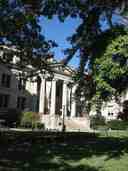
  2. In front of you stands a stately limestone building with tall columns, a golden dome gleaming at the top, and a flag waving right above its central entrance-look straight ahead,…もっと読む折りたたむ

    In front of you stands a stately limestone building with tall columns, a golden dome gleaming at the top, and a flag waving right above its central entrance-look straight ahead, it's impossible to miss that shiny cap catching the sunlight. Alright, adventurer, you’re standing before the Old Capitol Building-one of Iowa City’s true showstoppers! Imagine the year is 1840. Workers, in suspenders and dust-covered hats, gather for the laying of the first cornerstone, the July sun scorching their brows. Iowa City buzzes with excitement, knowing this building will soon become the heart of government for the new territory, soon to be the 29th state. Let’s have some fun with its origins. John F. Rague, the architect, was already a pro, having designed Illinois’ capitol-honestly, he probably thought, “Wow, it’s like déjà vu!” But Rague threw in the trowel and quit after five months, because his plans were changed. I’d be grumpy too if someone swapped my blueprints! Still, if you squint, you can see his vision lives on, especially in that grand golden dome. Early sketches were pretty wild-imagine this: two domes and a central tower. Now that would’ve been a fashion statement for a state capitol! Instead, Iowa got these classic Greek Revival vibes. Inside, lawmakers crafted the very first Iowa constitution. In these chambers, the first governor was sworn in, and six general assemblies huddled over laws that would shape the state. When Iowa officially became a state in 1846, this was the epicenter. Just two months later, right here, the groundwork was laid for the University of Iowa-so you could say this is where Hawkeyes hatched. But after only ten years, Iowa reached for bigger dreams and moved the capital west to Des Moines-easier to get to for more folks. That meant the Old Capitol didn’t just fade into obscurity; it took on a whole new role. It became the University of Iowa’s very first permanent building, and from 1857 to 1863, the entire university squeezed inside. Picture students juggling armloads of books, dodging around faculty, and someone squeezed into a window nook reading poetry-no modern campuses, just everyone under one big, historical roof. Decades rolled on, and in the 1920s renovations began to keep this old landmark from falling apart. Even the university presidents kept their offices here-if these walls had a resume, it’d be impressive! Fast-forward to the 1970s, and the building was showing its age, creaking with tired floorboards. But rather than get a bland office building makeover, a team led by Margaret Keyes gave the place a six-year restoration glow-up, bringing it back to its 1850s splendor. They peeled away layers of history to let the original shine. Now buckle up for some drama. In 2001, as part of building repairs, work crews with torches accidentally set the cupola on fire-talk about hot under the collar! Thankfully, a tough firewall from a cheaper 1920s upgrade kept the flames from reaching the rest. Still, the damage was massive-dome gone, bell ruined, and a flood of water everywhere. You probably could've gone swimming in the basement! A new wooden dome was hoisted in 2003, covered with nearly 24-carat gold leaf. They even replaced the bell, though the singed original is still on display inside. Today, the Old Capitol stands as a museum and a symbol-it’s even the face of the University of Iowa’s logo. Its rooms hold exhibits on how Iowa changed and grew, and if you ever hear the sound of graduates nervously defending their theses, don't worry-it’s tradition. This isn’t just a building. It’s a star of coins, survived fire, and the beating heart of the university’s “Pentacrest.” With its golden dome shining down, it’s been the steady anchor in Iowa City’s whirlwind story. Ready to delve deeper into the government building, campus landmark and 1970s restoration or the november 2001 fire and renovation? Join me in the chat section for an enriching discussion.

    専用ページを開く →
  3. Right ahead of you, you’ll spot a grand neoclassical building with massive white columns and a wide staircase, proudly sitting in the sunlight behind the leafy trees-just look for…もっと読む折りたたむ

    Right ahead of you, you’ll spot a grand neoclassical building with massive white columns and a wide staircase, proudly sitting in the sunlight behind the leafy trees-just look for the two big banners waving between the pillars. Ah, you’ve reached the legendary University of Iowa Museum of Natural History! Imagine it’s 1858-the streets are all horses and wagons, and over at the University’s only building, the Old Capitol, a handful of scientific enthusiasts are puzzling over a growing jumble of rocks, bones, and bird eggs. The place was called the Cabinet of Natural History, and, honestly, it was more treasure chest than cabinet, stuffed with wonders from Iowa’s earliest geological surveys. But, the first curator, paleontologist James Hall, quickly realized that wrangling fossils and funds wasn’t nearly as fun as it sounded-so, he packed up and left, the university’s bankruptcy woes echoing behind him. Enter Theodore S. Parvin, a lawyer with a taste for adventure, determined to build Iowa’s geological collection. Over the decades, each new curator managed to snag more bones, birds, and artifacts. The big move came in 1885, when the ever-growing Cabinet was lugged over to a new Science Hall, thanks to Samuel Calvin’s knack for persuasion and fossil hunting. Two years later, the museum got its true name-and so began its reign as “The” place for Iowa’s natural history. By the late 1800s, the museum’s fourth curator, Charles Nutting, turned glass display cases into campus attractions. He had a nose for adventure, organizing expeditions to the far-off Bahamas and even to Laysan Island, bringing back specimens that filled the exhibits faster than a squirrel at a bird feeder. Nutting’s collection grew so big, he practically begged for a new home, and in 1908, Macbride Hall-the stately building in front of you-opened to cheers and gasps. Through twists and turns-like nearly being tossed out in the 1960s by a budget-obsessed university president or being brought back to life by George Schrimper in the 1970s-the museum survived by the skin of its prehistoric teeth. Schrimper’s redesign introduced Iowa Hall, dioramas packed with coral reef creatures and a model of Jefferson’s ground sloth, for that touch of Ice Age drama. Last year, the museum welcomed over 60,000 visitors to its four floors-each packed with more than 140,000 objects. Just think: you could see a right whale’s skeleton hanging above, a giant panda’s glassy stare, and over a thousand brilliant birds in the Hageboeck Hall. Speaking of birds, the Laysan Island Cyclorama lets you spin in a circle and spot feathered wonders from a century ago. And just when you think you’ve seen it all, don’t miss the new Biosphere Discovery Hub, where you can get hands-on with the mysteries of human impact on the planet. Oh, and keep an eye out for Iowa’s own celebrity-giant sloths-whose fossils the museum’s team dug up near the West Tarkio Creek. Who would guess that ground sloths, car-sized and lumbering, once wandered Iowa? Imagine bumping into one of those on your morning jog. So as you stand before these columns, you’re not just at a building; you’re at the crossroads of curiosity, adventure, and the wild, wild history of Iowa itself.

    専用ページを開く →
さらに11件のスポットを表示表示するスポットを減らすexpand_moreexpand_less
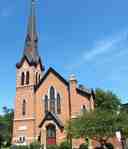
  1. Look for a tall, striking brick building with a pointed steeple and large arched windows-it's right ahead with a patch of inviting green out front. Welcome to one of Iowa City’s…もっと読む折りたたむ

    Look for a tall, striking brick building with a pointed steeple and large arched windows-it's right ahead with a patch of inviting green out front. Welcome to one of Iowa City’s oldest stories, standing before you in brick and stained glass: the Congregational United Church of Christ. Picture this spot back in 1856-seventeen locals, maybe bundled against a chilly Iowa wind, gathering together with hope to form a new congregation. Fast-forward just over a decade and you’d see the cornerstone laid in 1868, with the whole project-designed by Gurdon P. Randall, a seasoned Chicago architect-costing $30,000. That’s a pretty sum, especially when you consider what you could buy for $30k in the 1860s. A whole block of Iowa City, maybe! Dedicated in December of 1869, this church has always known how to adapt. Look to your right (or imagine peeking through old blueprints) and you’ll find that where the university’s biology building stands today, a parsonage once linked the church with home life. Every few decades, the church received a new addition: a parsonage, an administration wing, a Little Chapel, even a top-of-the-line Lyon and Healy pipe organ in 1903-perfect for rolling thunderous chords through the sanctuary. Step inside and the Gothic Revival theme continues, from vaulted beams overhead (added in the 1930s spurred by a need for a little ‘wow’ factor inside) to the pair of towers framing its face. Over the years, there have been social halls, education wings, and a 2007 pipe organ packed with parts and history from three different instruments-talk about a musical Frankenstein’s monster! With every decade, the Congregational United Church of Christ has both changed and stayed the same, welcoming all who pass through its doors with the same spirit of community that started it all. Can you feel that sense of history lingering in the air? That’s not just a church bell, it’s the echo of Iowa City’s past!

    専用ページを開く →
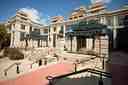
  2. Right in front of you is a massive, cream-colored stone building with lots of grand windows and green metal framework stretching overhead-just look for the imposing, modern…もっと読む折りたたむ

    Right in front of you is a massive, cream-colored stone building with lots of grand windows and green metal framework stretching overhead-just look for the imposing, modern structure with steps leading up to a bold entrance. Now, let me whisk you into the world of big deals and even bolder dreams! This is the Pappajohn Business Building, where the future business leaders of Iowa sharpen their skills. Imagine the buzz from 1994 as the doors first opened-classrooms sparkling with new technology, giant screens ready to flash market trends, and students already dreaming of Wall Street. The Tippie College of Business calls this place home, and it even has its very own Entrepreneurial and Small Business Center, incubating ideas that could become tomorrow's success stories. Its style is a quirky blend: traditional Pentacrest charm meets financial fortress, all topped off with “money-green” accents-because hey, even buildings have a sense of humor about their purpose! Thanks to alumnus John Pappajohn (yes, that's his real last name), the University got one of its largest gifts ever, a cool $4 million that helped launch this $34 million wonder. When it opened, John famously said, “Pappa’s in the house”-and you can bet he meant business! Now picture students networking under the atriums, trading ideas in every corner, and maybe plotting the next big financial leap-who knows, maybe you’ll catch a whiff of future fortune in the air!

    専用ページを開く →
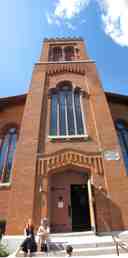
  3. Look for a sturdy, reddish-brown brick building with tall arched windows and a boxy tower topped by rectangular notches instead of a spire-it's right ahead of you, proudly…もっと読む折りたたむ

    Look for a sturdy, reddish-brown brick building with tall arched windows and a boxy tower topped by rectangular notches instead of a spire-it's right ahead of you, proudly standing watch over the street. You're now facing Old Brick Church, a survivor with more twists than a mystery novel! Imagine Iowa City in 1856-no electric lights, horse-drawn carts rattling by, and at this very spot, a new church rising from the ashes after the last one burned down. In 1877, a fierce windstorm swept through town and knocked the steeple right off, turning the planned spire into the dramatic crowned tower you see now. For over a century, people gathered here to sing, pray, and mark major moments. But in 1970, the church quieted, and soon the land was bought by the university, destined-gasp!-for a parking lot! Locals wouldn’t stand for that. Instead, they banded together, forming Friends of Old Brick, and saved the building, turning protest into a rescue mission. Since then, it's seen everything from lively weddings to dance lessons and heartfelt fundraisers. If these bricks could hold a potluck, they'd invite half of Iowa City! So take a moment to feel the determination and community spirit wrapped up in this sturdy old spot.

    専用ページを開く →
  4. Right in front of you, you’ll spot a striking four-story red brick building with a balcony over the main door, topped by a gray mansard roof and a white cupola standing proudly at…もっと読む折りたたむ

    Right in front of you, you’ll spot a striking four-story red brick building with a balcony over the main door, topped by a gray mansard roof and a white cupola standing proudly at the very peak. In 1852, when Iowa City was still the capital, Ferdinand Haberstroh built this impressive structure-the Park House Hotel-beckoning weary business travelers with promises of comfort and maybe a little gossip over steamy mugs of coffee. After Haberstroh’s passing, a local priest scooped it up, and soon the Sisters of Charity from Dubuque swept in, transforming it into St. Agatha’s Female Seminary. Imagine the flutter of long skirts and a sign stretching clear across the building declaring, “Seminary for the Education of Young Ladies.” The first two floors buzzed with learning, while up above, students and sisters ducked under the new roof-installed in 1875-where tales of late-night whispers and laughter were surely common. When the school closed, the building’s next act was as a women’s boarding house, and eventually, as Burkeley Place, it settled into a long career as an apartment building. If these bricks could remember, they’d surely know more secrets than the city’s pigeons. With recent renovations and National Historic status, the Park House Hotel still stands-watching, welcoming, and oh, if only the local squirrels would spill the real stories!

    専用ページを開く →
  5. Look ahead for a towering red brick church with round-arched doorways, tall windows, and a dramatic spire topped with a clock and cross-St. Mary's stands proudly right in front of…もっと読む折りたたむ

    Look ahead for a towering red brick church with round-arched doorways, tall windows, and a dramatic spire topped with a clock and cross-St. Mary's stands proudly right in front of you, just beyond the trees. Welcome to St. Mary’s Church and Rectory, a place where Iowa City’s heart has been beating for nearly two centuries! Take a moment to imagine it’s the winter of 1840. Snow squeaks under boots as a frontier missionary, Father Samuel Mazzuchelli, arrives in town. Instead of this magnificent church, you’re squinting at a small cabin that doubles as a hotel, with just 28 people gathered for the very first Mass. No gold domes, no pipe organs-just faith, frostbitten fingers, and maybe a grumbling stomach or two. Mazzuchelli was quite the real estate mogul-he bought these very lots for $2,000, which was a small fortune back then. He designed a wooden church in Greek Revival style, and by 1842, the townsfolk had a new spot to warm up and worship. The church quickly grew-by 1844, there were 70 families, and the first choir sang right here, their voices echoing through a new gallery. But Iowa City was swelling with new faces-Germans, Bohemians, you name it. Needing more space, the parish laid the cornerstone of the church you see before you in 1867, right over the foundation of the old one. While the new walls rose, they kept celebrating Mass inside the old church, sort of like squeezing into your house while it’s being renovated. I imagine a priest dodging falling hammers in the middle of a Latin chant. The massive bell tower was finished only in 1873-talk about a fixer-upper-and by 1885, you’d hear the 17 bells ringing out across the city. And what about the inside? Walking in, you’d see arches that soar overhead, stained glass windows colored by Iowa sunlight, and an altar full of statues: Saint Patrick, Saint Boniface, Saint Anne with a tiny Mary, and more! Oh, and a pipe organ from 1883-restored in 2015-that could likely rattle your socks off if you’re not expecting it. St. Mary’s has had its fair share of drama. Nearby churches for Bohemian immigrants would rise and fall (one even burned down), only for their congregations to come back here, gathering strength. Over the decades, priests added buttresses, new spires, redecorated interiors, and even got rid of the old communion rail-clearing the way for the changes of Vatican II. Mass transformed from Latin to English, priests faced their congregations, and bright new pews welcomed everyone for the parish’s centennial in 1941. The secret to its durability? Besides divine inspiration: local builder J.J. Hotz and a lot of elbow grease. Attached to the church, the rectory was built in the 1890s, designed to match its Gothic and Romanesque Revival neighbor. If it ever starts raining, that’s your shelter. Its big porch and brick arches echo the church’s design-pretty stylish digs for Iowa. You might notice there’s no grand apse on the back, but there’s hidden drama in the art: inside, find statues for the Twelve Apostles spread along the nave walls. Each side altar tells its own story, featuring Old Testament prophets, saints galore, and even a lamb with a mysterious scroll from the Book of Revelation. If you listen closely, maybe you’ll hear echoes of one of the 1,700 families here today, or the laughter of schoolchildren from long-gone St. Mary’s School, where the first accredited Catholic high school in Iowa once stood. In short, St. Mary’s is a living patchwork of Iowa City’s history-from frontier chapel to thriving parish hub. If only those bells could tell all the tales… or maybe they just want to drown out the sound of my jokes!

    専用ページを開く →
  6. Architects like Gurdon P. Randall and proud local talents such as Proudfoot & Bird lent their flair to make each building unique, whether it was a welcoming hotel or a home full…もっと読む折りたたむ

    Architects like Gurdon P. Randall and proud local talents such as Proudfoot & Bird lent their flair to make each building unique, whether it was a welcoming hotel or a home full of stories. Curious about old favorites? The William Bostick House from 1851, Park House Hotel, St. Mary’s Catholic Church, and even the Congregational United Church of Christ all stand as stars on the National Register. Wandering this street, it’s easy to imagine old-timers chatting on their porches, church bells ringing, or young med students hoping they’d left their stethoscopes in the right pocket for once!

    専用ページを開く →
  7. To spot the Union Brewery, look for a large corner building with red brick walls, rows of tall windows, and a silver cupola on top, nestled behind some leafy trees right at the…もっと読む折りたたむ

    To spot the Union Brewery, look for a large corner building with red brick walls, rows of tall windows, and a silver cupola on top, nestled behind some leafy trees right at the edge of the sidewalk. Alright, time to raise a glass-at least in spirit! The Union Brewery, built in 1856 by two determined German immigrants, Anton Geiger and Simeon Hotz, is more than just pretty brickwork. Imagine Iowa City in the late 1800s: horse-drawn wagons rattling past, hints of malt and hops drifting from open cellar doors, and Conrad Graf, the legendary brewmaster, busy perfecting Graf’s Golden Brew in the cool beer caves below. When Iowa’s prohibition law hit in 1884, the Union Brewery was at the very center of a riotous rebellion-furious beer lovers stormed the streets, and poor Conrad ended up owing $7,000 after an angry attorney took him to court. Undaunted, the brewery pressed on, switching to soda during prohibition, but those clever yeast spores refused to retire; let’s just say their soda packed a little extra punch! Underneath your feet, a genuine secret: preserved tunnels snake from here to other old breweries, built to shuttle barrels between chilly beer caves. Over a century later, developers are still dreaming of reopening them for bold explorers. Since 1986, the Union Brewery’s been on the National Register of Historic Places-a toast to wild nights, underground mysteries, and very stubborn yeast!

    専用ページを開く →
  8. To spot the Hamburg Inn No. 2, look for a cozy brick building with a big black awning and bright yellow vintage signs just above the entrance-it’s nestled right along the street…もっと読む折りたたむ

    To spot the Hamburg Inn No. 2, look for a cozy brick building with a big black awning and bright yellow vintage signs just above the entrance-it’s nestled right along the street next to a splash of orange from a neighboring shop. Alright, step closer and take in the wonderful aroma-because you’ve landed in front of one of Iowa City’s most legendary diners! Picture this: it’s the 1940s, the streets are bustling, and the Panther brothers are cooking up history inside a little restaurant that would soon become a favorite pit stop for everyone from hungry locals to future presidents. The Hamburg Inn No. 2, standing since 1948, has seen it all-a parade of hopeful candidates shaking hands and gulping down mouthfuls of breakfast and, of course, that famous pie shake. Over time, the “Burg” gained a reputation as the coziest greasy spoon around, offering breakfast all day, homefries crispy enough to wake you up, and omelettes bigger than your ambitions. You know you’re in a special place when Bill Clinton, Ronald Reagan, and Barack Obama have squeezed into its booths, all eager for a slice of Midwest tradition-and maybe a vote or two. Don’t forget the coffee-bean caucus, where each diner gets to cast their own little bean ballot for their favorite candidate-no speeches required, just good taste! Sometimes actors from The West Wing pop in, and the Hamburg Inn loves a cameo just as much as a candidate. The best part? Through all the handshakes, decision days, and expansions, it’s the smell of pie, the sizzle from the griddle, and the chatter that makes this diner the real heart of Iowa politics. Can you imagine which famous hand might’ve grasped that very door handle before you? Now that's worth a story or two!

    専用ページを開く →
  9. You’re looking for a stately white house with a bright red hipped roof, two dormers peeking out at the top, wide sash windows, and a grand arched porch right in the center-just…もっと読む折りたたむ

    You’re looking for a stately white house with a bright red hipped roof, two dormers peeking out at the top, wide sash windows, and a grand arched porch right in the center-just follow the walkway and it’s the one with the inviting, cherry-red door. Now, let me paint you a picture: Imagine it’s 1919, and the streets of Iowa City are bustling with the promise of a new era. Ahead of you stands not just any house, but the Emma J. Harvat and Mary E. Stach House-a monument to bold steps and big dreams! Built by two powerhouse women, Emma Harvat and Mary Stach, this place stands as Iowa City’s answer to ‘who rules the world?’ Back then, Emma rolled into town at 43, having already conquered the business world and decided retirement was just too dull. So, she teamed up with Mary, and together they opened one of the best women’s clothing shops in town. But Emma wasn’t satisfied just dressing the city-she became its first female mayor! Not only was she Iowa City’s first lady in charge, but get this: she was the very first woman to lead any U.S. city with a population over 10,000. Talk about smashing the glass ceiling… she put a stylish roof over it instead! And this house? Designed by Orville Carpenter, it’s got a Colonial Revival flair with enough classy touches to make a history buff swoon-like the sunroom extension and that elegant central hallway. Secret parlors, bay windows perfect for people-watching (or cat-napping), and the laughter of friends building a legacy fill these walls. The neighbors called it the De Saint Victor House for a while, but the spirit of Emma and Mary lingers, reminding passersby that here, in the heart of Goose Town, two women changed the course of local history-one bold decision (and perhaps one fabulous dress) at a time.

    専用ページを開く →
  10. Right now, you’ll spot the Obermann Center for Advanced Studies as a striking stone-and-timber Tudor Revival house with steep, triangular roof peaks and dark wooden trim-just look…もっと読む折りたたむ

    Right now, you’ll spot the Obermann Center for Advanced Studies as a striking stone-and-timber Tudor Revival house with steep, triangular roof peaks and dark wooden trim-just look for the historic building tucked among trees next to the big black sign that reads ‘111 Church Street.’ Let’s imagine it’s 1978: bell-bottoms, disco music, and a new kind of research dream is brewing at the University of Iowa. It all started thanks to a pioneering spirit-C. Esco Obermann, who must’ve loved ideas so much that he and his wife Avalon helped put their family name on Iowa’s future of curiosity. At first, this center wasn't even in this charming house! It was over in Oakdale Hall-so if these walls seem like they’ve just settled in, they have… since 2011, to be exact, after Oakdale Hall was demolished. The Obermann Center isn’t the type to sit still. Over the decades, it’s transformed from “University House” to “Center for Advanced Studies” to today’s honored mouthful-the C. Esco and Avalon L. Obermann Center for Advanced Studies. That's what happens when your sponsors have both generosity and a knack for naming things that sound impressive at dinner parties. Just picture the students and professors bustling through these doors, from fresh-eyed undergraduates to well-seasoned scholars with more books than houseplants! But this isn’t just a place for quiet tea-drinking and theory-nope! The Obermann Center throws the doors wide open for everything from raucous annual symposiums, where debates spark about everything from Afro-Brazilian cinema to the latest tug-of-war over book bans, to a summer residency where you can hear the frantic, hopeful scribbles of writers on deadline. The Center is equal parts laboratory, stage, and secret writer’s hideout. It even hosts international fellowships for creative minds from halfway across the globe, and a writing retreat where, at least once a year, stressed-out researchers find that magic “silent room” and the comforting aroma of catered lunch (not to mention the sense of victory over their word counts). So whether it’s a panel on labor strikes or a book completion workshop called “Book Ends,” the Obermann Center turns bright ideas into world-changing projects. With famous scholars like historian John Durham Peters and legal legend Herbert Hovenkamp having passed through here, you never know which brainwave might be the next big breakthrough-or the next topic for a fiercely caffeinated Obermann Conversation. Take a look at this storybook building, and remember: inside, ideas don’t just float-they march, debate, and every so often, take a well-deserved coffee break!

    専用ページを開く →
  11. To spot the Iowa Writers' Workshop, look for the stately white house with dark green trim, tall narrow windows, and a small sign out front reading "Dey House," perched on a grassy…もっと読む折りたたむ

    To spot the Iowa Writers' Workshop, look for the stately white house with dark green trim, tall narrow windows, and a small sign out front reading "Dey House," perched on a grassy lawn dotted with trees and flowers. Welcome, you story adventurer, to the legendary Iowa Writers' Workshop-where the grass hums with the whispers of would-be Hemingways and the windows look like they've been winking at genius for nearly a century. Picture yourself here back in 1936, when the workshop first officially opened its doors. The air would have been thick with pipe smoke, typewriters clacking away inside, and maybe a few nervous poets pacing the lawn, searching for the right word. If these walls could talk, they’d probably quote a Pulitzer winner and then complain about short story endings. But let’s rewind the clock even farther-all the way to 1897! A theater producer named George Cram Cook started teaching “Verse-Making,” which honestly sounds like a weird fitness class, but it was really the spark that lit Iowa City’s literary torch. In 1922, Dean Carl Seashore, who clearly thought “why not?” instead of “why bother?”, decided that creative writing could count as a proper thesis. Imagine the shuffle of papers and the nervous clearing of throats as the very first writing students turned in stories instead of science experiments. Fast-forward to the golden era under director Paul Engle, who took the Workshop from a small campus program and turned it into a national landmark between 1941 and 1965. Engle had a flair for the dramatic: in 1959, he roped in Esquire magazine for a symposium called “The Writer in Mass Culture,” hosting literary VIPs like Norman Mailer and Ralph Ellison-big enough news that even Newsweek showed up. Engle and his wife, Hualing Nieh Engle, weren’t content just making American writers famous-they founded the International Writing Program, bringing voices and stories from all over the globe to this very lawn. Their work was so inspiring, over 300 writers nominated them for the Nobel Peace Prize. Not bad for a couple who started by asking friends for donations to keep the lights on! Over the years, this Workshop became its own legend. The best writers in the country-and later, the world-flocked here to battle self-doubt, pass around stories or poems in round-table workshops, and either cheer or wince as their peers tore their precious drafts to pieces (all in the name of craft, of course). You could find names like Kurt Vonnegut, Philip Roth, Marilynne Robinson, and Rita Dove teaching or passing through, offering advice, or just trying to borrow a pencil that actually worked. And yes, those workshops are famously intense: “Juilliard for Writers,” as one director put it. The idea was less about letting loose and more about focusing raw talent until it glowed. Every week, new stories or poems hit the table, and voices would rise around that table-sometimes gentle, sometimes fierce, but always passionate. The Workshop’s success is legendary. It’s launched Pulitzer Prize winners by the dozen in fiction, poetry, and journalism. Graduates have gone on to run major writing programs, head up literary magazines, and even show up in pop culture-remember the TV show Girls? Hannah Horvath tried her luck here, too. Today, under Lan Samantha Chang-the first woman, first Asian American, and first nonwhite director-the Workshop’s endowment has grown to more than $12 million. She says what they really want are stories filled with energy, stories that reach out and grab the reader by the lapels. So, as you stand on this green lawn, picture decades of writers, hope in their pockets and manuscripts in their arms, stepping through these doors. Listen closely-if you hear the faint scratch of pens or the hum of an old radiator, you might just be catching the music of the next great American novel, before the world even knows its name. Intrigued by the organization, reputation and influence or the awards won by faculty and alumni? Make your way to the chat section and I'll be happy to provide further details.

    専用ページを開く →

よくある質問

ツアーはどうやって始めますか?

購入後、AudaToursアプリをダウンロードして引き換えコードを入力してください。ツアーはすぐに開始できます。再生ボタンをタップして、GPSガイド付きルートに従うだけです。

ツアー中にインターネットは必要ですか?

いいえ!開始前にツアーをダウンロードしておけば、完全にオフラインで楽しめます。チャット機能のみインターネットが必要です。モバイルデータを節約するため、WiFi環境でのダウンロードをお勧めします。

これは団体ツアーですか?

いいえ、これはセルフガイド式のオーディオツアーです。ガイドや団体、決まったスケジュールに縛られることなく、スマホから流れるナレーションを聴きながら自分のペースで自由に探索できます。

ツアーの所要時間は?

ほとんどのツアーは60〜90分で完了しますが、ペースは完全に自由です。好きな時に一時停止したり、スポットを飛ばしたり、休憩を取ったりできます。

今日中にツアーを終えられない場合は?

問題ありません!ツアーには無期限でアクセスできます。明日、来週、あるいは来年でも、好きな時に再開できます。進行状況は保存されます。

どの言語が利用可能ですか?

すべてのツアーが50以上の言語に対応しています。コードを引き換える際にお好みの言語を選択してください。注意:ツアー生成後に言語を変更することはできません。

購入後、どこからツアーにアクセスできますか?

App StoreまたはGoogle Playから無料のAudaToursアプリをダウンロードしてください。メールで届いた引き換えコードを入力すると、ライブラリにツアーが表示され、ダウンロードして開始できるようになります。

verified_user
満足保証

もしツアーを楽しめなかった場合は、返金いたします。お問い合わせ先: [email protected]

以下の決済で安全にチェックアウト

Apple PayGoogle PayVisaMastercardPayPal

AudaTours: オーディオツアー

楽しくて手頃なセルフガイド式ウォーキングツアー

アプリを試す arrow_forward

世界中の旅行者に愛されています

format_quote このツアーは街を見るのに本当に良い方法でした。ストーリーは作り込まれすぎず面白くて、自分のペースで探索できるのが良かったです。
format_quote 観光客気分になりすぎず、ブライトンを知るためのしっかりとした方法でした。ナレーションには深みと文脈がありました。
Christoph
Christoph
starstarstarstarstar
ブライトン・ツアー arrow_forward
format_quote 片手にクロワッサンを持ち、期待ゼロで始めました。アプリはただ一緒にいてくれる感じで、プレッシャーもなく、クールな物語を楽しめました。

オーディオツアー使い放題

世界中のすべてのツアーをアンロック

0 ツアー·0 都市·0 国
all_inclusive アンリミテッドを探索