AudaTours logoAudaTours

デンバーオーディオツアー:歴史ある通りと現代の驚異

オーディオガイド14 か所

デンバーの輝く中心部では、鉄とガラスの超高層ビルが、ゴールドラッシュの秘密の亡霊や数十年にわたる文化的反乱の上に影を落としています。 このセルフガイドオーディオツアーで、ブルックス・タワー、コロラド・コンベンションセンター、ベッチャー・コンサートホール、そしてその間にある隠れた名所に織り込まれた語られざる物語を解き明かしましょう。ほとんどの訪問者が見ることのないもの、つまり現代の喧騒の下に隠されたスキャンダル、伝説、奇妙な驚異を発見してください。 コンベンションセンターでの政治的陰謀の嵐の後、通りから姿を消したのは誰でしょうか? ベッチャー・コンサートホールの真夜中の壁に響き渡る忘れ去られた交響曲とは何でしょうか? ブルックス・タワーのどのフロアに、50年近くにわたるスキャンダラスな秘密が隠されていたのでしょうか? 賑やかな広場や静かな回廊を通り抜け、デンバーの劇的な過去の鼓動を一つ一つ感じてください。隅々まで新たな発見があり、あまりにも早く、あまりにも単純に読まれがちなこの街に、謎の閃光が走ります。 表面の奥に横たわる、より深いデンバーを発見する準備はできていますか?あなたの物語はここから始まります。

ツアーのプレビュー

map

このツアーについて

  • schedule
    所要時間 40–60 mins自分のペースで進める
  • straighten
    ウォーキングルート 3.8kmガイド付きパスに沿って進む
  • location_on
  • wifi_off
    オフライン対応一度のダウンロードでどこでも使える
  • all_inclusive
    無期限アクセスいつでも、ずっと再生可能
  • location_on
    オックスフォード・ホテル(デンバー)から開始

このツアーのスポット

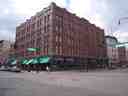
  1. Look for the big, red-brick, five-story corner building with arched windows and green awnings at street level, right where 17th meets the cross street. Alright, you’ve made it…もっと読む折りたたむ

    Look for the big, red-brick, five-story corner building with arched windows and green awnings at street level, right where 17th meets the cross street. Alright, you’ve made it to the Oxford Hotel... one of Denver’s old-timers that still carries itself like it remembers everybody’s business. This place went up in 1891, designed by early Denver architect Frank Edbrooke, back when downtown was a rougher mix of railroads, money, and schemes in decent hats. From the outside, it’s got that sturdy “I’ve seen some things” brick-and-arches look-built to outlast trends, panics, and a whole lot of questionable mustaches. In 1979, the Oxford landed on the National Register of Historic Places, which is basically the official way of saying: “Yes, this building matters, and no, you may not casually ruin it.” But long before the honors, the Oxford had its share of real drama. In February 1908, labor leader Bill Haywood and two other officers from the Western Federation of Miners were quietly kept overnight in adjacent rooms here by Denver police. Not for a cozy vacation... for control. The whole point was secrecy-if their supporters found out, they might’ve tried to block what came next: an early-morning extradition, whisking them by special train to Idaho to face conspiracy charges tied to the assassination of a former Idaho governor. It’s the kind of tense, late-night story that makes a hotel hallway feel a lot longer. The Oxford didn’t always stay glamorous. By the 1950s, it had slid into flophouse territory... the kind of place where “room service” meant the radiator maybe worked. Then in the 1980s, ownership changes and improvements helped pull it back from the edge. And inside? The Cruise Room. It’s a windowless little bar that leaned into Art Deco style and, during Prohibition, allegedly operated as an illicit speakeasy-complete with rumors of secret panels and tunnels. It officially opened the day after Prohibition ended, which is an impressively prompt return to civic responsibility. In 2012, it was carefully restored-right down to historically accurate paint and that warm, light-pumpkin tone-while the drink list modernized with mixology favorites and a serious commitment to martinis served from oversized shakers. Subtle is not the point. When you’re ready, Barth Hotel is a 2-minute walk heading southeast.

    専用ページを開く →
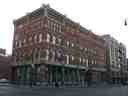
  2. On your right, look for the big four-story red-brick corner building with rows of arched windows and a fancy white-painted cornice along the roofline. This is the Barth Hotel...…もっと読む折りたたむ

    On your right, look for the big four-story red-brick corner building with rows of arched windows and a fancy white-painted cornice along the roofline. This is the Barth Hotel... and it’s been quietly outlasting Denver trends since 1882. Back when the city was still shaking off its frontier dust, architect F. C. Eberley designed this solid 50-by-125-foot block like it meant business: thick brick, tidy stone trim, and a ground floor with an unusually tall ceiling, nearly nineteen feet high. That’s not “cozy inn” energy... that’s “we might need to store something large and questionable” energy. It didn’t even start with a proper lobby on the first floor; the hotel rooms were up on the top three floors, and the welcome mat came later. Over the years it cycled through names like Union Hotel and Elk Hotel, like it was trying on hats in a mirror. But by 1980, it was Denver’s oldest continuously running hotel... and in 1982 it landed on the National Register of Historic Places. Not bad for a building that’s basically a brick time capsule. Ready for Brutø? Just walk southeast for 3 minutes.

    専用ページを開く →
  3. On your left is Brutø... a place that looks calm from the sidewalk, but inside it’s all heat, timing, and nerves of steel. This is one of Denver’s Michelin-starred restaurants,…もっと読む折りたたむ

    On your left is Brutø... a place that looks calm from the sidewalk, but inside it’s all heat, timing, and nerves of steel. This is one of Denver’s Michelin-starred restaurants, which is basically the culinary world’s way of saying, “Yeah, this one counts.” You might catch a little soundtrack through the door when it opens... the low murmur of people trying to sound casual while they’re quietly freaking out about how good the next bite might be. In a city that used to get stereotyped as all steak-and-potatoes, Brutø helps tell the newer Denver story: creative, confident, and totally okay with surprising you. A Michelin star doesn’t happen by accident. It’s earned, night after night, with obsessive attention to flavor and the kind of focus that makes a regular dinner feel like an event. When you’re ready, 1125 17th Street is a 6-minute walk heading southwest.

    専用ページを開く →
さらに11件のスポットを表示表示するスポットを減らすexpand_moreexpand_less
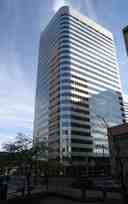
  1. On your right, look for the tall, rounded-corner tower with shiny blue glass and pale horizontal bands, rising like a giant, polished filing cabinet against the sky. This is…もっと読む折りたたむ

    On your right, look for the tall, rounded-corner tower with shiny blue glass and pale horizontal bands, rising like a giant, polished filing cabinet against the sky. This is 1125 17th Street, a 25-story, 363-foot office tower that popped onto Denver’s skyline in 1980. It was designed by Skidmore, Owings and Merrill... the architectural equivalent of a hit-making band that somehow always gets radio play. The building’s had a whole identity journey, too. First it wore the Amoco badge, back when Standard Oil leased a big chunk of space here and the energy biz felt like it would power everything forever. Later it became Bank One Tower, then Chase Tower after the JPMorgan Chase and Bank One merger-because nothing says “new era” like another new sign. These days, it goes by the simplest name possible: its address. In 2017, it even changed hands multiple times, like a very expensive game of hot potato. When you’re set, 17th Street Plaza is a 2-minute walk heading northwest.

    専用ページを開く →
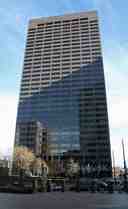
  2. On your right, look for the tall, clean-edged tower with a pale top and a big grid of dark, reflective windows that mirrors the sky like a giant office-grade sunglasses lens.…もっと読む折りたたむ

    On your right, look for the tall, clean-edged tower with a pale top and a big grid of dark, reflective windows that mirrors the sky like a giant office-grade sunglasses lens. This is 17th Street Plaza, a 33-story, 438-foot slice of early-1980s confidence, finished in 1982 when Denver was leaning hard into “modern skyline” energy. Skidmore, Owings and Merrill helped shape it, along with Wendel Duchsherer Architects, and the whole thing clocks in at about 695,000 square feet... which is a whole lot of carpet tiles and conference calls. Even the business story feels like an office thriller: in 2009 it sold from J.P. Morgan to HRPT Properties Trust for about $135 million back then, roughly $200 million in today’s money, and it was 93 percent leased. Tenants ranged from Molson Coors to KPMG to the Japanese Consulate... so yes, diplomacy happened in this glass box. In 2019, Plant Holdings North America bought it, keeping the tower’s quiet hum of deal-making alive. When you’re set, Daniels & Fisher Tower is a 5-minute walk heading southeast.

    専用ページを開く →
  3. On your right is the Daniels and Fisher Tower, and it still knows how to pull focus. Back in 1910, this thing shot up to 325 feet… which made it the tallest building anywhere…もっと読む折りたたむ

    On your right is the Daniels and Fisher Tower, and it still knows how to pull focus. Back in 1910, this thing shot up to 325 feet… which made it the tallest building anywhere between the Mississippi River and California. Denver didn’t just want a clocktower. Denver wanted a statement. Architect Frederick Sterner took his inspiration straight from Venice’s St. Mark’s bell tower. So yeah, this is Denver doing its best Italian accent… and honestly, it works. Look up and you’ll spot the clock faces on all four sides, perched on a 20-story shaft like it’s keeping an eye on the whole neighborhood. In 1911 they hoisted a 5,500-pound bell into the top floors… about the weight of a full-grown rhinoceros, give or take. It was made in Baltimore, had a 150-pound clapper, and an electric motor that rang the hour like it had somewhere to be. The bell even has a dedication inscription from William Cooke Daniels and Cicely Cook Daniels… a very classy way of saying, “We bought the bell. You’re welcome.” The tower’s seen its share of drama. In 1918, a stunt climber nicknamed “the human fly” scaled it in 38 minutes. And in 1929, a student nurse fell from the twentieth floor and somehow landed on a balcony three floors down… surviving, but badly hurt… and heartbreakingly, not found for two days. When the old store came down around 1971, the tower got spared, renovated in 1981, and today it even hides the Clocktower Cabaret downstairs. Not bad for a building that refused to leave. When you’re set, the Federal Reserve Bank of Kansas City Denver Branch is a 2-minute walk heading southwest.

    専用ページを開く →
  4. On your left, look for the low, fortress-like concrete building with tall vertical columns and deep shadowed windows, sitting back from the sidewalk like it’s guarding a very…もっと読む折りたたむ

    On your left, look for the low, fortress-like concrete building with tall vertical columns and deep shadowed windows, sitting back from the sidewalk like it’s guarding a very serious secret. This is the Federal Reserve Bank of Kansas City, Denver Branch... the second-largest of the Kansas City Fed’s three branches, which is a very “Denver” place to land: important, but not trying to steal the whole show. It opened on January 14, 1918, back when money meant paper, ink, and muscle-bundles counted by hand, ledgers balanced line by line, and the stakes felt personal. Over time, Denver grew and the branch moved with it, relocating in 1968 to the 16th Street Mall, right where the city’s foot traffic and commerce practically hum. Because if you’re going to manage part of the nation’s money system, you might as well be near lunch options. Inside, there’s a 7,000-square-foot Money Museum... which is basically a playground for grown-ups who like history with receipts. Ready for Brooks Tower? Just walk southeast for 2 minutes.

    専用ページを開く →
  5. Right in front of you, look for the tall, dark brown Modern high-rise with long vertical strips of windows and a stack of small balconies running up the face like a zipper. This…もっと読む折りたたむ

    Right in front of you, look for the tall, dark brown Modern high-rise with long vertical strips of windows and a stack of small balconies running up the face like a zipper. This is Brooks Tower, planted at 1020 15th Street, and it’s been setting its own kind of skyline standard since 1968. Forty-two stories, about 420 feet tall, and at the time it went up it wasn’t just a big deal for Denver... it was the tallest building in the entire Rocky Mountain region. Not bad for a place that was still shaking the dust off its frontier boots. Brooks Tower was also Denver’s FIRST high-rise building meant for people to actually live in. Offices were one thing. But asking folks to ride an elevator dozens of floors to go home? In the 1960s, that was still a little futuristic. The developer, Aaron Brooks, pushed the idea through with Brooks Realty and Construction, and he brought in architect Max Ratner, based back east. The result is pure mid-century confidence: lots of concrete, brick, and glass, and a shape that’s meant to give as many residents as possible a piece of that view-downtown lights one way, the Rockies the other. If Denver had a “panoramic setting,” this building clicked the “yes” box. The tower didn’t rise smoothly, though. Construction started June 8, 1966, under a $7.6 million contract-which is roughly around $70 million in today’s money, give or take depending on whose inflation calculator you trust. Then reality showed up: labor disputes, ugly weather, and owner-requested changes. Extensions piled up-court records say the architect approved 215 extra days-and the whole thing eventually slid into a legal fight between the tower’s corporation and the main contractor. Nothing says “new luxury living” like paperwork and lawsuits. Still, the building was substantially finished around June 1968, with a more formal public opening noted in early 1969. There’s an older ghost on this lot, too. Before Brooks Tower, this was home to Denver’s Mining and Exchange building. And surviving that change is a 12-foot copper statue from 1891 called “The Old Prospector,” preserved out front in the garden. So while the tower points to modern urban living, the front yard nods to Denver’s original business model: dig a hole and hope. Inside, Brooks Tower started as rental apartments-studios up to penthouses, with plenty of balconies for people who like to supervise the city from above. It later made a major leap in 1995, converting into condos in what was reported then as Denver’s biggest condo conversion: 517 units. The funny thing is, the unit count depends on who you ask-some sources say 565 or 566, and some databases toss out numbers that don’t quite add up. When your building is basically a vertical neighborhood, the math gets a little… creative. And for a few years in the 1970s, this place even had a second life as a music landmark. From 1973 to 1977, the second floor hosted Ebbets Field, a club co-founded by promoters Chuck Morris and Barry Fey. It pulled in major acts and even won Billboard’s “Club of the Year” in 1975 and 1976-meaning while some residents were trying to sleep, history was happening upstairs. Brooks Tower has kept aging like any 1960s giant: in the late 2010s, the building took on a massive re-piping project to replace old water risers-initially talked about at $44 million, later reported closer to $33 million-and managed it in phases so people could stay put. Because moving 500-plus households out of a 42-story building is... everyone’s favorite weekend plan. When you’re set, the Denver Center for the Performing Arts is a 5-minute walk heading northwest.

    専用ページを開く →
  6. The Denver Center for the Performing Arts is coming up on your right. And even from out here, you can feel it: that little buzz in the air that says, “Something’s about to…もっと読む折りたたむ

    The Denver Center for the Performing Arts is coming up on your right. And even from out here, you can feel it: that little buzz in the air that says, “Something’s about to happen.” Car doors thump, footsteps click, and somewhere inside, a stage manager is probably whispering the most powerful word in theater... “Places.” This whole operation started as one person’s big idea. In the early 1970s, a Denver businessman named Donald Seawell stood around 14th and Curtis, looked at the old Auditorium Theatre and a bunch of underused blocks around it, and pictured a serious, first-class arts district right in the middle of downtown. That’s either vision... or the kind of confidence you only get before you’ve tried to schedule rehearsals for a cast of fifty. The Denver Center for the Performing Arts, founded in 1972, grew into the biggest tenant in this entire performing arts complex. And “complex” is not a dramatic metaphor here. This is a four-block site, about 12 acres, packed with ten performance spaces and more than 10,000 seats altogether. It’s owned and partly operated by Arts and Venues Denver, which is the city’s way of saying: yes, we’re investing in the arts, and also yes, someone needs to manage the parking. Ground broke in December 1974, and then the buildings started arriving like acts in a show. By 1978, Boettcher Concert Hall opened-famous for being the first major concert hall in the United States built “in the round,” with the audience wrapping around the music. That same push included an eight-story parking garage with 1,700 spaces. Because nothing sets the mood for a symphony like triumphantly finding parking. In 1979, the old Auditorium Theatre got a major renovation and became today’s Ellie Caulkins Opera House-modernized, upgraded, and given extra cabaret spaces inside. That year also brought the opening of the Helen G. Bonfils Theatre Complex, with multiple theaters that let the Center do everything from big, glossy productions to intense, up-close work where you can see an actor’s thoughts land before the line does. Over time, the campus kept expanding: the Temple Hoyne Buell Theatre opened in 1991-with 2,880 seats, it’s a heavyweight stop for touring shows. The Seawell Grand Ballroom arrived in 1998, and the Weeks Conservatory Theatre followed in 2002. Then, in 2005, the opera house got a full renovation-because in theater, the only thing more permanent than tradition is the next renovation. What happens inside all these halls? A lot. The Denver Center isn’t just a set of buildings-it’s an engine for live performance. The resident Denver Center Theatre Company launched in 1979 and went on to win the 1998 Tony Award for Outstanding Regional Theatre. One of the boldest artistic marathons here: director Israel Hicks staged all ten plays of August Wilson’s Pittsburgh Cycle over about two decades starting in 1990. That’s the kind of long game that makes your calendar surrender. On the big touring side, Denver became what insiders call a “pick city”-a place producers WANT to bring shows. Disney even tested major productions here, and plenty of national tours have launched from these stages. And the education arm has reached huge numbers of students over the years, turning “I like plays” into “I know how to make one.” One more fun time capsule: in July 1982, this place hosted a World Theatre Festival-114 performances, 18 plays, 13 countries, all in 25 days. A month-long theatrical buffet... and then the festival name was basically retired. Classic showbiz: brilliant run, quick exit. Ready for Mountain States Telephone Building? Just walk northeast for 4 minutes.

    専用ページを開く →
  7. On your right, look for the tall, buff-colored tower with strong vertical lines and step-back tiers, sitting on a darker stone base like it means business. This is the Mountain…もっと読む折りたたむ

    On your right, look for the tall, buff-colored tower with strong vertical lines and step-back tiers, sitting on a darker stone base like it means business. This is the Mountain States Telephone Building at 931 14th Street... a 15-story monument to the moment Denver got modern. It opened in 1929 as the headquarters for Mountain States Telephone and Telegraph, later “Mountain Bell,” and it wasn’t just office space-it was built to bring dial telephone service to Denver for the first time. No more operator. Please hold. Suddenly, you could call someone directly, which probably doubled the city’s daily arguments. Architect William N. Bowman dressed the building in what the company proudly called “Modern American Perpendicular Gothic”-basically Gothic Revival with skyscraper swagger: setbacks, vertical punch, and terra cotta cladding over a pink granite base. It earned a spot on the National Register of Historic Places in 2005. If you can peek toward the entry, there are 13 telecommunications-history murals painted in 1929 by Allen Tupper True-like an illustrated user manual for the wired age. Ready for Boettcher Concert Hall? Just walk southeast for 4 minutes.

    専用ページを開く →
  8. Boettcher Concert Hall is coming up on your right… and if you’ve ever wondered what it feels like to sit inside the music instead of in front of it, this place was built for you.…もっと読む折りたたむ

    Boettcher Concert Hall is coming up on your right… and if you’ve ever wondered what it feels like to sit inside the music instead of in front of it, this place was built for you. Back in 1978, Denver opened Boettcher as the first symphony hall “in the round” in the entire United States. That means the stage sits near the center, and the audience wraps around it like a big, well-dressed hug. About 80 percent of the seats are within 65 feet of the musicians, which is close enough to see a conductor’s eyebrows do most of the talking. It’s part of the Denver Performing Arts Complex, which is huge-second in the nation only to New York’s Lincoln Center. Not bad for a town that started as a scrappy mining supply stop. The hall is named for Claude K. Boettcher, a Colorado native and philanthropist-the kind of person who made enough money to put his name on something classy, then actually did something useful with it. Now, here’s the twist: Boettcher opened to mixed reviews, and a lot of it came down to acoustics. The hall was designed assuming a full house… but those 2,362 seats weren’t always filled. When the crowd was light, the sound could get weird-some spots too loud, others kind of thin. So the building itself had to get smarter. Look at the design logic: there are basically no perfectly flat walls inside; everything is tilted to scatter sound and stop “flutter echoes.” Those wave-like bands along the curves-technically “undulating acoustical facias”-help spread the music around the room. Under the stage, there’s even an acoustical moat acting like a bass-friendly echo chamber. And above? A canopy with 108 round discs helping sound reach both the audience and the musicians. In 1993, they tackled the acoustics head-on-adding reflectors, adjusting seat backs, and installing acoustic curtains so the space could be tuned, even during a performance. Today, it’s home base for the Colorado Symphony, founded in 1989 after the Denver Symphony Orchestra, drawing about 150,000 people a year to around 90 performances. In 2014, the city even toyed with demolishing Boettcher for an outdoor amphitheater-part of a $17 million upgrade plan (about $23 million today). That sparked some serious debate… because tearing down your symphony hall is a pretty bold way to “refresh the arts.” In the end, Boettcher’s story is classic Denver: ambitious, occasionally messy, and stubbornly committed to making big ideas work. When you’re ready, I See What You Mean (Argent) is a 6-minute walk heading southeast.

    専用ページを開く →
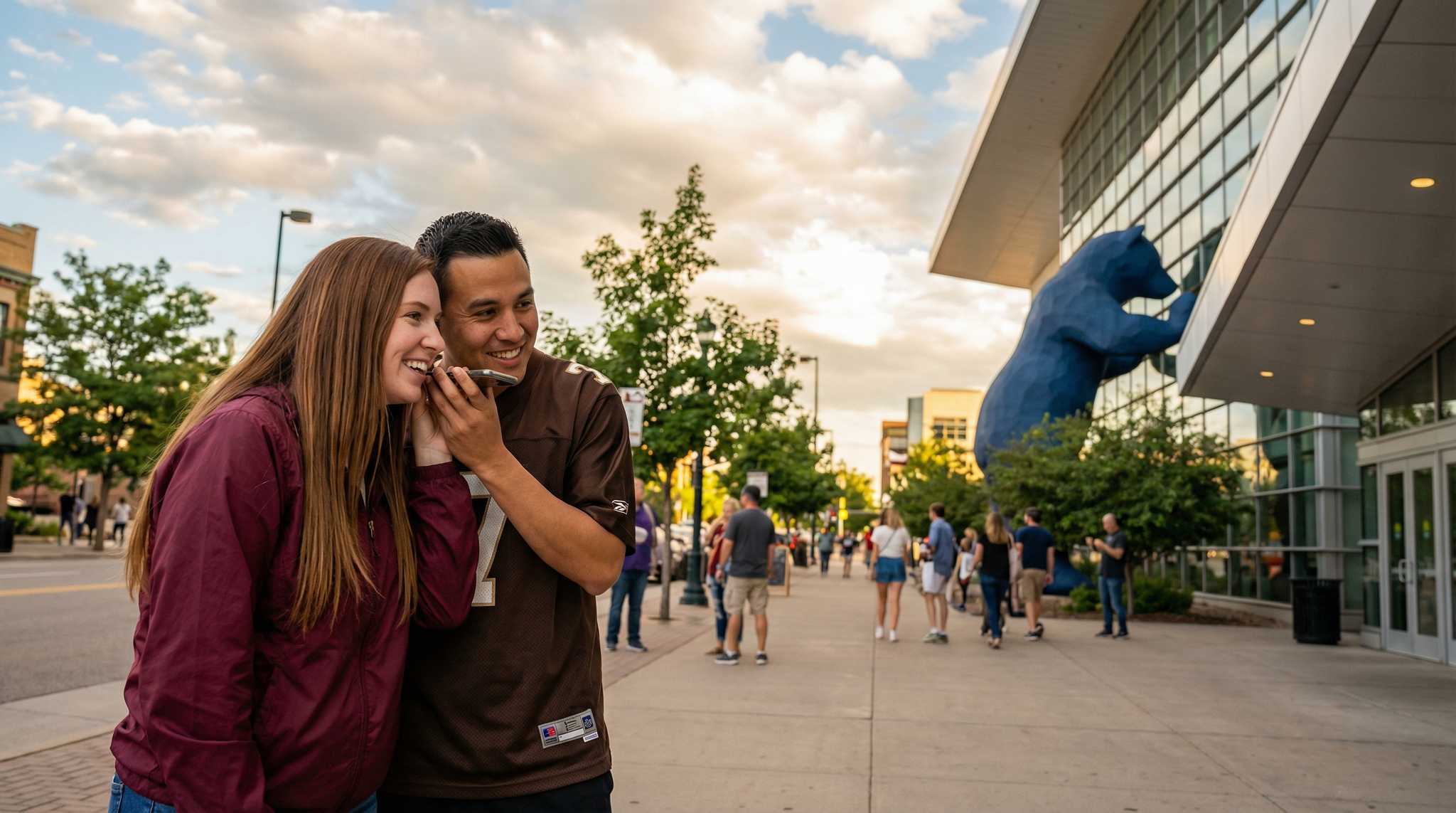
  9. On your right, look for a GIANT faceted blue bear reared up on its hind legs, with its paws pressed to the Colorado Convention Center’s glass like it’s trying to get a peek…もっと読む折りたたむ

    On your right, look for a GIANT faceted blue bear reared up on its hind legs, with its paws pressed to the Colorado Convention Center’s glass like it’s trying to get a peek inside. This is I See What You Mean, better known as Denver’s “Big Blue Bear,” a 40-foot sculpture by artist Lawrence Argent, installed here in 2005. The pose is the whole joke and the whole charm: an American black bear-Rocky Mountain local-standing up like a curious neighbor, peering into the lobby. Argent got the idea from a newspaper photo of a bear looking through someone’s window… which is funny until you remember that’s also a real thing that happens out here. The bear wasn’t even supposed to be blue. The plan leaned “natural stone colors,” but a blue mockup showed up, and Argent went with the more punchy choice. The city paid about $424,400 at the time-around $690,000 today-and people loved it immediately. Ready for the Joslin Dry Goods Company Building

    専用ページを開く →
  10. On your left, look for the big, wedge-shaped red-brick building with long rows of wide windows and a dark, wraparound storefront at street level. This is the Joslin Dry Goods…もっと読む折りたたむ

    On your left, look for the big, wedge-shaped red-brick building with long rows of wide windows and a dark, wraparound storefront at street level. This is the Joslin Dry Goods Company Building, one of downtown’s old retail power players. Back in 1873, John Jay Joslin started the Joslin Dry Goods Company, and Denver was the kind of town where a good coat, sturdy boots, and a little ambition could take you a long way. The competition got spicy when Denver Dry Goods arrived in 1888... and suddenly shopping wasn’t just shopping, it was civic sport. The building you’re looking at was shaped by architect Frank E. Edbrooke, then tweaked and re-tweaked in 1902, 1927, and again in 1964. That last remodel didn’t just update the look, it helped push the brand into its simpler “Joslins” name... like the building got a haircut and a new attitude. Subtle, right? In 1997, it landed on the National Register of Historic Places, and not long after it reinvented itself as a 177-room Courtyard by Marriott. Retail dreams in, hotel keycards out. When you’re set, Fan Expo Denver is a 9-minute walk heading southeast.

    専用ページを開く →
  11. On your right... welcome to Fan Expo Denver. Even from outside, you can almost hear it: the soft roar of a crowd, the snap of photo ops, the squeak of fresh convention badges, and…もっと読む折りたたむ

    On your right... welcome to Fan Expo Denver. Even from outside, you can almost hear it: the soft roar of a crowd, the snap of photo ops, the squeak of fresh convention badges, and somebody’s armor plates clicking like a determined kitchen drawer. Denver does “high altitude” in more ways than one. This event started in 2012, when a local nonprofit called Pop Culture Classroom launched it as Denver Comic Con. The first year pulled in about 27,700 people over a June weekend... which is already a lot of humans in one place to debate the correct watch order of a sci-fi franchise. And here’s the part people miss: it wasn’t just a party. The convention was designed to help fund Pop Culture Classroom’s year-round educational work. Comics as a gateway drug... to reading, art, and learning. Terrifying. Then it grew fast. By 2015, attendance topped 100,000, putting Denver on the short list of the biggest fan conventions in the country. That kind of size changes the energy. The vibe turns from “local gathering” to “citywide migration,” where you’re as likely to bump into a Stormtrooper as a CFO. In 2019, it changed names to Denver Pop Culture Con after a legal dust-up with San Diego Comic-Con. Even superheroes have lawyers. The convention paused in 2020 because of COVID, and in 2021 it was acquired by Fan Expo HQ, becoming Fan Expo Denver. Pop Culture Classroom didn’t vanish, though-they stayed involved as the featured charity, and they kept bringing educational programming into the mix. Inside, the experience is basically organized joy: celebrity panels, creator talks, workshops, indie films, autograph areas, “Artist Valley,” big-name “Celebrity Summit,” collectibles, and fan groups like the 501st Legion-those Star Wars costumers who take their trooping VERY seriously. And Denver being Denver, there were local twists: tracks spotlighting Colorado creators, plus programming centered on women, minorities, and the LGBTQ community. They even built kid and teen spaces where thousands of students could make comics, play with animation, and get hands-on with creative tech. Pop culture... with homework you actually want to do. Oh-and yes, there was a special collaboration beer every year with pun-based names chosen by fans. Because of course there was.

    専用ページを開く →

よくある質問

ツアーはどうやって始めますか?

購入後、AudaToursアプリをダウンロードして引き換えコードを入力してください。ツアーはすぐに開始できます。再生ボタンをタップして、GPSガイド付きルートに従うだけです。

ツアー中にインターネットは必要ですか?

いいえ!開始前にツアーをダウンロードしておけば、完全にオフラインで楽しめます。チャット機能のみインターネットが必要です。モバイルデータを節約するため、WiFi環境でのダウンロードをお勧めします。

これは団体ツアーですか?

いいえ、これはセルフガイド式のオーディオツアーです。ガイドや団体、決まったスケジュールに縛られることなく、スマホから流れるナレーションを聴きながら自分のペースで自由に探索できます。

ツアーの所要時間は?

ほとんどのツアーは60〜90分で完了しますが、ペースは完全に自由です。好きな時に一時停止したり、スポットを飛ばしたり、休憩を取ったりできます。

今日中にツアーを終えられない場合は?

問題ありません!ツアーには無期限でアクセスできます。明日、来週、あるいは来年でも、好きな時に再開できます。進行状況は保存されます。

どの言語が利用可能ですか?

すべてのツアーが50以上の言語に対応しています。コードを引き換える際にお好みの言語を選択してください。注意:ツアー生成後に言語を変更することはできません。

購入後、どこからツアーにアクセスできますか?

App StoreまたはGoogle Playから無料のAudaToursアプリをダウンロードしてください。メールで届いた引き換えコードを入力すると、ライブラリにツアーが表示され、ダウンロードして開始できるようになります。

verified_user
満足保証

もしツアーを楽しめなかった場合は、返金いたします。お問い合わせ先: [email protected]

以下の決済で安全にチェックアウト

Apple PayGoogle PayVisaMastercardPayPal

AudaTours: オーディオツアー

楽しくて手頃なセルフガイド式ウォーキングツアー

アプリを試す arrow_forward

世界中の旅行者に愛されています

format_quote このツアーは街を見るのに本当に良い方法でした。ストーリーは作り込まれすぎず面白くて、自分のペースで探索できるのが良かったです。
format_quote 観光客気分になりすぎず、ブライトンを知るためのしっかりとした方法でした。ナレーションには深みと文脈がありました。
Christoph
Christoph
starstarstarstarstar
ブライトン・ツアー arrow_forward
format_quote 片手にクロワッサンを持ち、期待ゼロで始めました。アプリはただ一緒にいてくれる感じで、プレッシャーもなく、クールな物語を楽しめました。

オーディオツアー使い放題

世界中のすべてのツアーをアンロック

0 ツアー·0 都市·0 国
all_inclusive アンリミテッドを探索