AudaTours logoAudaTours

ビーゴ音声ツアー:城塞から銀幕へ

オーディオガイド14 か所

ビーゴでは、かつて海賊襲撃の影が白塗りの石壁にちらつき、一方では芸術の反逆者たちがギャラリーの壁の裏で都市の不安定な未来を形作っていました。 このセルフガイド音声ツアーは、曲がりくねった小道や印象的な広場を巡り、多くの旅行者が見過ごしてしまう物語や秘密を解き明かすお手伝いをします。 ビーゴを永遠に変えた爆発的な市議会論争は何が原因だったのでしょうか?共同司教座聖堂のどこに、何世紀も前の暗号が最も鋭い歴史家たちを今も困惑させているのでしょうか?どの芸術家のスキャンダルが現代美術館を大きく揺るがし、なぜある忘れ去られた壁画は公の場で決して語られないのでしょうか? 壮大な大理石のホールから、生き生きとした通りの迷宮へと足を踏み入れましょう。足元に隠された歴史の緊張を感じ、ビーゴをかがり火、抗議、そして静かな啓示の場所として見てください。 ツアーを開始し、ビーゴの表面がひび割れて、常にそこに属していた物語が明らかになるのをご覧ください。

ツアーのプレビュー

map

このツアーについて

  • schedule
    所要時間 40–60 mins自分のペースで進める
  • straighten
    ウォーキングルート 2.6kmガイド付きパスに沿って進む
  • location_on
  • wifi_off
    オフライン対応一度のダウンロードでどこでも使える
  • all_inclusive
    無期限アクセスいつでも、ずっと再生可能
  • location_on
    ポルトガル広場から開始

このツアーのスポット

  1. Look for an open square with a thick patch of green lawn and a central, rectangular reflecting pool with playful water spouts, surrounded by stately old stone buildings on one…もっと読む折りたたむ

    Look for an open square with a thick patch of green lawn and a central, rectangular reflecting pool with playful water spouts, surrounded by stately old stone buildings on one side and a large pale modern building on the other. Welcome to Plaza de Portugal, a spot in Vigo that’s packed more surprises into a patch of green than you’d ever expect! Imagine it’s 1929-the world’s buzzing about art deco, people are rocking snazzy hats, and along comes a mayor with a vision. Adolfo Gregorio Espino wanted a bit more chill and a lot more green at the city’s core, so he teams up with architect Jenaro de la Fuente Álvarez to build this plaza. Of course, they blew their budget by a whopping 32,000 pesetas, oops, but what’s a public project without a little over-budget drama? Now, here’s where things get international. In 1931, the city of Porto, Portugal, wanted to be best buds with Vigo, so they gifted a tree. Not to be outdone, they followed up with a commemorative plaque, then topped it off with a dramatic sculpture of the poet Luís de Camões-a real 1930s “top this” move! The statue arrived in 1934, courtesy of Porto’s colonial exhibition committee and sculptor José Sousa Caldas. If Luís ever gave a dramatic reading here, I guarantee the pigeons were an attentive audience. Back then, it wasn’t the lush space you see now. Picture gritty sand underfoot, stubby trees barely taller than a ten-year-old, and wild vines snaking up a pergola. There was a grand double staircase connecting down to Uruguay Street, with fierce triton heads spurting water-tell me that’s not the most dramatic way to descend from a plaza! The plaza’s seen some wild transformations-gone went the staircases and fountains in 1975 for an underground car park (talk about an upgrade for the car enthusiasts… not so much for the romantics!). Even the original pergola took a holiday to Bouzas, and the staircases got a new address on Enrique Blein Budiño Street. Not all was lost: one legendary triton fountain stuck around, while another moved to Plaza de Camelias. The story keeps changing. In 2007, the city brought back a fountain, wood pergola, and a swanky new water feature. Fast-forward to 2018 and they freshened it all up again, with even more grass, a playground, and an outdoor exercise area. It’s like Vigo’s own version of a makeover show-except this one stars staircases, statues, and a triton or two. So, take a look around and feel history mixing with everyday city life right under your nose. Welcome to Plaza de Portugal!

    専用ページを開く →
  2. Looking straight ahead, you’ll spot the Fraga Cinema Theatre by its striking, grand granite façade-just look for the tall rectangular portico at the corner, surrounded by a row of…もっと読む折りたたむ

    Looking straight ahead, you’ll spot the Fraga Cinema Theatre by its striking, grand granite façade-just look for the tall rectangular portico at the corner, surrounded by a row of arched windows above and circular windows scattered across the stone wall. Welcome to the legendary Fraga Cinema Theatre! Breathe in the crisp Vigo air and let your eyes wander over the majestic granite and ornate baroque details-all the way from the castle-like top to those circular windows that almost look like the portholes on an old ship. Picture yourself in the summer of 1941, the Second World War still rumbling beyond Spain’s borders, and entrepreneur Isaac Fraga Penedo striding through this very intersection, dreaming big. Fraga was more than a cinema enthusiast; he was a visionary who saw Vigo as the perfect place to bring movie magic to life. Now, the spot under your feet once held only modest little houses. Before Fraga’s dream could take shape, they had to be demolished, making room for something grand, a true palace for celluloid wonders. But oh, the drama behind the bricks! The first architect, Jenaro de la Fuente Álvarez, stepped aside, only to watch another architect’s dreams fall short as well. Third time’s the charm, they say-this time it was Luis Gutiérrez Soto, the “official architect of Francoism,” known for cinema palaces across Spain. Fun fact: he drew up two designs, but only the second, full of Galician pride and elements inspired by the Cathedral of Santiago de Compostela, finally made the cut. Building the Fraga was a saga-six long years of technical headaches, world-class stonemasons from abroad, and two more architects stepping in to save the day while Soto was away. Just imagine the endless clatter of hammers on stone, the foreign accents shouting directions, and that stubborn Vigo rain soaking everything. But out of the chaos rose a masterpiece dressed in the finest Galician granite, every detail polished to perfection. Local artists even took home awards for their work on the building’s decorations. March 27th, 1948: spotlights flash and crowds gather for the grand opening. The very first film? "Botón de ancla," a comedy-drama set in Galicia-naturally! The press was charmed, the audience swept into plush red velvet seats, and the Fraga, with its nearly 1800 seats, instantly became the hottest ticket in town. Weekends saw the building buzzing with laughter, gasps, and applause as generations fell in love with the magic of cinema-until the 1980s, when a new rival appeared: the dreaded multiscreen cinema. Audience numbers fell, and the Fraga tried to reinvent itself: a new smaller screen here, a makeshift screen there. But nothing could fully revive that old silver screen glory. In 1988, disaster struck-a fire tore through the cinema, the smell of smoke lingering in the ornate lobby. Yet, like any good cinema hero, the Fraga managed a comeback. Within three months, it reopened, patched up and ready to roll. But time waits for no one: by 2001, the final curtain fell, with “Lara Croft: Tomb Raider” starring on the marquee while two other films played in the makeshift mini-halls. Imagine the gigantic Tomb Raider poster clinging to the outside for months, gathering mould; talk about an unintentional art installation! But the spirit of Fraga wouldn’t go quietly. Downstairs, the Nueva Olimpia disco pounded out late-night beats for decades, its closing party in 2007 featuring the ever-cheerful Georgie Dann. Imagine the echo of famous voices-Miguel Bosé, Massiel, Tom Jones-filling the basement, with every wall vibrating. Later, even the seat cushions and brass tickets were snapped up by collectors, a bit of Fraga magic travelling into new chapters. These walls have seen dreams built, burnt, and bought back again. Plans for a sparkling social and cultural center have hovered over the old theatre like movie credits that just won’t roll. Maybe one day, crowds will gather again under these proud arches, waiting for a new story to flicker to life on the screen. For now, soak in the grandeur of the Fraga, and who knows-maybe you’ll feel a little of that old movie magic brushing past you as you linger outside.

    専用ページを開く →
  3. Straight ahead, you’ll spot a grand building with a stone clock perched on top, tall windows neatly marching across the white facade, and a broad stone staircase sweeping up to…もっと読む折りたたむ

    Straight ahead, you’ll spot a grand building with a stone clock perched on top, tall windows neatly marching across the white facade, and a broad stone staircase sweeping up to the entrance on Calle del Príncipe. Now, let me whisk you into the story of the Museum of Contemporary Art of Vigo-or MARCO, as the locals call it. Picture this spot back in the 1800s, when the city needed something a little less artistic: a sturdy new jail. In 1861, the plans for a prison took shape under architect José María Ortiz y Sánchez, but by the time the building was finished-almost twenty years later-it had leveled up to a Palace of Justice. Courtrooms, prison cells, and a snug little residence for the guards all bustled behind these stone walls. Just imagine the parade of stories and characters who crossed this threshold, from judges in flowing robes to prisoners probably plotting their escape-or at least their next meal. Fast forward a hundred years, and the city council had a wild idea: tear it down and plant a tree-filled plaza instead. But not so fast! A band of passionate architects and a history professor rose up to save this slice of the past from the bulldozers. Thanks to them, MARCO was declared a Cultural Heritage Site in 1990, earning a new lease on life. In 1995, three Vigo architects began transforming this hefty old prison into a modern haven for contemporary art, carefully preserving its unique hexagonal shape and soaring glass-topped halls. Finally, in 2002, the museum flung open its doors, inviting the city’s curious minds to explore art in all its weird and wonderful forms. Step inside, and you’ll find 3,500 square meters of gallery space where light pours in through glass roofs that once covered windowless courtyards. Where a chapel once stood, there’s now a lively central plaza. Today, MARCO is a cultural playground-once voted home to one of Spain’s ten best exhibitions! It’s a hub for new ideas, quirky installations, and creative collaborations as part of Spain’s Strategic Museums Association. Not bad for a place that started out as a jail, right? So if you’ve brought your imagination with you, this museum might just be the most surprising stop of our journey.

    専用ページを開く →
さらに11件のスポットを表示表示するスポットを減らすexpand_moreexpand_less
  1. Casa Yáñez stands dramatically at the corner with its ornate, white wooden gallery climbing vertically along the facade-just look to the chiseled granite building with the…もっと読む折りたたむ

    Casa Yáñez stands dramatically at the corner with its ornate, white wooden gallery climbing vertically along the facade-just look to the chiseled granite building with the eye-catching neogothic balcony tower jutting out into the street! All right, time for a little trip down Vigo’s memory lane! Standing here in front of Casa Yáñez, imagine yourself surrounded by the scents of freshly cut Galician granite and the distant chatter of well-dressed folks from 1900, all abuzz with excitement in the city center. Now, don’t let the elaborate, almost fairytale-like details of this house fool you-it didn’t spring from the ground by magic! Its origins start in Paris, at the Universal Exposition of 1889, where our architect hero, Michel Pacewicz, met a group of Vigo’s well-to-do citizens-thanks to the matchmaking skills of Benito Sanjurjo, who happened to know everyone worth knowing. Picture Pacewicz dazzling this crowd, waving his blueprints with a flourish-before coming all the way from his residence in Château-Gontier to take a crack at Vigo’s skyline. But there was a twist worthy of a comedy play: because he was French, Pacewicz couldn’t sign his own architectural projects in Spain! So, he had to get a local builder-Dimas Vallcorba-to sign off on things. It’s almost like getting your friend to vouch for you on a new club’s guest list. Paulino Yáñez, the wealthy timber importer who commissioned the house, must have been delighted to get such a dramatic residence. Casa Yáñez is built from carefully hewn Galician granite, a little fortress seemingly plucked from a late medieval tale, but right here in modern-day Vigo. Notice its chaflán-the ornate wooden corner gallery isn’t just a balcony, it’s a show-stopper! There are also shimmering ceramic trims in gold tones and grand balconies with intricate stone tracery, all coming together like a beautiful architectural puzzle. On one side, facing Alameda Park, the building gathers around a slightly off-center turret-like it’s just daring future architects to outdo it. The details keep surprising you: diamond-shaped windows, heraldic shields, and a front door that looks like it might lead to a secret society of lottery winners, thanks to its current use! Still, perhaps the best part of this building’s story is how Pacewicz’s style-a mix of grandeur and creativity-became infectious, influencing rival architects across Vigo. So as you admire the stonework and the bold, castle-like air, remember: every architectural rivalry needs at least a touch of drama, and Casa Yáñez has plenty to go around.

    専用ページを開く →
  2. To spot Alameda Park, look straight ahead for a wide, formal path lined with sculpted trees and glowing old-fashioned streetlights, leading your eyes to a grand fountain spraying…もっと読む折りたたむ

    To spot Alameda Park, look straight ahead for a wide, formal path lined with sculpted trees and glowing old-fashioned streetlights, leading your eyes to a grand fountain spraying water into the air right in the center. Welcome to Alameda Park-Vigo’s beloved green heart and, on a lucky day, the setting for more pigeons than polite conversation! Imagine yourself standing where, over a hundred years ago, the salty sea once lapped the shore. Back in the late 19th century, this land wasn’t a park at all but part of the ocean, claimed for the city through hard-fought negotiations. Picture city officials with top hats in a heated debate with the dock company, determined to gift Vigo its very first public garden. At last, in 1877, the city triumphed, and the transformation from waves to willow trees began. If you were here in those first years, you'd walk along a neat rectangle, shaded by rows of 56 poplar trees-the park’s original stars, which inspired the name “Alameda.” Today, while the poplars are gone, you’re surrounded by a living tapestry: chestnuts, magnolias, yews, pines, and especially colorful camelias. Spring and summer burst with tulips and pansies, their scents drifting on the breeze. The central walkway, where you stand, is flanked by lush parterres and leads to a fountain that sparkles with water and light, especially magical at night. The park is more than plants and paths-it’s also a street-level open-air art gallery. Sculptures peek at you from every corner. There’s “Maternity,” a tender mother cradling her child; “Peace,” a graceful woman with doves resting atop her head; and “Farewell,” a poignant family moment. José Luis Medina added whimsical animal sculptures-a hyena, a swan, and even a granite snail. At the very center, Casto Méndez Núñez, a legendary Vigo sailor and world explorer, gazes across the garden in bronze, keeping an adventurous eye on the place. And most recently, a bronze homage sits quietly-a lifelike writer, Domingo Villar, keeps watch from a park bench with his books beside him. Alameda Park is more than peaceful green: every year, book fairs spring up here, and the nearby streets are lined with elegant cafés, grand hotels, and historic buildings like Casa de Prudencio Nandín and glamorous Casa Yáñez. Even the air in Alameda seems a little richer-the smell of coffee, the laughter echoing from the old town, the hush of ages in the mighty trees. So, take a stroll-who knows, maybe the next chapter of the park’s story is about you! If you're keen on discovering more about the natural heritage, artistic heritage or the events, head down to the chat section and engage with me.

    専用ページを開く →
  3. To spot the Afundación Vigo Social Center, just look for the impressive corner building with pale granite walls, elegant iron balconies, and big bay windows standing boldly at the…もっと読む折りたたむ

    To spot the Afundación Vigo Social Center, just look for the impressive corner building with pale granite walls, elegant iron balconies, and big bay windows standing boldly at the intersection-trust me, you can’t miss it! Now, as you stand here, imagine the footsteps of Vigo’s most fashionable elite echoing off these granite stones back in the late 1800s. This isn’t just any old building-it’s the once grand Casa Bárcena, built for Manuel Bárcena Franco, an ambitious count who thought, “Why not build the flashiest civil building in town?” He wanted power and prestige, and judging by the rich decoration and dramatic bay windows, I’d say he nailed it. Picture workers climbing up scaffolding here between 1879 and 1884, chiseling elegant details in granite and gossiping about whether the Count’s new house would ever be finished-spoiler alert: it was, and it’s a stunner! But our stone superstar didn’t stay in royal hands forever. In 1928, it got scooped up by the city’s savings bank, which brought a quieter, more businesslike hustle to these halls. Somewhere in the 1950s, though, the savings bank decided to move on-maybe it got too noisy with all the ghostly whispers of old balls and grand receptions, or maybe they simply wanted a new adventure. Over the years, this place turned into a hub for exhibitions and events, adding a new chapter to its story. Fast forward to 2003-an echo of hammering, sawing, and cheerful chaos fills the air as they bring this beauty back to life. The garden inside is brand new, made to flood every room with sunlight. Look around and you’ll see sleek glass, modern touches, artistic sculptures, all balanced on that proud old stone. And of course, if you hear royal fanfare in your imagination, that’s because the Spanish king and queen themselves popped by for the grand reopening! But wait, there’s more than just pretty walls here. The Afundación Vigo Social Center is bursting with life. It hosts dazzling art exhibitions-some say its collection is the best display of Galician art in the world! You can walk through centuries of creativity, from Castelao’s lively works to haunting pieces by Antón Patiño, all in one sweeping visit. Inside, you’ll also find a buzzing, interactive science exhibition called Naturnova, where the universe, biosphere, and the mysteries of humans come alive through 37 hands-on modules. This is where ideas bloom. There’s a state-of-the-art auditorium for 360 people-that’s a lot of possible applause-plus rooms for meetings, technology training, and lively discussions about the future. There are even secret-sounding initiatives: the Institute of Development boosts local jobs, and the Center for Social Initiatives spreads kindness to kids and seniors alike. Don’t be surprised if you suddenly feel the urge to start a community project while standing here! So take a long look: centuries of ambition, civic pride, and creative energy are all wrapped up in these walls. From aristocratic dreams to modern wonder, this old granite giant keeps Vigo’s spirit glowing.

    専用ページを開く →
  4. To spot the Afundación Theatre, look for an impressive neobaroque palace just ahead on your left, crowned with dramatic stone horse statues galloping along the rooftop and a grand…もっと読む折りたたむ

    To spot the Afundación Theatre, look for an impressive neobaroque palace just ahead on your left, crowned with dramatic stone horse statues galloping along the rooftop and a grand façade packed with sculpted columns and arched windows. Now, imagine the heartbeat of Vigo at the turn of the century. The citizens, hungry for culture and entertainment, rally together to build a theatre right here where you’re standing. In 1900, their dream takes shape as the Teatro Rosalía de Castro, opening its doors with Verdi’s “Aida”-I’d say the drama was on stage, but… just wait. The excitement was real, but so, sadly, was misfortune-the theatre’s first act didn’t rake in enough to keep the curtain up. It ended up a storage warehouse, which isn’t quite the fate any theatre buffs would wish. Enter José García Barbón, Vigo’s theatrical superhero. He swoops in and, with an enthusiasm that would make any opera singer jealous, brings theatre back to the city. But then, on a February night in 1910 after a carnival show, disaster strikes-a roaring fire devours the building. Imagine, the very stage where haunting arias soared now filled only with ashes and the scent of smoke. But the city’s passion proved as stubborn as a diva after curtain call. García Barbón’s nieces, determined that Vigo would not lose its cultural soul, chose the brilliant architect Antonio Palacios to rebuild. And wow, did Palacios deliver! Inspired by the Paris Opera and Bilbao’s Arriaga Theatre, he conjured up the stunning neobaroque marvel in front of you, finished in 1927. Notice the opulent stonework and those brave horses perched up top-like they’re ready to leap into a standing ovation at any minute. This new Teatro García Barbón wasn’t just for plays and operas-it was a buzzing hub for concerts, balls, popular dances, even cinema. Did Vigo’s very first bingo round happen here? Absolutely-beneath those chandeliers a few lucky folks called out numbers instead of lines. Throughout the decades, the theatre was transformed again, with new names, new owners, and new roles-at one point it became the beating cultural heart of a bank, and today it thrives as Afundación Theatre. From devastating fires and daring rescues to wild bingos and concerts, this building has thrown its own drama onto the streets of Vigo. Not bad for a place that started as a city’s stubborn wish-talk about a showstopper!

    専用ページを開く →
  5. Directly across from you stands the El Moderno Building, easily spotted by its grand, ornate stone façade with rows of arched windows, white decorative balconies, and a…もっと読む折りたたむ

    Directly across from you stands the El Moderno Building, easily spotted by its grand, ornate stone façade with rows of arched windows, white decorative balconies, and a distinctive rounded corner topped by a domed turret. Now, let’s imagine Vigo at the turn of the 20th century, a city eagerly reaching for the future-at least, as futuristic as you can get with stone and some serious French flair! The El Moderno Building sprang to life in 1897, the grand dream of Manuel Bárcena Franco, Count of Torrecedeira. His mission? To create stylish rental apartments that would make Parisians jealous. The Polish-French architect Michel Pacewicz took on the challenge, stirring up the streets of Vigo with construction noise, clouds of dust, and the sound of workers wondering what “rococo” actually meant. By 1902, the stone masterpiece was unveiled, catching everyone’s eye with its striking columns, wonky-shaped windows, and those bold, swooping balconies-enough fancy stonework to make a stonemason faint! Not long after, the building gained a new identity when the famous Hotel El Moderno moved in, filling these rooms with stories, laughter, and maybe even a little ghostly drama. The hotel’s owner, Jesús Fernández Otero, also Vigo’s first deputy mayor, later dabbled in the hotel game with the legendary Hotel Continental-clearly, someone who liked nice sheets. El Moderno saw history unfold, from celebrities checking in, like the tragic death of Fernando Díaz de Mendoza y Aguado in 1930, to movie magic when Cesáreo González transformed it into the Gran Hotel in 1953. Though changes in 1977 stripped away parts of its original glamour-farewell, shimmering dome!-you can still spot “El Palomar” at the very top. Every balcony, statue, and window whispers reminders of when this was Vigo’s sharpest address… and the place to spot stories unfolding, one curtain flutter at a time.

    専用ページを開く →
  6. Take a look on your left and you'll spot the sturdy, sloping stone walls of the Castle of San Sebastián with its small, round sentry turret perched at the corner-almost like a…もっと読む折りたたむ

    Take a look on your left and you'll spot the sturdy, sloping stone walls of the Castle of San Sebastián with its small, round sentry turret perched at the corner-almost like a watchful stone pigeon overlooking Vigo! Now, let your imagination run wild as you stand in front of this timeworn fortress. Back in 1656, when the air was heavy with the shouts of soldiers and the clang of hammers, Vigo wasn’t quite the bustling city it is today. King Philip IV was in charge, and everybody was a little jittery about enemy ships-especially the English and Portuguese. To keep the city safe, the people of Vigo started building up their defenses, and right here, where the castle now stands, there used to be a humble little chapel to San Sebastián. Someone must’ve thought, “Sorry Saint, but we need cannons more than candles!” So, up went these thick stone walls, designed by Juan de Villarroel y Prado, the same mastermind behind the nearby Castro Fortress. It wasn’t an easy start! The wall rose quickly, but, well, let’s just say it wasn’t exactly top-of-the-line-no deep moat, and the stones might have been a bit loose. The tension was real during the Portuguese War of Independence. Soldiers would have ducked behind these walls, eyes wide as the enemy circled Vigo for six days straight! Soon after, clever engineers even linked this castle to the Castro Fort using secret tunnels-talk about mystery beneath your feet! As centuries passed, the castle wore many hats: lookout, hospital, even a barn for sheep after the English left it in ruins in 1719. It was a military barrack until 1964, then the city took ownership. At one wild point in the 1970s, people talked about demolishing what was left, but luckily, that idea was tossed aside-whew! Now, as you take in the rough stone and feel the breeze, remember that this battered old castle has been Vigo’s silent guardian, holding centuries of secrets in its shadowy tunnels and windswept walls. Pretty epic, right?

    専用ページを開く →
  7. Right in front of you stands the grand Vigo City Council, or Concello de Vigo, the headquarters of city decisions, heated debates, and - let’s be honest - probably a few cups of…もっと読む折りたたむ

    Right in front of you stands the grand Vigo City Council, or Concello de Vigo, the headquarters of city decisions, heated debates, and - let’s be honest - probably a few cups of very strong Galician coffee. Imagine the council chambers buzzing during election years, with parties vying for the spotlight. Since 2007, one mayor has towered above the rest: Abel Caballero. Some say he’s practically the city’s mascot at this point! Elected first with a little help from the Bloque Nacionalista Galego, Caballero has clung to his mayoral chair through 2011, 2015, and 2019, all with an expanding majority. It’s safe to say he probably has his own designated parking spot by now. Within these walls, council seats are divided like slices of a very political pie: PSdeG-PSOE claims a whopping 20 seats, while PPdG holds 4, Marea de Vigo 2, and BNG 1. Picture the lively council meetings - debates, negotiations, passionate speeches - all echoing through the polished halls. In 2007, they passed a major plan for Vigo’s urban future, designing more than 40% of the city’s new housing to be protected and affordable. Tensions ran high, and some council members probably thought about taking up acting with all the drama in the air! But despite legal battles and, in 2015, a stern judicial shakeup from Spain’s Supreme Court that overturned the plan, the city pressed on. Think about all the decisions hashed out here: city budgets, major events, and plans that shape Vigo’s skyline. Even the city’s finances - its “deuda viva” or living debt - are debated behind these doors, with only the crunch of numbers and maybe the occasional groan. The City Council stands as Vigo’s command center, proof that democracy never sleeps... though the odd nap in a long meeting might still sneak in.

    専用ページを開く →
  8. To spot the Francisco Fernández del Riego Art Gallery, look for a sturdy stone building with simple granite walls, small balconies, and a shield-shaped coat of arms above the main…もっと読む折りたたむ

    To spot the Francisco Fernández del Riego Art Gallery, look for a sturdy stone building with simple granite walls, small balconies, and a shield-shaped coat of arms above the main entrance, just behind the black sign that says "Pinacoteca." Picture yourself here, outside a building that’s been through more twists and turns than a detective novel. The air feels cool against the stone walls, worn smooth by centuries of weather and whispers from Vigo’s old town. This isn’t just any gallery-you're gazing at Casa de Arias Taboada, a 17th-century survivor that stood tall when Portuguese soldiers thundered into town in 1665. Imagine Diego Arias Taboada, the fierce governor, peering down from those balconies, ready to defend Vigo’s honor-maybe even clutching his morning coffee instead of a sword! Notice how the granite masonry forms solid frames around windows and balconies. These weren’t just for show: back in its early days, the delicate stonework and coat of arms signaled power and prestige. Now, history’s shield stands guard over masterpieces instead of musketeers. The original whitewashed wall is long gone, but the house still glows in the sunlight, proudly displaying the family crest of Taboada and Figueroa. Step inside and the past meets the present-literally! Since opening as an art gallery in 2011, this spot has become a museum where everyday visitors (like you!) can stroll in for free, snap photos (no flash, please-ghosts don’t like surprises), and browse ever-changing exhibitions. Over 160 dazzling works wander through time and style, from Galician greats like Jenaro Pérez Villaamil and Manuel Colmeiro to international surprises, including paintings on loan from the legendary Museo del Prado. Feel the quiet hum of creativity in the air as you wander from a mysterious Dutch landscape by Jan Vermeer van Haarlem, to whimsical French still lifes, to portraits brimming with secrets and stories. See if you can spot treasures like the nine delicate drawings of Isidoro Brocos Gómez, or the solemn Hombre Sentada by Maside-each piece a time capsule, echoing the sounds of old Vigo. And don’t forget to check out the new observation deck, offering breathtaking views of the ancient city, the Ría de Vigo, and the sparkling Puerta del Sol beyond. So take a moment here-because every stone, every painting, and every creak of history under your feet has a story to tell, and some of them are just waiting for you to lean in and listen.

    専用ページを開く →
  9. Right ahead, you’ll spot an open, gently sloping plaza crowned with a striking silver sculpture of a human figure with a fish tail balanced high on two black pillars-this is the…もっと読む折りたたむ

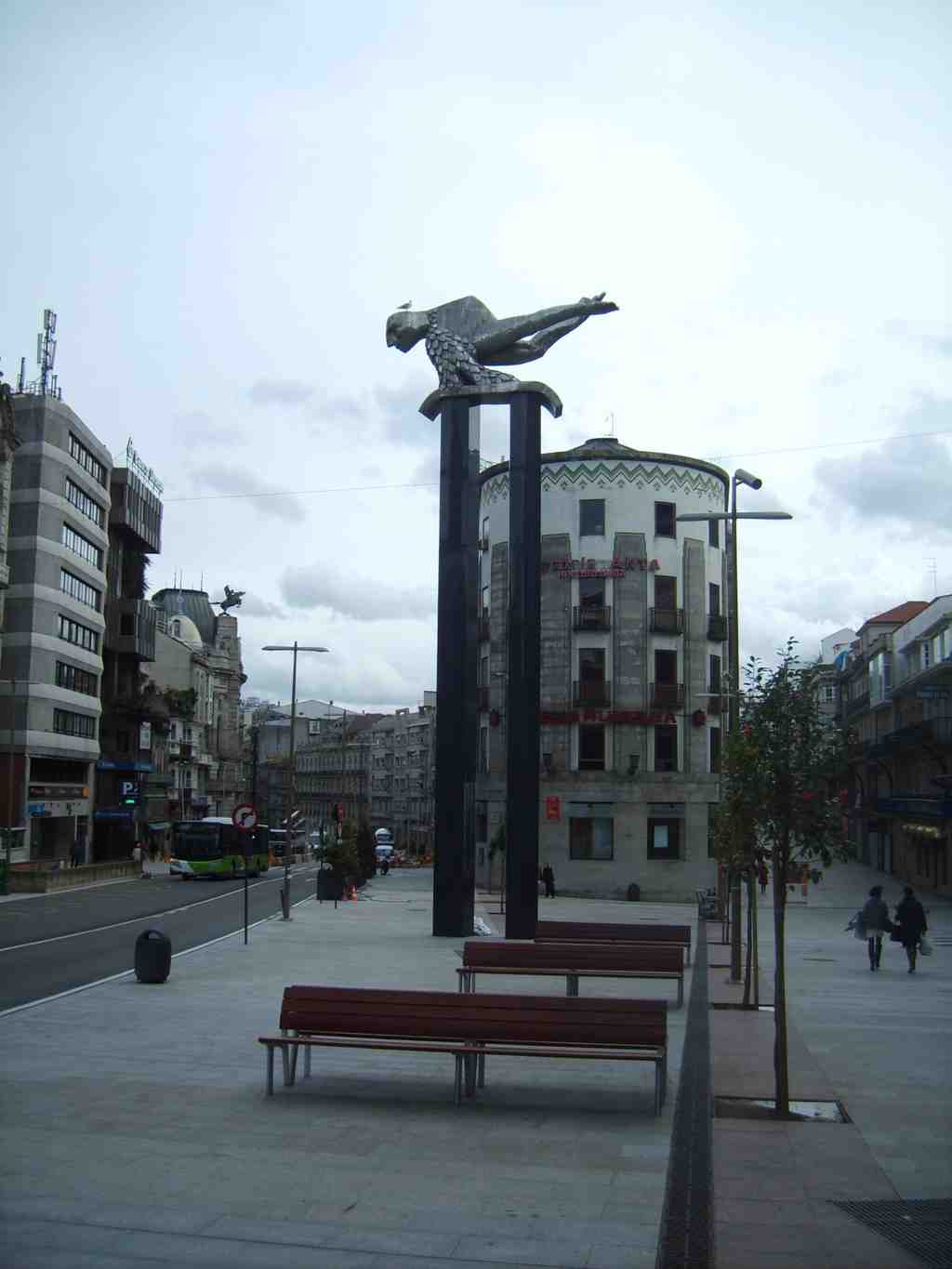
    Right ahead, you’ll spot an open, gently sloping plaza crowned with a striking silver sculpture of a human figure with a fish tail balanced high on two black pillars-this is the unmistakable “El Sireno” in the Puerta del Sol square. Standing in the heart of Vigo at Puerta del Sol, you’re actually at the city’s “kilometer zero”-the very epicenter where all roads meet and every local will point you to if you ask, “¡Dónde está el centro!” This plaza, once called Plaza del Capitán Carreró until 1981, guards a secret: it sits where one of the original seven gates of Vigo’s old walled city once stood, facing east, where the sun makes its grand entrance every morning. Imagine, for a second, 17th-century Vigo surrounded by thick stone walls funded by both the king and everyday Vigueses-not to keep out tourists, but to keep out pirates and invaders. Seven gates welcomed fishermen, merchants, and even the odd sheep or two. If the city walls hadn’t been torn down in 1862, you’d probably need a password just to get in! Now, feel the gentle tilt of the plaza. It leans ever so slightly towards the sunrise, as if the city itself is eager to catch the first rays. But that’s not all that’s peculiar here-the show-stealer is “El Sireno,” a whopping 11 meters tall and, honestly, the only fish-man hybrid I’ve known to never swim away! Francisco Leiro designed him in 1991, inspired by Venice’s Lion of San Marcos. Locals love to joke that the real reason El Sireno looks so intense isn’t the legendary courage of old, but because he’s been holding up traffic in the plaza for decades. This isn’t just a stage for quirky statues, though. Puerta del Sol has seen its share of history. Picture the crowd in 1789, jaws full of amazement, as Vigo’s first gas lights flickered on, chasing away the darkness. Or the solemn ceremonies as the city honored thinkers like Ricardo Mella and philanthropists like José García Barbón. The Second Republic was boldly declared here to a plaza full of shouts and cheers; revolutionary spirits definitely left footprints on these stones! And if you’re ever around in December, brace yourself: the entire city flocks here as the Christmas lights are switched on in a festival of music, laughter-and possibly a few tangled fairy lights. Don’t miss the ornate Edificio Simeón nearby, a marvel of Vigo’s modernism, which owes its charm to architect Michel Pacewicz and a dash of Eiffel-inspired flair. Next door, the grand Banco de Vigo building adds to the eclectic skyline. So while you stand here, know you’re at the crossroads of old city gates, local legends, and celebrations that give this spot its electric heartbeat-even if you never find any real mermaids, you’ve found a legend or two!

    専用ページを開く →
  10. You’ve just arrived in front of the grand Co-Cathedral of Santa María, one of Vigo’s most cherished and enduring treasures. Take a deep breath and look up: you’re standing where…もっと読む折りたたむ

    You’ve just arrived in front of the grand Co-Cathedral of Santa María, one of Vigo’s most cherished and enduring treasures. Take a deep breath and look up: you’re standing where over 800 years of stories have unfolded, from pirates and explosions to angels and emperors-and maybe even a ghostly olive tree or two. Now, let’s travel back to the 12th century. Imagine a much simpler church right here, its stone walls barely weathered, farmers and fishermen shuffling in for mass. We know about this early church thanks to dusty old documents from 1156 and 1170, in which the bishops and kings of the past squabbled over holy land like it was the latest Spanish soap opera. By the late 1300s this humble house of worship evolved-a new Gothic church growing in its place, with grand chapels, golden altars, and echoes of Gregorian chants swirling beneath lofty stone arches. If you’re picturing a sleepy parish, think again: in 1585 the infamous English pirate Francis Drake stormed ashore, plundering Vigo’s treasures. Imagine the clang of swords, crashing doors, terrified prayers, and a very peeved priest waving his best candlestick at the door. But the drama wasn’t over. In 1809, a nearby gunpowder store-located up at the Castle of Castro-exploded spectacularly. The blast shattered windows, shook homes, and sent church stones tumbling. Good thing they didn’t keep the communion wine too close… After that disaster, the old gothic church couldn’t be saved. So in 1811, architect Melchor de Prado y Mariño answered the saintly call! (And probably took out some serious construction insurance.) Work began in earnest in 1816-delayed a few years, thanks to the small inconvenience known as the Napoleonic War. For its new form, Melchor chose neoclassical style: simple, strong, and elegant, echoing ancient Roman temples. But he added twin baroque towers for a little extra flair-so if you ever thought the Co-Cathedral looked like it couldn’t decide what to wear to the party, you’re not wrong! Completed in 1838, the church still seems to stand ready for anything, even another pirate raid. Step inside and you’ll find a world of treasures. The great retablo at the main altar is a fireworks show of gold and intricate carvings (and zero danger of actual explosives, don’t worry). Here you’ll also discover the work of Santiago Padrós, Spain's master mosaic artist. His monumental mosaics sparkle in the candlelight-featuring angels holding the Ten Commandments and the Gospels. Below these angels, Padrós wove in two distant cities: ancient Constantinople, now Istanbul, and Rome itself. For the devout (or the travel-hungry), it's like a pilgrimage without ever leaving your pew. Looking for even more hidden details? In the old days, the altar featured donor gifts from as far as London, adorned with the English coat of arms-perhaps a peace offering after Drake’s visit! There were chapels for every saintly purpose: Saint Anne for mothers and children, Saint Benedict for students hoping to finally pass an exam, Saint Bartholemew, Saint John, even the mysterious Angel Custodian. Outside, rumor has it, a mighty centennial olive tree once stood proud-outlasting wars, raids, and storms. It became such a symbol of Vigo they almost needed to build a second cathedral just to fit the branches. Sadly, the old olive didn’t survive into modern times, but its legend still lingers in the city’s nickname: the Olive City. And if all this doesn’t make the Co-Cathedral sound impressive enough, in 2020 Rome itself-by way of the Vatican-raised the church’s status to Basilica. So now, it’s not just Vigo’s heart; it’s an official VIP in the world of sacred buildings. So take another look-imagine the stories inside these walls, the footsteps of pirates, saints, artists, and architects. And remember: whether you came here to pray, to admire, or just to snap a stellar selfie, you’ve just witnessed centuries worth of Vigo’s soul, standing proud under the Galician sky.

    専用ページを開く →
  11. To spot the Casa Torre de Pazos Figueroa, look for a robust stone building with large wooden windows and a beautifully decorated stone balcony jutting out above the street, right…もっと読む折りたたむ

    To spot the Casa Torre de Pazos Figueroa, look for a robust stone building with large wooden windows and a beautifully decorated stone balcony jutting out above the street, right in front of you in Plaza de Almeida. Now, imagine you’re standing where nobles once strolled in the 1500s, eager to show off their architectural bling. This house began its story as a grand urban palace, built when Vigo was a tiny village, likely to impress locals and confuse jealous neighbors. It’s actually part of the oldest architectural ensemble in Vigo-an exclusive club of stone, shields, and secrets. On the third floor, you’ll see intricate Renaissance shields and a fancy inscription; if those stones could talk, they’d brag about their artistic style and their gargoyles peeking down from the cornice, ready to spit out rainwater or maybe keep a watchful eye on medieval mischief. Down below, the arched doorways are laced with unique designs, mixing Galician spirit and Portuguese flair-what a cross-border collaboration! And just in case you thought this was all just for show, remember, it was restored to house the Instituto Camões, keeping the spirit of learning alive where history and artistry play hide and seek. So, next time you hear a funny gargoyle joke, you know where it came from!

    専用ページを開く →

よくある質問

ツアーはどうやって始めますか?

購入後、AudaToursアプリをダウンロードして引き換えコードを入力してください。ツアーはすぐに開始できます。再生ボタンをタップして、GPSガイド付きルートに従うだけです。

ツアー中にインターネットは必要ですか?

いいえ!開始前にツアーをダウンロードしておけば、完全にオフラインで楽しめます。チャット機能のみインターネットが必要です。モバイルデータを節約するため、WiFi環境でのダウンロードをお勧めします。

これは団体ツアーですか?

いいえ、これはセルフガイド式のオーディオツアーです。ガイドや団体、決まったスケジュールに縛られることなく、スマホから流れるナレーションを聴きながら自分のペースで自由に探索できます。

ツアーの所要時間は?

ほとんどのツアーは60〜90分で完了しますが、ペースは完全に自由です。好きな時に一時停止したり、スポットを飛ばしたり、休憩を取ったりできます。

今日中にツアーを終えられない場合は?

問題ありません!ツアーには無期限でアクセスできます。明日、来週、あるいは来年でも、好きな時に再開できます。進行状況は保存されます。

どの言語が利用可能ですか?

すべてのツアーが50以上の言語に対応しています。コードを引き換える際にお好みの言語を選択してください。注意:ツアー生成後に言語を変更することはできません。

購入後、どこからツアーにアクセスできますか?

App StoreまたはGoogle Playから無料のAudaToursアプリをダウンロードしてください。メールで届いた引き換えコードを入力すると、ライブラリにツアーが表示され、ダウンロードして開始できるようになります。

verified_user
満足保証

もしツアーを楽しめなかった場合は、返金いたします。お問い合わせ先: [email protected]

以下の決済で安全にチェックアウト

Apple PayGoogle PayVisaMastercardPayPal

AudaTours: オーディオツアー

楽しくて手頃なセルフガイド式ウォーキングツアー

アプリを試す arrow_forward

世界中の旅行者に愛されています

format_quote このツアーは街を見るのに本当に良い方法でした。ストーリーは作り込まれすぎず面白くて、自分のペースで探索できるのが良かったです。
format_quote 観光客気分になりすぎず、ブライトンを知るためのしっかりとした方法でした。ナレーションには深みと文脈がありました。
Christoph
Christoph
starstarstarstarstar
ブライトン・ツアー arrow_forward
format_quote 片手にクロワッサンを持ち、期待ゼロで始めました。アプリはただ一緒にいてくれる感じで、プレッシャーもなく、クールな物語を楽しめました。

オーディオツアー使い放題

世界中のすべてのツアーをアンロック

0 ツアー·0 都市·0 国
all_inclusive アンリミテッドを探索