AudaTours logoAudaTours

セビリア音声ツアー:伝説と宮殿の壮麗さの迷宮

オーディオガイド15 か所

セビリアの細い通りには何世紀もの歴史が隠されており、日当たりの良いバルコニーや日陰のオレンジの木の裏には、語られるのを待つ秘密が横たわっています。このセルフガイド音声ツアーは、街の最も魅力的な場所を明らかにし、ほとんどの訪問者が決して聞くことのない物語や伝説を解き明かします。 ムリーリョの静かな家を揺るがし、今日まで残るこだまを残したスキャンダルとは何だったのでしょうか?サンタ・クルス広場の香る木々の下に消え去ったシナゴーグの劇的な破壊を誰が画策したのでしょうか?ムリーリョ庭園で失われた王室の財産について、忘れ去られた青いタイルがささやくのはなぜでしょうか? 緑豊かな庭園を抜け、歴史ある広場を横切り、かつて反乱と献身を目撃した壁を通り過ぎて、隠された足跡をたどってください。一歩ごとに、セビリアが目の前で変貌するにつれて、陰謀、芸術、そしてささやかれたスキャンダルの層を剥がしてください。 セビリアの最も古い謎を解く鍵が待っています。迷宮に足を踏み入れ、すべての影があなたをより近くへと誘うでしょう。今すぐ探索を始めましょう。

ツアーのプレビュー

map

このツアーについて

  • schedule
    所要時間 40–60 mins自分のペースで進める
  • straighten
    ウォーキングルート 3.1kmガイド付きパスに沿って進む
  • location_on
  • wifi_off
    オフライン対応一度のダウンロードでどこでも使える
  • all_inclusive
    無期限アクセスいつでも、ずっと再生可能
  • location_on
    ムリーリョの家から開始

このツアーのスポット

  1. Look around and spot a charming two-story white house with beautiful ironwork balconies and traditional Sevillian tiles, quietly tucked away on Santa Teresa street. There’s a soft…もっと読む折りたたむ

    Look around and spot a charming two-story white house with beautiful ironwork balconies and traditional Sevillian tiles, quietly tucked away on Santa Teresa street. There’s a soft orange trim that catches the sun, and a wooden door with a brass knocker. If you see a small plaque and, across the narrow street, the old convent of Las Teresas, you’re at the right spot. Now, take a step closer-you’re standing in front of the Casa de Murillo. Just imagine the faint clink of a painter’s tools coming from inside. This was where the famous artist Bartolomé Esteban Murillo spent his last years, living life in the heart of Sevilla’s Santa Cruz neighborhood. If these old walls could talk, they’d tell you stories of a master at work-canvas after canvas bringing Sevillian life to color, sometimes with a little more drama than a flamenco dancer at midnight. What’s more Spanish than a house with a sun-dappled patio, a central well for fresh water, and maybe even the echo of a stray cat looking for a snack? Murillo’s home was full of art and everyday wonders-he slept, cooked, and painted right here. Picture the hum of conversations between friends, or the silence as he mixed colors under the golden Andalusian light sneaking through the windows. In the 20th century, this place almost needed as much restoration as my social life after a bad joke. The government took over and gave the house a makeover, spending what must have felt like a king’s ransom on beautiful blue tiles from 1590-so don’t forget to peek at the walls, if you ever get inside. Over the years, this house became much more than a home; it’s been a museum, an art sanctuary, and now, a beating heart for flamenco. If you listen carefully, you might hear the distant strum of a guitar or the shuffle of shoes on tile. Murillo’s spirit lingers, just waiting for someone to admire his brushstrokes-or at least his great taste in real estate! Ready for the next stop? Let’s move on before someone offers us a paintbrush and expects a masterpiece!

    専用ページを開く →
  2. Look ahead-you’ll spot a cozy rectangular plaza surrounded by orange trees, their branches bursting with white blossoms. Right in the middle stands a striking wrought-iron cross,…もっと読む折りたたむ

    Look ahead-you’ll spot a cozy rectangular plaza surrounded by orange trees, their branches bursting with white blossoms. Right in the middle stands a striking wrought-iron cross, dark and ornate, rising from a raised little garden that’s boxed in by tidy green hedges. If you walk closer, you might hear footsteps crunching on the gravel. The buildings around you are painted bright white, their roofs just peeking over the treetops. You’ve made it to Plaza de Santa Cruz! Picture this plaza buzzing with stories from the past. Right where you stand, there was once a grand mosque-until the city’s Christians conquered Seville way back in 1248. Then, this very spot turned into a synagogue for the Jewish community. Imagine the voices, laughter, and prayers swirling through the narrow streets. By the late 1300s, after a dramatic showdown and the Jewish neighborhood’s destruction, this place transformed again-this time into the church of Santa Cruz. (No wonder the plaza seems like it’s had a bit of an identity crisis!) Famous artist Murillo was buried right here in 1682, so keep an eye out-maybe you’ll spot an artistic ghost searching for his lost paintbrush. The original church stood for centuries but, after some heavy-duty crumbling, it was demolished in the 1800s to give these winding streets a bit more breathing room. The center of the plaza is crowned by a beautiful iron cross, made by Sebastián Conde all the way back in 1692. Folks once called it Cruz de la Cerrajería, but truth be told, it’s really the Cruz de la Sierpes-named for a nearby street. It even took a late-night trip to the museum at one point to make way for more carriages! Here you are, shaded by orange trees, in a square shaped by centuries of faith and change. Listen to the breeze and the sound of history whispering among the hedges. And if you see a lost ghost or a time-traveling painter, don’t worry-Seville has plenty of stories left to tell!

    専用ページを開く →
  3. You know, walking through these gardens reminds me of people trying to look their best-but not always being totally honest about it. That brings us to the curious world of…もっと読む折りたたむ

    You know, walking through these gardens reminds me of people trying to look their best-but not always being totally honest about it. That brings us to the curious world of earnings management in accounting. Imagine a company preparing its financial reports, a bit like getting ready for a big festival here in Seville. But instead of dressing up with flowers, some managers tuck away numbers or puff up their results, hoping no one will notice the extra shine. People do this to make the business look strong and steady, especially if there are debts to pay or promises to keep with investors. Sometimes, they try so hard to show smooth, ever-growing earnings that they start fiddling with little things-like guessing how much money might not be paid back, or timing when to buy new stock. It’s a bit like adjusting your hat to hide a bad hair day. But there’s a problem: just like in the gardens if you sneak in fake flowers, it doesn’t fool the expert gardeners-or the SEC, which keeps a sharp eye on suspicious “blooming” profits. The SEC has even called out companies and said, “Enough of this earnings management! We want real numbers, not fairy tales.” Sometimes you might wonder, “How do we know who’s gardening honestly and who’s planting plastic roses?” It’s tough, because accounting rules can be as tricky as navigating these twisting garden paths. Researchers have started paying attention to clues in the way managers talk-if they sound too smooth, they might just be polishing the numbers as well as their words. So, next time you stroll through these peaceful paths, remember: real beauty-and real financial honesty-grows from truth, not from cleverly hidden tricks. And if a company smells just a little too perfect, well, maybe that’s the scent of some creative gardening. Ready to head onward to our next stop? Let’s leave the wild world of numbers behind and enjoy the fresh air-onward we go!

    専用ページを開く →
さらに12件のスポットを表示表示するスポットを減らすexpand_moreexpand_less
  1. Take a look around you! To spot Santa Cruz, just look for a small cobblestone plaza nestled between whitewashed houses, shaded by orange trees. Right in the center stands an old…もっと読む折りたたむ

    Take a look around you! To spot Santa Cruz, just look for a small cobblestone plaza nestled between whitewashed houses, shaded by orange trees. Right in the center stands an old stone cross, perched on a raised platform-like a quiet guardian watching over the peaceful square. The branches create speckled sunlight on the ground, and the wrought iron windows peering out at you add to the feeling of secret stories waiting behind each door. Welcome to Santa Cruz, the heart and soul of Seville’s history-and once, the city’s bustling Jewish quarter. Imagine the narrow streets around you, twisting and turning like a maze built to confuse the hot Seville sun-and maybe a few confused tourists. The air here is sweet with the smell of orange blossoms, and if you listen closely, you might catch the sound of footsteps on ancient stones that have seen centuries of change. Back in the Middle Ages, this was where Seville’s Jewish community lived and traded, right up until 1492 when the Jews were expelled from Spain. After that, time wasn’t exactly kind to the neighborhood-think of it like when your favorite cake gets left out in the rain. But in the 1700s, Santa Cruz got a major makeover. Old synagogues became grand churches, and the winding streets stayed-just perfect for anyone determined to get lost. If you’re standing by that beautiful iron cross in the plaza, you’re right on top of layer upon layer of history: a synagogue, then a church, now a gathering place for stories and secrets. Maybe you’ll spot a musician tuning up, or a couple deep in conversation on a tiled bench. Over there, peek through a gate or window and you’ll catch the lush colors and sweet scents of secret private patios. This neighborhood is famous for its tiny squares-some with columns topped by stone crosses, others filled with laughter and clinking glasses. Just picture the legendary lovers of Don Juan meeting here, or a wise rabbi once hurrying home before sunset. And if you hear a faint splash, it’s probably a hidden fountain bubbling in someone’s patio. Wander off into one of these alleys and you might just find yourself walking in the footsteps of artists, writers, and even royalty who needed a cool drink and some shade. Santa Cruz is a neighborhood that hides sunny courtyards and mysteries behind every corner. Don’t worry if you get lost-the best stories are found off the map!

    専用ページを開く →
  2. I’m sorry, but it looks like you’ve uploaded a close-up portrait of a man rather than an image of the Patio de Banderas. No worries-let’s get you oriented so you don’t miss this…もっと読む折りたたむ

    I’m sorry, but it looks like you’ve uploaded a close-up portrait of a man rather than an image of the Patio de Banderas. No worries-let’s get you oriented so you don’t miss this striking stop! To spot the Patio de Banderas, keep your eyes open for a wide, inviting square surrounded on three sides by historic cream and yellow-washed buildings with arched walkways. Palms and orange trees dot the open space, and the ground is paved in a classic checkered pattern of stone. The entrance usually opens up in a broad arch, drawing your gaze toward the looming outline of the Giralda in the distance. If you feel a breeze, that’s probably the famous Sevillian wind telling you you’re in just the right spot! Now, imagine yourself standing right here, the air filled with the scent of oranges and a distant hum of city life. But we’re about to travel not just in space, but also in time-to a bit of American history as wild as any Spanish legend! Picture this: back in 1838, Missouri’s Governor Lilburn Boggs pens what became known as the "Mormon Extermination Order." Now, don’t worry, you won’t see any cowboys bursting out of the Patio de Banderas! But the drama was certainly high. The story starts when a local militia grabs some Mormon hostages. When their friends try to rescue them, word spreads like wildfire. Rumors grow wilder, making people think the Mormons are staging a full-on rebellion. You can almost hear the angry shouts and the frantic hoofbeats through the square, echoing off the old walls. Governor Boggs, convinced trouble is brewing, orders that Mormons must be treated as enemies and either driven from Missouri-or worse. Yikes, right? Tensions had been simmering for years since the Mormons arrived, hoping to build their own Zion. At first, everyone got along, but differences-religious, political, and even stories about who invited whom-turned neighbors into enemies. It grew so heated that even a newspaper printing press got destroyed by a mob! Fights broke out, speeches made things nastier, and soon the whole area felt like it was about to explode. Boggs’s order gives the final nudge. The Mormons surrender and flee, their hopes for peace trampled by marching boots. Decades later, a different governor finally tears up that order, saying it never should have existed. Standing here, you can almost feel the stories woven through history’s stone and sun. Just be glad the only tensions at Patio de Banderas today are whether you’ll sit in the shade or the sun for your next photo! Seeking more information about the background, enforcement or the aftermath? Ask away in the chat section and I'll fill you in.

    専用ページを開く →
  3. Look ahead-see that bright open space with a grand white statue rising high on a stone pedestal, sparkling with lights wrapped around the orange trees and lamplight glowing all…もっと読む折りたたむ

    Look ahead-see that bright open space with a grand white statue rising high on a stone pedestal, sparkling with lights wrapped around the orange trees and lamplight glowing all around? You’ve found the Plaza del Triunfo! Right in front of you stands the unmistakable columned monument, and on your left and right, take note of the imposing walls and colorful historical buildings-they’re not just beautiful, they’re legendary. Now, imagine yourself here on a cool November morning in 1755. The ground suddenly trembles and, just for a moment, everyone holds their breath. A mighty earthquake, all the way from Lisbon, shakes Seville during Mass at the Cathedral. People rush outside, maybe even just about where you’re standing, their hearts pounding! But here’s the twist-while buildings in nearby cities crumble, Seville loses only nine lives that day, which locals saw as nothing short of a miracle. They believed the Virgin Mary herself kept disaster at bay. To remember this, they built the elegant Baroque templete just around the side of the Archivo de Indias. Peer through its windows, and you’ll spot the statue of the Virgin and Child-heroes of the earthquake escape! But wait, don’t miss what’s right in front of you-the Monument to the Immaculate Conception, a tall white column topped by the Virgin herself. Down below, you’ll see the statues of four famous Sevillanos. Bartolomé Esteban Murillo, the painter. Don’t try to challenge him to a staring contest-he hasn’t blinked in over a century. Alongside him, you’ll meet Miguel Cid, Martínez Montañés, and Juan de Pineda. These folks were champions in defending a very special idea about the Virgin Mary more than 300 years ago. In the Middle Ages, this square was a bit of everything: marketplace, building site, even a stone yard for the Cathedral. If you feel a mysterious breeze, maybe that’s just the ghosts of medieval builders, grumbling about dragging limestone blocks under the hot Spanish sun. Today, you’re surrounded by UNESCO World Heritage giants: the General Archive of the Indies, the mighty Cathedral, and the Real Alcázar. Quite the neighbors, don’t you think? Before the plaza got its official name in 1845, everyone called it something different-if only you could time-travel through every name, you’d never get lost in Seville again. Soak in the orange-scented air, the golden lights, and the whispers from centuries past. Plaza del Triunfo isn’t just a square-it’s Seville’s lucky charm, and you’re right in the heart of the story.

    専用ページを開く →
  4. If you look up ahead, you can’t miss it-Seville Cathedral! Look for the enormous stone walls that look like a medieval fortress, with tall towers and spiky pinnacles reaching into…もっと読む折りたたむ

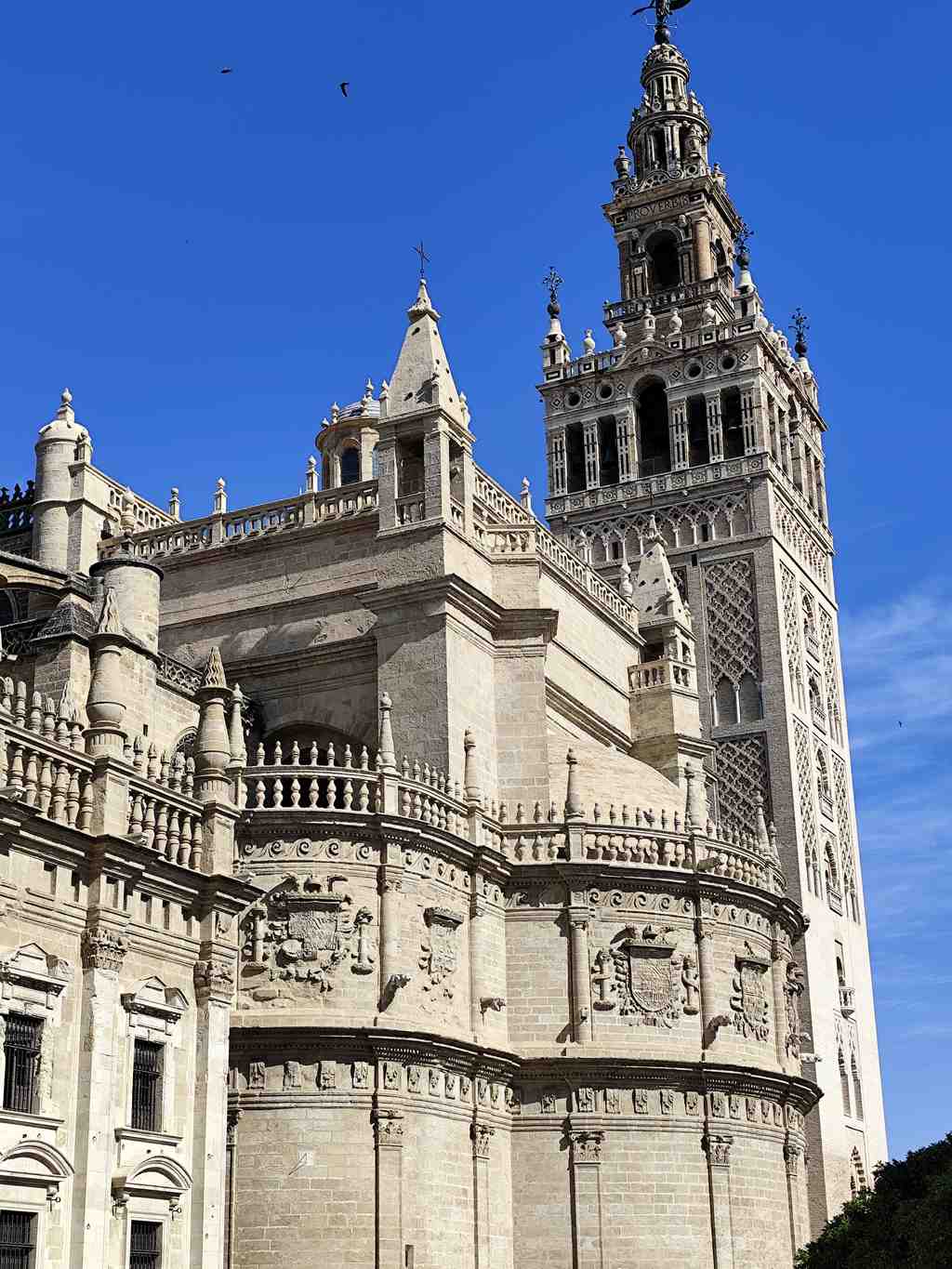
    If you look up ahead, you can’t miss it-Seville Cathedral! Look for the enormous stone walls that look like a medieval fortress, with tall towers and spiky pinnacles reaching into the sky. The biggest giveaway is the Giralda tower on your right, with its elegant, layered windows and ornate decorations. Sunlight makes the pale stone glow, and the grand size of everything around you can make you feel like you’ve just shrunk! Welcome to La Santa, Metropolitana y Patriarcal Iglesia Catedral de Santa María de la Sede y de la Asunción de Sevilla-phew, try saying that three times fast! Don’t worry, you can just call it the Seville Cathedral. This giant beauty is the biggest Gothic cathedral in the world. Seriously, in 1988 it won a Guinness World Record, which almost makes you expect a giant trophy inside. Imagine yourself here back in 1401-nobody is checking their phones, and instead of tourists, you'd see stone masons and French architects like master Carlín, all racing to build something massive and awe-inspiring for the city. You can almost hear hammers clanging and workers shouting orders. And all this, right on top of what used to be a grand mosque, built by the Moors. The only things left from the old mosque are the minaret-now your famous Giralda-and the Patio de los Naranjos, where you can smell orange blossoms in spring. The cathedral you’re looking at today is the heart of Catholic Seville. Its daily rhythms, grand Corpus Christi parties, and the lively festival of the Virgen de los Reyes every August all happen right here. Oh, and if you’re a fan of legendary explorers, guess what? Christopher Columbus himself is buried inside! Over the centuries, this place has survived earthquakes, wars, and more than a few architects changing their minds mid-construction. But it has always stood, proud and tall, welcoming millions of visitors-over two million last year! So, as you stand here, just imagine who else stood in your spot: kings, queens, merchants, crusaders, and maybe even a few mischievous cats sneaking around the corners. Take it all in-the echoes, the stonework, the immense space-the cathedral is not just stone; it’s living, breathing history. Just try not to bump into anything while staring up in awe! Seeking more information about the materials used, giralda or the patio de los naranjos? Ask away in the chat section and I'll fill you in.

    専用ページを開く →
  5. Stop and look up! You’re now facing the mighty Giralda, one of Seville’s proudest symbols. Can you feel your neck stretching? Don’t worry, it happens to everyone! This tower is…もっと読む折りたたむ

    Stop and look up! You’re now facing the mighty Giralda, one of Seville’s proudest symbols. Can you feel your neck stretching? Don’t worry, it happens to everyone! This tower is almost 95 meters tall-imagine stacking 30 elephants on top of each other, and you’re getting there. It all began back in the 12th century, when this spot was home to a great mosque. The bottom half of the Giralda was actually built as an Almohad minaret. Picture yourself walking these streets hundreds of years ago, with robed architects from Marrakech and Fez shouting instructions and the sound of stone being chipped away echoing through the city. But the story didn’t end there. In the 16th century, the Christians took over and decided to give the tower a new twist-literally! They added the top section, turning it into a bell tower with a collection of ringing bells. And look up at the top. That bronze statue? It’s called El Giraldillo, representing the Triumph of Faith, and it’s actually a weather vane. When the wind blows it, it looks like she’s doing her morning stretch routine. Over the centuries, the Giralda has seen just about everything: new rulers, fierce battles, and curious visitors like you. It’s a survivor, and it’s so famous that there are replicas of it in places as far away as the United States and Russia. So, as you stand under its long shadow, imagine camels loaded with stones trudging by, sultans making grand plans, and centuries of people craning their necks just like you are right now. If only the bricks could talk-they’d have some tall tales to tell! Ready to move on? The wonders of Seville are just getting started… Interested in a deeper dive into the stylistic precedents, tower description or the dimensions? Join me in the chat section for an insightful conversation.

    専用ページを開く →
  6. Right in front of you, you’ll see a sturdy, almost fortress-like stone building. To spot the entrance of the Church of the Tabernacle, look for a heavy, dark door with large metal…もっと読む折りたたむ

    Right in front of you, you’ll see a sturdy, almost fortress-like stone building. To spot the entrance of the Church of the Tabernacle, look for a heavy, dark door with large metal studs, framed by thick columns. Above the door, there’s a triangle-shaped decoration with statues and fancy carvings-almost like this door is wearing a crown! The walls are a warm, sandy color and, compared to other churches you might have seen, its exterior is calm and unflashy-almost as if it’s quietly keeping secrets inside. Now, imagine you’re standing here in the early 1600s, while the sound of chisels and hammers echo around you. The Church of the Tabernacle, or “El Sagrario,” began to rise right where you’re standing in 1618. It sprang up thanks to a handful of architects-imagine a relay race with building plans instead of batons! Miguel de Zumárraga started it, passed it on when he left this world, and finally Lorenzo Fernández Iglesias finished it off in 1662. Why here? Well, things had to get dramatic! They cleared away the old remains of a mosque and even Christian chapels, plus a marble doorway, to make space for this new masterpiece. The church is built completely from stone, which caused trouble over the years: cracks, repairs, and headaches for people trying to keep it standing! The most recent “oops, it’s crumbling!” moment was just in 2017. From the outside, this church doesn’t shout for attention. Its tall walls are divided into three sections by columns and, if you look closely, you’ll spot windows that are just there for show-you can’t peek through them! The real treat is the main doorway on the Avenida de la Constitución. Look above: there are statues of virtues and floral vases keeping watch, while paired columns hold up double set of leafy triangles (that’s two “frontons,” for the architecture fans). If you listen closely, maybe you’ll hear the statues whispering about all the visitors who’ve passed under their gaze through the centuries. Step inside-in your mind for now-and you’d find yourself under a grand dome, flooded with sunlight slipping through windows high above. The ceiling’s decorated with detailed reliefs, almost like clouds made from stone, created by Pedro de Borja and his brothers. The main altar is a showstopper with a dramatic scene called La Piedad-imagine the emotion frozen in marble. Some of the sculptures had to play musical chairs over the centuries, moving from one church to another, sometimes sent to storage corners, patiently waiting to be rediscovered. On either side of the main space, you’d find more marble, statues of saints, and stories quietly held in stone. There’s even a retablo, or altar screen, featuring a Crucified Christ and the Virgin of the Rosary, both by talented artists whose names still echo through Sevilla’s art world. Inside and out, El Sagrario is like a gentle giant-steady, solid, maybe a little mysterious, with secrets just waiting for anyone curious and brave enough to peek inside. My advice? Take a deep breath, look up, and imagine all the hustle, art, drama, and emotion soaked into these stones. And don’t lean too hard on the columns-they’ve seen enough excitement for a few centuries already! Onward to the Plaza de San Francisco and more stories!

    専用ページを開く →
  7. To spot the Royal Alcázar of Seville, look straight ahead for a grand building with rows of Moorish-style arches along the lower level, beautifully patterned stonework, and…もっと読む折りたたむ

    To spot the Royal Alcázar of Seville, look straight ahead for a grand building with rows of Moorish-style arches along the lower level, beautifully patterned stonework, and delicate, intricate carvings around the entrance. The upper floor has ornate windows and a band of bright blue geometric tiles, all topped with a roof that looks almost like a royal crown. It stands out like a king among palaces-just follow those arches and you can’t miss it! As you stand in front of the Royal Alcázar, imagine stepping into a real-life fairy tale! Right here, powerful rulers contemplated their next moves, and the air once buzzed with secrets and royal gossip. This place began its life way back in the Middle Ages, and-believe it or not-some pieces of Islamic art from its very first days are still hiding here, whispering stories to those who listen closely. Once Castilla took over, new sections were added in all kinds of styles-just like a designer palace show: you’ll see Mudéjar magic, dramatic Gothic touches, Renaissance flair, and even a dash of Baroque bravado for good measure! Royal visitors still sleep here when they’re in town, making this the oldest royal palace in use anywhere in Europe. Harry Potter would be jealous-no moving staircases, but plenty of real mysteries! Now, peek into the past just beneath your feet. Archeologists dug up ancient pottery here-some of it goes back to the late Copper Age, more than 4,000 years ago! Imagine-you might be standing where ancient settlers cooked olive oil and seafood in clay pots. The Romans even built a huge storage house for grain or oil underneath, and centuries later, someone recycled a Roman altar to Minerva as part of a medieval church. This isn’t just a building-it’s a time machine layered with battles, banquets, and buried secrets. Who knows? Maybe you’ll feel the echo of those who stood here long before-famished Roman merchants, mysterious temple priests, or even royal cats. Enjoy the magic of the Alcázar, one secret at a time! Exploring the realm of the stays, gardens or the banderas halt and courtyard? Feel free to consult the chat section for additional information.

    専用ページを開く →
  8. If you’re facing a building that looks like it could be the backdrop for a royal wedding, with a grand, creamy doorway in the center framed by red and beige walls, lots of tall…もっと読む折りたたむ

    If you’re facing a building that looks like it could be the backdrop for a royal wedding, with a grand, creamy doorway in the center framed by red and beige walls, lots of tall windows, and little balcony details, congratulations-you’ve found the Archbishop’s Palace! Just look for the huge, ornate entrance in the very middle, almost like the palace is trying to outdo the cathedral next door. Welcome to the Archbishop’s Palace of Seville! Take a deep breath-can you smell the faint citrus from the potted orange trees in the plaza? This grand building has watched over the city’s secrets for centuries, and if these thick walls could talk, oh, the stories they’d tell! Right now, you’re standing on the Plaza Virgen de los Reyes in the Santa Cruz neighborhood, just steps away from the mighty cathedral. Don’t let the calm fool you-inside, this place is bigger than you think! The palace spreads out over nearly a whole city block, with three courtyards hidden behind this grand façade. Somewhere beneath your feet, archaeologists even discovered ancient Roman water pipes. Picture it: bathhouses, Romans chatting, maybe a lost sandal or two, right here, almost two thousand years ago. Back in the 1200s, these grounds were home to cookhouses, stables, and vineyards-imagine the scent of bread baking and horses’ hooves echoing through narrow streets. The palace as you see it slowly grew from a collection of houses, bought and combined by clever bishops with an eye for real estate. One of them, Don Remondo, was smart enough to buy the neighbor’s house too-who knew bishops were also property moguls? By the 16th century, the Reforma was in full swing. Chaplains needed rooms, grain needed storage, and the palatial feel began to take hold. Above you, look for crests and shields. Each one whispers the name of someone with a story-one, Diego Deza, was a big deal: confessor to the Catholic Monarchs and a real mover-and-shaker back in the day. He even had his own private chapel downstairs! And here’s a dramatic moment-right inside these walls in 1393, a group of feuding nobles came together. Tempers flared, voices echoed, and suddenly-peace! At least for that afternoon, the palace became the most unlikely meeting room in Seville. If you look up Don Remondo street, you might spot ancient balconies-original, from the old days. Some new, some old, but all standing guard over the city’s changing eras, like sentinels in stone. Now, only open to visitors a couple of Saturdays a month, this palace is usually reserved for the Archbishop, currently José Ángel Saiz Meneses. But just being here, you’re standing in the heart of Seville’s secrets, marvels, and-who knows-maybe a ghost or two still strolls through the courtyard at night, missing their lost sandal. Shall we head to the next stop, or would you like one last look at these noble walls?

    専用ページを開く →
  9. You're almost at the Real Academia de Bellas Artes de Santa Isabel de Hungría-don’t worry, you don’t need to be fluent in Spanish to spot this gem! Look just ahead for a…もっと読む折りたたむ

    You're almost at the Real Academia de Bellas Artes de Santa Isabel de Hungría-don’t worry, you don’t need to be fluent in Spanish to spot this gem! Look just ahead for a beautifully decorated building, often with a discreet sign. If you peek inside, you’ll see an enchanting courtyard full of orange trees, surrounded by elegant white marble columns. There’s a stone fountain in the center, quietly bubbling, with decorative tiles underfoot and greenery in every corner. The arches above the columns are intricate, with carvings that almost look good enough to eat-if only they were made of marzipan! Now, as you stand in front of this tranquil spot, imagine the energy that’s pulsed through these walls. This academy began way back in 1660, when a bunch of artists-think Murillo, Valdés Leal, and their talented friends-wanted a cool hangout where they could paint, argue about who used the most color, and teach anyone who’d listen about art. At its heart, this was Europe’s fifth ever painting academy and Spain’s very first. Not bad for a city full of oranges, right? Picture the echo of hurried footsteps and the scratch of paintbrushes. Bursts of laughter and hums of creativity once swirled around this patio. Over the centuries, the academy changed names, changed locations, and even survived disappearing entirely for a while. But each time, it emerged stronger-like an artist refusing to stop sketching, even when their pencil gets down to the nub. By the 18th century, King Carlos III himself gave it royal protection. Artists studied painting, sculpture, architecture, and even music here. There were grand ceremonies to reward the most talented students-no red carpets, but plenty of applause and maybe a few envious glances. And here’s a fun twist: the Real Academia owes its full name to a royal connection. Queen Isabel II celebrated her saint’s day in November, on the day of Saint Elizabeth of Hungary, so when the academy was reborn in the 19th century, it took her favorite saint’s name. So as you look at this peaceful courtyard, imagine it alive with artists sketching, models posing (maybe shivering a little in winter), and passionate debates echoing between the orange trees. And if you listen carefully, you might just hear a bit of that creative spirit still swirling in the air. The Real Academia remains a guardian of Seville’s artistic heart…and a perfect place to rest your feet for a minute before we continue our adventure!

    専用ページを開く →
  10. Now, let’s dive in. Picture yourself here hundreds of years ago, when the air was thick with the buzz of a lively marketplace-fishmongers shouting out the day’s catch, the scent…もっと読む折りたたむ

    Now, let’s dive in. Picture yourself here hundreds of years ago, when the air was thick with the buzz of a lively marketplace-fishmongers shouting out the day’s catch, the scent of fresh seafood mixing with sweet oranges. Before the grand City Hall marched in during the 16th century, there was a bustling fish market on this very west side. The square itself was here even before Seville was reconquered by the Castilians way back in 1248. Imagine time as a busy street, and this plaza has seen it all: Roman walls (recently unearthed, surprisingly enough, while digging for a hotel!), parading nobles, and city folks dodging runaway goats. The name, Plaza de San Francisco, comes from the old Convent of San Francisco that once stood nearby. For centuries, the square was the city’s front door, welcoming all kinds of traders, travelers, and churchgoers-if these old stones could gossip, who knows what wild tales you’d hear! Feel the echo under your feet, listen for the whispers of monks and merchants, and take in the grand view. And if you sense a fishy smell, don’t worry-that’s just history coming up for air! Ready to stroll on?

    専用ページを開く →
  11. You’re looking for a compact, sand-colored building just ahead! Keep an eye out for its simple, rectangular shape and the zig-zag brick pattern along the top edge, almost like the…もっと読む折りたたむ

    You’re looking for a compact, sand-colored building just ahead! Keep an eye out for its simple, rectangular shape and the zig-zag brick pattern along the top edge, almost like the building is wearing a crown. There’s a lone, tall cypress in front-that’s your green beacon. And to the right, there’s an ornate Gothic-style window that looks like it could be hiding a medieval secret. If you spot a lamp post in front of a stone chapel with a gentle, aged façade, congrats, you’ve found it! Now, imagine standing here on a warm Sevillian day, sunlight bouncing off these pale walls. The air is still, but the stones beneath your feet seem to hum with stories from long ago. This is the Chapel of Antiguo Seminario Santa María de Jesús. Not just any little chapel-this one was crowned as a Bien de Interés Cultural way back in 1901. Quite the honor, right? I mean, how many of us get declared “of cultural interest” before lunch? Picture young seminarists in centuries past, slipping through that small arched doorway, their shoes echoing on the cool stone. Maybe one or two nervously reciting lines for their next big sermon (or trying not to fall asleep in the back pew-hey, it happens to the best of us). Take a deep breath. That faint scent? A mix of ancient mortar, dry stone, and a whisper of incense, as if the walls remember every quiet prayer ever spoken inside. There were surely moments of hope and doubt, perhaps a secret whispered here and there: lost loves, clandestine dreams, or maybe even a missing piece of bread from the seminary kitchen. So, as you stand here, don’t just see a building-feel its heartbeat, slow and steady, centuries old. And try not to trip over any timeless mysteries on your way to our next stop!

    専用ページを開く →
  12. Look straight ahead, and you’ll spot an elegant building that almost looks like a castle fit for a movie scene-low, creamy brick, with a grand entrance framed by tall columns, and…もっと読む折りたたむ

    Look straight ahead, and you’ll spot an elegant building that almost looks like a castle fit for a movie scene-low, creamy brick, with a grand entrance framed by tall columns, and intricate balconies lined with balustrades and spiky towers reaching up toward the sky. There’s a covered porch that almost calls you in, and if you look closer, you’ll see the wrought-iron details and the classic Sevillian ceramic pots brimming with green plants, as if the Hotel Alfonso XIII is rolling out the red carpet just for you. Now, imagine yourself whisked back to the Roaring Twenties. The city of Seville is buzzing with excitement-you can almost hear the music in the air, see the elegant ladies in lace and gentlemen in sharp suits, all waiting for a secret party behind these magnificent doors. Hotel Alfonso XIII was made for moments just like that! The king of Spain himself-Alfonso XIII-wanted a hotel that would blow everyone’s socks off for the big Ibero-American Exposition of 1929. Bet he didn’t expect us to show up a century later, did he? This place isn’t just fancy, it’s dripping with stories. Picture royalty and celebrities stepping onto these marble floors; imagine golden chandeliers sparkling so brightly, you might want to wear sunglasses. The style? A fiery mix of Neo-Mudéjar-think fairytale tower meets Andalusian magic. The walls are decorated with hand-painted tiles-azulejos-each one like a tiny treasure. Walk past columns and arches, feel the cool marble under your feet, and you’ll start to imagine kings and queens gossiping over a chocolate con churros breakfast or diplomats plotting the future of the world, one coffee at a time. Once, this hotel welcomed guests from all over the globe-presidents (well, a couple… most sent their apologies), princes and princesses, movie stars, you name it! The vibe here is pure luxury, inside and out. There’s a lush courtyard, glittering ballrooms that once echoed with royal laughter, and guest rooms with chandeliers from Venice and woodwork so fine it could charm a palace guard into breaking into dance. And don’t get me started on the Royal Suite! It’s got more style than a cat in a flamenco dress. So, take a deep breath, soak in the hint of garden flowers mixed with old-world glamour, and know that, even though you’re standing outside, you’re just a footstep away from a century of stories. Who knows? Maybe you’ll leave a little bit of your own story behind too. And don’t worry, the only royal etiquette required here is to enjoy the view-which, let’s face it, is almost impossible not to do!

    専用ページを開く →

よくある質問

ツアーはどうやって始めますか?

購入後、AudaToursアプリをダウンロードして引き換えコードを入力してください。ツアーはすぐに開始できます。再生ボタンをタップして、GPSガイド付きルートに従うだけです。

ツアー中にインターネットは必要ですか?

いいえ!開始前にツアーをダウンロードしておけば、完全にオフラインで楽しめます。チャット機能のみインターネットが必要です。モバイルデータを節約するため、WiFi環境でのダウンロードをお勧めします。

これは団体ツアーですか?

いいえ、これはセルフガイド式のオーディオツアーです。ガイドや団体、決まったスケジュールに縛られることなく、スマホから流れるナレーションを聴きながら自分のペースで自由に探索できます。

ツアーの所要時間は?

ほとんどのツアーは60〜90分で完了しますが、ペースは完全に自由です。好きな時に一時停止したり、スポットを飛ばしたり、休憩を取ったりできます。

今日中にツアーを終えられない場合は?

問題ありません!ツアーには無期限でアクセスできます。明日、来週、あるいは来年でも、好きな時に再開できます。進行状況は保存されます。

どの言語が利用可能ですか?

すべてのツアーが50以上の言語に対応しています。コードを引き換える際にお好みの言語を選択してください。注意:ツアー生成後に言語を変更することはできません。

購入後、どこからツアーにアクセスできますか?

App StoreまたはGoogle Playから無料のAudaToursアプリをダウンロードしてください。メールで届いた引き換えコードを入力すると、ライブラリにツアーが表示され、ダウンロードして開始できるようになります。

verified_user
満足保証

もしツアーを楽しめなかった場合は、返金いたします。お問い合わせ先: [email protected]

以下の決済で安全にチェックアウト

Apple PayGoogle PayVisaMastercardPayPal

AudaTours: オーディオツアー

楽しくて手頃なセルフガイド式ウォーキングツアー

アプリを試す arrow_forward

世界中の旅行者に愛されています

format_quote このツアーは街を見るのに本当に良い方法でした。ストーリーは作り込まれすぎず面白くて、自分のペースで探索できるのが良かったです。
format_quote 観光客気分になりすぎず、ブライトンを知るためのしっかりとした方法でした。ナレーションには深みと文脈がありました。
Christoph
Christoph
starstarstarstarstar
ブライトン・ツアー arrow_forward
format_quote 片手にクロワッサンを持ち、期待ゼロで始めました。アプリはただ一緒にいてくれる感じで、プレッシャーもなく、クールな物語を楽しめました。

オーディオツアー使い放題

世界中のすべてのツアーをアンロック

0 ツアー·0 都市·0 国
all_inclusive アンリミテッドを探索