オビエド市オーディオツアー:中世の壁に響く伝説のこだま
千年前、オビエドのギザギザの中世の壁は、王や反逆者が伝説となる運命の都市を再構築する中で、秘密を固く守っていました。 ヘッドホンを装着し、セルフガイドのオーディオアドベンチャーに没頭して、静かな通りや石造りの角に深く織り込まれた物語、つまりオビエドの中心部を駆け抜けるだけの人々が見逃してしまう物語を解き明かしましょう。 なぜ古代の塔はほとんど一夜にして姿を消したのでしょうか?スペイン初の市民記念碑が秘密のコードのように組み立てられたのは、どのような予期せぬひねりがあったからでしょうか?豪華な邸宅を夢見たのは誰で、その部屋が数十年後に音楽で脈打つことになったのでしょうか? 王座が挑戦され、石造りのファサードの裏でスキャンダルが響き渡り、そして市井の人々が静かに歴史を変えた影の路地をたどってください。一歩ごとに、日常から忘れ去られた戦い、先見の明のある精神、そしてささやかれる陰謀のドラマへと引き込まれていくでしょう。 壁があなたを待っています。もっと近づき、もっと深く耳を傾け、今すぐオビエドの最も古い謎を解き明かしてください。
ツアーのプレビュー
このツアーについて
- schedule所要時間 30–50 mins自分のペースで進める
- straightenウォーキングルート 1.2kmガイド付きパスに沿って進む
- location_on
- wifi_offオフライン対応一度のダウンロードでどこでも使える
- all_inclusive無期限アクセスいつでも、ずっと再生可能
- location_onオビエドの中世の壁から開始
このツアーのスポット
To spot the medieval wall of Oviedo, look for a long, rugged wall of weathered limestone blocks running along the left side of the quiet street-its rough, ancient stones and…もっと読む折りたたむ
To spot the medieval wall of Oviedo, look for a long, rugged wall of weathered limestone blocks running along the left side of the quiet street-its rough, ancient stones and patches of greenery make it stand out from the modern buildings nearby. Now, as you stand by this timeworn guardian of Oviedo, close your eyes for just a moment and imagine you’re back in the days of kings and monks. It’s the 9th century. King Alfonso II, nicknamed “the Chaste”-for reasons we shall not ask about-decides to move the kingdom’s capital to this very city. And what does every good king need, besides a crown and a scepter? A wall, of course! The air fills with the clanking of chisels and shouts of busy builders, as the very wall before you rises stone by stone, stretching in a great ring to protect the city’s precious monasteries and palaces, including the Monastery of San Vicente, the seed from which Oviedo would grow. Not only was this wall tough-it was famous enough to appear in royal documents like the will of King Alfonso II, stored away in the Cathedral of San Salvador. Over the centuries, it saw drama fit for a soap opera: mighty kings made donations, queens handed over palaces, and knights surely strutted around talking about how impenetrable it was. But even walls can have their… ups and downs. Flash-forward to 1258. Now it’s Alfonso X, known as “the Wise,” sitting on his throne. He looks at Oviedo and says, “Hmm, time for an upgrade!” And so, using Council funds for two-thirds and Church money for the last third, the city gets a brand new wall. This was no garden fence-imagine a wall 1,400 meters around, 4 meters high, and about two meters thick, built with two parallel layers of stone and a chunky center of rubble. It must have looked as if nothing short of a dragon could break through! But time marches on quicker than a medieval tax collector. Even by the late 1400s, kings and queens were still collecting taxes to add new towers and gates. Soon, though, the city outgrew its old stone skin. By the 17th and 18th centuries, the wall was less about blocking invaders and more about blocking traffic. Houses, shops-even the new City Hall-were built right up against it, like kids clinging to their mother’s skirt! At the Monastery of San Pelayo, the monks were so practical, they just used bits of the old wall as part of their new buildings. Recycling, medieval style. By the 1800s and 1900s, parts of the wall began to vanish. “Progress!” they shouted. “Room for new houses!” they cried. People were so busy growing the city that few cared when pieces disappeared-except, it seems, for the poor Tower of Gascona, which was demolished in 1963. For decades, the medieval wall was left to weeds and weather. It wasn’t until 1977 that folks said, “Hang on! We’re losing history!” and began preserving what was left, like this very stretch in front of you. Today, some sections still cling to the city like memories to a storyteller: here at Calle Paraíso, at Plaza de Riego, and in scattered spots across streets and squares. Yes, the wall has seen better days, and sometimes the city squabbles over who should take care of it, but it remains protected as a National Monument-reminding us that even the sturdiest stones need a bit of love now and then. So as you stand here, imagine centuries of footsteps, royal processions, and neighborhood gossip echoing through these ancient stones. And don’t forget: if these walls could talk, they’d probably ask for a little less moss and a little more admiration!
専用ページを開く →To spot the Monument to Jovellanos, look for a large stone slab built into the side of a golden-brown historic building, decorated with carved noble crests and words high above…もっと読む折りたたむ
To spot the Monument to Jovellanos, look for a large stone slab built into the side of a golden-brown historic building, decorated with carved noble crests and words high above the street, in a quiet corner beside the old San Pelayo monastery. Now that you’ve found it, let’s travel back to the end of the 1700s, when Oviedo was buzzing with big ideas and busy feet. This isn’t just any chunk of rock-you’re standing before Spain’s very first public monument dedicated to a regular person, not a king or saint! And what a character: Gaspar Melchor de Jovellanos, born just up the coast in Gijón in 1744, was a guy who wore many hats-think judge, writer, reformer, ultimate brainiac, and nonstop dreamer for Asturias. I bet he collected more paper cuts than anyone in town. In 1798, the people of Asturias wanted to say thanks. Not with a party, but with something that would last. They teamed up with the famous architect Juan de Villanueva from Madrid, who sent his blueprint for this tribute. Imagine the clinking of chisels against stone as it was built. Jovellanos had worked tirelessly, pushing for new industry, smart laws, and progress for the region when others would rather just stay home and nap. But here’s a twist: this monument has had a wild ride. Over centuries, it’s been moved, chopped up, and reassembled-sometimes more puzzle than monument. Today, only part of the original remains, tucked into this quiet side street like a treasure waiting to be found. If you look closely, you’ll spot the old Spanish royal shield, the cross of Asturias, and even faded Latin inscriptions-though time and a little too much rain have tried their best to blur Jovellanos from memory. So, next time you conquer a challenge, remember: if you’re really impressive, maybe someone will build you a huge stone thank-you, too. But let’s hope it doesn’t get moved around quite so much!
専用ページを開く →Look straight ahead in the Plaza de la Corrada del Obispo for a grand, two-story stone building with ornate windows and balconies, flanked by elegant wooden bay windows on each…もっと読む折りたたむ
Look straight ahead in the Plaza de la Corrada del Obispo for a grand, two-story stone building with ornate windows and balconies, flanked by elegant wooden bay windows on each side-this is the Casa del Deán Payarinos. As you stand here, imagine yourself at the very spot where, back in 1900, the sounds of hammers and saws echoed through the square as the famous architect Juan Miguel de la Guardia worked his magic. This home was commissioned by Benigno Rodríguez Pajares, a local canon with a taste for both style and legacy-maybe he wanted his house to hit a high note, because today it serves as Oviedo’s main Conservatory of Music! Picture the building’s original, classy façade, those majestic neoclassical shapes softened by quirky wooden bay windows, silently watching over the plaza. But here’s a twist: although that stone face looks set in time, the inside is a different tune altogether. The interior was reinvented in the 1980s-a bit like swapping your violin for an electric guitar-so the place could welcome a new generation of young musicians. Step a bit closer and listen! If you pause, you might almost hear the echo of pianos and violins floating through those old windows. This house has gone from private haven to living, breathing hub of musical creativity, proving even buildings can have second acts worthy of a standing ovation!
専用ページを開く →
さらに7件のスポットを表示表示するスポットを減らすexpand_moreexpand_less
Look straight ahead for the tall, creamy stone building with one majestic, spiky tower rising from its center and three grand arched doorways-if you see the sun glinting off…もっと読む折りたたむ
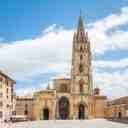
Look straight ahead for the tall, creamy stone building with one majestic, spiky tower rising from its center and three grand arched doorways-if you see the sun glinting off intricate Gothic decorations, you’ve found the Cathedral of Oviedo! Now, let’s take a step back in time-imagine the very ground beneath your feet rumbling as armies, kings, and builders cross these stones. The story of the Cathedral of Oviedo is like a grand novel, written over more than a thousand years, with every chapter adding a dash more drama, mystery, and-yes-a bit of royal family squabble! The first bold character in our story is King Fruela I, who in the 8th century decided, “Let’s build a basilica right here, devoted to San Salvador.” Imagine the clatter of hammers and voices echoing through the early medieval morning. Sadly, his church was destroyed in a raid by invading forces, but as with any good novel, the story didn’t end there. Next came King Alfonso II “The Chaste”-no relation to Alfonso “Needs More Coffee”-who declared Oviedo the capital of his kingdom and constructed not just a grand basilica but a whole cluster of churches and monasteries. This medieval “holy city” was the spiritual heart of Asturias, with kings and even monks vying for the best chapel space. The city was alive with the chants of monks, the swirl of incense, and rows of pilgrims streaming in, their boots dusty from the Camino de Santiago. That sense of gathering, of hope and mystery, lingers in the air even today. Throughout the centuries, each ruler and architect couldn’t resist adding a special touch. The current cathedral began its long journey in the late 1200s, growing slowly over three hundred years-a bit like a child who’ll only eat if dinner is peppered with surprises. Gothic architects brought daring heights, flying buttresses, and towering arches; then came Renaissance masters who capped the single, stunning tower you see rising to 80 meters-tall enough for any bishop to keep an eye on the city (or to check if it’s raining). But the voice of the cathedral isn’t just its architecture-it’s the legendary bells! One of them, called “Wamba,” first rang out in 1219 and still sounds today, even though it’s cracked. Can you imagine? That bell survived cannonballs, fires, and lightning strikes-talk about being hard-headed! Its deeper, graver tones echo ceremoniously across the city, calling everyone together for holy days, celebrations, or in times of danger. Inside, the adventure continues. The cathedral is filled with treasures: a chamber called the “Cámara Santa” hides crosses decked in jewels-the Cross of Victory and the Cross of the Angels-which are actually the symbols of Asturias and Oviedo. There’s a chest called the “Arca Santa,” stuffed with relics brought all the way from Toledo to be kept safe from invaders. It even holds the mysterious “Holy Shroud”; yes, another shroud with tales of miracles and wonder! The Cámara Santa-a gem of pre-Romanesque architecture-has been recognized by UNESCO as a World Heritage spot, so if it’s good enough for world judges, you know it’s worth a peek. Through the years, the cathedral has seen its share of drama. In 1934, a violent explosion damaged this sacred place, destroying art and relics. Some treasures, like the Holy Shroud, were pulled from the rubble just in time. It took years, but the people of Oviedo rebuilt every detail, determined not to let their beloved cathedral fade into memory. Want more mysterious corners? The crypt of Santa Leocadia, buried below, is among the oldest surviving parts, with its stones sharing secrets of lost chapels, bishops, and the long-lost palaces of kings. The cloister, begun in 1300, took almost a century and a half to finish-talk about a slow home renovation project!-and is now a tapestry of styles from Gothic to Baroque. Just imagine monks pacing around its cool, shaded arcade, arguing about the best flavor of bread. So, as you gaze up at its extraordinary façade-see if you can spot the stone portraits of Fruela and Alfonso-or listen for the deep, echoing ring of Wamba, remember: you’re not just looking at an old building, but reading the pages of a living epic, where every stone whispers history, hope, and just a hint of miracles. And if you hear any unexpected bells right now, well-maybe the cathedral’s just saying “hello!” If you're keen on discovering more about the description of the building, archdiocese of oviedo or the in popular culture, head down to the chat section and engage with me.
専用ページを開く →To spot the Museo de Bellas Artes de Asturias, look for an impressive stone building right ahead with tall arched windows, wrought iron balconies, and blue and red flags waving…もっと読む折りたたむ
To spot the Museo de Bellas Artes de Asturias, look for an impressive stone building right ahead with tall arched windows, wrought iron balconies, and blue and red flags waving above its grand entrance. Now, let’s step into a story where art leaps right out of stone walls! Just imagine: it’s 1844, and someone in a grand old palace hatched the idea of turning three remarkable buildings - the Palacio de Velarde, the House of Oviedo-Portal, and the House of Solís-Carbajal - into one magnificent museum. Years later, in 1980, they finally opened the doors, filling the air with excitement and just a tiny bit of paint smell (no worries, it’s all dried by now). Walking past these ancient walls, you can almost hear the footsteps of collectors, dreamers, and curious minds who filled the place with Spanish treasures, plus some Italian and Flemish surprises to keep it interesting. Picture this: you wander through rooms with the glow of old glass, the cool touch of stone, and paintings that wink with secrets from centuries gone by. There’s always a thrill here, as the museum carefully hides and reveals up to 10,000 pieces, but only a few hundred are in the spotlight at any time. Just outside, see if you can spot the architect’s touch as the building stretches and grows with a new expansion. So, take a deep breath-the art and history here have been waiting just for you. And if you hear a faint whisper, don’t worry; it’s probably just a painting practicing its Spanish accent.
専用ページを開く →To spot the Palacio de Camposagrado, look for a big square stone building with golden sandstone walls, fancy cornerstones, and a dramatic balcony and doors facing the open plaza,…もっと読む折りたたむ
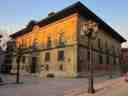
To spot the Palacio de Camposagrado, look for a big square stone building with golden sandstone walls, fancy cornerstones, and a dramatic balcony and doors facing the open plaza, right where the sunlight seems to dance. Now, let’s travel back in time together. Imagine the sound of horses’ hooves echoing on cobblestones as the eighteenth century dawns in Oviedo, and the city’s most powerful aristocrats decide to build a palace so grand, locals would joke it needed its own weather forecast! The Palacio de Camposagrado rises up before you, designed by two rival architects who couldn’t agree if the building wanted to party with curvy, Baroque swagger or pose with elegant Neo-Classical calm. The lower floor, solid and proud, was started by Francisco de la Riva, all curves and flourishes; but blink and look up-see those stately Ionic columns and the crisp lines added years later by Pedro Antonio Menéndez? That’s the Neo-Classical flair, sneaking onto the stage! But the story isn’t only about style-oh no! During the wild days of the Asturian miners' strike in 1934, shouts filled the streets, and the palace was burned, its stones turning from gold to gray with soot. Yet, like any dramatic hero, the building survived and was lovingly restored, earning its role today as the seat of the Regional Court. So as you gaze up at its sturdy walls, picture the whispers of nobles, the clatter of revolution, and maybe, just maybe, the soft sighs of the architects arguing about whose style really won. Welcome to the Palacio de Camposagrado, where every stone has a secret to tell!
専用ページを開く →To spot the Royal Institute of Asturian Studies, just look for a historic stone building with a shiny plaque outside, displaying a crown-topped crest right at eye level as you…もっと読む折りたたむ
To spot the Royal Institute of Asturian Studies, just look for a historic stone building with a shiny plaque outside, displaying a crown-topped crest right at eye level as you stroll along Plaza Porlier. Alright, you’re standing in front of a place that’s a bit like the brain of Asturias-except, unlike our brains, this institute proudly wears a crown! The story of the Royal Institute of Asturian Studies starts way back in 1946. Picture post-war Spain: the streets are quieter, the city’s air feels heavy with hope and hard work. Inside these walls, a group of local legends-think top Asturian thinkers with wild, brilliant ideas-gathered under the Patronage of José María Torres Quadrado. Their mission? To rescue, protect, and level-up everything that makes Asturias truly Asturian, from art to science to culture. You might notice the name 'Real'-royal-on that plaque. That title was a serious upgrade, gifted by the king in 1992, after almost fifty years of hard work and a little royal recognition from Prince Felipe himself, who became the honorary president. Today, the Institute still buzzes with minds focused on the past, present, and future of Asturias-preserving treasures like the ancient manuscripts of thinkers such as Jovellanos and Pardo Bazán. If these documents could talk, they’d probably share juicy secrets and poetic wisdom all night long! Every time you step closer, just imagine shelves bending under the weight of rare books and manuscripts, some written in faded ink, carrying the silent echo of history. Now and then, they celebrate big anniversaries with exhibits, opening up their treasure chest to show everyone these wonders. Not bad for a building that looks so calm on the outside, right? So, if you hear laughter or deep discussion drifting from the windows, don’t be surprised-it’s just history getting a little livelier every day!
専用ページを開く →But the real hero of this plaza’s story arrived in the 19th century: Rafael del Riego. No, he wasn’t here to sample the local cider - he was a bold Asturian military leader and…もっと読む折りたたむ
But the real hero of this plaza’s story arrived in the 19th century: Rafael del Riego. No, he wasn’t here to sample the local cider - he was a bold Asturian military leader and champion of liberal ideas. In 1820, he led a major uprising for freedom, an event so dramatic that you can almost hear the echoes of marching boots and cheering crowds if you listen closely. The city honored Riego by renaming the square after him, and just to be sure no one would forget his legacy, they stuck a monument here too. Try spotting it - although, don’t worry, you won’t need a treasure map for this hunt. Imagine the hustle and bustle of past markets, heated debates, and even conspiracies whispered in the shadows. Today, the only uprising might be a sudden craving for coffee from a nearby café. So, take a moment to soak up the atmosphere-a place where every stone has a story, and every story has a hero.
専用ページを開く →To spot the Church of San Isidoro, look ahead for a sturdy stone building with a grand, almost theatrical single tower rising above the Plaza de la Constitución-its ornate baroque…もっと読む折りたたむ
To spot the Church of San Isidoro, look ahead for a sturdy stone building with a grand, almost theatrical single tower rising above the Plaza de la Constitución-its ornate baroque façade and dramatic figures in niches will make it stand out proudly against the sky. Welcome to the Church of San Isidoro el Real! As you stand here, close your eyes for a moment-well, not for too long, you’ll want to see the view-because you’re standing on the very stones where centuries of Oviedo’s history have unfolded. Imagine the year is 1217: horses clopping by, a bustling market, and somewhere nearby, the faint chiming of a church bell. The very first record of this church dates back to that year, making it one of Oviedo’s oldest places of worship-third only to San Tirso and San Juan. But believe it or not, this isn’t the original church! Our story actually starts with a now-vanished Romanesque church. All that remains from that chapter is its old entrance arch, which has been relocated to a quiet park in Oviedo, like an architectural fossil-go on, try and spot it later if you’re a fan of ancient scavenger hunts. Fast forward to the 1500s, when Magdalena de Ulloa-a woman who knew how to get things done-decided that Oviedo deserved more. She funded a college for Jesuits, and by 1587, what you see in front of you was part of a much larger Jesuit complex. By 1873, the rest of the college was torn down to make way for a market, but this church remained, a silent witness to all the hustle and bustle of life in the Plaza del Fontán. If these stones could talk… they’d probably have a lot of complaints about all the demolition noise. As you gaze at the façade, notice how the single tower rises up like an exclamation mark. That’s not a design choice-they actually planned on two towers, but, like many ambitious Oviedo projects (including the cathedral!), money ran out. So if you’re ever short on cash, just say you’re following historical precedent. On the façade, you’ll see statues watching over the city: San Isidoro in his niche and, just above, San Antonio de Padua and the Archangel Gabriel. Don’t worry, you don’t need to greet all of them-just a friendly nod will suffice. Let’s take a peek inside with your imagination. The church is shaped in a Latin cross, echoing monasteries across Europe. Baroque details swirl over the walls, capillas (side chapels) open up, and a soft golden light filters through the stained glass. One of the most prized treasures here is the main altarpiece, or retablo mayor. It’s so rich in detail and allegory that historians still puzzle over its meaning. Imagine dozens of saints watching you, with scenes so full of symbolism it’s like a spiritual “Where’s Waldo?” If you look very closely, you’ll spot San Luis Gonzaga, San Matías, and even the Annunciation and Adoration of the Shepherds tucked among gilded carvings. One odd but touching feature: the relics and mementos. The church safeguards not just a relic of its patron, San Isidoro, but bone relics of several blessed locals, and even a piece of the bloodied cassock of Pope John Paul II-part of Oviedo’s own “secret collection.” These treasures fill the chapels, guarded by wooden saints whose expressions seem to whisper prayers from centuries ago. If you listen carefully, you might almost hear the sound of the grand baroque organ, built in the 1600s by an asturian master-its pipes still vibrate during concerts to this day. In its time, the organ was so prized that people would come just to hear the music swirl and echo through the nave. The Church of San Isidoro didn’t just watch over worshippers; it was also part of the city’s most dramatic moments. In 1836, during the First Carlist War, a mausoleum was placed here for Oviedo’s fallen defenders. Their bravery earned Oviedo the proud name of “Benemérita”-and inspired the city’s famous Disarmament Festival, a yearly celebration that, frankly, is an experience in itself (just imagine lots of chickpea stew and an excuse to eat too much). If you wander around the eastern façade, you’ll find the headquarters of one of Oviedo’s most venerable brotherhoods-the Brotherhood of the Holy Burial and Our Lady of Sorrows-whose members, in centuries past, marched through the streets, candles in hand, in processions that filled the square with shimmering golden light. So, while the world whirls around this bustling square, the Church of San Isidoro el Real keeps its old stories alive-from Jesuit beginnings to secret relics, from unseen towers to echoing organs. And now, you’re part of its latest chapter. Ready to see what history tastes like? The next stop awaits! Eager to learn more about the the building, the main altarpiece or the parish church? Simply drop your inquiries in the chat section and I'll provide the details you need.
専用ページを開く →To spot the Plaza del Fontán, look ahead for a charming rectangular square surrounded by colorful, low-rise buildings dotted with iron balconies and flower boxes, and sheltered…もっと読む折りたたむ
To spot the Plaza del Fontán, look ahead for a charming rectangular square surrounded by colorful, low-rise buildings dotted with iron balconies and flower boxes, and sheltered arcades running around the ground floor, with lively market stalls and people gathered beneath the open sky. Welcome to the heart of Oviedo’s old town, the Plaza del Fontán, a place that’s worn many hats through the centuries-and looked good in all of them, if you ask the locals! Imagine you’re not just stepping onto cobblestones but walking above what was once a wild, gleaming lagoon fed by bubbling springs. Long ago, Oviedo was much smaller, and this spot, just outside the early city boundaries, was a favorite of noble families looking to relax-and, perhaps, sneak away from their day jobs, not that nobles ever admit to working. Back in those days, you’d have seen more geese and cows than café tables. Country folk from the outskirts trundled in with baskets of eggs, cheese, and garden produce, eager to sell their wares, while blacksmiths hammered tools and basket-weavers shaped willow into baskets, filling the air with a chorus of clattering and market shouts. Of course, nothing ruins a picnic for everyone-nobles and chickens included-like a stinky, stagnant lake. By the early 1500s, this beautiful lagoon was more “bring your nose plugs” than “romantic getaway.” So, in 1523, the city folks got serious: they drained the lake, scrubbed things up, and replaced it in 1559 with a brand-new washing area and a sparkling new fountain. And that’s where its name comes from-Fontán-springing from “fuente,” the Spanish word for fountain! But the Fontán didn’t stop changing. In 1576, the widow Magdalena de Ulloa, looking for a meaningful project, decided to build a Jesuit college right where you’re now standing. The college was ready by 1587, but only its church, San Isidoro, still stands today. After construction, they had a bunch of leftover building materials, and being thrifty, they used them to shape this very plaza. During the 1600s, the square shook things up again, becoming home to a real “corral de comedias”-an outdoor theater! This was the place for laughter, drama, and the odd distracted chicken wandering across the stage. As the years passed, the plaza’s shops expanded, and what were once storage rooms above became homes. Perhaps upstairs, you would have heard the sounds of families, children’s laughter, and-you guessed it-the odd dramatic row between neighbors. But the most laughable part? That would be the famous fountain installed in 1657. Locals called it “el cañu del Fontán,” a spout so close to the ground that anyone wanting a drink had to bend double, no matter how proud they were. It was such a spectacle that a humorist from Madrid, Luis de Tapia, wrote playful verses about how the fountain had the unexpected power to knock the pride out of even the snobbiest noble. Imagine a whole city with a built-in antidote to vanity, one awkward sip at a time! Over time, the plaza was reshaped and reimagined-especially in 1792, when the city tried to make it perfectly rectangular with rows of elegant shops and apartments all hugging beneath arcades. Of course, in the grand tradition of well-laid plans, the project didn’t go exactly as intended, and the different building heights give the square its own quirky, unique character. Still, even as the area grew and changed, the original spirit of Fontán-for friendship, exchange, and a bit of humble fun-remained untouched. Now, fast-forward to the late twentieth century. Time and the weather wore at the plaza until, by the 1990s, it was on the verge of fading away forever-except for the little corner where the legendary Casa Ramón hid out untouched. In 1997, the square was lovingly rebuilt and restored, polished up, and brought back to life with its cheerful arcades, playful market scenes, and the laughter of those who gather-just like today. Take a deep breath and imagine the clamor of old-time market days, the echo of a distant actor’s speech, the giggles at that cheeky, low-down fountain, and the flutter of pride tamed by a single, awkward sip of water. The Plaza del Fontán is living proof that even the humblest places can blossom into the most beloved hearts of a city. Now, go ahead-take a lap, look for the covered market next door, or see if you can spot where the plaza’s past peeks through its colorful present. And remember: here at Fontán, even the cobblestones have stories to tell!
専用ページを開く →
よくある質問
ツアーはどうやって始めますか?
購入後、AudaToursアプリをダウンロードして引き換えコードを入力してください。ツアーはすぐに開始できます。再生ボタンをタップして、GPSガイド付きルートに従うだけです。
ツアー中にインターネットは必要ですか?
いいえ!開始前にツアーをダウンロードしておけば、完全にオフラインで楽しめます。チャット機能のみインターネットが必要です。モバイルデータを節約するため、WiFi環境でのダウンロードをお勧めします。
これは団体ツアーですか?
いいえ、これはセルフガイド式のオーディオツアーです。ガイドや団体、決まったスケジュールに縛られることなく、スマホから流れるナレーションを聴きながら自分のペースで自由に探索できます。
ツアーの所要時間は?
ほとんどのツアーは60〜90分で完了しますが、ペースは完全に自由です。好きな時に一時停止したり、スポットを飛ばしたり、休憩を取ったりできます。
今日中にツアーを終えられない場合は?
問題ありません!ツアーには無期限でアクセスできます。明日、来週、あるいは来年でも、好きな時に再開できます。進行状況は保存されます。
どの言語が利用可能ですか?
すべてのツアーが50以上の言語に対応しています。コードを引き換える際にお好みの言語を選択してください。注意:ツアー生成後に言語を変更することはできません。
購入後、どこからツアーにアクセスできますか?
App StoreまたはGoogle Playから無料のAudaToursアプリをダウンロードしてください。メールで届いた引き換えコードを入力すると、ライブラリにツアーが表示され、ダウンロードして開始できるようになります。
もしツアーを楽しめなかった場合は、返金いたします。お問い合わせ先: [email protected]
以下の決済で安全にチェックアウト