
カスカイス・オーディオツアー:カスカイスとエストリルの歴史的響きと芸術的リズム
かつて眠れる海辺の町は、陽光あふれる通りのすぐ下に、古代の埋葬、王室の陰謀、そして奔放な科学パーティーの秘密を隠していました。このセルフガイド・オーディオツアーは、絵葉書のように美しい湾を超えてカスカイスを案内し、ほとんどの観光客が見過ごしてしまう物語や場所を解き明かします。最初の汽笛が空気を切り裂いたとき、この静かな村をどんなドラマが揺るがしたのでしょうか?ポソ・ヴェーリョ洞窟の暗い奥深くで、どのような奇妙な儀式が繰り広げられ、その痕跡は今もあなたの足元に残っているのでしょうか?なぜ考古学者チームは、王室の誕生日に二日酔いで現れ、ポルトガルで最も興味深い発見の一つをすることになったのでしょうか? 壮大な鉄道のプラットフォームから、隠された部屋、そして潮風が忘れ去られた伝説と混じり合う曲がりくねった路地へとさまよいましょう。曲がり角ごとに新たな色彩と、カスカイスの複雑なルーツへのより深い洞察がもたらされ、政治的確執、失われた愛、先史時代の謎へとあなたを引き込みます。明らかなものを見過ごす準備はできましたか?今すぐ旅を始めましょう—歴史はあなたのすぐ目の前で待っています。
ツアーのプレビュー
このツアーについて
- schedule所要時間 40–60 mins自分のペースで進める
- straightenウォーキングルート 3.7kmガイド付きパスに沿って進む
- location_on
- wifi_offオフライン対応一度のダウンロードでどこでも使える
- all_inclusive無期限アクセスいつでも、ずっと再生可能
- location_onカスカイス駅から開始
このツアーのスポット
Right in front of you is a modern white building with an arched roof and a metal gate, standing out against the older stone and greenery around it-keep an eye out for the white…もっと読む折りたたむ
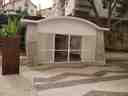
Right in front of you is a modern white building with an arched roof and a metal gate, standing out against the older stone and greenery around it-keep an eye out for the white entrance tucked beside a rusty metal sign and some big leafy plants. Now, let’s take a leap-or should I say a shuffle-back in time together, right here at the Caves of Poço Velho, or “old well.” Imagine you’re popping into central Cascais for a coffee, only to find out you’re actually standing above secret chambers used thousands of years ago, way back in the Paleolithic era. This spot, quiet as it might seem, is the real underground of Cascais-literally! In 1879, the caves were rediscovered by a brave geologist named Carlos Ribeiro, often called the Indiana Jones of Portugal. Rumor has it, he expected to find rocks and stones, but stumbled upon ancient secrets: people had used these caves not as a home, but as a resting place for their ancestors. Fast-forward to 1880, and the caves hosted an international group of scientists-though sources say they arrived a little worse for wear after a rowdy royal birthday bash the night before. Turns out, archaeology is more exciting with a touch of a hangover! The caves saw their most serious activity during the Neolithic and Chalcolithic periods, about 5,000 to 6,000 years ago. Try to picture people tiptoeing in here with offerings carved from limestone, stone tools, and-my favorite detail-lots of seashells, left behind as if the sea itself wanted to join the party. Over 100 burials have been discovered, each a silent storyteller from prehistory. By the 20th century, the caves needed saving from the growing city above. Archaeologists like Afonso do Paço and Abreu Nunes swept through, uncovering polished tools, decorated slabs, and mysterious idols. They even cleaned and installed electric lights-making these caves the most exclusive night club for skeletons and ancient artifacts. Most days, the Caves of Poço Velho are locked tight, hiding their secrets. But for those lucky enough to peer inside, they catch a glimpse of Cascais’ oldest residents-long before sunbathers or surfers appeared. So next time you stroll this ordinary street, remember: there’s a whole other world beneath your feet. And hey, if you hear any spooky echoes, maybe it’s just an ancient ancestor checking in on the neighbors!
専用ページを開く →
さらに12件のスポットを表示表示するスポットを減らすexpand_moreexpand_less
To spot the Palace of the Counts of Guarda, just look ahead for a large, stately two-story building with a tiled roof, neat rows of windows, and, most striking of all, a parade of…もっと読む折りたたむ
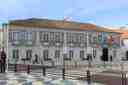
To spot the Palace of the Counts of Guarda, just look ahead for a large, stately two-story building with a tiled roof, neat rows of windows, and, most striking of all, a parade of blue and white religious tiles decorating the upper facade. Now let’s step back, take a deep breath of that salty Atlantic air, and imagine yourself standing on this very square two centuries ago. This grand palace before you, now the lively seat of Cascais’ town hall, has been watching the tides turn since the late 1700s. Back then, imagine horses prancing past while local nobles in fine clothes stride up these steps, quite proud of their latest address! Legend has it, Dona Inês Margarida da Cunha, a lady with quite the taste for grandeur, was the mastermind behind its creation. It served as her dazzling residence, later hosting the British Admiral Charles Cotton when Napoleon’s armies stalked the continent. Oh yes, this place has seen some hats with feathers! Over the years, this palace changed hands, eventually landing in the lap of João Lopes Calheiros de Menezes. When his descendant was named the Count of Guarda in 1860, the palace’s most famous name-Palácio dos Condes da Guarda-was born. But don’t let the aristocratic past fool you; this building has had a wilder side too! Picture this: it became a bustling casino in the early 20th century, with laughter, music, and maybe a little bit of cheating at cards echoing through the grand halls. Afterwards, it housed everything from shops to a post office. They even tacked on some extra buildings for good measure, like a grocery or a restaurant, and one façade from an old eatery still peeks out from the southern side today. But nothing about this building shouts louder than its tiles-azulejos! These treasures, some painted way back in 1790 at the famous Real Fábrica de Louça do Rato, turn the facade into a gallery of saints. Lean in close and you’ll spot Saint Sebastian, Saint Anthony, Saint John, and more-all lined up like they’re waiting for a group portrait. Fun fact: it holds the largest collection of saintly tile panels ever to decorate a single building in Portugal. Some even whisper that if you listen closely in the evening, you might hear faint, ghostly hymns from these painted figures. (Okay, that’s probably just the wind, but why not use your imagination?) Inside, you’d find the place has changed a bit-a grand stone staircase, a fine neobaroque upper floor where the noble family once entertained guests, and a stunning tile panel of a halberdier welcoming you to the first floor. Today, the energy is all public life and culture, especially since the 2015 transformation of the ground floor into the Museu da Vila. It’s less a building and more a living album of Cascais’ stories-noble feasts, military intrigue, wild parties, civic decisions, and even the odd postal delivery. And here you are, adding your own footsteps to the centuries-old parade!
専用ページを開く →To spot the Bases of the Cascais wall, look down at the ancient stone and mossy remains set into the sand right below the tall, modern seawall near the beach. Now, as you stand…もっと読む折りたたむ
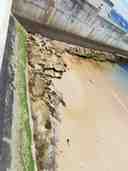
To spot the Bases of the Cascais wall, look down at the ancient stone and mossy remains set into the sand right below the tall, modern seawall near the beach. Now, as you stand here, imagine yourself back in a time when pirates were real-yes, with hats and all! These old stone bases are the last whispers of a wall that once connected the mighty fortresses around Cascais’ busiest beach. Waves would crash against the defenses while fishermen hurried in and out with baskets of slippery seafood, always keeping one wary eye on the horizon just in case someone unfriendly came sailing in. Built centuries ago, this wall was like the town's shield, protecting local folks and their treasures from invaders who fancied a seaside adventure. On dark nights, you might’ve seen a lantern flickering as a guard tiptoed along these stones, boots echoing, heart pounding at every creak-was it just the wind, or trouble brewing? But don’t worry, today you're more likely to spot crabs scuttling and seagulls plotting their next snack. No need for armor-just sunscreen! These simple stones are actually heroes in disguise, and, much like me, they’ve been officially recognized for their importance. In 1977, they were declared a site of public interest, ensuring their stories, secrets, and sandy mysteries live on. As you listen to the sounds of the sea, remember: history is right beneath your feet!
専用ページを開く →Look to your right-you’ll spot a massive ochre-colored stone fortress with thick, rugged walls rising right out of the green grass and gardens, guarding the sea like a stoic…もっと読む折りたたむ
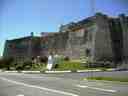
Look to your right-you’ll spot a massive ochre-colored stone fortress with thick, rugged walls rising right out of the green grass and gardens, guarding the sea like a stoic giant. Welcome to the impressive Fort of Nossa Senhora da Luz de Cascais, where every stone has seen action, drama, and a dash or two of royal glamour. Picture this: it’s the late 1500s, and Cascais needs defending from pirates and invaders. The Portuguese roll up their sleeves, and in 1594, they build this mighty stronghold around a medieval tower, topping it with not one or two, but three bastions, like armor plates on a medieval knight. Standing here, close your eyes and you might imagine the clanking of cannonballs being loaded and the salty sea air swirling with the shouts of soldiers on watch. But the most fearsome enemy to ever knock on these doors wasn’t a human at all-it was the mighty Lisbon earthquake of 1755! The ground trembled, cracks split through the walls, the old tower’s top crumbled, and the chapel of Saint Anthony was lost to the rubble. Even so, these walls refused to surrender, patched up and ready for the next chapter. As times changed and gunpowder got fancier, the fort’s battle days came to a close, but it refused to retire. The 20th century brought new floors, whitewash, and a bit of a makeover. Today, the fort is a classified public monument and still serves the Portuguese Army and-get this-the President of Portugal actually uses it as a summer residence! Talk about going from cannonballs to canapés. All around you, the yellowish walls were designed so that, from the sea, enemies might mistake the fortress for the coastline. Clever, right? And if you strain your ears, you might hear the echo of old parades and secret meetings that once filled these hidden corners. So, take a moment, breathe in that Atlantic breeze, and feel the centuries of suspense and surprise swirling around this sturdy seaside sentinel!
専用ページを開く →To spot the Church of Nossa Senhora da Assunção, just look for a bright white building with two matching towers rising on either side and a classic wooden door in the middle,…もっと読む折りたたむ
To spot the Church of Nossa Senhora da Assunção, just look for a bright white building with two matching towers rising on either side and a classic wooden door in the middle, topped by a simple stone cross and a clock peeking out from the right tower. Now, let’s dive into its story! Imagine yourself standing here in the salty sea breeze, just a stone’s throw from where the roaring Atlantic waves crash onto the coast. You’re gazing at a church that has been the heart of Cascais for centuries, but its very roots reach deeper-this sacred place stands on ground that was once a Visigothic necropolis! If old stones could talk, I bet they’d have some wild tales to tell, and maybe a ghost or two asking for directions. Step inside with your imagination for a moment. The air is cool and quiet under the tall ceiling, and as the sunlight spills through the windows, you’ll spot four painted panels from about 500 years ago-masterpieces created when explorers had just started crossing the oceans and Portugal was at the edge of the known world. In 1572, artists etched a view of the church against the sea, just outside the bustling village walls, standing proud while ships sailed by and townsfolk hurried about. This resilient beauty hasn’t had an easy ride. In 1671, it got a grand makeover-a new altarpiece, glorious tiles, and cheerful scenes from Mary’s life across the walls. Suddenly, in 1755, the infamous Lisbon earthquake struck with a thundering force, cracking the façade and scattering the choir, but this church simply dusted itself off, embraced its sturdy towers, and rose once more. Even Queen Amélia and Europe’s royals took notice, visiting in summer, mingling with locals, and commissioning world-class paintings. From ancient burials and master painters to storms and royal concerts, this church has seen it all-a true survivor of Cascais, echoing centuries of prayers, celebrations, and the occasional pipe organ tune donated by a grateful tycoon. Just imagine the stories still waiting behind that thick wooden door!
専用ページを開く →Look to your right for a shining white mansion with a decorative rectangular balcony and tall windows-it stands elegantly behind a black iron fence right by the…もっと読む折りたたむ
Look to your right for a shining white mansion with a decorative rectangular balcony and tall windows-it stands elegantly behind a black iron fence right by the sidewalk. Alright, so you’ve found Casa Sommer! Imagine the late 1800s-the air is buzzing with the excitement of summer, carriages rumble past on dusty roads, and high society folk parade their fancy hats. Right here, a successful entrepreneur named Henrique de Sommer decided his family needed an eye-catching summer home. Not just any house-oh no, he wanted neoclassical grandeur! As you gaze up, notice those smooth finishes and the elegant curves above the windows. Those fluted pilasters-those vertical grooves-almost look like the building’s put on its very best suit, ready to impress. Now, funny enough, this impressive home didn’t just stay a private mansion. After the family moved out, schoolteachers took over, teaching children all sorts of foreign words inside these very walls-who knows how many “Olá!” and “Bonjour!” echoed through the halls? Later, Casa Sommer was even a children’s home, a place bubbling with the laughter and mischief of little ones. But time wasn’t always kind, and the house fell silent, growing a little shabby, like an old storybook left on a shelf. Just when it seemed doomed, the Municipality of Cascais stepped in like a hero at the last page of a novel. Restorers-led by architect Paula Santos-patched it up, added clever hidden corridors underground, and opened the doors once again in 2016 with a flourish! Step inside now, and you’ll find treasures like the Foral of Cascais-a royal scroll that granted this town its official start, signed by King Manuel I himself. Imagine the thrill of opening a book over 500 years old, the ink still telling stories of when Cascais was born! Or leaf through the Livro de Posturas, a manual of quirky local rules that kept this seaside town in order-surely including one or two about not letting goats wander onto the beach. So take a moment, soak up the sunshine, and let your imagination wander through the lively lives Casa Sommer has sheltered. Who knows, maybe a new story is waiting to be written-by you!
専用ページを開く →Directly ahead, you’ll spot a cheery pale yellow building with a triangle-shaped roof, tall windows with criss-crossed ironwork, and a pair of potted plants flanking the front…もっと読む折りたたむ
Directly ahead, you’ll spot a cheery pale yellow building with a triangle-shaped roof, tall windows with criss-crossed ironwork, and a pair of potted plants flanking the front door-just the place to pause for a story from Cascais’ glamorous past. Welcome to the Sporting Club of Cascais, where, if these walls could talk, they’d probably whisper about secret duels in tennis whites-and maybe a royal scandal or two! Go on, take a breath, and imagine you’ve just traveled back in time to 1879. The scent of freshly cut grass drifts over from the old parade grounds of the citadel. Suddenly--that’s the sound of Portugal’s elite picking up a racquet for the very first time, with the future King Carlos even giving it a try. This wasn’t your average sports club. Oh no, the Sporting Club was only for those with the right pedigree... and the right invitation! Royalty, politicians, and foreign ambassadors flocked here, eager to see and be seen, rather like the “Instagram Stories” of its era, but with more top hats and moustaches. The town of Cascais had just become the Royal Family’s summer playground, so anyone who was anyone wanted to be near the action-literally joining the parade, as these grounds were known. Now, imagine standing here at the turn of the century. Women in lace and gentlemen in straw hats sip lemonade under the shade, while, nearby, aristocrats whisper about policy and poetry. Overhead, the sound of laughter and the occasional boom--from fans at an international tennis match. Guilherme Pinto Basto, the “father of Portuguese tennis,” turned these grounds into Portugal’s championships. Even Wimbledon champions made their mark here, and legends like Blanche Bingley and Noel Turnbull graced these courts. If tennis wasn’t your talent, you could always try pigeon shooting, archery, or-if you were feeling generous-attend a glamorous charity ball. But the Sporting Club of Cascais had another first up its neatly tailored sleeve: football! In 1888, a group led by the energetic Pinto Basto brothers staged the very first football game ever played on the Portuguese mainland-right here, on grass they’d more likely watched the King’s horse trot over the year before. There’s even a plaque to prove it. The club flourished, rebranding itself as the Royal Sporting Club in 1910-just in time for “Royal” to go out of style when Portugal became a republic a few months later. Oops! Never mind, it remained a cherished spot for generations-at least until closing its doors in 1974 after nearly a century of stylish service. But every great club deserves an encore! First, this building became a nursery, then an actual nursery school, and, finally, the Museum of the Sea in 1992. Even the old tennis courts were reborn in 2009 as the Casa das Histórias Paula Rego, a gallery celebrating Cascais’ most celebrated artist. If you listen closely, you might still hear--stories and sports echoing across these time-weathered grounds. Who knows, maybe your story will become part of the legend of Cascais, too! Ready to move on?
専用ページを開く →To spot the Museum of the Sea, look for a low, sunny yellow building with large arched windows and classic lanterns, right ahead of you, framed by neatly trimmed bushes and…もっと読む折りたたむ
To spot the Museum of the Sea, look for a low, sunny yellow building with large arched windows and classic lanterns, right ahead of you, framed by neatly trimmed bushes and benches along a cobbled path. Welcome to the Museum of the Sea, where the past feels as close as the salty air from the nearby Atlantic-and trust me, the stories inside are every bit as bracing! Imagine for a moment that you’re standing here during the late 1800s. The building in front of you isn’t full of shipwreck relics and bubbling aquariums yet-it’s alive with the clink of glasses and the laughter of Portugal’s noble elite, gathered at the fanciest sports club around, all thanks to Prince Carlos (before he became King Carlos). These were the famous “members of the Parade”-and yes, only the crème de la crème got to join! I guess you could say this place was Cascais’ VIP lounge, no velvet ropes required. But nothing lasts forever, even for the well-heeled. As Portugal’s tides shifted and the republic was born, “Royal” was quietly dropped from the club’s name-perhaps the only thing nobler than their sportsmanship was their ability to adapt. The club eventually faded into silence in 1974, but instead of leaving this lovely yellow building for ghosts and gulls, the city took over. And just think: it took a few more years (and maybe more paperwork than any sailor could stomach) before the doors swung open as a museum in 1992. Step inside today and you won’t just find echoes of old parties; you’ll find the entire saga of this town’s seafaring heart. There’s one room dedicated to underwater archaeology, almost as if the seas themselves snuck their secrets onto dry land. Peer at models of fishing boats and try to picture how lively the Tagus River must have been when their sails first fluttered in the wind. If you fancy yourself a bit of a detective, the shipwreck artifacts might set your imagination whirling-shiver me timbers! Now, wander toward the “People of the Sea” room, where stories of Cascais’ fishing families are told through nets, clothes, and models so lifelike you’ll half-expect them to wink. There are fish here too-not swimming, of course, but preserved forever in mid-glory: sharks, porcupinefish, and even a somewhat bashful-looking sperm whale. Each creature tells a tale about survival, adventure, and maybe just a bit of ocean mischief. Best of all, there’s a whole exhibit about King Carlos himself, whose love for the ocean would make even Jacques Cousteau jealous! He spent years researching the deep-from aboard his mighty yacht Amélia IV-and his discoveries are celebrated with help from museums as far-flung as London and Monaco. So take in the sea breeze and get ready to dive into Cascais’ maritime legacy, where history floats right up to greet you. Watch out for flying fish tales-they’re contagious around here!
専用ページを開く →To spot the Palácio dos Condes de Castro Guimarães, just look for the tall, fairy-tale tower with its colorful tiled roof and creamy stone walls overlooking a tiny cove to your…もっと読む折りたたむ
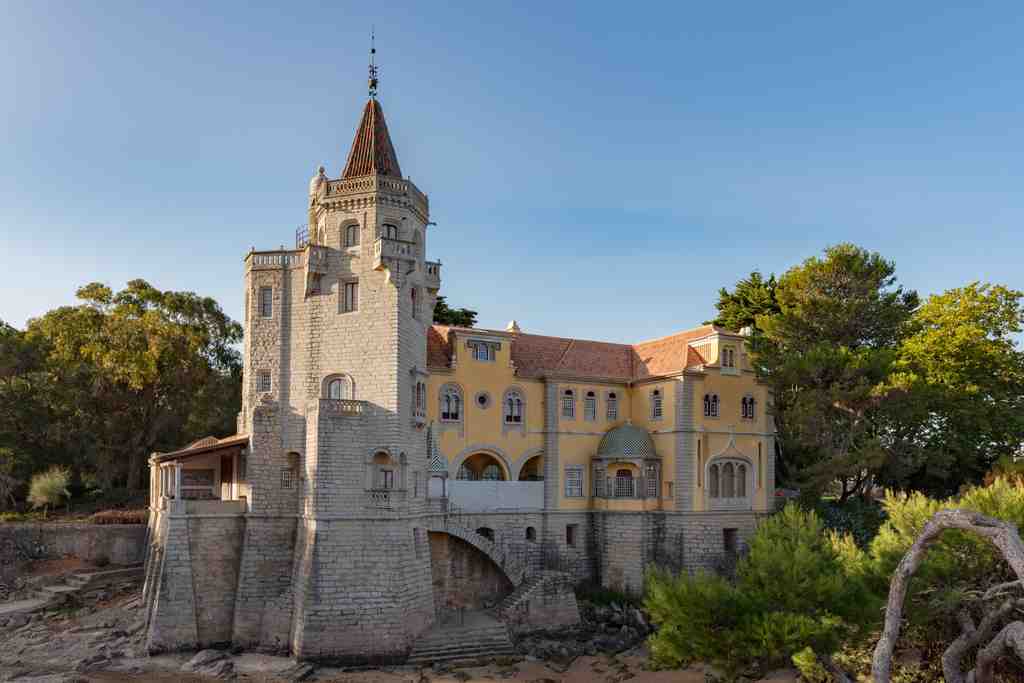
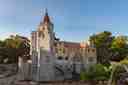
To spot the Palácio dos Condes de Castro Guimarães, just look for the tall, fairy-tale tower with its colorful tiled roof and creamy stone walls overlooking a tiny cove to your left-it looks like a castle that wandered straight out of a storybook and decided to settle by the sea. Here we stand, in front of one of Cascais’ grandest surprises! Picture yourself in 1900: aristocrats are rolling up in carriages, the salty breeze is seasoned with whispers of high society and clinking tea cups, and what do they see? This eclectic castle with a tower that juts boldly into the cove. Built for the adventurous Jorge O’Neill, a man with a name as Irish as his taste was extravagant, this palace was meant to impress at every turn. Visitors once gasped in awe at the blend of madcap styles-Neo-Gothic, Neo-Manueline, even hints of Moorish flair. If castles played dress-up, this one raided every costume in the closet. Stroll closer and you might hear the crunch of gravel beneath those old carriages. Jorge O’Neill wanted a summer home that shouted drama, so you’ll find gargoyles peeking from every corner, eaves that make you wish you’d brought binoculars, and a curious mix of tall, sunny windows and dark, mysterious porches. Inside, rooms are tiled in brilliant colors, beams crisscross the ceilings, and cloisters capture the cool evening air-every step echoes with secrets. But there’s more! In 1910, the wealthy and cultured Count of Castro Guimarães bought the palace for himself and filled it with treasures: imagine sparkling porcelain, ornate furniture, rare jewelry, and even a custom-built neo-Gothic organ. I hope he didn’t play it too loudly; the neighbors might’ve complained! One prized piece is a 16th-century manuscript telling the story of Portugal’s very first king. That’s not just history, that’s historical V.I.P. status. After the Count passed away in 1927, he gifted his beloved home to Cascais, asking that it become a museum and gallery-so future generations could explore its wonders too. When the museum opened in 1931, it was the first of its kind in town, buzzing with excitement and curious visitors. Legendary writers even tried to apply as curators-though poor Fernando Pessoa, one of Portugal’s biggest literary names, didn’t get the job. Don’t worry, he went on to write plenty of poetry. So, step right up and imagine yourself as both guest and explorer; behind these grand windows and beneath that colorful tower, every stone and artifact has a secret to tell.
専用ページを開く →To spot the Santa Marta Lighthouse, just look ahead and you’ll see a tall, square tower covered in bright white tiles with striking blue horizontal stripes, topped by a red…もっと読む折りたたむ
To spot the Santa Marta Lighthouse, just look ahead and you’ll see a tall, square tower covered in bright white tiles with striking blue horizontal stripes, topped by a red lantern and standing near some palm trees right by the sea. Welcome to your grand finale in Cascais! Take a deep breath of that salty Atlantic air as you stand before the Santa Marta Lighthouse, gleaming ahead with its crisp blue-and-white stripes and proud red lantern. If you were a sailor centuries ago, you’d have eyes locked right here, praying that light would cut through a foggy night. But let’s rewind. Imagine it’s the 1640s. This spot was all about cannons, not cozy coastal vibes. The fort here-Fort of Santa Marta-was built to keep unwanted visitors out of the beautiful Cascais Bay. If you listen closely, you might almost hear the as guards scan the horizon for enemy sails. Jump ahead to the late 1700s, and the fort is getting spiffed up-parapets widened, batteries expanded, quarters made comfier. By the 1860s, the world’s changing, and the military decides guns are out, guiding ships is in. In 1867, Santa Marta’s lighthouse rises atop the old fort. Thanks to its place between the roaring Atlantic and the gentle flow of the River Tagus, this tower starts sending beams across the Cascais Bay. At first, it’s a simple red light spinning through a clever mix of lenses and mirrors-sounds fancy, but back then, it was essentially the “high-tech” of its day! Over time, more upgrades appear. In 1936, the tower is jacked up an extra eight meters-turns out modern buildings were getting in the way. A decade later, a foghorn is added. Imagine being a local then: you’d hear three seconds of a deep, resonant blast followed by seven seconds of silence, a pattern like a heartbeat cutting through the misty night air. In 1953, someone finally says, “Let’s use electricity!”-no more tricky lamps or worries about gusty winds blowing out flames. The lighthouse keepers had incredible stories, tucked away in diaries full of foggy headaches and illuminated triumphs. But by the 1980s, automation quietly took over. Now, the tower blinks under remote control, no keeper required-but I’d still recommend waving, just in case a friendly ghost is on duty. Here’s the best part: in the early 2000s, locals decided to bring this historic hub back to life. Now, the Santa Marta Lighthouse is also a museum. Step inside to see enormous Fresnel lenses so big you’d think they belong in a sci-fi film, and trace wild tales of Portugal’s lighthouses. There’s even a room dedicated entirely to the lonely art of the lighthouseman! If you watch the documentary, you’ll hear voices echoing five centuries of tradition-and, maybe, a few jokes about outsmarting stubborn seagulls. Soak in the sea breeze, watch the modern marina shimmer, and look up once more at that red lantern. Imagine waves breaking and ships being guided home, night after night. This lighthouse is living history, a beacon of safety, adventure, and timeless Portuguese charm. Congratulations-your tour ends where land meets ocean, under the watchful stripes of Santa Marta!
専用ページを開く →





よくある質問
ツアーはどうやって始めますか?
購入後、AudaToursアプリをダウンロードして引き換えコードを入力してください。ツアーはすぐに開始できます。再生ボタンをタップして、GPSガイド付きルートに従うだけです。
ツアー中にインターネットは必要ですか?
いいえ!開始前にツアーをダウンロードしておけば、完全にオフラインで楽しめます。チャット機能のみインターネットが必要です。モバイルデータを節約するため、WiFi環境でのダウンロードをお勧めします。
これは団体ツアーですか?
いいえ、これはセルフガイド式のオーディオツアーです。ガイドや団体、決まったスケジュールに縛られることなく、スマホから流れるナレーションを聴きながら自分のペースで自由に探索できます。
ツアーの所要時間は?
ほとんどのツアーは60〜90分で完了しますが、ペースは完全に自由です。好きな時に一時停止したり、スポットを飛ばしたり、休憩を取ったりできます。
今日中にツアーを終えられない場合は?
問題ありません!ツアーには無期限でアクセスできます。明日、来週、あるいは来年でも、好きな時に再開できます。進行状況は保存されます。
どの言語が利用可能ですか?
すべてのツアーが50以上の言語に対応しています。コードを引き換える際にお好みの言語を選択してください。注意:ツアー生成後に言語を変更することはできません。
購入後、どこからツアーにアクセスできますか?
App StoreまたはGoogle Playから無料のAudaToursアプリをダウンロードしてください。メールで届いた引き換えコードを入力すると、ライブラリにツアーが表示され、ダウンロードして開始できるようになります。
もしツアーを楽しめなかった場合は、返金いたします。お問い合わせ先: [email protected]
以下の決済で安全にチェックアウト 


