
エアランゲン音声ツアー:啓発された精神と隠された遺産
エアランゲンの穏やかなファサードの下には、亡命者、革命、そして石に刻まれた秘密によって形作られた都市が横たわっています。 このセルフガイド音声ツアーで、大学の尖塔や何世紀も前の教会の裏に隠された物語をたどってみましょう。ほとんどの訪問者が見過ごしてしまうような通路を巡り、一歩ごとに通常の地図には載っていない驚くべき展開を発見してください。 フリードリヒ・アレクサンダー大学の廊下を抜け、真夜中の脱出を企てたのは誰でしょう?ユグノー教会の壁の中で、かつてどのような静かな権力闘争が響き渡っていたのでしょうか?ノイシュタット教会のある窓は、なぜ夏の嵐の後にいつも輝くのでしょうか? 移り変わる影と陽光が降り注ぐ広場を巡りましょう。反乱のささやき、禁断の情熱の瞬間、そして生存者の創意工夫が、エアランゲンの石畳の通りを鮮やかに蘇らせます。それぞれのランドマークは、この街についてあなたが知っていると思っていることを問い直すでしょう。 隠されたドラマを明らかにし、他にはない方法でエアランゲンを歩きましょう。歴史が現在と出会う場所で、秘密があなたを待っています。再生ボタンを押して始めましょう。
ツアーのプレビュー
このツアーについて
- schedule所要時間 40–60 mins自分のペースで進める
- straightenウォーキングルート 2.2kmガイド付きパスに沿って進む
- location_on
- wifi_offオフライン対応一度のダウンロードでどこでも使える
- all_inclusive無期限アクセスいつでも、ずっと再生可能
- location_onユグノー教会(エアランゲン)から開始
このツアーのスポット
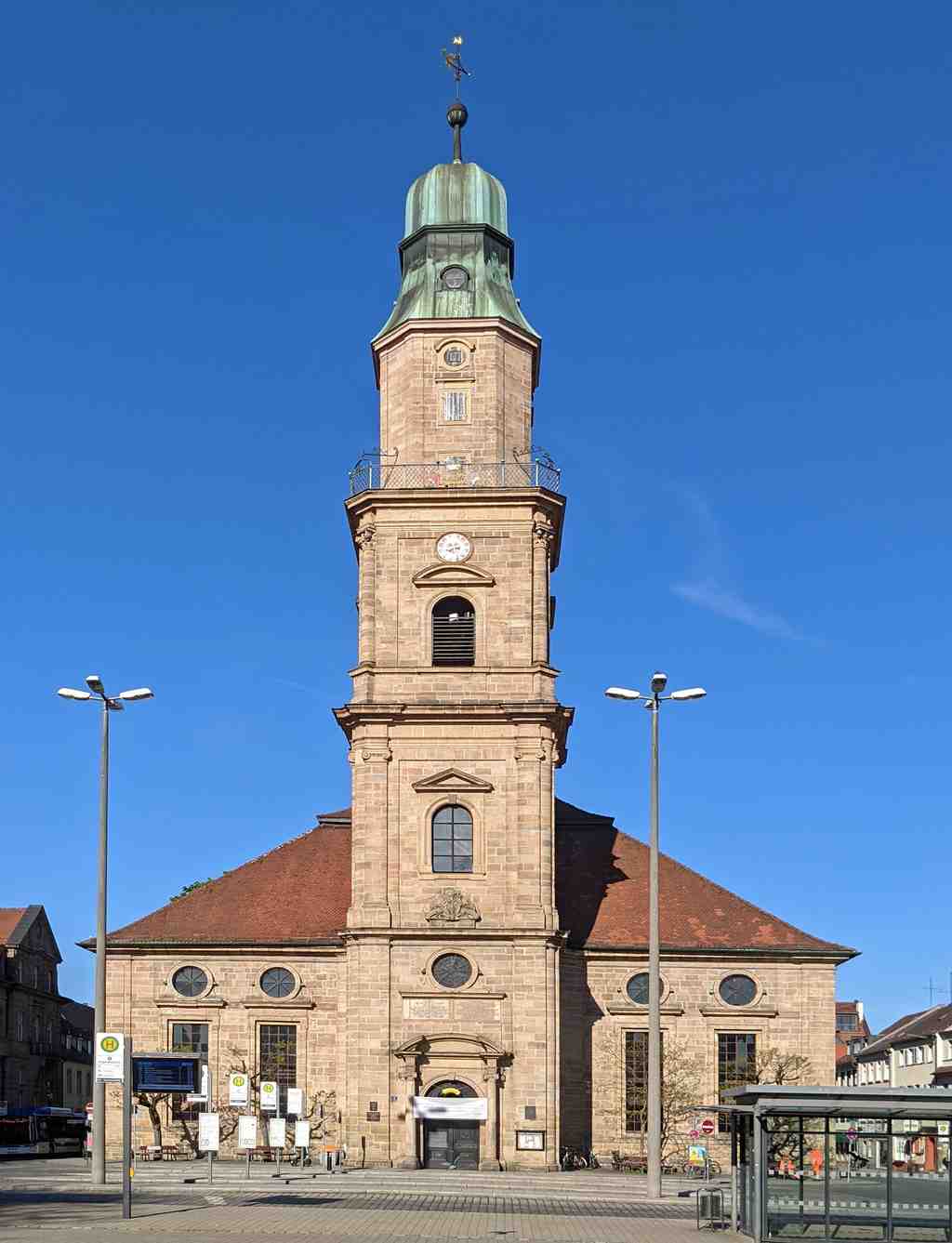
To spot the Huguenot Church, look for a grand rectangular building of sandy stone with a steep red-tiled roof and a tall, four-story tower topped by a greenish dome and a golden…もっと読む折りたたむ
To spot the Huguenot Church, look for a grand rectangular building of sandy stone with a steep red-tiled roof and a tall, four-story tower topped by a greenish dome and a golden weather vane-it sits squarely at the heart of Hugenottenplatz, almost impossible to miss. Welcome to the Huguenot Church, my friend! Imagine the year is 1686. The square where you’re standing is busy with the scraping of wagon wheels and the chatter of newcomers. But these aren’t just any newcomers-they’re Huguenots, Protestant refugees fleeing France with little but their faith and perhaps, if they were lucky, a well-traveled baguette. After King Louis XIV banned their religion in France, they poured across borders, and nearly 1,500 of them suddenly arrived right here, doubling Erlangen’s tiny population overnight. The locals, let’s say, weren’t thrilled at first-crowded houses, new flavors in the market, and an unexpected boost in fashion sense. But thanks to the local ruler, Markgraf Christian Ernst, these newcomers got more than a warm welcome. He built them an entirely new part of the city: the Erlanger Neustadt-and at its center, this impressive church. Picture the area buzzing with construction. Soldiers lent their muscles, the Markgraf paid the bills, and just two months after the first refugees arrived, the foundation stone of this very church was set. The architect, Johann Moritz Richter, designed it as part of a gleaming baroque dream-a neat, gridded city with this simple yet imposing hall church at its core. The church’s layout is unique: longer from north to south than east to west. Its mighty hipped roof and large, light-catching windows marked it as a leading light, literally and figuratively, for Protestant faith in a new homeland. But it wasn’t easy sailing. The congregation wondered if the church would be big enough, so the plans kept changing-expanding, stretching, trying to fit the hopes and numbers of its people. Finally, in 1693, the church was finished and dedicated. And what about that impressive tower in front of you? That came later, completed in 1736, funded in part by donations collected from far and wide. Ever adaptable, the congregation used all the resources they could-sometimes even using money meant for the poor to build higher! So, if the tower looks a little smug, that’s probably why. Step closer, and you’ll notice inscriptions in Latin and those impressive smooth sandstone walls. The doors are on every side, with the grand entrance right under the tower. In those days, Huguenot services were held in French, keeping the old world alive until 1822, long after everyday life had switched to German. Even the church’s name has an identity crisis worthy of a soap opera! French-Reformed, then Huguenot, but only reluctantly-because the congregation has roots not just in France, but also Switzerland, the Netherlands, the Palatinate, and with the Waldensians. Inside, things are refreshingly unadorned, as Calvinists frown on religious imagery-so no golden angels here, but twelve solid wooden columns holding up a simple vaulted ceiling, symbolizing the apostles. The celebrated organ, built by a student of the famous Silbermann, still thunders above the main entrance to this day. Three mighty bells chime from the tower-the oldest forged in 1702 and hauled from the foundry, spending World War II in a distant bell cemetery, only to return home victorious in 1947. These days, the church is getting a top-to-bottom spruce-up, with modern amenities like a heat pump and rooms behind glass, but always with an eye on preserving the spirit of shelter, community, and faith that made it special hundreds of years ago. As you stand outside, imagine the first Huguenots glancing up at this very tower, hearts pounding with hope that maybe, just maybe, they had finally found a safe place to belong. Now, that’s a reason to ring a bell-or three!
専用ページを開く →To spot Hugenottenplatz, look for a broad, open square framed by leafy trees and modern buildings, with a busy bus station on one side and a fountain and plenty of bicycles on the…もっと読む折りたたむ
To spot Hugenottenplatz, look for a broad, open square framed by leafy trees and modern buildings, with a busy bus station on one side and a fountain and plenty of bicycles on the other. Welcome to Hugenottenplatz, one of Erlangen’s most important crossroads-both for buses and, believe it or not, for stories! Take a moment to soak in the lively scene: on the west side, buses line up like soldiers at parade rest, while on the east, café umbrellas pop open like cheerful mushrooms on a spring morning. Over three centuries ago, this square looked very different. Imagine standing here when it was called Place devant le Temple et la Douane-a smaller sibling to the grand market squares nearby. The architect Johann Moritz Richter must have had quite a headache designing it, since his job was to create a planned baroque city for the French Huguenots who fled persecution and found a new start right here. Picture a procession of French families, carrying hopes, dreams, and probably some very good recipes. From 1695 until 1812, market stalls bustled across these cobbles as the "French Market," or, on some days, the less glamorous but crucial "Timber Market"-where people bartered for wood. The square has had more name changes than a runaway nobleman: for a while, it was Luitpoldplatz, named after a Bavarian prince, before finally reclaiming its Huguenot heritage in 1936 for the Neustadt’s 250th birthday. The dominant building, just across the square, is the Evangelisch-reformierte Kirche-once simply called the Temple-its rectangular shape fitting neatly into the careful layout like the ultimate game of city-building Tetris. But the square you see today is a mix of old elegance and modern hustle. On the west, the bus station forms Erlangen’s main public transport hub, with buses shuttling students, workers, and the rare confused tourist (don’t worry, you’re not alone). The east side is sprinkled with trees and bike racks, a favorite spot for locals to park before diving into street cafés or grabbing a snack from the kiosk. In 1997, a sparkling fountain claimed the square’s heart-though, fair warning, in 2025 it had a rather rough time with vandals. Every building here tells a tale: the old post office, sleek new offices disguising a parking garage, and the meticulously restored Richthaus, rescued from a cloak of stone. Streets branch off like storylines-toward the station, the market, or winding alleys filled with surprises. So whether you came for history, a bus connection, or just a bit of shade on a sunny day, you’re standing at the crossroads where Erlangen’s stories all come together-sometimes with a sneeze of dust, a splash from the fountain, and always a sense of arrival.
専用ページを開く →To spot the Kunstpalais Erlangen, look straight ahead for an elegant, three-story Baroque building with creamy white walls, golden trim, and a roof dotted with charming dormer…もっと読む折りたたむ
To spot the Kunstpalais Erlangen, look straight ahead for an elegant, three-story Baroque building with creamy white walls, golden trim, and a roof dotted with charming dormer windows; the grand entrance with its arched doorway is right in the center. Now, imagine you’re standing in the 1700s, where this very building, Palais Stutterheim, was springing to life on the orders of Christian Hieronymus von Stutterheim-he didn’t just want a house, he wanted a masterpiece! Fast-forward to 1974, and the city stepped in to turn this elegant palace into a home for art, transforming what was once the finest address in town into a buzzing gallery at the heart of Erlangen. After a dramatic two-year renovation (with plenty of dust and anticipation), the Kunstpalais doubled its exhibition space and reopened in 2010, ready to dazzle visitors with everything from thought-provoking paintings to mind-bending photography and even artist-made books. The collection? Over 4,500 works that capture the spirit of modern art, each piece adding its own twist to the story of how creativity evolved after 1945. With lively exhibitions, mysterious special events, and even some unforgettable comic salon shows in the summer, this isn’t just a stop for art-it’s a place where ideas, history, and a little bit of magic all come together.
専用ページを開く →
さらに11件のスポットを表示表示するスポットを減らすexpand_moreexpand_less
As you approach, look out for the double silhouette logo-two wise profiles set in a circle, proudly announcing “Friedrich-Alexander Universität 1743”-to know you're in the right…もっと読む折りたたむ
As you approach, look out for the double silhouette logo-two wise profiles set in a circle, proudly announcing “Friedrich-Alexander Universität 1743”-to know you're in the right spot! Now, let’s dive into the remarkable story of the University of Erlangen-Nuremberg, or FAU for short. Picture yourself back in 1743, the world buzzing with new ideas, powdered wigs, and the faint sound of footsteps echoing through old stone streets. The university was born not here in Erlangen, but in Bayreuth, under the ambitious gaze of Friedrich, Margrave of Brandenburg-Bayreuth. But it was just a year before Friedrich decided, “Ah, Bayreuth is so last season-let’s move this whole operation to Erlangen!” And so, the academic adventure began. FAU started as a strictly Protestant institution, its earliest professors probably keeping a sharp eye on any suspicious cake-eating or loud laughter. Over the centuries, though, it became as diverse and open-minded as a group project the night before a deadline. Its name honors not just Friedrich but also Alexander, Margrave of Brandenburg-Ansbach, who was the university’s fairy godfather-providing the support it desperately needed. Fast forward to the 19th century, and you’d see the move into the majestic Schloss, or palace, that still stands at the heart of campus today. Imagine the shuffle and excitement as books from the dissolved University of Altdorf arrived; maybe there was a grand “book parade”-or at least a few sore backs from hauling heavy tomes up the stairs. Jump to the 20th century and things get electric-literally! In the 1960s, FAU becomes the first classic university in western Germany to add a faculty of engineering. No more hiding your love for gadgets and gears, you could now study engineering right here. The university joined forces with colleges in Nuremberg, grew new faculties, and kept spreading like Wi-Fi across the region. Today, FAU is everywhere-absolutely everywhere! From humble North and South sites in Erlangen to innovative new research centers and even a tech-loving campus in Busan, South Korea. If you ever think, “That’s enough campuses,” FAU is politely ignoring you and planning another. Academically, FAU is a heavyweight, ranked among the world’s best universities, and famous for sending Nobel Prize winners, world chess champions, and even pioneer MP3 engineers out to change the world. Its research is a thrilling ride through everything from molecular medicine to supercomputers-seriously, if computers could blush, the ones here would be cherry red from all the cutting-edge work. Let’s not forget the campus itself: dotted with palaces, lush gardens, and always filled with a friendly hum of student chatter, bicycle bells, and the seasonal sound of eager pages turning at exam time. And here’s a quirky claim to fame-the University Library is the biggest in Bavaria outside Munich, stocking a staggering 5.4 million books! You’ll never have to fight over a textbook here, unless it’s exam season - in which case, may the odds be ever in your favor. So, as you stand here, imagine yourself part of a story that stretches back nearly three centuries, a story filled with debates, discoveries, the occasional academic fashion disaster, and endless curiosity. Welcome to FAU-where every day, history and the future are only ever a conversation apart. Wondering about the campuses, faculties or the research? Feel free to discuss it further in the chat section below.
専用ページを開く →Just ahead, you’ll spot a long, elegant yellow building with gently curving wings, lined by tall windows, statues and decorative vases along its roof-just follow the path between…もっと読む折りたたむ
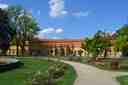
Just ahead, you’ll spot a long, elegant yellow building with gently curving wings, lined by tall windows, statues and decorative vases along its roof-just follow the path between the flowerbeds and look for the three grand arched doors in the center to find the Orangery. Now, close your eyes for a moment-let’s step back to the early 1700s, when the air was thick with excitement, perfume, and perhaps a faint whiff of orange blossom drifting beside you. Imagine the bustling garden parterre before you was not just a sea of flowers and soft grass, but alive with the shimmering silks and powdered wigs of Erlangen’s noble court. This Orangery, with its striking semi-oval arms reaching outward, was more than just an ornate greenhouse. It was the jewel of Erlangen’s grand palace complex, built as a surprise by Margrave Christian Ernst for his wife, Elisabeth Sophie, in 1704. Picture the scene as royal carriages rumbled up the path, nobles stepped down, and inside this very building, exotic citrus trees waited out the winter like VIP guests enjoying a warm suite. The Orangery’s design is theatrical, as if the very walls themselves want to applaud! Those elegant wings curve like a stage embracing the parterre, while in the center, a grand rectangular hall, the Wassersaal, holds court with stuccoed ceilings and, once upon a time, real fountains and shimmering water basins installed right in the floor. These fountains weren’t just for show-when they were restored in the 2000s, centuries-old waterworks and fountains reappeared beneath the tiles, as if the room was whispering its secrets. Now look up at the southern façade-those three majestic portals at the center! The middle arch is wrapped in columns and crowned by statues so lively you half-expect them to jump down and offer you a bowl of fruit. Here, the statues of the Four Seasons stand guard, surrounded by vases brimming with acanthus leaves, flowers, and fruit. Heraldic eagles line the building’s corners, broadcasted symbols of the margrave's power, and the family’s crowned coat of arms sits proudly overhead-because even in the garden, every ruler needs a proper throne, right? In its early days, this place was part greenhouse, part ‘Maison de plaisir’-the ultimate party venue, with festivals and ceremonies that would put any modern wedding planner to shame. Even the apartment wings at the ends of the curves were for special guests. And don’t get me started on the garden outside! The Orangery follows the palace’s central garden axis and faces what was supposed to be its twin-the never-built Concord Church. Between them, the Huguenot Fountain splashes dramatically, marking the heart of the whole palace grounds. Rumor had it that in the garden’s heyday, sixty marble sculptures stood here-gods, virtues, symbols of continents and elements-each singing the praises of the margrave and his beloved. Speaking of mysteries, notice how the building’s north wall is mostly solid? That was a clever trick to shield the exotic plants from chilly north winds, protecting oranges and lemons from an untimely frost. But time moves on, and after a century of parties and plenty, the Orangery changed roles. In 1818 it became part of the university, and since 1914 it’s echoed with the sound of organ music and art debates rather than court gossip. Yet, if you listen closely, you might still hear a faint chuckle from the seasons overhead-after all, in a building this dramatic, who says history has to be silent? So as you stand here, breathe in the scent of the present, but listen for the footsteps of the past-this palace of plants, parties, and power remains one of the earliest masterpieces of Baroque garden design in Franconia. If you're keen on discovering more about the building description, rooms of the orangery or the the main portal to the water hall, head down to the chat section and engage with me.
専用ページを開く →Ahead of you is a wide, open expanse of green lawn dotted with tall trees, framing a grand stone building at the far end-if you look straight ahead, you’ll spot the gardens…もっと読む折りたたむ
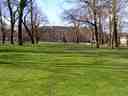
Ahead of you is a wide, open expanse of green lawn dotted with tall trees, framing a grand stone building at the far end-if you look straight ahead, you’ll spot the gardens stretching out before the magnificent Schloss. Welcome to the Schlossgarten, one of the first great baroque gardens in all of Franconia, and today, an oasis for Erlangen’s locals, students, and visitors alike. Picture it: the year is 1700, and behind the newly built palace, only a modest garden was planned. But sometimes-even in the best-laid blueprints-margraves and margravines dream bigger! Thanks to Margravine Elisabeth Sophie, the garden exploded in size and extravagance, stretching nearly as far as the eye could see: 280 meters across and 550 meters long, with grand avenues, elegant flowerbeds, mighty clusters of trees, and velvety lawns. The garden’s heart was built on perfect symmetry, marked by dazzling sights. To one side, the Orangerie, home once to exotic citrus trees, gleamed with Baroque flair, its façade sprinkled with the playful edge of Rococo design. To the other, the Konkordienkirche was planned as a twin, but only its central rectangle got built. Over time, this would morph into a stately university house, but that’s a drama for later. Where you’re standing, lively garden parties once graced these lawns, with noble guests swirling around marble statues and cooling their hands at sculpted fountains. Take a moment and imagine the gentle chattering of silk dresses, the echo of boots on gravel walkways, and the distant splash of water from the fountains. But this was no static paradise! There were kitchen gardens fragrant with herbs, fruit orchards, a wild pheasantry, and even an ancient medicinal garden-a real supermarket of the 18th century, just add a powdered wig. As you pass through the garden, look for the grand Hugenottenbrunnen in its oval basin-a tiered mountain of stone. At the base, elegant Huguenot families; higher up, ancient gods; and, on the very peak, Margrave Christian Ernst keeping watch. They say if you peer through a hole in the stone, you might just catch a glimpse of his equestrian statue beyond. And speaking of that statue, it’s a heroic sight: the margrave sits astride his steed, armor glinting (imagine it in its original glory, before the centuries wore it down), and beneath him, figures of Envy and a fallen Turk, all carved from a single enormous lump of sandstone! Sadly, years of exposure, rowdy students, and even the occasional act of mischief have left their mark-now the statue stands behind its protective fence, as much legendary as it is real. The garden’s transformation didn’t stop there. In the late 1700s, botany professor Johann Christian von Schreber waved his academic wand, and the garden changed again, from stern Baroque order to the gentler, wilder English landscape style. He introduced winding paths and natural groves thanks to his passion for plants-a pillar in his honor stands here today. By 1849, the garden flung open its gates to the ordinary folk of Erlangen, and never shut them since. Look around and you might spy the little Delphinbrünnlein, topped by a cheerful child riding a dolphin. Listen, can you hear the giggle of the water or imagine the children dancing near it on festival days? On special Sundays, music drifts across the lawns-concerts filling the air, and once a year, the entire university descends here for the grand Schlossgartenfest, the biggest garden party in Europe! Not all memories here are happy: near the garden’s edge you may come across the somber memorial that once showed a weary soldier with broken sword, dedicated to those lost in World War I. Only the stone blocks remain now, their names etched in remembrance-a reminder that gardens, like people, carry stories both joyful and sad. So stroll these paths, where noble guests, university professors, poets, and the everyday folks of Erlangen have wandered for centuries. You’ll find the Schlossgarten isn’t just a park-it’s a living chronicle, growing wilder, wiser, and ever more welcoming through every age. For a more comprehensive understanding of the orangery, concord church or the huguenot fountain, engage with me in the chat section below.
専用ページを開く →Right in front of you stands the grand, stone-faced university palace, easily spotted by its stately rows of tall windows and decorated rooftop statues, with a proud greenish…もっと読む折りたたむ
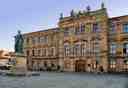
Right in front of you stands the grand, stone-faced university palace, easily spotted by its stately rows of tall windows and decorated rooftop statues, with a proud greenish statue of a historic figure keeping watch on the left as you approach from the street. Welcome to the Friedrich-Alexander-Universität Erlangen-Nürnberg, or FAU for short! If these ancient stone walls could talk, they’d probably ask you for your student ID-but don’t worry, I’ve got the stories you’re looking for. Now, close your eyes for a split second and imagine: it’s the year 1743. The air is thick with the scent of ink and candle wax, and you hear the clatter of horse-drawn carriages on cobblestone. The university is brand new, freshly arrived in Erlangen and named after the dashing Margrave Friedrich von Brandenburg-Bayreuth, its founder, and his number one fan, Karl Alexander. At first, only a handful of bold students fill these rooms, learning theology, law, medicine, and philosophy, all slightly worried the roof might leak. But don’t be fooled-they were laying the groundwork for greatness! Jump forward to the 19th century, and Erlangen has just become part of Bavaria. The university barely escapes closure, all because it trains the top Lutheran theologians-talk about job security! Slowly, traditions relax, and in 1897, women are finally allowed to study. In fact, the first woman gets her PhD here in 1904. Imagine the excited whispers in these corridors when that happened! Of course, history here isn’t just lectures and libraries-it’s packed with drama. When the 20th century rolls around, world wars sweep through, with three-quarters of the university’s students marching off to fight. The scars of war linger, but somehow the buildings remain standing, and after the chaos, fresh students and professors flood in. There are serious moments, like difficult confrontations with the past-especially the troubling times under the Nazis and the slow process of reckoning that only began much later. But there were also moments of downright scientific gossip: in 1982, Germany’s first “test-tube baby” is born in the university hospital right here, sparking headlines nationwide! FAU knows how to keep things lively. The university grew and grew-today, nearly 40,000 students fill more than 300 different study programs in these halls and all over the city. Medicine, science, theology, engineering, philosophy-there’s even a whole campus dedicated to languages and another bursting with engineers. Some students prefer the city center; others enjoy high-tech labs out in the southern districts or over in Nuremberg. At the heart, though, is this very palace, surrounded by leafy gardens where students still picnic and rant about exams the way only students can. It’s not all bookworms, though. There’s shimmering international sparkle: thousands of students arrive from all across the world, and the university holds impressive ranks in global ratings. FAU isn’t just big in Bavaria-it’s a top player in Europe, praised for innovation and research. Actually, they even halted new scholars from China for a bit to protect technological secrets-spy movie stuff! And, not to be outdone, researchers here have won some of Germany’s highest research prizes. Of course, as buildings age, they need love (and considerable slapdash repairs). The university faces the constant challenge of leaking roofs and classrooms in need of TLC. Recently, there’s been talk of moving entire departments to shiny new locations, like the infamous “Raspberry Palace”-and let’s be honest, who wouldn’t want to say they had lectures in a palace that sounds like dessert? So while you’re standing here, just imagine the echoes of history between these stones-revolutions of science, whispers of protest, and sighs of relief when exams are finally over. After all, with nearly 300 years of life, FAU is bursting with stories-the trickiest part? Fitting them all into one tour stop! Exploring the realm of the overview and key figures, construction or the erlangen schools and the "erlangen programme"? Feel free to consult the chat section for additional information.
専用ページを開く →To spot the University Library Erlangen-Nuremberg, look for a large, modern, cream-colored building with sweeping black-trimmed windows on two upper floors and rows of bicycles…もっと読む折りたたむ
To spot the University Library Erlangen-Nuremberg, look for a large, modern, cream-colored building with sweeping black-trimmed windows on two upper floors and rows of bicycles parked at the front, right next to the intersection. Now, let’s step into a world where the hush of page-turning meets the soft hum of laptop fans - welcome to the University Library Erlangen-Nuremberg! Stand tall (or at least as tall as you can among university students hauling backpacks), because you’re facing the largest academic library in all of Bavaria, outside Munich. If you listen carefully, you might even imagine the faint drifting from the stacks above you. But this building stands on the shoulders of giants. Back in 1743, when the library was born alongside the university, it started humbly - just a single room in the old knight’s academy, filled with dusty tomes donated by the margraves and the university’s first chancellor. Can you picture scholars in elaborate wigs squinting at Latin manuscripts by candlelight, wondering when someone will finally invent coffee strong enough to get them through Aristotle? As the centuries rolled on, the library swallowed up precious volumes from castles in Ansbach and Schwaningen, then devoured the whole Altdorf University collection, doubling its size overnight. At one point, there were so many books that they spilled out of the castle and into the “Red House,” surely confusing the neighbor’s cat. Desperate for space, the university eventually built this state-of-the-art library in 1913. Imagine the excitement: brand new, complete with a separate administration wing and a massive magazine block, all constructed according to the latest building principles of the time. In the basement, the writer Ernst Penzoldt immortalized himself during his student days with colorful wall paintings that still wink out at staff today - a hidden treasure, if you will, depicting the university’s varied faculties. Fast forward, and the library has grown not just in size but in sheer brainpower. Today, it’s packed with more than 5.5 million media items: ancient manuscripts, futuristic e-books, medieval scrolls, and enough dissertations to build a small fort (not that I recommend trying). It’s not just one building, either, but a sprawling, friendly octopus, with four main libraries and fifteen branch libraries spread across almost 200 locations in Erlangen and Nuremberg. The library has a boast-worthy claim: if you stacked all its books, you might finally have an excuse for calling in sick with “crushed by knowledge.” Here, everyone aged sixteen or older is welcome to borrow materials, fee-free-so students, researchers, and the hopelessly curious mix together every day, eyes wide as they hunt everything from 12th-century illuminated Bibles to the fanciest research databases you can imagine. Need a rare book from a Bavarian monastery? Or the latest in philosophy journals? They’ve got you. Most treasures live quietly in secure stacks, ready to be summoned by a click on their online catalog, OPACplus. And if Erlangen doesn’t have it, the library can whisk it in from far away through interlibrary loan-with the only catch being you need to avoid drowning in footnotes. This place is no ordinary book barn; it has weathered history’s storms. Because Erlangen surrendered peacefully in World War II, the library miraculously escaped the devastating losses suffered by many German institutions, preserving priceless medieval texts, personal collections from university founders, the legendary Gumbertus Bible, and a quirky collection of medals, artwork, and even old schoolbooks bought by a forward-thinking librarian from the 1950s. Of course, today’s scholars love Wi-Fi, open-access publishing, and digital goodies just as much as the old-timers loved parchment. The library offers 450 cozy workspaces, and it even runs “FAU University Press” to help university folks publish quickly-in print or online. Thanks to digitization, students can unearth treasures or submit dissertations while still in pajamas at home, which I bet the 18th-century scholars would envy! So, whether you’re hunting ancient secrets, chasing modern science, or just looking for a quiet spot to daydream while pretending to work, the University Library Erlangen-Nuremberg is an endless adventure of stories, information, and discovery. And who knows? Inside these walls, you might just find a tale that changes your life-or at least fuels your next coffee break!
専用ページを開く →In front of you stands the Neustadt Church, its tall, square tower rocketing 60 meters into the sky, topped by a lantern, while the sandy yellow baroque stonework gives it away;…もっと読む折りたたむ
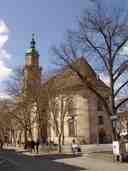
In front of you stands the Neustadt Church, its tall, square tower rocketing 60 meters into the sky, topped by a lantern, while the sandy yellow baroque stonework gives it away; look for the most commanding tower on this street - you can’t miss it! Alright, traveler, ready for a whirlwind story carved in sandstone and crowned by angels? Imagine it’s the early 1700s in Erlangen - the city smells of sawdust and stone dust, the streets busy with French Huguenots, Lutheran newcomers, and German Reformed folks sizing up the future. Here, right where you stand, the Neustadt was being drawn up as Europe’s next great city of tolerance and clever street planning. But boy, did building this church take patience! Those Lutherans had to pass the hat more times than a juggler in a busy tavern. They needed 35,000 gulden (yes, that’s a lot of bread rolls), and it took decades, countless fundraisers, coins gathered in inns and on journeys, and generous donations from every corner - even rival congregations chipped into the pot. By 1725, the cornerstone was laid, but let’s not pretend there was a fancy party - they were pinching pennies, after all. There were hold-ups, design debates, and so many builders involved that you’d think the tower would come out wobbly - but nope! Each layer of this church, from the hefty Doric pilasters to the airy Corinthian capitals on its grand façade, reveals a city determined not just to worship but to impress. And oh, that tower! It’s Erlangen’s tallest - the skyscraper of its day. Stand here on a foggy morning, and it almost vanishes above you, as if nudging the heavens. Inside, the Neustadt Church is a treasure chest of storytelling. There’s a star on the floor marking the center - no, this isn’t for churchfolk to practice their dance steps, but to mark where the two main axes meet, because good Lutherans like their symmetry. Above, Christian Leinberger, a local painter with a love for color and drama, created vivid ceiling paintings in the 1700s. Money was tight, so his brother painted fake stucco where real plaster would have cost too much - talk about church budget hacks! Look up in the nave, and the paintings zigzag from the nativity of Christ at one end, to the crucifixion at the other. In the middle? The Ascension - as if the story soars up with the congregation. Did I mention drama? The church survived war, fire, and fashion faux pas, including a huge interior makeover in 1904 - out went some glass, in came stone, and the sacristy was tucked cozily behind a new wall. World War II damaged those vibrant ceiling frescoes, but by 1955, restoration work brought back the light - a bit like giving the church a fresh haircut after a rough year. But it’s not just a place for sermons and weddings. It was here, in 1743, that the university - yes, the Friedrich-Alexander-Universität - had its very first service. For much of its life, the Neustadt Church has been the “university church.” Every second Sunday during semester, you’ll hear sermons by theology professors - because here, academics and angels go hand-in-hand! The church is also famous for its music. There are regular concerts with choirs and even an institute for church music founded here in 1854. The first children’s service in all of Germany was held here in 1850 - imagine the flutter of Sunday-school excitement! Down below, in the crypt, local nobility and notable folks found their final rest. If you like a dash of intrigue: in 1819, a certain Friedrich Julius Stahl was baptized here, switching from Judaism to Protestantism - later he’d become a famous legal philosopher, and most likely a champion competitive debater at dinner parties. Architecturally, this church forms a kind of holy trio. Alongside the Altstädter and Huguenot churches, it lines up using urban planning so clever it would make a city engineer faint with joy. All three spires create Erlangen’s “baroque skyline,” a bit like three birthday candles on a fancy cake - except they almost never get blown out. The church is still alive with music and spirit. From the clang of its original baroque organ pipes to the echoing stomp of students through the doors before exams, Neustadt Church presses the whole city into its rhythm. Whether you’re here for peace or simply to enjoy the view, it’s a reminder: patience, persistence, and a bit of group fundraising can build something magnificent - and maybe a little quirky, too. Want to explore the architecture, equipment or the ceiling painting in more depth? Join me in the chat section for a detailed discussion.
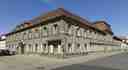
専用ページを開く →Right in front of you stands an impressive, sand-colored stone palace stretching along the corner with two grand, low, two-story wings, dozens of pale shutters, and tall hipped…もっと読む折りたたむ
Right in front of you stands an impressive, sand-colored stone palace stretching along the corner with two grand, low, two-story wings, dozens of pale shutters, and tall hipped roofs peeking over-just look for the long, symmetrical building with the classical windows and the sturdy, no-nonsense presence at the crossroads. Welcome to the Egloffsteinsches Palais-the largest baroque palace of the old Erlangen nobility! Imagine the year is 1718. The world smells of fresh-cut sandstone, powdered wigs, and maybe-if the wind is right-a whiff of horse and carriage. Count Carl Maximilian von Egloffstein, a man of ambition and, presumably, fabulous taste in hats, decides that nothing short of the grandest noble residence would suit him at the edge of the growing city. The result? This four-winged sandstone fortress with its grand hall and rows of wide shuttered windows, an aristocratic sight that must have made the neighbors feel very humble indeed. On the Schuhstraße side, you might spot the long façade with its twenty-one windows-yes, count them if you like, but don’t get dizzy! The three windows in the middle bulge out grandly, marking where the majestic ballroom lies. Picture carriages rolling up, noble guests stepping out in swirling coats, music and candlelight floating from that grand salon. Inside, under an oval ceiling panel crafted by the Bayreuth master Andrea Domenico Cadenazzi, Apollo rides his chariot, the goddess Ceres lounges, and stucco cherubs beam down-an artistic treat designed to dazzle. Yet things don’t always go as planned, even for counts and countesses. After Carl Maximilian’s death, debts piled up and by the 1740s, the palace was in new hands-first the state, which briefly housed dusty local officials, then the University, making plans for anatomical theaters and even an observatory. Imagine students poking at skeletons in one room while professors squint at the stars. But, sadly, money ran out faster than enthusiasm. The city finally bought the building in 1749 and transformed the front into a poorhouse and the back into an orphanage. If you shiver, it might be a ghostly orphan racing down these halls, or just a chilly Erlangen breeze. During the worst harvest in 1746, the poorhouse buzzed with desperate energy, while the orphanage in the rear tried to keep children out of trouble by offering them their first lessons. In a twist of fate, this palace became home to future poet and orientalist Friedrich Rückert in the early 1800s. Look up at the windows-the tragic loss of his children in the palace’s rooms inspired heart-wrenching poetry that’s still read today. One might say that this grand building has seen its share of happiness and heartbreak. Fast-forward to the industrial age-tobacco takes over! That’s right; the halls once trodden by counts and orphans became a tobacco factory, filling the building with the sweet, sharp aroma of snuff and cigars. Later, it hosted schools, including the Ohm-Gymnasium, which soon outgrew even this gigantic palace-the equivalent of teenage rebellion, but for an entire institution. At one point, it even had Bavarian Jager soldiers marching in its courtyards. If these walls had eyes, they’d be very, very surprised by all their tenants. The palace changed again and again-public library, vocational school, and finally, today’s adult education center and Franco-German Institute. Over your head, most of the building is still protected as a historical monument, except the western wing, which was once stables and carriage houses (follow your nose-a faint smell of hay and horses may still linger in old stones, or maybe that’s just my imagination galloping). So here stands the Egloffsteinsches Palais, a building that’s worn so many hats you’d think it owned stock in the local hat shop. Nobles, orphans, students, poets, soldiers, and just maybe, you-each leave a little mark on its long, long story.
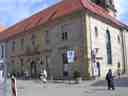
専用ページを開く →To spot St. Sophia’s Church, just look for the grand sandstone building with a red-tiled roof, oval and arched windows, and an ornate entrance right on the corner-its pale stone…もっと読む折りたたむ
To spot St. Sophia’s Church, just look for the grand sandstone building with a red-tiled roof, oval and arched windows, and an ornate entrance right on the corner-its pale stone facade stands out against the nearby shops! Now, let’s step into the world of St. Sophia’s Church-a place whose walls have probably heard more secrets than your favorite coffee shop! Standing here, close your eyes for a second and imagine the year is 1701. This spot is buzzing with excitement as Baron Christoph Adam Groß von Trockau lays the foundation for a special academy for young nobles, hoping to fill Erlangen’s streets with future knights rather than just, well, students late for class. At the southern tip of this grand academy, what you see before you rises: a church named in honor of Sophie Luise of Württemberg, wife of the powerful Margrave Christian Ernst. Back in those days, the church’s Baroque facade was brand-new, gleaming with intricate details and a lofty, oval window above a majestic arched door-reminding everyone that, yes, holiness has style. But here’s the twist: what began as a private college chapel soon became a bustling parish church in 1703, filled with the hopes and hymns of a new Lutheran community. You can practically hear the echo of their first Sunday as the organ, installed in 1702, bursts into life. The Sophienkirche had a knack for transformation. When the original knightly academy faded away-after its founder’s death and a bit of financial drama-the university took over and used these halls not just for worship, but for academic celebrations and even burials. Imagine professors in capes and robed students gathered for ceremonies where now the echoes have died away. Baron Groß von Trockau himself was laid to rest here, his legacy literally built into the foundations. But wait, there’s more! The building didn’t just stop at religions and graduations. After some courtroom drama-yes, really-it became a courthouse and even a city jail complete with a “drunk tank.” That’s right-what had once rung with church bells sometimes held the slightly less angelic snores of those who’d had one too many. In the end, even after most of the building was torn down for a department store, the city couldn’t forget the Sophienkirche’s story. Parts of its facade were carefully preserved and blended into modern shops and offices. So look around-it may appear more business than Baroque now, but take a closer glance and you’ll time-travel through centuries of church bells, school bells, and maybe even jailhouse rock!
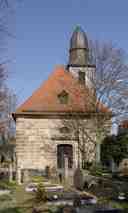
専用ページを開く →Right in front of you, look for a sturdy, rectangular stone building made of pale, unplastered sandstone blocks, topped with a steep red-tiled roof and a distinctive, two-tiered…もっと読む折りたたむ
Right in front of you, look for a sturdy, rectangular stone building made of pale, unplastered sandstone blocks, topped with a steep red-tiled roof and a distinctive, two-tiered slate bell tower rising above the entrance-this is the Neustadt Cemetery Church. Now, take a moment and imagine yourself standing here over two centuries ago. No church stood on this peaceful cemetery ground-only rows of graves and mourners at the mercy of blustery Bavarian weather. Funerals had to parade all the way from the distant Sophienkirche or the Neustadt Church, giving everyone a thorough tour of Erlangen, whether they wanted it or not. And when the rain came, as it often does, the only shelter in sight was an umbrella-if you had one! But then, along came a certain Johann Gottfried Groß, a man with a soft spot for dry feet and dry ceremonies. He defied the damp with the ultimate power move-he built a roof over his family tomb, sparking the first spark of inspiration for a cemetery church. The grand vision kicked off, designs were made, but actual building didn’t start until some clever fundraising, handshakes with big donors, community collections, and even a sweet subsidy from the Margrave of Bayreuth himself made the dream possible. So finally, between 1783 and 1787, a dedicated crew of carpenters and masons hammered, hauled, and heaved, raising these thick sandstone walls and that unmistakable hipped roof. The church became a beacon of comfort-quite literally-when, in 1827, the benefactress Anna Margarete Stock funded the elegant bell tower over the eastern portal. That tower, once half-timbered, would later be cloaked in slate, probably to stop the wind from whistling tunes through the beams. But fate loves drama, and in 1928 a lightning bolt shouted its arrival and the tower had to be rebuilt-no superhero origin story is complete without a little destruction, right? Step inside with your imagination. Picture a bright, open hall divided by a cross-shaped aisle, sunlight slipping in through four big arched windows on each side. On three sides, a wooden gallery wraps around, holding a mighty organ that’s seen more upgrades than your favorite smartphone. The central showpiece is a stylish pulpit-altar, made back in 1787, surrounded by wooden rails and crowned with the image of the Risen Christ, freshly painted for the church’s facelift in 1908. Beneath your feet, resting quietly, are generations of Erlangen residents, and above, echoes of joy, sorrow, and organ music fill the air-a place where history doesn’t just exist, it lingers. Thank you for exploring Erlangen’s layers of stories with me today!
専用ページを開く →


よくある質問
ツアーはどうやって始めますか?
購入後、AudaToursアプリをダウンロードして引き換えコードを入力してください。ツアーはすぐに開始できます。再生ボタンをタップして、GPSガイド付きルートに従うだけです。
ツアー中にインターネットは必要ですか?
いいえ!開始前にツアーをダウンロードしておけば、完全にオフラインで楽しめます。チャット機能のみインターネットが必要です。モバイルデータを節約するため、WiFi環境でのダウンロードをお勧めします。
これは団体ツアーですか?
いいえ、これはセルフガイド式のオーディオツアーです。ガイドや団体、決まったスケジュールに縛られることなく、スマホから流れるナレーションを聴きながら自分のペースで自由に探索できます。
ツアーの所要時間は?
ほとんどのツアーは60〜90分で完了しますが、ペースは完全に自由です。好きな時に一時停止したり、スポットを飛ばしたり、休憩を取ったりできます。
今日中にツアーを終えられない場合は?
問題ありません!ツアーには無期限でアクセスできます。明日、来週、あるいは来年でも、好きな時に再開できます。進行状況は保存されます。
どの言語が利用可能ですか?
すべてのツアーが50以上の言語に対応しています。コードを引き換える際にお好みの言語を選択してください。注意:ツアー生成後に言語を変更することはできません。
購入後、どこからツアーにアクセスできますか?
App StoreまたはGoogle Playから無料のAudaToursアプリをダウンロードしてください。メールで届いた引き換えコードを入力すると、ライブラリにツアーが表示され、ダウンロードして開始できるようになります。
もしツアーを楽しめなかった場合は、返金いたします。お問い合わせ先: [email protected]
以下の決済で安全にチェックアウト 


