
ブレーマーハーフェン音声ツアー:ブレーマーハーフェンの解き放たれた遺産
かつてブレーマーハーフェンを激しく揺るがした一度の爆発は、何マイルも先の店の窓を粉々にし、港を混乱に陥れました。街の穏やかな表面の下には、未解決の謎、壮大な不運、そして頑固な野心の網が横たわっています。このセルフガイド音声ツアーは、賑やかな埠頭、影の路地、そしてそびえ立つ尖塔のそばを巡り、ほとんどの訪問者が耳にすることのない秘密を解き明かすよう誘います。 どのようなねじれた陰謀が、悪名高いモーゼル号襲撃事件を引き起こし、幽霊のようなこだまを時を超えて送ったのでしょうか?どの意志の戦いが、新港の建設をほぼ停止させたのでしょうか?なぜ建設業者はシュミット市長記念教会の下に正確に522本の杭を打ち込まなければならなかったのでしょうか?そして、その泥だらけの基礎には何が今もつきまとっているのでしょうか? 大胆な保険詐欺や悲劇的な災害から、火災旋風を生き延びた信仰の物語まで、ドラマに満ちた通りを巡りましょう。旅の終わりには、あらゆる角が、動き出す本物の歴史の鼓動で電撃的に感じられるでしょう。 さあ、もっと近づいてください。ブレーマーハーフェンは、あなたが耳を傾ける勇気があるなら、その秘密を語る準備ができています。
ツアーのプレビュー
このツアーについて
- schedule所要時間 30–50 mins自分のペースで進める
- straightenウォーキングルート 3.6kmガイド付きパスに沿って進む
- location_on場所ブレーマーハーフェン, ドイツ
- wifi_offオフライン対応一度のダウンロードでどこでも使える
- all_inclusive無期限アクセスいつでも、ずっと再生可能
- location_onモーゼル号襲撃事件から開始
このツアーのスポット
If you’re looking for the spot, keep your eyes peeled for the towering hull of a steamship looming beside the busy harbor, with crowds of people milling about the pier. Off to one…もっと読む折りたたむ
If you’re looking for the spot, keep your eyes peeled for the towering hull of a steamship looming beside the busy harbor, with crowds of people milling about the pier. Off to one side, you’ll notice a paddle steamer puffing a trail of smoke into the sky. In the distance, masts of other ships poke above the horizon, but the Mosel is the real star: her name etched at the bow, ropes and rigging stretching like spiderwebs overhead. Picture a waterfront scene alive with travelers, dock workers, and onlookers-everyone is drawn to the bustle and energy along the quay. Now, standing here, imagine it’s a chilly December morning in 1875. The air is thick with excitement and the shouts of porters and families saying their tearful goodbyes. Suddenly, a large barrel is hoisted with some effort-people pause, watching as it swings above the heads of the crowd. But at that exact moment, disaster strikes. The barrel crashes to the cobblestone, and with a deafening blast, the world erupts-smoke surges into the sky, debris flies everywhere, and for a second, time stands still. In the blink of an eye, 83 lives are lost and the harbor is thrown into chaos, screams and cries echoing over the water. One sailor who watched from a nearby ship described the chaos: a giant mushroom cloud soaring almost 200 meters high, people scattered across the pier, and everything coated in soot. The shockwave was so strong, it shattered shop windows along the main street-locals miles away heard the rumble! And the reason? This wasn’t just an awful accident. It was a darkly clever insurance scam gone horribly wrong. The culprit, hiding under the false name “William King Thomas,” turned out to be Alexander Keith Jr., a man whose life was more dramatic than your average crime novel. Former blockade runner, con artist, and now, behind one of the most daring plots of his time. Talk about bringing explosive secrets along for the ride… So while you stand here, close your eyes for a moment-can you feel a chill in the air? Maybe you’ll catch a ghostly whisper from the past-reminding us that history is never as quiet as it seems. And hey, next time you see a suspiciously large barrel, maybe give it a little extra room! Eager to learn more about the course of events, the perpetrator or the the victims? Simply drop your inquiries in the chat section and I'll provide the details you need.
専用ページを開く →Look ahead of you and you’ll spot the New Harbor-it’s the waterway stretching straight in front, lined with boats docked along both sides and flanked by city buildings and parking…もっと読む折りたたむ
Look ahead of you and you’ll spot the New Harbor-it’s the waterway stretching straight in front, lined with boats docked along both sides and flanked by city buildings and parking lots. On the left, you’ll see a wide path for strolling and plenty of cars, while on the right there are more modern buildings, outdoor cafés, and the unmistakable view of ships bobbing on the gentle waves. The harbor itself is long and relatively narrow, with an inviting aura of both history and constant movement. Imagine standing here back in 1852, when this very harbor first opened its gates to the bustling world of ships. Back then, ships didn’t just bring tea and coffee-they brought noise, excitement, maybe even a little sea shanty or two. The Old Harbor, just south from here, was getting a bit cramped; ships were getting bigger and more bosses were shaking their fists, so Jacobus van Ronzelen got the job to plan this whole new basin. It wasn’t smooth sailing-construction actually stopped because of a legal squabble with Hanover. (Seems even harbors can get caught in a bit of political drama!) But they finally got the job done, and the New Harbor opened up, all 480 meters long. The place quickly became the hot spot for steamships and those flashy Lloyd liners. In fact, the northeastern pier over there has a special bulge-that was so ships could turn around more easily. You wouldn’t want a steamship doing a 10-point turn, would you? The harbor saw a lot of firsts: the Simon Loschen lighthouse, sturdy cranes-one could lift 45 tons!-and even a hand-operated crane, which you can still see on display in the Maritime Museum. Picture the excitement when the train station opened, bringing travelers right to the water’s edge. But it wasn’t all about work; there was drama, too. On a chilly December night in 1875, a barrel of explosives suddenly went off right here, next to the emigrant ship Mosel. It was a tragedy that shook the city-83 lives lost, with a memorial standing quietly today in Wulsdorf cemetery. The harbor kept changing as the years rolled on. More bridges, more ship docks, even a mysterious phantom ship at the beginning of the Nazi era. Some of the dock’s original gates and bridges were replaced over time-at one point, they even had a railway swing bridge and a street swing bridge crossing over. Today’s lock to the river Weser was finished in 2005, all shiny and new, making sure ships can pass no matter the tides. And if you look just a bit north, there’s a tiny oasis: the Schleusengarten. Tall trees, green grass, and a quiet obelisk tell the story of sailors who never made it home from distant lands. So take a deep breath, enjoy the mix of sea air and city life, and maybe imagine a chorus of sailors, engineers, and townspeople, all buzzing with the energy that keeps Bremerhaven’s heart pumping. And remember-if a ship starts honking at you, step aside. The harbor’s still very much alive!
専用ページを開く →
さらに7件のスポットを表示表示するスポットを減らすexpand_moreexpand_less
Directly ahead, you can’t miss it-the huge, gray steel hull rising from the water, looking smooth and sleek, with a tower of antennas, hatch covers, and the conning tower sticking…もっと読む折りたたむ
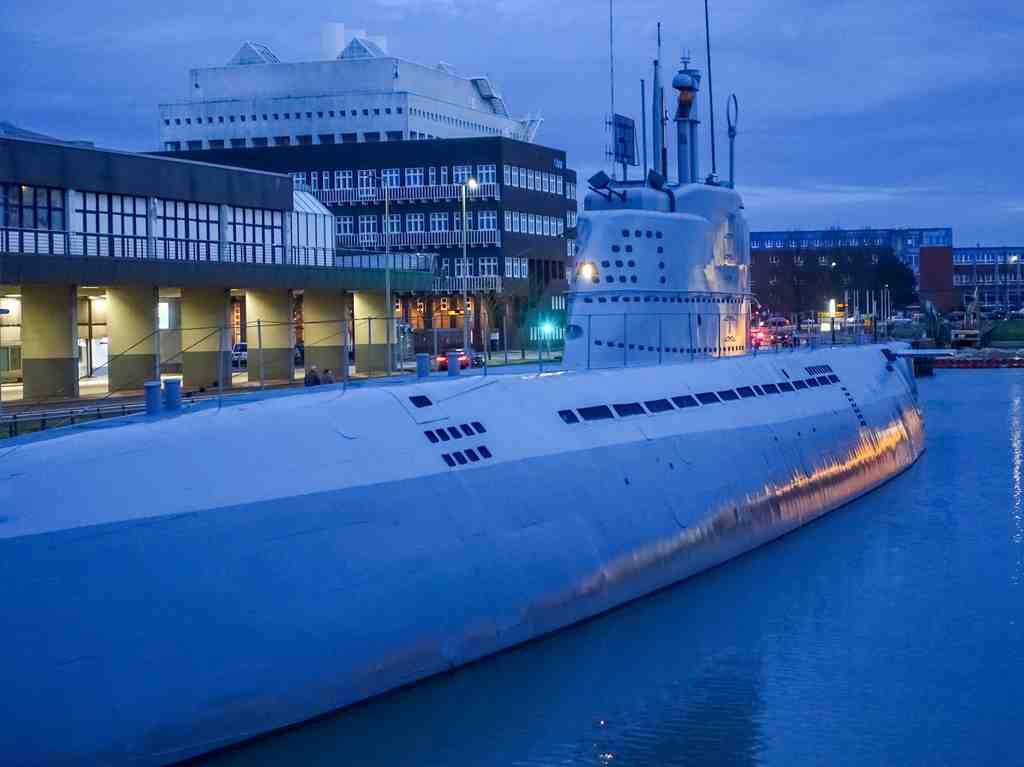
Directly ahead, you can’t miss it-the huge, gray steel hull rising from the water, looking smooth and sleek, with a tower of antennas, hatch covers, and the conning tower sticking up toward the sky, all lit by the soft evening glow. To spot the submarine Wilhelm Bauer, simply look out at the harbor’s edge where the water meets the bank. That futuristic-looking boat is hard to confuse for anything else! Now, let’s step into the world of spies, tension, and secret underwater missions. As you stand here, imagine the year is 1945. The smell of sea salt hangs in the air, there’s a cold bite to the breeze, and before you sits the German submarine Wilhelm Bauer, called U-2540 in its original days. This mighty Type XXI U-boat was one of the most advanced submarines ever designed by Nazi Germany during World War II. But here’s a twist: it never actually went on a mission in the war! Built right at the end, it was scuttled-sunk on purpose-before it ever got to fire a torpedo at enemy ships. But, much like in a good movie where the hero just won’t stay down, U-2540 made its comeback! Pulled from the floor of the cold Baltic Sea over a decade later, she was dusted off (well, maybe “scraped clean”) and transformed for testing in the new West German Navy. She got a second shot at underwater adventure, powered by fierce diesel engines that could push her through the waves at a wild 15 knots on the surface, and even faster beneath. That’s over 30 kilometers an hour underwater! Not bad for someone her size. And speaking of size, look at her: over 76 meters long-she’s like a steel whale built for silence and stealth, holding a crew of nearly sixty men, plus enough torpedoes to make James Bond nervous. Even after a brush with disaster-a collision underwater with a destroyer, no less! She retired here to Bremerhaven, done with fighting, now sharing her secrets with visitors. Today, she’s the only floating Type XXI left-a real-life time machine moored quietly in this harbor, echoing with tales of the deep, and maybe just a little relieved she can finally take it easy. So, if you feel a shiver, maybe it’s the ghost of an adventure-or just the cool North Sea breeze. Let’s move on before the Wilhelm Bauer decides she wants a third act! Interested in knowing more about the design, construction and wartime service or the salvage, refit and new service
専用ページを開く →Take a look ahead-what you’re seeing is the Old Harbor, or Alter Hafen, the very heart where Bremerhaven first came to life. If you spot a wide, calm stretch of water surrounded…もっと読む折りたたむ
Take a look ahead-what you’re seeing is the Old Harbor, or Alter Hafen, the very heart where Bremerhaven first came to life. If you spot a wide, calm stretch of water surrounded by old stone and brick walls, some old machinery and cranes around, and the lively city backdrop beyond, you’ve found the right spot. There might even be a seagull or two judging you for your snack choices! Alright, now, just imagine it’s the early 1800s. Instead of cars and cameras, picture muddy boots, rows of workers with shovels, and the rhythmic creak of wooden wheelbarrows. This is where Bremerhaven started-almost 200 years ago! Dutch engineers, experts in taming water, were brought in, and the whole thing was overseen by the Dutch master himself, Jacobus Johannes van Ronzelen. He dreamed up this harbor and, with the help of 900 hard-working folks, turned mud into the beating heart of a growing port city. Boy, did they have it hard-digging out the basin all by hand, working day and night for not much more than a crust of bread. Next time your Wi-Fi is slow, just remember these guys! The Old Harbor was finished in just three years. Back then it was a hive of activity-ships docking, cargo loading by hand, and everyone hustling to keep the city’s lifeblood flowing. The first solid building here? The Bremen authority building, built from stone in 1829-probably the most sophisticated ‘waterside office’ around. But it didn’t stay the center of attention. Ships kept getting bigger, so they had to build New Harbor further north. After that, this place started a second life-first, a busy fishery, with lively fish auctions adding their own sort of bubbly chaos. Then, in the following years, the city changed, channels were connected, bridges built, and part of this old harbor was even filled in-imagine, losing almost half its width! That’s like putting your favorite ice cream in a too-small bowl-still good, but just not the same. Even today, if you look around, you’ll see bridges crossing and reminders of the harbor’s heyday-the mascots of old Bremerhaven. And if you listen closely, through the modern city sounds, maybe you’ll catch a whisper of that backbreaking work, the shouts of sailors, or the laughter from a long-ago fish market. Not bad for a spot that once started with nothing but a Dutch engineer’s plan and a whole lot of mud! Go ahead, soak up the view. If the wind feels a bit stronger here, that’s just the harbor showing off its history.
専用ページを開く →To spot the Seute Deern, look along the waterfront. You’ll see a tall, black wooden ship with three masts towering high into the sky, almost like skeletal arms reaching for the…もっと読む折りたたむ
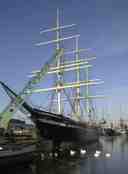
To spot the Seute Deern, look along the waterfront. You’ll see a tall, black wooden ship with three masts towering high into the sky, almost like skeletal arms reaching for the clouds. It's docked right beside the old crane and surrounded by water, with swans often gliding nearby. The ship looks proud and strong, even after its tumultuous life-childhood scars and all. Now, as you stand in front of the Seute Deern, close your eyes and imagine the creak of timber and the slap of water against the hull. This old lady of the sea, whose name means “Sweet Girl” in Low German, has lived a life worthy of a dramatic movie. She started her journey in 1919 all the way over in Mississippi, built in the sticky air from fresh swamp pine. Back then, she was called Elisabeth Bandi, and boy, did she have her share of troubles. Without copper skin to protect her, tiny shipworms made her hull their home, turning every trip into a soggy adventure. The Seute Deern shipped wood across the Atlantic, survived wild storms, and changed hands more times than a hot potato. She sailed from America to Finland to Germany, even getting a full makeover in Hamburg, right down to a brand-new over-sized figurehead-a “sweet girl” watching over her bow. She braved the Second World War, became a floating hotel, and even served as a youth hostel. But running a hotel on a leaky wooden ship was, well, let’s just say guests sometimes got a little “extra” water in their rooms! Over the years, she was bought and sold more often than an old bicycle. Sometimes she sank at her berth, and more than once needed to be rescued and restored. Finally, she found her home here in Bremerhaven as a museum and restaurant ship, giving people a taste of history with their lunch. But the sea can be tough, even for the sweetest girl. In August 2019, while resting in the Old Harbor, she began to sink. The damage was too great-and by 2021, the “Sweet Girl” had to be dismantled for good. But her legend lives on, and today, you can almost hear the echoes of sailors’ laughter, the creak of masts, and maybe, just maybe, a whisper from the Seute Deern herself, wondering what her next adventure might be. So as you stand beneath her tall masts, just imagine: What stories would you tell if you’d sailed the world for over a century?
専用ページを開く →This place is known as the “University by the Sea,” and you can almost smell the salty breeze from the North Sea just a few steps away. It started back in 1975, but the roots go…もっと読む折りたたむ
This place is known as the “University by the Sea,” and you can almost smell the salty breeze from the North Sea just a few steps away. It started back in 1975, but the roots go even deeper-there used to be a navigation school here, training sailors who dreamed of steering ships across stormy waters. Imagine a time when steam engines hissed, compasses spun, and teachers explained navigation with chalk on big dusty blackboards. Today, this isn’t just a ship school! Here, bright minds dig into everything from biotechnology to cruise management. Whether students aim to become sea captains, solve the world’s energy problems, create life-saving medical tech, or cook up the next big social project, they find a place here. Some parts of these buildings are brand new, designed by an actual award-winning architect, while others use bricks from a much older emigrant house. If these walls could talk, they would probably speak five languages and still get homework done on time. One round tower you’ll spot is a tribute to the old Swedish fortress Carlsburg that stood here centuries ago. So even surrounded by laptops and labs, there’s a sense of adventure, a little bit of mystery, and a whole lot of history in the air. Ready for the next stop? Let’s keep walking-before the students tempt us to join a lecture or, worse, a group project!
専用ページを開く →If you’re looking for the Historical Museum Bremerhaven, just scan for a modern building made of reddish-brown bricks. The museum has a curved wall of large windows at street…もっと読む折りたたむ
If you’re looking for the Historical Museum Bremerhaven, just scan for a modern building made of reddish-brown bricks. The museum has a curved wall of large windows at street level-those windows are outlined in dark purple, which makes the entrance really stand out. You’ll spot its white sign on the building, shining bright with “Historisches Museum Bremerhaven, Morgenstern-Museum” written across the top. There’s a set of steps leading up, and you can’t miss the streetlamp right next to the main door. The big, glassy front gives you a glimpse into the museum’s world of history before you even step inside. Alright, take a deep breath and imagine you’re stepping back in time. This is no ordinary brick-and-glass building-this is the front door to the story of Bremerhaven and its wild, windy coast! Just think: over a hundred years ago, a bunch of local history fans called themselves “the men from Morgenstern.” No, they didn’t wear superhero capes-though I think they deserved them. Instead, they spent their days uncovering mysterious ancient objects, stashing them in a little house in Lehe, and inviting everyone in to get a closer look. Legend has it, the collection grew so large that it couldn’t be contained in one spot. It moved from place to place-sometimes hiding away for safety during wars, sometimes squeezed into schools and even a department store. The poor museum even survived a fire. If these walls could talk, they’d probably ask for a vacation! But with a bit of luck, heroics, and countless helping hands, the treasures kept coming-ceramics that clinked, furniture that creaked, bits of beautiful jewelry from the region, and even relics plucked from sinking ships. The museum became so impressive that people from all over Germany started to take notice. By the 1930s, it had a reputation as one of the top history hubs in the north-pretty amazing considering its humble, shoebox-sized beginnings. Even though it had some tough times, through wars, fires, and the odd missing artifact, the spirit of discovery never left. So, as you stand here, listen for the echoes of laughter and curiosity from those early collectors. Close your eyes for a moment and imagine ceramics clattering, shipbuilders shouting over the wind, the hush in classrooms where treasures hid, and the thrill of finding something ancient in the mud. If museums had heartbeats, this one would pound with the stories of sailors, teachers, collectors, and dreamers-each of them stubborn, passionate, and always ready for the next adventure. That’s the story of Bremerhaven, captured right here for you to explore. Ready for the next chapter?
専用ページを開く →Right ahead of you, you’ll see a long, white building with rows of neat windows and a sloping, dark roof. In the front, there’s a small grassy area, some low hedges, and a car…もっと読む折りたたむ
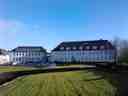
Right ahead of you, you’ll see a long, white building with rows of neat windows and a sloping, dark roof. In the front, there’s a small grassy area, some low hedges, and a car park often filled with splashes of color from the parked cars. You can spot the entrance by its dark-tinted boxed glass doorway that juts out just a little from the facade. On a sunny day, the white walls almost shine. So, if you look just over the lawn, there it is, waiting quietly - the IMARE, or as it was known, the Institute for Marine Resources. Imagine, for a moment, that you’re standing at the frontier where ocean waves crash up against the world of business suits and technology. The IMARE wasn’t your usual science lab filled with bubbling beakers and wild-haired inventors, though I bet there was at least one scientist with coffee stains on their lab coat. No, this place was all about connecting the secrets of the sea to the real world - helping local companies become more innovative, and making sure we treat our oceans with a bit more respect than the average pirate. Set up as a joint effort between Bremerhaven’s university and the famous Alfred Wegener Institute, the goal here was to turn ocean research into real, usable ideas. They dug into problems like, “How can we keep our seas clean?” and “Can we farm fish without turning the place into a fishy mess?” You might say they tried to make sure our grandchildren could still go ‘fishing for dinner’ instead of just ‘googling for dinner.’ Inside, they explored everything from marine physics to ‘bio-diagnostics’-that’s a fancy word for figuring out if the tiny creatures in the water are feeling healthy or not. You’d find people here monitoring the sea for pollution, using super-sensitive sensors that could spot a single drop of oil, or even a suspiciously green patch of algae trying to throw a party. But like all great stories, this one has a twist: the IMARE’s mission wrapped up in 2016. The research goes on, but this particular building is a bit like an old ship in harbor-once bursting with energy and discoveries, now quieter but still holding a thousand salty stories in its walls. So as you stand here, imagine the whirl of ideas that once filled these halls. And keep your eyes and ears open-Bremerhaven’s spirit of ocean adventure is never far away, and you never know what marine marvel might turn up next. Now, I hope you brought your imaginary snorkel. The ocean of knowledge is deep, and we’ve just dipped our toes in!
専用ページを開く →



よくある質問
ツアーはどうやって始めますか?
購入後、AudaToursアプリをダウンロードして引き換えコードを入力してください。ツアーはすぐに開始できます。再生ボタンをタップして、GPSガイド付きルートに従うだけです。
ツアー中にインターネットは必要ですか?
いいえ!開始前にツアーをダウンロードしておけば、完全にオフラインで楽しめます。チャット機能のみインターネットが必要です。モバイルデータを節約するため、WiFi環境でのダウンロードをお勧めします。
これは団体ツアーですか?
いいえ、これはセルフガイド式のオーディオツアーです。ガイドや団体、決まったスケジュールに縛られることなく、スマホから流れるナレーションを聴きながら自分のペースで自由に探索できます。
ツアーの所要時間は?
ほとんどのツアーは60〜90分で完了しますが、ペースは完全に自由です。好きな時に一時停止したり、スポットを飛ばしたり、休憩を取ったりできます。
今日中にツアーを終えられない場合は?
問題ありません!ツアーには無期限でアクセスできます。明日、来週、あるいは来年でも、好きな時に再開できます。進行状況は保存されます。
どの言語が利用可能ですか?
すべてのツアーが50以上の言語に対応しています。コードを引き換える際にお好みの言語を選択してください。注意:ツアー生成後に言語を変更することはできません。
購入後、どこからツアーにアクセスできますか?
App StoreまたはGoogle Playから無料のAudaToursアプリをダウンロードしてください。メールで届いた引き換えコードを入力すると、ライブラリにツアーが表示され、ダウンロードして開始できるようになります。
もしツアーを楽しめなかった場合は、返金いたします。お問い合わせ先: [email protected]
以下の決済で安全にチェックアウト 


