AudaTours logoAudaTours

レンヌ音声ガイドツアー:歴史と遺産の響き

オーディオガイド15 か所

レンヌの現代的な喧騒の下には、秘密のトンネルや何世紀も前の伝説が足元で脈打っています。このセルフガイド音声ツアーで街を巡り、政治的激変、禁断の儀式、そしてほとんどの訪問者が見過ごすような風変わりな脇道を明らかにしましょう。 共和国広場の最も壮麗な宮殿は、完成する前に雷によってほぼ破壊されかけたのはなぜでしょうか?かつて、どの勇敢な司教が、中世の野蛮な権力の儀式で貴族の肩に担ぎ上げられなければならなかったのでしょうか?そして、サン=ジェルマン教会のアーチの内側にある異形の彫刻から、誰の忘れられない顔が睨みつけているのでしょうか? 賑やかな広場から影に包まれた大聖堂へと足跡をたどりましょう。すべての石や路地裏に、革命、陰謀、信仰、そしていたずらの気配を感じてください。一歩ごとにドラマと回復力の層が明らかになり、レンヌを単なる都市としてではなく、生きている叙事詩として見ることができます。 レンヌの隠された核心を解き放つ準備はできていますか?語られざる物語への旅が今、始まります。

ツアーのプレビュー

map

このツアーについて

  • schedule
    所要時間 40–60 mins自分のペースで進める
  • straighten
    ウォーキングルート 2.6kmガイド付きパスに沿って進む
  • location_on
  • wifi_off
    オフライン対応一度のダウンロードでどこでも使える
  • all_inclusive
    無期限アクセスいつでも、ずっと再生可能
  • location_on
    共和国広場(レンヌ)から開始

このツアーのスポット

  1. To spot Republic Square, look for a large, open rectangular plaza bustling with buses and people, bordered to the south by the grand, ornate facade of the Palais du Commerce with…もっと読む折りたたむ

    To spot Republic Square, look for a large, open rectangular plaza bustling with buses and people, bordered to the south by the grand, ornate facade of the Palais du Commerce with its stone arches and domed roof. Welcome to Republic Square, the beating heart of Rennes, where the city never seems to sleep and there’s always something happening! Take a deep breath-can you smell the coffee drifting from nearby cafés? Now listen closely. The gentle rumble you hear isn’t your stomach; it’s the endless dance of buses arriving and departing, weaving around the grand Palais du Commerce. But let’s not rush; let’s go back in time. Picture yourself here in the early 1400s. Back then, you’d be standing near the edge of Rennes’ medieval walls, gazing out over the Vilaine River, which flowed right beneath your feet. No buses, no bustling commuters-just the rhythm of the river and maybe a fisherman or two, cursing their luck or the weather. This plaza didn’t even exist yet; it was all about the water and the old quay, the “cale du Pré-Botté,” a vital lifeline for the city’s markets and merchants. Leap forward to 1912, and imagine the chaos! Rennes’ mayor, Jean Janvier-a man with a plan and a mustache to match-oversaw a colossal project: covering the Vilaine with concrete and building the square that you see today. Just think, there are sixty-five massive arches beneath your feet, holding up this entire square! Back then, engineers used reinforced concrete-a modern marvel-to turn what was once a river into the city’s brand-new centerpiece. When the project finished in 1913, President Raymond Poincaré himself came to admire “the garden above the river.” If you’d been here, you might’ve waved a little French flag and caught a glimpse of fancy hats and jubilant cheers! By the 1920s, the square had blossomed into a lush French garden, with swirling white-stone balustrades and elegant lamp posts, perfect for postcards and romantic strolls-or, if you’re like me, daydreaming and pigeon-watching. In summer, the scent of fresh-cut grass perfumed the air, while in winter, the crisp wind rushed through the alleys, tousling the locals’ scarves like a stubborn barber. The jewel on the south side? That’s the Palais du Commerce, rising like a palace from a storybook. Built in two grand phases, this building once bustled with postal workers, telegraph operators, and students dashing to the art school. The northern arcade-the one you can walk through today-became a sort of gateway, a portal from the north to the vibrant heart of Rennes. Funny thing: in the early 1900s, during a thunderstorm, lightning struck the Palais du Commerce, and fire nearly destroyed the whole place before it was even finished! Just imagine the racket of the storm, the frantic shouts, and the chaos of firefighters pouring buckets of water. But Rennes rallied, and the city restored the palace, determined as ever. Sometimes even the grandest buildings need a little patching up, right? For decades, everyone crossed the square-maybe hurrying for a tram (yes, Rennes had those even before buses), or gathering at the Café de la Paix for gossip. If walls could talk, they’d spill all the city’s secrets, from political debates to daring newspaper stories. Did you know even Jean Jaurès, the famous French politician, sipped coffee here? During World War II, tragedy struck the square: bombs shattered bridges and houses, while joyful crowds later celebrated liberation, hoisting the “Voice of France” aloft as a symbol of hope. Life always returns, and so did the market stalls, shops, and laughter-though sometimes, mysteries lingered. Rumor has it you could spot a concrete tunnel built by the Germans to protect telephone lines, with only two sets of stairs, echoing with footsteps. Today, the square continues to evolve. The river below still murmurs, hidden beneath stone and bustling city life. Whether you’re catching a bus, shopping, or just watching the world whirl around you, Republic Square is more than a plaza-it’s the living soul of Rennes, layered with stories, laughter, heartache, and a dash of French unpredictability. Don’t blink, because you never know what-or who-you might spot next!

    専用ページを開く →
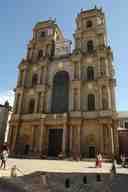
  2. To spot the landmark, look ahead for a grand, double-towered stone building with a giant arched window in the center and heavy wooden doors at its base-it’s hard to miss, with its…もっと読む折りたたむ

    To spot the landmark, look ahead for a grand, double-towered stone building with a giant arched window in the center and heavy wooden doors at its base-it’s hard to miss, with its monumental classical façade rising over the square. Well, take a deep breath, because you’re standing in front of the heart of Catholic life in all of Ille-et-Vilaine-the Roman Catholic Archdiocese of Rennes, Dol, and Saint-Malo! Imagine its roots going so deep that the first rumor of a bishop here was back in 453 AD-when the world was still full of legendary saints, wild forests, and, let’s be honest, fashion statements that involved a lot more wool! Long before podcasts and pigeons ruled the city, this was the spiritual nerve center for a sprawling arrondissement. Now, here’s where things get interesting. Tradition claims the first apostles around here included Saint Maximinus-a supposed pal of Saint Paul himself. Local lore swirls with stories of Saint Armel slaying Druidic customs right near the dolmens, and St. Méen, who, maybe for a bit of peace, retreated into the forests to found a monastery. It sounds like all the saints wanted a bit of solitude-which is slightly ironic for folks whose job was to bring everyone together. Fast forward to the Middle Ages, when Christianity was flourishing, and things were getting, shall we say, slightly more organized. The Bishop of Rennes didn’t just hand out blessings-oh no! He had the high honor of crowning the dukes of Brittany. But, if you thought medieval bishops were all solemn and stodgy, get this: tradition demanded that for his first grand entry into Rennes, the bishop had to be carried on the shoulders of four Breton barons. That’s right-a real “VIP entrance.” Imagine the clatter as those ornate shoes and splendid robes swished through the square! But with great power came even greater admin duties. The cathedral chapter was stacked: five dignitaries, sixteen canons, and sixteen prebends, all meticulously recorded-except when someone forgot to jot things down, which happened often enough to keep historians busy for centuries. Chapter members even had their own treasurer, nominated by the Pope-because even in the 17th century, someone had to mind the collection plate. As the centuries rolled on, the see of Rennes grew even more influential, swallowing up ancient dioceses like Dol and St. Malo. Thanks to some major paperwork after the Concordat of 1802 (and what must have been a truly spectacular round of pie charts), the diocese took on broad new powers, reorganizing itself to match the whole department. Today, it doesn’t stand alone-there are eight other dioceses that look to Rennes as the “big sibling” of the church family, stretching out across Brittany and beyond. Of course, history here isn’t all smooth sailing and chanting choirs. The cathedrals themselves were often under construction, delayed and redesigned. One was begun in 1180 after a bishop had a dream-talk about inspired project management! The grand consecration finally happened in 1359, never mind that the place was still missing a few essentials. Later cathedrals kept rising, falling, and rising again, with one dedicated to Saint Peter in 1541 before being torn down in 1755 to make room for the towering structure you see now. But hold on-it’s not just a story of stone and ceremony. During the French Revolution, things got more dramatic than a soap opera. Bishops were suddenly elected like city mayors, the Papacy was snubbed, and constitutional bishops ended up in schism. There was Claude Le Coz, who switched from being principal of a college, to “Constitutional Bishop,” to Archbishop, all in the same political storm. Talk about a career pivot! A parade of remarkable bishops has led this archdiocese-poets, cardinals, and political mediators, all threading their legacy through these ancient halls. Today, with one priest serving around 3,319 Catholics, this place still hums with life, prayer, and yes, just a bit of good old-fashioned intrigue. So, next time you stroll by, remember: this isn’t just a building-it’s a living tale of saints and scandals, crowns and revolution, and enough history to make your head spin faster than a flock of spinning altar boys!

    専用ページを開く →
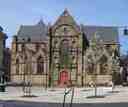
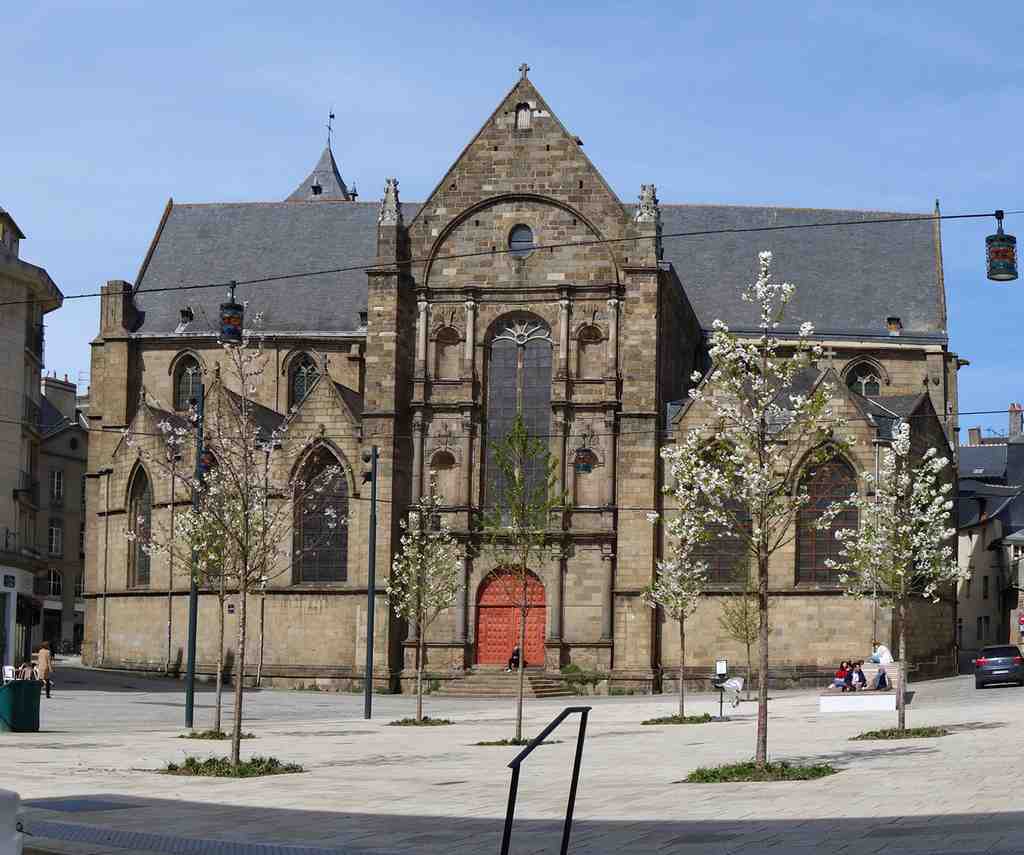
  3. If you're looking for Saint-Germain Church, just glance across the sunny square for a large, rectangular Gothic stone building with a flat west wall and striking red double doors…もっと読む折りたたむ

    If you're looking for Saint-Germain Church, just glance across the sunny square for a large, rectangular Gothic stone building with a flat west wall and striking red double doors in the center, framed by tall pointed windows and a towering roof-it's hard to miss! Welcome to Saint-Germain Church! Now, let’s step back in time for a moment-imagine the smell of stone and ancient timber and the faint echo of city life bustling outside as we stand before these tall, pointed arches. This church, right here in the heart of Rennes’ “new town,” has seen it all: from medieval merchants to high-powered parliamentarians. If these stones could talk, I bet they’d have some juicy stories-scandals, secrets, and maybe a little gossip about the neighbors on Place Saint-Germain! Picture the year 1470. Builders are hard at work, but slowly-very slowly-a bit like your least favorite relative who never seems to leave. The church isn’t finished until 1690, over two centuries later! It starts off in the flamboyant Gothic style, a real local specialty, with intricate stonework and soaring arches, but it finishes in the Renaissance style. Talk about a fashion makeover. Even the church’s layout breaks the rules: it’s not your usual cross shape, but rectangular, with a quirky, angled corner on the southwest side, following the path of an old Roman road. And if you’re wondering about the bells-well, the proud tower rising above you wasn’t even a church tower at first but a beffroi-part of the city’s guardhouse. The church inherited it, probably after much negotiation and maybe some cookies exchanged with the city council. But there was a church here even earlier-in the twelfth century! That one was surrounded by a graveyard. Today, only two pillars next to the sacristy remain from that primitive church. A little spooky, a little magical… Look up at the west facade and imagine what was once a giant Gothic window-home to the legendary Apocalypse stained glass. Now it’s blocked by an impressive organ: say hello to the star of the church’s musical history! This instrument didn’t even originate here; the grand organ case once belonged to an abbey far from Rennes, and since the early 1800s, it has drawn music lovers from near and far. Over the centuries, different families and workshops have added their own notes-like a centuries-long game of musical telephone. The current organ has a grand total of three keyboards, a pedalboard, and thirty-six stops. That’s enough to shake the dust from even the oldest stonework! Step inside, in your mind’s eye, and you’ll see the church is filled with soaring Breton Gothic arches, slender pillars, and wooden beams decorated with fantastical and comical faces: monsters, grotesques, and wild creatures straight from a medieval cartoonist’s imagination. The roof vault rose much higher than first planned-originally, it was meant to be wooden, but was switched to stone in the 1600s. Thanks to this change, the ceiling feels almost sky-high, echoing with every footstep and whispered prayer. Turn your gaze to the windows. Saint-Germain is home to Rennes’ oldest surviving stained glass window-crafted in the 1500s and beautifully restored in the 1800s, it sits quietly on the south side, pieced together from bits and bobs rescued from barrels after the Revolution. No neat stories here-the fragments are shuffled like a stained glass jigsaw puzzle, creating a dreamy, abstract splatter of color and history. Elsewhere, the master glass artist Max Ingrand left his signature in the twentieth century, brightening up the rest with his luminous windows, turning the walls into a canvas of light. Behind the main altar, you’ll spot a grand painting of the raising of Lazarus by Eloi Firmin Féron-a prize-winner from Rome who won the king’s favor in the 1800s. Before this, an earlier work on the same subject by Gaspard de Crayer held the spot; the Musée des Beaux-Arts swaps these masterpieces like fancy wallpaper. And don’t miss the details: a finely carved eighteenth-century baptismal font railing shines in the light, and the pulpit, built in 1805, is decorated with vibrant reliefs of the four evangelists. Above, an angel blasts a trumpet, probably to make sure nobody falls asleep during a long sermon. Oh, and the altar? It’s a cross-country traveler! Built for Saint-Malo’s cathedral in the late 1700s, it found its way here in 1805 after the Revolution left Saint-Germain rather empty-handed. Over time, artisans added columns of vivid marble, a gilded wooden canopy, and chubby cherub faces-by 1855, a radiant, triangle-shaped “glory” was added, surrounded by flying angels. Today, Saint-Germain Church sits proudly as a classified historic monument, quietly collecting all the stories, hymns, and footsteps of Rennes’ lively past. So take a good look-you’re facing a place where history and legend are stitched together, brighter than any stained glass. And unlike the builders here, I promise not to take 200 years to finish the story!

    専用ページを開く →
さらに12件のスポットを表示表示するスポットを減らすexpand_moreexpand_less
  1. To spot the Place du Parlement-de-Bretagne, look ahead for a grand, open square surrounded on all sides by elegant, cream-colored classical buildings with tall arched windows, all…もっと読む折りたたむ

    To spot the Place du Parlement-de-Bretagne, look ahead for a grand, open square surrounded on all sides by elegant, cream-colored classical buildings with tall arched windows, all neatly lined up like a row of well-behaved toy soldiers. Welcome to the Place du Parlement-de-Bretagne, the historic heart of Rennes! Now, if you can sense a little echo of importance in the air, that’s because this square has seen everything from royal parades and revolutionary crowds to tram bells and Christmas markets. You’re standing where the city’s fortunes have turned and twirled, much like festival dancers on a warm summer night. Let’s travel back to December 1720, a night when disaster struck-imagine flames crackling through the old wooden city, voices shouting in panic, the air thick with smoke. Half of Rennes was lost to that terrible fire. But don’t lose hope! Like a phoenix from the ashes, this square was born. The city called in its best builders, and after some budget drama worthy of a soap opera-engineers showing off expensive plans-Jacques Gabriel, with his eye for harmony, won the project. His vision gave these buildings their granite bases and creamy, soft-stone facades, a style so timeless that today, all these fronts are protected by law. But the stories don’t stop there. Originally, this spot was called Place Louis-le-Grand to honor the Sun King, Louis XIV. Imagine in 1730, a majestic bronze statue of Louis himself, riding a horse, surveying his city. Locals would have gawked, children tugging at mothers’ sleeves, “Is that really the king, Mama?” But, just a few decades later, during the Revolution, the statue melted away-sacrificed for the cause of liberty. Statues come and go, but the spirit of the place stays. If you look around, you’ll notice every facade matching-except one rebel: Hôtel de Mucé at number 4, built from the original, fancier, and maybe a bit snobbier plans of the first engineer. Can you spot it? It’s the odd sibling at the family reunion. Underfoot, the very cobblestones you’re standing on are protected as historic monuments. Under your feet, lie the faint tracks of tram rails, echoing with the rumble of streetcars that once passed through, carrying stories and laughter until 1938. Today, this square is Rennes’ living room-a spot for nighttime festivals like Tombées de la nuit, stories at the Mythos festival, or the sparkles of the Christmas Market. Whether it's crowds, artists, or quiet moments in the sun, the square collects memories by the hundreds. Do you feel like a part of history yet? You should, because here, you’re not just a visitor-you’re joining almost 300 years of Rénais tradition.

    専用ページを開く →
  2. If you look ahead, you’ll see a large, commanding rectangular building with a grand stone staircase at its center, tall arched windows, intricate carvings, and four shiny golden…もっと読む折りたたむ

    If you look ahead, you’ll see a large, commanding rectangular building with a grand stone staircase at its center, tall arched windows, intricate carvings, and four shiny golden statues glimmering above the slate roof-right there on Place du Parlement-de-Bretagne! Now, take a moment to imagine: The year is 1655, and in front of you stands one of Brittany’s proudest symbols-the Palace of the Parliament of Brittany. This magnificent building was born from a bit of a tug-of-war; the powerful Parliament wanted its home inside the city walls, while town leaders dreamed of somewhere outside. After years of heated debate (and possibly some dramatic huffs and puffs), the builders settled here, in what was once a cemetery and an awkwardly shaped patch of ground. It might not have been Paris, but hey, everyone loves an underdog story, right? By the time the foundation stone was laid in 1618--the city was itching for change. Picture a bustling construction site, clanging tools and clouds of dust rising as plans shifted, money ran out, and even a plague slowed things down. It took over 40 years before the judges, dressed in their finest, could finally march through the doors. But once complete, the palace transformed the city’s north end, sparking a rush of fancy townhouses and the French court’s artsy style trickling into Rennes. As you stand here, admire how the palace stands apart-set back so you can walk all the way around it (if you need your steps for the day, you’re in luck). Its bold facade-a mix of rugged granite on the bottom and elegant pale stone topped with towering windows-speaks of dignity and drama. If you look up, you'll spot intricate reliefs and a balustrade lined with symbols. Those statues on the roof? They aren’t just there for show-they represent the Law, Force, Eloquence, and Justice, which frankly sounds like the start of a superhero team. But let’s not forget the action this palace has seen. In 1720, a catastrophic fire razed much of Rennes, but the Parliament was spared, thanks to some well-placed firebreaks. It became so important that a grand statue of Louis XIV starred in the square out front-until the Revolution, when the locals decided they’d had enough kingly poses. Fast forward to the 1990s, when an entirely different sort of drama played out. It was 1994, and a protest by fishermen took a fiery turn. A stray flare set the wooden roof ablaze and the flames raged through the night--consuming centuries of history and thousands of precious documents. Firefighters rushed from miles around, and by dawn, the city mourned, but most of the palace’s treasured artwork and tapestries were heroically saved. Rennes wasn’t about to let its icon vanish for good. The palace was painstakingly rebuilt, stone by stone, using old plans and photos to restore every historical detail and spending enough money to make even a king blush. Today, the grand interiors-once full of anxious lawyers and important objections-boast breathtaking ceilings, golden moldings, and a hall where Justice herself peers down from above. Fun fact: the Parliament’s peaked roof used to be called “the forest” because of its massive beams-today, you’d find a metal skeleton instead, making fire less likely to crash this party twice. And even though most of the criminal courts have moved on to shiny, modern homes elsewhere, the palace remains a working courthouse and a radiant tourist draw, often lit up for special events and known as one of Rennes’ “must see” sights. So, if you fancy wandering inside, seeing the famous Grand’Chambre where every inch screams “important things happened here,” book a visit at the tourist office. Oh-and next time your city council can’t agree on anything, just remember: it could take forty years and a few costume changes to get it just right!

    専用ページを開く →
  3. To spot Champ-Jacquet Square, just look ahead for a charming line of tall, half-timbered 17th-century houses standing shoulder to shoulder, their colorful timber frames…もっと読む折りたたむ

    To spot Champ-Jacquet Square, just look ahead for a charming line of tall, half-timbered 17th-century houses standing shoulder to shoulder, their colorful timber frames zig-zagging across bright facades-plus, you can't miss the statue standing proudly at the corner. Alright, you've made it to one of Rennes’ most playful slices of history-Champ-Jacquet Square! Just take a moment to let your eyes wander over those wonky, whimsical houses. It almost feels like a fairy tale got mixed up with a game of Jenga, right? The buildings lean and sway, like they’re huddling together to resist the wind or maybe gossiping about the passersby. Their exposed wooden frames and patchwork windows have seen centuries of feet, hooves, and tires rolling across this square. You’re now standing at the heart of historic Rennes, in the Centre district, at a crossroads that’s been buzzing since the days of yore. The square sits at the intersection of Rue Champ Jacquet and Rue Leperdit. Long ago, this very spot was close to the old “Jacquet Gate” in the ancient city walls-so the name has some real medieval street cred. As you take in the view, can you hear the whisper of history on the breeze? In 2022, plans sprang up to revitalize Champ-Jacquet: more greenery for the squirrels (and humans), fewer cars clogging the vibe. They want everyone to wander freely, maybe to stroll like medieval Rennes residents, only with better shoes and fewer sword fights. But let’s talk drama. Smack in the middle of the square, keeping a vigilant eye on history, stands the statue of Jean Leperdit. You see him clutching a piece of paper? Picture the French Revolution-very intense stuff. Leperdit, the city’s mayor, was famous for one bold act: in a daring moment, he tore up a list of citizens doomed for the guillotine, saving lives with a rip. Talk about making paper work for you! Now, here’s a quirk: in 1839, a famous sculptor offered to make a statue of Leperdit-free of charge! The city agreed... but it never happened. It took until 1892 for a statue, finally by Emmanuel Dolivet, to appear. Then, World War II rolled around, and the statue was melted down for its metal. All that drama, only for its head to end up in a museum! But don’t worry: in 1991, Leperdit was recast, and by 1994, he was back in the square, as if to say, “Mess with me? Not so fast!” So, as you stand here, just imagine all the footsteps, the whispered secrets, and-who knows-a few revolutionary heroics ringing through these centuries-old timbers. Maybe even give Leperdit a nod. After all, it’s not every day you meet a statue that survived a revolution, got recycled, and returned for an encore!

    専用ページを開く →
  4. To spot the Tour de l’horloge de Rennes, look for a tall tower with a striking octagonal belfry topped by a sharp spire-imagine it rising through the smoky chaos as seen in the…もっと読む折りたたむ

    To spot the Tour de l’horloge de Rennes, look for a tall tower with a striking octagonal belfry topped by a sharp spire-imagine it rising through the smoky chaos as seen in the image before you. Now, picture yourself standing here in the heart of Rennes five hundred years ago. Close your eyes for a moment-can you hear a giant, booming bell slicing through the early morning air, letting everyone know it’s time for work, mischief, or maybe just a strong coffee? That’s Madame Françoise, the prideful 20-ton bell, gleaming high atop the original clock tower built in 1469. This wasn’t just any tower. It stood right at the bustling crossroads, a beacon of time and, more importantly, of civic pride-a colossal symbol that Rennes was a city of riches and free spirit. Imagine the awe of passersby gazing up at the gleaming statue of Saint Michael, sword raised, crushing a dragon (and I’m not just talking about someone’s mother-in-law here). On three sides, clock faces ticked away above the wooden gallery as the hours sang out over the rooftops, making sure nobody was ever late for dinner or a good story. But, like all the best tales, there’s a twist. In 1720, a dreadful fire swallowed the city. Flames licked the edges of the tower and, with a thunderous crash, Madame Françoise fell right through the ruins, her chime silenced. The tower burned so fiercely, some said even the dragon statue looked frightened! By 1729, it was gone, leaving only memories and a legend so big it was even joked about by famous writers like Rabelais. Don’t worry, Rennes couldn’t do without its timekeeper for long. A new clock tower was raised nearby, now keeping watch near the Hôtel de Ville. So, as you stand here, know you’re on the very spot where the heartbeat of old Rennes used to ring out-where, once upon a time, everyone knew exactly when to laugh, work, or run from dragons.

    専用ページを開く →
  5. To spot the Blossac Hotel, just look ahead for a grand, pale stone mansion with tall arched windows, elegant balconies, and a slate roof lined with decorative dormer windows-it…もっと読む折りたたむ

    To spot the Blossac Hotel, just look ahead for a grand, pale stone mansion with tall arched windows, elegant balconies, and a slate roof lined with decorative dormer windows-it stands out with its impressive classical façade right on rue du Chapitre. As you stand in front of the Hôtel de Blossac, imagine the year is 1728; the smell of fresh-cut stone lingers in the air and the faint echo of construction tools drifts through the narrow streets-a city still recovering from the great fire of 1720. When Rennes was nearly flattened by that fire, local families knew they would have to rebuild not just their homes, but something grander-something worthy of the city’s pride. Enter the La Bourdonnaye family, earls of Blossac, who decided to erect their splendid residence here on this precious plot of land, joined from the ashes of old manor houses and the ancient Hôtel de Brie. The architect, rumored to be Jacques Gabriel-yes, the same mind behind some royal masterpieces-designed the Hôtel with two imposing wings, a grand entrance and the most jaw-dropping staircase Brittany had ever seen. Back then, this place wasn’t just another house; it was the dazzling stage for Rennes’s most glamorous parties, filled with laughter, gossip, and more lace than you could shake a powdered wig at. The grand salons glowed with candlelight, and you might hear Well, the governor of Brittany lives right there! from awestruck passersby. But if you think this mansion was simply a private paradise, think again! The city, eyeing both its beauty and its perfect location, decided it would be perfect for the commander in chief-the top dog in the province of Brittany. The furniture and domestic staff were extravagant enough to rival the French court. Between 1732 and the Revolution, the Hôtel de Blossac saw nearly seventy servants bustling about: maids, butlers, bakers, guards-even a Swiss! Imagine them scurrying by, some upstairs carrying trays to the dazzling golden salon, others below in the immense vaulted kitchens preparing four feasts daily. You could say it was a full house-though thankfully, the only mice here were the ones on the menus. During those glory days, parties and receptions filled both the central rooms and the lush French-style garden behind you. The mansion overflowed with the secrets and schemes of military masterminds and their equally strategic families. There was even a golden salon with gold leather walls, marble ornamentation, and so many gaming tables one could nearly lose count-if only the Revolution hadn’t interrupted the fun. Of course, no grand story is complete without a bit of intrigue and drama. When the Revolution swept through France, the Hôtel de Blossac was sliced up like a baguette, divided into apartments for ordinary citizens. Can you picture the curious mix of newborns and authors, fancy chandeliers hanging next to laundry lines and lilting voices echoing down the grand corridor? One apartment even belonged to Paul Féval, a famous novelist, who surely found plenty of inspiration in these historic halls-perhaps with a ghostly noble or a plotting servant sneaking through the shadows. Time, as it does, took its toll, and by the 20th century the building was a shadow of its former self. But in 1947, the Hôtel de Blossac was recognized as a national treasure-a survivor of uprisings and urban sprawl, beloved enough to earn a spot on the list of historic monuments. Restoration crews spent thirty years carefully polishing the façade and bringing out every detail of those majestic staircases, ensuring it wouldn’t just be a memory in a dusty book. Today, the Hôtel de Blossac remains a true gem, with its rich past built into every stone and staircase. Step a little closer and see if you can spot the arms of the La Bourdonnaye family on the pediment, and maybe peek into the courtyard or garden, which are open during office hours or during the European Heritage Days. Now, government offices work busily inside-but the Hotel still knows how to tell a good story. And trust me, if these walls could talk, they’d probably ask for a refill of champagne!

    専用ページを開く →
  6. In front of you, you’ll see a weathered stone slab carved with rows of faded Latin letters-look for the tall rectangular block standing upright, usually placed in a display case…もっと読む折りたたむ

    In front of you, you’ll see a weathered stone slab carved with rows of faded Latin letters-look for the tall rectangular block standing upright, usually placed in a display case or on a pedestal, and you’ll know you’re at the right spot! Welcome to the ancient heart of Rennes, or as the Romans would have called it: Condate Riedonum! Let’s step back-way back-to a time when this city wasn’t just a crossroads of streets, but the grand meeting place of peoples and empires. Close your eyes for a moment and imagine the scent of wood smoke in the air, the sound of hammers clinking in busy workshops, and the chatter of people from distant lands bartering in a thriving market. Long before Rennes ever saw a stone cathedral or a parliament building, this city was just a quiet spot where the Ille and Vilaine rivers met. Even in the Stone Age, people passed through here, dropping their polished axes and flint arrowheads-but no one stuck around for long, probably because those rivers liked to flood more than your favorite uncle at a buffet! It wasn’t until the Romans showed up in the 1st century that Condate grew into something legendary. Now, don't let the old stone fool you. Under your feet, Roman streets once ran as straight as an arrow, laid out with such precision that you’d think Caesar himself had a ruler and a really big ego. The Romans built cardines and decumani-fancy words for straight north-south and east-west roads. Between them sprouted temples, markets, housing blocks, and for those who needed a souvenir, workshops that pumped out fine ceramics, glimmering glass, and metal trinkets. Some of these treasures, made right here, have even been found as far away as other Roman towns-proof that Condate wasn’t just a backwater, but a true crossroads of the ancient world. But here’s a twist for you: all those military objects found during excavations-a Roman cavalry helmet, elegant swords, and even tiny models of shields and axes-have left archaeologists scratching their heads. Was Condate founded by soldiers, or was it just really good at fixing their stuff? Maybe the city was the medieval version of a Super Garage: “Army broken? Condate can fix it!” The real answer? Still a bit of a mystery. The Romans were clever, too. They picked this spot because, despite those pesky floods, the city sat on a rise with plateaus-giving its people a clear view of anyone coming their way and making it easy to show off a little. The rivers made trade and travel irresistible, even if the locals occasionally needed to dry their sandals. As you look at this ancient stone, remember that the city it represents was the capital of the Riedones tribe, a place stitched into the vast tapestry of the Roman Empire. Julius Caesar himself wrote about these people! Condate was always a little off-center-physically and politically-but its rough landscapes made it tough for enemies to attack. And just in case, the Romans built a mighty wall in the 3rd century, parts of which you can still see today in the ramparts of Rennes. The wall was even decorated for show, with fancy brickwork and reused bits of old temples and milestone markers. Inside Condate’s walls, life ranged from the simple-wooden homes with clay walls and cozy shared spaces-to the luxurious. Some lucky families lived in houses with painted walls, beautiful mosaics underfoot, and even water systems to keep things clean. In its heyday, the city bustled with priests, craftsmen, soldiers, and merchants, all leaving their tiny fingerprints on history. Even the arrival of Christianity couldn’t erase Condate’s pagan past-old temples and tiny statues to mysterious gods have been found all over the site. Over the centuries, the site was abandoned, plundered, and rebuilt. Monks, merchants, and nobles came and went, but every time archaeologists dig into Rennes today, they find a little more of Condate’s lost world: carvings, jewelry, clay pipes-sometimes just a sliver of pottery or the sudden appearance of ancient Latin, like the letters on this stone. So as you stand here, think of the thousands of years packed into this one spot-the silent footsteps of Gauls and Romans, the secret lives of craftsmen and soldiers, the clash of armies, and laughter of market traders. History around here always seems to start out mysterious… and just when you think you’ve solved the puzzle, it sends you on one more wild goose chase. Exploring the realm of the etymology, topography or the town planning? Feel free to consult the chat section for additional information.

    専用ページを開く →
  7. To spot Rennes Cathedral, look for a massive stone building right in front of you with two imposing granite towers rising high above the square, decorated with rows of columns,…もっと読む折りたたむ

    To spot Rennes Cathedral, look for a massive stone building right in front of you with two imposing granite towers rising high above the square, decorated with rows of columns, arched doorways, and a grand central entrance-there’s no mistaking its neoclassical strength and elegance! Now, as you stand here, imagine yourself in a bustling medieval town, the air thick with the scent of woodsmoke and the hum of the market just around the corner. The ground beneath your feet has felt centuries of footsteps, because the site you’re looking at has been sacred ground since the 6th century-long before anyone thought to invent selfies or croissants! While the building’s current towers seem timeless, this cathedral’s journey has been anything but smooth. Picture the first cathedral on this spot, a gothic wonder, standing tall-until, one day in 1490, the entire west front and a tower suddenly collapsed with a thunderous crash (the medieval version of “needs some serious home repairs”). Locals reportedly leapt from their beds convinced that doomsday had landed in Rennes! Picked up by determination and maybe a little bit of Breton stubbornness, the townsfolk set out to rebuild, not once but several times, often pausing for decades between stages-perhaps because their architects kept getting distracted by baguettes or revolutions. Builders worked their magic in chunks across two centuries, with different architects stepping in like a relay race: Tugal Caris laid the next layer of the façade in the 1600s, Pierre Corbineau took over with extra grandeur, and finally François Hoguet crowned the towers to their current proud height of 48 meters. Just when they thought they’d earned a rest, the nave and choir threatened to collapse too! In 1754, a stone tumbled during prayers, probably sending a few monks running for cover. So most of the cathedral was demolished and patiently rebuilt-right in time for the French Revolution to hit pause on the whole project. For over forty years, the cathedral stood silent, half-built, with only its towers keeping watch over Rennes, while mass was held in a nearby abbey-turned-temporary-cathedral. When construction finally resumed in the 1800s, the inside was decorated to dazzle-with gold, marble gifts from the Pope, and stunning painted ceilings. Step inside, and you’ll feel how this place balances solemn granite strength with touches of warmth and color, just like Rennes itself-tough as stone with a joyful spirit. Now, shall we step back in time and imagine those bells ringing out to mark another chapter for this legendary city?

    専用ページを開く →
  8. To spot the Ramparts of Rennes, look for a thick stone wall stretching in front of you, with a rounded turret on one end and vines cascading over part of the wall, set just below…もっと読む折りたたむ

    To spot the Ramparts of Rennes, look for a thick stone wall stretching in front of you, with a rounded turret on one end and vines cascading over part of the wall, set just below an old mansion-like building. Now, take a deep breath and look up at these ancient stones-because you’re staring at some of the last standing sentinels of Rennes’ wild and battle-filled past. Imagine the year is somewhere around 275 AD, and the town-then called Condate-has no walls and is free to spread out as it likes. But suddenly, the peaceful days are shattered by the chaos rocking the Roman Empire. In desperation, after a nasty series of lootings, the townsfolk roll up their sleeves and start stacking giant blocks of granite, mixing them with red bricks, to form a wall so solid it was almost impossible to take down-so much so that when demolition crews tried centuries later, the sound of chisels and hammers must have echoed across Rennes for days on end. This original wall was no ordinary fence. It stretched almost 1,200 meters and surrounded nine whole hectares-giving Rennes the nickname “the red city,” thanks to those distinctive Roman bricks. The architectural details weren’t just for show: along the outside, you would see diamonds and triangles made from white stones, and some bricks laid in stylish herringbone patterns. “Look at us!” these walls seemed to brag, “Nobody’s taking this city easily!” And if you were a rogue Viking or a sneaky bandit, well, good luck. There were rows of wooden stakes along the River Vilaine to keep you at bay, and every so often another fearsome tower would loom from the wall, keeping a sharp eye on the horizon. Rennes itself was a bit of a medieval fortress theme park: there were four main gates, guarded with towers so sturdy that they needed continual repair, especially after sieges like the one led by Nominoë in the ninth century. Over the years, the wall was constantly strengthened and updated-new ditches were dug, older bits patched up, and even whole new layers added. Sometimes, right after a siege or major scare, you’d find masons scrambling to make sure every tower and gate was in top shape. They took this wall seriously! By the 1400s, things got even more... crowded. Rennes was booming, and the city’s suburbs had grown like eager fans sneaking into a stadium. The powers that be-led by Duke Jean V-realized the old monster wasn’t big enough, so they built two new defensive layers. The first, enclosing the bustling “New Town,” was packed with traders, artisans, and, just to even things out, a few monks. Here, a 22-meter-tall stone tower, grandly called Le Bart, sprang up-and eventually ended up as a prison (talk about job changes!). The second layer, pushed out even farther, wasn’t quite as refined: built quickly and cheaply as the population spread, sections of it fell apart fast, crumbling under the stress of new-fangled cannons-or maybe just some overly enthusiastic goats. Some towers were already showing cracks less than ten years after they were built! You had to feel sorry for the quality control team. As gunpowder became the new boss in town, the defenders added “boulevards”-oval-shaped bastions bristling with cannons ready to bark at any nearby enemy. By now, any would-be attacker must have felt a bit like they were trying to break into a fortress built by over-caffeinated, slightly paranoid beavers. And then, in a twist worthy of a sitcom, along came the union of Brittany with France, pushing the front lines so far away that the walls weren’t much needed anymore. Bit by bit, whole chunks of the ramparts were sold off and knocked down as Rennes grew. Today, only fragments like this one remain-hidden, protected, even tucked into people’s basements. The sections you see in front of you, between Place du Maréchal-Foch and Rue de Juillet, have survived centuries of change, their stones still whispering the stories of “the red city.” You’re not just looking at an old wall: you’re standing where Romans, dukes, crafty masons, scared peasants, and a few underpaid laborers left their mark. And thanks to archaeological projects and restoration efforts, these last proud remnants are now being honored and revealed along this green, peaceful stretch, where once you’d have heard swords clashing and the clang of armored boots. So, as you walk here, just imagine the ramparts stretched all around-alive with guards, flickering torches, and the ever-present rumble of history, peeking out like roots beneath your feet and all around this remarkable city. Fascinated by the situation, roman enclosure or the extensions in the fifteenth century? Let's chat about it

    専用ページを開く →
  9. In front of you, you’ll notice a bustling outdoor scene lined with colorful market stalls and vibrant produce, all set against a backdrop of beautiful half-timbered medieval…もっと読む折りたたむ

    In front of you, you’ll notice a bustling outdoor scene lined with colorful market stalls and vibrant produce, all set against a backdrop of beautiful half-timbered medieval houses; just look for the rows of bright red canopies and the classic black-and-white patterns on the old buildings to spot the Market of the Lices. Welcome to the beating heart of Rennes, the Market of the Lices! Imagine it’s a crisp Saturday morning and the air is alive with chatter and the calls of vendors as they set up their wares - some have been arriving since 4 a.m., fighting off sleep with the hope of selling the freshest eggs, blooming flowers, and stinky cheeses that would make even a French mouse weep for joy. This lively atmosphere isn’t new - in fact, you’re standing on ground that’s seen over 400 years of laughter, arguments over which melon is juiciest, and even the odd political protest! Back in 1483, the first whispers of a marketplace at the bottom of this square began to float on the wind. Fast forward to 1622, when the city was gripped by a terrible plague. Rennes decided to move its market here, not just for shopping but for safety - after all, a little fresh air beats a crowded plague-infested alley, right? Before that, this very spot hosted jousting tournaments and, more grimly, public executions. Talk about death and taxes! But post-plague, Rennes couldn’t resist a good market, so the square stuck with its new, much livelier role. Over the centuries, the market grew and morphed. Picture 1705: chickens everywhere, feathers flying, and people haggling so fiercely over fowl you’d think each one was laying golden eggs. They even built special wooden halls for all those poultry sellers. But nothing is forever-fire came in 1720, devouring the halle in a great blaze. Not one to give up, the city rebuilt a new hall in 1733 to shelter the ever-growing crowds of producers, traders, and hungry customers. By the 1800s, the market was bursting at the seams, and a new plan was hatched to build more halls. Enter Jean-Baptiste Martenot, Rennes’ chief architect, who directed construction of two elegant market pavilions between 1868 and 1871-yes, you’re standing near the famous Halles Martenot! These beauties brought order to the chaos, and the market buzzed not just on Saturdays, but every day. But it wasn’t always smooth sailing. Fires, revolutions, and ever-changing fashions tested the market’s resolve. After WWII, it almost faded away, with the grand halls used for all sorts of events, from commercial exhibitions to electric music festivals. Who expects to find rock ‘n’ roll in a fruit and veg market? By 1965, the Saturday morning tradition relaunched, just as supermarkets were starting to tempt shoppers with the promise of endless aisles and suspiciously shiny apples. By the late 1980s, the market lived through its own bit of drama: heated debates, a demolished pavilion, and even the construction of an underground parking lot, a sure signal that times were a-changin’. Fierce arguments erupted as the city reorganized the stalls by trade. Imagine the poor butchers and bakers arguing over who got the best spot-sounds like a recipe for a meat pie with a side of protest! Today, with 290 permanent spots, the Market of the Lices is France’s third largest, attracting some 10,000 visitors every Saturday morning. No wonder-it’s a riot of color and smells, where local grandmothers size up their lettuce next to restaurateurs sniffing artisan cheese. You’ll find everything from galette-saucisse (the pride of Rennes!) to fresh, fragrant flowers-just don’t try buying a hamster; it’s strictly forbidden, though enterprising vendors sometimes try anyway. Musicians, dancers, comedians, and even the occasional cat or bride-to-be make this place feel less like a market and more like a rolling festival. So breathe in that fresh market air, soak up the sounds, and let the spirit of centuries of farmers, foodies, and bargain hunters carry you along. Welcome to an institution that has survived plague and fire, passion and politics-a place where every Saturday, the heart of Rennes comes alive, one perfect strawberry at a time!

    専用ページを開く →
  10. Just ahead, you'll spot Place Sainte-Anne by the colorful half-timbered houses clustered together along one side and packed terraces buzzing with chatter-look for the lively…もっと読む折りたたむ

    Just ahead, you'll spot Place Sainte-Anne by the colorful half-timbered houses clustered together along one side and packed terraces buzzing with chatter-look for the lively square with a flurry of umbrellas and people in every direction. Now, imagine the cobblestones beneath your feet humming with stories going back almost two thousand years. This square is like Rennes’ memory box, each building a chapter, every stone echoing the energy of centuries. If you take a moment and listen, you might even hear the faint jingle of the old market bells and the lively laughter of locals. Let’s rewind to the very beginning: in Roman times, this area wasn’t just any patch of land-it was a hub where ancient roads met, within sight of a grand temple to Mercury and a proud Roman arch. Picture togas instead of tourists, the air thick with the whiff of spices and bread from the market. Centuries later, the Romans had faded, but life pulsed on; Rennes grew, and this spot became the edge of the city, just outside the protective sweep of the medieval walls. During the Middle Ages, Place Sainte-Anne had a totally different mood-a maze of bustling streets, homes squeezed close together, even a cemetery and a hospital. Grim, maybe, but crucial for the town’s survival. The hospital was St. Anne’s, and most agree that’s how the square got its name-at least, according to one local historian who couldn’t resist a bit of dramatic flair. But mystery swirls here, too! Some whisper it might be named for Anne of Brittany, who perhaps even celebrated her royal engagement nearby-can you imagine the fancy gowns, the gossip, and those medieval party tunes drifting out into the night? The square continually reinvented itself. By the 19th century, its colorful half-timbered houses became meeting spots for revolutionaries and townsfolk. Just across, the Benedictine nuns at Saint-Aubin’s church would ring the bells-sometimes drowning out the tavern laughter-while the smell of fresh bread from the old faubourg bakeries wove through the air. Fast-forward to recent times-until 2002, this bustling promenade was... just a parking lot. Yes, really! Rows of cars instead of cafes, and instead of clinking coffee cups, you’d have heard the beeping of car remotes and the sighs of people searching for a space. But when the metro arrived, engineers dug deep and brushed off layers of history: ancient foundations, bits of the Roman city, more than enough for a few archaeologists to break into a happy dance. Today, Place Sainte-Anne is all about life: it buzzes morning to midnight, with the metro station spitting out students, musicians, and book lovers for the famous open-air book market. At night, the nearby Rue Saint-Michel’s bars overflow, their music and laughter blending with the clinking of glasses under those quirky purple umbrellas. Order a galette, sip your cider, and glance at the houses around you-some date back to the 1400s, each one leaning a little, as if listening in on your conversation. The square is ringed with spots of legend. There’s the striking façade of the Notre-Dame-de-Bonne-Nouvelle basilica, incomplete yet majestic; the stately Couvent des Jacobins, once a monastery, now a hotspot for international congresses. Every corner tells a tale: at number 19, Jean Leperdit drew his last breath, once the mayor, now a hero immortalized among the timbers and memories. And let’s not forget the brief revolution: in 1792, the square was named Place des Jeunes Malouins, honoring the brash youth of nearby Saint-Malo who rushed to help defend the city during hard times. So whether you come for the crêpes, the history, or just a sun-soaked seat among friends, Place Sainte-Anne is the heart of Rennes-never the same for long, but always full of stories. Curious about the location and access, origin of the name or the historical? Don't hesitate to reach out in the chat section for additional details.

    専用ページを開く →
  11. Ahead of you, look for a bold flag: its left side is solid black, and the rest is white, adorned with several rows of little black teardrop and arrow shapes-classic symbols of…もっと読む折りたたむ

    Ahead of you, look for a bold flag: its left side is solid black, and the rest is white, adorned with several rows of little black teardrop and arrow shapes-classic symbols of Breton pride. Welcome to the land with a name almost as proud as its people-the Pays rennais! Ah, but this isn’t just any patch of territory; you’re standing in what was, and in many ways still is, the heart of Brittany. If you take a deep breath, you can almost smell the ancient woodlands and hear the faint echoes of a language quite unlike French: the regional gallo, along with a whisper of Breton. The Pays rennais stretches far beyond the city itself, out to hidden micro-regions like Coglais and the mysterious Désert of Fougères. It’s a place that’s felt at the edge of Brittany-close enough to the rest of France to swap a few stories, but just stubborn enough to keep its own. Now, imagine centuries ago, when this land was alive with the footsteps of the Riedones, a Celtic tribe, crafting their own legends in the mists. Turf wars? Absolutely. Plot twists? Plenty. And if you think modern France is complicated, try keeping track of all the sénéchaussées and little bishoprics fighting for a slice of the pie. That pie, by the way, eventually became most of the Ille-et-Vilaine department after 1790. But, here’s the punchline: don’t mix up the Pays rennais you see on old history maps with today’s busy “pays de Rennes”-one's a patchwork of tiny villages and warring knights, the other’s a tightly knit bunch of modern communities organizing who gets the best roundabouts. Through it all, one thing endures: the twisty, lively gallo dialect, the beloved Rennes fashion, and that age-old Breton stubbornness to hold onto heritage. So, as you look out at the landscape, picture a land that’s always danced to its own tune-a place where the past is never quite done telling its tale, and where every cobblestone has a story itching to be told. Don’t worry, the tour continues-no gallo required!

    専用ページを開く →
  12. You’re looking for a massive stone building with a triangular roof and no big front tower, its walls covered in winding ivy and a colorful image of the Virgin and Child just above…もっと読む折りたたむ

    You’re looking for a massive stone building with a triangular roof and no big front tower, its walls covered in winding ivy and a colorful image of the Virgin and Child just above the main door-straight ahead, across the busy street. Now, picture yourself at the heart of Rennes, standing before the Basilica of Our Lady of Good News-where stone and story meet. The building might seem a bit incomplete; you’ll notice there’s no grand entrance tower like you’d expect on most cathedrals. But don’t let that fool you-this is where drama and devotion have played out on a grand stage for centuries. Long ago, there was another church right here, which dated back to the twelfth century. The building you see now actually replaced that older church, which was torn down in the early 1900s. Imagine, if you will, the old church once stood not far from this very spot, out past the city’s medieval walls, with townsfolk whispering prayers just outside the ramparts. The story of this place truly ignites in 1364, after a very dramatic medieval battle-the Battle of Auray. The Duke of Brittany, Jean de Montfort, believed that his surprising victory was thanks to the Virgin Mary. So, as a thank you, he founded a Dominican convent right here in Rennes, which quickly became known as the “convent of Good News.” Word spread like wildfire-and soon, a painted wooden image of the Virgin and Child became the most cherished treasure in the city. People flocked here, praying for miracles. And oh, miracles did happen-at least, that’s what the good folks of Rennes believed! When a deadly plague hit in 1634, the city’s leaders promised to offer up a silver model of Rennes if the Virgin would end the suffering-and, wouldn’t you know it, the epidemic faded. During the terrible Great Fire of Rennes in 1720, people even claimed to have seen the Virgin herself appearing in the sky, hovering over their burning homes! That moment is frozen in paint, preserved in a neighboring church to this day. But history wasn’t always so kind. During the French Revolution, much of the church’s silver was melted down, faith was shaken, and the people of Rennes had to pick up the pieces. There was even more trouble-an epidemic of cholera struck in 1849, bringing the city to its knees. Yet faith endured: another offering, a new silver gift, was presented to the Virgin in 1861, a hopeful gesture after so much loss. When foreign armies threatened Rennes in 1871, the city’s archbishop made a bold promise-if Rennes was spared, he would offer a candle to the Virgin each year on her birthday. The city was saved, and even today, the tradition continues-there’s always a candle burning in the basilica for the city’s protection. So how did this new basilica come to be? Picture Rennes in the late 1800s, buzzing with plans for growth and change. The old Saint-Aubin church was demolished, and this new building-designed by the city architect Jean-Baptiste Martenot-rose in its place, though construction halted before it was fully complete. Martenot dreamed of making this basilica the centerpiece of a whole new neighborhood, with wide streets and grand urban vistas. Part of his dream was realized: the space in front of you opened up, and a grand school was built nearby. Still, the basilica stands a bit unfinished, its vaults and carvings waiting for a sculptor who never arrived. Step inside, and you’ll notice the church feels both intimate and grand. Its design borrows from the great Gothic cathedrals-tall pointed arches, breathtaking stained glass, and soaring ceilings. On a sunny day, the colored light from windows made by master glassmen fills the space with warmth and wonder, dancing with images from Brittany’s history, including the beloved Duchess Anne. There’s another story tucked in these walls-the memory of Blessed Marcel Callo, born in this very parish and baptized here. His statue stands in tribute, a reminder that the basilica’s message of hope and good news continues for the people of Rennes. Stop for a moment, and imagine the centuries of footsteps, prayers, and laughter that have filled these walls. What stories would this old church tell, if only it could talk? With every echo you hear, remember, you’re standing at the crossroads of faith and legend in the very heart of Rennes-where good news has always been in generous supply. To delve deeper into the context: existence of a demolished church today, history of the basilica or the architecture, simply drop your query in the chat section and I'll provide more information.

    専用ページを開く →

よくある質問

ツアーはどうやって始めますか?

購入後、AudaToursアプリをダウンロードして引き換えコードを入力してください。ツアーはすぐに開始できます。再生ボタンをタップして、GPSガイド付きルートに従うだけです。

ツアー中にインターネットは必要ですか?

いいえ!開始前にツアーをダウンロードしておけば、完全にオフラインで楽しめます。チャット機能のみインターネットが必要です。モバイルデータを節約するため、WiFi環境でのダウンロードをお勧めします。

これは団体ツアーですか?

いいえ、これはセルフガイド式のオーディオツアーです。ガイドや団体、決まったスケジュールに縛られることなく、スマホから流れるナレーションを聴きながら自分のペースで自由に探索できます。

ツアーの所要時間は?

ほとんどのツアーは60〜90分で完了しますが、ペースは完全に自由です。好きな時に一時停止したり、スポットを飛ばしたり、休憩を取ったりできます。

今日中にツアーを終えられない場合は?

問題ありません!ツアーには無期限でアクセスできます。明日、来週、あるいは来年でも、好きな時に再開できます。進行状況は保存されます。

どの言語が利用可能ですか?

すべてのツアーが50以上の言語に対応しています。コードを引き換える際にお好みの言語を選択してください。注意:ツアー生成後に言語を変更することはできません。

購入後、どこからツアーにアクセスできますか?

App StoreまたはGoogle Playから無料のAudaToursアプリをダウンロードしてください。メールで届いた引き換えコードを入力すると、ライブラリにツアーが表示され、ダウンロードして開始できるようになります。

verified_user
満足保証

もしツアーを楽しめなかった場合は、返金いたします。お問い合わせ先: [email protected]

以下の決済で安全にチェックアウト

Apple PayGoogle PayVisaMastercardPayPal

AudaTours: オーディオツアー

楽しくて手頃なセルフガイド式ウォーキングツアー

アプリを試す arrow_forward

世界中の旅行者に愛されています

format_quote このツアーは街を見るのに本当に良い方法でした。ストーリーは作り込まれすぎず面白くて、自分のペースで探索できるのが良かったです。
format_quote 観光客気分になりすぎず、ブライトンを知るためのしっかりとした方法でした。ナレーションには深みと文脈がありました。
Christoph
Christoph
starstarstarstarstar
ブライトン・ツアー arrow_forward
format_quote 片手にクロワッサンを持ち、期待ゼロで始めました。アプリはただ一緒にいてくれる感じで、プレッシャーもなく、クールな物語を楽しめました。

オーディオツアー使い放題

世界中のすべてのツアーをアンロック

0 ツアー·0 都市·0 国
all_inclusive アンリミテッドを探索