マルセイユ音声ガイドツアー:旧港からサン・ジャン要塞へ
ピンク色の教会が丘に頑としてしがみつき、マルセイユの古代の石は旧港そのものよりも古い秘密をささやいています。ここは単なる都市ではなく、何世紀にもわたる激しい反乱、無名の英雄、身も凍るような疫病、そしてあらゆる嵐を生き抜く日常の反抗の舞台です。このセルフガイド音声ツアーに参加して、マルセイユの心を開放しましょう。風が吹き荒れる広場、漁師の影、地元の人々さえ見逃す謎を隠す広場を巡ります。 死が街を忍び寄る中、サン・ローランの門で全てを危険にさらした恐れ知らずの司教は誰だったのでしょうか?なぜ修道女たちは、ランシュ広場で侵略者に降伏するよりも自らを傷つけたのでしょうか?そして、エスプラナード・ド・ラ・トゥーレットでの一度の日の出が、一人の男の運命を永遠に変えたのはどうしてでしょうか? 潮風があなたを歴史の奥深くへと誘う間、あなたの足跡で大胆な脱走や埋もれたスキャンダルをたどりましょう。今すぐ探索を始めてください。バラ色の石壁の裏に隠された物語が、あなたの耳を傾けるのを待っています。
ツアーのプレビュー
このツアーについて
- schedule所要時間 40–60 mins自分のペースで進める
- straightenウォーキングルート 2.6kmガイド付きパスに沿って進む
- location_on
- wifi_offオフライン対応一度のダウンロードでどこでも使える
- all_inclusive無期限アクセスいつでも、ずっと再生可能
- location_onマルセイユのサン・ローラン教会から開始
このツアーのスポット
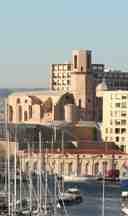
Look for a solid, rose-colored stone building with a tall octagonal bell tower rising above the rooftops, perched on a small hill near the harbor and beside the taller modern…もっと読む折りたたむ
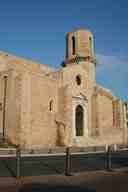
Look for a solid, rose-colored stone building with a tall octagonal bell tower rising above the rooftops, perched on a small hill near the harbor and beside the taller modern blocks-if you see the sailboats and water below, you’re in the right place! Welcome to Saint-Laurent Church, the very heart of Marseille’s old fisherfolk quarter! If you close your eyes for a moment, you can almost hear the sea breeze and the clatter of fishermen unloading their catch just down the slope. This rugged Romanesque church, built from pink stone dragged all the way from Cap Couronne, stands proudly on what’s now called the Tourette Hill-a spot that’s seen more history than a cat’s seen sardines in this town. But before the church ever arrived, this hill overlooked the very roots of Marseille itself. Archaeologists found traces of the city’s first Greek settlers here, and once, someone even reused a piece of an ancient temple, maybe from Apollo’s own sanctuary! You’ll find that ancient Ionian column capital at the Marseille History Museum these days-a little piece of mystery from the dawn of the city. The church’s story truly begins in the wake of danger. Imagine 870 AD: Marseille has just survived brutal raids from Saracen pirates, and the bishop Babon is so worried he throws up a massive fortified wall. Centuries later, with life calmer and the economy on the rise, the townsfolk carve this sturdy church right into the ancient stone. Funny enough, fishermen quickly adopt Saint-Laurent as their parish, and it’s stayed in their hearts ever since. Take a good look at its design-there’s not a single frilly sculpture or flashy detail outside. In fact, it’s all about simplicity and strength, a reminder that sometimes “less” is the way to survive the centuries. It’s got the same plain, honest feel as the famous Cistercian abbeys of Provence, but with its own seafaring soul. Instead of angels and fancy carvings, Saint-Laurent offers shadowy nooks, stone arches, and the promise of safety for all who worked the wild Mediterranean. Fast-forward to the 1700s-a hard moment in Marseille’s history. In August 1720, the plague rages outside. The bishop, defying fear, stands right here on these steps and leads a mass for desperate fishermen. Decades later, during the Revolution, the church is seized, its treasures melted into coins, and its doors closed. For years, it’s just a dusty depot for military gear, waiting for life to return. But Saint-Laurent is a survivor. During World War II, as German occupiers set charges to flatten the old port’s neighborhoods, the church shudders…but it stands. The only sound is the priest tolling the bell as the world shakes outside. Step inside if you can, and you’ll find a wooden Madonna, painted in bright colors, and a gold-lacquered Saint Lawrence smiling kindly from the shadows. The baptistry waits patiently for restoration, a silent witness to centuries of baptisms and hopes. And for one last cheery scene-up until the 1980s, after Sunday mass, you might catch Provençal musicians playing lively folk tunes right on the church steps. The neighborhood priest, Victor Party, loved nothing more than ending mass with a bit of local music. Rumor has it, he even made it into a Marcel Pagnol movie, simply by being himself. So take a moment to enjoy the strength and quiet wisdom of Saint-Laurent. Like the people who’ve gathered here for centuries, this church can weather any storm-and always has a tale or two, whenever you’re ready to listen.
専用ページを開く →To spot Esplanade de la Tourette, stand by the stubby octagonal tower poking over sandy-colored stone walls-just ahead of you, across the street, is the open plaza with a view…もっと読む折りたたむ
To spot Esplanade de la Tourette, stand by the stubby octagonal tower poking over sandy-colored stone walls-just ahead of you, across the street, is the open plaza with a view toward the port. Now, pause for a moment and imagine Marseille in the early 1700s-a city alive with voices, but also, in 1720, stricken by the deadliest plague. Here on the Esplanade de la Tourette, where you stand today, the sun shines brightly, but three centuries ago, it was the site of real courage and grim determination. Picture the Chevalier Roze, a city hero, rolling up his sleeves when others ran: faced with a city overrun by tragedy, Roze gathered 150 soldiers and prisoners, and together they braved streets thick with fear to clear away the victims of the plague. They even knocked open old stone bastions nearby to create makeshift tombs-a necessary, if somber, solution to keep the city alive. Imagine the silence broken only by the shouts of orders and the scrape of stone. As if that weren’t dramatic enough, in 1830, tragedy struck again-this time sudden and loud-as a young sergeant named Joseph Bitterlin was executed here at sunrise, following an accidental shooting of his colonel. For years, the Esplanade also hosted a statue of Roze himself, keeping watch like a silent guardian, before it was shuffled off and finally brought home again in 2017. So next time you cross this grand, open space, remember: you’re walking across a stage where drama, bravery, and a few shivers were once very real.
専用ページを開く →To spot Lenche Square, look ahead for a lively open plaza surrounded by leafy green trees, outdoor cafés with tables and chairs, and classic Marseille buildings painted in pale…もっと読む折りたたむ
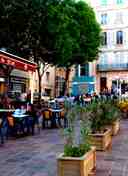
To spot Lenche Square, look ahead for a lively open plaza surrounded by leafy green trees, outdoor cafés with tables and chairs, and classic Marseille buildings painted in pale colors with many windows. Now, let’s step into Lenche Square and travel back in time. Imagine the gentle clinking of coffee cups all around you. This bustling square, so close to the Old Port, hides centuries of secrets beneath its sunny surface. It’s named after the Lenche family, who arrived from Corsica and made this place their own in the 1500s. The Lenchés weren’t just any family-they were coral merchants, dealing shiny treasures between North Africa and Marseille, sailing wild seas and returning with stories of adventure and, yes, probably sunburns. But this square’s story doesn’t stop at sea trade. Close your eyes and picture this: over two thousand years ago, this may have been the city’s ancient agora-the main Greek market and meeting place. Imagine the shouts of merchants, the stamp of sandals on stone, and the fresh smell of olives in the air. Fast forward to the Middle Ages, and you'll find a mysterious group of nuns here. Legend says when invaders threatened, these nuns cut off their own noses to scare off the attackers. Yikes! That’s what I call “cutting edge” defense. The townspeople ended up calling them the "desnarados." Beneath your feet, deep under the square, may still rest the ancient cellars where they hid their food-and maybe their secrets. On the eastern edge once stood a grand home where, believe it or not, King Louis XIV slept when he visited in 1660. In true Marseille fashion, that building is long gone-just imagine the Sun King trying to get comfortable on a squeaky bed. Even in recent history, drama hasn’t left this place: the house at number 17 changed hands with more than a few raised eyebrows. So, whether you’re here for coffee or just a little sunshine, remember-every stone in Lenche Square is packed with stories of daring, drama, and a dash of Mediterranean mischief. Ready to keep walking?
専用ページを開く →
さらに12件のスポットを表示表示するスポットを減らすexpand_moreexpand_less
Picture a curious group of astronomers huddled together, gazing up at the same stars shining above you now, except without the glare of smartphones and streetlights. The Jesuits…もっと読む折りたたむ
Picture a curious group of astronomers huddled together, gazing up at the same stars shining above you now, except without the glare of smartphones and streetlights. The Jesuits were so fascinated by the mysteries of the universe that they gathered right here to study the heavens-probably hoping to find out if Martians preferred red or white wine! This place has always buzzed with secrets and stories. So as you stand here, imagine quiet footsteps on old stones, and the hushed excitement as someone spots a comet overhead. Who knows? Maybe the next cosmic discovery will be yours!
専用ページを開く →In 1647, the city bought a house right on this street-not for parties, but for a purpose. The Saint-Joseph Foundation was set up here, aiming to help women in trouble, especially…もっと読む折りたたむ
In 1647, the city bought a house right on this street-not for parties, but for a purpose. The Saint-Joseph Foundation was set up here, aiming to help women in trouble, especially those trying to escape lives they didn’t choose as prostitutes. Imagine them entering through what was once called the “street of dishonor” (how’s that for welcoming?) and leaving along the “street of the repentant.” Now, just to keep things confusing, “street of dishonor” has changed its name to mean the exact opposite! Life inside wasn’t easy. The women had their hair cut off-because people believed hair was the devil’s favorite rope for temptation. It sounds old-fashioned now, but for many women this place was their chance at a new beginning, a fresh start. Picture anxious footsteps, hushed voices, and, after a tough time, a hopeful walk down the street, heading into a very different future. So as you stroll along Refuge Street, remember: these stones have seen stories of sadness and hope, and if these walls could talk, they’d probably start with, “You think *your* bad hair day is rough!”
専用ページを開く →Right in front of you, Place des Moulins is a broad, peaceful square dotted with chunky stone planters filled with lush, spiky greenery and shaded by rows of tall, leafy…もっと読む折りたたむ
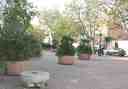
Right in front of you, Place des Moulins is a broad, peaceful square dotted with chunky stone planters filled with lush, spiky greenery and shaded by rows of tall, leafy trees-just look for the open space lined with potted plants and old stone structures as you stroll ahead. Now, let’s spin back a few centuries-Place des Moulins gets its name from the windmills that once perched atop this very hill. Imagine the distant sound of wooden blades turning in the breeze. In the 18th century, this spot was the windy kingdom of millers; if you were here back then, you’d have counted up to fifteen windmills, their sails catching the salty Marseille air. Nowadays, only three survive, tucked away inside houses nearby-who knew some lucky folks get to live in a real windmill? If you peek around, you’ll find two to the south dressed up as homes, and a third at number 28, looking cozy as ever. For over 15 years, a passionate Marseillais writer made his home right next to this square, perhaps inspired by the ghostly whoosh of vanished sails and the grind of old stones. So take a breath, imagine those mighty mills hard at work, and feel the secrets of Marseille’s bakers, wind, and wheat swirling around you. But don’t worry-no flour in the air today, just a breeze and maybe a stray leaf or two!
専用ページを開く →To spot the Church of Our Lady of Accoules, just look ahead for a tall, weathered stone tower with a sharply pointed spire-surrounded by city buildings, it stands out with its old…もっと読む折りたたむ
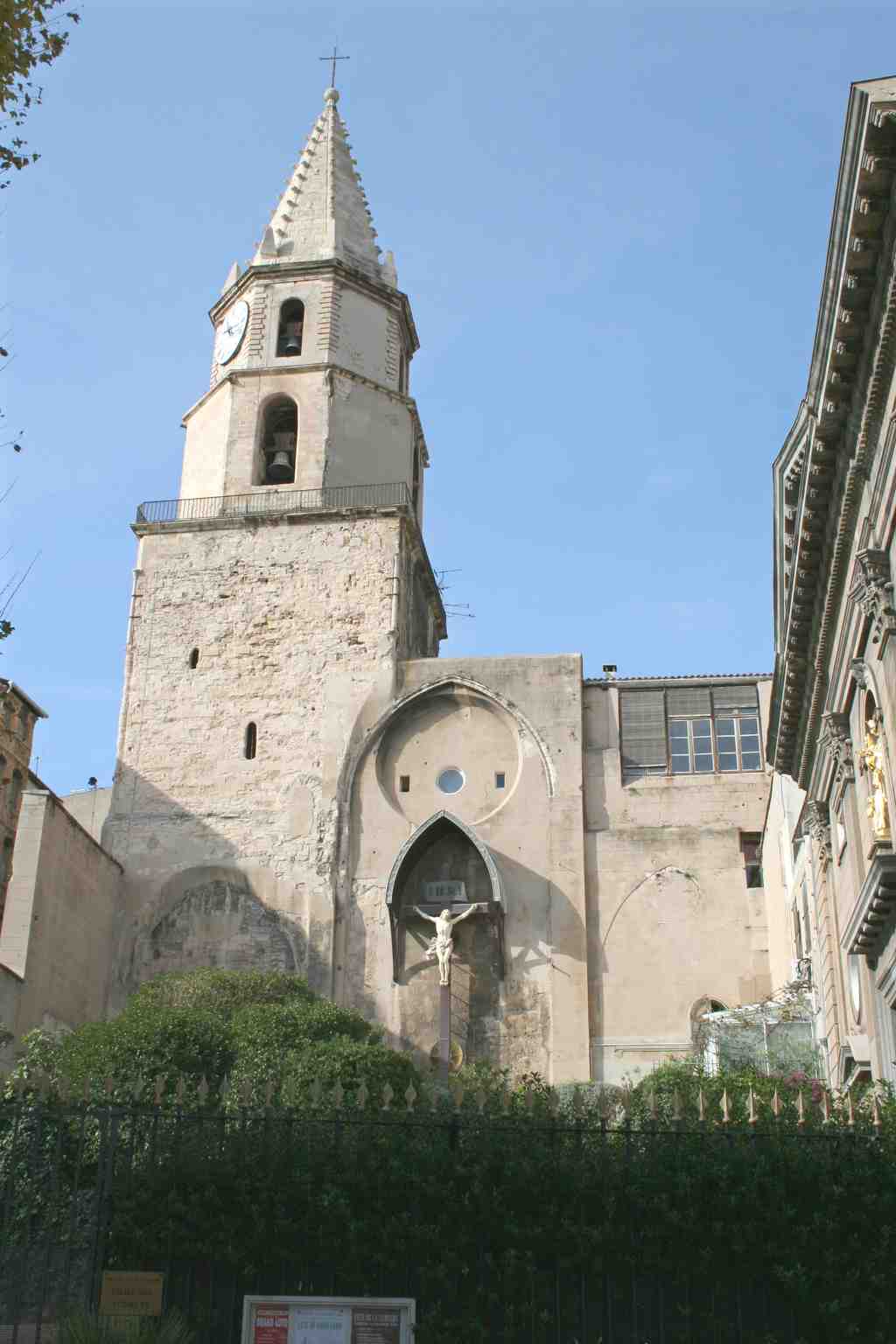
To spot the Church of Our Lady of Accoules, just look ahead for a tall, weathered stone tower with a sharply pointed spire-surrounded by city buildings, it stands out with its old clock face and the dramatic remains of a gothic arch built into its rough facade. You’re now standing before one of Marseille’s most mysterious survivors-a church whose stones have witnessed enough drama to fill an entire season of a historical soap opera! Let’s set the scene-close your eyes for a moment and listen to the echoes of footsteps climbing up to this church over centuries, the bustle of the square outside, and the far-off splash of water from an ancient spring that once flowed nearby. Back in the Middle Ages, this was no ordinary church. According to legend, it was built on the ruins of a temple to Minerva. By 1033, nuns from Saint-Sauveur Abbey were already in charge here. The name “Accoules” itself? Well, there’s a bit of a mystery: Some say it comes from the Latin word for “arcs,” describing the curious arched structure visible in its remains today. Others think it might be from “acquis fluentibus”-named after the spring whose waters were once so important they traced a stream down to the port, discovered later during excavations in Jules Verne Square. The church you see before you replaced older versions built as early as the 11th century, but its big gothic makeover likely happened in the 1300s. Imagine it then: massive, soaring, with five grand aisles and towering buttresses, all backed against the Observatory Hill. The faithful, judges, and city bigwigs would gather here-even justice was meted out on its doorstep at what is now Place Daviel. Now imagine the crowds, the smell of incense, the sound of a bell echoing off the stone. Fast forward to the French Revolution, 1793. The Accoules church had become a center of rebellion, its halls filled not with prayer but with the fiery debates of those opposing the Convention. The revolutionaries didn’t take kindly to losing control, and as punishment, the church was ordered to be torn down-except for the bell tower, which was spared for the most practical reason of all: the city needed its clock to keep time for the busy port. The rest was auctioned off for rubble, leaving years of desolate ruins in the heart of the city. But Marseille is nothing if not resilient. In 1820, the site saw a rebirth of sorts, as a crypt and a rocky calvary were set before the ancient wall, transforming this place of loss into one of pilgrimage and revival. Picture a massive stone cross-erected after an impassioned mission led by a priest returning from Palestine inspired by what he had seen. Crowds filled the streets for the procession, while police and soldiers kept nervous watch over a city simmering with political tension; even the mayor had his spies in the churches, worried that revolution might be brewing once again. Over the next years, the new Church of Our Lady of Accoules rose to the right of the calvary, shaped by the very rock of the Saint-Esprit hill. Its layout borrowed from Rome’s Pantheon-a round, domed space hidden behind a stern, classical facade. Think of it as a church cosplaying as a Roman emperor, hiding its curves in plain sight! This became a site for the Missionaries of Provence and, not to be dramatic, but Marseille’s faith found a new rallying point here. Of course, things could still get spooky-did you know that in the early 1600s, the priest Louis Gaufridy was linked to a sensational witchcraft trial that had half the city whispering? He ended up burned at the stake, and the story still haunts Marseille’s legends! The church faced tragedy again in World War II, when a bomb left it wounded; it was painstakingly restored in the 1950s, and most recently its dome and the old tower have been renewed-proof that even after centuries, the spirit of this place is hard to break. In fact, the bell tower remains a proud landmark, painted by artists and immortalized in memory, while beneath your feet, the elusive spring still trickles in secret along ancient channels. So next time you see that pointed spire against the sky, remember: you’re not just looking at a church, but a survivor of revolutions, resurrections, and more stories than even I can fit into one tour. Curious about the the collegiate church of notre-dame-des-accoules, the calvary or the the new church? Don't hesitate to reach out in the chat section for additional details.
専用ページを開く →To spot Rue Caisserie, look for a long, slightly curving street lined with sturdy, modernist buildings with pale facades, some brick accents, and shopfronts at street level-just…もっと読む折りたたむ
To spot Rue Caisserie, look for a long, slightly curving street lined with sturdy, modernist buildings with pale facades, some brick accents, and shopfronts at street level-just ahead of you, stretching between busy squares and quiet corners of old Marseille. Now, picture yourself standing here at Rue Caisserie, a place that might seem, at first glance, like just another street in the bustling heart of Marseille's old town. But hold on, don’t let its everyday appearance fool you-this street is like a spine running through centuries of the city's wild and dramatic history. If walls could talk, Rue Caisserie’s would probably argue about which century had the wildest parties, or the worst drama. Before we dive in, try to imagine the faint sound of footsteps echoing on ancient stone, the chatter of merchants, the smell of salt from the Old Port, and perhaps-somewhere in the distance-the ominous rumble of history about to change everything. This street, nestled in the 2nd arrondissement, traces the northern side of the Hôtel-de-Ville neighborhood, perched just north of the iconic Vieux-Port. It starts from Place Daviel and Place Villeneuve-Bargemon and lazily winds towards Place de Lenche, seamlessly becoming Rue Saint-Laurent as it marches off toward Esplanade de la Tourette. Today, it sits about 20 meters above sea level, following the rolling curve of the Butte des Moulins. So, if you feel slightly out of breath, blame the very ground beneath you-it’s had centuries to build up its altitude! Let’s rewind-way, way back. Rue Caisserie is one of Marseille’s oldest corridors, with ancient Greek roots. Back then, it wasn’t just a simple street. It pulsed with life and commerce, packed with wooden workshops called “caisseries”-basically, the medieval version of Amazon warehouses, except with a lot more splinters. That’s where the street got its name: generations of box-makers, cartwrights, and traders left their legacy right here. As the centuries turned, names and owners paraded through. In its past lives, this street answered to names like Rue Bernard-de-Caille and Rue des Mariet, shouting out its former landlords. At the far end, pitchers would have come to draw water from the great Saint-Lazare fountain-lavoir, adorned with a dramatic sculpture of the suffering saint. That fountain is only a ghost memory now-it was removed in the 1930s “for traffic reasons,” which is city-planner speak for “it got in the way of the buses.” But it was the winter of 1943 that truly split Rue Caisserie’s destiny-literally. Nazi forces dynamited much of old Marseille, and Rue Caisserie became the historic border between preserved old town to the north, and the new, rebuilt neighborhoods to the south. The street you’re on was widened, leveled, and reinforced with huge retaining walls after the war. As you look around, you’ll see sturdy postwar buildings standing shoulder to shoulder with the echoes of lost centuries. There’s a kaleidoscope of details hiding in these façades. Peer closely at numbers 13-15 and 25-27; those are the backside views of the “U towers,” designed by architect Gaston Castel. If you’re feeling adventurous, take one of the stairways that zigzag down towards the Vieux-Port-they give spectacular peeks towards the basilica of Notre-Dame-de-la-Garde. The ghosts of charity and piety linger, too. At number 54, a passage leads to the old headquarters of the Œuvre de Notre-Dame de la Miséricorde. At number 16, the building once contained a 16th-century chapel by the Pénitents Bleus, which, after moonlighting as a warehouse, became a hopping 1920s cinema called Populaire-Cinéma (then Massilia). And at the start of the street, you’ll spot the tranquil memorial garden of Notre-Dame-des-Accoules church, honoring the victims of the tragic 1943 evacuation. Finally, at number 38 stands the former Hôtel Salomon-a noble mansion with its own tale. Imagine 16th-century lawyers wheeling and dealing here, rewarded with their very own fountain (no small perk). The whole building was declared a historic monument in November 2024-making it one of the youngest “old” things you’ll see today! So, as you walk this quiet curve of Rue Caisserie, imagine the layers under your feet-Greek traders, medieval craftsmen, city planners, survivors, and dreamers. Don’t forget: every cobblestone here has a story… if you walk slowly enough, maybe you’ll hear it whisper.
専用ページを開く →To spot the Hotel Daviel, look straight ahead for a grand, elegant stone building with tall windows, intricate iron balconies, and a triangular sculpted pediment above its main…もっと読む折りたたむ
To spot the Hotel Daviel, look straight ahead for a grand, elegant stone building with tall windows, intricate iron balconies, and a triangular sculpted pediment above its main entrance-right opposite you on Place Daviel. Alright, time to set the scene. Imagine you’re standing here in the 1740s, just as the sweet scent of newly cut stone fills the air and the sound of hammers echoes from this bustling construction site. The Hotel Daviel wasn’t always here, but this spot has long belonged to justice and drama! First, there was an old courthouse built back in 1576-so ancient, a Dutch traveler once said it was the most impressive building in all Marseille. But, as buildings do, it began to groan under the weight of too many legal discussions and not enough space. The city leaders dreamed of a grand new palace of justice, and after a bit of royal arm-twisting, they got their wish. But there’s a twist: they had to buy extra land-by raising taxes on every sack of grain! Talk about making you pay for your daily bread. The new palace, begun in 1743, was the work of the Gérard brothers, master builders, and it opened its doors in style. Justice had a new home, and Marseillais flocked here to see justice served-or avoided with a clever story and a wink. If you gaze up at the building now, you’ll see its noble façade: divides of stone pilasters topped with Ionic capitals, and right at the center, a gorgeous, ornate balcony fenced with ironwork decorated with daisy patterns. Above, the triangular pediment boasts a bold goddess riding a lion, surrounded by children-one showing the Marseille shield, the other holding the tablets of law. Just beneath the second-floor windows, carved panels hint at the building’s past: the hand of justice and the torch of Themis, the goddess of fairness. It’s a stone tale of law and order! But those stones have heard everything: echoes of judges' gravelly voices, the tense whisper of important verdicts. In the 1790s, as the French Revolution swept Marseille, these walls bore witness to some dark days and death sentences. Imagine crowds buzzing nervously outside, waiting for news. For more than a century, this was the city’s main courthouse-until justice packed its bags and moved to a newer building in 1862. Yet the Hotel Daviel’s life didn’t end there; it found a second wind. From old justice to young students, it hosted Marseille’s medical school, bustling with the curious and the future healers of the city. Through all this, it survived wars and even escaped destruction during World War II, when other buildings nearby were not so lucky. And now, look around-today, the Hotel Daviel is tightly woven into city life, even connected to the nearby Hôtel de Ville by a secret underground passage. Not bad for a building that started life financed by grain. If these carved angels and fierce lions could talk, oh, the stories-and the scandals-they’d share with you! If you're curious about the historical, the different assignments or the description of the buildings, the chat section below is the perfect place to seek clarification.
専用ページを開く →Picture this: ancient Greeks dressed in flowing tunics, merchants shouting their wares, and maybe even a goat being slightly less well-behaved than expected. This very street ran…もっと読む折りたたむ
Picture this: ancient Greeks dressed in flowing tunics, merchants shouting their wares, and maybe even a goat being slightly less well-behaved than expected. This very street ran straight through the city as its east-west backbone, guiding folks from the port to the fortified Greek walls, all the way to the famous Porte d’Italie. Through the centuries, city walls grew, buildings rose and fell, and yet, this street survived as the lifeline of Marseille. Of course, history isn’t always kind. In the 19th century, the city changed shape. When the Rue de la République was cut through in 1864, Grand-Rue lost a part of itself. And in the 1900s, more transformations! Grand-Rue became shorter, tucked in as buildings behind the Bourse were knocked down. Then came World War II and the year 1943, when the German occupation brought destruction and the old Vieux-Port quarter was devastated. After the war, the hungry hands of reconstruction worked quickly, so what you see around you now is mostly newer than it looks-except for one stubborn old-timer. Let me introduce you to the grand survivor: the Hôtel de Cabre. Dating back to around 1535, this stone beauty managed to dodge bulldozers, bombs, and time itself. Here’s the plot twist: in 1954, someone decided the Hôtel de Cabre needed a change of scenery. So, what did they do? They lifted the whole building onto rails, slid it about fifteen meters down, and spun it around 90 degrees. Imagine waking up in the morning and finding your front door faces a totally new street-it’s enough to make you spill your coffee! In fact, if you look closely, you’ll still spot the words “rue Bonneterie” carved into the wall, a tiny time-portal to an old street that once ran toward the port. If these stones could talk, they’d probably ask for a good dusting-and then tell you stories of ancient Greek traders, fierce wartime survivors, and the stubborn old building that took a little stroll. So next time someone says their house feels stuck in one spot, tell them the story of Marseille’s Grand-Rue, where even the buildings have been on an adventure.
専用ページを開く →Picture yourself standing here, right in the midst of Marseille, on the very soil where thousands of soldiers once landed, not with a bang, but with the quiet footsteps of a…もっと読む折りたたむ
Picture yourself standing here, right in the midst of Marseille, on the very soil where thousands of soldiers once landed, not with a bang, but with the quiet footsteps of a top-secret mission. Welcome to Operation Goldflake-where the real action was all about sneaking rather than shooting, and a good cover story was just as important as a sturdy helmet. It’s early 1945. Imagine the salty tang of the Mediterranean, the distant rumble of trucks, and the scent of diesel mixing with spring air as ships slipped into Marseille’s port, carrying a different kind of cargo. Nearly the entire Canadian Corps and the tough-as-nails British 5th Infantry Division are about to pull off a disappearing act worthy of Houdini. Their mission isn’t just to travel from Italy to northwestern Europe, it’s to do it so quietly that the German army wouldn’t suspect a thing until it was far too late. Why all the cloak and dagger? Well, the Allied commanders made a bold choice. After years of fighting from Sicily north into Italy, it was time to move these battle-hardened troops up to Belgium and France. But to do that without tipping off the enemy? That would require a symphony of misdirection, clever planning, and a slightly theatrical sense of humor. Just visualize the scene in Italy: convoys rumble through dusty towns by night, dodging both potholes and passersby. Trains are loaded with tanks, jeeps, and soldiers, all orchestrated to move invisibly across a chaotic landscape. Every day, as many as 3,700 people, 40 tanks, 650 vehicles, and 50 personnel carriers shuffled from Naples and Leghorn to Marseille’s docks. But what’s harder: moving that many men and machines, or making your enemies believe you never left? This is where things get brilliantly sneaky. To pull the wool over German eyes, the Allies launched Operation Penknife. A special crew, called the 1st Canadian Special Basra Unit-think of them as master illusionists-was sent out to keep up appearances. Soldiers drove around Italy posting fake signs, and then moved them the next day. It’s like the world’s largest, slowest magic trick. They kept Canadian clubs, leave centers, and hospitals open as a cover. Even “The Maple Leaf”, the Canadian newsletter, kept printing in Rome, just to sell the story. The wireless units kept up normal radio chatter-most of it just empty words-to fool German eavesdroppers who tried desperately to jam what they thought were real messages. The Germans bought it: their maps showed Canadians all over Italy long after the last boots had marched out. Security was tight, but even the best laid plans can unravel-a Canadian journalist let the secret slip in April, but even then, official word was kept under wraps. Canadians at home only learned about the move on April 23, when the jig was, more or less, up. So as you stand here today, picture all those invisible footsteps: soldiers exhausted but determined, convoys sneaking along French roads, and planners losing sleep to keep the grand illusion alive. Operation Goldflake-proof that sometimes, in war, trickery and teamwork win the day. And if you think it all sounds like something from a movie, don’t forget-Marseille played a starring role in one of World War II’s greatest acts of misdirection!
専用ページを開く →To spot Jules Verne Square, look ahead for an open, tree-lined terraced area with low fencing tucked between modern apartment blocks, just steps away from the classic building of…もっと読む折りたたむ
To spot Jules Verne Square, look ahead for an open, tree-lined terraced area with low fencing tucked between modern apartment blocks, just steps away from the classic building of the city hall and with a glimpse of the Old Port in the background. Welcome to Jules Verne Square! Imagine you’re standing on a spot where Marseille’s time machine has left its mark-no, really! This ordinary-looking square has secrets deep beneath your feet. After the old quarters were destroyed back in 1943, the ground was flattened, but for decades, nothing was built. Then came the archaeologists with their shovels and brushes, and suddenly, the past started whispering. Under the northwest corner of the square, they discovered the remains of an ancient quay from the end of the 6th century BC. Can you picture the shouts of sailors, the crash of waves against the stones, and the creaking wood of Phoenician trading ships? For nearly a hundred years, this was a busy spot, until silt crept in and nature decided to turn it into a quiet sandy beach. But then, another chapter-by the 4th century BC, people were hauling ships ashore, repairing hulls right where you stand, using great wooden beams to slide boats on dry land. And just when history seemed to quiet down, Roman merchants arrived with rows of massive clay jars-dolia-full of wine, stacking them high in warehouses. If you could smell through time, you’d catch sniffs of salt, oak, and sweet grape on the breeze! By the 6th century, the sea retreated, the ground grew marshy, and homes began springing up around what had once been Marseille’s maritime engine. Today, the square bears the name of the famous writer Jules Verne, an adventurer of the imagination. So whether you’re dreaming of ancient sailors or moon-bound voyages, you’re standing at the crossroads of old worlds and new. Now, careful as you move on-you never know when you might step straight into another exciting chapter.
専用ページを開く →Look to your left for a low, modern building with wide windows; just inside, you’ll spot the ancient clay jars-these enormous, round vessels-set deep into the excavated earth,…もっと読む折りたたむ
Look to your left for a low, modern building with wide windows; just inside, you’ll spot the ancient clay jars-these enormous, round vessels-set deep into the excavated earth, making it stand out from the neighborhood around it. Welcome to the Roman Docks Museum, a place where Marseille’s ancient secrets bubble up from the ground-quite literally! Imagine you’re standing above what used to be one of the Roman world’s busiest warehouses, almost 2,000 years ago. Under your feet are the remains of a grand commercial hub, discovered entirely by accident back in 1947 when post-war workers were rebuilding parts of the Old Port. Talk about finding treasure in the rubble! These mighty jars you see, called dolia, aren’t your average kitchen containers-unless you’re hoping to store enough wine or olive oil to have a truly legendary party. Each one could stand as tall as you and hold up to 2,000 liters. Picture Roman merchants bustling about, hauling up huge lids, sealing the dolia with fragrant resin, and filling them with goods fresh off the ships docked at the port. The ground itself is riddled with the round outlines of these dolia, set deep for stable storage and to protect precious wine from the Mediterranean sun. Making these jars was no easy feat. Roman potters had to build, dry, and fire them on the spot; imagine the tension as the clay dried and cracks appeared, with artisans hurrying to patch up the fissures like ancient pottery doctors. Now, these vessels weren’t just sitting idly-some Roman ships even set out on the sea with dolia tucked away in their holds, ferrying tasty exports all across the empire. You might say they had the original take-away service-just with a risk of shipwreck if you weren’t careful! But what about the treasures above and around the dolia? In the museum’s showcases nearby, you’ll find the relics of underwater detectives-amphorae, lamps, plates, coins, anchors, and more, pulled up from over twenty shipwrecks in the gulf of Marseille. You can almost hear the quiet drip-drip as divers surfaced with each new find. There are Etruscan cups, Greek ceramics, Punic jars-evidence that Marseille’s ancient port was a true Mediterranean melting pot. Some of these ships held surprising cargo, like the Esteou dou Miet full of black bucchero pottery, or the Grand Congloué jam-packed with stamped amphoras from Campania. Take a closer look at the mosaics and tools along the walls. One mosaic, found just streets away, shows a Roman bather frozen mid-swim, colorful and alive as she was in the third century. There’s even a model showing the seafront in Roman times, with dockworkers, dolia, and busy ships, so you can almost hear the calls of sailors, the creak of ropes, and the splash of water against the quay. If you listen closely, you can feel the brisk sea breeze and the organized chaos of goods coming in from Spain, Egypt, and beyond! Over a thousand years of trade are hidden here-from the first Greek settlers to Roman merchants and medieval builders who later carved their homes right into these foundations. Each era left a mark, almost like a layer cake with every bite revealing a new flavor. In fact, some of these clay jars were later used, centuries after the Romans, by people who had no idea they were standing on history; life simply continued on top, with each generation building atop the last. So, as you stand here, take in the ghostly outlines of the dolia and the artifacts in the cases. Try to imagine the sounds and smells that once filled this warehouse: the crackle of clay, the tang of fermenting wine, the salty tang of the sea, and the constant murmur of many languages mingling as old Marseille did its business. The Roman Docks Museum lets you time travel in just a few steps-no sandals or togas required. Before you leave, picture for a moment a cargo ship, its hull full to the brim with dolia, rocking on the ancient waves and ready for its next adventure. For a more comprehensive understanding of the origin of the museum, the dolia or the underwater excavation collections, engage with me in the chat section below.
専用ページを開く →Picture yourself here nearly 2,000 years ago, in the days when France was called “Gallia” and emperors liked their plays almost as much as gladiator games. This spot, nestled at…もっと読む折りたたむ
Picture yourself here nearly 2,000 years ago, in the days when France was called “Gallia” and emperors liked their plays almost as much as gladiator games. This spot, nestled at the southern edge of ancient Marseille and backed by the Saint-Laurent hill, was the city’s main stage for drama and entertainment. The theatre was built during the time of Augustus - that's between 14 BC and 27 AD - right around the period Caesar’s relatives were busy conquering the world and inventing salads. Although it’s a Roman theatre, Marseille wanted to add a twist by drawing inspiration from the Greeks, right down to the orientation - the seats faced east, so you wouldn’t get the sun in your eyes and miss the punchline of the play. Imagine a grand structure almost 115 meters wide, like the wingspan of a very ambitious pterodactyl, scooping up crowds of locals and visitors ready for a show. The cavea - which is just a fancy name for the enormous curved seating area - was cut into the hillside and fanned out almost perfectly in a half-circle. You could have sat here comfortably, with the stone dalles from the pink quarries at La Couronne supporting you. These seats were sloped at about 25 degrees - perfect for relaxing or rolling a bit closer if the drama got too exciting. The orchestra, the theatre’s central stage, was a feast for the eyes, paved with colorful marble slabs. The actors and musicians below would look up at faces lit with excitement - unless the play was a real tearjerker, then maybe they’d see a few handkerchiefs. Now, let’s crank up the drama: for centuries, this place buzzed with performances and cheers. But as the Roman world faded, so too did the theatre’s glory. By the 4th or 5th century, the applause faded, and the site slowly filled up with dirt and discarded memories - historians found hints of an ancient garbage dump on top, which is tough feedback for any show! Fast forward to World War II, after the devastation of 1943, when the city was rebuilding. Construction workers and archaeologists started digging…and voilà! The secrets of the Ancient Theatre were uncovered bit by bit between 1945 and the early 2000s - fragments of seats, chunks of marble, and curved steps, all covered by the modern world. Even though most of this grand theatre lies buried under the Vieux-Port College and the streets around us, its story still echoes. It stands as a reminder that under every step we take in Marseille, there could be a ticket to the past, just waiting for a new audience. And don’t worry, I won’t make you perform a soliloquy before we move on! Ready for the next stop?
専用ページを開く →To spot Place Fontaine-Rouvière, look for a small open square just behind Quai du Port, where a striking bronze bust of Chevalier Roze on a stone pedestal greets you beneath shady…もっと読む折りたたむ
To spot Place Fontaine-Rouvière, look for a small open square just behind Quai du Port, where a striking bronze bust of Chevalier Roze on a stone pedestal greets you beneath shady green trees. Now that you’ve made it to our last stop, take a moment to soak in the quiet charm of Place Fontaine-Rouvière. Imagine yourself centuries back, where this peaceful spot buzzed with life and whispers-named after the Rouvière family, who brought a touch of Italy to Marseille in the 1400s. But here’s where it gets dramatic: right in front of you stands a bust of Chevalier Roze-Marseille’s ultimate hero. Picture 1720, the city gripped by the plague and panic swirling in the air. Chevalier Roze, who might well have worn his cape inside out from all his dashing around, bravely led volunteers through the chaos, burying plague victims and helping save the city from disaster. The bust by Jean-Baptiste Hugues once stood on the Esplanade de la Tourette until wartime upheavals shifted it around. Like a stubborn Marseillais refusing to leave his favorite café, the bust returned to this square in 2017-making it home once more. Feel the courage in the air, maybe even a ghostly ‘merci’ whispered by old Marseille itself. And voilà, you’ve made it to the end-a real hero’s finish!
専用ページを開く →
よくある質問
ツアーはどうやって始めますか?
購入後、AudaToursアプリをダウンロードして引き換えコードを入力してください。ツアーはすぐに開始できます。再生ボタンをタップして、GPSガイド付きルートに従うだけです。
ツアー中にインターネットは必要ですか?
いいえ!開始前にツアーをダウンロードしておけば、完全にオフラインで楽しめます。チャット機能のみインターネットが必要です。モバイルデータを節約するため、WiFi環境でのダウンロードをお勧めします。
これは団体ツアーですか?
いいえ、これはセルフガイド式のオーディオツアーです。ガイドや団体、決まったスケジュールに縛られることなく、スマホから流れるナレーションを聴きながら自分のペースで自由に探索できます。
ツアーの所要時間は?
ほとんどのツアーは60〜90分で完了しますが、ペースは完全に自由です。好きな時に一時停止したり、スポットを飛ばしたり、休憩を取ったりできます。
今日中にツアーを終えられない場合は?
問題ありません!ツアーには無期限でアクセスできます。明日、来週、あるいは来年でも、好きな時に再開できます。進行状況は保存されます。
どの言語が利用可能ですか?
すべてのツアーが50以上の言語に対応しています。コードを引き換える際にお好みの言語を選択してください。注意:ツアー生成後に言語を変更することはできません。
購入後、どこからツアーにアクセスできますか?
App StoreまたはGoogle Playから無料のAudaToursアプリをダウンロードしてください。メールで届いた引き換えコードを入力すると、ライブラリにツアーが表示され、ダウンロードして開始できるようになります。
もしツアーを楽しめなかった場合は、返金いたします。お問い合わせ先: [email protected]
以下の決済で安全にチェックアウト