アジャン音声ツアー:信仰、要塞、そして美術の残響
アジャンの街路には、かつてローマの剣闘士の衝突の響きや中世の陰謀のささやきがこだましていました。瓦屋根の下やそびえ立つ大聖堂の塔の下には、影の中や陽光が降り注ぐ中庭に歴史が潜んでいます。 このセルフガイド音声ツアーは、アジャンの中心部を巡り、何世紀も前の石の裏に隠された秘密や物語を解き明かします。ほとんどの訪問者が見ることのない、ドラマと魅力の層を発見してください。 サン・カプライ大聖堂の鐘は、なぜかつて祝祭ではなく危険を知らせたのでしょうか?古代円形劇場のアーチの下で姿を消し、二度と見られなくなったのは誰でしょう?美術館にあるどのような奇妙な芸術作品が、市全体を巻き込む騒動を引き起こしたのでしょうか? 響き渡る大聖堂から陽光が降り注ぐ広場へと移動し、失われた声と鮮やかな色彩に導かれてアジャンの過去へと深く入り込みましょう。曲がり角ごとに新たなドラマと忘れ去られた驚異が明らかになり、街は生き生きとした物語へと変貌します。 あなたの冒険が始まります—アジャンの静かな石の中に真実を求めてみませんか。
ツアーのプレビュー
このツアーについて
- schedule所要時間 40–60 mins自分のペースで進める
- straightenウォーキングルート 3.5kmガイド付きパスに沿って進む
- location_on
- wifi_offオフライン対応一度のダウンロードでどこでも使える
- all_inclusive無期限アクセスいつでも、ずっと再生可能
- location_onアジャンのサント=フォワ教会から開始
このツアーのスポット
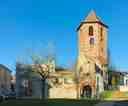
The Romans didn’t exactly leave them with a hero’s send-off-these early Christians were thrown into marshes just north of town. Picture the whispering wind, the darkness, and the…もっと読む折りたたむ
The Romans didn’t exactly leave them with a hero’s send-off-these early Christians were thrown into marshes just north of town. Picture the whispering wind, the darkness, and the quiet bravery of believers sneaking in at night to recover the bodies. They cleaned them, wrapped them gently, and hid them away in a crypt called Saint-Caprais-du-Martyre, now known as the Martrou. Legend even claims there’s a secret well inside where martyrs’ bodies were concealed-the access later sealed shut in the 1600s, making it Agen’s own hidden chamber of secrets. By the year 405 or so, Bishop Dulcide had an idea: Let’s give Sainte Foy a better home! He moved her relics and built a brick church right on the spot, its foundations still hiding echoes from the Merovingian and Carolingian times. The remains of Saint Caprais were whisked off to another church, which eventually became today’s iconic Saint-Caprais Cathedral. Over the centuries, Agen was ravaged-Sarrasins and Normans swept in, but Sainte-Foy's church survived the chaos. In 866, to protect Sainte Foy’s relics from invaders, they were spirited away to Conques Abbey. By the 10th century, Agen’s people had shifted north, building a new city around Sainte-Foy. Jump ahead to the 13th century: the church was rebuilt using brick, single nave, and graceful vaults. As time passed, it got even grander-side aisles in stone, and a pentagonal choir. Yet in the 1800s, when the railway arrived, things really turned upside down… or sideways! The old cemetery was moved, and in 1892, the nave was demolished to make way for a new boulevard. They rebuilt the church at a right angle to the old one-so if you ever think you’re having a tough day, remember Sainte-Foy changed direction entirely! Finally, after all those twists, rebuilds, and railway mayhem, the church you see was ready for worship again in 1913. Take a minute to gaze at its stately tower, finished in 1877, and if you squint, maybe you’ll see the Republic’s motto carved into the stone-a blend of faith and French spirit. That’s a lot of action for one building! Ready for the next stop?
専用ページを開く →Travel with me back nearly two thousand years, when this whole district trembled with the excitement of thousands of spectators. Built sometime in the first century AD, when Agen…もっと読む折りたたむ
Travel with me back nearly two thousand years, when this whole district trembled with the excitement of thousands of spectators. Built sometime in the first century AD, when Agen was called Aginnum and Rome’s power stretched far and wide, the amphitheatre stood as a symbol of Roman showmanship and architecture in Aquitaine. Picture the massive elliptical structure - over 100 meters long - able to hold somewhere between 12,000 and 15,000 people. That’s nearly the population of Agen itself at the time! If you think getting good seats at a concert today is hard, just imagine elbowing your way through those crowds, eager for the day’s events. And what events they were! From gladiator games to beast hunts and dramatic re-enactments of Roman legends, all eyes were on the sandy central arena. Early on, the arena could seat a modest 6,000. But the people of Agen wanted more: bigger, louder, and grander! So, like a stadium getting a major upgrade, they expanded the amphitheatre. New sections sprang up, with broad marble staircases and extra rows, and a gigantic portico that wrapped around the outside. Even the seating got a Roman “VIP treatment” - stone seats up close for the rich and important, while the rest had to make do with wooden planks farther up. Now listen carefully… That’s the sound of builders hard at work, using local limestone from the very land beneath your feet. The Romans were so eager to get the show started, they built the first version of the amphitheatre as quickly as possible, then improved it as they went along. And just like today’s sports arenas, everything had to be planned: from the grand entrances and exits - called vomitoria, believe it or not! - to the clever drainage needed to save the arena floor from the marshy aquifer beneath. But every great era has its end. By the end of the fourth century, the cheers had faded, and Agen was changing fast. The empire’s worries and invasions echoed even here. The stone seats became quarries for new buildings. Sometimes I wonder if there’s an old Roman builder out there who would be scandalized to know his stadium became someone’s basement! Incredibly, as the centuries passed, the memory of the amphitheatre slipped away - buried not just by earth, but by time itself. Then, in the 1800s, some curious townfolk and historians started to notice something strange: street names like Rue des Arènes and mysterious curved property lines, hinting at a forgotten secret beneath their feet. The real discovery, though, didn’t happen until 1988, during a rescue excavation for new construction. Imagine the excitement when workers uncovered thick Roman walls, cold and silent after all these years! The press, the politicians, and local history lovers argued fiercely - should they reveal the site, or cover it over again for protection? It was a real drama, worthy of the ancient games themselves! Today, while the amphitheatre remains hidden underground, it has not been forgotten. The site was officially listed as a historic monument in 1991, and its memory continues to echo through Agen’s streets. So as you stand here, imagine the roar of the ancient crowd, the clatter of wooden steps, and the proud spirit of a Roman city that still lingers. But if you hear a lion, don’t worry. That’s just me, getting carried away!
専用ページを開く →To spot the Martrou Church, look for a simple cream-colored building with a distinctive bell tower made of old bricks rising above the rooftops on your left along the narrow rue…もっと読む折りたたむ
To spot the Martrou Church, look for a simple cream-colored building with a distinctive bell tower made of old bricks rising above the rooftops on your left along the narrow rue des Martyrs. Now, as you stand beside these humble walls, let’s travel back in time-imagine the air thick with tension and hope. Over 1,700 years ago, on this very ground, a dramatic scene unfolded. It was the year 303, and in Agen, faith could cost you your life. Sainte Foy, a young woman, stood bravely before the Roman proconsul, Dacien, under the watchful rule of Emperor Maximian. Her crime? Refusing to give up her beliefs. She was executed, but her courage sparked a fire. Soon, her sister, Saint Alberte, Saint Caprais, and hundreds more-almost 500 Christians-chose the same fate. Their bodies were thrown into the marshes north of the city. Imagine the quiet shuffling steps at night as secret supporters retrieved their friends, washed them, and hid them here, away from prying Roman eyes. It wasn’t just hiding; it was hope. The early Christians dug out a crypt-the Saint-Caprais-du-Martyre-right below where you stand. You’d find a well down there too, a chilling detail: it’s where the martyrs’ bodies were thrown. That crypt became sacred, though its opening was sealed during the 1600s. Over centuries, miracles were whispered in reverent tones, and the spot slowly transformed. Around 405, Bishop Dulcide decided it was time Sainte Foy and her companions got a proper memorial. He moved their relics and built a church to hold them, giving their story a permanent home. Later, this little church-Martrou-became the chapel for a hospital complex. Pilgrims heading to Santiago de Compostela passed right by, often popping in for a prayer, or maybe just a rest from all that walking. Through the centuries, the church has been reimagined more times than any popular haircut, surviving Romanesque designs, wars, hospital mergers, and even a job change in the 20th century: it’s now just as much a cultural space as a spiritual one. Look up and imagine the Grey Penitents gathering upstairs, their quiet voices echoing in the hall built above the nave. Even today, restoration efforts keep the Martrou present and proud, its bell a gentle reminder of both suffering and survival. For a building so plain on the outside, it sure has some wild stories to tell-almost like a plain cake hiding an explosion of flavors on the inside!
専用ページを開く →
さらに12件のスポットを表示表示するスポットを減らすexpand_moreexpand_less
Picture yourself here in the 12th century, with dust swirling, stone masons hammering, and the city abuzz with the news that a grand structure was rising on an ancient site, once…もっと読む折りたたむ
Picture yourself here in the 12th century, with dust swirling, stone masons hammering, and the city abuzz with the news that a grand structure was rising on an ancient site, once a basilica built in the 6th century, itself attacked and rebuilt after a Viking incident. That’s right, Vikings! They raided Agen in 853 and left this poor church in need of a serious renovation. You could say the Viking visit was less “tourism” and more “extreme home makeover: chaos edition.” Saint-Caprais Cathedral is not just any old French church. It’s a stop along the legendary pilgrimage route to Santiago de Compostela, and as a reward for its devotion, UNESCO put a big gold star next to its name by adding it to the World Heritage list. Talk about bragging rights! You’re now standing in the footsteps of pilgrims who’ve shuffled across Europe for centuries with both sore feet and spiritual curiosity. But why “Saint-Caprais?” The cathedral is named after a local hero who was martyred in Agen in 303, right after Sainte Foy. According to tradition, it was Saint Dulcide, the bishop, who built a church here in the 5th century to house relics of those first Christian martyrs. And by 580, we know there was already a basilica because good old Gregory of Tours-France’s original gossip columnist-mentions it in his writings. The church even got tangled up in the medieval Game of Thrones, where noble families, kings, and armies rampaged through the region. As the dust settled, Saint-Caprais had its own starring role in political drama. For centuries, this place was a collegial church standing side by side with Saint-Étienne Cathedral-until the Revolution crashed the party. In 1791, it suddenly found itself playing new roles: first as a hay storage, because even grand cathedrals must adapt! In 1796, it reopened for worship, and in 1802, after the destruction of Saint-Étienne, it stepped into its final, enduring role as the official cathedral of Agen. Honestly, it’s like the city’s spiritual understudy who suddenly gets the starring role. Look up at the architecture: that’s a Romanesque apse joined to a single-nave Gothic vessel. The unusual mix is partly thanks to centuries of interruptions-bad politics, empty bank vaults, and, of course, marauding invaders shaped its final form. The bell tower, which looks like it couldn’t decide which Gothic style it preferred, was built in the 1830s by Bishop Jean-Aimé de Levezou de Vezins and uniquely stacks three Gothic forms in reverse historical order. It's like reading history backwards, one pointed arch at a time. Inside, the dazzling painted walls tell the full saga: the coming of Christianity, the sacrifice of local martyrs, the patriarchs, prophets, and kings of the Bible. The work is by Jean-Louis Bézard-who, in the mid-1800s, battled with the clergy over which stories should be depicted, proving that religious drama is never just ancient history! Even the altar decorations, its cross and six candlesticks, are protected by law for their artistic and historical value. Feeling musical? The main organ here, built by Jean-Baptiste Stoltz, once wowed the crowds at the Paris Universal Exposition in 1855. According to local legend, Empress Eugénie herself donated it to the cathedral in 1858. This whopper of an organ-biggest in the region-has 45 stops and three keyboards, making it a dream for any ambitious organist, or just someone needing to drown out the sounds of daily life. Before you set off, don’t miss the statues on the counter-façade: Saint Caprais standing proud to the right, and Saint Etienne to the left-kind of like the welcoming committee, only with halos and robes. So, next time someone asks what shaped Agen, you can say: a mix of Romans, Vikings, war, revolution, artistry, and a stubborn cathedral that always found a way to stand tall. Now, onward to the next stop-the adventures of Agen await! Want to explore the historical, architecture or the decoration and furniture in more depth? Join me in the chat section for a detailed discussion.
専用ページを開く →Look up at the Church of Saint-Hilaire d'Agen before you. Take a moment to let your eyes wander over its unique mix of soft stone and sturdy bricks, standing like an old…もっと読む折りたたむ
Look up at the Church of Saint-Hilaire d'Agen before you. Take a moment to let your eyes wander over its unique mix of soft stone and sturdy bricks, standing like an old storyteller right along Boulevard Scaliger. Now, let’s slip back in time, to when the scent of incense mingled with the sounds of footsteps on stone, and mystery and drama were as common as church bells. Imagine it’s the 1200s. Back then, the Cordeliers-Franciscan friars, with sandals so simple they’d make any modern flip-flop jealous-were on the move, founding monasteries across Aquitaine. The air around here would carry the hum of prayers, the rustle of brown robes, and maybe the clatter of a horse-drawn wagon heading for the cloister. These friars first settled outside the city walls, near the Porte Saint-Michel. Their cloister was so generously donated to, people even called it the Golden Convent. But don’t let the name fool you-turns out it wasn’t because of piles of coins. The term “Doré” actually morphed from “Dovère,” thanks to the archbishops of Bourges, and all due to a nearby 9th-century chapel. Names, like my hair in humidity, have a habit of changing unexpectedly. Now, get ready for some medieval action. In 1336, the French king Philippe VI decided these friars’ spot against the city wall was just a bit too strategic-what if the English attacked? So, with a royal decree, and a sprinkle of papal approval, the convent was taken, walls came down, and the friars had to move… again! Grumpy canons from Saint-Étienne Cathedral, jealous Augustinians, and a whole saga of property squabbles followed. If you think moving house is tough now, try doing it with dozens of monks and a very delicate marble cloister. Eventually, with the king’s payment of 5,000 livres and some extra donations, the friars settled right here in Saint-Hilaire, by the city’s Saint-Georges gate. Construction of this new church finished in 1348, just as Europe was being swept up by the Black Death-talk about bad timing for housewarming. The centuries rolled on. The French Revolution blew through in 1790, when the state seized the friars’ property. The peaceful aisles of this very church soon echoed with soldier boots and the bray of horses as it became a gendarme barracks and, believe it or not, a hay storage. Consider that the next time someone tells you church pews are uncomfortable! For a brief moment, this place even hosted the department’s electoral assembly. By the 1800s, the old neighborhood church nearby was falling apart, and the townsfolk petitioned to move their parish here. So, in 1826, the Saint-Hilaire parish made this former monastic church its new spiritual home. Peer up at the architecture: a classic southern Gothic style. A single, wide nave runs without a transept, edged by shallow side chapels, and an abside shaped with seven sides. Most fascinating? The roof! Its structure is like the hull of a ship turned upside-down-you can almost imagine a medieval boat sailing over your head. Later, the bell tower was rebuilt and a soaring modern steeple added in 1892, thanks to architect Léopold Payen. Colorful stained glass windows glow since 1869, including one signed by the Bordeaux glass master Joseph Villiet. But history didn’t end there. In 1944, amid the shadows of World War II, Marthe Dortel-Claudot from this very parish, with guidance from Canon Dessorbes, rallied communities across France to pray for German-French reconciliation. This became Pax Christi, a powerful global movement for peace that began right here-not exactly a small achievement for an old friary. Today, while its 16th-century painted wooden Pietà has moved to the Agen Museum of Fine Arts, many faithful stories, bittersweet memories, and a couple of dusty secrets surely linger inside these walls. As you stand here, think of all the quiet resilience this building has seen-a survivor, a shelter, and a symbol of peace. Who knew one church could fit so much drama, history, and hope under one very nautical roof? For further insights on the historical, description or the the church of st. hilary and the pax christi movement, feel free to navigate to the chat section below and inquire.
専用ページを開く →In front of you, you’ll spot the Old church of Saint-Hilaire d'Agen by its tall, weathered red-brick tower with pointed roof, rising out of the rough stone ruins surrounded by…もっと読む折りたたむ
In front of you, you’ll spot the Old church of Saint-Hilaire d'Agen by its tall, weathered red-brick tower with pointed roof, rising out of the rough stone ruins surrounded by patches of grass and a few bare trees. Let’s time-travel to the 11th century, right here on rue Georges-Thomas, where this church once stood proudly as a gem of early Romanesque design. At first, it was just a single nave ending in a modest, curved choir, decorated with old stone carvings-imagine the echoing chants and faint candlelight inside those thick walls. A simple stone bell wall once crowned the roof, calling the faithful to gather in this peaceful corner of Agen. As we move into the 1200s, the church starts growing-probably because its congregation simply couldn’t fit! Builders added side aisles and two rounded mini-chapels, giving it some serious real estate upgrades. The once standalone nave now shared the space under one big roof, like a medieval open-plan living room. Somewhere along the way, a new hexagonal brick tower appeared, attached to the west side-tall and striking, a sign of Gothic ambition. Today, that tower is what catches your eye. Fast forward a few centuries, and the story takes a twist. By the early 1800s, this old church was so cramped and crumbly it was almost falling down. The nearby former Cordeliers convent-once home to monks, then a police barracks, then, bizarrely, a voting hall, stable, and hayloft-became Saint-Hilaire’s parish instead. All it took was a petition signed by everyone from the mayor to the bishop-imagine that town meeting! Then, disaster struck in the 1860s: city planners decided a new road would go right through the church. The west wall and the first six meters of the nave were demolished. What was left behind was used as a warehouse, and then, in 1913, a fire broke out, adding one more dramatic chapter to its life. At one point, the city even considered selling the tower-imagine putting that quirky fixer-upper on the market! Yet, this ruin is more than just stone and brick; it’s a resting place for local nobles like Nicolas and Dominique de Bastard, whose family vault lies beneath what once was the altar. By 1950, its crumbling elegance was finally recognized as a historic monument-a badge of honor for surviving centuries of ups and downs. So as you stand here, surrounded by sunlit ruins, you’re not just seeing an old shell. You’re standing at the crossroads of medieval devotion, local politics, noble legacies, urban ambition, and a surprising amount of drama-proof that even in ruins, stories endure.
専用ページを開く →To spot the Church of the Jacobins of Agen, look for a large, rectangular red-brick building with tall, narrow gothic windows and sturdy buttresses, standing proudly at the corner…もっと読む折りたたむ
To spot the Church of the Jacobins of Agen, look for a large, rectangular red-brick building with tall, narrow gothic windows and sturdy buttresses, standing proudly at the corner where the quiet streets meet, just behind a set of iron gates. Now, as you stand before this impressive church, I invite you to imagine stepping back in time, when the air was thick with the chatter of monks in black and the distant rumble of horse carts on cobblestones. The Church of the Jacobins, built in the 14th century, has more drama in its walls than a season of your favorite historical series! Founded by the Dominicans-known as Jacobins in France-these “brothers of the Order of Preachers” were the great talkers and thinkers of their time. Let’s rewind to the early years, when the inquisitor Bernard de Caux established the Dominican convent here in 1249. If you listen closely, you might almost hear the soft footsteps echoing under the first, modest brick church, built with humility and quiet purpose. But it didn’t stay humble for long-thanks to the generosity of Alphonse de Poitiers in 1254, the church grew bigger and taller, bringing in elegant stone details, round columns, and vibrant stained glass windows. The arms of Alphonse can still be spotted on one of the vault keystones-almost as if he wanted to leave his signature for eternity. Picture 1279: medieval lords in chainmail, with banners fluttering, swore loyalty to the King of England under these very rafters-imagine the tension and whispers swirling around! Later, in 1340, the future king Jean II “the Good” took oaths of fealty here, securing the town’s fate once again. This place was always buzzing with the most powerful people in France. Fast forward to December 1561-a truly wild moment! The church was stormed and pillaged by Protestants during a time of religious turmoil. But that was nothing compared to 1585, when Marguerite de Valois, abandoned by her husband and chased out by her brother, turned the peaceful convent into a fortress. For a while, the holy site was packed with soldiers, gunpowder, and barricades! It all went up in flames when Henri de Navarre broke in and set the powder stores alight, blowing apart the novice quarters and destroying much of the church. The booms would’ve echoed across the river-and not just in the ears of those poor monks! But the story doesn’t end there. Through revolution and ruin, this church kept rising from the ashes, hosting local assemblies before the Revolution, becoming a parish church, and finally, a treasure trove for medieval art and exhibitions. Today, you’re not just standing in front of a church, but in the shadows of knights, queens, monks, and rebels. If only these bricks could talk! But for now… you’ve got me.
専用ページを開く →Back in 1836, the founding members of Agen’s Academic Society didn’t just want a place to stash some paintings-they had dreams of an entire museum. The only hitch? Their budget…もっと読む折りたたむ
Back in 1836, the founding members of Agen’s Academic Society didn’t just want a place to stash some paintings-they had dreams of an entire museum. The only hitch? Their budget was a bit like a painter’s palette missing a few colors. So, in a stroke of brilliance (and not a little desperation), they offered their growing collection to the city in 1863, on just one condition: the museum director would always be handpicked by them. Not exactly a bank heist, but quite the masterstroke for a group of scholars! By 1876, the museum found its grand home across four Renaissance mansions, each one brimming with stories. As you walk through these ancient thresholds, it's as if you’re being welcomed into the cozy, extravagant house of a slightly eccentric-and very wealthy-European collector. Don’t worry, you won’t have to dust the statues. The collection stretches from prehistoric tools all the way into the bold brushstrokes of the 20th century. There’s truly something for everyone here, whether you’re stirred by medieval tombs or Impressionist skies. Speaking of excitement, did you hear about the major overhaul in 2012? The museum closed its doors for months-probably sending several paintings into existential crisis mode-just to meet new standards and give its aging halls a much-needed facelift. If only they could have touched up my old sneakers while they were at it... Marvel at how every artifact has a story to tell. On one floor, you’re staring at a medieval knight’s tomb, carved with solemn detail and draped in tapestry as plush as royal robes. A few steps away, the gallo-roman galleries dazzle you with objects fit for a toga party: the famous Venus from Mas d’Agenais, a Togatus statue, and dazzling jewelry that once made someone in old Aginnum the talk of the town. Move along and you’ll see prisoner stones and ancient funerary relics, making you realize-sometimes, history is more drama than the best soap opera! Now for a twist worthy of an art caper: the museum holds an impressive Spanish collection, thanks to the very generous-and possibly very suave-Count of Chaudordy. Now, this count wasn’t just any collector. As a French ambassador to Spain, he collected five paintings by the iconic Francisco Goya. Among them? A self-portrait painted in 1783, and others tinged with fantasy and royal intrigue: a scene of caprices, an equestrian sketch of Ferdinand VII, and a painting with a title so French it could wear a beret-Le Ballon. If that’s not enough, feast your eyes on masterpieces from Tintoretto, Corneille de Lyon, and Dutch and Flemish artists whose names are almost as dramatic as their artwork. Wander through the 18th and 19th centuries and you’ll find yourself surrounded by a sparkling company of portraits: Madame du Barry flirting with a coy smile, Madame Sophie, and even the young Louis XV. You’ll spot Impressionists like Eugene Boudin and Alfred Sisley making the skies shimmer; Jean-Baptiste Camille Corot’s landscapes whisper with rainy French afternoons; while Corneille de Lyon’s men try to out-stare you across the room. And don’t miss the landscapes, portraits, and city scenes by local talents-from the poetic brush of Jules Arrès-Lapoque to the innovative Roger Bissière. Strange, beautiful, comic, and tragic-through every era, every brushstroke, and every chiseled marble, the Museum of Fine Arts of Agen is a grand, delightfully eccentric gallery of human creativity and ambition. You never know what you’ll find around the next corner-other than a possibly judgmental statue or two. Enjoy your grand tour through the centuries!
専用ページを開く →To spot the Chapel of Notre-Dame du Bourg, just look for a striking red-brick facade with a pyramid of arched bell openings rising above a round window and a pointed doorway right…もっと読む折りたたむ
To spot the Chapel of Notre-Dame du Bourg, just look for a striking red-brick facade with a pyramid of arched bell openings rising above a round window and a pointed doorway right at the street’s edge - you really can’t miss its unusual shape at the corner of rue de Montesquieu and rue des Droits-de-l’Homme! Now, imagine yourself back in medieval Agen, where just outside the first city walls, a humble chapel watched over a Christian cemetery. By the end of the 1200s, this quiet little chapel grew into a parish church called Notre-Dame du Bourg, eventually getting swept up inside Agen’s new city defenses-talk about an upgrade! But don’t get too comfy: one wild December night in 1561, as storm clouds loomed, Protestant forces seized the city, and chaos broke out-Notre-Dame du Bourg, Saint-Étienne Cathedral, and Saint-Caprais were pillaged and set ablaze. The whole event was dramatic enough to fill a Netflix series, I promise! But Agen’s spirit proved stronger than fire: the church was lovingly restored, with the south wall broken open to create a brand new aisle, and the old square end replaced by a sleek, multi-sided apse. Over time, Bishop Jules Mascaron made this a spot for heartfelt devotion, earning the nickname Notre-Dame de Grâce. The cemetery vanished in 1809 (thank you, Napoleon!), and in 1926, this survivor of storms, flames, and political upheaval earned its moment in the spotlight as a protected historic monument. Step inside, and you’ll see the sunlight dance through colorful stained glass windows by Henri Feur-vivid fragments of hope lighting up centuries of stories.
専用ページを開く →Pause for a moment in front of what was once the magnificent Saint-Étienne Cathedral. Picture, if you will, the year 1272: stone masons chiseling away, wooden scaffolding…もっと読む折りたたむ
Pause for a moment in front of what was once the magnificent Saint-Étienne Cathedral. Picture, if you will, the year 1272: stone masons chiseling away, wooden scaffolding creaking, cloaks flapping in the wind, and the construction of a grand cathedral dedicated to Saint Stephen, one of the original seven deacons and a martyr from Jerusalem. The cathedral was set to become a masterpiece, stretching a whopping 70 meters, with 23 chapels and breathtaking stained glass by the artist Arnaud de Moles. Talk about a cathedral with ambition! But the road to glory was as bumpy as a cobblestone street. The project hit a snag almost immediately when Arnaud de Goth, a close relative of Pope Clement V, died, slowing construction to a snail’s pace. Even when a decision from Bordeaux’s parliament forced the bishop to fork over a hefty annual sum-first 500 livres, then 1002-there were still complaints. Eventually, the choir wasn’t vaulted, and the nave was barely more than a sketch. It’s a running theme for old Saint-Étienne: “Not quite finished, but still fabulous!” Then disaster struck. In 1660, just as they were starting to make headway, an earthquake rattled the stones loose. By the eve of the French Revolution, the cathedral had seen better days, with ceremonies moving to Saint-Caprais. In 1798, Joseph Raymond bought the battered cathedral and started tearing it down for stone, which ended up shoring up a Garonne river dike! By 1836, the last stones fell, making way for a wheat market. So today, while Saint-Étienne herself is gone, her spirit lingers-one part epic history, one part proof that even the grandest projects can develop cracks. Don’t worry, though-no wheat trading here now, just stories waiting to be discovered.
専用ページを開く →Look ahead for a classic stone façade with four elegant Corinthian columns and a pale green door, framed by leafy trees and an ornate iron fence at 18 cours Victor Hugo-this is…もっと読む折りたたむ
Look ahead for a classic stone façade with four elegant Corinthian columns and a pale green door, framed by leafy trees and an ornate iron fence at 18 cours Victor Hugo-this is the Protestant Temple of Agen! So, plant yourself right here for a story that’s taken centuries to unfold, a bit like a good soap opera with less amnesia and way more history. Imagine the air buzzing with debate and tension as the Renaissance sweeps over Agen; artists and brilliant thinkers like Bernard Palissy and the Scaliger family are talking philosophy and science, but there’s also a new wind blowing through town: the Reformation. Calvinism is spreading fast, and Agen is quickly caught up in it. It’s no surprise really, with nearby Nérac being a hotbed of reform led by the powerful and sometimes dramatic Albret family-picture dispatches, secret letters, and perhaps a few overcooked Renaissance dinners! Now, fast-forward to 1560-the atmosphere is electric, and the town’s first Protestant temple goes up on rue Fon-Nouvelle. No sooner do they get comfy than battles break out. Suddenly, you’ve got Henri IV, the “good king” himself (and a one-time Agenois local), heading up the Huguenots, while his wife Marguerite de France-yes, the famous “queen Margot”-takes up residence right here in Agen’s old Jacobins church. It’s like Game of Thrones, Agen-style, with a bit less dragon, a bit more Dragonnade! When the Edict of Nantes is signed in 1598, there’s a sigh of relief-until Protestants are suddenly banned from worshipping in big bishop cities like Agen. So, undeterred, they build a new temple in nearby Boé. “If you can’t pray here, pray next door!” might have been the motto. But wait-here comes 1685, and disaster strikes when the Edict of Nantes is revoked. The temple is demolished. Worship goes underground-literally! Families huddle by candlelight in barns, risking everything just to share a hymn or a whispered prayer. Pastors are condemned to the galleys, and some are forced to flee into exile. Centuries turn, revolutions roar, and suddenly: the wind changes again! The French Revolution brings liberty, and slowly, the Protestant community inches back into the light. By 1865, right on this spot, they finally get to build a temple of their own-a place crowned with a classic façade and a big open Bible up top, calling everyone to “Search the Scriptures” and “The truth shall set you free.” Fitting, isn’t it? Peek inside today and you’ll find no lavish gilding or statues-just light, bare benches, and a plain wooden cross, echoing the humility and hope that survived centuries of stormy history. And, if you feel a sprinkle, don’t worry-it’s probably just the Garonne river reminiscing about its famous 1930 flood that nearly washed the temple away. But, like the people who built it, this place is stronger than it looks!
専用ページを開く →Aginnum wasn’t just any small settlement-it was a wealthy, high-traffic hub, surrounded by an epic 800-meter-long, 60-meter-thick wall. That’s some serious security, and, to put…もっと読む折りたたむ
Aginnum wasn’t just any small settlement-it was a wealthy, high-traffic hub, surrounded by an epic 800-meter-long, 60-meter-thick wall. That’s some serious security, and, to put that in context, would you believe that today’s fitness influencers would probably get a full workout just running around it once! The city spread over an impressive 80 hectares, pulsing with energy, thanks more to people passing through than to busy merchants. This high volume of visitors even laid the groundwork for Christianity to arrive early in Agen. Imagine a grand theatre-rare for a modest town-where the residents were entertained, and nearby, an amphitheatre so big it could host up to 15,000 cheering fans. Too bad those buildings don’t stand today, but if you listen closely, you might still hear the distant roar of their ancient crowds. The city’s heart was the forum, lively with debate and business, right where today’s market stands. The only real survivor of Aginnum’s glory is the little cella of Martrou, which once kept the relics of Saint Caprais safe. Here’s a fun twist-Aginnum even gets a guest appearance in the beloved comic “Asterix and the Tour of Gaul,” so if you spot wild boars and magic potions, you’re in the right place! As you stand here, try to picture streets once alive with Roman sandals, Christian processions, and, if you’re lucky, perhaps a couple of cartoon Gauls rushing by.
専用ページを開く →Look ahead for a grand stone archway with “PRISON DÉPARTEMENTALE” carved above it and the French flag waving proudly on top-this heavy entrance marks the Agen Prison right in the…もっと読む折りたたむ
Look ahead for a grand stone archway with “PRISON DÉPARTEMENTALE” carved above it and the French flag waving proudly on top-this heavy entrance marks the Agen Prison right in the heart of the city. Welcome to the formidable Agen Prison-a place that’s seen its fair share of drama since opening its doors back in 1860. Imagine the world here over 160 years ago: carriages rolling down cobbled streets, the clatter echoing near this very arch. Built under the watchful eye of architect Gustave Bourrières starting in 1854, this prison sits just steps from the city’s courthouse, making it a very convenient layover for those about to meet the long arm of the law. The imposing cross-shaped building, called a Croix de Lorraine, rises over two stories, and isn’t just for atmosphere; it separates the wings where men, women, and those on semi-freedom (who-plot twist-don’t even get a courtyard to stretch their legs) are kept. Don’t be fooled by the tough stonework and historic looks-inside, things have gotten a bit cramped at times. For years, overcrowding meant tensions ran as high as the walls. And in 2010, the place almost faced the fate of a movie villain: closure! The Justice Minister announced it would shut down and be replaced by a shiny new prison in Pau, but the townsfolk and politicians of Agen weren’t ready to lose their slice of history-or convenience. After much debate (and probably plenty of coffee-fueled meetings), the plan was scrapped, and the aging prison got a makeover instead, updating it to modern European standards. With 146 beds divided among men, women, and semi-liberty quarters, and even a small voluntary work workshop, it’s a world within a world. The nation’s eyes returned here in 2021 when a television documentary shone a spotlight on everyday life for inmates and staff. From justice dramas to daily routines, Agen Prison is a true survivor, its stories echoing behind every stone. So, while it might not be on your list for a sleepover, it’s definitely a place with plenty to tell.
専用ページを開く →In front of you stands an impressive grand building with creamy white stone, tall windows, and a stately set of steps leading to three arched doorways right in its center-just…もっと読む折りたたむ
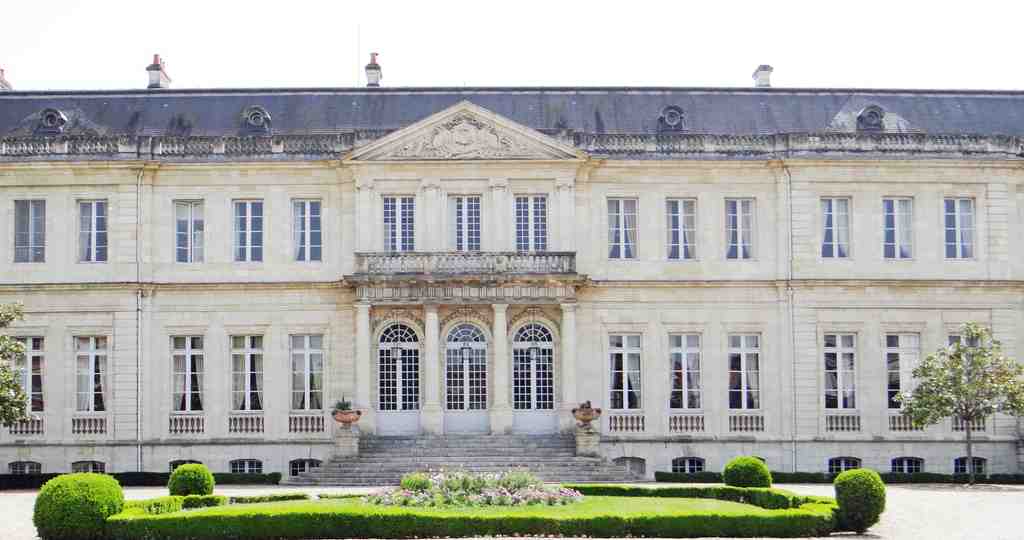
In front of you stands an impressive grand building with creamy white stone, tall windows, and a stately set of steps leading to three arched doorways right in its center-just look for the symmetrical façade and the beautiful formal garden. Now, let’s travel back in time! Imagine the year is 1773: the original bishop’s palace suddenly collapses-talk about a bad day at the office for Bishop Jean-Louis d’Usson de Bonnac! But our bishop, who loved art as much as a cat loves a sunny window, didn’t just sit around sulking; instead, he ordered a shiny new palace right near the Grand Seminary. With skilled architect Leroy drawing up the plans, the first stone was laid in 1775. But-because even in history nothing goes according to plan-our bishop waited nearly eight years before he could move in. Come the Revolution, this palace got a wild new life: from bishop’s digs, to schoolhouse, to home of a Legion of Honour cohort, before landing as the prefecture of Lot-et-Garonne in 1809. When government officials moved in, they even tore off the balustrade on the roof for their own style statement. But trouble wasn’t done: in 1904, a dramatic fire gutted the place, leaving only blackened walls. In 1910, the roof was rebuilt like a “Mansart hat,” giving it a new silhouette. Finally, in 1947, the palace was crowned a historic monument. Who knew a building could have so many lives?
専用ページを開く →To spot the Lot-et-Garonne Departmental Archives, just look for a grand building with striking red and white stripes, tall arched windows, and a French flag above a majestic stone…もっと読む折りたたむ
To spot the Lot-et-Garonne Departmental Archives, just look for a grand building with striking red and white stripes, tall arched windows, and a French flag above a majestic stone entrance right in front of you. Now, imagine standing at 3, place de Verdun, surrounded by the whispers of centuries past, as the distinctive striped walls of the Archives rise before you. Built in 1907 by the imaginative architect Albert Courau, this building has guarded the secrets and stories of Lot-et-Garonne for over a hundred years-and let’s face it, it wears those stripes better than any referee I’ve ever seen! Labeled as “Heritage of the 20th Century,” its walls hold treasures from the 1100s all the way to World War II, all lovingly preserved in the hushed atmosphere of the reading room. Picture scribes, historians, and even the occasional nervous researcher, dusting off ancient manuscripts, maybe hoping to stumble upon a long-lost family mystery. And if you hear a giggle coming from the extension-created in 1984 in the old maternity wing next door-that’s just the contemporary archives getting up to some modern mischief. Over the decades, a curious parade of directors, from Charles Pécantin to the present-day Stéphane Capot, have each left their mark, guarding memories and documents for generations yet to come. Welcome to Agen’s time machine-who knows what secrets you might uncover if you step inside!
専用ページを開く →
よくある質問
ツアーはどうやって始めますか?
購入後、AudaToursアプリをダウンロードして引き換えコードを入力してください。ツアーはすぐに開始できます。再生ボタンをタップして、GPSガイド付きルートに従うだけです。
ツアー中にインターネットは必要ですか?
いいえ!開始前にツアーをダウンロードしておけば、完全にオフラインで楽しめます。チャット機能のみインターネットが必要です。モバイルデータを節約するため、WiFi環境でのダウンロードをお勧めします。
これは団体ツアーですか?
いいえ、これはセルフガイド式のオーディオツアーです。ガイドや団体、決まったスケジュールに縛られることなく、スマホから流れるナレーションを聴きながら自分のペースで自由に探索できます。
ツアーの所要時間は?
ほとんどのツアーは60〜90分で完了しますが、ペースは完全に自由です。好きな時に一時停止したり、スポットを飛ばしたり、休憩を取ったりできます。
今日中にツアーを終えられない場合は?
問題ありません!ツアーには無期限でアクセスできます。明日、来週、あるいは来年でも、好きな時に再開できます。進行状況は保存されます。
どの言語が利用可能ですか?
すべてのツアーが50以上の言語に対応しています。コードを引き換える際にお好みの言語を選択してください。注意:ツアー生成後に言語を変更することはできません。
購入後、どこからツアーにアクセスできますか?
App StoreまたはGoogle Playから無料のAudaToursアプリをダウンロードしてください。メールで届いた引き換えコードを入力すると、ライブラリにツアーが表示され、ダウンロードして開始できるようになります。
もしツアーを楽しめなかった場合は、返金いたします。お問い合わせ先: [email protected]
以下の決済で安全にチェックアウト