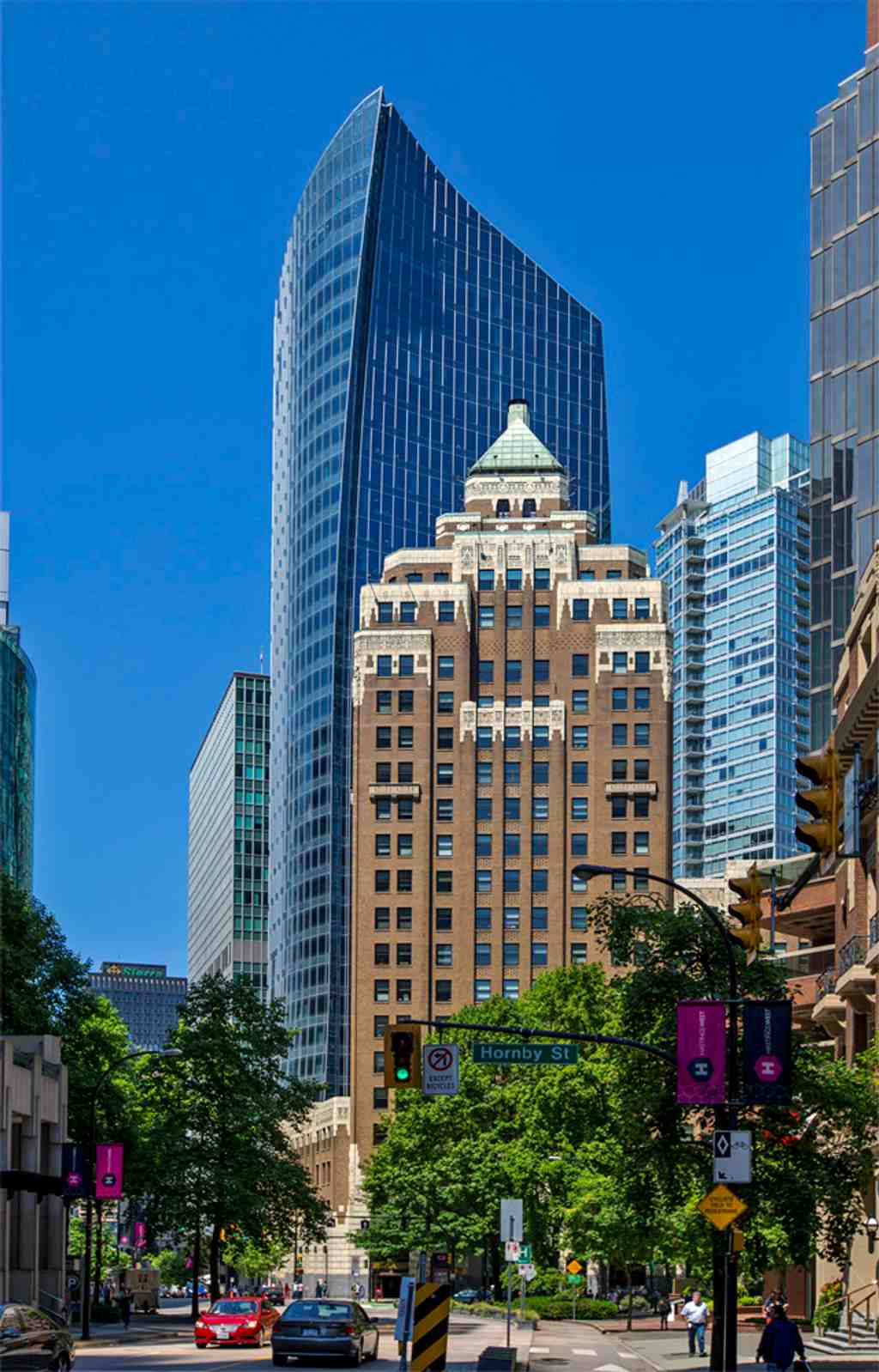
バンクーバーオーディオツアー:ダウンタウン中心部の伝説とランドマーク
きらめくバンクーバーのダウンタウンのタワーの下には、反乱、燃えるような野心、そして石とガラスに響く物語によって築かれた都市があります。 このセルフガイドオーディオツアーでは、絵葉書のような景色を超えて、秘密の会議が変化を引き起こし、富が栄枯盛衰を繰り返し、裁判所の階段で芸術が抗議と衝突した隠れた場所を発見します。 クライストチャーチ大聖堂を巡る対立は、なぜそれを地図から永遠に消し去るところだったのでしょうか?バンクーバーの象徴的なライオンの一つに傷をつけ、街を噂で騒がせた爆発的な出来事とは何だったのでしょうか?そして、どの超高層ビルのきらめく細部が、深海の数十の生き物を密かに隠しているのでしょうか? 大聖堂の鐘からそびえ立つアールデコ様式の冠まで、曲がりくねった道をたどり、スキャンダル、都市伝説、王室訪問、失われた夢、そして驚くべき反抗の瞬間を辿ります。一歩ごとに、バンクーバーの新たな一面—大胆で美しく、語られざるドラマに満ちた—が明らかになります。 歴史の響きを聞き、再生ボタンを押して、スカイラインの下に脈打つ鼓動を解き放ちましょう。
ツアーのプレビュー
このツアーについて
- schedule所要時間 30–50 mins自分のペースで進める
- straightenウォーキングルート 4.0kmガイド付きパスに沿って進む
- location_on
- wifi_offオフライン対応一度のダウンロードでどこでも使える
- all_inclusive無期限アクセスいつでも、ずっと再生可能
- location_onクライストチャーチ大聖堂(バンクーバー)から開始
このツアーのスポット
To spot Christ Church Cathedral, look for a striking, stone Gothic-style church with steep gabled roofs tucked between tall, modern glass towers, right at the northeast corner of…もっと読む折りたたむ
To spot Christ Church Cathedral, look for a striking, stone Gothic-style church with steep gabled roofs tucked between tall, modern glass towers, right at the northeast corner of Burrard and West Georgia Streets, across from the Fairmont Hotel. Now, as you stand here, maybe with the city’s hum in your ears and the aroma of fresh coffee wafting by, imagine stepping back over 130 years in time. It’s December 23, 1888-before this grand stone church even existed-when a group of hopeful parishioners gathered just up the road at 720 Granville Street for prayer, excited but without a proper roof over their heads. Sounds like an awkward Christmas pageant, right? But Vancouver was just a young city then, growing as fast as a squirrel on espresso. Funds were tight and spirits high, and by February 1889, a building committee scrambled to raise money any way they could. The church would sit on land bought from the mighty Canadian Pacific Railway, thanks to Henry John Cambie, CPR’s chief engineer and part-time miracle worker. By October 1889, the basement-what some called the “root house”-was finished enough to hold a service for 52 people. Picture it: cold stone all around, damp air, and more hope than heating. I wouldn’t recommend building your house like this, unless you enjoy negotiations with railroad companies and, apparently, upset neighbors. The “root house” didn’t win any beauty contests, and soon the railway called it an eyesore. The church folks worried about losing their sacred spot, but in 1892, a new design was submitted by the architect Robert Mackay Fripp, and the community came together with a clever financing plan. The cornerstone was placed in 1894-imagine the sound of chisels against stone as the foundation finally settled -and by 1895, the finished church opened its doors at last. This cathedral was crafted with local cedar and strong Douglas fir, filling it with the scent of the West Coast forest, and carrying Gothic arches that reached for the heavens. Soon, it was humming with life. By 1909, more families crowded in, leading to the first expansion. The very first organ used a human blower-imagine, someone paid five bucks a month just to pump air so the congregation could sing! I'm guessing the job title was “Assistant to the Assistant Organist.” By 1920, with Vancouver growing brighter, candles gave way to the glimmer of electricity, and the present lanterns were added in 1930-can you almost see their golden light flickering on a misty evening? In 1929, the church you’re seeing now was elevated to the role of cathedral for the Anglican Diocese, its importance blooming as people in the city flocked here for worship, weddings, and yes, the occasional royal family visit. They did dream of a bell tower, but 1943 bylaws silenced that idea, only for it to finally be realized in 2016. The bells now ring out every morning and evening, their voices echoing through downtown, summoning city dwellers and birds alike. Think about the constant reinvention-Christ Church Cathedral faced demolition in 1971 to make way for a glassy high-rise, but Vancouverites fought for its survival. Thanks to their passion, it gained “Class A Heritage” status in 1976, forever anchoring this spot in the city’s heart. Restoration and renewal work began in the 1990s, preserving its cedar ceilings and stone walls for future generations. Inside, the cathedral mixes traditions both old and new-services are said in stately English and in contemporary tones, accompanied by music ranging from medieval chants to fresh compositions by celebrated local musician Rupert Lang. Over the decades, both world-class preachers and famous scientists like David Suzuki have graced this pulpit-talk about mixing science and faith without a food fight! Look for the Celtic cross outside, a symbol tying the parish’s roots to the British Isles, while nearby, Coast Salish salmon carvings and spindle whorls honor the Indigenous peoples of this land. Everyone’s story is welcome here, and in recent years, the cathedral has stood as a beacon of inclusiveness, becoming one of Canada’s spiritual homes for same-sex unions. Standing here now, you share the view with generations of Vancouverites who-in moments of joy, protest, music, and prayer-have all found themselves drawn to these sheltering stones. Now, take a deep breath, listen for those bells, and get ready-your journey through Vancouver’s swirling history has just begun.
専用ページを開く →Look straight ahead for a grand neoclassical building with tall columns, a domed roof, and a pair of stone lions flanking its wide steps-congratulations, you’ve found the…もっと読む折りたたむ
Look straight ahead for a grand neoclassical building with tall columns, a domed roof, and a pair of stone lions flanking its wide steps-congratulations, you’ve found the Vancouver Art Gallery! Welcome to one of Vancouver’s true icons-though today you’re standing outside a world-class art museum, this mighty structure actually started life in 1911 as the city’s provincial courthouse. Imagine walking up these marble steps, past those silent granite lions, but instead of seeing Picasso or Emily Carr, you’d be whispering to your lawyer and hoping for a lenient judge. The moment feels almost dramatic enough to cue the sound of a wooden gavel. This building was designed by Francis Rattenbury, the same architect behind Victoria’s grand Parliament Buildings-he sure loved making a statement! He made sure every inch would impress: porticos, Ionic columns, ornate stonework, and marble from Alaska, Tennessee, and Vermont. Let’s fast forward a few decades: If you were here in the 1930s, you’d have seen men in worn coats, gathered on the steps in protest, their voices echoing between the stone lions during the tough years leading up to what Vancouver calls "Bloody Sunday." Amazingly, when a group of unemployed protesters occupied the gallery, not a single painting was harmed, though nervous curators must have held their breath every second! In the 1940s, a blast of dynamite shook the rear of the western lion-windows rattled all around Georgia Street, some folks thought the city was under attack! The rear of the lion had to be carved anew, and to this day, eagle-eyed visitors can spot the join where craftsman patched the damage. The lions have seen drama and sunshine, and-judging by the number of people snapping photos on a sunny day like today-maybe even a bit of embarrassment during the odd flash mob or zombie walk. You’re now standing outside not just a slab of history, but the largest art museum in Western Canada, spanning over 15,000 square meters and holding about 12,000 works inside. It became the Vancouver Art Gallery in 1983, after spectacular renovations by architect Arthur Erickson. The transformation from courthouse to gallery was part of a grand scheme to reinvent Robson Square; a network of passageways even connects the gallery underground to the rest of the square. Today, half of the museum’s collection is by Western Canadian artists and features legends like Emily Carr, whose wild West Coast forests and stormy skies fill the walls. In fact, the museum holds over 250 of her works-so many that sometimes staff joke Carr’s ghost might wander the halls if someone ever moved a painting out of order. You’ll also find beautiful First Nations artwork, with carvings, totems and contemporary pieces by renowned artists like Robert Davidson or Bill Reid. The collection includes everything from haunting photographs to vibrant Asian art, and sometimes even a mystery or two-like the time the gallery discovered ten supposed Group of Seven paintings were, in fact, clever forgeries! One of the most unique things about the Vancouver Art Gallery is how it pulses with the life of the city. On these stairs, crowds have gathered for Olympic countdowns, pro-marijuana rallies, environmental protests, and the unforgettable sight of 215 tiny pairs of shoes-silent and powerful-placed in a vigil for the children of residential schools. On summer days, you’ll find sunbathers lounging on the grass, laughter mixing with the low hum of city buses. Even the library inside is a treasure chest of over 50,000 art books, catalogues and journals, if you’re feeling scholarly. Now, the museum’s plans for the future are as vivid as their exhibitions. For years they dreamed of a new home at Larwill Park, with dazzling designs, soaring ambitions, and even some dramatic hiccups-after a bidding saga, cost overruns sent those plans back to the drawing board. I guess you could say that, just like great art, the gallery’s story is always evolving. So as you stand on these historic steps, take a breath and imagine all the passion, the protests, the masterpieces, and even the blasts of dynamite that have made the Vancouver Art Gallery what it is. Before you head off to the next stop, maybe channel your inner artist and picture what wild creation you’d hang on these grand walls! Interested in knowing more about the building, permanent collection or the library and archive
専用ページを開く →If you look ahead, you'll spot the Marine Building by its bold bronze doors and its stunning brown-brick facade rising up, capped with a pale green, copper-topped crown that…もっと読む折りたたむ
If you look ahead, you'll spot the Marine Building by its bold bronze doors and its stunning brown-brick facade rising up, capped with a pale green, copper-topped crown that stands out like a ship’s prow against the skyline. Now, get ready for a little time travel-no need for a DeLorean! Imagine it’s 1930. You’re standing in front of what was, at the time, the tallest skyscraper in all of Vancouver; in fact, for a moment, this was the king of the city’s skyline, soaring 22 stories and nearly a hundred meters above the busy harbour below. The architect’s dream? A building that looks like a rocky island bursting from the sea, dripping with golden highlights and coated in a magical, oceanic green. The Marine Building owes its very existence to a man with a nose for opportunity-and apparently, for a good story-Lieutenant Commander J. W. Hobbs. He peered out at Vancouver and saw a future powered by global ships and commerce, thanks to the Panama Canal. And what better way to mark the city’s new importance than to give it a building as dazzling as the newly minted Chrysler Building over in New York? Now, here comes the twist: None of the architects, those good folks at McCarter Nairne, had ever designed a skyscraper before! But fuelled by hope, coffee, and probably a decent amount of nervousness, they pressed on. The city’s mayor even kicked things off in classic 1920s style, blasting a golden whistle-because why break ground the ordinary way? By October 1930, after $2.3 million (and a very anxious bank manager or two), the doors swung open. But fate had another plan. The Great Depression hit, and this bright, glittering “crag out of the sea” ended up being sold at a loss-snapped up by the Guinness family (yes, of the famous beer) for less than half its cost. Today, the building’s worth more than $150 million. Talk about an investment with ups and downs! Step closer and really look-there are sea snails, crabs, turtles, seahorses, even skate and scallops, all frozen in gold and sea-green right on the walls outside. On the inside, you’d find 12 local hardwoods lining the elevator walls, each brass door polished and glimmering with carved sea life and ships. Back in the day, you could take an elevator to the observation deck for just a quarter-imagine climbing up here, gazing across a city that was still finding its feet. These days, there’s no public gallery, but the lobby’s a jaw-dropper if you ever get inside, though it’s now got marble underfoot instead of the “battleship linoleum” imported all the way from Scotland! There's even a restaurant where merchants once did business. The Marine Building isn’t just a Vancouver treasure-it’s Hollywood’s too! It’s been the headquarters of supervillains, superheroes, newspaper reporters, and time-traveling cops in shows like “Smallville,” films like “Fantastic Four,” and even “Blade: Trinity.” So look up, soak it in, and let your imagination fill in the echoes of history and the golden glimmer of all the amazing stories this “crag from the sea” still holds. And hey, if you spot something fishy in the details-here, that's intentional!
専用ページを開く →
さらに8件のスポットを表示表示するスポットを減らすexpand_moreexpand_less
To spot Waterfront station, look for a grand red-brick building with a long row of tall, white columns on its front, right at the corner of West Cordova and Granville Street - you…もっと読む折りたたむ
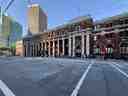
To spot Waterfront station, look for a grand red-brick building with a long row of tall, white columns on its front, right at the corner of West Cordova and Granville Street - you really can’t miss those bright columns shining against the street bustle! You’re standing in front of the beating heart of Vancouver’s transit system, but if you stop for a second, close your eyes, and listen, you might just hear the echo of steam engines and the distant clack of suitcase wheels from over a century ago. This building, with its stately brick walls and grand Ionic columns, has been the jumping-off point of countless adventures since it opened in 1914. Back then, it was the proud Pacific terminus for the Canadian Pacific Railway’s epic journeys from Montreal and Toronto. Imagine: men in bowler hats, women in long dresses, all buzzing with excitement-or maybe nerves-as they awaited the train that would carry them right across Canada, a journey that could take days on iron rails. But here’s the kicker: this isn’t even the first station built by the CPR, it’s the third! The previous version stood just one block over-where Granville chops down to the waterfront. If you love a bit of gloom, the old station was built in a style folks called “railway gothic,” but today’s version went full-on neoclassical, favoring grand, symmetrical lines, a red brick façade, and those unforgettable towering columns. It’s almost as if the architects back in Montreal wanted to remind you: “You’re starting a journey worthy of ancient epic poems, even if you’re only heading to Burnaby.” Through these doors, not only did travelers set out on new lives and adventures, but history unfolded in dramatic fashion. During World War II, the elegant halls you see around you were hurriedly transformed into a temporary hospital. Picture wounded soldiers gazing up at those high, painted ceilings, wondering if the columns were holding up just the building-or maybe their hope for the future, too. Waterfront Station is a master shapeshifter. Fast forward to the mid-1970s: rail travel across the country was slowing, but Vancouver was only getting busier. The city dreamed up the Granville Waterfront Station Plan, plotting to pull together train, bus, and ferry connections into a single buzzing hub. That’s when the SeaBus made a dramatic entrance-gliding in on a floating pier attached to the main terminal, opening a direct link to North Vancouver, where mountain views and salty sea breezes waited on the other side. If you listen (or sniff) just right, you can practically sense the flurry of transport modes finding their fit: Via Rail’s national trains, Amtrak’s routes south, even a parade of intercity buses everyone hoped would ease the mad dash to catch a connection. As the 1980s rolled in, the SkyTrain made its debut-its tracks elbowing aside the old rail lines to snake right into Expo 86, the world’s fair that welcomed millions and briefly turned Vancouver into the center of the universe. Yet life at Waterfront Station wasn’t always smooth sailing. The platform saw companies come and go-Royal SeaLink Express gave ferries to Victoria and Nanaimo a shot in the '90s, but folded; HarbourLynx tried again, only to be stopped, literally, by engine trouble. The West Coast Express joined in 1995, carrying commuters from the valley as the city’s tide of workers steadily surged. Inside the main hall, you’ll spot twin clocks perched high over each end, so you’ll never miss your train-or your date! Above the columns, you’ll find stunning landscape paintings by Adelaide Langford, painted in 1916, showing off the vast beauty of Canada to everyone waiting for the next train or ferry. Imagine being homesick and looking up at those painted mountains-maybe they felt a bit closer for just a moment. This station never really sleeps. Today, it’s the endpoint of the Expo Line, the Canada Line, the West Coast Express, hundreds of buses, the SeaBus, float planes, and even helicopters if you want to make an entrance James Bond-style. Upgrades are always underway: new escalators, better accessibility, and a service centre worthy of an international gateway. So, while you’re here, take in the beautiful collision of old and new. Stand outside among the rumble of buses, the ding of distant trains, and remember: for more than a hundred years, Waterfront Station has been where Vancouver meets the world-and where the next adventure is always just a platform away. They say you can’t be in two places at once, but standing here, you’re at the center of everywhere. And hey-if you bump into a ghostly conductor, don’t worry; he’s probably just making sure you’ve got the right fare!
専用ページを開く →You can spot Gastown up ahead by looking for the statue of a stout figure standing atop a red-brick pedestal, set on a cobblestone square surrounded by classic brick buildings and…もっと読む折りたたむ
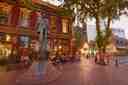
You can spot Gastown up ahead by looking for the statue of a stout figure standing atop a red-brick pedestal, set on a cobblestone square surrounded by classic brick buildings and glowing street lamps-just follow the winding street until the famous steam clock and this lively gathering place come into view. Welcome to Gastown, my friend-the spot where Vancouver truly found its spark! Imagine you’re standing in the very cradle of the city, where the old cobblestones under your feet once echoed with the clatter of wagon wheels and laughter from rowdy sailors. Picture it: the year is 1867, and through the thick coastal fog rolls a fellow from Yorkshire known as “Gassy” Jack Deighton. He wasn’t called “gassy” just because he talked a lot-though trust me, by Victorian standards he could out-story even your chattiest uncle at a barbecue. He opened the first saloon right here, pouring pints for sawmill workers, loggers, and fishermen, while sharing tales tall enough to touch the treetops. Soon, the neighborhood around Gassy Jack’s saloon became known as “Gassy’s town”-and, with a little smoothing over, it eventually became “Gastown.” Now, close your eyes just for a moment and smell the faint tang of ocean air, the sweet smoke of campfires curling through the air, and the heavy scent of timber as workers from the nearby Hastings Mill trudged here after a long day. Gastown thrived as the bustling waterfront hub of Burrard Inlet, filled with people from every walk of life-loggers caked in dust, captains scanning the harbor, and travelers eager for a taste of adventure…and maybe a bit of whiskey. Of course, this lively core didn’t stay calm for long. At nightfall, these streets turned into a “rowdy resort” for off-duty workers. You can almost hear the boisterous laughter and shanty songs drifting out from raucous taverns, mixing with the clang of ship bells at dockside. Gastown became a hub for trade and commerce-the place everyone wanted to be, unless you liked your towns dry and quiet like Moodyville across the water. But time, as always, brings change with its own set of challenges. In the 1960s, this heritage seemed threatened as the city planned to bulldoze Gastown’s old brick and stone to put up a roaring new freeway. But the city didn’t count on the spirit of its locals! People from all backgrounds-including business owners and a host of passionate, tie-dyed counterculture protestors-rallied to save these buildings. The clinking coffee cups in nearby cafés were nearly drowned out by the sound of picket signs and hopeful chants. One key figure, Henk Vanderhorst, even opened the Exposition Gallery on Water Street, encouraging new art and enterprise to blossom here. Thanks to him and others, Gastown earned recognition as a historic site-and its future was preserved as carefully as your grandma’s secret cookie recipe! Take a look around now: old brick facades covered with ivy, chic shops selling the latest fashions, cozy bistros, art studios, tattoo parlors, and even cutting-edge technology start-ups thriving upstairs. Gastown is more than a relic-it’s the heartbeat of Vancouver’s creativity and innovation. And while it’s certainly a magnet for tourists nowadays, it also remains a place of protest, conversation, and transformation. Just listen for a second-you might hear the notes of a jazz saxophone echo through the annual Jazz Festival, or the cheers from the famous Gastown Grand Prix bike race. Ah, and you haven’t truly experienced Gastown if you haven’t noticed its most peculiar celebrity-the steam-powered clock at Cambie and Water Street! Built in 1977 to cover a steam grate (nobody wants to sleep on hot steam, after all), this clock is powered by Vancouver’s downtown-wide steam network. Throughout its life it’s seen repairs and restorations. When it chimes with its whistling, steam-powered tune, you almost expect a parade of Victorian gentlemen in top hats to tip their hats as they pass by. If you’re lucky, you might just catch a cloud of steam with a chorus of whistles, letting you know you’re standing at the crossroads of yesterday and today. So wander a bit, explore the winding lanes-who knows? Maybe you’ll stumble on the spirit of “Gassy” Jack himself, chatting away at a corner pub, hoping for one more audience eager to listen. Just don’t ask him for directions-he’s likely to tell you three different ways, and none of them will be right!
専用ページを開く →To spot the Woodward's Building, just look up-you can’t miss the big red “W” perched proudly atop its metal tower above a handsome old brick building, surrounded by modern glass…もっと読む折りたたむ
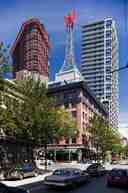
To spot the Woodward's Building, just look up-you can’t miss the big red “W” perched proudly atop its metal tower above a handsome old brick building, surrounded by modern glass towers at the corner of Hastings and Abbott. Alright, welcome to the legendary Woodward’s Building! If these bricks could talk, I bet they’d have as many tales as the shops and dreamers who once filled the air with the buzz of a city in motion. Picture yourself here about a hundred years ago: it’s 1903, and Cordova Street is the beating heart of Vancouver’s retail world. Shoppers bustle in and out, and at the center of it all, standing strong, is the Woodward’s Department Store. This place wasn’t just a shop-it was a destination, like the mall of all malls! Need shoes? Fancy cheese? A new hat? Check, check, and check. The slogan could’ve been “Woodward’s: Everything but the kitchen sink!” Wait, actually, they probably sold those, too. Now, imagine it’s Christmas. The air is crisp, and families huddle around the elaborate Christmas window displays shimmering with lights and mechanical toys that made kids wide-eyed with wonder. But the real spectacle is above: the giant neon “W” atop the building, sitting on a steel tower that’s a 25-meter-high nod to Paris’s Eiffel Tower. At night, the original “W” replaced a World War II searchlight that used to scan the skies, visible all the way from Abbotsford-just in case you needed to find your way from, say, another city. But this building is much more than its famous sign. In its glory days, the Woodward’s Food Floor was the talk of the town, North America’s most prominent supermarket at the time. You could buy goods you’d never seen elsewhere, maybe even a few you didn’t know existed! The place grew in twelve separate bursts, expanding like a living thing until it covered nearly two-thirds of the block, eventually rising twelve stories tall. What’s behind those brick walls? Well-don’t get lost! Twisting stockrooms, winding hallways, and hidden offices sprawled behind the main retail floors, shaping an urban maze that employees navigated like pros. The “one-stop shop” spirit was alive here-groceries, fashion, banking, even booking your holidays, all under one roof. It’s no wonder the building drew crowds and lured other businesses, transforming this whole area into a retail magnet. If you’d visited in the 1940s, you’d have seen working-class shoppers, chatty staff, and the “W” rising like a beacon over the skyline. But then, time shifted. The 1960s brought glittering new shopping malls to the suburbs. The crowds started to drift away, following Eaton’s and other big stores down to Pacific Centre. The neighborhood changed, and Woodward’s lost some of its shine, as industry and people moved elsewhere. In the 1980s, even the legendary Food Floor changed hands, ending up as an IGA-one of those “I guess this is okay” sort of moments for Woodward’s fans. Finally, in 1993, Woodward’s declared bankruptcy. The doors closed. The big building became a ghost, watching over empty sidewalks as the area around it slipped into tougher times. For years, it just stood there, mostly vacant, except for the occasional film shoot-hey, Vancouver never misses a chance to show off on screen! But the story wasn’t over. In 2002, activists seeking social housing staged the “Woodsquat” occupation here, sparking a movement that would shape the building’s future. Policemen arrived, tents went up, and the neighborhood buzzed with hope and conflict. That week-long occupation and the months of protest afterward lit the fire for real change. The city eventually bought the building, launching a wild redevelopment that had to balance the dreams of new residents with the fierce pride of long-time neighbors. Most of those old labyrinths have been demolished since 2006-except the oldest chunk at the base, keeping the story anchored in the past. And in 2010, that giant “W” went back up, shining with new LED lights, a sign that Woodward’s had been reborn. So as you stand here, let the spirit of a century of shopping, squabbles, and second chances swirl around you. Think of the old days and the future still being built. Look around at the students, families, shops, and even a basketball hoop in the atrium-a nod to how communities can change, yet always remember where they came from. And if you hear the faint echo of Christmas carols or the shuffle of shoppers, don’t be alarmed-that’s just the Woodward’s magic working its charm.
専用ページを開く →Right in front of you, towering over the sidewalk with its striking red brick and ornate details, stands a tall, wedge-shaped building with a faded copper roof-just look up and…もっと読む折りたたむ
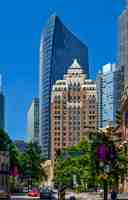
Right in front of you, towering over the sidewalk with its striking red brick and ornate details, stands a tall, wedge-shaped building with a faded copper roof-just look up and you can't miss its dramatic presence at the corner of West Hastings and Cambie. Welcome to the legendary Dominion Building, one of the coolest slices of Vancouver history you'll ever spot. Take a deep breath, because back in 1910, when this beauty first opened, crowds gathered on these very streets to gawk at what was, for a short and glorious time, the tallest commercial building in the British Empire. Picture men in bowler hats and women in extravagant feathered hats, all craning their necks, as if this pointy building had suddenly sprouted from Gastown like a steel-and-brick mountain. This place was the beating heart of early Vancouver's business world, a glittering symbol of ambition and a race to the sky. But the real story starts with a mystery. The architect, John S. Helyer-brilliant, eccentric, and endlessly imaginative-is rumored to have met his end tumbling down the very staircase you'll see through those front windows. Whether that’s true, or just one of those stories that gets taller with every telling, no one can say for sure. The building's money, meanwhile, came from Count Alvo von Alvensleben, a German financier-rumor had it back then that his cash was straight from the Kaiser himself. Imagine: the tallest building in the British Empire built with money from its greatest rival! The newspapers couldn't get enough of it, especially once they realized the record had already been set by an even taller tower in Toronto. Oops! Over the decades, these walls have contained everything: lawyers, filmmakers, web developers, booksellers, dancers, politicians-even a dentist if you ever needed your teeth checked mid-tour. And if you suddenly feel like a movie star, there’s a reason. The Dominion Building has been in the movies more times than some actors-The Neverending Story filmed scenes here, a rooftop chase in Blade: Trinity had folks leaping across the skyline, and you can even spot it in Jennifer Lopez’s film The Mother as she looks dramatically down into Victory Square. TV shows like Battlestar Galactica and Alcatraz have made the Dominion Building their backdrop when a dash of drama was needed. Today, as you stand here, the grand copper roof shines a little brighter thanks to careful restoration, and creative people still drift in and out-writers, designers, nonprofit heroes, and anyone else who loves to work somewhere with just the right mix of history and mystery. So take a moment to soak in the details-the smell of roasted coffee from across the street, the distant sound of city traffic, and maybe, just maybe, the ghost of John S. Helyer still watching over his Gothic masterpiece.
専用ページを開く →To spot Holy Rosary Cathedral, just look for the grand stone building with soaring twin spires and a huge rose window right above its pointed entry arches-it’s the Gothic beauty…もっと読む折りたたむ
To spot Holy Rosary Cathedral, just look for the grand stone building with soaring twin spires and a huge rose window right above its pointed entry arches-it’s the Gothic beauty standing proudly along the street, with its towers reaching far into the sky. Welcome to the Holy Rosary Cathedral, where history, faith, and a dash of drama have all come together in downtown Vancouver! Imagine yourself back in the year 1900, with the air buzzing as stones are lifted, bells ring, and hope is in the air. This magnificent French Gothic revival cathedral started out when Vancouver was still young, its roots laid at the intersection of Richards and Dunsmuir, where bustling modern life now surrounds its peaceful stone walls. Now, hold your breath and listen-if you were here back then, you’d have heard the clang of hammers and chisels as workers carefully stacked Gabriola Island sandstone, crowned by those stunning, unmatched bell towers-the cathedral’s show-stopping signature. The taller one was meant to have flying buttresses, like the grand medieval cathedrals of France, and if you look up, you can almost imagine the dream that never quite made it but still left its mark. The very first version of Holy Rosary was a humble wooden church, founded in 1885 by Father Patrick Fay, the chaplain to Canadian Pacific Railway workers. Legend says Father Fay picked this spot by spotting the tallest tree from the Coal Harbour waterfront-imagine gazing out onto what was then a thick, silent forest instead of a city humming with cars and coffee shops! But the church quickly became too small for its lively congregation, so they started building bigger, only to face a series of hurdles that would have made even a saint sweat. The fundraising was so daunting the project got a cheeky nickname-“McGuckin’s Folly”-because the parish was already swimming in debt and the local Catholic community was still tiny. Yet against all odds (and a lot of doubters), in just 491 days, the cathedral rose from the ground, ready for its grand debut on the Feast of the Immaculate Conception, December 8, 1900. Back then, newspapers hailed it as “the finest piece of architecture west of Toronto and north of San Francisco.” Not too shabby for a church that started off as the underdog! Take a closer look and you’ll see why. The cathedral is cruciform-shaped like a cross-with its doors guarded by pointy arches. If you step inside, you’d find red marble columns supporting the high nave and oak and marble treasures all around. Sunlight streams through 21 stained glass windows, including masterpieces by Guido Nincheri. One even made it onto a Canada Post Christmas stamp, so you could say this church became a bit of a celebrity! Now, the bells… Oh, the bells have a story! The original seven, meant to represent the sacraments, were so out of tune they had to be shipped back to Europe. The new set-this time eight, for a perfect octave-has rung for everything from Dominion Day in 1911 (the very first peal in Canada!), to the opening of the 2010 Winter Olympics, to regular joyful and solemn occasions. The cathedral’s organ is the oldest of its style in all of British Columbia, and the first note ever played on it dates back to 1900. Despite wear, leaky roofs and questionable repairs, it was lovingly restored and, like the bells, now returns every year for concerts in a grand celebration of sound. Holy Rosary hasn’t just been a place for worship-through fires, gunshots (yes, a gunman once fired at the altar; nobody was hurt!), and even passionate protests on its steps, this cathedral has stood strong. Over the years, it’s hosted papal visits, historic funerals for local heroes like lifeguard Joe Fortes, and events like memorials for city tragedies. One last touch of heart: In 2017, an art piece called “Homeless Jesus” appeared on the grounds-a life-sized sculpture of a man sleeping on a park bench, his face hidden and feet marked with stigmata. It urges every passerby to pause and think about those who need help most. From its very first wooden beams to today’s stone walls and soaring spires, Holy Rosary Cathedral remains a guardian of stories, faith, and the heartbeat of Vancouver’s community. Maybe take a moment here to look up, listen, and wonder how many footsteps just like yours have walked this spot across more than a hundred years. Ready for our next stop?
専用ページを開く →Let’s travel back in time, to when Vancouver was little more than a sawmill and a scrappy town at the edge of the wild, wild West Coast. Picture it: the year is 1869, the lumber…もっと読む折りたたむ
Let’s travel back in time, to when Vancouver was little more than a sawmill and a scrappy town at the edge of the wild, wild West Coast. Picture it: the year is 1869, the lumber is fresh, and J. A. Raymur, manager of the Hastings Mill, decides his workers could use a little culture between chopping trees. So, he opens the New London Mechanics Institute-a humble little reading room for the millmen. Not long after, it’s renamed the Hastings Literary Institute, a place where you’d find gentlemen in waistcoats-top hats optional-nose-deep in books, far from the busy saws. When the City of Vancouver was officially born in 1886, literary life survived disaster. Just months later, the Great Vancouver Fire roared through, leaving almost nothing behind. Yet, from the smoky ashes, a miracle: 400 books, saved from the Institute’s collection, were donated to form the Vancouver Reading Room, the city’s first library. I like to think those books were a bit singed, but very proud! Fast forward to the turn of the century-and to rivalry as hot as the freshest timber. When American industrialist Andrew Carnegie dangled $50,000 for a grand new library, the East and West sides of Vancouver nearly declared civil war over where it should be built! In the end, after a fierce plebiscite-which, I imagine, was as heated as any hockey game-East Vancouver snagged the prize. The first true big library, all domed and French-mansarded, stood proudly at what’s now Hastings and Main. If you had popped in back then, you’d have found marble staircases, glittering stained-glass windows depicting Shakespeare and Milton, and reading rooms just for ladies-plus fireplaces everywhere to keep bookworms toasty. There was even a chess room: unfortunately, no record if the librarians were any good at checkmate. The Central Branch would hop from building to building, growing larger-like a well-fed library cat-until ending up right here, as the anchor to Library Square. This building you’re admiring opened in 1995, the product of Vancouver’s largest-ever capital project at the time, a whopping $106.8 million. In the early nineties, the city held a public referendum and chose the wildest, most imaginative design-by the legendary architect Moshe Safdie. Picture nine stories of knowledge, with spiraling ramps, glass-roofed concourses, sunny piazzas, and bridges spanning light wells like bookish Indiana Joneses might swing across, all surrounded by food smells drifting from nearby shops and the sounds of city life. With 1.3 million items on its shelves-and conveyor belts bustling behind the scenes to move books like a high-speed literary rollercoaster-it’s British Columbia’s largest public library. But that’s not all. The library has always been more than just books. Here you’ll find everything from storytime for toddlers to programs for teens, bustling community events, and a true city living room where everyone belongs, whether you’re borrowing DVDs or classic novels, playing video games, or just enjoying quiet company. They even deliver books to people who can’t leave home. Such service would make the original fire-and-smoke survivors proud! Let’s not overlook the library’s rooftop-since 2018, an 8,000-square-foot garden designed by landscape architect Cornelia Oberlander has crowned the building, a green oasis in the heart of the city. It’s a place where you can read surrounded by fresh air, with the city humming below your feet. That’s real bookworm luxury. A few quirky bits of history: At one point, the government of British Columbia leased the top two floors before they became meeting and event spaces. And let’s not forget One Book, One Vancouver-the giant city-wide book club that had everyone from hipsters to retirees clinging to the same book, from Douglas Adams’ “The Hitchhiker’s Guide to the Galaxy” to tales of legendary Canadian ski teams. Book clubs just aren’t the same unless you know you’re annoying a whole city by returning your copy late! So, whether you’re here to marvel at the architecture, sniff a brand-new bestseller, or just people-watch on the piazza, remember this: every corner of this library is packed not only with books, but with stories of a city that rebuilt, argued, read, and grew-together. Now, are you feeling inspired to check out a book? Just remember-it’s not polite to yell ‘Eureka!’ in the quiet study space, unless you really, really love your latest read!
専用ページを開く →To spot Rogers Arena, look straight ahead for a large, modern grey building with a bold red "ROGERS ARENA" sign and banners supporting the Vancouver Canucks, set against a cluster…もっと読む折りたたむ
To spot Rogers Arena, look straight ahead for a large, modern grey building with a bold red "ROGERS ARENA" sign and banners supporting the Vancouver Canucks, set against a cluster of tall city towers. Right now, you’re standing in front of the beating heart of Vancouver’s sports scene-Rogers Arena! Imagine it: you’re just steps away from more than 18,000 screaming fans, echoing off the steel and concrete, the air thrumming with energy. For years, this spot has been the center of high-stakes hockey games, unforgettable concerts, and moments when entire nations held their breath. Built in 1995, Rogers Arena was first called “General Motors Place”-or “The Garage” as locals liked to call it. Back in the mid-1990s, Vancouver needed a shiny new home for big indoor events and, with the NBA coming to Canada, it was also the new nest for the short-lived Vancouver Grizzlies. Fun fact: those Grizzlies only graced this building for six wild seasons before heading to Memphis, but during their time here, the echo of bouncing basketballs and sneakers squeaking across polished floors was impossible to miss. There’s something magical about this place’s constant state of change. In 2010, just before the Winter Olympics, the arena shed its GM skin and became “Rogers Arena.” But guess what? For the Olympics, it changed names again, temporarily becoming “Canada Hockey Place,” because Olympic rules don’t play well with big corporate logos. Those two weeks in 2010 were unforgettable-imagine: the tense silence right before the puck drop, then the roar that shook the rafters as Canada seized not one, but two hockey gold medals right here. I’m not saying the city celebrated all night… but, well, let’s just say you could hear the cheer from the North Shore Mountains to Burnaby. And it’s not just hockey. Rogers Arena has hosted everything from epic UFC clashes to world-class concerts-when you see the lights glowing at night, you know something special’s happening inside. Artists and athletes all get their moment under those bright, four-storey-high theatrical screens (another Rogers Arena specialty-they were the first of their kind in North America). The last time they lit up for a Canucks entrance for a regular game was in the 2015-16 season, but the projectors and mighty screens still wait in the wings-who knows when they’ll be called into action again? Speaking of being center stage, Queen Elizabeth II herself once dropped the ceremonial first puck here in 2002. Not every arena can say it’s had a royal guest of honor! (Now that’s what I call “regal icing.”) Over the years, Rogers Arena has kept changing with the times: new high-tech scoreboards, massive renovations to make the dressing rooms more luxurious than a five-star hotel, and a sparkling new VIP restaurant to welcome fans and players. They haven’t forgotten about the comfort of every fan, either. After being delayed a bit, soon every seat in the stadium will be replaced to guarantee you’ll be comfortable whether you’re watching a slapshot, a slam dunk, or a screaming guitar solo. The soul of the arena doesn’t just come from the stars, though-it’s been shaped by everyone who works here. There have been legendary labor battles, fierce union changes, and even protests over wage rights, all echoing the passion of Vancouver’s workers standing up for fair treatment as fiercely as the Canucks chase the puck. Outside, the arena is now surrounded by sleek towers-originally, there were plans for condos, but now they’re much-needed rental spaces, so the spirit of the city keeps growing up around its favorite entertainment hub. When you look up at this building, it’s not just a structure: it’s a living legend, hosting the first-ever pro women’s hockey game in Vancouver in 2025, and even the WNBA’s debut game in Canada that same year. So take a deep breath, listen to the memory of thousands of fans chanting “Go Canucks Go!” and smile-because, on this spot, sporting history is made night after night. And don’t worry, if you ever forget where you are, just follow the noise of the city’s biggest parties.
専用ページを開く →To spot the final landmark, just look ahead for the bold, energetic logo-Molson Indy Vancouver-splashed in blue and orange above the outline of a sleek race car, with “AT CONCORD…もっと読む折りたたむ
To spot the final landmark, just look ahead for the bold, energetic logo-Molson Indy Vancouver-splashed in blue and orange above the outline of a sleek race car, with “AT CONCORD PACIFIC PLACE” below; you’re standing in the heart of where thousands once roared for race day thrills. Now, close your eyes for a moment-or at least squint, so you’re not tripping over anything-and imagine the scene right here, not so long ago. The summer air is buzzing, not just with excitement, but with the rumbling growl of Champ Cars bursting down the city streets at mind-bending speeds. Grandstands pack over 100,000 fans-enough people to make even a rock concert feel shy-while every seat offers a rush of color, noise, and adrenaline. The Molson Indy wasn’t just a race; it was one giant Vancouver party, held between July and September every year from 1990 to 2004. In 1990, the very first race screeched to life right here, on a circuit that wound its way alongside BC Place and continued past Science World-back then, the city must have felt like it was shaking beneath the thunder of engines. Al Unser Jr. claimed the first checkered flag, but whether you were a racing nut or just here for the spectacle, everyone came away with stories. By 1998, they’d tweaked the route, weaving the track through new territory, but the excitement only grew-these races were wild and unpredictable, drivers jostling for position, fans gasping as each lap unfolded. And oh boy, did the numbers stack up! For most of its fifteen-year glory run, the Indy lured more weekend fans than a Stanley Cup parade. In 1996, so many people showed up, the event actually shattered the Canadian single-day sporting attendance record-only for Montreal’s Formula 1 Grand Prix to steal the trophy that very same year. If that’s not friendly Canadian rivalry, I don’t know what is. But like every good party, things began to wind down. In 2004, with over 158,000 fans over three days, the engines fell silent for good. Why? Well, some folks loved the electrifying energy, but others grumbled about the noise, the traffic, and their windows rattling. As new condos rose where the track once ran and Olympic dreams took over for the 2010 Winter Games, the city’s priorities changed. No matter how fast you drive a race car, you can’t outrun progress-or construction. There were even hopes for a high-voltage comeback with the Formula E ePrix in 2021, but just like a car running out of gas, that plan fizzled before the lights turned green. Still, stand here and listen: if you hear the faintest echo of engines and cheers, it’s just Vancouver, remembering the days it truly revved up to be a world-class motorsport city. Keep your eyes peeled-you never know when the next race might try to make a comeback!
専用ページを開く →
よくある質問
ツアーはどうやって始めますか?
購入後、AudaToursアプリをダウンロードして引き換えコードを入力してください。ツアーはすぐに開始できます。再生ボタンをタップして、GPSガイド付きルートに従うだけです。
ツアー中にインターネットは必要ですか?
いいえ!開始前にツアーをダウンロードしておけば、完全にオフラインで楽しめます。チャット機能のみインターネットが必要です。モバイルデータを節約するため、WiFi環境でのダウンロードをお勧めします。
これは団体ツアーですか?
いいえ、これはセルフガイド式のオーディオツアーです。ガイドや団体、決まったスケジュールに縛られることなく、スマホから流れるナレーションを聴きながら自分のペースで自由に探索できます。
ツアーの所要時間は?
ほとんどのツアーは60〜90分で完了しますが、ペースは完全に自由です。好きな時に一時停止したり、スポットを飛ばしたり、休憩を取ったりできます。
今日中にツアーを終えられない場合は?
問題ありません!ツアーには無期限でアクセスできます。明日、来週、あるいは来年でも、好きな時に再開できます。進行状況は保存されます。
どの言語が利用可能ですか?
すべてのツアーが50以上の言語に対応しています。コードを引き換える際にお好みの言語を選択してください。注意:ツアー生成後に言語を変更することはできません。
購入後、どこからツアーにアクセスできますか?
App StoreまたはGoogle Playから無料のAudaToursアプリをダウンロードしてください。メールで届いた引き換えコードを入力すると、ライブラリにツアーが表示され、ダウンロードして開始できるようになります。
もしツアーを楽しめなかった場合は、返金いたします。お問い合わせ先: [email protected]
以下の決済で安全にチェックアウト