AudaTours logoAudaTours

リンツ音声ガイドツアー:信仰、芸術、そして隠された物語の響き

オーディオガイド15 か所

リンツの静かな屋根の下、石の通路やそびえ立つドームには秘密が脈打ち、街の魂を形作った陰謀やインスピレーションがほのめかされています。 このセルフガイド音声ツアーで、リンツの見過ごされがちな場所を巡り、ガイドブックには載っていない、地元の人々が当たり前だと思っている物語や光景を解き明かしましょう。 MAERZでかつて怒りを巻き起こし、リンツの芸術シーンを永遠に変えた隠れた芸術作品とは?忠誠心が試された夜、教区教会を満たした禁断のささやきとは?OÖ州持株会社の建物での一本の電話が、今も響き渡る金融の嵐を引き起こしたのはなぜでしょうか? ステンドグラスの下で革命をたどり、スキャンダルと沈黙の間を歩き、リンツの通りが壮麗さと気骨の両方を明らかにするのを見てください。どの角も陰謀と忘れ去られた野心の交差点です。 街の心が呼んでいます。再生ボタンを押して、すべての石の裏に隠された、まだ見ぬリンツを発見してください。

ツアーのプレビュー

map

このツアーについて

  • schedule
    所要時間 40–60 mins自分のペースで進める
  • straighten
    ウォーキングルート 2.5kmガイド付きパスに沿って進む
  • location_on
  • wifi_off
    オフライン対応一度のダウンロードでどこでも使える
  • all_inclusive
    無期限アクセスいつでも、ずっと再生可能
  • location_on
    教区教会(リンツ)から開始

このツアーのスポット

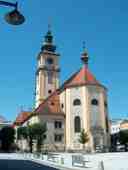
  1. You’ll spot the Parish Church by its pale stone tower with a greenish, onion-shaped dome-just look for the large historic church perched at the corner, its elegant baroque façade…もっと読む折りたたむ

    You’ll spot the Parish Church by its pale stone tower with a greenish, onion-shaped dome-just look for the large historic church perched at the corner, its elegant baroque façade and sturdy steeple rising above the city’s heartbeat. Alright, so you’re looking at what Linzers know as the Stadtpfarrkirche Mariä Himmelfahrt-a name that’s a bit of a mouthful, but then, so is its history. Here’s a building that has done everything you can imagine, except maybe host a rock concert... although, give it time. Built originally way back in 1207, when people measured land in 'Klafter' instead of those sassy metric units, this spot was where Linz itself started to take shape. Picture surveyors hunched with their sticks, marking out sacred ground-aligning the church’s very axis with the sunrise on both Good Friday and Easter Sunday that spring. I’ll admit, towns didn’t always get this much choreography. But, like all great European churches, it couldn’t just stick with the original outfit. The first church here was a simple Romanesque one-nave structure: think more monk simplicity, less opulent fireworks. Over the centuries, new styles and new bishops with strong opinions kept arriving. Close your eyes (if you’re not crossing the street) and imagine the Gothic age rolling in-suddenly, bigger ambitions, higher ceilings, a new impressive chancel. Add a bell tower in 1453. Did I mention the tower? It’s the one that nearly everyone uses as a meeting point when they’re late for lunch. The 1600s brought some serious glamour: architects started decking out the church baroque-style, giving us the grand three-aisle basilica you see now. The same church you’re standing by was officially re-opened in 1656-probably to much applause, and maybe a little renaissance gossip. Now, on to the juicy bits. Underneath the altar, sealed silently into the walls, lies the heart-literally-of Emperor Frederick III. He died here in Linz in 1493, and as was custom with Europe’s VIPs back then, they divided up his remains for separate burials. Forget your family tree-imagine having to keep track of your body, one organ at a time. If you want to see a tribute, there’s a beautiful red marble slab inside, remembering the emperor’s rather... piecemealed stay. It’s also highly likely-though the records are a bit fuzzy with age-that right here in 1521, a royal wedding was held: Ferdinand I (eventually Emperor himself) married Anna of Bohemia and Hungary. That union kicked off the Habsburg domination of Central Europe. No pressure, right? As for music-Anton Bruckner, who’d go on to become one of Austria’s most celebrated composers, was once the organist here. Apparently, he wasn’t exactly thrilled with the organ, saying it could use a little work. Organ builders took it personally (as only organ builders can). Over time, the instrument’s been overhauled, beautified, and expanded until now it boasts 50 registers-fifty! Which is about 49 more than most people can handle at a time, Bruckner included. If you walk around the outside, peek around the apse. There’s a marble niche designed by Johann Lucas von Hildebrandt holding a statue of St. John of Nepomuk, carved by Georg Raphael Donner-proof that even the side entrances here are overachievers when it comes to art. This place is a living record of nearly every change in Linz: new rulers, styles, feuds, and even changing burial rules-at one point, the entire town graveyard was moved, but funeral services still happened right here. You couldn’t get any more 'central' than that.

    専用ページを開く →
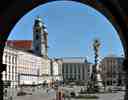
  2. On your right, you’ll see a massive rectangle of open space lined with tall, pastel-hued buildings and ringed by lively cafes and tram tracks - this is Main Square, the beating…もっと読む折りたたむ

    On your right, you’ll see a massive rectangle of open space lined with tall, pastel-hued buildings and ringed by lively cafes and tram tracks - this is Main Square, the beating heart of Linz. Now, Main Square - or Hauptplatz, as the locals put it - isn’t just big, it’s monumental. In fact, with around 13,000 square meters, it’s one of the largest enclosed squares in all Austria. Today, it’s separated from the Danube River by just one road and a few chunky bridgehead buildings. But if you squint a little, you’ll notice how the buildings surrounding it have oddly narrow facades and seem to stretch way back. That was... let’s call it ‘prime real estate strategy’ from the old days, when property prices right here were sky-high because everyone wanted in on the action. Let’s jump back to the early 1200s. Imagine this space being staked out with nothing more than ropes, measuring sticks, and a seriously ambitious town council. In 1207, when Linz expanded, this very square and the city church got marked off. By around 1230, the shape you see now was in place - roughly three times longer than it is wide, stretching almost the length of two football fields. Now, the square’s seen a parade of different names. It started as “An dem Markt” - basically ‘at the market’ - then picked up a few catchy titles over the centuries, including the dramatic-sounding “Platz des 12. Novembers” after the First Republic was declared. Throughout the 1900s, its name kept getting updated to follow the political winds... and not always in ways anyone would be proud of. But since 1945, ‘Hauptplatz’ has stubbornly stuck. It’s always been a place of gathering, trade, drama... and, at times, a little darkness. Back in the day, public executions were an honest-to-goodness event held right here. People would pack in for year markets, tournaments, even legendary weddings - like the one in 1521 when Archduke Ferdinand tied the knot and celebrated with a tournament that sounded suspiciously like a medieval rager. Take a look toward the dazzling stone pillar near the center - that’s the Trinity Column, or Dreifaltigkeitssäule. It’s one of Linz’s most recognizable landmarks. The locals erected it in the early 1700s to say thanks for surviving fire, plague, and war. Nowadays, people pass it daily, barely glancing, but those old symbols carry a lot of weight if you know the backstory. You’ll also find the Old Town Hall here - still the mayor’s office after 500 years - and the quirky Feichtinger House with its musical clock. And if you’re the kind to seek out oddities, there’s a relief of a Roman family stuck on Number 10, left over from the days when Linz was a Roman outpost called Lentia. There’s even an elephant carved into Number 21. Yes, that IS as random as it sounds - it was put there to mark the visit of a real elephant with the imperial entourage in the 1500s. Linz knew how to throw a parade. Main Square is still the city’s living room. On Fridays you’ll find a proper farmers’ market; Saturdays, a flea market with more bric-a-brac than most basements; and come winter, the air sings with mulled wine and Christmas cheer at the market stalls. And through it all, trams glide, locals chat, and the market rings echo off stone. Oh, and if you’re feeling underground... literally... you should know there’s a whole warren of World War 2 bunkers and a parking garage just below your feet. That’s the thing about this place - every layer, above and below, has a story. Ready for Old Cathedral (Linz)? Just walk southeast for 2 minutes.

    専用ページを開く →
  3. Take a look to your left-you can spot the Old Cathedral, or “Alter Dom,” by its striking twin green towers topped with bulbous “onion” domes, standing proud above the surrounding…もっと読む折りたたむ

    Take a look to your left-you can spot the Old Cathedral, or “Alter Dom,” by its striking twin green towers topped with bulbous “onion” domes, standing proud above the surrounding rooftops. Alright, time for a tale with more twists than a Viennese pastry. This elegant Baroque church started life in the late 17th century, when the Jesuits rolled up their sleeves and decided Linz needed a house of worship that’d make a statement. Construction kicked off in 1669, and just under a decade later, it was officially dedicated to Saint Ignatius of Loyola-the Jesuit top boss and a man who knew a thing or two about leaving a legacy. But let’s not get lost in the incense. Fast-forward to the late 1700s, and the story takes a sharp turn. The Jesuit order was suppressed, the church stood empty, and meanwhile, Emperor Joseph II was playing ecclesiastical chess-he founded a new diocese in Linz and needed a bishop’s seat. The parish church was considered, but it just didn’t have the *je ne sais quoi*. So, this grand structure landed the starring role as Linz’s very first cathedral. Imagine the bishop looking at the empty church and saying, “Well, this’ll do nicely.” And so, for over a century, all the major action happened right here: bishops installed, important Linzers buried, sacred ceremonies galore. But Linz got bigger, folks got more devout-or maybe just more numerous-and the city needed a bigger church. Eventually, in 1909, the “New Cathedral” took over the prime spot, and the Old Cathedral became, well, old news. Despite all the switching around, the Jesuits made a comeback and resumed care for their old haunt until-cue dramatic organ music-a whopping 400 years after its founding, they finally packed up in 2023. Today, the church serves as a home to the local Ukrainian-Catholic community and is still deeply woven into the city’s spiritual fabric. Inside, if you could step through those doors, you’d find classic Baroque opulence: a soaring, wide nave, bright with light and lined with cozy side chapels. Look up near the entrance and you’ll spot the coats of arms of the Starhemberg, Weissenwolf, and Kuefstein noble families-because why not display a little bling at the front door? And don’t miss the real show-stopper: the organ. Known as the Bruckner Organ-yes, THAT Bruckner-the instrument has survived makeovers, renovations, and even some literal heavy lifting. Anton Bruckner, the famous composer (if you love symphonies and walls of glorious sound, he’s your guy), worked as the cathedral’s organist from 1856 to 1868. He tinkered with the instrument so thoroughly that you could practically call it custom-made. Back then, the equivalent price for such an organ and its renovations would’ve run up to several hundred thousand euros today, which, in modern dollars, could get you a mid-range Tesla-without the heavenly pipes. And, as is the way with ancient churches, you’re standing above layers of history-bishops, Jesuits, even a Habsburg princess all entombed beneath your feet. Not to worry, they’re the quiet type. Ready to discover what’s next? When you’re set, just head northwest for about 3 minutes and you’ll find yourself at the Minorite Church.

    専用ページを開く →
さらに12件のスポットを表示表示するスポットを減らすexpand_moreexpand_less
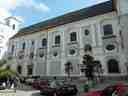
  1. Looking to your left, you’ll spot the Minorite Church by its elegant, creamy façade rising three stories high, topped by a wide sloping roof, with detailed decorative work framing…もっと読む折りたたむ

    Looking to your left, you’ll spot the Minorite Church by its elegant, creamy façade rising three stories high, topped by a wide sloping roof, with detailed decorative work framing its front and a slender tower peeking out on the far side - it’s wedged right into the row of historic city buildings, so keep an eye out for those ornate portals. Now, let’s dig in…and trust me, there’s more going on with these walls than meets the eye. This is the Minorite Church, also fondly called the Landhauskirche: the ONLY Rococo-style church in all of Linz. Imagine stepping into the mid-1200s - this was the stage for the first Franciscan monks who arrived in town, the so-called “Minor Brothers,” or Minoriten. Their job? Spiritual guidance, humility, and running the city’s earliest monastery, which made this spot, for several centuries, *the* religious headquarters for Linz. Of course, things got a tad complicated during the Reformation. Here come the politics: by 1562, Emperor Ferdinand the First decided he’d had enough of monks running the show, so he sold everything but the church and cloister to the local government. Think of it as a 16th-century corporate takeover - with slightly more Latin thrown around. The church itself survived a few centuries of musical chairs: Jesuits moved in for a while, as part of the Catholic “Counter-Reformation”-basically an answer to Luther and his busy friends. Eventually, the Franciscans regained control, but by the late 1700s, Emperor Joseph II pulled the plug on monasteries altogether and repurposed the next-door buildings for...government offices. So, when you see officials heading into the Linzer Landhaus, you can thank this complicated history. But let’s talk about the building staring back at you. Although the original church was medieval Gothic, you’re seeing a timeless Rococo showpiece created by Johann Matthias Krinner in the mid-1700s. The main entrance-actually, there are two-deliver you into what feels more like a divine ballroom than a solemn chapel. Picture bright, airy spaces, gentle stucco swirls and cherubs overhead, and six deep side niches each packed with unique altars-almost like having your spiritual options laid out like a box of deluxe chocolates. Speaking of chocolates, the high altar is the crown jewel: marble that’s not marble (stucco work, crafty and thrifty), flanked by sculptures and paintings-don’t miss the brilliant “Annunciation” by Bartolomeo Altomonte, practically shimmering with gold. The side altars are no slouches either, blending architecture and altar into seamless Rococo style. You’ll find saints with dramatic stories and some wild backstories...one even features Saint Joseph of Cupertino floating in midair, which certainly gives new meaning to “uplifting.” Listen carefully and you might hear the grand organ-original parts dating back before Columbus hit America-yet the keys play thanks to a modern rebuild in 2009, part of Linz’s stint as European Capital of Culture. If organ music could talk, this one would probably have a few opinions about city politics. Now, in the sacristy, you’ll see more ornate woodwork and red marble than many royal palaces. It’s often called the most beautiful sacristy in Linz-though I wouldn’t bring that up near the Ursuline Church unless you want to start a rivalry. Today, the Priestly Fraternity of Saint Peter keeps tradition alive with Mass in Latin, Tridentine-style. So there’s a good chance some things here haven’t changed for hundreds of years. Alright, time for something completely different. When you’re set, Linzer Landhaus is just a minute’s walk west.

    専用ページを開く →
  2. You can spot the Linzer Landhaus on your left - look for a grand cream-and-pink Renaissance building with a tall tower topped by a metal dome, standing out against the tidy row of…もっと読む折りたたむ

    You can spot the Linzer Landhaus on your left - look for a grand cream-and-pink Renaissance building with a tall tower topped by a metal dome, standing out against the tidy row of park-side trees along the promenade. Alright, you’re now looking at what’s basically Austria’s answer to the Renaissance town hall on steroids - the Linzer Landhaus. This place isn’t shy about making an entrance. The north portal alone, all red and painted marble, puts most other local doorways to shame. It’s like the architects took one look at the Swiss Gate in Vienna and thought, “Let’s outdo that, but with more flair.” You’ll notice those colorful coats of arms above the windows, too - that’s Austria announcing itself like it’s arriving at a royal ball. But the story here goes way beyond fancy doors and dramatic stonework. Back in 1563, this plot was home to a Minorite monastery until the local landowners decided they wanted something a little more... political. So, out went the monks and, by 1568, in came a power hub - meeting rooms, assembly halls, and a school that would one day have a pretty famous science teacher. Yep, for fourteen years, none other than Johannes Kepler - the guy who cracked the code on planetary motion - taught here. Imagine him crossing this very courtyard, maybe complaining about the draft in winter and getting lost among the thousands of books in a library so impressive he kept praising it to anyone who’d listen... until most of it went up in smoke after a fire. Speaking of fire, the Landhaus is no stranger to drama. In 1626, local farmers led by Stefan Fadinger stormed the building, pitchforks-ready, but couldn’t crack the defenses. That rising for farmers’ rights didn’t go as planned, and the Protestant school here was eventually shut when others took over. Fast forward a bit and in 1800, a disastrous fire starting up at Linz Castle ate through half of this place - if you’re wondering, the losses would have made headlines, with the library, archive, and most of the art gallery wiped out overnight. Even the serious repair job after, led by Ferdinand Mayr, would have cost what we’d now call a small fortune... easily well over a couple million dollars in today’s money. When you walk through the main archway, you step into a Renaissance arcade courtyard - take a peek at the seven “planet” statues on the fountain in the center, representing the universe as folks pictured it back in Kepler’s day. In the summer, this courtyard transforms into a kind of open-air concert hall. Don’t miss the Landhaus tower, which watches over the whole complex. It got its showy copper dome in the early 1800s - after a little “facelift,” of course. If you’ve seen the stone bridge outside, that too was a lucky rediscovery from an 18th-century facelift, accidentally unearthed in 2007 beneath the new park. And out front, that big metal ring in the ground? It’s a quiet nod to the Pummerin Bell - parked here temporarily in 1952 on its way to the cathedral in Vienna, and remembered ever since. From protester sieges to planetary fountains, the Landhaus has been stubbornly at the center of Upper Austria’s business for centuries. Not bad for a place that started as a cloister. When you’re ready, head southeast for just 2 minutes - OÖ Landesholding is waiting.

    専用ページを開く →
  3. Right on your right, you’ll see the OÖ Landesholding-modern Linz at its most unromantic and, frankly, most crucial. Now, it might not look like a palace or a place where you’d…もっと読む折りたたむ

    Right on your right, you’ll see the OÖ Landesholding-modern Linz at its most unromantic and, frankly, most crucial. Now, it might not look like a palace or a place where you’d stumble upon a secret recipe for Linzer torte, but if you want to know who REALLY pulls the economic strings in Upper Austria, this is ground zero. Step back to the early 2000s, when the mood in government circles was all about getting lean-lean government, that is. Bureaucracy on a diet. Politicians and officials were in constant debates about transparency, efficiency, and just how much red tape you could trim before the whole thing unraveled. Into this rather tense environment walked the Landesholding. Established in August 2005, the OÖ Landesholding wasn’t about privatizing the crown jewels, but organizing them. Before this move, the state owned slivers or chunks of around 30 companies: banks, property groups, railway lines, even spas. Imagine a poker player with so many chips scattered across the table that they can’t remember which belong to them. The Landesholding gathered all those chips into one neat stack-except for the big energy company, but even that came under the umbrella a few years later. Think of the Landesholding not as a CEO, but more as a vigilant parent at a birthday party-making sure everyone shares, no one runs off with the presents, and, crucially, the cake gets sliced fairly. Its job: manage shares in companies, look for economic and organizational synergies (there’s a word to spice up a dinner party), but leave the actual running of hospitals, theaters, or tram lines to the pros in charge. And the portfolio? There’s a smorgasbord in there: students’ dorms, the region’s health provider, the land’s cultural museums, the local bank. And more practical things, like broadband internet, thermal spas, rental housing, and the all-important railways. In fact, three special “sector holdings” focus on tourism lifts, public transport, and spas-collecting all the ski lifts, steam baths, and ticket machines under specialized umbrellas, and letting each run its show with some strategic oversight. Of course, with all this comes layers of oversight, budgets, and responsibility that would make your head spin. Funding for these entities doesn’t come from Landesholding’s own pocket. They collect dividends and balance sheets, then send the money right back to the state-so the local government, not some faceless boardroom, still calls the financial shots. Slightly less Bond villain, a bit more... patient accountant. If you’re imagining a secretive financial empire, rest assured, the Landesholding is bound by transparency rules so strict you could use them to prop up a bridge. Every cent is documented. Every handshake checked twice. The official board even includes members from the region’s government and workers’ representatives, keeping both sides of the political fence close to the action. At last count, this quiet company was involved with about 19,500 employees-yes, you heard that right. That’s nearly the population of a small Austrian town, all working somewhere under this vast, sensible umbrella. Ready for a spot of academic grandeur? Akademisches Gymnasium (Linz) is just a 5-minute walk southeast.

    専用ページを開く →
  4. If you look to your left, you’ll spot an elegant, cream-colored corner building with three stories, tall windows, and a grand, columned entrance set back from the street-trust me,…もっと読む折りたたむ

    If you look to your left, you’ll spot an elegant, cream-colored corner building with three stories, tall windows, and a grand, columned entrance set back from the street-trust me, it gives off strong “history professor with a taste for drama” vibes. So, you’ve found yourself outside the Akademisches Gymnasium Linz-the city’s own Hogwarts, if Hogwarts traded in Latin homework and hockey sticks instead of magic wands. Now, the roots of this school stretch all the way back to 1542, which would make it...well, older than most countries people can name offhand. Its start was a little unconventional, too-founded as a Protestant landscape school thanks to the support of Philipp Melanchthon, one of Martin Luther’s “bros” in the Reformation. If you imagine a band of scholars plotting education reform across the Danube in Luftenberg, you’re not far off. But owning a prime spot in Linz wasn’t always on the cards. This school bounced around different locations like a university student desperate for decent Wi-Fi, past Enns and through Linzer Landhaus, before finally settling here in the late 19th century. And not without a bit of a squeeze-two stately townhouses belonging to the Cistercians were cleared out to make way. Not everyone gets their alma mater built on top of someone’s monastery hideout. Take in that front façade: a sort of mini-palace in historicist style, with “I’m important, pay attention” details everywhere. Notice the raised central bit with the balcony above the columns? That’s like the school’s version of flexing for Instagram, circa 1872. Inside, there’s a feast of architectural surprises: arched ceilings, grand staircases with cast iron balustrades, and even a formal hall upstairs dressed up in Neo-Renaissance style, probably ready for graduation ceremonies, dramatic monologues, or-let’s face it-a bit of teenage mischief over the centuries. Speaking of centuries, the school’s seen some real overachievers (and perhaps a few lovable slackers). Many teachers would go on to become household names in Austrian history and politics. Even the school’s societies leave a mark-connections forged here between young men eventually spawned not one but two of Linz’s enduring student fraternities. There’s sporting tradition, too: from hockey championship wins, to floorball upsets, to...well, football attempts. Turns out, no school is perfect. Step closer to the windows and picture students coming and going, books under arm, Latin verbs and French idioms dancing in their heads. Some things don’t change; others end up as prized relics. The school’s original library, its seal collection, and ancient student flags-some dating to the 1800s-have outlived many a fashion and now sit guarded in Linz’s museums. Alright, enough scholarly nostalgia. When you’re ready, let’s stroll northeast for about 3 minutes and discover the Ursuline Church.

    専用ページを開く →
  5. To spot the Ursuline Church, just look to your left for a grand butter-yellow façade with two towers and a wave-like baroque design-if you notice a giant statue of Mary and a pair…もっと読む折りたたむ

    To spot the Ursuline Church, just look to your left for a grand butter-yellow façade with two towers and a wave-like baroque design-if you notice a giant statue of Mary and a pair of angels up top, you’re in the right place. Alright, let's set the scene. It’s the late 1730s: powdered wigs, ornate dresses, and-let’s be honest-probably some questionable personal hygiene. But you’d never suspect a whiff of that as you stand in front of the elegant late baroque exterior of the Ursuline Church, a real Linz landmark. Dedicated to the Archangel Michael, this Catholic church looks like it could leap straight out of a movie about grand Austrian court intrigues. Designed by Johann Haslinger, who unfortunately didn’t live to see its completion, it’s a feast of baroque style: smooth convex curves at the center, flanked by sharply concave sides, statues keeping watch, and a main portal that almost shouts, “Step inside-if you dare.” Back in the day, the Ursuline nuns arrived from Vienna, turned up their sleeves, and got straight to work teaching the local girls. Their first humble chapel, built around 1680, eventually made way for this much grander project-one that ran into fits and starts over four decades. The finishing touches, like those two handsome towers, were finally added in the early 1770s by a master stonemason named Michael Herstorfer. On the inside, things only get more impressive. The high altar, crafted by Johann Matthias Krinner and funded by a cool 3,000 guilders-about $60,000 in today’s money-features artwork by Martino Altomonte depicting Archangels Michael, Gabriel, Raphael, and Uriel. Pretty good company, right? Throughout the church, you'll find baroque ironwork, altar paintings by the Altomonte family, and side altars with a surprising sense of drama-one even features Saint Augustine, a relic the nuns brought with them from Vienna. Above you, the late 19th-century organ-restored with Swiss precision in 2006-still fills these walls with sound for concerts and art events today. Once just a convent chapel, this church now hosts everything from classical recitals to community gatherings. Talk about evolving with the times. Ready for Carmelite Church (Linz)? Just walk southeast for one minute and it’ll be on your left.

    専用ページを開く →
  6. Look to your left-you’ll spot the Carmelite Church by its ornate, light-toned Baroque facade, decorated with statues and crowned by an oversized figure of Saint Joseph perched…もっと読む折りたたむ

    Look to your left-you’ll spot the Carmelite Church by its ornate, light-toned Baroque facade, decorated with statues and crowned by an oversized figure of Saint Joseph perched above the doorway, like he’s keeping a watchful eye on the Landstraße. Alright, soak this in: You’re standing outside a church that’s seen more drama than a binge-worthy Netflix series. The Carmelites first showed up here in 1671, probably with more hope than cash, and after some creative couch surfing in local lodgings, they finally built their modest first chapel just up the road in 1675. Fast forward a few decades-July 1, 1690-the regional governor Franz Joseph von Lamberg shows up, probably in his finest wig, to lay the foundation stone for the church you’re looking at today. They took inspiration from the Church of St. Joseph in Vienna, but Linz always finds a way to make things its own. The facade you see, all curves and drama, was modeled after a church in Prague. Inside, there’s real flair-ornate stucco by Diego Francesco Carlone and Paolo d’Allio, splashes of gold, life-sized statues of Saints Thérèse and John, and sitting up top, Saint Joseph, as if guarding the whole street. The main altar painting is by Martino Altomonte, and the confessionals-those little wooden cubicles-well, they were at the heart of a real scandal in 1871 about priestly misdeeds and freedom of the press. The church has also witnessed darker times; in World War II, Pastor Paulus Wörndl was executed for treason, a stark reminder of the risks some took for their beliefs. This church isn’t just architecture-it’s a survivor, a memory box full of both grace and grit. When you’re ready to keep moving, just walk northwest for about 2 minutes and you’ll reach Offenes Kulturhaus Oberösterreich.

    専用ページを開く →
  7. To spot the Offenes Kulturhaus Oberösterreich-just look to your right for a broad, slightly severe building with a charcoal-grey façade and big stretches of windows; it stands out…もっと読む折りたたむ

    To spot the Offenes Kulturhaus Oberösterreich-just look to your right for a broad, slightly severe building with a charcoal-grey façade and big stretches of windows; it stands out from older neighbors as a sort of modern puzzle piece amid Linz’s baroque blocks. So, here you are, outside Linz’s living, breathing heart of contemporary art. Now, at first glance, the OK-locals call it okay, but there’s nothing just-okay about it-looks pretty cool and composed... but beneath this façade, there’s an entire world that’s been reshaped, repurposed, and reimagined more times than a student rewrites an essay at the last minute. Let’s roll things back to the 1960s, when this was an empty Ursuline convent and school. The nuns had stepped out, decades of underuse and storm damage set in, and the building was starting to look like a particularly stubborn tooth that no one wanted to pull-or pay to fix. Throw in a few alarmed heritage experts and a tough-as-nails building police order, and you’ve got proper drama: save it, or take it down, piece by piece. Eventually, with a patchwork squad of city, state, and even the bishop (I like to imagine them arguing over who’d get the worst room if they didn’t fix it), the façade at least was saved. The rest? Well, let’s say that Harrachstraße wing was gutted all the way down except for the shops on the ground floor-those, even back then, seemed immortal. Flash-forward to the ‘70s-after negotiations, renovations, a lot of new wiring and a modern air-conditioning system-serious money went in. We’re talking a few million Austrian schillings, something that would easily be several million dollars today. Out of all that dust rose a new center; not a school, but a place to invite all kinds of art-makers, thinkers, performers, and dreamers. And so, in 1977, Linz welcomed its “Landeskulturzentrum”-a local culture hub. By the late ‘80s, with postmodernism in full swing and shoulder pads ruling fashion, the Offenes Kulturhaus (Open Culture House) specifically took root here. Its job? Keep the doors thrown wide to new, sometimes wild forms of art-installations, video, performances, whatever creative experiment someone could fit in 1800 square meters. Here’s the fun part: The spot remains a living lab rather than a hush-hush museum. No big collection gathering dust-just six to eight blockbuster shows a year, each one ephemeral, pushing boundaries in all kinds of directions. Over time, you get events with names like “Höhenrausch”-meaning “altitude rush”-where brave visitors climbed walkways on the rooftops for art and jaw-dropping views. Imagine Yoko Ono and Pipilotti Rist, some art-world rockstars, joining in. That’s not your average museum tour. And while most places tuck their best event spaces far away, here, they put them right up top-the “Mediendeck” on the roof is a glassy, steel-and-concrete perch for performances and after-hours parties. Downstairs, there’s more-cinemas, bars like Solaris, and the popular Gelbes Krokodil, where the dinner is as innovative as the paintings. Want a hit of culture without hushed talking and velvet ropes? This is it. Every detail, inside and out, is made to surprise and spark conversation-hence that anthracite smudge on the façade, so different from next door. Alright, when you’re ready to soak in some more of Linz’s stories, you’ll find Nordico just a 3-minute walk northwest. Let’s go.

    専用ページを開く →
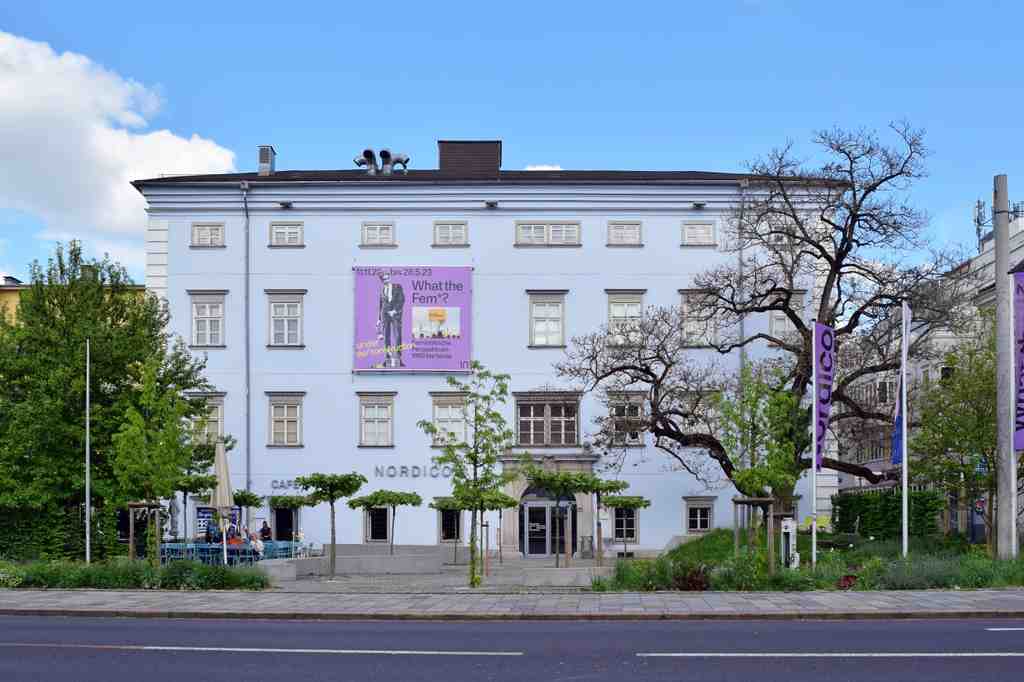
  8. Looking to your right, you’ll spot a striking pale blue building with four stories, large rectangular windows, and a grand stone doorway-its unique blue color and bold “Nordico”…もっと読む折りたたむ

    Looking to your right, you’ll spot a striking pale blue building with four stories, large rectangular windows, and a grand stone doorway-its unique blue color and bold “Nordico” sign make it impossible to miss among the more neutral facades. This is the Nordico Stadtmuseum-essentially the city’s memory palace and the proud owner of a name that might make you expect more polar bears than local relics. The story starts way back in the early 1600s, when Francesco Silva, an Italian master builder, created this as a posh little palace and farmyard for the monks of Kremsmünster Abbey. By the 1670s, the house had leveled up, adding more floors and a splash of Baroque confidence. Peek above the chunky granite portal and you’ll see a lively coat of arms, flanked by three Nordic kings-Erik, Olav, and Knut-looking like they’ve wandered straight from a Scandinavian epic. But the real twist comes in the 1700s when this place was run by the Jesuits. Their plan? Set up a boarding school for blond-haired, blue-eyed kids from Sweden, Denmark, and Norway, so they could be schooled in the finer points of Catholicism before heading home to do a little missionary work of their own. Needless to say, the recruitment drive fizzled out-so much so that, in a move that’s a bit too dark for Disney, they ended up buying the children of soldiers roaming through Austria. Their meals were funded from princely church foundations, which-in today's money-probably worked out to a few thousand euros a year for room, board, and the occasional existential crisis. At one point, the Nordico even boasted its own Bethlehem-inspired chapel, connected to the main house by an underground passage. Sadly, both the church and the secret hallway disappeared in the 1960s, thanks to city planners who must have fancied a wider street more than a slice of biblical architecture. To make room, they lopped off a chunk of the building, giving Nordico its slightly squashed look today. Over time, Jesuits left, the city took over, and by the 1930s Nordico became Linz’s city museum, anchored by Anton Pachinger’s impressive collection-a bit like Linz’s answer to the British Museum, just with fewer mummies. After decades of renovations and a major facelift in the 2000s, Nordico reopened with its now-celebrated collection… and state-of-the-art climate-friendliness that earned it Austria’s official Green Label. Fun fact: even the open plaza you’re standing on gets people talking. Locals once called it a “concrete desert,” but after an artful intervention-including a giant blue “S” you can sit on-the area’s now leafier and a tad more philosophical (that “S” is a nod to Freud’s theories, in case you wondered). If you’re curious about Linz’s archaeology, arts, and the odd artifact or two, this place is your go-to. When you’re ready, head southwest for about two minutes and you’ll reach the Catholic Private University Linz.

    専用ページを開く →
  9. Alright, coming up on your right, you’ll spot the Catholic Private University Linz. Looks pretty peaceful from the outside now, but its story is anything but quiet. Let’s rewind a…もっと読む折りたたむ

    Alright, coming up on your right, you’ll spot the Catholic Private University Linz. Looks pretty peaceful from the outside now, but its story is anything but quiet. Let’s rewind a bit-back to the year 1672. Europe was fresh out of the Thirty Years’ War, wigs were all the rage, and people here were already studying theology in this very place. Imagine that: future priests, philosophers, and dreamers ducking into lecture halls while the world outside spun with turmoil and change. The university didn’t just spring up overnight, though. It grew, evolved, swapped names and roles. Fast forward to the 1970s-this was when things got official. The local bishopric decided their humble theology institute deserved a promotion and up it went, earning state recognition as an official theological university. Even the government in Vienna wrote to say, “Yep, you’re legitimate.” That’s some serious paperwork. Then, in 2000, Linz made higher education history-this became Austria’s very first PRIVATE university. No mean feat for a city better known for steel mills and Danube fog. These walls have witnessed centuries of shifting thought, heated debate, and, at times, more Latin than you could shake a stick at. The university’s specialties run deep: from ancient religious texts to modern philosophy, from art history to ethics and the fine points of church law. The campus is also home to the Jägerstätter Institute-founded in honor of Franz and Franziska Jägerstätter. Franz, by the way, was a local farmer who famously refused to serve in Hitler’s army based on conscience. The institute digs into stories of people like him-unsung heroes, the difficult work of peacemaking, and the gray zones of morality. And this isn’t just an ivory tower. Graduates from here show up everywhere: law, the arts, politics-you name it. There’s something special about a place that’s been shaping minds for hundreds of years, right in the heart of Linz. Ready for Bundesrealgymnasium Linz Fadingerstraße? Just walk northeast for about 2 minutes and you’ll be there.

    専用ページを開く →
  10. Look to your left and spot a grand, pale building with tall windows, a stately corner entrance, and a block-long presence-it looks every bit the classic high school you’d conjure…もっと読む折りたたむ

    Look to your left and spot a grand, pale building with tall windows, a stately corner entrance, and a block-long presence-it looks every bit the classic high school you’d conjure in an old European movie, equal parts charisma and formidable symmetry. Welcome to Bundesrealgymnasium Linz Fadingerstraße, or if you’d rather not risk a tongue-twist, just “the Fadinger Gymnasium.” Built in 1909 by architect Karl Bundsmann, this building marks the confident stride from historicism to early art nouveau-that’s “Jugendstil” if you want to impress the locals. Take in that U-shaped footprint; the connecting corner pavilion anchors the block like the wise old teacher during lunch duty. The outer walls? A textbook example of “look, but don’t touch”-this place has been protected as a landmark for decades. Now, here’s a school that’s seen about every twist history could throw its way. Back in 1851, when Linz had more cobblestone than coffee shops, locals like the writer Adalbert Stifter pushed for a proper institution where young minds could be filled, not just with calculus and chemistry, but with the spirit of modern progress. Imagine the excitement when the first classes started in a repurposed craftsman’s hall-blackboards squeaking, inkpots at the ready. Of course, by the 1890s, the old digs were so overcrowded you’d get an education just by dodging elbows. So, in 1908-with a budget that would have made city councilors sweat (we’re talking about what would be several million euros or dollars today)-crews broke ground right here. And when World War I ended, out went the Habsburg eagle above the entrance. Times change, but the homework stays the same. Past these cheerful facades, a parade of students has shuffled, including a few names you might only mention at the family dinner table with a deep breath. Ludwig Wittgenstein, the famed philosopher, wandered these halls. So did a young Adolf Hitler, though history records his grades as utterly forgettable-proof that brilliance and mischief can share a classroom. The building is impressive, but it’s the sheer variety of young talent-future billionaires, artists, scientists, politicians, and, yes, a couple of notorious characters-that gives the Gymnasium its gravitas. The school’s always claimed to nurture independence, curiosity, and creative thinking; sometimes, perhaps, a bit too much. But education here isn’t just old chalk and musty books. In the 1970s, the school’s theater group put on shows so lively the audience didn’t just toss roses-they tossed career offers. In recent years, students fiddled with robotics, built radios, and snagged media prizes-think student-made films and award-winning radio shows, broadcasting the unvarnished voice of Linz’s new generation. Inside, there’s a grand hall used for everything from final exams to film screenings and the occasional concert-though the echo of a hundred students whispering answers is probably its best-guarded secret. Alright, let’s keep things moving. To visit Egeregg Castle, just head north along Fadingerstraße for about 5 minutes.

    専用ページを開く →
  11. Alright, coming up on your right, imagine for a moment you’ve arrived at Egeregg Castle-but don’t worry if you don’t see turrets or drawbridges. These days, the grand structure is…もっと読む折りたたむ

    Alright, coming up on your right, imagine for a moment you’ve arrived at Egeregg Castle-but don’t worry if you don’t see turrets or drawbridges. These days, the grand structure is long gone, covered by a patchwork of modern housing and the ordinary business of city life. Still, if you listen carefully to the ground beneath your feet, you might sense a few secrets lingering. Let’s rewind to 1551, when Koloman Egerer-a Viennese merchant with ambition (and, some might say, a decent flair for branding)-bought a plot here at what used to be the edge of Linz. Dealers needed water for their trades, and this area fit the bill, perched beside the Ludl, a small but lively side arm of the Danube. If someone told you today they bought a “bit swampy, prone-to-flooding” piece of land on the outskirts, you might raise an eyebrow. But Koloman? He snapped it up, tacked on a sturdy house, and after a bit of expansion, named his new place Egereck-giving it a whiff of aristocratic air, even before imperial approval. His good fortune didn’t stop there. By 1572, Koloman was knighted by Emperor Maximilian II, and Egereck was elevated to the status of a “Freihaus,” which meant independence from a long list of taxes and feudal chores. I won’t bore you with the exact numbers, but back then, skipping city taxes was about as delightful as saving thousands of euros a year-quite the coup. The catch? He did have to put down a lump sum, the interest of which (imagine about a year’s salary, both then and now) went back to the city coffers as an artful compromise. Koloman’s family life had as many twists as his real estate deal. His relatives married into all sorts of notable lineages-one daughter wed a humanist named Johann Sambucus, herself cited as Protestant, which in Catholic-majority Austria was, well, spicy. The Egerer men didn’t hang around long; by 1598, the male line fizzled out, and Egereck changed hands like a used car-passing through a series of aristocrats and officials, each more grandly titled than the last. The Grundemann family, for instance, beefed up their status with imperial favor and kept Egereck as their fancy weekend address. Back then, Egeregg Castle was built in a robust square, anchored at each corner by onion-domed towers that seemed determined to look medieval-function following form, with no plans for actual battles. Locals could spot its silhouette in engravings, nestled in the marshy lowlands beside the “smelly” Ludl creek-a less-than-ideal address for a grand estate, unless you enjoyed exotic damp and the occasional mosquito. Over the centuries, Egereck drifted between being a prestigious home, a fallback apartment for widows, and eventually, a management office for the sprawling Grundemann properties. But by the 1700s, the glamour faded. In 1737, it was torn down by order of Josef Groß von Ehrenstein, the postmaster (a surprisingly powerful gig), so he could build Linz’s first home for orphans and the poor, the Prunerstift. In classic Linz fashion, some demolition started before the emperor signed off on it, but, permission came through eventually. Parts of the old castle ended up in the foundation of that charity building-talk about recycling. Even into the 1800s, the castle’s cellars served as horse stables, tucked away underground. When the railway came to town, Egereck’s last traces were swept away. Today, aside from a fading street name, there’s nothing left in sight-unless you count the invisible footprints of all those who schemed, dreamed, or tried to dodge taxes on this spot. Ready for a change of pace? MAERZ, the Artists' Association, is just a minute north. Let’s go see what’s new and creative in Linz.

    専用ページを開く →
  12. All right - look left. You’re now face-to-face with MAERZ, one of Linz’s most... let’s call it consistently rebellious residents. On the outside, it might look like a converted…もっと読む折りたたむ

    All right - look left. You’re now face-to-face with MAERZ, one of Linz’s most... let’s call it consistently rebellious residents. On the outside, it might look like a converted civic building - which is exactly what it is, standing in what used to be the Linz Volksküche, the old public kitchen, now filled with the aroma of fresh paint and the quiet hum of artistic debate. To really get this place, you’ve got to picture Linz in 1913. It’s a city with a foot firmly planted in tradition, but a handful of young artists - Franz Brosch, Klemens Brosch, Franz Sedlacek, Anton Lutz, and Heinz Bitzan - are feeling stifled by the local art club’s, let’s say... glacial pace. Imagine the conversation: "Great watercolors, Otto - but what about Dadaism?” So, they decide to split, founding their own group and calling it “MAERZ.” The name? Inspired by the idea of “ver sacrum,” meaning “sacred spring.” Not a poetry class, but the idea was to signal a real, radical new beginning. Right from the start, they drew in the rebels and experimenters. Later, during the rumbling years between the world wars, artists like Alfred Kubin and Vilma Eckl joined in, stirring the pot even more. By the way, if you ever see Kubin’s drawings, don’t do it alone at night. Just a tip. But that streak of independence didn’t go over too well with the authorities when the wrong folks came to power. In 1939, after the Nazis took over Austria, the MAERZ association was flat-out banned. For over a decade, local culture lost a strong pulse - no public shows, no concerts, none of those night-long readings arguing over the merits of modernism. Then, after World War II, MAERZ re-emerged like that friend who skips a decade of parties but picks up right where they left off. Egon Hofmann, the president from 1921 - back in the saddle and more determined than ever. For years, they had no physical address, staging shows wherever they could - in borrowed halls, cafés, even cross-border collaborations. They managed all this at a time when “funding for the arts” meant scraping together the Austrian schilling equivalent of what today would hardly cover your phone bill. Still, somehow, the exhibitions and gatherings got bigger, flashier. Finally, in 1968, MAERZ secured its very own gallery - right on the bustling Taubenmarkt. For 35 years, it became the go-to place to see everything from wild experimental sculpture to readings of literature that made the local critics clench their jaws. But like any proper artist, MAERZ refused to settle down. In 2003, they moved here, to this inviting but no-nonsense spot in Eisenbahngasse, where the ethos remains “out with the old, in with the - well, whatever nobody’s seen yet.” Inside today, you’ll find exhibitions that could be painting, video, sound installations, even architecture. Literature still finds its voice here - especially of the kind that twists language into strange contortions. The list of members runs like a who’s-who of Austrian avant-garde, from Oscar-winning sculptors to writers with cult followings, and even a couple of internationally famous artists like Richard Serra and Valie Export. If you’re wondering, yes, you WILL occasionally see something genuinely confusing. That’s half the fun. There’s a real sense that every generation reclaims MAERZ a little differently. Around here, “tradition” means starting something entirely new... again and again. So when you leave, if you overhear a heated debate about abstract art at the café, don’t be surprised - Linz wouldn’t be Linz without its MAERZ.

    専用ページを開く →

よくある質問

ツアーはどうやって始めますか?

購入後、AudaToursアプリをダウンロードして引き換えコードを入力してください。ツアーはすぐに開始できます。再生ボタンをタップして、GPSガイド付きルートに従うだけです。

ツアー中にインターネットは必要ですか?

いいえ!開始前にツアーをダウンロードしておけば、完全にオフラインで楽しめます。チャット機能のみインターネットが必要です。モバイルデータを節約するため、WiFi環境でのダウンロードをお勧めします。

これは団体ツアーですか?

いいえ、これはセルフガイド式のオーディオツアーです。ガイドや団体、決まったスケジュールに縛られることなく、スマホから流れるナレーションを聴きながら自分のペースで自由に探索できます。

ツアーの所要時間は?

ほとんどのツアーは60〜90分で完了しますが、ペースは完全に自由です。好きな時に一時停止したり、スポットを飛ばしたり、休憩を取ったりできます。

今日中にツアーを終えられない場合は?

問題ありません!ツアーには無期限でアクセスできます。明日、来週、あるいは来年でも、好きな時に再開できます。進行状況は保存されます。

どの言語が利用可能ですか?

すべてのツアーが50以上の言語に対応しています。コードを引き換える際にお好みの言語を選択してください。注意:ツアー生成後に言語を変更することはできません。

購入後、どこからツアーにアクセスできますか?

App StoreまたはGoogle Playから無料のAudaToursアプリをダウンロードしてください。メールで届いた引き換えコードを入力すると、ライブラリにツアーが表示され、ダウンロードして開始できるようになります。

verified_user
満足保証

もしツアーを楽しめなかった場合は、返金いたします。お問い合わせ先: [email protected]

以下の決済で安全にチェックアウト

Apple PayGoogle PayVisaMastercardPayPal

AudaTours: オーディオツアー

楽しくて手頃なセルフガイド式ウォーキングツアー

アプリを試す arrow_forward

世界中の旅行者に愛されています

format_quote このツアーは街を見るのに本当に良い方法でした。ストーリーは作り込まれすぎず面白くて、自分のペースで探索できるのが良かったです。
format_quote 観光客気分になりすぎず、ブライトンを知るためのしっかりとした方法でした。ナレーションには深みと文脈がありました。
Christoph
Christoph
starstarstarstarstar
ブライトン・ツアー arrow_forward
format_quote 片手にクロワッサンを持ち、期待ゼロで始めました。アプリはただ一緒にいてくれる感じで、プレッシャーもなく、クールな物語を楽しめました。

オーディオツアー使い放題

世界中のすべてのツアーをアンロック

0 ツアー·0 都市·0 国
all_inclusive アンリミテッドを探索