

Tour Audio di Los Angeles: Echi di Patrimonio nei Tesori Nascosti di West LA
Sotto le palme baciate dal sole di Los Angeles, segreti e lotte echeggiano tra poltrone di velluto di cinema e silenziose sale commemorative. Più che una città di stelle, questo quartiere della zona ovest nasconde storie di coraggio, controversie e ribellione cinematografica. Questo tour audio autoguidato conduce nel profondo del cuore di LA, svelando leggende che la maggior parte dei visitatori ignora. Scopri dove drammi inenarrabili ed eroi sconosciuti hanno plasmato la città che pensavi di conoscere. Perché gli applausi al Jackie Robinson Stadium una volta scuotevano le gabbie politiche ben oltre lo sport? La lunga ombra di chi infesta la Sawtelle Veterans Home, e quale manufatto scomparso alimenta voci nelle sue sale? Quale famigerata disputa si è una volta svelata dietro il bagliore al neon del tendone del Nuart Theatre? Traccia storie di sfida e passione mentre ti muovi attraverso vicoli nascosti e grandi facciate. Ogni tappa rivela nuove scintille di dramma e scoperta, cambiando per sempre la tua visione di LA. Premi play per entrare nei segreti che plasmano l'anima di questa città.
Anteprima del tour
Informazioni su questo tour
- scheduleDurata 30–50 minsVai al tuo ritmo
- straighten4.4 km di percorso a piediSegui il percorso guidato
- location_onPosizioneLos Angeles, Stati Uniti
- wifi_offFunziona offlineScarica una volta, usa ovunque
- all_inclusiveAccesso a vitaRiascolta quando vuoi, per sempre
- location_onParte da Nuart Theatre
Tappe di questo tour
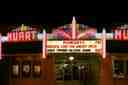
Look for a bold neon sign spelling “NUART” in glowing pink and yellow on Santa Monica Boulevard-if you spot that dazzling marquee above glass doors, you’ve found the Nuart…Leggi di piùMostra meno
Look for a bold neon sign spelling “NUART” in glowing pink and yellow on Santa Monica Boulevard-if you spot that dazzling marquee above glass doors, you’ve found the Nuart Theatre. Alright, you’re standing outside a true Los Angeles legend! Picture it: the year is 1929, the air is buzzing with excitement for silent films and jazz-age dreams. Right where you stand, this single-screen gem opened its doors, dazzling moviegoers. Its art-deco façade is like a beacon for cinema lovers, especially now when the neon flickers to life as the sun sets. Over the decades, the Nuart became the crown jewel of Landmark Theatres, leading the charge for art-house movies across the country. Imagine crowds lining up for foreign films, independents, and cult classics that might have otherwise faded into obscurity. Here, some movies nobody cared about...became legends. In 1974, Landmark gave the Nuart a new lease on life, and since then it’s been all about offbeat gems and quirky debuts. In fact, it just celebrated its 50th anniversary with fans dressing up for midnight showings. Speaking of quirky, every Saturday night since the wild 1980s, you could catch The Rocky Horror Picture Show, complete with a live shadowcast-costumes, callouts, maybe a flying piece of toast if you're not careful! The Nuart has also been a movie star itself: featured in films like Foul Play, and even had John Waters tell people to “smoke anyway” in a no-smoking reminder as only he can. On stage, punk bands and cult icons have rocked out to wild crowds-legend has it, the energy here could light up a neon sign all by itself! So breathe in that popcorn smell, and remember: you’re standing where outrageous cinema history was-and still is-made.
Apri pagina dedicata →
Mostra altre 6 tappeMostra meno tappeexpand_moreexpand_less
Right in front of you, you’ll spot a collection of grand, Victorian-style buildings surrounded by palm trees and neatly trimmed bushes, lined up on broad, dirt roads-the Sawtelle…Leggi di piùMostra meno
Right in front of you, you’ll spot a collection of grand, Victorian-style buildings surrounded by palm trees and neatly trimmed bushes, lined up on broad, dirt roads-the Sawtelle Veterans Home sits spread out ahead, with beautiful old architecture that looks like it belongs in a storybook. Let’s step into the dusty boots of the late 1800s and imagine the warm California sun beating down as you stand amidst these sprawling acres-back then, most of this land was just empty, windswept chaparral. Then, with a bit of political magic and a dash of entrepreneurial scheming, two local developers pulled off what we might call the "real estate coup of the century." Senator John P. Jones and Arcadia B. de Baker, eager to put West LA on the map, donated 300 acres (and soon after, even more) to house the Pacific Branch of the National Home for Disabled Volunteer Soldiers. Picture eager veterans arriving by train, stepping onto wide avenues lined with young eucalyptus and palm trees-as much a fresh start as it was a home. Now, let’s rewind even further, to the final days of the Civil War. Washington D.C. lawmakers, moved by the sacrifices of citizen soldiers, decided to create a special place solely for volunteers-the kind of place where those injured in battle, or simply worn down by war, could find rest and care. These volunteers weren’t regular career soldiers, and before Congress acted, they didn’t have anywhere to go after they hung up their uniforms. So, President Lincoln’s pen signed one of its last acts into law: the beginning of the National Home for Disabled Volunteer Soldiers. Suddenly, the country had promised not to abandon its heroes. Sawtelle soon became one of the most prominent branches-think of it as the California version of a home for heroes. As admission rules relaxed, it grew and grew: space for 1,000 residents, then a major hospital, and even land set aside for a dedicated veterans' cemetery. If you had fought in the Civil War, the Indian Wars, or later conflicts in the Philippines, China, or Alaska, you’d have found open arms-and maybe even a rocking chair-waiting here. And not just anyone got in; you had to be honorably discharged, out of money, and unable to work. Sorry, no freeloaders allowed! By 1900, the Home’s hospital was overrun with the needs of so many veterans that a new one was built right here, a place buzzing with the latest medical wonders of its day. Not long after, in 1927, the mighty James W. Wadsworth Hospital rose up, quickly becoming a local landmark-but Wadsworth, like all the best sequels, only followed the blockbuster original. But all was not always peaceful in paradise. Rumors swirled about food quality and management-enough to trigger an official investigation from the Board of Managers and, later, from the U.S. Senate itself. Turns out, after some finger-wagging and reminders about responsibilities, mostly everything was fine. Still, you can imagine the tension during those hearings: “Are you feeding the soldiers enough mashed potatoes?” Now, that’s congressional drama! Like all good things, the Sawtelle Home didn’t just serve as a quiet refuge. It became a magnet, drawing families, tourists, and even real estate speculators. The Los Angeles Pacific Railroad added a stop right here-a “must-see” on the famous Balloon Route streetcar tour. New neighborhoods blossomed around the campus as people, and their extended families, settled nearby, hoping some of that peace would rub off on them, too. As the years passed, LA’s veteran services transformed again and again. The original National Home merged into the mighty Veterans Administration in 1930. New hospitals rose, new buildings were planned, and the old Victorian barracks gave way to Spanish Colonial-style wonders. More than a hundred years after it first opened its doors, the legacy of the Sawtelle Veterans Home lives on-serving thousands at the West Los Angeles VA Medical Center just down the road. So while you stand here, surrounded by the branches of those hundred-year-old trees, remember you’re on hallowed ground: part peaceful garden, part bustling sanctuary, and always a place that put duty, honor, and a good story above all else. Now, onward to the next stop-shall we see what stories await us there?
Apri pagina dedicata →You’re looking for a baseball field that stretches out in front of you, with a classic diamond, green turf, towering light posts, and the big blue "UCLA Bruins" logo right behind…Leggi di piùMostra meno
You’re looking for a baseball field that stretches out in front of you, with a classic diamond, green turf, towering light posts, and the big blue "UCLA Bruins" logo right behind home plate-if you spot the netting and the scoreboard peeking out over the outfield fence, you know you’ve made it to Jackie Robinson Stadium. Now, take it all in-the fresh cut grass, the thrum of excitement you can almost sense from the stands, even when the seats are empty. This isn’t just any college baseball park; it’s where the mighty UCLA Bruins swing for the fences, nestled a pop fly away from the West LA VA Medical Center and now a legend in its own right since opening in 1981. With just 1,820 seats, it’s got that up-close, heart-in-your-throat feel, perfect for watching dreams unfold-unless, of course, you showed up hoping for cotton candy, because you’re more likely to catch a pop fly than a snack here! But the real magic lies in its namesake. Jackie Robinson wasn’t just an athlete-he was a pioneer who exploded baseball’s color barrier wide open in 1947 and made the world take notice. Long before Jackie wore number 42 for the Brooklyn Dodgers, dazzling fans and stealing home so many times it’s still a record, he was right here at UCLA-earning varsity letters in not just one or two but four sports. Baseball, basketball, football, track-Jackie Robinson did it all, making most of us feel tired just thinking about it! The stadium sits almost perfectly aligned to true north, so if you ever get lost, just remember: home plate points you in the right direction in more ways than one! A bronze statue and a mural greet every visitor at the entrance. They weren’t always here, though-they’re owed to the tireless efforts of Jackie’s brother, Mack Robinson, who campaigned for years until he raised $100,000, drew in a talented sculptor, and made sure that every Bruin and visitor would remember whose shoulders they stand on. The stadium is the site of big moments and little surprises. In 1981, when the place was officially dedicated, Jackie’s widow Rachel Robinson took the mound and, with Dodgers legends looking on, tossed out the first pitch-talk about goosebumps. Over the years, the field has seen it all: monumental victories, heartbreak losses, and even a no-hitter in 2015 when the Bruins won in extra innings-bet nobody’s heart rate ever went quite back to normal after that one! And as for the rivalries? Let’s just say the stadium once hosted 2,914 fans-way above capacity-watching UCLA and USC battle it out. If you see any stray foam fingers still trembling, now you know why. College baseball royalty have called this diamond home-Gerrit Cole, Trevor Bauer, Chase Utley, Eric Karros, and more-making their mark here before heading to the Majors. UCLA even boasts multiple big-league managers as alumni, including Dodgers skipper Dave Roberts. It’s not all home runs and highlights, though. In 2020, things got tense when the stadium’s parking lot was used to detain protesters-a reminder that even sports sanctuaries aren’t always untouched by real-world struggles. And in 2024, a legal plot twist saw UCLA almost lose access to this beloved ballpark before, thankfully, a judge reversed the order-a little extra drama, just to keep everyone on their toes. So whether you’re here for the echoes of glory, the spirit of Jackie Robinson, or just hoping to snag a foul ball, Jackie Robinson Stadium brings together heroes, history, and the thrill of the game-all under LA’s bright blue sky. Don’t forget to tip your cap to Jackie’s statue on the way in (but maybe don’t try to outrun his record-19 steals of home plate is probably enough for one lifetime!).
Apri pagina dedicata →Straight ahead, you’ll spot the Streetcar Depot-a charming, white, wooden building with intricate arching supports all around and a low, sloped roof that looks straight out of a…Leggi di piùMostra meno
Straight ahead, you’ll spot the Streetcar Depot-a charming, white, wooden building with intricate arching supports all around and a low, sloped roof that looks straight out of a Victorian storybook. Alright, picture yourself here in 1900: the air is thick with the smell of fresh-cut wood and anticipation, and the buzzing conversations of soldiers and their loved ones waiting under the grand eaves. This striking depot, dreamed up by architect J. Lee Burton, was once the end of the line for the Soldiers’ Home Line-a route that rolled up from the very spot where today’s Expo/Sepulveda Metro Station sits, right to these grounds of the Sawtelle Veterans Home. Folks piled off the rickety Los Angeles Pacific Railroad cars-maybe with flowers in hand, maybe with excitement, or maybe just to stretch their legs after a long ride on the Balloon Route. In those days, this Victorian Eastlake Movement-style structure was cutting-edge; now, it stands like a wise old owl, having outlived the clanging of rails that faded by the 1920s. Even after the last passenger, the tracks stuck around, barely used, until they too vanished, with the land being picked over like a cake at a party. Today, as cars zoom by and memories linger in the sunshine, this depot is one of the rare whispers from that time, listed on the National Register of Historic Places-a little piece of Los Angeles time travel, minus the confusing time zones!
Apri pagina dedicata →Look straight ahead for a cream-colored building with a red-tiled roof, arched windows, and black awnings above doors that spell out “Wadsworth”-it’s framed by leafy trees and…Leggi di piùMostra meno
Look straight ahead for a cream-colored building with a red-tiled roof, arched windows, and black awnings above doors that spell out “Wadsworth”-it’s framed by leafy trees and sits nobly along Eisenhower Avenue. Now that you’ve found the Wadsworth Theatre, let’s imagine stepping into history, where freshly painted Mission Revival walls echo the applause of thousands. Picture it: It’s 1939, the world is changing fast, and a brand new, $162,000 theater emerges on the grounds of the Soldiers’ Home at Sawtelle. This wasn’t just a building-it was a sparkling promise, offering 1,500 plush seats to veterans eager for both escape and connection, whether through heart-stirring Broadway performances or the latest movie reels spinning golden light across the crowd. During those early years, the air must have been thick with excitement and a bit of buttered popcorn, while outside, red Spanish tiles glistened in the California sun. Fast forward to 1976-the theatre earns its name in honor of Major James W. Wadsworth, a Civil War officer who stood up for disabled veterans, making this place about more than entertainment-about honor and healing. Through the decades, this grand dame of West LA has seen film classics like “The Passion of Joan of Arc,” a splashy Esther Williams retrospective (water ballet, anyone?), nervous laughter during “Spies Like Us” with Aykroyd and Chase right there, and even a rare public appearance by Woody Allen! In 1992, things got dramatic not just onstage, but off-a controversial film about a hospital revolt almost lit up this stage, but concern for veterans’ well-being sent the screening packing to UCLA. Renovated in 2002 to just under a thousand velvet seats, the Wadsworth’s walls still hum with Broadway showtunes, famous premieres, and since 2009-the wild energy of the Streamy Awards. Go ahead, take a deep breath… you’re standing at the crossroads of Hollywood magic, civic duty, and more than a little showbiz sparkle!
Apri pagina dedicata →Look ahead for a grand, white, wooden chapel with steep castle-like towers and pointy roofs, tucked behind palm trees-the Wadsworth Chapel stands out like something from an old…Leggi di piùMostra meno
Look ahead for a grand, white, wooden chapel with steep castle-like towers and pointy roofs, tucked behind palm trees-the Wadsworth Chapel stands out like something from an old storybook. Alright, history fans and fans of things that creak in the wind, you’re looking at one of LA’s quirkiest survivors-Wadsworth Chapel, a place with personality, secrets, and maybe even a few ghosts, if you believe in that sort of thing. Wadsworth Chapel was built in 1900, when Teddy Roosevelt was president and horseless carriages were just beginning to make noise on Wilshire Boulevard. Back then, imagine soldiers marching past this very spot-this whole area was a home for disabled volunteer soldiers who’d fought in the Civil War. The federal government got the land in 1888, and soon after, the campus sprang up with grand old Victorian buildings to house and care for veterans. Now, here’s where things get interesting: this is a chapel with not one, but two personalities. The building’s split in half-one side for Catholic services, one for Protestant-all under one roof, separated by a double brick wall, yet sharing the same intricate, fairy tale exterior. Each chapel even has its own pointy tower and belfry-just in case anyone tried to sneak between denominations! This double chapel, designed by J. Lee Burton, once earned the nickname "an intricate little jewel box" and was built out of redwood with a whopping 21 types of windows. Talk about a stained glass convention! Originally the place was painted in dark earth tones with crisp white trim, and it was part of a campus people called "the most monumental complex of Shingle-style Queen Anne structures ever constructed in LA." Picture the late 1800s: soldiers in uniform gathering inside, sunlight filtering through those varied windows, and the distant clanging of the chapel bell. But the story takes a turn: in 1955, fire damaged the Protestant half. The Veterans Affairs department didn’t have the funds for a full repair, so since then, the southern balcony has been closed. Then the real drama came with the Sylmar earthquake in 1971-the ground shook, foundations crumbled, and the north bell tower actually pulled away from the building. The chapel doors were locked, and they haven’t opened to the public since. The building has aged, faded, and stood silent, like an old soldier with stories to tell but nobody to listen. Restoration-at an eye-popping $11.5 million-has been debated for years. After all, it’s a moral issue: fix the chapel, or use the money to help living veterans. So here it stands, the oldest building on Wilshire, waiting for someone to bring it back to life-a fixer-upper that’s seen a century of LA change before its very (stained glass) eyes. So, next time someone says LA has no history, you can point right here-where two chapels, a lot of history, and probably a couple lost spirits still linger just beneath the white paint.
Apri pagina dedicata →


Domande frequenti
Come inizio il tour?
Dopo l'acquisto, scarica l'app AudaTours e inserisci il tuo codice di riscatto. Il tour sarà pronto per partire immediatamente – tocca play e segui il percorso guidato dal GPS.
Ho bisogno di internet durante il tour?
No! Scarica il tour prima di iniziare e goditelo completamente offline. Solo la funzione chat richiede internet. Ti consigliamo di scaricare tramite WiFi per risparmiare dati mobili.
È un tour guidato di gruppo?
No – è un tour audio autoguidato. Esplori in autonomia al tuo ritmo, con la narrazione audio riprodotta dal tuo telefono. Nessuna guida, nessun gruppo, nessun orario.
Quanto dura il tour?
La maggior parte dei tour richiede 60–90 minuti, ma sei tu a controllare il ritmo. Metti in pausa, salta le tappe o fai pause quando vuoi.
E se non riesco a finire il tour oggi?
Nessun problema! I tour hanno accesso a vita. Metti in pausa e riprendi quando vuoi – domani, la prossima settimana o il prossimo anno. I tuoi progressi vengono salvati.
Quali lingue sono disponibili?
Tutti i tour sono disponibili in oltre 50 lingue. Seleziona la lingua preferita quando riscatti il codice. Nota: la lingua non può essere cambiata dopo la generazione del tour.
Dove accedo al tour dopo l'acquisto?
Scarica l'app gratuita AudaTours dall'App Store o Google Play. Inserisci il codice di riscatto (inviato via email) e il tour apparirà nella tua libreria, pronto per essere scaricato e avviato.
Se il tour non ti piace, ti rimborseremo l'acquisto. Contattaci a [email protected]
Pagamento sicuro con 


