
Tour audio di Jersey City: icone nascoste e racconti lungo l'argine
E se il battito cardiaco di Jersey City risuonasse più forte dove strade alberate e ferrovie nascoste si intersecano con racconti di ribellione e resilienza? Questo tour audio autoguidato ti invita ad andare ben oltre l'ovvio, svelando storie stratificate a Hamilton Park, lungo l'argine Harsimus Stem, all'interno della Chiesa Cattolica di Sant'Antonio da Padova e dietro ogni angolo intrigante. Perché quartieri rivali hanno combattuto una battaglia segreta per un tratto di pietra dimenticato? Chi ha cospirato per salvare una ferrovia fantasma dal svanire sotto nuove torri? Quale leggendario allenatore ha compiuto miracoli nel basket in una palestra della chiesa sopra il santuario? Attraversa parchi vittoriani lussureggianti e sali su imponenti argini mentre i sussurri di ferrovie scomparse e faide di quartiere riempiono la tua immaginazione. Ogni fermata apre il passato di Jersey City, lasciando che la storia si riversi nella vita moderna e che le strade ordinarie pulsino di segreti drammatici. Pronto a scoprire il vero spirito sotto queste pietre storiche? Che il tour abbia inizio.
Anteprima del tour
Informazioni su questo tour
- scheduleDurata 50–70 minsVai al tuo ritmo
- straighten4.7 km di percorso a piediSegui il percorso guidato
- location_onPosizioneJersey City, Stati Uniti
- wifi_offFunziona offlineScarica una volta, usa ovunque
- all_inclusiveAccesso a vitaRiascolta quando vuoi, per sempre
- location_onParte da Parco Hamilton, Jersey City
Tappe di questo tour
To spot Hamilton Park, just look for the lush green square surrounded by leafy trees, benches, and old brownstone homes-it's right between Eighth and Ninth Streets, with a central…Leggi di piùMostra meno
To spot Hamilton Park, just look for the lush green square surrounded by leafy trees, benches, and old brownstone homes-it's right between Eighth and Ninth Streets, with a central fountain acting like a friendly landmark letting you know you’ve arrived. Now that you’re here in Hamilton Park, take a big deep breath-if you catch a hint of grass mixed with the faint aroma of coffee and something tasty from a local bakery, you know you’re in the right place! Imagine yourself walking through this same park in the Victorian age: horse-drawn carriages rattling by where electric scooters might zoom today and ladies in long dresses, bustling about under wide shady trees that still stand here. The homes around you, with their beautiful nineteenth-century brownstones, watched a city grow up all around them, and, just like a stubborn grandparent, Hamilton Park has insisted on staying a safe green haven all these years. Here’s a secret-this park isn’t just a pretty garden. It’s the heart of the neighborhood’s social life! All year round, the park invites everyone to come together for so many fun events. From free Shakespeare plays, where epic love stories and sword fights play out under the summer stars-move over Broadway, right?-to movies screened outdoors where every bark and giggle becomes part of the soundtrack. In spring, kids dash through the grass for the annual Easter Egg Hunt, hoping to score that one big chocolate bunny. Every Wednesday, you’ll see local farmers hauling baskets of tomatoes and berries to the bustling farmers market, and laughter from family picnics mixes with the background chatter of neighbors catching up. After a major makeover in 2010, the park looks as fresh as ever-just imagine how relieved the squirrels must have been! Soak it all in: the echo of children’s voices, neighbors chatting on benches, and maybe, just maybe, the distant murmur of a Shakespearean ghost rehearsing under the trees. Not a dull moment here-Hamilton Park has always been Jersey City’s living room, with room for everyone on the couch.
Apri pagina dedicata →Right ahead, you’ll spot the Harsimus Stem Embankment as an elevated stretch of wild green, with tall grass and scattered trees rising up from a stone base-just look for a long,…Leggi di piùMostra meno
Right ahead, you’ll spot the Harsimus Stem Embankment as an elevated stretch of wild green, with tall grass and scattered trees rising up from a stone base-just look for a long, overgrown strip running alongside Sixth Street. Now, take a good look at this lush green corridor-it might seem quiet now, but back in its heyday, the Harsimus Stem Embankment was alive with the rattling thunder of trains! This half-mile-long stone structure used to carry not one, not two, but seven roaring railroad tracks, all belonging to the mighty Pennsylvania Railroad. Imagine the hustle: freight cars, workers shouting, and the shrill whistle of trains dashing to the Hudson River at Harsimus Cove. If you close your eyes for a second, you might almost hear those ghostly whistles through the wildflowers and tangled branches. Built 27 feet high, this embankment was once the proud spine of Jersey City’s railroad age. From here, the tracks stretched to the waterfront, where cargo would be loaded onto barges and sent across the river-each trip an adventure of steel, steam, and sometimes, spilled coffee. The stone you see beneath all that greenery? It’s tough enough to have shrugged off a century of locomotive stomping and is now almost playing hide-and-seek with the plants. For years, this was the divide between two lively neighborhoods: Harsimus and Hamilton Park. Now, don’t let the calmness fool you-there’s been some real drama right here, just without the popcorn. In 2005, after Conrail packed up and left, developers swooped in hoping to build modern high-rises. The city went “Not so fast!” and a legal tug-of-war began. Judges, lawyers, and city planners battled it out, sometimes louder than a freight train at midnight. At one point, locals gathered, demanding that this piece of history be saved for everyone to explore, daydream, and maybe walk their dog in peace. The embankment is now a Jersey City municipal landmark, recognized for its historic value. There’s still a bit of unresolved mystery and tension about the future-will this green artery become a park or will more high-rises peek over the trees? For now, you’re standing in a place where nature is staging a comeback and history refuses to be forgotten… and who knows, maybe one day you’ll come back and find it transformed forever. So take it all in, and see if you can spot the clues of stories gone by-sometimes, the best adventures are hidden in plain sight!
Apri pagina dedicata →Here’s how to spot St. Anthony of Padua Catholic Church: look straight ahead for a towering stone building with pointed arched windows and a tall, greenish spire capped with a…Leggi di piùMostra meno
Here’s how to spot St. Anthony of Padua Catholic Church: look straight ahead for a towering stone building with pointed arched windows and a tall, greenish spire capped with a cross-its spire stands out above the rooftops around you. You’re now standing before one of Jersey City’s most legendary places-a church with more spirit than a choir on Sunday! Imagine it’s the late 1800s: Polish families are bustling through busy streets, clutching their coats as the wind rushes in from the river. Back then, if you spoke Polish and wanted to pray, you had to cross the choppy Hudson River by ferry, just to reach a church in New York! Tired of soggy shoes and saltwater splashes, these determined folks set out to build a parish right here, and in 1892, St. Anthony's opened its doors. Fast forward to more recent times, and this isn’t just a church-it’s the birthplace of New Jersey’s oldest Polish-speaking parish, added to the National Register of Historic Places. But here’s the real slam dunk: upstairs, for years you could hear the squeak of sneakers and the swish of nets as Coach Bob Hurley, Sr. led St. Anthony High School's basketball team to glory. They say the team was so good, even the church bells cheered! So whether you came to pray, play, or just enjoy the view, this place has been making history for over a century.
Apri pagina dedicata →



Mostra altre 13 tappeMostra meno tappeexpand_moreexpand_less
To spot White Eagle Hall, just look straight ahead for a tall, tan-brick building with arched windows, broad stone steps, and a proud white eagle emblem perched above twin arched…Leggi di piùMostra meno
To spot White Eagle Hall, just look straight ahead for a tall, tan-brick building with arched windows, broad stone steps, and a proud white eagle emblem perched above twin arched entrances-right on Newark Avenue. Now, imagine you’re stepping up to these doors, feeling the energy of the city humming around you, and-if you listen close-maybe you’ll hear echoes of music, laughter, and the squeak of a basketball on old wood floors. White Eagle Hall isn’t just a building; it’s a stage set for over a century of Jersey City’s best stories. It all started in 1910, when a group of Polish immigrants teamed up with master craftsmen to build a place where their community could gather, celebrate, and connect. Led by the determined Rev. Peter Boleslaus Kwiatowski-who, rumor has it, could organize a neighborhood quicker than most people tie their shoes-they put their hearts (and backs) into creating a landmark that would last. The white eagle you see on the façade? That’s not just decoration-it’s Poland’s proud national symbol. And if you look closer, you’ll spot the solemn faces of four Polish heroes carved right into the stone. Bet you didn’t expect to bump into historic royalty today! Inside, sunlight pours through two elegant glass skylights honoring Frédéric Chopin and Marcella Sembrich, a piano legend and a dazzling opera star. Enter on a busy night today, and the room glows with excitement-a sea of music lovers or theater fans, swept up in something amazing. Back in the day, this hall was the local hotspot for bingo games, community concerts, and the kind of wild dance parties your grandparents would never admit to. Later on, it became a gym for the legendary St. Anthony High School basketball team, the Friars. Their coach, Bob Hurley, led them through so many championships that the walls almost started handing out trophies by themselves. Seriously, you could practically smell the sweat and adrenaline of high-stakes games-though thankfully, that’s all been cleaned up now! The stage also saw fierce “Battle of the Bands” contests. And believe it or not, Jersey City’s own Frank Infante, who’d go on to play guitar for Blondie, had one of his first moments of glory right here under these very lights. A while back, the hall got a million-dollar makeover-original wood floors turned into bar counters, church relics transformed into new fixtures, and a bright new future emerged. Today, with sparkling bars, sky-high ceilings, and the energy of a premiere music venue, it’s the heartbeat of Jersey City nightlife. So take in the sight, and know you’re standing in front of a hall built by hope, kept alive by legends, and restored by Jersey City’s dreamers-who believed, just like those Polish immigrants, that a great gathering place could make a city feel like home.
Apri pagina dedicata →To spot Dixon Mills, just look for a big old red-brick building with a tall green strip on the corner, boldly painted with the word “DIXON” in giant white letters, and some sky…Leggi di piùMostra meno
To spot Dixon Mills, just look for a big old red-brick building with a tall green strip on the corner, boldly painted with the word “DIXON” in giant white letters, and some sky bridges connecting the buildings above you. Now, picture yourself back in the 1800s, right here in Jersey City-before all the fancy apartments, this place was bursting with activity and clouded with a little smoke. Joseph Dixon, a man of big dreams (and probably a lot of pencil shavings), brought his crucible factory from Salem all the way to this spot in 1847. Imagine workers in worn aprons hustling around, the air buzzing with the sound of machinery turning out not just crucibles, but pencils, crayons, stove polish, and even lubricants. The smell of graphite and newly-made pencils would fill your nose-and don’t get me started on those greasy, mysterious stove polishes. Dixon Mills thrived, its brick walls soaking up nearly fifty years of invention and industry. Years later, when the factory doors finally closed, you’d think that was the end. But-plot twist!-in the 1980s, the place was transformed, turning rugged factories into a lively web of homes, bridges still stretching overhead like a set from an old movie. Today, you can peek into the lobby’s mini-museum, where bits of the past are carefully displayed, whispering stories of smoky workshops and the unstoppable march of progress. You almost expect to find a ghostly worker asking for a coffee break!
Apri pagina dedicata →Look for a grand, cream-colored stone building with big rectangular windows and a striking greenish trim around the roof, sitting right on the corner where the trees line the…Leggi di piùMostra meno
Look for a grand, cream-colored stone building with big rectangular windows and a striking greenish trim around the roof, sitting right on the corner where the trees line the sidewalk and the New Jersey sun bounces off the facade. Alright, time for a story with more twists than a box of crayons on a hot day! Let's imagine you’re standing here over a hundred years ago-close your eyes for just a second and picture the clickety-clack of carriage wheels over cobblestones as Jersey City’s brand new museum takes its very first bow back in 1901. It didn’t even have its own building yet! Instead, all those treasures-paintings, sculptures, bits of history from the colonial times straight into the modern era-were stuffed up on the fourth floor of the Jersey City Free Public Library, right around the corner from Van Vorst Park. You can almost hear the echo of a librarian whispering, “shhh!” as kids tromped through to catch a glimpse of something cool. But like every great Jersey City tale, the museum’s journey hit a few potholes. In 1953, the city’s wallet was tighter than a drum, so the museum shut its doors. For two decades, the collection just sat there-quiet, gathering dust-until finally, the doors swung open again in 1975, and Jersey City’s own historian, J. Owen Grundy, swooped in. He ended up serving as museum president five times, proving that if you want something done right, you’ve probably got to do it yourself… over and over! Things started to look up in the 1980s and ‘90s, when the museum finally landed its own home-a big, beautiful old post office warehouse from 1929 on Montgomery Street. Now, I know what you’re thinking: a post office warehouse doesn’t sound glamorous, but inside, it became a wonderland. Light poured down from skylights into crisp modern galleries, and there was even a 152-seat theater for community events, movie nights, and a starlit classroom where kids and adults alike got bitten by the art bug. Imagine local artists, like Priscila De Carvalho, debuting vibrant exhibitions in rooms that once rattled with the sound of mail carts. The museum really became a party for the senses-a place where Jersey City’s wild mix of cultures and stories came to life on canvas, on paper, in sculpture and more. Of course, real life isn’t always as neat as a gallery wall. The museum struggled to keep its doors open, closing again in 2010, the future uncertain, a little like the last seconds of a dramatic movie. Then, a quick twist: the local Medical Center swooped in, buying up the space and reopening a small part to the public. But the spotlight faded quickly, and it closed for good soon after. In a courtroom drama fit for TV, a 2015 court decision made it clear-the museum collection belonged to its own association, not the city. What a collection it was! American paintings, quirky maps, gorgeous furniture, heartfelt sculpture, and dazzling contemporary art-pieces from artists like David Wojnarowicz and Chakaia Booker, masterpieces from the 1800s, and a treasure trove of items you’d never guess reflecting New Jersey’s creative heart. And then, in 2018, came the next plot twist: the entire collection-thousands of works-found a new home at Rutgers’ Zimmerli Art Museum. A bittersweet ending, or maybe a new beginning? Well, Jersey City wasn’t about to close the book just yet. The city bought a building near Journal Square, once a thundering transportation hub built in 1912, where streetcars zipped and bus horns echoed. They called it the Pathside building, and it was all set to become Centre Pompidou x Jersey City-a satellite for the famous Parisian museum, with millions earmarked for renovations and a collection of modern masterpieces ready to travel across the Atlantic. But just as everything seemed ready to launch, the project hit a big red stop button. In June 2024, state funds vanished and the city’s dreams splintered, leaving everyone wondering, would the art ever come back? Politicians haggled, newspapers buzzed with rumors, and the very future of Jersey City’s place in the art world hung by a thread. But, if Jersey City has taught us anything, it’s that the story here is never really over. So, as you stand outside this grand old building, remember: every window, every stone, every echoing footstep inside holds a piece of a journey that keeps going, shifting, reinventing itself-just like the city itself. Keep your eyes open, because you never know when Jersey City’s art scene will leap out and surprise you again!
Apri pagina dedicata →Look ahead for a tall, polished bronze statue of a police officer standing proudly on a pedestal, with his right hand resting on his holster and his left hand holding his jacket,…Leggi di piùMostra meno
Look ahead for a tall, polished bronze statue of a police officer standing proudly on a pedestal, with his right hand resting on his holster and his left hand holding his jacket, looking ever-watchful between the towering city buildings. Alright, brave explorer, you’re standing face to face with a true Jersey City legend-the Police Memorial! This isn’t just any statue; it’s a seven-foot-tall sentinel of polished bronze and iron, sculpted all the way back in 1936 by a guy with a name as grand as his art: Archimedes Giacomantonio. Picture the tension and the pride-he created this uniformed officer by combining the features of two real Jersey City cops. That’s teamwork, literally cast in metal! But buckle up, because this statue has enough drama for a television series. Originally, the statue stood watch in Bayview - New York Bay Cemetery. It looked over the city’s bravest, with a granite pedestal inscribed in heartfelt memory of Jersey City’s fallen police, made possible thanks to their comrades-all unveiled by the famously tough Mayor Frank Hague. Now, every good hero faces adversity, and this statue had quite a ride. In 1961, it simply vanished-stolen! But wait, the story gets even twistier: in 1975, thieves struck again and this time, they cut it into pieces, trying to sell it for scrap. It could have disappeared forever, if not for a detective-worthy rescue mission! The scattered parts were discovered all over town, like a detective story playing out in real life. Luckily, the original artist returned, pieced the statue back together, and gave it a second chance at heroism. It was rededicated in 1976 and now stands right here, not in a quiet cemetery, but at the heart of the city, behind City Hall-so everyone feels its protective gaze. So, while you’re here, maybe give it a little salute or a quiet thank you. Our city certainly knows how to honor those who serve, and this monument has the scars and the spirit to prove it. Now, onward to our next adventure!
Apri pagina dedicata →You’ll spot the Powerhouse Arts District right in front of you-the huge, bold brick building with tall smokestacks and bright yellow and blue window panels is hard to miss beneath…Leggi di piùMostra meno
You’ll spot the Powerhouse Arts District right in front of you-the huge, bold brick building with tall smokestacks and bright yellow and blue window panels is hard to miss beneath the wide Jersey sky. So, here we are in the heart of the Powerhouse Arts District, where the past packs more punch than an espresso shot! Picture this: over a century ago, the Victorian-era powerhouse standing before you thrummed with the roar of massive steam engines, generating energy for the Hudson and Manhattan Railroad. As Jersey’s factories faded away in the 20th century, these warehouses went quiet, left behind like sleeping giants-until artists and dreamers moved in, drawn to the high ceilings and affordable rent. Imagine the clang of sculptors’ hammers and the swirl of dancers from Nimbus Dance, mixing with laughter spilling out of makeshift galleries and studios on Bay Street. Yet, the district’s journey hasn’t been all smooth-city plans twisted and turned, as developers eyed the land for high-rise towers, making old-timers nervous about losing the quirky spirit that makes this place unique. Today, groups like Art House Productions and the Exchange Place Alliance keep creativity alive, even as the skyline grows taller. If you ever sense a playful energy in the air, it’s just the ghosts of artists past and present, daring you to imagine what magic these brick walls will hold next!
Apri pagina dedicata →To spot the old Headroom LGBTQ+ Lounge, look for a wide, industrial-style building with big windows and a tan facade, tucked behind a metal awning right across the street from…Leggi di piùMostra meno
To spot the old Headroom LGBTQ+ Lounge, look for a wide, industrial-style building with big windows and a tan facade, tucked behind a metal awning right across the street from where you're standing. Alright-pause here a moment, and let’s conjure up the magic that once filled this humble stretch of Bay Street. Imagine neon lights flickering to life behind those windows, the thump of music pulsing through the concrete walls, and the laughter drifting onto the sidewalk, no matter the weather or the worries of the world. Yes, right here stood Headroom LGBTQ+ Lounge-Jersey City’s sparkling beam of queer nightlife, even though it shone only briefly. Back in late 2020, when the world was quieter, distant, and starved for smiles (not to mention decent Wi-Fi connections), Headroom opened its doors in this very spot. Run by Joseph Cameron and Howard Brunner, it wasn’t just any bar. It was the only LGBTQ venue in the city with a real, honest-to-goodness stage. Picture velvet curtains, sequins catching the light, and tables spaced six feet apart-because let’s face it, during the pandemic, socializing meant learning the choreography to “keep your distance.” And if you were in need of color on a gray Jersey night, what a show you’d get! Drag artists-some local legends, some fresh from the glitterbomb that is RuPaul’s Drag Race-brought sass and sparkle. You could even catch “A Trans-elebration,” a night crafted to honor trans performers. On weekends, drag brunches served up pancakes with a full side of shade, and whenever Drag Race aired live, Olivia Lux would lead the party right from this stage. Let’s not glaze over the wild reality-Headroom opened during COVID-19, a time when most places were worried about how to squeeze their old routines into a world full of rules and masks. But here, distancing and safety were built in from day one: temperature checks at the door, spaced tables, and masked-up patrons cheering behind their cocktails. It was a safe haven in every sense-a place you could shake off the world and just be yourself, no apologies or questions asked. But darkness crept in quicker than anyone wanted. After just six months, on the cusp of Memorial Day weekend in 2021-right when things were looking brighter and the world was about to unmask-Headroom slammed shut. The drama wasn’t on stage this time. It was off-stage, brewing between the owners. There were whispers about fees and contracts, money meant for performers, one owner asking for a bigger piece of the pie. When push came to shove, the locks changed, and the music stopped overnight. Both sides told their stories-one said it was about honoring the performers, the other said it was just business. Meanwhile, the community reeled. Performers and staff had to scramble. Some nearby businesses stepped up to support, hiring out-of-work entertainers or donating to help staff stay afloat. The spirit of Headroom, that sense of belonging, lingered like glitter in the air, even as its doors stayed dark. And oh, what Headroom meant! Critics raved about the top-notch shows. It wasn’t just a place to grab a drink-it was a spot to see and be seen, to celebrate being entirely, unashamedly yourself. For six fleeting months, this place promised warmth during a cold time, light during a difficult year. One writer even said, “There was nothing else like it around.” You’d better believe the city felt that loss. Even now, as you stand here, you can imagine the echo of music, the swirling energy, the roar of the crowd when a queen made her grand reveal or when the brunch crowd let out a collective gasp. The Headroom LGBTQ+ Lounge was a stage, a safety net, an experiment in hope against the odds-a reminder that sometimes the shortest stories leave the sharpest memories. Who knows? The dream of Headroom hasn’t vanished forever. There’s talk it could rise up somewhere new. But for a moment, right here, Jersey City partied like nowhere else. And standing outside these doors, you’re walking right through the heart of its history-heels, sequins, and all.
Apri pagina dedicata →To spot the Great Atlantic and Pacific Tea Company Warehouse, look for a massive nine-story building with rows of tall windows and red brick panels between wide concrete…Leggi di piùMostra meno
To spot the Great Atlantic and Pacific Tea Company Warehouse, look for a massive nine-story building with rows of tall windows and red brick panels between wide concrete frames-it’s standing proudly on the corner, topped with a distinct projecting cornice, and the number 150 is big and bold above the doorway. Alright, time to take a leap back in time-imagine you’re standing here in Jersey City in 1900. The city buzzes with new industry and fresh hope, and up in front of you rises this colossal warehouse, built for A&P, the original king of supermarkets. Workers in flat caps and rolled sleeves hurry through rows of truck bays, loading crates stacked with tea, coffee, and sugar-listen closely and you might just hear the heavy echoing from days gone by. This wasn’t just any ordinary warehouse; it was the nerve center of a grocery empire that stretched across America. A&P started small in Manhattan, but by the 1930s, they would have more than 15,000 stores-yep, you heard that right! Five massive buildings once filled this block, connected by railroad sidings and humming with the energy of trucks and trains hauling food to hungry cities. The air was thick with the scent of roasted coffee beans, and every morning, sunlight streamed through these gigantic sash windows onto palettes of goods ready to speed off to the next destination. If walls could talk, these ones would probably interrupt each other with stories-of booming business one year, and the nervous silence of 1929 the next, when the company sold this building. Yet as the decades rolled by and A&P’s warehouses became memories, this hefty giant refused to fade away. Today, it’s gone from storing coffee and canned fruit to hiding bikes and housing artists. Look up and picture those dramatic cornices once sheltering workers from the rain, and listen for the faint lingering in the air. If only you could pop inside-who knows what secrets the old tea empire might still have stashed away!
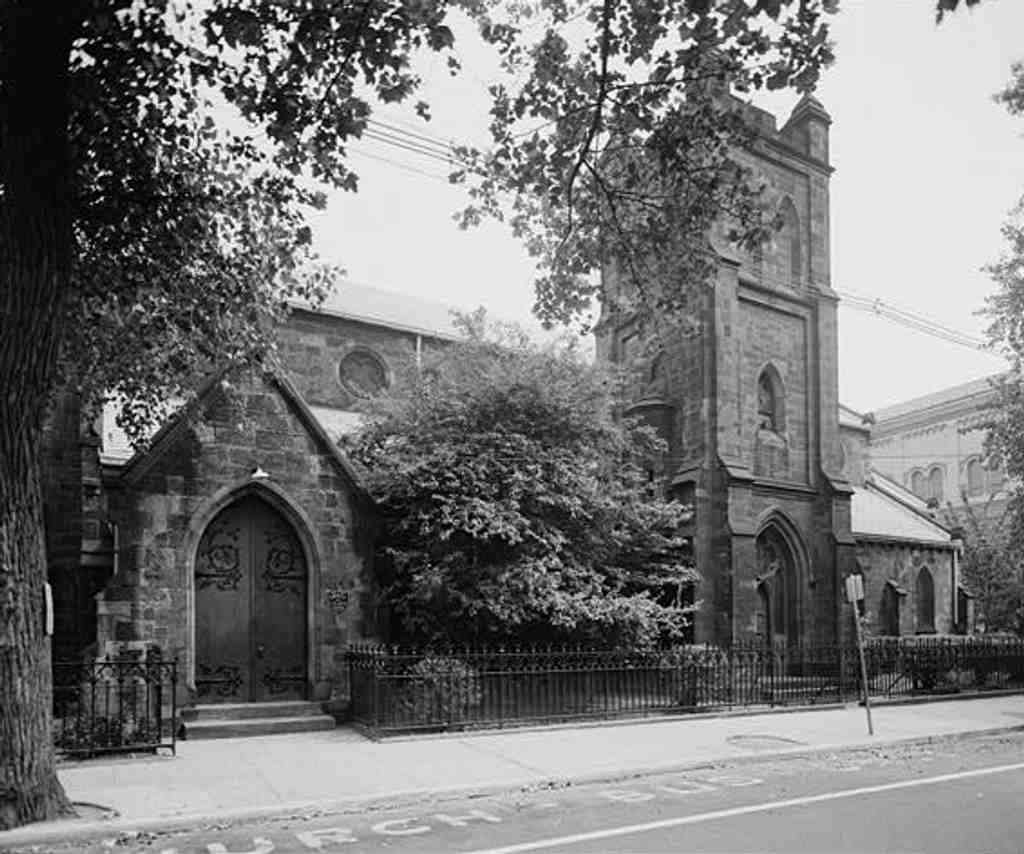
Apri pagina dedicata →To spot Grace Church Van Vorst, just look for the striking stone building with a tall square tower and pointed arched doors, tucked behind a shady tree and nestled right beside…Leggi di piùMostra meno
To spot Grace Church Van Vorst, just look for the striking stone building with a tall square tower and pointed arched doors, tucked behind a shady tree and nestled right beside the street. Now, take a deep breath and imagine yourself in the mid-1800s. The world is changing fast, Jersey City is growing, and suddenly, right here, a group of people decide they need a place for hope and community. So, in 1853, they built this church, made from brownstone blocks strong enough to stand the test of time. Can you picture a horse-drawn carriage rumbling by as the heavy front doors creak open? Designed by Detlef Lienau, this English Gothic wonder-with its pointed arches and tall roof-was so impressive, they decided it deserved an upgrade just a few years later. In 1864, they added two extra bays, giving it more room for joyful voices, and a baptistry where water splashed as children were welcomed into the community. But the church wasn’t done telling its story. In 1912, a 57-foot-high tower rose into the sky-perfect for spotting any latecomers! Through every generation, laughter, footsteps, and maybe a few rushed wedding parties echoed under this roof. And if you look next door, the rectory’s stones and style match the church, as if the two buildings are old friends. Amazing, isn’t it? Over a century and a half later, this peaceful corner has been bustling with stories, prayers, and-let’s be honest-a lot fewer horse-drawn carriages!
Apri pagina dedicata →Right ahead, you’ll spot Van Vorst Park as a big green oasis, packed with trees, winding paths, and a charming little pavilion right at its heart-all surrounded by classic…Leggi di piùMostra meno
Right ahead, you’ll spot Van Vorst Park as a big green oasis, packed with trees, winding paths, and a charming little pavilion right at its heart-all surrounded by classic brownstones on every side, so just look for that burst of green framed by city streets. Now, imagine standing here hundreds of years ago-no playgrounds, no busy traffic, but the land still pulsing with life. This chunk of the city was once at the very edge of a wild, colonial frontier, and it’s named after the Van Vorst family, who arrived way back in the 1630s, when beaver hats were all the rage. Back then, if you wanted to cross the Hudson River, you needed a sturdy boat and maybe a bit of luck dodging passing sturgeon. The Van Vorsts weren’t just settlers-they basically ran the show, managing huge tracts of land called the patroonship Pavonia, the first European settlement around here. And just to add a twist worthy of a soap opera: the township of Van Vorst only existed for ten short years, from 1841 to 1851, before being swallowed up by the fast-growing Jersey City. Picture politicians shaking hands, maybe some dramatic moustache twirling, as they signed the paperwork! The Van Vorst family name still lingers, especially thanks to Cornelius Van Vorst, who became the twelfth mayor here in the 1860s. His ancestors’ old homestead? That’s long gone, but the streets and stories are still alive. Now, look around you-these beautiful brownstones and rowhouses were once home to families who strolled these paths in top hats and bonnets, whispered secrets on shaded benches, and maybe even grumbled about the pigeons (some things never change). The park itself has been lovingly maintained, spruced up in 1999 with help from local neighbors who wanted it to keep its magic-for dogs, picnics, and kids alike. So, take a breath and let your footsteps echo alongside centuries of Jersey City’s story-lush, bustling, and ever-changing, just like this park.
Apri pagina dedicata →Just ahead of you, take in the sight of a modern light rail station flanked by tall, glassy apartment buildings-this is your gateway to Liberty Harbor. Picture this: It’s the…Leggi di piùMostra meno
Just ahead of you, take in the sight of a modern light rail station flanked by tall, glassy apartment buildings-this is your gateway to Liberty Harbor. Picture this: It’s the 1970s, and all around you isn’t the sleek, bustling scene you see now, but a patchwork of empty fields and forgotten factories. The dust swirled across silent rail tracks, and the ground held onto the memory of old industry-what a quiet, ghostly place it must have been! Then, visionaries came along with a bold idea to breathe new life into these brownfields, giving birth to Liberty Harbor. The architects, Duany and Plater-Zyberk, planned each street, nook, and park with a focus on people, hoping neighbors would actually meet and-gasp-talk to each other. City planners called it “new urbanism,” but let’s be honest, it just means life feels a little more neighborly. Today, the Hudson-Bergen Light Rail zips through with a cheerful ding, the NY Waterway ferry splashes over to Lower Manhattan, and the Liberty Landing Ferry still glides out from Warren Street. Imagine the stories of newcomers who stepped off these travel lines with wide eyes and big dreams, amazed to see an old industrial wasteland transformed into a lively, welcoming neighborhood. It’s a place that invites you to stroll, to connect, or just to pause and watch the city pulse with energy. So take a deep breath-the spirit of transformation is all around you, and Liberty Harbor’s ready to welcome you aboard!
Apri pagina dedicata →






Domande frequenti
Come inizio il tour?
Dopo l'acquisto, scarica l'app AudaTours e inserisci il tuo codice di riscatto. Il tour sarà pronto per partire immediatamente – tocca play e segui il percorso guidato dal GPS.
Ho bisogno di internet durante il tour?
No! Scarica il tour prima di iniziare e goditelo completamente offline. Solo la funzione chat richiede internet. Ti consigliamo di scaricare tramite WiFi per risparmiare dati mobili.
È un tour guidato di gruppo?
No – è un tour audio autoguidato. Esplori in autonomia al tuo ritmo, con la narrazione audio riprodotta dal tuo telefono. Nessuna guida, nessun gruppo, nessun orario.
Quanto dura il tour?
La maggior parte dei tour richiede 60–90 minuti, ma sei tu a controllare il ritmo. Metti in pausa, salta le tappe o fai pause quando vuoi.
E se non riesco a finire il tour oggi?
Nessun problema! I tour hanno accesso a vita. Metti in pausa e riprendi quando vuoi – domani, la prossima settimana o il prossimo anno. I tuoi progressi vengono salvati.
Quali lingue sono disponibili?
Tutti i tour sono disponibili in oltre 50 lingue. Seleziona la lingua preferita quando riscatti il codice. Nota: la lingua non può essere cambiata dopo la generazione del tour.
Dove accedo al tour dopo l'acquisto?
Scarica l'app gratuita AudaTours dall'App Store o Google Play. Inserisci il codice di riscatto (inviato via email) e il tour apparirà nella tua libreria, pronto per essere scaricato e avviato.
Se il tour non ti piace, ti rimborseremo l'acquisto. Contattaci a [email protected]
Pagamento sicuro con 


