
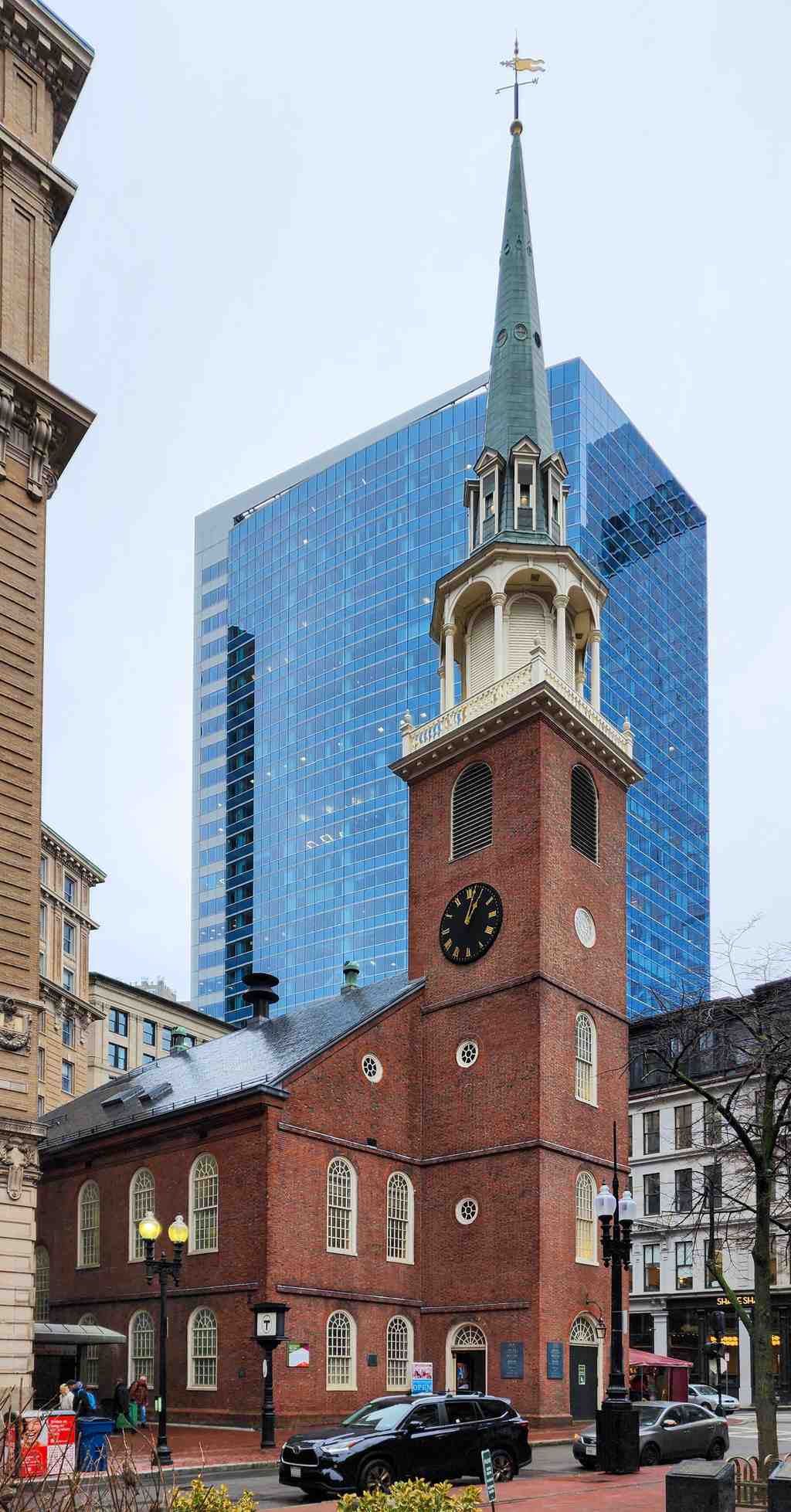
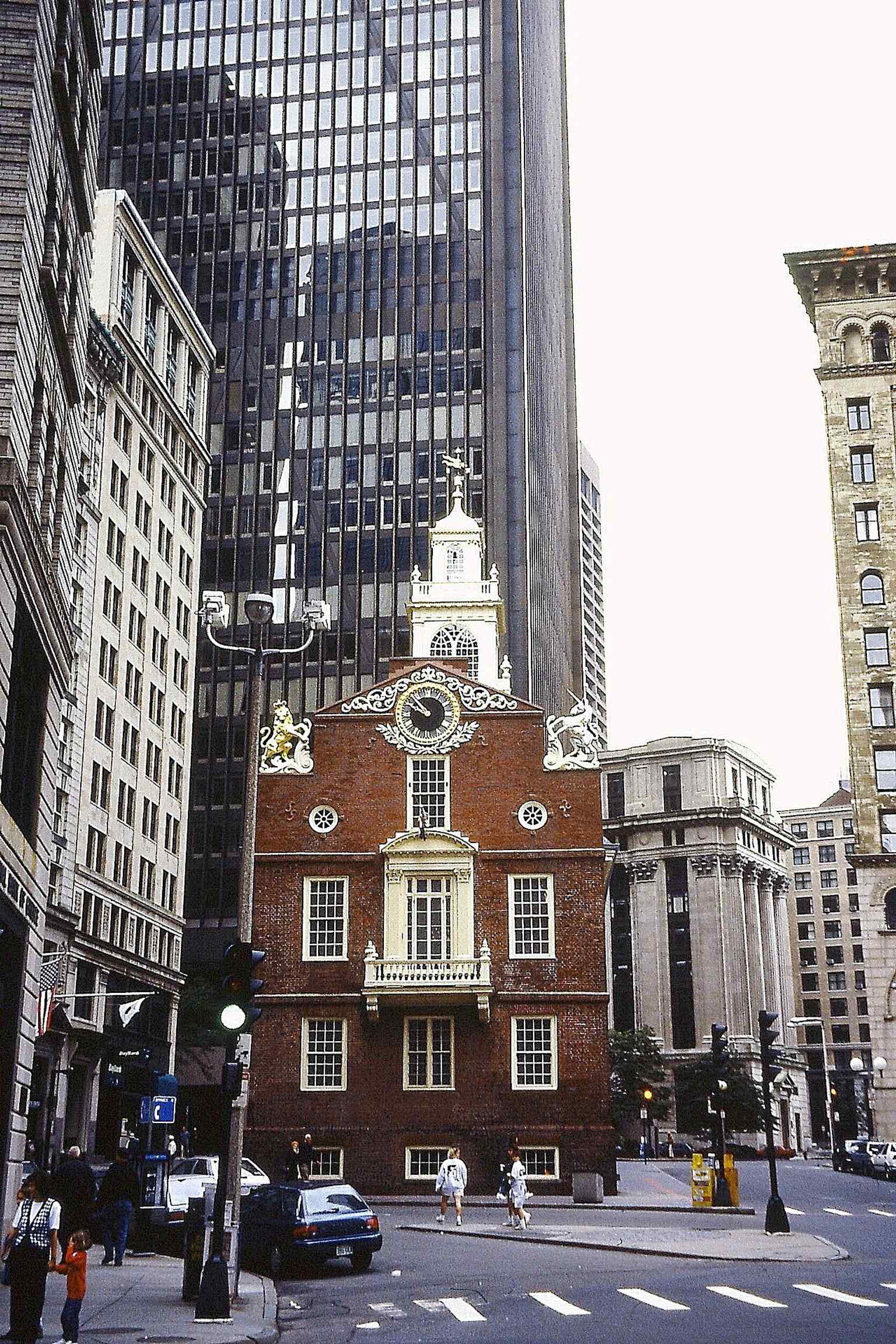
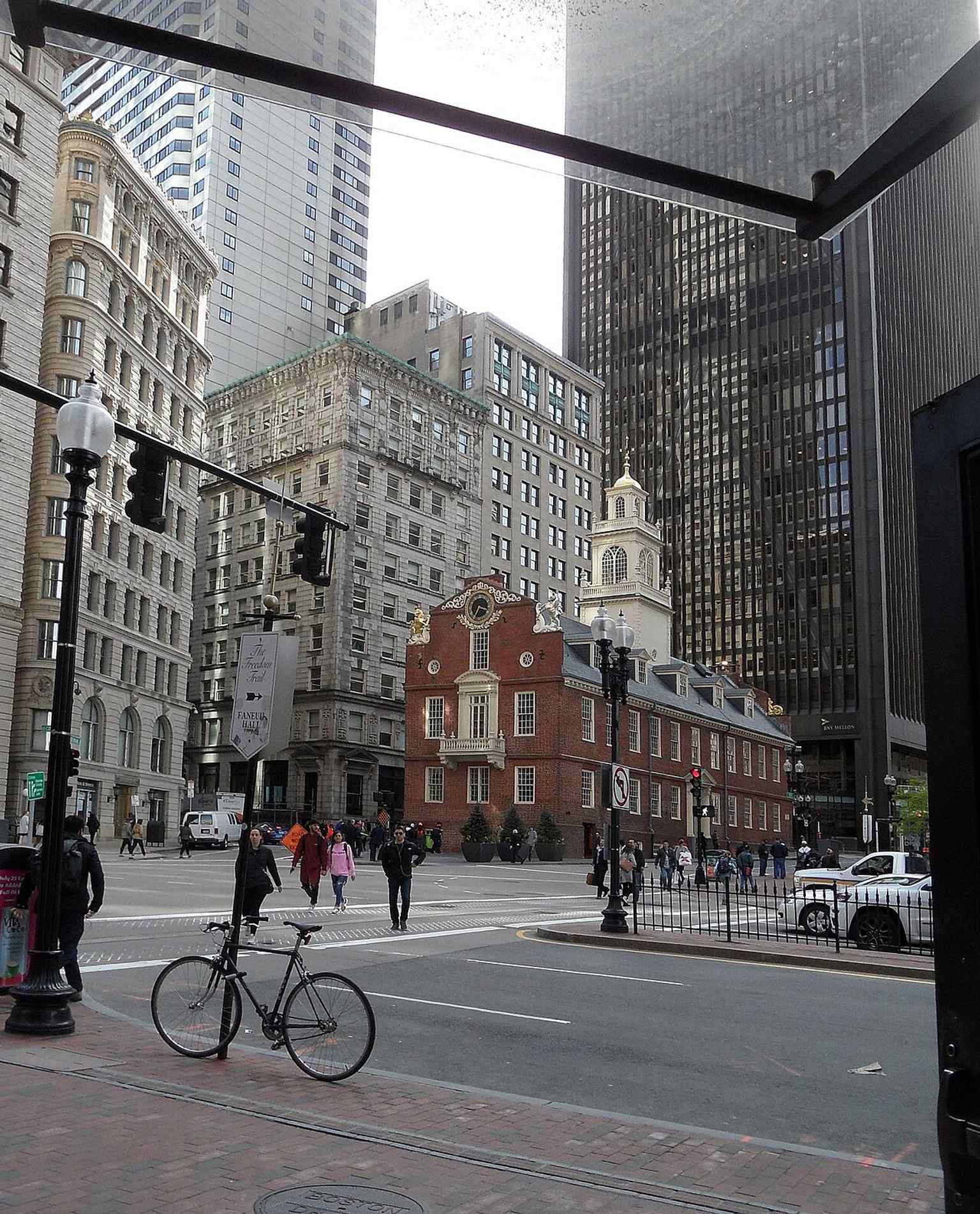
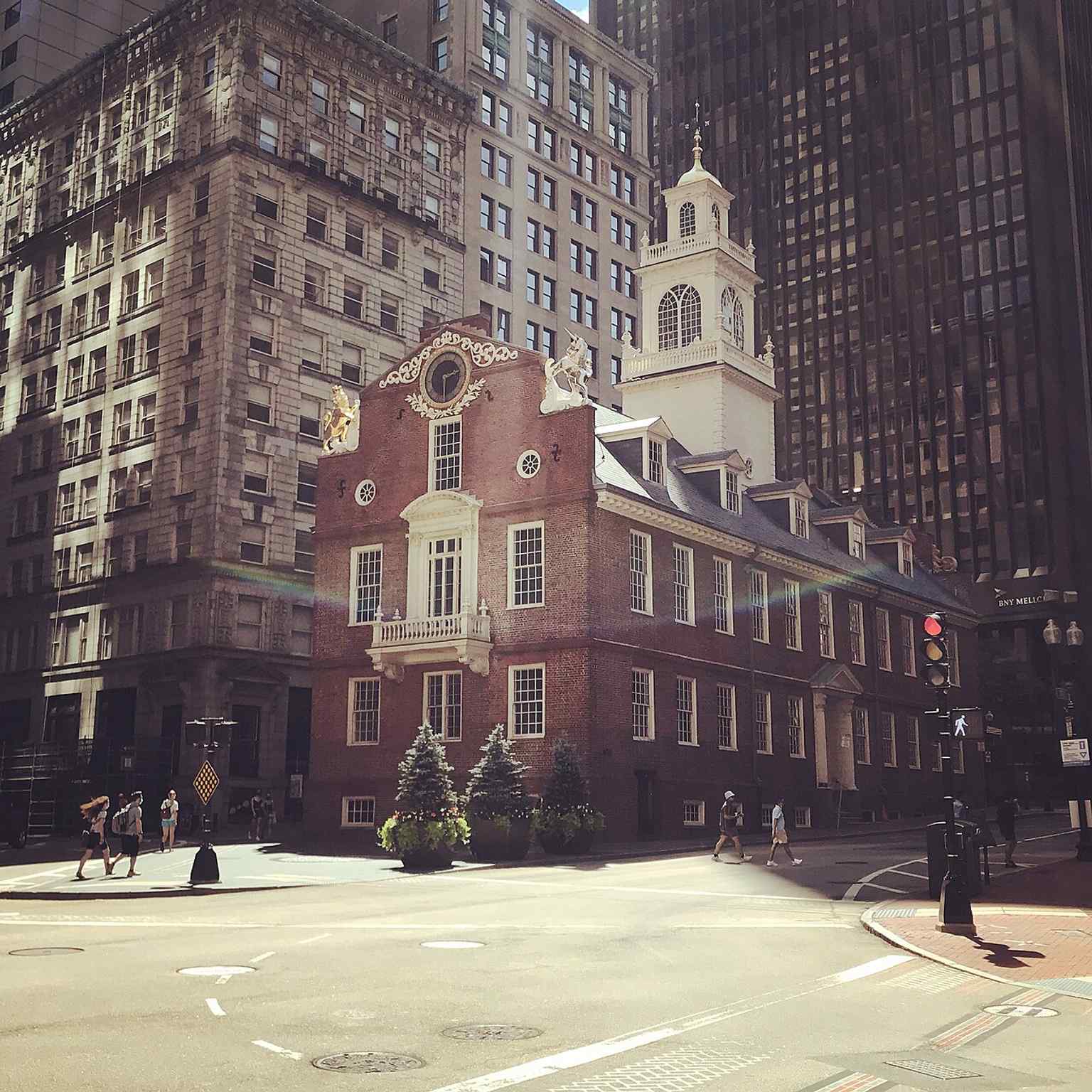
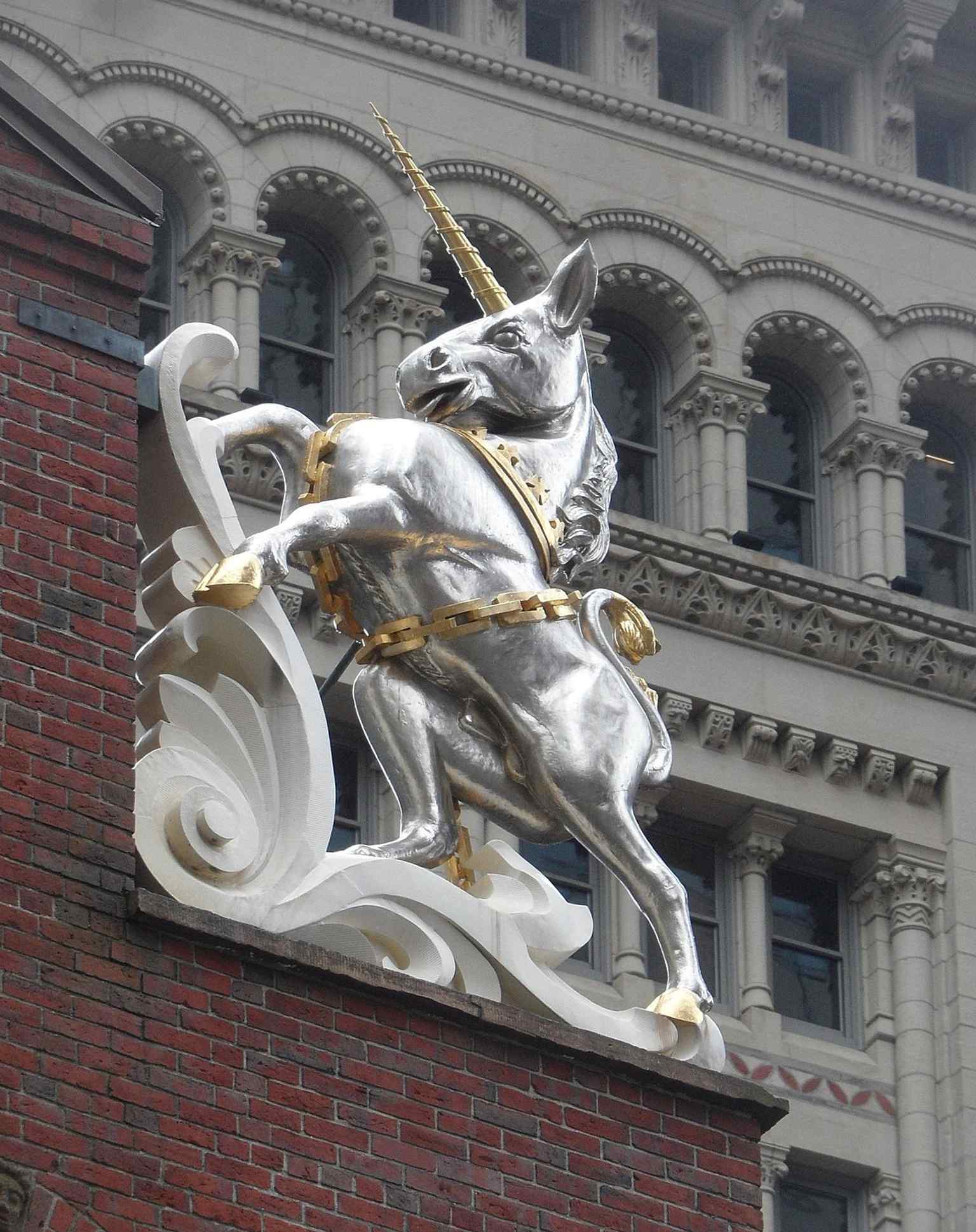
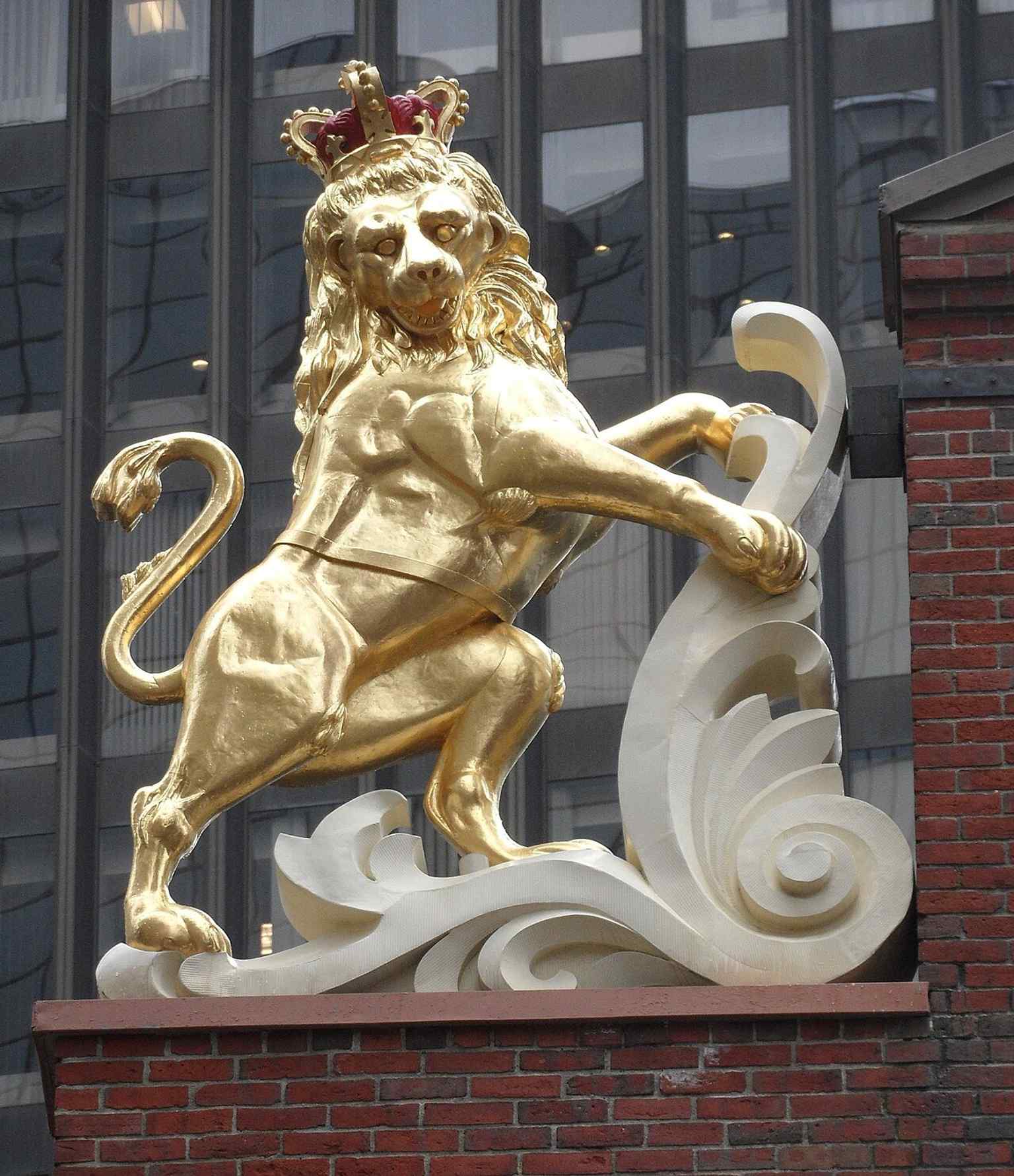
On your right, look for a red-brick building with a steep gabled roof and a slender central tower, topped by royal lion-and-unicorn figures that make this old public landmark easy to spot.
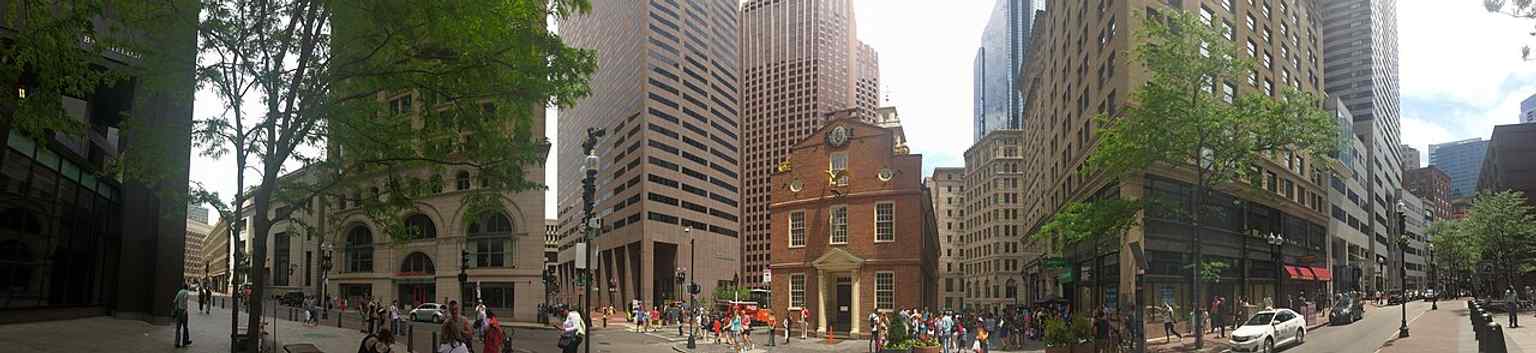
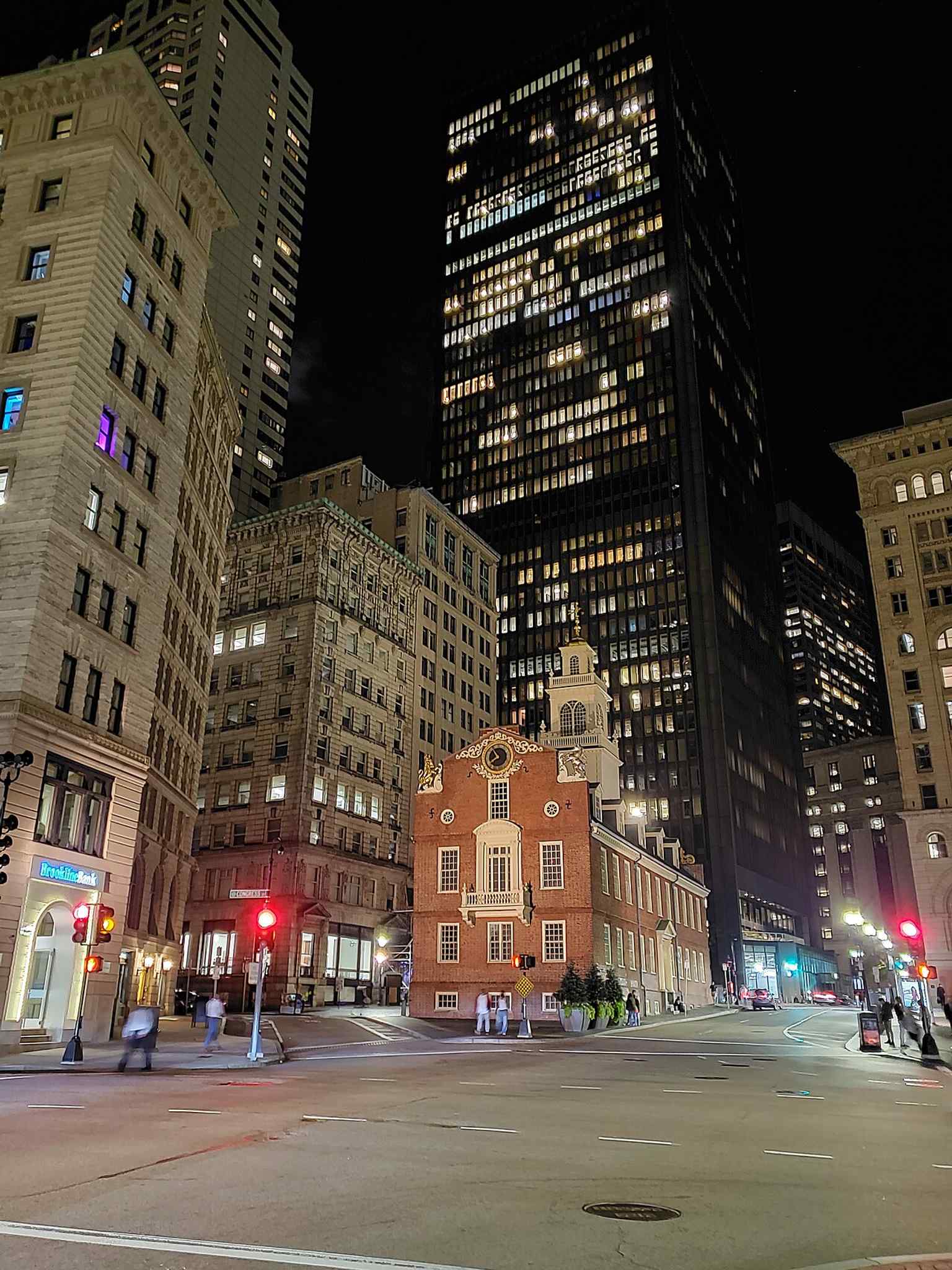
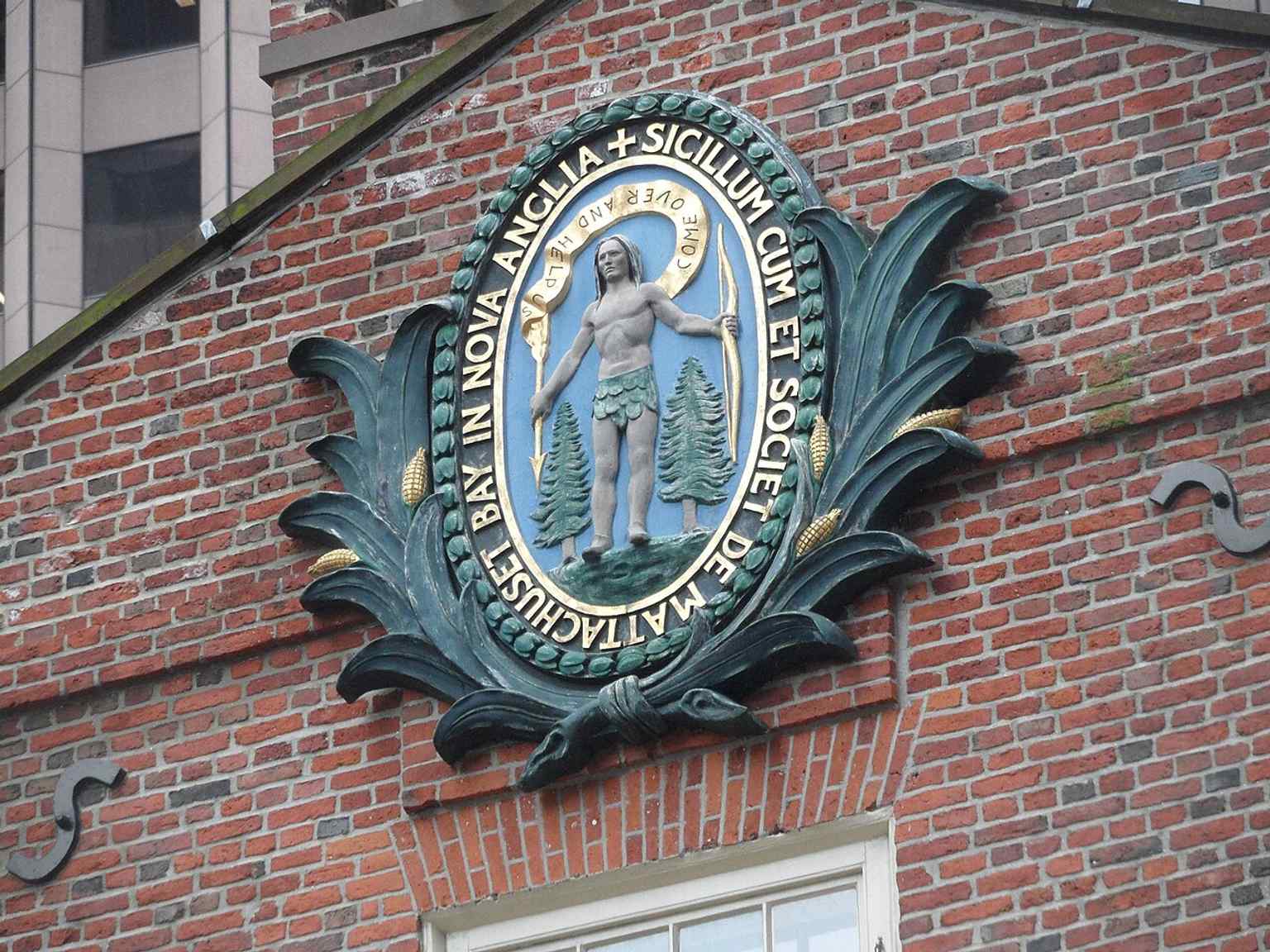
Here it is... the Old State House, finished in seventeen thirteen, and still holding its ground as Boston’s oldest surviving public building. It’s kind of amazing, honestly. Surrounded by tall glass and steel neighbors, this place still carries itself like it knows it used to run the whole town... because it did.
For much of the seventeen hundreds, this was the nerve center of Massachusetts. The judicial branch worked here, the legislative branch met here, and the executive branch worked here too. All three branches of government under one roof, stacked inside a building only about sixty-five feet tall. Back then, that made it the tallest building in Boston until seventeen forty-five. Not bad for a structure that started life after the first Town House on this site burned in seventeen eleven.
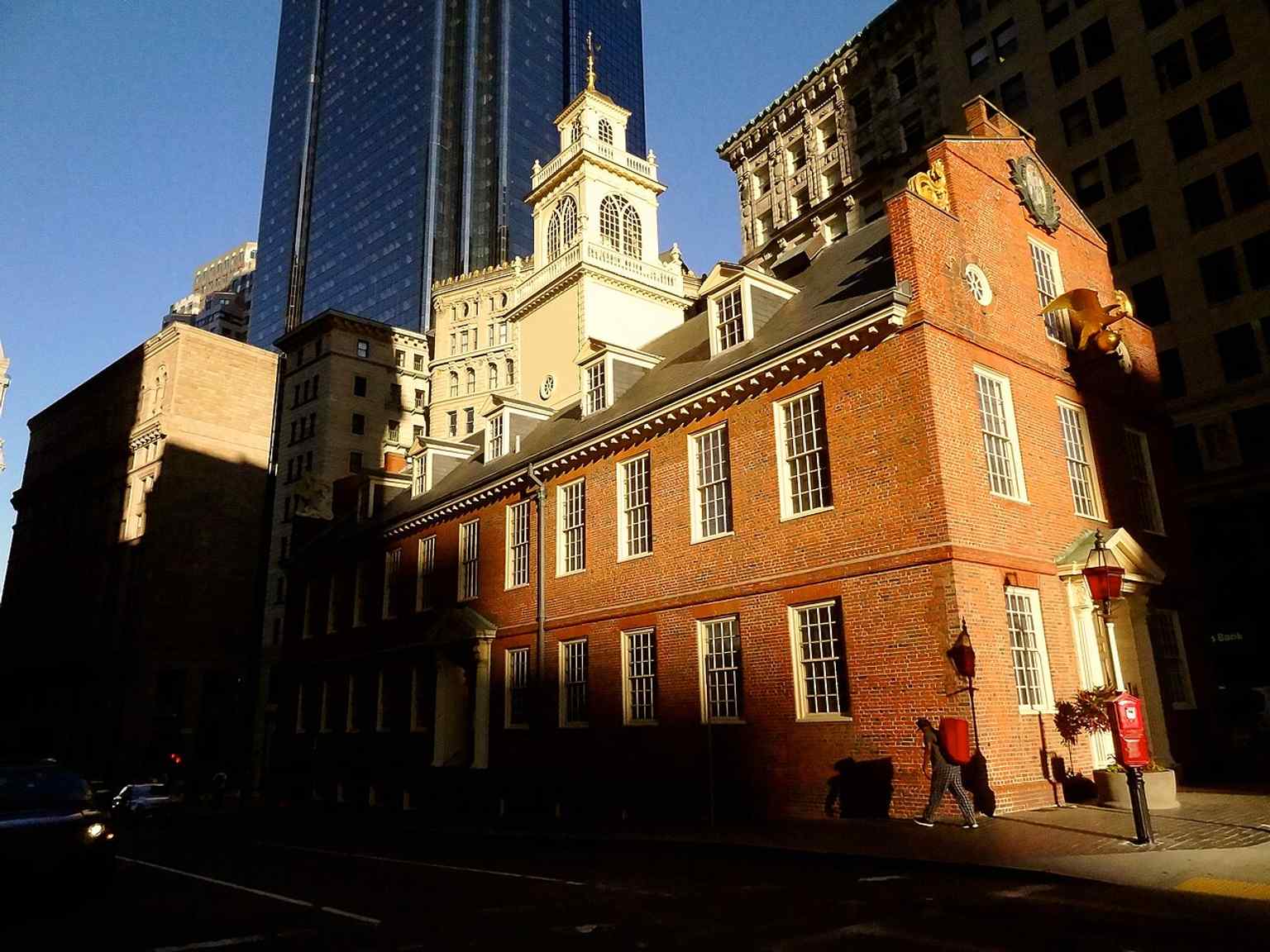
The building you’re looking at is a survivor, but not a delicate one. Fire gutted it again in seventeen forty-seven. The brick outer walls held on, the inside was rebuilt, and the structure came back with some of the features that still define it now: the gable roof, the square central tower, and that eastern balcony where officials announced laws to the public below. It’s a stage set for government, really - one part architecture, one part public theater.
And then the mood changed. In the seventeen sixties, tensions with Britain got sharp. Samuel Adams pushed for a public gallery inside the Representatives’ Chamber, so more people could watch lawmakers at work - one of the earliest public legislative galleries in what became the United States. Then, in seventeen sixty-eight, British troops arrived in Boston and pointed their weapons at this building’s front door. That wasn’t symbolic. It was a direct show of force, and the legislature refused to meet here while soldiers occupied the space.
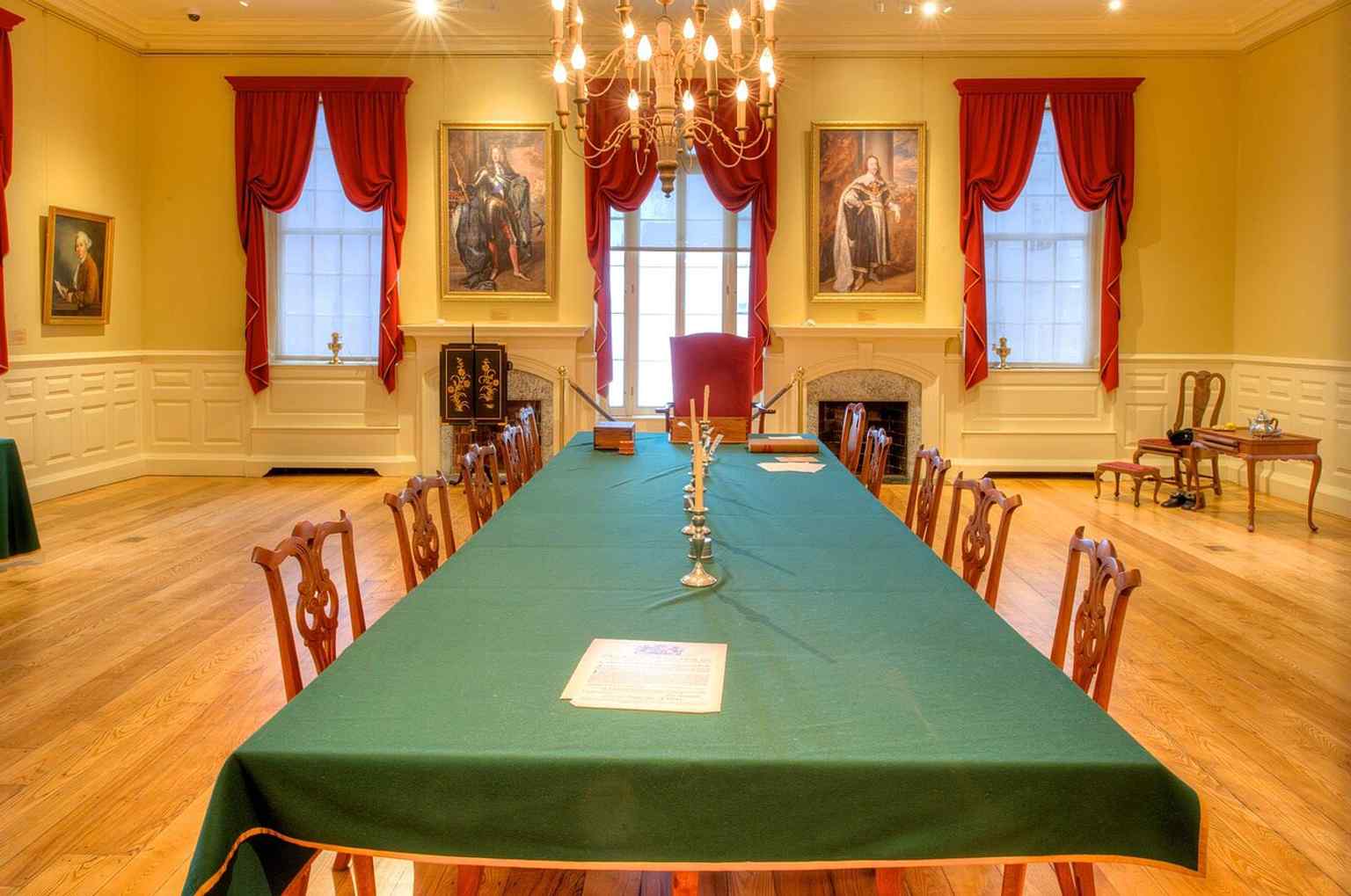
If you want a peek inside, take a glance at the app’s image of the Council Chamber - one of the big second-floor rooms where colonial power got negotiated face-to-face.
Just east of the building sits the memorial marker for the Boston Massacre, another reminder that this crossroads wasn’t some quiet administrative address. It was a pressure point. Decisions came out of these windows, arguments spilled into the street, and history turned on very human tempers.
Later, the state legislature moved to the New State House in seventeen ninety-eight. This old place became Boston’s city hall, then commercial space, and for a while it came dangerously close to demolition. In the eighteen eighties, George Clough renovated it, the Bostonian Society stepped in, and the building shifted from workplace to memory-keeper.
If you feel like seeing that change in one glance, the image in the app really shows how this colonial survivor now sits in a canyon of modern towers.
If you want to go inside another time, the museum is generally open daily from ten in the morning to five in the afternoon.
This building feels less like a relic and more like Boston still speaking in its original voice.
Take a moment with it... and when you’re ready, we can wander on to the next stop.






.jpg)


