
Audioguida di Penzance: Echi di Storia e Patrimonio
Un triangolo bianco Art Déco si protende audacemente nel blu del mare della Cornovaglia: la Jubilee Pool è la prova che Penzance non si sottrae mai allo spettacolo o alla sopravvivenza. Indossa le cuffie per un tour audio autoguidato attraverso Wherrytown e il cuore di Penzance, scoprendo battaglie segrete, scandali bizzarri e storie selvagge nascoste appena sotto la superficie. Perché gli abitanti infuriati hanno lottato con le unghie e con i denti per mantenere a galla la Jubilee Pool quando le tempeste minacciavano di spazzarla via? Quali segreti scomparsi riposano nella foresta spettrale sotto Battery Rocks? Un singolo rintocco delle campane di St Mary potrebbe davvero fermare un disastro? Percorri passeggiate battute dal vento e cimiteri di granito dove il fuoco dei cannoni e lo spirito comunitario hanno plasmato ogni pietra. Ogni tappa trasforma lo scenario quotidiano in un vivido palcoscenico di ribellione, invenzione e risate. Pronto a immergerti sotto la superficie levigata di Penzance? Premi play e scopri quanto lontano possono arrivare le sue onde di dramma.
Anteprima del tour
Informazioni su questo tour
- scheduleDurata 30–50 minsVai al tuo ritmo
- straighten4.0 km di percorso a piediSegui il percorso guidato
- location_onPosizionePenzance, Regno Unito
- wifi_offFunziona offlineScarica una volta, usa ovunque
- all_inclusiveAccesso a vitaRiascolta quando vuoi, per sempre
- location_onParte da Jubilee Pool
Tappe di questo tour
To spot Jubilee Pool, look out towards the seawall where the pool juts out into the water, creating a vast, white Art Deco triangle against the deep blue of Mount’s Bay. It’s hard…Leggi di piùMostra meno
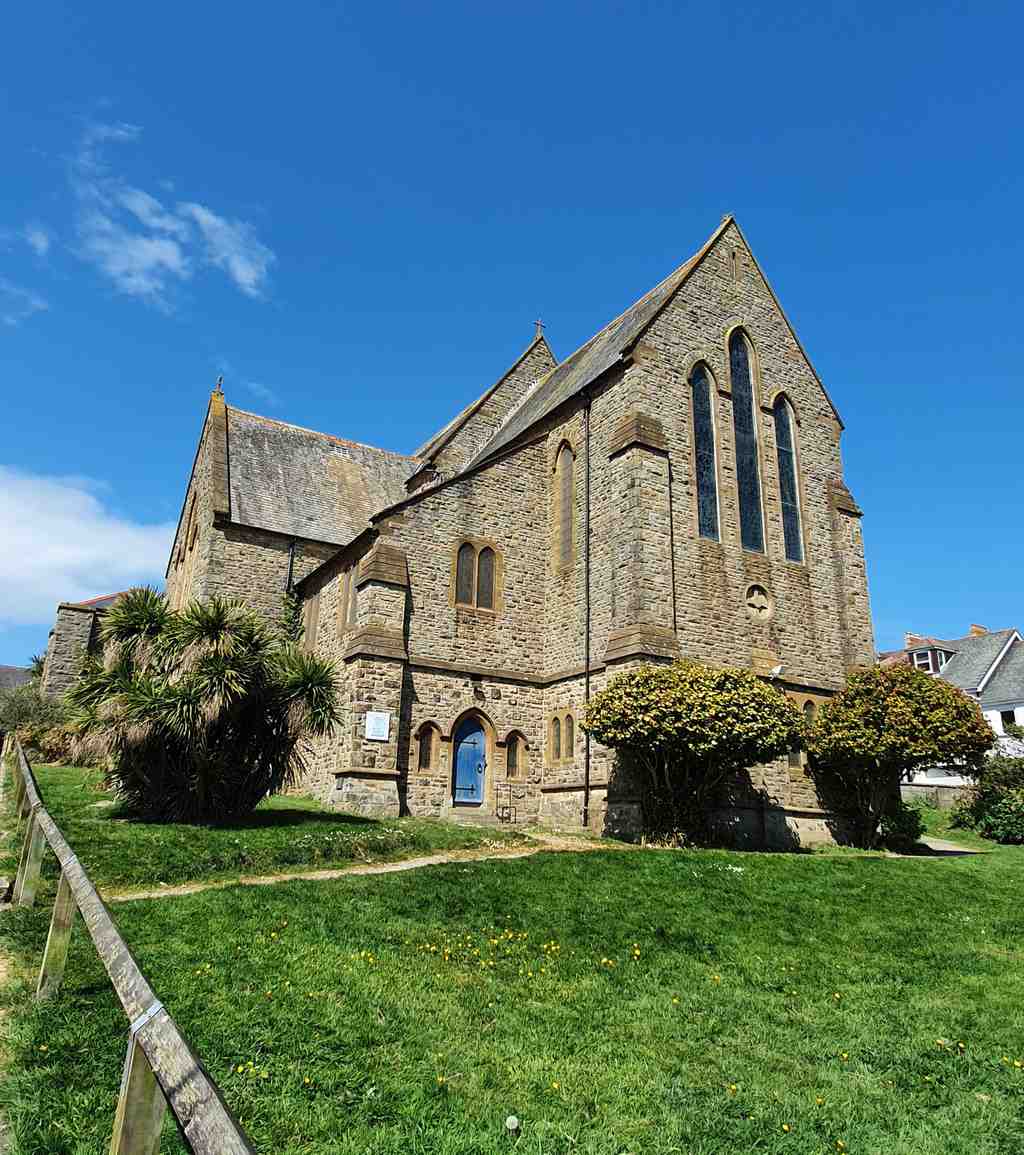
To spot Jubilee Pool, look out towards the seawall where the pool juts out into the water, creating a vast, white Art Deco triangle against the deep blue of Mount’s Bay. It’s hard to miss-just follow the curve of the promenade, and soon you’ll see the dazzling white walls, swooping and sharp like a giant seagull has landed right on the sea. Now, as you stand in front of Jubilee Pool, imagine the sea air swirling around you, carrying a spark of excitement and just a hint of salt. This isn’t just any swimming pool-it’s the grand old star of Penzance! Built in 1935 for King George V’s Silver Jubilee, this mighty lido was once nearly voted down because folks thought it’d be a “white elephant” - just a fancy way to say a big, splashy waste of money! I guess you could call it a whale of a gamble. But look around-this geometric beauty, shining white, has weathered fierce Cornish storms and fierce debates in the council chambers. Designed by Captain Frank Latham, the pool’s smooth curves and angles are a nod to the Art Deco craze, but some say it was shaped to copy a seagull taking off. You can just picture the flocks that would have landed on these walls back then, eager for a swim-though hopefully not competing in the water! Back in the 1930s, crowds would line up in bathing suits with rubber caps, ready to jump into water straight from the sea. By the end of its first summer, almost 60,000 swimmers had braved the bracing water. But then, in 1962, a wicked storm-Ash Wednesday, they called it-smashed into the pool with a mighty crash. Walls were breached, and for decades, it looked like Jubilee might be lost to the tides of time. Yet, Penzance folk are a stubborn and lively crowd. The pool was patched up, nearly closed again, then saved by the community, who rallied together. Imagine garden fetes, fundraising teas, kids shaking buckets-all to bring Jubilee Pool back to life! Finally, after storms, stubborn councillors, and one very dramatic rescue, the pool emerged with a new twist-thanks to a geothermal well deep below, you can now swim here in toasty warm water. Take that, chilly Cornish breeze! Today, Jubilee Pool is run by local shareholders, loved by swimmers, dog walkers, and daydreamers alike. Just close your eyes for a second and imagine the splashing, laughing, and cheers after someone’s first cold dip-exactly as it would have sounded in 1935. Ready for our next stop? Off we go, but don’t worry-I won’t make you swim there.
Apri pagina dedicata →If you look just beyond the gleaming white curve of the Jubilee Pool, you’ll spot a cluster of craggy rocks stretching out into the sea-those are the famous Battery Rocks. You’ll…Leggi di piùMostra meno
If you look just beyond the gleaming white curve of the Jubilee Pool, you’ll spot a cluster of craggy rocks stretching out into the sea-those are the famous Battery Rocks. You’ll know you’re at the right spot when you see the rough brown stones meeting the gentle lap of the tide, right next to the bold white pool walls and the colourful flags snapping in the seaside wind. Follow the pool wall with your eyes all the way to where the land breaks into jagged shapes-here’s where Penzance history comes alive! Listen-close your eyes for a second and imagine the salty air is thicker with tension. It’s the 1700s, and these very rocks are bristling with cannons! That’s right-Penzance once needed protection from French ships prowling the Cornish coast. In response, the townsfolk built a gun battery right here in 1740. Picture the townspeople, tired of French pirates ruining their day at the beach, petitioning the government for some “great guns.” The answer? Sure, but you’ll have to build the fortifications yourselves! The Battery Rocks are much older, though. Some say the Spanish raiders from 1595 landed right here, making things downright dramatic-for the English and the invading Spaniards! If you look down between the rocks at low tide, you might spot stumps of ancient trees, reminders of a submerged forest that was here when the sea was much lower-like a mysterious ghostly woodland hiding beneath the waves. If you start to feel brave, imagine the Boxing Day swimmers. From the 1880s right through to today, you’ll see folks of all ages plunging into these chilly waters, regardless of the season. Why? Maybe it’s the thrill. Or maybe someone just left the kettle on at home. Either way, these Battery Rocks have echoed with laughter, splashes, and the clink of artillery for centuries. There’s even more lively company, too. Keep your eyes peeled for the shock of purple sandpipers darting around the rocks-birds that travel all the way from the Arctic for a winter holiday in Cornwall. Lucky them! So, as you stand here, feel the wind, imagine the roar of cannons and laughter. These rocks guarded the town, sheltered the harbour, and now, they show us just how much history a single stretch of stone can hold. Not bad for a patchwork of old rocks, eh?
Apri pagina dedicata →

Mostra altre 8 tappeMostra meno tappeexpand_moreexpand_less
To spot Morrab Library, just look in front of you for a grand, cream-coloured building with impressive columns marking the entrance. There’s a sign above the doorway that says…Leggi di piùMostra meno
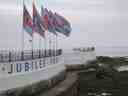
To spot Morrab Library, just look in front of you for a grand, cream-coloured building with impressive columns marking the entrance. There’s a sign above the doorway that says "Morrab Library" and several tall, rectangular windows looking out onto the gardens. You can't miss the stately, almost secretive air about it - it feels like a place full of whispers and hidden treasures. Welcome to Morrab Library, a true treasure chest in the heart of Penzance. Imagine stepping into 1841, when this building was actually a private home built for a wealthy brewer named Samuel Pidwell. The hefty columns at the entrance seem to say, “Shhh-only the curious may enter!” Now, this isn’t just any old library. It’s one of the oldest subscription libraries in England - you need to be a member, or as I like to think, part of the adventurer’s club of books. Inside are more than 60,000 books, and enough archives to keep any historian up all night - and not because of the coffee! The oldest books here were printed when pirates were still sailing these coasts. It all started as a meeting point for two book clubs: one for ladies who could borrow a story for four days, and one for gentlemen because, well, they always want a club of their own. The place buzzed with whispers of the latest news, dramatic tales, and, I imagine, the odd scandal, too. Just think: as you look up at those big windows, maybe a Victorian librarian is peering back at you, stern and silent. If you could wander inside, you’d find not just books but hand-written journals, rare prints, and even a roomful of Napoleonic engravings. There are stories here about presidents, wild collections, strange artifacts-and even about houses that once traveled half the world before settling here. One mystery remains: what happened to all those members’ overdue books from the 1800s? Perhaps they're still out there somewhere, waiting to be found. So take a moment, imagine the hushed excitement of discovery, and give a friendly nod to Morrab Library: Penzance’s own palace of words!
Apri pagina dedicata →You’re getting close! To spot St John’s Hall, just look ahead for a grand stone building with a strikingly symmetrical design. It stands tall and proud right above a set of broad…Leggi di piùMostra meno
You’re getting close! To spot St John’s Hall, just look ahead for a grand stone building with a strikingly symmetrical design. It stands tall and proud right above a set of broad granite steps-with doors and windows marked out in neat rows. You’ll notice the cream-coloured stone from Lamorna Quarry, and those sturdy columns flanking the door, just like a set of sentinels on parade. Even if you’re not a fan of architecture, you can’t miss that echo of ancient Rome-the whole building looks as though you could expect a toga-clad senator to come walking out! Alright, imagine it’s the 1860s. The town’s getting a little restless-“We need a bigger place for all these grand ideas!” So, they pick a spot right here on glebe land. The foundation stones were laid with much ceremony in 1864-a flurry of waistcoats, top hats, and probably more than a few stiff upper lips. And when this place opened in 1867, it was the big event in Penzance. They actually lugged in a single block of granite for that main step-18 feet across! Someone must’ve eaten their Weetabix that morning. Inside, there was something for everyone. Museum to the west, council business to the east, and any grand occasion-balls, speeches, concerts-took place smack in the centre. Imagine: a young suffragette, Helen Beedy, in 1874, firing up an audience of 600-no microphones, just pure passion echoing off those high walls. This place has seen a lot. Once the seat of local government, you can almost sense the buzz of important decisions and the low rumble of courtroom drama. There were even geological treasures displayed here… until one fateful ceiling collapse sent the exhibits packing! Of course, this old hall refused to fade away-St Piran’s Day parades and the big Golowan Festival both start here nowadays. With recent renovations, it’s still full of life-the public library’s moved in, council offices buzz away, and you get a dose of Cornish celebration every year.
Apri pagina dedicata →To spot St John’s Church, just look for the sturdy stone building rising ahead of you-its golden-grey walls built from blocks so solid you’d think they’d weathered every Cornish…Leggi di piùMostra meno
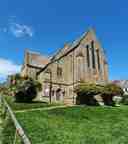
To spot St John’s Church, just look for the sturdy stone building rising ahead of you-its golden-grey walls built from blocks so solid you’d think they’d weathered every Cornish storm. The building sits on a wide green lawn, with a pointed roof and tall arched windows that draw your eye upwards. There’s a splash of colour too: that bold blue door tucked beneath a beautiful arch. If you’re facing a church that seems both welcoming and a little mysterious, you’re in the right place! Now, picture yourself here in 1880, standing in a muddy field as the townsfolk gaze at a foundation stone, wondering if this plot will really become something grand. Penzance was bursting with people-over ten thousand souls!-but just two churches. The vicar, Revd. Hedgeland, was determined to change that, marching in like a man on a mission. The land? Gifted! The stone? Hauled all the way from Castle an Dinas-just imagine the racket those carts must have made, rumbling down Cornish lanes. The walls were dressed with golden Ham Hill stone from Somerset, as if the church was stitched together with a patchwork quilt of England itself. Inside, the floors were tiled in cheerful colours from as far as Dorset and Hereford, while Welsh fire lamps kept things toasty in the vestries-imagine the gloaming glow and the aroma of smouldering coal! When the church finally opened, just about the whole town squeezed inside, craning their necks to see the ancient font-already over 200 years old by then, kindly donated by St Mary’s down the road. The big day in October 1881 must’ve felt electric. Picture the light from twelve massive gas coronas sparkling on a sea of polished stone-a grand, slightly misty glow as Penzance stepped into a new chapter. Over time, mystery and memory crept into these stones. The statue of St John the Baptist appeared in the 1890s, then the grand choir stalls and the twinkling stained glass windows. Some windows even remember Queen Victoria herself-and the fallen from a faraway war. The church organ, built bit by bit, boomed and whispered its way through the years, picking up extra pipes like a Cornish hoarder collecting shells on the beach. Oh-and if you suddenly hear faint organ echoes or imagine gaslights flickering in the windows, don’t worry. That’s not a ghost; it’s just history showing off. Step a little closer, take in the details, the hush, and let your imagination fill in the rest. This place has soaked up stories for over a century-and it still has plenty of room for yours.
Apri pagina dedicata →

Domande frequenti
Come inizio il tour?
Dopo l'acquisto, scarica l'app AudaTours e inserisci il tuo codice di riscatto. Il tour sarà pronto per partire immediatamente – tocca play e segui il percorso guidato dal GPS.
Ho bisogno di internet durante il tour?
No! Scarica il tour prima di iniziare e goditelo completamente offline. Solo la funzione chat richiede internet. Ti consigliamo di scaricare tramite WiFi per risparmiare dati mobili.
È un tour guidato di gruppo?
No – è un tour audio autoguidato. Esplori in autonomia al tuo ritmo, con la narrazione audio riprodotta dal tuo telefono. Nessuna guida, nessun gruppo, nessun orario.
Quanto dura il tour?
La maggior parte dei tour richiede 60–90 minuti, ma sei tu a controllare il ritmo. Metti in pausa, salta le tappe o fai pause quando vuoi.
E se non riesco a finire il tour oggi?
Nessun problema! I tour hanno accesso a vita. Metti in pausa e riprendi quando vuoi – domani, la prossima settimana o il prossimo anno. I tuoi progressi vengono salvati.
Quali lingue sono disponibili?
Tutti i tour sono disponibili in oltre 50 lingue. Seleziona la lingua preferita quando riscatti il codice. Nota: la lingua non può essere cambiata dopo la generazione del tour.
Dove accedo al tour dopo l'acquisto?
Scarica l'app gratuita AudaTours dall'App Store o Google Play. Inserisci il codice di riscatto (inviato via email) e il tour apparirà nella tua libreria, pronto per essere scaricato e avviato.
Se il tour non ti piace, ti rimborseremo l'acquisto. Contattaci a [email protected]
Pagamento sicuro con 


