Tour Audio di Lincoln: Echi di Cattedrali, Castelli e Strade Senza Tempo
Sotto i tuoi piedi a Lincoln, le storie turbinano come la nebbia mattutina lungo il fiume Witham, intrecciate con segreti e ambizione. Poche città svelano il loro cuore con tanta audacia eppure nascondono così tanti racconti appena fuori vista. In questo tour audio autoguidato, scopri gli artisti ribelli e gli inventori rivali che hanno trasformato il Lincoln College of Art, svela drammi nascosti su High Street dove le strade romane giacciono sotto negozi affollati, e cammina attraverso una città plasmata da assedio, scandalo e invenzione. Quale scioccante incidente ha cambiato per sempre l'eredità di un amato fondatore? Perché la Lincoln medievale divenne l'epicentro di controversie su lana, culto e potere? E quale mistero stranamente persistente mantiene i numeri dei negozi in un ciclo infinito intorno a High Street? Passa da antichi ciottoli a vivaci campus mentre lo spirito di Lincoln si dispiega ad ogni angolo—echi di risate, ribellione e reinvenzione inseguono i tuoi passi. Guarda questa città iconica con occhi nuovi. Inizia ad ascoltare ora, e lascia che Lincoln riveli i suoi segreti.
Anteprima del tour
Informazioni su questo tour
- scheduleDurata 40–60 minsVai al tuo ritmo
- straighten4.0 km di percorso a piediSegui il percorso guidato
- location_onPosizioneLincoln, Regno Unito
- wifi_offFunziona offlineScarica una volta, usa ovunque
- all_inclusiveAccesso a vitaRiascolta quando vuoi, per sempre
- location_onParte da Lincoln College of Art
Tappe di questo tour
Look for a grand, red-brick building with arched windows and tall chimneys rising above its roof, standing proudly at the top of a short flight of steps-it’s hard to miss this…Leggi di piùMostra meno
Look for a grand, red-brick building with arched windows and tall chimneys rising above its roof, standing proudly at the top of a short flight of steps-it’s hard to miss this standout structure contrasting beautifully with the sky and surrounding trees! Welcome, art adventurer! If you take a deep breath and listen closely, maybe you can almost hear the cheerful bustle of students from year after year, each of them on their way to becoming the next big thing in the world of British art. Now, imagine it’s 1863. Instead of smartphones and electric lights, there are clattering horse-drawn carriages and the buzz of excitement about this brand-new place for creative minds-a single room on the Corn Exchange, where you’d hear pencils scratching and voices humming with ideas. The Lincoln College of Art started right there, thanks to Rev. John Somerville Gibney and Edward R. Taylor. Gibney, who had a twinkle in his eye and a knack for pushing boundaries, dreamt this school up after seeing the amazing inventions at the Great Exhibition of 1851. At first, the school was so small that lessons spilled into borrowed spaces above the National School for Boys. But boy, did it grow quickly! Their annual art exhibit became so popular that the floor had to be reinforced-now that’s what I call making an impression. You could walk past the doors and hear the chatter of aspiring artists debating geometry, sketching flowers, or learning to shade in the earliest attempts at modern design techniques. Students ranged from those just learning to hold a pencil straight to budding masters painting still lifes, dreaming of Paris and London art scenes. But not all was smooth sailing. In 1875, a shocking tragedy struck. Rev. Gibney, always full of energy and ideas, was inspecting the roof with a joiner when he tapped a skylight with his foot, lost his balance, and fell, calling out, “My God!” as he dropped into the model room below. The news sent waves through the town, and an inquest at the White Hart Hotel found it was a terrible accident. In a twist of fate, Gibney had just spoken in a sermon about how life can change in an instant-you never know what’s coming next! To honour him, the school created the Gibney Scholarship, opening doors for countless future artists to devote themselves entirely to their craft. Fast-forward to the late 1800s, and you’ll find a lively debate swirling through its corridors. Some traditionalists complained about the school’s fascination with French Impressionism. One grumpy Royal Academician even called it “a ridiculous craze from Paris”-but the school’s principal, Alfred Webster, fired back that Britain itself had grown from foreign inspiration. The school regularly filled its halls with cutting-edge ideas, mixing ancient Greek art with daring modern styles. Lincoln was alive with new ways of seeing the world, and this curious little school was right at the centre. By the late 1800s, the building you’re standing before arose, as the school became part of the city’s great “School of Science and Art.” Art students mingled with aspiring scientists, and you could hear not only the scratching of charcoal but also the whoosh of the gas lamps and, sometimes, the clanging of glass-blowing demonstrations downstairs. Over the decades, students learned everything from painting and metalwork to advertising and pottery. And don’t think the story ends there-this place saw fires, expansions, and more name changes than a rock band on tour. In 1958, flames leapt through the west wing, destroying precious artwork but somehow leaving the heart of the building and its spirit intact. Years later, in 1991, smoke was spotted drifting from an office. BT staff next door saved the day, though equipment and works were lost. By the late 20th century, the college had sparked the careers of all sorts of talent: painters, ceramists, and even those with their work on postage stamps! It absorbed new influences, joined De Montfort University, and eventually became part of the University of Lincoln. That makes this one of Britain’s oldest and most influential schools of art-a launchpad for dreamers from the industrial revolution to the Instagram generation! Today, as you stand before this bright red-brick relic, look up and try to imagine the echoes of young rebels with paint on their smocks, the crack of glass, the rustle of sketchbooks, and the crisp Lincolnshire air carrying laughter and ambition out over the city. This is not just a building-it’s a living canvas of Lincoln’s creative soul. Intrigued by the founding and early years, controversy or the school of science and art? Make your way to the chat section and I'll be happy to provide further details.
Apri pagina dedicata →Facing you is the proud heart of Lincoln, England: a historic city that unfolds across a scenic hillside, crowned by the majestic outlines of the Cathedral and the Norman castle.…Leggi di piùMostra meno
Facing you is the proud heart of Lincoln, England: a historic city that unfolds across a scenic hillside, crowned by the majestic outlines of the Cathedral and the Norman castle. Look up the dramatic slope to spot its ancient skyline-don’t worry, you’re not climbing Everest, though Steep Hill might have you questioning that soon enough! Now, while you’re standing here, let your imagination wander. We’re not just in any city-we’re in a place where over 2,000 years of history are layered beneath your feet. Picture the mist rising off the River Witham in the early morning, the faint clang of distant church bells, and the gentle bustle of people heading to market. That’s Lincoln: once just a handful of wooden roundhouses near Brayford Pool some 2,000 years ago, built by Iron Age Britons. Not exactly what you’d call a starter home, but hey, river views! Fast forward to 48 CE: the Romans march in and think, “You know what would look great here? An outpost.” So, Lindum Colonia is born, a fortress high on the hill, with roads leading straight to London, York and the sea. Soldiers retire and settle here, shops and bathhouses pop up, and Lincoln becomes the kind of Roman retirement village you really wouldn’t mind joining-if you didn’t mind the odd barbarian raid! For centuries, you’d have heard the clatter of Roman sandals on stone, Latin conversation drifting from open windows, and the rumble of carts along the Fosse Way. After the Romans faded, the town shrank; by the 5th century, much of it was left empty. But you know how hard it is to keep a good city down. Enter the Anglo-Saxons, the Vikings, and a healthy dose of drama and invention. By the time the Danes showed up, Lincoln was back in business, right up there with York-minting coins, trading far and wide, and bustling with timber-framed houses and winding lanes. But wait, we’re not done with our time travel! In the 11th century, William the Conqueror decides Lincoln needs a castle-right here on this windswept hill-so he builds it, and soon after, an awe-inspiring cathedral joins it. Imagine medieval Lincoln: a powerhouse city by the 1150s, famous for its green and scarlet woollen cloth (think Robin Hood's “Lincoln green” outfit-fashion conscious AND functional). Jesters, pilgrims, monks, and traders all jostling in these busy streets. Want a real twist? Lincoln had one of England’s largest Jewish communities, with stories both proud and tragic-including markets, shared meals, and, sadly, dark days when riots changed the fate of many. The centuries roll on, and Lincoln keeps making headlines. Battles roar in its streets during wars between kings and barons, trade booms, and in the 1400s, it’s rich and lively, well before the Industrial Revolution. Then, disaster: the cathedral’s great spire, once literally the tallest building in the world, collapses in 1549 after years of weather and rot. Not a great day for sky-high ambition, but this twist of fate helped preserve a wealth of ancient buildings-since there wasn’t much money left for “modern improvements.” Talk about finding a silver lining! By the 18th century, Lincoln is pretty much a “one-street town,” but the Industrial Revolution changes everything. Steam engines, factories, and bustling canals bring noise, smoke, and a hum of invention. In WWI, Lincoln’s engineers design and build the first tanks-imagine their clanking progress across what’s now peaceful fields. The wars bring hardship and resilience; bombs fall, but the city rebuilds, and the people stand strong. Step back into the present: Lincoln is a city of students, scholars, and tourists, a place where you can eat, celebrate, and wander among living history. Every year, people flock here for the glittering Christmas market-well, unless the weather has other ideas and delivers “British snowmageddon.” Churches, mosques, and diverse communities thrive together; swans glide on the pool, wildlife flourishes in parks, and the old Roman street plan means you’re probably walking in the footsteps of a Viking, a Roman, and a medieval wool merchant…all at the same time. So, as you stand here, take in the layers-the City of Lincoln is a living, breathing tapestry, from ancient echoing streets to modern innovation. And if you spot a peregrine falcon soaring above the cathedral, remember: life in Lincoln always aims high, whether you measure by spires, spirit, or a climb up Steep Hill! Eager to learn more about the etymology, economy or the demography? Simply drop your inquiries in the chat section and I'll provide the details you need.
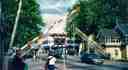
Apri pagina dedicata →To spot Lincoln’s High Street, look straight ahead for the unmistakable railway crossing barrier arm stretching upward, traffic paused, and a brick signal box perched next to the…Leggi di piùMostra meno
To spot Lincoln’s High Street, look straight ahead for the unmistakable railway crossing barrier arm stretching upward, traffic paused, and a brick signal box perched next to the line-this is the lively heart where past and present meet. Now, let’s imagine we’re strolling back through time, right from where you stand, dodging a few imaginary market carts and perhaps a Roman sandal or two. Close your eyes for a second and picture the street beneath your feet as a grand Roman road, called Ermine Street. Over 2,000 years ago, this was the superhighway of its age, stretching all the way from London-yes, Londinium!-to Lincoln, which the Romans knew as Lindum Colonia. You can almost hear the distant clop of Roman horses and the creak of wooden-wheeled carts carrying spices, fine pottery, or swords sharp enough to cut through a bad haircut. As centuries slipped by, Lincoln’s fortune rose and fell. Once the Romans packed up and left (probably muttering about the unpredictable weather), the city hit a bit of a slump. But High Street wouldn’t let that keep it down! By the Middle Ages, people had built houses, markets, and even streets like Silver Street and Flaxengate branching off into neat lines of burgage plots, those long, narrow strips behind each home. Picture medieval merchants peddling their goods, horses snorting, and six churches calling folks to worship. Two of those would even survive the whirlwind of history. Fast forward to the 16th and 17th centuries, and High Street was hopping. Timber-framed houses sprang up, markets bustled, and the whiff of baking bread and brewing ale probably filled the air. Even the bridges here were sites of busy trade-fancy a spot of flour with your gossip? With the thundering arrival of the Industrial Revolution, the whole character of High Street shifted gears. Imagine ironworks hammering, train whistles blowing, and sooty-faced workers marching off to build the future. The railway blasted through in 1846, and soon after came hotels and inns for travelers, as well as lively places of worship for non-conformists-people determined to do things just a bit differently! And that railway crossing just in front of you? Once, it belonged to the grand Midland Railway, which would see throbs of people heading north and south under the watchful gaze of Lincoln Cathedral-if you glance north, you can't miss its towers reaching above the city like a stone crown. But High Street has its quirks, too. Did you know the shop numbers just keep marching along in one big loop? They start at number 1 on the west side, trek north, and as soon as you reach the top, they march right back south again on the east! It’s like a conga line of addresses, and by the time you get to number 471-480, you’re right back opposite number one. No wonder lost tourists sometimes look dizzy. You’re also at the crossroads of some dramatic history; during construction on the Boots store nearby, workers uncovered the remains of a Roman hypocaust-an ancient central heating system! That’s right, the Romans even managed to keep cozy while plotting their empire. If you fancy a chilly adventure, you can peek into the basement to see these 2,000-year-old ruins today. Don’t forget-there’s High Bridge, the medieval river crossing just a little north, where water once roared under its arches, delivering goods to merchants. And tucked amongst busy shops are architectural treasures like the Guildhall and Stonebow. If you spot two statues on a medieval arch, you’re looking at the Archangel Gabriel and the Virgin Mary keeping watch-just as they have done since the 15th century, though I doubt they ever dealt with late-night shopping crowds. There’s also the humbler St Mary le Wigford church-so close to the railway signal box it feels like you could order a sermon with your train ticket-and down south you’ll find St Peter at Gowts, once serving the marshlands of the Great Gowt Drain. Here, too, are the grand echoes of St Mary’s Guildhall-once a grand home, then a maltings, a school, and today, a proud protector of Lincoln’s civic past. With a puff of smoke and a clatter of carriages, the Industrial Revolution left its mark as rows of terraced workers’ homes sprang up, and the hum of new industry filled the southern High Street. Even now, you’ll notice the character changes after you cross the tracks: in the north, a charming parade of historic shops, in the south, big bold development and the buzz of urban life. Through it all, High Street has shown a knack for reinvention-just like your favorite pop star, only with more medieval masonry. Recent efforts by English Heritage and the city have helped restore its historic sparkle, so you’re walking not just through one street, but a living timeline of Lincoln’s story. The sounds of passing cars and distant footsteps remind us that, though centuries have passed, High Street is still the beating heart of the city-always moving, always changing, always ready for the next chapter. Ready to delve deeper into the landmarks and listed buildings, gallery or the numbering? Join me in the chat section for an enriching discussion.
Apri pagina dedicata →
Mostra altre 12 tappeMostra meno tappeexpand_moreexpand_less
You’ll spot Lincoln Drill Hall right ahead-a grand, castle-like red brick building with tall, battlemented turrets rising proudly above the doorway; just glance toward the street…Leggi di piùMostra meno
You’ll spot Lincoln Drill Hall right ahead-a grand, castle-like red brick building with tall, battlemented turrets rising proudly above the doorway; just glance toward the street and look for what appears to be a mini fortress sandwiched between more modern structures. Now, as you stand outside and take in its bold, almost theatrical façade, imagine yourself back in 1890, when the Drill Hall first burst onto the scene. Picture prestigious architects Goddard and Son, dreaming up this striking structure for the 1st Lincolnshire Rifle Volunteers. It was thanks to Joseph Ruston, a local legend and former Member of Parliament, that this impressive hall came to life-he paid for it himself, so I suppose you could say he “took a shot” at philanthropy! As the heavy doors opened for the first time, the Drill Hall welcomed not only disciplined soldiers but also curious townsfolk, eager to gather beneath its high ceilings for everything from drills to dazzling social events. If you close your eyes for a second, you might just hear the clatter of boots and the shouts of the 4th Battalion of the Lincolnshire Regiment, mobilizing for World War I. The tension would have been thick-imagine the hustle, the hope, the last goodbyes whispered before young men marched out, uncertain if they’d see Lincoln again. Over the decades, the hall’s role shifted with the needs of the times, merging regiments, adapting to wars, and coming back together after peace broke out. But don’t let all that military talk scare you-this place knows how to have fun. In 1963, a certain group called The Rolling Stones played a New Year’s Eve gig here! Picture teenage fans packed into the hall, music pulsing, the thrill of rock and roll shaking the old bricks themselves. The very next day, the Stones made their debut on BBC’s Top of the Pops. You could say the Drill Hall helped launch legends-with a bit less marching, and a lot more grooving. As times changed, the old building did its best to keep up. Soldiers gave way to singers, comedians, festivals, and, yes, even live wrestling matches. But, like a drama queen in need of new costumes, the Drill went through some tough times-it closed in 1999, only to be saved by people power, reopened, refurbished, and reimagined again and again. After its near-final curtain in March 2020, the Lincoln College Group swooped in like true heroes, giving the building a new lease on life. When the hall reopened in December 2021, the applause was almost as loud as the action itself. Today, the main auditorium can hold up to 500 people, and the space buzzes with energy from bands, comedians, and theater troupes. Fancy a coffee or a bite? The cafe and upcoming Limelight restaurant inside offer just that. Every year, the Lincoln Beer Festival brings thirsty crowds together, filling the hall with the sounds of laughter, music, and the friendly clink of glasses. But this isn’t just any performance space-The Drill is beloved for its inclusive nights, like The Butterfly Club, where everyone is welcome to dance and celebrate. So, whether it’s history, rock legends, or panto magic that draws you in, take a moment to soak up the atmosphere. This building hasn’t just survived-it’s thrived, one show at a time.
Apri pagina dedicata →To spot the Lincoln Museum, look for a cluster of modern, pale stone buildings with big glass windows and sharp, clean lines set halfway up the steep slope-you’ll see a wide set…Leggi di piùMostra meno
To spot the Lincoln Museum, look for a cluster of modern, pale stone buildings with big glass windows and sharp, clean lines set halfway up the steep slope-you’ll see a wide set of steps leading to the main entrance. Welcome to the Lincoln Museum, where the past meets the present on this very hillside! Imagine standing at a place where history is layered beneath your feet like a giant archaeological trifle. The museum’s stone walls and huge glass panes might look sleek and contemporary, but their design tips a hat to the British Museum and even the alleyways of medieval Lincoln-if walls could talk, these would probably whisper tales from the Romans to the Victorians, with a few gossip sessions thrown in for good measure. Let’s wind back the clock to when it was simply “The Collection.” You see, this place is the heart of Lincolnshire’s story, a perfect blend of old and new. It opened its doors in 2005, the result of merging two grand institutions: the Usher Gallery and the City and County Museum. Picture Arthur Smith, the very first curator, bustling about in the early 1900s, sleeves rolled up, collecting fascinating bugs and butterflies, bird specimens from across the county, and some rather impressive flies. Frankly, I think he had more bug cases than a Victorian entomologist’s convention-and probably a few more surprises in his filing drawers. Now, take a breath of that fresh Lincolnshire air. The reason for this spot isn’t random. This museum sits right on the steep slope, balancing perfectly between Lincoln’s hilltop and the bustling valley below, right where ancient Romans once trudged back and forth from fortress to river. When the new museum was being built, a lift shaft’s pit unexpectedly revealed part of a Roman mosaic-paved corridor, hidden for centuries. If you had been here in 2005, you might have heard archaeologists gasping and brushing off the dirt, discovering the biggest Lincoln mosaic in over a hundred years. That same mosaic, along with treasures from every era-from the Ice Age to the Vikings-are now proudly on display inside. You could say the museum literally stands above history! But it doesn’t just stop with ancient relics. The Usher Gallery, just a stone’s throw away (don’t actually throw stones, though-it’s Grade II* listed!), was created in 1927 to house local entrepreneur James Ward Usher’s incredible collection. The building, simple but elegant, has its own drama, standing tall with urn finials and a balustraded roofline. In its day, it was opened with royal fanfare by the Prince of Wales, who probably wondered if Usher’s clock collection told better time than his own pocket watch. What will you find inside today? Expect a wild journey through time: see the Iron Age log boat from Fiskerton, a satellite photo of Lincolnshire big enough for you to find your own street (and possibly your neighbour’s odd gardening habits), and a timeline of the city that weaves together Stone Age flint, Roman coins, and Anglos-Saxon treasures like a 1,000-year-old boar’s head. The Usher Gallery is also a treasure trove of art: Joseph Banks stares sternly from his portrait, while Turner and Lowry bring their moody landscapes and city scenes to life. There’s even a special focus on Peter De Wint-a local legend with a brush-plus works by Warhol, Picasso, Dalí, and Matisse who have stopped by for special exhibitions. Yes, Lincoln can rival the best of Paris when it comes to world-class art! And talk about drama, just a few years ago, there was panic in the air-rumours swirled like autumn leaves that the Usher Gallery might close for good. Locals marched in protest, voices echoing up the hill, till a deal was struck. Now, the art stays put, the weddings can happen, but the spirit of Lincoln’s creativity remains for you to discover. So take a moment and imagine: above the Roman stones, through the echoes of curators past, and under these bright modern lights, Lincoln’s stories are waiting-some shout from the glass displays, some whisper quietly from the shadows, and a few might even crack a joke about flies and clocks when you’re not looking. Interested in knowing more about the location, exhibits or the modern and contemporary art programme
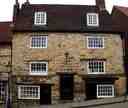
Apri pagina dedicata →To spot Jews’ Court, look for a sturdy, three-storey stone building with large white-framed windows and a dark wooden door, right on Steep Hill-just above Jew’s House and next to…Leggi di piùMostra meno
To spot Jews’ Court, look for a sturdy, three-storey stone building with large white-framed windows and a dark wooden door, right on Steep Hill-just above Jew’s House and next to an old-style streetlamp. Take a good look at this wonderful old building in front of you. Imagine it’s around 850 years ago, and Steep Hill is bustling under your feet. Children are running, traders are shouting out their goods, and the scent of baking bread wafts through the air. You’re standing before Jews' Court, which has seen just about everything: joy, fear, laughter, and a touch of mystery. Over your shoulder, the windows you see now were once very different-smaller, more mysterious-illuminating secrets whispered inside. Legend has it this place was the center of Lincoln’s lively medieval Jewish community. Some say it was a great synagogue, filled with singing voices and the rustle of parchment as people prayed inside. Close your eyes for a second and you might hear the quiet creak of old stone underfoot. But don’t daydream too long; this building had its share of drama. In 1290, the Jewish community was forced to leave Lincoln, and since then, Jews’ Court has changed hands, surviving centuries of stories, scandals, and salvation. Fast forward, and by the early 20th century, this once proud building was rough around the edges-split into tiny rooms for cheap lodging, the spirits of history nearly lost under layers of dust and creaky boards. There was even a rumor started in 1910-when a well was dug in the basement-about strange discoveries and local legends, luring people down for a peek into the darkness just for a penny or two. Luckily, heroes with a love of history stepped in! When the city wanted to tear it down, Lincoln’s own historical society swooped in to save the day-perhaps wearing capes, perhaps not-and restored it. Today, you can still feel that mix of old and new: it’s home to a Jewish congregation (so if you hear singing or gentle laughter inside, you know why!) and welcomes visitors eager for a glimpse of Lincoln’s layered past. It’s a place of books, debates, and the occasional ghost story. And who knows, if you listen closely as you walk on, maybe you’ll catch an echo from the past-a secret or two, drifting out onto the street.
Apri pagina dedicata →To spot Steep Hill, look straight ahead and you’ll see a cobbled street shooting almost straight up, flanked by ancient stone and brick buildings, with the soaring towers of…Leggi di piùMostra meno
To spot Steep Hill, look straight ahead and you’ll see a cobbled street shooting almost straight up, flanked by ancient stone and brick buildings, with the soaring towers of Lincoln Cathedral peeking over the hilltop in the distance. Alright, take a deep breath, stretch your legs-this is no ordinary street you’re about to tackle! Steep Hill might as well be called "Mount Everest: Lincoln Edition." With a one-in-seven gradient at its mildest-and an even steeper one-in-five section-you'll literally feel history in your calves. As you gaze up, imagine travelers of old gripping the side handrail (yes, you'll spot one) while shops, tea rooms, and lively pubs tempt them to take a break and regroup. Back in Roman times, this was part of the legendary Ermine Street, the main highway to the north, bustling with soldiers, merchants, and who knows, perhaps a few grumpy donkeys. Imagine clattering hooves and the smell of bread baking as you pass by Norman houses-the iconic Jew’s House and Norman House-where the ancient walls have surely heard their share of secrets. Want a sense of real medieval drama? Picture dodging a few runaway barrels or, in more peaceful times, pausing to trade gossip at Brown’s Pie Shop or the Wig & Mitre pub, just as locals do today. Even now, Steep Hill is alive with the clink of teacups, the scent of fresh cakes, and the cheerful calls of shopkeepers. And if you find yourself puffing halfway up, you’re just following in truly historic footsteps! The top opens onto magnificent castle views and the stunning entrance to Lincoln Cathedral-an epic reward for your efforts. So, whether you find yourself panting or laughing at the steepness, remember: in 2011, Steep Hill was crowned "Britain’s Best Place." Maybe because it feels like a stroll through a living postcard… or maybe because you can treat yourself to a pastry at the top. Just remember-going down might be trickier than coming up!
Apri pagina dedicata →Ahead of you stands St Mary Magdalene, Bailgate - look for a small, rectangular stone church with simple pointed windows, nestled right by the towering Lincoln Cathedral, its…Leggi di piùMostra meno
Ahead of you stands St Mary Magdalene, Bailgate - look for a small, rectangular stone church with simple pointed windows, nestled right by the towering Lincoln Cathedral, its weathered walls catching the sunlight. Imagine standing here centuries ago, in a bustling medieval market with the great shadow of Lincoln Cathedral behind you. St Mary Magdalene, the church in front of you, is old enough to make even the oldest cheese in Lincoln’s markets jealous-it dates back to the late 1100s, opening its doors in 1317. Originally, though, there was another St Mary’s even earlier, likely hidden beneath the mighty cathedral next door, and it’s mentioned in the legendary Domesday Book! This place has seen its fair share of drama: in 1644, during the English Civil War, Parliament soldiers gave it a rough time, so much so that it needed a big rebuild in 1695. And just when the church thought it could finally put its feet up, the Victorian architect George Frederick Bodley swooped in around the 1880s to give it a rather stylish makeover, including a fancy chancel screen and an organ case. Speaking of organs-the one inside has changed hands more often than a hot potato, with work done by some of the finest builders in Lincoln! So while you’re standing here, listen closely-you might just hear echoes of centuries-old hymns or a distant peal of organ pipes, telling secrets of Lincoln’s lively past.
Apri pagina dedicata →To spot Lincoln Castle, look across the rooftops to your left-you’ll see thick stone walls topped with a flag, two large grassy mounds, and the castle’s impressive towers rising…Leggi di piùMostra meno
To spot Lincoln Castle, look across the rooftops to your left-you’ll see thick stone walls topped with a flag, two large grassy mounds, and the castle’s impressive towers rising above the red-brick houses all around. Welcome to Lincoln Castle, a place where history is thicker than the castle walls themselves! Imagine standing here over 950 years ago, when William the Conqueror picked this very spot to stamp his authority on England-right over the remains of an old Roman fortress, which means you’re about to walk where both Roman sandals and Norman boots have trudged. William wasn’t just picking a pretty view-he wanted a fortress to guard important crossroads and rivers, perfect for keeping an eye on the Vikings, traders, and anyone trying to sneak in. Around 1068, the earth trembled as workers knocked down no less than 166 homes to make way for this mighty stone castle, perched 60 metres above the countryside, with cold winds whistling through the gaps in the newly built curtain walls. But this castle wasn’t just any medieval fortress-it’s got two mottes, those grassy mounds you see inside, which are rare in England. Only one other place, far away in Lewes, has a pair like these. Over time, Lincoln Castle wasn’t just a silent stone giant. It was the scene of battles, sieges, and secrets. In 1141 during a time of bitter royal struggle-imagine swords flashing and banners flying at the First Battle of Lincoln, as King Stephen and Empress Matilda fought over the crown. Later, in 1217, the castle’s thick walls were tested again during the Second Battle of Lincoln, right after the infamous Magna Carta was signed-a real rebel yell of English history! This place also boasts a connection to one of the most famous documents in the world: Lincoln Castle is home to one of the four surviving original copies of the Magna Carta. If you stroll into the exhibition, you’re just inches away from the medieval ink and parchment that shaped nations. Don’t let the stone-and-mortar fool you-Lincoln Castle is filled with stories of daring, escape, and even a bit of scandal! In 1375, Agatha Lovel, “notoriously suspected” in the murder of her master, slipped out of this prison by bribing her jailers. (And you thought your coworkers were tricky to trust!) The men who let her go? Brought up on charges-though they wiggled out of punishment, and Agatha vanished into mystery. Move forward in time, and the castle becomes a prison. These cold stone walls echoed with footsteps of the imprisoned-debtors, crooks, and some who were just unlucky. The “separate system” was in force here, which meant each prisoner sat alone in a boxed seat during chapel sermons, with only the preacher for company. Not exactly Sunday brunch, is it? In the 19th century, Lincoln saw some infamous moments-hangman William Marwood perfected the ‘long drop’ in the prison yard, making executions, well... less drawn-out and terribly more efficient. Walk the walls-yes, you really can!-and you’ll spot everything from the cathedral’s soaring spires, to the patchwork rooftops of Lincoln and green countryside rolling off into the distance. As you circle the ramparts, imagine lookouts braving the winter chill, scanning for enemy banners or mischievous townsfolk, or even keeping an eye out for escaping prisoners. Down below, in the courtyard, echoes of old market days and the clang of hammers on stone seem to hang in the air. The castle’s story isn’t finished. In the last decade, the “Lincoln Castle Revealed” project gave the old fortress a facelift: hidden dungeons now tell their tales, and Magna Carta gets its moment in the spotlight. Whether you walk beneath the archways, climb the mottes, or linger in the chapel filled with wooden boxes for pews, Lincoln Castle’s stones hold centuries of secrets, daring escapes, royal power plays, and justice-sometimes swift, sometimes slippery. Bring your imagination-who knows what stories you’ll uncover here! Yearning to grasp further insights on the layout and architecture, other defences or the gallery? Dive into the chat section below and ask away.
Apri pagina dedicata →In front of you, look for the castle’s ancient stone towers and battlements rising beside the city’s old walls-these sturdy defenses mark the heart of the action during the…Leggi di piùMostra meno
In front of you, look for the castle’s ancient stone towers and battlements rising beside the city’s old walls-these sturdy defenses mark the heart of the action during the legendary Battle of Lincoln in 1217. Alright, hold onto your helmet-let’s take you back to the early 13th century! The city around you isn’t just a peaceful spot for tourists and students now-it was the stage for an epic showdown that shaped the fate of England. Imagine it: the year is 1217, and Lincoln is a city under siege, its streets crowded with soldiers, its mighty castle still proudly standing on top of the hill, stubborn as ever against wave after wave of attackers. Back then, two powerful roads, Ermine Street and the Fosse Way, met here-think of them like the medieval M1 and A1-so whoever controlled Lincoln pretty much controlled half the country. The air would have been thick with the smell of wood smoke, horses, and, probably, nerves. But why was the city under siege? Well, after King John dropped dead (literally, during the First Barons’ War), England was in total chaos. Some barons, hungry for a bit of French flavor, invited Prince Louis from across the Channel to come and be their king. He shows up, declares himself boss in London, and boom-civil war! But here comes the plot twist: after John’s death, many of those rebel barons started to get cold feet and swapped sides to back nine-year-old Henry III, England’s very young new king. Let’s hope his bedtime wasn’t too early for war councils. Stepping into these streets, imagine yourself as one of the hundreds of knights William Marshal-the real-life knight in shining armor, and basically England’s action hero-led to Lincoln. Marshal had mustered his army in Newark and then advanced here with 400 knights, 250 crossbowmen, and a mighty mix of foot soldiers. The defenders inside the castle, led by Nicola de la Haie (yes, a woman in charge in 1217!), were holding out faithfully for King Henry, surrounded by Prince Louis’ French and rebel troops, commanded by Thomas, Count of Perche. Outside the walls, tension built like thunder. The French and rebel knights couldn’t agree on whether to march out and meet Marshal’s force in an open clash, or hunker down and keep hammering at the castle, hoping to grab it before help arrived. In the end, nerves won the argument-and they stuck to the siege. Now imagine Marshal and his men sneaking up from the northwest through the town of Stow. Towering stone gates and defensive walls stand between them and their besieged friends. Marshal’s secret weapon? Falkes de Breauté, leading the crossbowmen, rushes the north gate and wins it. The castle’s defenders cheer, but the French? They keep battering away at the stubborn fortress, unaware that doom is climbing up behind them. The rooftops quickly fill with crossbowmen-picture them crouching, aiming downward-and suddenly, a deadly rain of bolts showers Louis’ troops below. Confusion erupts. The attackers don’t know which way to turn-are the shouts coming from behind, above, or inside the walls? And that’s Marshal’s moment. With everything in chaos, his knights and foot soldiers crash down onto the French ranks-a wild charge through winding, echoing streets. Thomas, Count of Perche, is offered the chance to surrender. But pride or stubbornness (or possibly both) push him to fight to the end. He dies in the melee as the French siege collapses into a panicked rout. Survivors scramble through the south gate, leaving Lincoln behind in a mad dash for London, hoping to escape the victorious army at their heels. What happened next? Well, let’s just say it wasn’t a craft fair. Marshal’s army, apparently thinking “finders keepers,” looted the city mercilessly, plundering even the churches and the grand cathedral. The townsfolk, who’d backed Louis, were in for a very rough time. Some women, desperate to escape, tried to flee by boat-sadly, not all made it out alive. Back on the roads to London, locals ambushed and attacked the escaping French soldiers. This “Lincoln Fair,” as it was sarcastically called later, made the city infamous for a time. But it also turned the tide in the First Barons’ War-Henry’s enemies were captured, French reinforcements were smashed at sea, and finally, Prince Louis had to sign a treaty and sail home with his dreams of ruling vanished like a ghost at dawn. So as you stand here today, picture the roars of battle, the crash of swords, the thrum of crossbows, and maybe, just maybe, the odd knight sheepishly admitting he really didn’t want to loot the cathedral, but peer pressure is a terrible thing. The stones beneath your feet hold the echoes of one of medieval England’s wildest cliffhangers-and you’re right at the center of it. If you're keen on discovering more about the background, battlefield or the battle, head down to the chat section and engage with me.
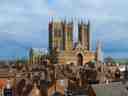
Apri pagina dedicata →To spot Lincoln Cathedral, look above the rooftops and let your eyes be drawn to the enormous stone building with three towering spires, its grand Gothic front facing you at the…Leggi di piùMostra meno
To spot Lincoln Cathedral, look above the rooftops and let your eyes be drawn to the enormous stone building with three towering spires, its grand Gothic front facing you at the very top of the city’s skyline. Now, stand right where you are and imagine this: it’s the year 1072, and Bishop Remigius, a Norman with big dreams and an even bigger beard, decides to plonk down a cathedral here-setting off a story that would be just as dramatic as any Netflix show. Back then, this spot was perfect: perched high up, ready to catch every eye for miles around, and making sure Lincoln became the new religious HQ instead of sleepy old Dorchester. They finished the first cathedral by 1092, but Remigius missed its grand opening by a whisker-he died two days before the consecration. Bad luck, right? But that was just the beginning. Not long after, a fire burned the cathedral’s wooden roof to ashes. And in 1185, the ground shook with a mighty earthquake, walls splitting “from top to bottom.” If you listen closely, you might just imagine the distant. Most would have packed up and gone home, but not Lincoln. Enter St Hugh: a determined French bishop who rebuilt the cathedral, adding soaring arches, flying buttresses, and ribbed vaults that looked like something out of a stonemason’s fever dream. Soon, the cathedral drew crowds from far and wide-especially since it claimed one of the most exciting treasures in medieval England: an original copy of Magna Carta. This ancient scroll, with the king’s own seal, is now in Lincoln Castle, but imagine the excitement as pilgrims craned their necks and squinted at its tiny writing here. By the 1300s, Lincoln Cathedral wasn’t only standing tall. With its massive central tower and a wooden spire topped with lead, it may once have been the tallest building in the world-some say even taller than the Great Pyramid of Giza! On stormy nights, the wind would howl, and-just imagine-a wild gust one night in 1548 finally sent that legendary spire crashing to the ground. But Lincoln Cathedral isn’t all “doom and drama.” Inside, it’s a feast of mysteries and marvels. Look for the Lincoln Imp-a cheeky stone creature who’s become the mascot of the entire city. There are also two incredible stained-glass rose windows: the Dean’s Eye and the Bishop’s Eye, facing north and south. These glowing wheels of color were meant to represent good and evil, watching over the cathedral like, well, a pair of very sparkly security cameras. The architecture here is like a greatest-hits album of medieval design: quirky vaults everywhere you look, and a massive, thunderous bell called Great Tom that strikes the hour and makes the stone tremble. During World War II, the RAF pilots used the cathedral’s towers as a landmark-to help them come home safely. One young pilot once nearly crashed right into it, the experience rattling him so much he swapped the cockpit for a life of peace. Lincolnshire had so many airfields it was called “Bomber County”-and the cathedral stood as a silent memorial to all those who never returned. And don’t be fooled by those peaceful cloisters: this cathedral had a darker moment in 1255, when the death of Little Saint Hugh led to a tragic blood libel against Lincoln’s Jewish community-a story so infamous, Chaucer even wrote about it. Today, a plaque inside tries to set the record straight. The great organ, built by “Father” Willis and once powered by bored soldiers instead of electricity, still fills the nave with music. The choir’s haunting voices-boys and girls alike-have echoed here for centuries, and, if you listen, maybe you’ll hear a memory of the ancient chants bouncing off these limestone walls. Over the years, Lincoln Cathedral has inspired poets and filmmakers. Remember The Da Vinci Code? Westminster Abbey said “no, thanks,” but Lincoln Cathedral stepped into the spotlight, playing its grand double role. Its stones have seen secrets, legends, laughter, and tears. So as you look up, let yourself feel just a sprinkle of awe. This is no ordinary church: it’s the storybook of Lincoln, written in stone and light, with a few helpful imps to give the place character. You can walk inside for free, wander through the echoing nave, or join a tower tour if you’re feeling adventurous-but don’t forget to glance back and marvel at how the past and present stand together, right here on this very hill. Intrigued by the features, dean and chapter or the music? Make your way to the chat section and I'll be happy to provide further details.
Apri pagina dedicata →To spot St Peter in Eastgate, just look for a long, honey-colored stone building with six tall, elegant arched windows and a heavy wooden door set beneath a pointed arch-all…Leggi di piùMostra meno
To spot St Peter in Eastgate, just look for a long, honey-colored stone building with six tall, elegant arched windows and a heavy wooden door set beneath a pointed arch-all glowing warmly in the sunlight. Now, as you’re standing here, let’s take a little leap back in time. Imagine the year is 1070. Horses clop just behind you on the old cobbled road, and the gentle ring of hammers echoes out as the first stones of St Peter’s original church are set carefully in place. This spot you’re on has watched Lincoln’s story unfold for almost a thousand years, and my, what stories it could tell! In the 1640s, things turned rather dramatic-the English Civil War raged and, during the siege of 1643, sections of the church were badly damaged. Picture smoke curling above the rooftops and anxious townsfolk ducking inside for safety! But this is no place for gloom: by 1781, a new church stands strong and proud-though it wouldn’t be the final version. With the Victorian age came more townsfolk and a need for something even grander. In 1870, Sir Arthur Blomfield, quite the architect in his day, brought visions of sweeping arches and piercing windows, the very ones you see before you. And not to be outdone, George Frederick Bodley came along and splashed the chancel with breathtaking color in 1884. And just when you thought it couldn’t get more extravagant-surprise! In 1914, Temple Lushington Moore stitched on a whole new south aisle, funded by Alfred Shuttleworth. They even threw in a glittering Rood Screen for good measure. Stand still for a moment and imagine the hum of choir voices drifting from the grand organ, first built in 1836-a sound blown through pipes tinkered by some of the country’s best organ builders. Oh, and don’t forget Harry Smith Trevitt, who played it for decades-he probably had the liveliest fingers in Lincoln. Today, the church is every bit as warm and welcoming as its sunny walls. These days, St Peter in Eastgate is famed for its follow-the-fun community spirit-with a fresh outreach program, worship in a pub, and a parish as lively and friendly as ever. It just goes to show: some stones hold stories, and others, it seems, hold a whole city’s heart!
Apri pagina dedicata →Ahead of you is Newport Arch, a weathered, sandy-colored stone arch stretching across the road with a smaller side arch next to it-just look straight on at the cobbled street for…Leggi di piùMostra meno
Ahead of you is Newport Arch, a weathered, sandy-colored stone arch stretching across the road with a smaller side arch next to it-just look straight on at the cobbled street for this grand gateway; you can’t miss its ancient, rugged pride! Now, imagine standing right where you are, just as a Roman legionnaire might have done some seventeen hundred years ago. Smell the faint tang of stone, see the grooves worn smooth by millions of footsteps, carts, and, well, a few overconfident lorries. Newport Arch isn’t just any old arch-it’s the oldest archway in Britain that you can still drive a car through today! If you squint, you might just spot an ancient Roman chariot waiting its turn... probably stuck behind a white van. This stony sentinel was built in the 3rd century, back when Lincoln was called Lindum Colonia and teemed with Roman soldiers, merchants, and travelers. It marked the mighty northern gate of the city, sending the grand Roman road-Ermine Street-all the way to the Humber. At that time, the city’s importance earned the arch a dramatic makeover, making it even bigger and bolder when Lindum Colonia became the capital of Flavia Caesariensis. The great arch you see before you is about 34 feet deep, with a central passage 17 feet wide. If you peer at the worn stones, you’re eyeing work laid by Roman hands-just imagine the clang of metal and the shouts of builders echoing across the centuries! But here’s where the story gets even juicier. The arch hasn’t just survived time-it’s survived trucks. In 1964, a lorry took a swipe at Newport Arch and, forty years later, another lorry went for a rematch. The arch took both hits like a champ, suffering only minor bruises. And get this: in 2017, a logistics truck got itself gloriously wedged under the arch. The solution? Let out the tyres to escape-now, that’s what you call a Roman roadblock! Take a closer look at the side: that smaller archway is a pedestrian postern, used by countless walkers (including, maybe, a few Roman kids sneaking home late). Now it narrows, inviting you to imagine what secrets might have passed through its cool shadow. So, as you stand in the breeze, surrounded by the hustle of modern Lincoln, think of the centuries this arch has watched roll by-Romans, medieval merchants, horse-drawn coaches, and the occasional unlucky delivery driver. Newport Arch stands as both a gate to the past and a stubborn survivor, keeping history alive on Lincoln’s streets. And remember: if your car’s a bit tall, maybe take the scenic route!
Apri pagina dedicata →Take a look at this unassuming building right in front of you-can you sense the hum of voices, the fizz of local news just waiting to burst out? This is BBC Radio Lincolnshire,…Leggi di piùMostra meno
Take a look at this unassuming building right in front of you-can you sense the hum of voices, the fizz of local news just waiting to burst out? This is BBC Radio Lincolnshire, your backstage pass to everything Lincolnshire, whether you’re a tractor-driving farmer, a cathedral bell-ringer, or just someone who needs company on a drizzly afternoon. Let’s crank the clock all the way back to Thursday, March 8th, 1951. The BBC’s presence in Lincolnshire began with a national broadcasting site over at Stamp End Depot, sending out the first flickers of local news with a show called “News from the North.” I imagine it sounded like the radio equivalent of a strong cup of tea in cold hands. But it took nearly 30 more years before Lincolnshire got its very own voice-an identity on the airwaves that would echo through every kitchen, shopfront, and village hall. November 11th, 1980. Picture it: It’s 7 AM, a misty morning. Suddenly, the air vibrates with a peal of bells from Lincoln Cathedral. Then, for the very first time, a warm, inviting voice-Nick Brunger-cuts through the static to say: “And it’s a warm welcome for the first time to the programmes of BBC Radio Lincolnshire.” Talk about radio making an entrance! In those early days, radio was a daytime affair. By sunset, the station would hand you over to BBC Radio 2. If you were a night owl in the 1980s listening from Lincolnshire, you’d have to wait years for your own evening shows. Slowly, though, the lights stayed on later, and local programming extended its reach-like a chatty neighbour who eventually keeps you talking until midnight. Jingles are a radio station’s secret sauce, and BBC Radio Lincolnshire had its own special recipe. In 1988, Alfasound, the famed jingle producer, crafted a package based on the folk song, The Lincolnshire Poacher. So for almost 20 years, it was impossible to tune in without hearing something that sounded like a countryside adventure-a melodic toast to local tradition. The station isn’t just about music and news. It’s the heartbeat of Lincolnshire sport, bringing full commentary of Lincoln City football matches. There’s even a dedicated farming programme-imagine catching up with sheep news at 6 AM on a Sunday. And if your Portuguese is a bit rusty, you would’ve loved their special show for migrant workers until 2008-not bad for a radio station that covers wheat fields and city streets alike! Speaking of technical feats, radio coverage here is almost as tricky as navigating Lincolnshire roads. Most of the county can hear the station on FM thanks to the broadcast mast at Belmont-at one time the tallest in Europe. And if you find yourself in a tricky dead zone, don’t fret. Get your digital fix with DAB, your TV, or the magic of BBC Sounds online, where you’re never more than a click away from home. Though, beware, if you’re at the very edges of the county in Barton upon Humber or Bourne, you might pick up a rival station-don’t worry, we’ll forgive you. Radio Lincolnshire hasn’t shied away from innovation, either. In 2006, they trialed broadcasting straight from XDA pocket-PCs-picture reporters on the hoof, dashing through the streets with pocket computers, possibly looking a bit like high-tech shepherds. And who can forget the BBC Bus? This mobile studio brought live radio right to the people. Sadly, budget cuts sent it on a permanent coffee break in 2008, but its legend lives on. Through all these changes, the station’s shelves groaned under the weight of local awards and stories. Under Roy Corlett, the very first manager, and then David Wilkinson-who stuck around for 14 years-the station became the soundtrack of Lincolnshire. Add in gaggles of future-famous presenters: Boothby Graffoe the comedian, John Inverdale of sports fame, and Jo Wheeler, the weather whisperer. Did you know this humble station presided over the creation of the Lincolnshire flag in 2005? And every year, local folk talent competed in “Song For Lincolnshire,” filling radio waves with fresh, toe-tapping tunes. Through storms, sporting triumphs, and sleepy Sunday mornings, BBC Radio Lincolnshire links community voices, weaving old stories with new technology. It’s no wonder 73,000 people tune in every single week-though, with that many listeners, I hope they’ve got a very big kettle! And as you stand here, remember, every time you turn on the radio in Lincolnshire, you’re tuning in to a living, breathing slice of local history. Fancy giving them a wave? Maybe your story will be next on air. Seeking more information about the technical, programming or the events? Ask away in the chat section and I'll fill you in.
Apri pagina dedicata →To spot The Lawn, look for a grand yellow building ahead of you with impressive tall columns at its entrance, a little like a Greek temple dropped right in the middle of…Leggi di piùMostra meno
To spot The Lawn, look for a grand yellow building ahead of you with impressive tall columns at its entrance, a little like a Greek temple dropped right in the middle of Lincoln! Ah, you’ve made it to The Lawn! Take a look at those magnificent pillars and the big, inviting sweep of its curved wings-it almost begs you to imagine ladies and gentlemen in elegant hats and waistcoats strolling by, maybe with a breeze rustling through the nearby trees and birds gossiping overhead. But behind these handsome yellow walls, there’s a story that’s both dramatic and full of hope, so take a moment to picture yourself back in the early 1800s. In those days, there was a man called Dr. Paul Parnell who decided to leave behind a small fortune-not for jet skis, unfortunately, but for something even more daring: a new asylum in Lincoln. After a bit of old-fashioned British dithering, the doors finally swung open in 1820. Patients would arrive, perhaps a little nervous and hopeful, stepping through the grand columns of what was then called the Lincoln Lunatic Asylum. The air inside may have smelled faintly of ink and old books, with the occasional creak of the floorboards echoing through the corridors. But here’s where things get really interesting: This building became the birthplace of a medical revolution. In the 1830s, a clever doctor named Robert Gardiner Hill, working with the equally clever Edward Parker Charlesworth, decided that people didn’t need to be locked up in chains or forced into scary restraints, as was the unfortunate custom of the time. No, here, the belief was that everyone deserved kindness and dignity-no matter what tangled troubles their minds might have gotten into. By 1838, they had made their point so well that mechanical restraints became history, and the rest of the country took note. The place changed names a few times-Lincoln Lunatic Hospital, then The Lawn Hospital in 1921. For many years, patients came from all sorts of backgrounds-some paid more, others were helped by charitable funds. The hospital even had a Superwoman of mental health herself, Dr. Mary Barkas, leading the way in the late 1920s. Eventually, times changed. The hospital closed in 1985, letting the city breathe new life into these grand halls as a place for laughter, parties, and even a spot of coffee. Today, The Lawn hums with community, and you might just hear echoes of old footsteps blending with the joyful shouts from the children’s play area or the conversations in the café. So, you’re standing at a true crossroads of compassion, history, and a little bit of rebellious spirit-right in the heart of Lincoln!
Apri pagina dedicata →
Domande frequenti
Come inizio il tour?
Dopo l'acquisto, scarica l'app AudaTours e inserisci il tuo codice di riscatto. Il tour sarà pronto per partire immediatamente – tocca play e segui il percorso guidato dal GPS.
Ho bisogno di internet durante il tour?
No! Scarica il tour prima di iniziare e goditelo completamente offline. Solo la funzione chat richiede internet. Ti consigliamo di scaricare tramite WiFi per risparmiare dati mobili.
È un tour guidato di gruppo?
No – è un tour audio autoguidato. Esplori in autonomia al tuo ritmo, con la narrazione audio riprodotta dal tuo telefono. Nessuna guida, nessun gruppo, nessun orario.
Quanto dura il tour?
La maggior parte dei tour richiede 60–90 minuti, ma sei tu a controllare il ritmo. Metti in pausa, salta le tappe o fai pause quando vuoi.
E se non riesco a finire il tour oggi?
Nessun problema! I tour hanno accesso a vita. Metti in pausa e riprendi quando vuoi – domani, la prossima settimana o il prossimo anno. I tuoi progressi vengono salvati.
Quali lingue sono disponibili?
Tutti i tour sono disponibili in oltre 50 lingue. Seleziona la lingua preferita quando riscatti il codice. Nota: la lingua non può essere cambiata dopo la generazione del tour.
Dove accedo al tour dopo l'acquisto?
Scarica l'app gratuita AudaTours dall'App Store o Google Play. Inserisci il codice di riscatto (inviato via email) e il tour apparirà nella tua libreria, pronto per essere scaricato e avviato.
Se il tour non ti piace, ti rimborseremo l'acquisto. Contattaci a [email protected]
Pagamento sicuro con