Tour Audio di Ipswich: Armonie Storiche e Tour di Gemme Nascoste
Un santuario nascosto un tempo attirava pellegrini segreti a Ipswich, le sue mura sussurravano leggende perdute nel tempo mentre la città fuori andava avanti. Oltre le strade trafficate si trova uno strato di storie che la maggior parte dei visitatori non scopre mai. Con questo tour audio autoguidato, cammina al tuo ritmo attraverso angoli antichi e audaci meraviglie moderne, scoprendo gli scandali, le rivolte e gli enigmi che hanno plasmato la città. Chi ha rischiato tutto all'ombra di Nostra Signora di Ipswich quando la fede si è scontrata con il potere reale? Quale reliquia è scomparsa dalle sale del Museo di Ipswich, lasciando solo voci dietro di sé? E perché gli architetti hanno insistito sulle curve anziché sugli angoli nel progettare l'imponente Willis Building? Passa dai segreti del cimitero a sorprendenti vetri e acciaio mentre la storia prende vita intorno a te. Ogni svolta porta dramma, curiosità e un'emozionante sensazione di scoperta mentre la città rivela il suo volto più profondo. Inizia ora. Scopri gli strati che Ipswich sta aspettando di mostrarti.
Anteprima del tour
Informazioni su questo tour
- scheduleDurata 40–60 minsVai al tuo ritmo
- straighten3.3 km di percorso a piediSegui il percorso guidato
- location_onPosizioneIpswich, Regno Unito
- wifi_offFunziona offlineScarica una volta, usa ovunque
- all_inclusiveAccesso a vitaRiascolta quando vuoi, per sempre
- location_onParte da Santa Maria a Stoke
Tappe di questo tour
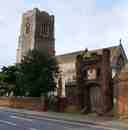
Look for a long, low flint-and-stone church with a square tower on the left and a little arched porch entrance facing you, sitting slightly raised behind a patch of grass.…Leggi di piùMostra meno
Look for a long, low flint-and-stone church with a square tower on the left and a little arched porch entrance facing you, sitting slightly raised behind a patch of grass. Alright, you’re at St Mary at Stoke… and this place has been doing “community hub” work since before Ipswich was even sure it was Ipswich. A church has stood on this spot since about the 900s, and the very first version was probably timber-because if you’re building in the 10th century, “fire-resistant” is more of a wish than a plan. Its location is no accident. You’re near the foot of a ridge, close to the river crossing by Stoke Bridge, so this was a natural gathering point. And, according to local tradition, a lot of Suffolk churches called St Mary were tied to pilgrim routes-people heading for the big Marian shrine at Walsingham. Medieval Ipswich even had its own Mary shrine in town, so religious traffic was real traffic. Now, look at the building and you’ll spot the time-layers. Part of St Mary’s is genuinely medieval… and part of it is unapologetically Victorian, after the railway arrived and the parish population suddenly ballooned. In 1872, architect William Butterfield designed a major extension-new nave, chancel, and a south porch-more than doubling the space. The older church didn’t get bulldozed; it got promoted into the north aisle and Lady Chapel. Very “keep the original, just add an extra wing.” Inside, there’s a medieval hammerbeam roof-one of those wooden ceiling structures that looks both beautiful and slightly like engineering showing off. It even has angels at the ends… except the angels you see are Victorian replacements, because the originals were wrecked by iconoclasts. Nothing says “piety” like smashing church art with enthusiasm. That wasn’t theoretical either. The Puritan visitor William Dowsing came through in January 1643 and recorded the wrecking of crosses and painted cherubim, even noting a brass inscription with “pray for us” that didn’t survive the mood of the times. Around Stoke itself, people once talked about the “Gold Rood of Stoke,” a cross said to have miraculous powers-exactly the kind of thing that would not make it through a 1547 crackdown on “superstitious” objects. Spoiler: it didn’t. St Mary’s is also a place where everyday life leaves fingerprints. In 1818, the parish finances were short, so they sold a bell for £25… about £2,500 today. Imagine fundraising by literally selling the thing that tells everyone to show up. And yes-there were reports of fiddlers, a wheezy trombone, and a squalling clarinet providing church music. It must’ve been… spiritually challenging. The churchyard holds its own stories too: men from the fleet during the Second Dutch War were buried here in 1665-names linked to ships like Royal James and Royal Oak-far from the sea, but not far from memory. When you’re set, Stoke Bridge is a 3-minute walk heading southwest.
Apri pagina dedicata →On your right, you’ll spot Stoke Bridge as a pair of chunky, arched concrete spans carrying the road over the river, with low parapets and traffic lights marking the climb onto…Leggi di piùMostra meno
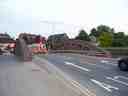
On your right, you’ll spot Stoke Bridge as a pair of chunky, arched concrete spans carrying the road over the river, with low parapets and traffic lights marking the climb onto it. This is one of Ipswich’s most practical pieces of drama: it sits right where the River Gipping officially turns into the River Orwell… which is a very polite way of saying the river changes its name and keeps on doing river things. The bridge pulls traffic in from Over Stoke and, because the water down there is tidal, it’s always had to deal with moods-calm one hour, bossy the next. There are records of a bridge here back in the late 1200s, and even earlier hints suggest people were crossing here long before that. It’s close to an old ford-basically the “cheap option” crossing-and down by Stoke Quay archaeologists have found signs of Saxon life. So yes, folks were picking this spot for centuries because it was the sensible way into town. In Elizabeth the First’s day, the town hauled 28 loads of timber from Whitton to build or repair the bridge-imagine the squeal of carts and the kind of mud that steals your shoes. But the wildest chapter is 12 April 1818. After days of heavy rain, the whole valley flooded so badly it looked like one huge lake. Three men stood here watching the torrent… and the bridge gave way. Two were pulled out. One wasn’t, and was found days later. Engineer William Cubitt improvised a temporary floating bridge, then his firm put up a cast-iron replacement-iron shipped in sections from Dudley, sent by canal, then by sea, like a grim little Meccano set. What you see now is newer: concrete from the 1920s, with a second span added in the early 1980s, and it stayed the southernmost crossing here until the Orwell Bridge arrived. When you’re set, St Peter’s Church is a 3-minute walk heading north.
Apri pagina dedicata →On your left, look for the chunky square flint-and-stone tower rising above a long roofline, tucked behind a low red-brick wall and an old arched gateway. This is St Peter’s…Leggi di piùMostra meno
On your left, look for the chunky square flint-and-stone tower rising above a long roofline, tucked behind a low red-brick wall and an old arched gateway. This is St Peter’s Church… the “by the Waterfront” one, because Ipswich used to lean hard on the River Orwell. You’re standing near what’s likely the town’s earliest church spot-there’s a St Peter’s mentioned in the Domesday Book, which is basically medieval England’s nosy spreadsheet. Back then, travelers crossed the river at a ford just up the way, so this place was a natural welcome mat. In 1297, it even hosted royal business: Edward the First married his youngest daughter, Elizabeth of Rhuddlan, right here in the earlier church. Nothing says “family celebration” like a political alliance. The building you see now went up around 1460, and inside is a much older treasure: a Tournai stone font from about 1170 to 1190. After a major restoration funded by a Heritage Lottery grant-£772,000 at the time, roughly £1.2 million today- it reopened in 2008 as a heritage center, cared for by the Ipswich Historic Churches Trust. When you’re ready, Curson Lodge is a 3-minute walk heading west.
Apri pagina dedicata →
Mostra altre 12 tappeMostra meno tappeexpand_moreexpand_less
On your left, look for the white-and-black timber-framed building with a steep tiled roof and a jettied upper floor that slightly overhangs the street corner. This is Curson…Leggi di piùMostra meno
On your left, look for the white-and-black timber-framed building with a steep tiled roof and a jettied upper floor that slightly overhangs the street corner. This is Curson Lodge… and it’s been quietly standing its ground since the 1400s. If these beams could talk, they’d probably complain about the price of repairs. It’s a 15th-century, Grade II star listed building, sitting around numbers 45 and 45A St Nicholas Street (though the shop number has drifted to 47, because streets love a little chaos). In 2007, the place got a serious second life, restored with help from the Ipswich Building Preservation Trust, plus support from the Architectural Heritage Fund, Ipswich Borough Council, and English Heritage. Big teamwork… just to keep old wood from turning back into trees. During that restoration, it picked up the name “Curson Lodge,” linking it to the larger mansion complex of Robert Curson, a Tudor courtier, once stretching across nearby streets almost down to Rose Lane. When you’re ready, the Unitarian Meeting House is a 3-minute walk heading southwest.
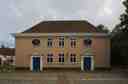
Apri pagina dedicata →On your right, look for a neat, honey-colored building with two dark blue doors, crisp white trim, and those two big oval windows like calm, unblinking eyes. This is the…Leggi di piùMostra meno
On your right, look for a neat, honey-colored building with two dark blue doors, crisp white trim, and those two big oval windows like calm, unblinking eyes. This is the Unitarian Meeting House, and it wears its importance quietly... which is very on-brand. It’s Grade I listed, meaning it’s protected at the highest level in England, the architectural equivalent of “do not touch” tape. The building you’re seeing opened in 1700, launched into the world by John Fairfax, and what’s remarkable is how much of the original interior has survived. Three centuries of footsteps, sermons, and shifting ideas... and the place still holds its shape. Unitarians have long made room for questions rather than shutting them down. So while other churches argued over who had the RIGHT answers, this one was built for people willing to keep thinking. When you’re set, Willis Building is a 1-minute walk heading north.
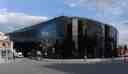
Apri pagina dedicata →On your left, look for a big, curved block wrapped in dark, mirror-like glass, with soft rounded corners and a hint of green along the roofline. This is the Willis Building, and…Leggi di piùMostra meno
On your left, look for a big, curved block wrapped in dark, mirror-like glass, with soft rounded corners and a hint of green along the roofline. This is the Willis Building, and it still feels like it landed here from the better-dressed future. Built between 1970 and 1975 as the regional headquarters for Willis Faber and Dumas, it was designed by Norman Foster and Wendy Cheesman just as their practice-Foster Associates-was hitting its stride. Ipswich got a front-row seat to what later got called “high tech” architecture: sleek materials, clever engineering, and a kind of confident practicality that says, “Yes, this is an office… but it’s trying.” Notice how it refuses to do neat right angles. That bulbous footprint wasn’t a stylistic whim-it’s the building taking the shape of its tight city-center site, squeezed between busy road junctions and the nearby Unitarian Meeting House. Two Grade I listed neighbors, side by side… one is historic and polite, and this one wears smoked glass and doesn’t apologize. Structurally, it’s a grid of concrete columns spaced about 14 meters apart, holding up cantilevered floor slabs-three open-plan office levels for roughly 1,300 people. Inside, there’s a central escalator spine leading up to a rooftop staff restaurant and garden with a full panorama of town. And yes, there was once a staff swimming pool for lunch breaks. It’s covered now-preserved under the floor because listing rules don’t do “just fill it in.” It opened on June 2, 1975, with Harold Macmillan doing the honors, and by 1991 it was Grade I listed-shockingly young for that level of protection. When you’re set, St Pancras Church is about a 7-minute walk heading east, going through one roundabout.
Apri pagina dedicata →On your left, look for the big red-brick neo-Gothic church with rows of pointed-arch windows and a stone-framed doorway set back from the street behind a low brick wall. This is…Leggi di piùMostra meno
On your left, look for the big red-brick neo-Gothic church with rows of pointed-arch windows and a stone-framed doorway set back from the street behind a low brick wall. This is Saint Pancras, a working Roman Catholic parish church right in central Ipswich… and it arrived with all the drama you’d expect from nineteenth-century religious life in England. The building is part of the Catholic revival era, when Catholic communities started putting up confident, permanent churches again after centuries of keeping things a little more low-profile. A lot of the money for this place came from one man with a remarkable story: L’Abbé Louis Simon, a French priest who fled here in 1793 as the French Revolution turned dangerous for clergy. Ipswich became his adopted home, and he did something quietly historic: he became the first Catholic priest to celebrate Mass regularly in Ipswich since the Reformation. Simon also had family money back in Normandy… and instead of living comfortably on it, he sold inherited property to fund Catholic church building here. Nothing like escaping a revolution and then spending your inheritance on bricks and mortar. The architect was George Goldie, a heavyweight in Catholic church design. There’s even been talk that St Pancras was drawn with bigger ambitions in mind-possibly a future cathedral, if East Anglia ever got its own Catholic diocese. The church was consecrated by the Bishop of Northampton, Francis Amherst, and the sermon was preached by Henry Edward Manning-who would later become Cardinal Manning. So yes, it opened with a pretty serious guest list. And then… two years later, 1863, the welcome party turned ugly. Anti-Catholic riots targeted the church after Guy Fawkes Night. The curate reportedly barricaded himself inside the presbytery for two days while things kicked off outside. The mayor eventually swore in about 200 special constables to restore order. It’s an odd footnote, but the trouble also sparked sympathy among local dignitaries-sometimes a community only gets seen clearly when it’s under pressure. Inside, the layout runs east to west: altar at the east end with a reredos and five big statues-Christ with the four evangelists. There’s a Lady Chapel too, with a decorative marble floral altar and a statue of Mary. Look up in your mind’s eye to the west end for the choir loft-rebuilt after a bad arson fire on Christmas Day 1985 that destroyed the loft and forced a rebuild. The organ up there dates to 1891, and a modern rose window added for the Millennium shows the Holy Spirit descending. When you’re set, Ipswich Blackfriars is a 2-minute walk heading west.
Apri pagina dedicata →On your left, look for a low, rough flint-and-stone ruin with three pale arched openings, sitting in a neat patch of grass and framed by modern red-brick buildings. This is…Leggi di piùMostra meno
On your left, look for a low, rough flint-and-stone ruin with three pale arched openings, sitting in a neat patch of grass and framed by modern red-brick buildings. This is Ipswich Blackfriars… or, more accurately, what time, politics, and redevelopment have decided to leave us. Back in 1263, this wasn’t a quiet little lawn with a picturesque wall. It was a full Dominican friary-Friars Preachers-founded by King Henry the Third. Yes, the king himself. He bought land here and basically handed over the keys, telling an official to come down and make it official, medieval-style. The Dominicans weren’t monks tucked away in the countryside. They were town people: preaching, teaching, begging their daily support from locals… and staying right in the middle of the action. And Ipswich had options. The Franciscans-Greyfriars-were already established, and the Carmelites-Whitefriars-arrived later. The Blackfriars were the middle sibling: serious, learned, and under the supervision of Cambridge, which feels very on-brand. Now, the big church that once stood here-dedicated to Saint Mary-vanished within about a century after Henry the Eighth’s Dissolution. Nothing like a national policy to ruin your building maintenance schedule. But the rest of the complex hung on for a long time, long enough that in 1748 an artist named Joshua Kirby drew plans and views of the site. Problem was… he misread what he was seeing. Later scholars realized the “church” Kirby pointed to was actually the friars’ dining hall, the refectory-where meals came with scripture readings, delivered from a raised lectern like a medieval dinner podcast. In the 1970s and 1980s, archaeologists finally sorted things out properly. They found the footprint of the lost church: a substantial aisled building, about 135 feet long. That’s roughly 41 meters-big enough that you’d feel it in your stomach when the singing started. The friary sat hard up against Ipswich’s town defenses-the rampart and ditch line ran close by-so the friars’ land deals came with conditions. Town leaders granted plots, but the friars had to keep access open so citizens could maintain the defenses and reach the gates if things got ugly. Even holy men had to share the sidewalk. Look again at that surviving wall fragment with the blocked arches. That’s part of the sacristy range-the working backstage of the church-later used as classrooms for Ipswich School until 1842. Imagine schoolkids crammed into an ex-dormitory under a fancy hammerbeam roof that may not even have been original. Recycling isn’t new; it just used to come with more Latin. And the people here? Not just robed friars. Excavations uncovered around 250 burials. One skeleton is especially haunting: a man whose right hand had been chopped off-yet the bone showed healing, meaning he lived afterwards. The injury looks like violence, not surgery. It matches a recorded attack in 1327 on a local man named Richard de Holebrok, tied to a tree by a mob and mutilated. For a place dedicated to preaching peace, the cemetery holds proof that medieval life could be brutally personal. By the 1500s, the friary was poor. So poor that, even before the official shutdown, the friars were leasing out gardens, houses, and buildings-basically renting the place room-by-room to stay afloat. When the royal visitor came through in 1538, the end arrived quickly. The property eventually passed to William Sabyn, a serious operator: sea-captain, customs controller, and local bigwig. The spiritual era ended, the real estate era began… and here we are, reading the remaining stones like subtitles. When you’re ready, Martin & Newby is a 1-minute walk heading southeast.
Apri pagina dedicata →On your left, look for the dark, old-school shopfront with big plate-glass windows and bold white lettering high up that reads “MARTIN & NEWBY.” This place was Ipswich retail…Leggi di piùMostra meno
On your left, look for the dark, old-school shopfront with big plate-glass windows and bold white lettering high up that reads “MARTIN & NEWBY.” This place was Ipswich retail the way it used to be: a proper, long-running shop where you could ask a real human for help and not get directed to “Aisle 47, section mystery.” Martin and Newby started back in 1873, founded by John Martin right here on Fore Street, and it grew into a small empire of everyday essentials-ironmongery, electrical goods, domestic bits, gardening, tools… basically, if your house was squeaking, leaking, or refusing to cooperate, they had something for it. In 1897, the ironmongery side got rebuilt into what you’re looking at now, proudly tied to Queen Victoria’s Diamond Jubilee-so yes, they literally branded the building as a celebration. During that rebuild, workers digging the cellar hit old stone foundations. People at the time thought, “Aha, the town’s East Gate!” These days, it’s more likely part of the Blackfriars Monastery precinct wall… which is a pretty Ipswich moment: you try to expand your stockroom and accidentally find medieval history. The shop stitched together neighboring buildings too-a former pub called The Bull’s Head became the tool section, while the electrical department moved into a handsome Georgian building that still had an old cooking range and copper down in the cellar. Then there’s the light bulb. In 2001, one of the world’s oldest working bulbs here finally went out after more than 70 years… and somehow that feels like a metaphor. The shop itself couldn’t outlast the DIY superstores and supermarket aisles, and it closed in 2004. When you’re set, Regent Theatre is a 4-minute walk heading north.
Apri pagina dedicata →On your left, look for the broad brick-and-stone front with the big “IPSWICH REGENT” sign and a long blue canopy above a wide set of steps leading into the entrance. You’re…Leggi di piùMostra meno
On your left, look for the broad brick-and-stone front with the big “IPSWICH REGENT” sign and a long blue canopy above a wide set of steps leading into the entrance. You’re standing outside the Regent Theatre, and it wears its confidence well. That neat, two-storey, almost politely formal façade is neo-Georgian… but don’t let the tidy look fool you. Behind it is Ipswich’s biggest performance space, with 1,551 seats-East Anglia’s largest theatre-and it’s been soaking up applause, squeaky shoes, and the occasional pre-show nerves since 1929. Back then, it opened as a “cine-variety hall,” which basically meant: films plus live acts, all under one roof, because why choose? And it arrived right as cinema was leveling up. This was among the first places in the country to show sound films, when voices coming out of the screen still felt like witchcraft. People would’ve walked in expecting a night out and walked out wondering if the future had just tapped them on the shoulder. The architect, William Edward Trent, didn’t do subtle. The place was built to feel LUXURIOUS: a restaurant, 14 viewing boxes, a resident Wurlitzer organ with its own organist, and even an 18-piece orchestra. Imagine that-going to the movies and getting a live soundtrack like you’re royalty. And in a detail that always cracks me up, the design even included a manager’s cottage. Because nothing says “showbusiness” like living inside your workplace. During the Second World War, the Regent shifted gears-still a place for performance, but also for civic events, concerts, ballet, opera… the kind of programming a town leans on when the world outside is unsteady. Then came the 1950s and 60s, when big names rolled through: Buddy Holly and the Crickets, The Beatles, and in 1964 The Rolling Stones. Two years later: Ike and Tina Turner, plus The Yardbirds. Add in Roy Orbison, Jimi Hendrix, and plenty more, and you’ve basically got a venue that saw pop history sweat under stage lights. In the 70s and 80s, when it was known as the Gaumont, it welcomed punk and new wave-Elvis Costello, Siouxsie and the Banshees, Gary Numan-music that didn’t politely “entertain” so much as grab your jacket and shake you awake. There was controversy over its future, but the Borough Council stepped in, reopened it in 1991 as the Regent, and it earned Grade II listed status in 2000. Inside, the 1929 shape largely remains-though the original Wurlitzer is gone. In 2007, the auditorium was refurbished, trimming capacity by about 150 seats to make them bigger and comfier… a very grown-up decision. Tragic news for knees that enjoyed suffering. And the updates keep coming: a £300,000 backstage upgrade in 2023 (about £380,000 in today’s money) gave touring companies more dressing rooms and better facilities. Then a bigger front-of-house project-£3.45 million-wrapped up in early 2025, funded by a ticket levy, improving accessibility, adding a lift, restoring 1929 details, and bringing back that classic Art Deco glow outside. When you’re ready, Cock and Pye is next-just walk northwest for about 5 minutes.
Apri pagina dedicata →On your left is the Cock and Pye... a pub with a name that sounds charming, until you learn what the “cock” part used to mean. Yep. This place was already on Ipswich’s official…Leggi di piùMostra meno
On your left is the Cock and Pye... a pub with a name that sounds charming, until you learn what the “cock” part used to mean. Yep. This place was already on Ipswich’s official pub list back in 1689, noted in what was then St Margaret’s Parish. Picture Upper Brook Street in those days: gravel underfoot, the smell of horse sweat and wet wool, and a steady clatter of coaches pulling in. The Cock and Pye started life as a proper coaching inn, the kind of place where travelers ate, drank, swapped gossip, and waited for fresh horses. By the late 1800s, though, it had shrunk down into a much smaller pub... the big travel business fading as the town changed. Now, about that sign. Traditionally it showed a BIG pie with a cock perched right on top-like the world’s oddest bakery display. Subtle branding, Ipswich. A local writer in the 1880s described the design as once-common, and he didn’t mince words about what it advertised: cockfighting. In the 1700s, this wasn’t hidden away-it was actively promoted, even in newspaper ads, as if it were a harmless night out. Then came 1835, when the Cruelty to Animals Act banned cockfighting. And at this very pub, the proprietor-Mr Birch-tried to sell up, because one of his main “attractions” had just become illegal. When you’re set, Ancient House is a 1-minute walk heading south.
Apri pagina dedicata →On your left, you’ll spot a bright white, jettied Tudor-style building with big black-leaded windows and lavish raised plaster designs, topped off by a royal crest right at the…Leggi di piùMostra meno
On your left, you’ll spot a bright white, jettied Tudor-style building with big black-leaded windows and lavish raised plaster designs, topped off by a royal crest right at the center. This is the Ancient House… and it’s wearing its history like it’s dressed for court. The bones of this place go back to the 1400s, and it’s now Grade I listed, which is basically the building equivalent of being told, “You are precious, and you’re not allowed to fall over.” Look at that surface detail on the upper floor: the sculpted plasterwork is called pargeting, and it’s not just decoration. It’s a statement. Four panels show a Tudor “world map”… with the continents they knew: Africa, Asia, Europe, and America. No Australia, because at the time it was still a bit shy about introducing itself to Europe. Africa gets a spear-carrying figure, Asia is paired with a horse and a mosque-like building, Europe shows a woman with a horse and a church, and America features a man with a dog at his feet. It’s like a 17th-century travel brochure… made entirely from plaster. Now, a twist: the showy frontage you’re looking at isn’t the original face of the building. Between about 1660 and 1670, Robert Sparrowe added this grand “new” front, including the Royal Arms of King Charles II and that old French motto: “Honi soit qui mal y pense”… “Shame on anyone who thinks badly of it.” Which is an impressively classy way to say, “Mind your business.” Before the Sparrowes, this place passed through local hands, including merchants like George Copping, a draper and fishmonger who bought it in 1567 and had the front ground-floor room richly panelled… plus he built a “long gallery,” because apparently even in Tudor Ipswich people needed a spot to pace dramatically. The Sparrowe family also pushed a legend about a secret Catholic worship room, and an even juicier rumor that Charles II hid here after defeat. Problem is… Ipswich is more than 100 miles off the king’s known route. Great story, shaky geography. By 1979, the house was in real trouble: sinking foundations, rot, woodworm, and deathwatch beetle-basically every tiny villain in the timber horror genre. Restoration kicked off in 1984; nothing was left untouched, and even the fireplaces had sunk at their own pace, like stubborn old relatives. Today it’s owned by Ipswich Borough Council, and the attic even hosts small art exhibitions from time to time. When you’re ready, Ipswich Town Hall is a 4-minute walk heading west.
Apri pagina dedicata →On your left, look for the big honey-colored stone building with a central clock tower and arched windows-Ipswich Town Hall sits like it owns the square… because, in a way, it…Leggi di piùMostra meno
On your left, look for the big honey-colored stone building with a central clock tower and arched windows-Ipswich Town Hall sits like it owns the square… because, in a way, it kind of does. This is Ipswich Town Hall: a Grade II listed civic heavyweight that still hosts full council meetings, but also moonlights as an events venue and art gallery. So yes, the place where people argue about budgets can also be where you admire a nice bust of the Duke of Wellington. Multitasking. Ipswich didn’t always have this grand Italianate showpiece. The earliest town hall began life as a chapel dedicated to St Mildrith, later converted for civic business by adding an upper floor in the eighteenth century-like the town looked at a sacred space and thought, “Nice… now add paperwork.” In 1818, architect Benjamin Catt gave the old setup a smarter Palladian face, though it took until 1842 to properly stitch the spaces together inside. Then came the Victorian confidence boost. On 18 April 1866, Mayor Ebenezer Goddard laid the foundation stone for the building you’re seeing now. It was designed by Bellamy and Hardy, built on the same site, and opened in 1868 by Mayor John Patteson Cobbold. The bill was £16,000 at the time-around £2 million today. That’s roughly $2.5 million in modern US money… not bad for a building that’s still doing the job. Now, let your eyes travel up that front wall. You’ve got sculpted figureheads: King Richard I, King John, and Cardinal Thomas Wolsey. Richard promised Ipswich a charter but didn’t live to deliver; John actually granted it- sometimes the less popular guy gets things done. Wolsey, meanwhile, is Ipswich born and bred, educated right here-proof you can go far after growing up on Suffolk streets. Above them sit statues for Commerce, Agriculture, Law and Order, and Justice-basically the town’s wishlist, carved in stone. And that clock tower? The striking clock was made by Dent of the Strand… the same firm behind Big Ben. Even Ipswich keeps good time. When it opened, this place had everything: council chamber, courtrooms, jury rooms-and down in the basement, a police station with seven cells, plus space for the fire engine and hose. Today it’s gentler: customer services, meetings, and galleries, including that Wellington bust and a matching Wolsey bust by an unknown artist-mysterious, but he got the cheekbones right. When you’re set, Our Lady of Ipswich is a 4-minute walk heading north.
Apri pagina dedicata →On your left is Our Lady of Ipswich… and what you’re looking at now is basically the “X marks the spot” for one of medieval England’s biggest pilgrimage stories. Back then,…Leggi di piùMostra meno
On your left is Our Lady of Ipswich… and what you’re looking at now is basically the “X marks the spot” for one of medieval England’s biggest pilgrimage stories. Back then, England had this nickname: “Our Lady’s Dowry.” Meaning the country liked to think of itself as specially devoted to the Virgin Mary. And it wasn’t just talk-there were Marian shrines all over the place. By the high Middle Ages, Suffolk alone had loads of them. Most churches around here either carried Mary’s name, or had a little Mary-shrine tucked in, usually toward the east end of a side aisle. But a few became so popular they broke out into their own dedicated sites… and Ipswich’s did exactly that. The shrine here-known as Our Lady of Grace-first shows up in records in 1152. Picture Ipswich as a busy port town: shipyards, cargo, gulls arguing overhead… and then a steady flow of pilgrims arriving dusty-footed, hunting beds in the local inns and maybe a stiff drink in a tavern before making their way to pray. This shrine sat just outside the west gate of the old town wall, near Lady Lane, not far from St Mary at the Elms. Today you get a plaque and an image… then, you’d have had candles, offerings, and that particular hush people slip into when they want something badly enough. Important people came through too. In 1297, Princess Elizabeth-daughter of Edward the First-was married here to the Count of Holland. That’s a serious royal endorsement. And then there’s Sir John Howard-later the Duke of Norfolk-who kept turning up like a repeat customer. In 1463 he left an offering of 2 pence… call it a few dollars today, pocket change with spiritual ambitions. Later he spent 10 shillings on a pilgrimage-roughly a few hundred dollars in modern money, depending on how you measure it-and he came back again and again. In 1483, he left 20 pence, plus 4 pence “to bow on Our Lady’s foot,” basically paying for the privilege of a close-up moment with the statue, and 11 pence in alms. Then he died two years later at Bosworth, alongside Richard the Third. History has no refund policy. The shrine’s reputation hit a new peak in the early 1500s with a story that still crackles with tension: Anne Wentworth, a 12-year-old having terrifying seizures, was brought here after a vision of the Ipswich image. Sir Thomas More wrote that she arrived contorted and raving… then, in front of everyone, she was suddenly well. The tale turned her into the “Maid of Ipswich,” and it poured fuel on the shrine’s fame. And then came the Reformation. In 1538 the statue was taken to Chelsea to be burned, along with Walsingham’s. No eyewitness left us the dramatic finale… but we do have a dry, almost funny detail from Cromwell’s man: the image arrived wearing “two half shoes” of silver. Even sacred icons apparently needed footwear. Here’s the mystery twist: a wooden Madonna and Child in Nettuno, Italy-locally called “the English Lady”-matches old descriptions, down to those odd little silver half-shoes. Records there suggest a statue arrived from Ipswich in 1550, and tests date the wood to the right medieval window. Maybe it was quietly sold off instead of burned… or maybe sailors smuggled it away, got caught in a storm, and donated it in gratitude. A bit of wood from the base even showed high salt content, like it had tasted sea spray. The sea loves a good plotline. When you’re ready, Ipswich Museum is a 4-minute walk heading northwest.
Apri pagina dedicata →On your left, look for the big, confident red-brick Victorian building with tall cream-trimmed windows and the words “IPSWICH MUSEUM” fixed to the corner wall. Alright, you’ve…Leggi di piùMostra meno
On your left, look for the big, confident red-brick Victorian building with tall cream-trimmed windows and the words “IPSWICH MUSEUM” fixed to the corner wall. Alright, you’ve made it to Ipswich Museum… and it looks exactly like a place that would keep a giraffe in a glass case and call it “education.” This Grade II star listed building has been one of the town’s great knowledge-hubs for well over a century, sitting here on High Street like it’s quietly daring you to learn something. The story starts earlier, though. Ipswich’s first museum opened in 1847, originally over on Museum Street, built with a pretty clear mission: teach working people about the natural world. Not with lofty speeches, either… with real specimens, cabinets, and open evenings where ordinary folks could come in after work and look science straight in the eye. The first president was William Kirby, an insect expert-so yes, Ipswich began its museum life with a man who took beetles seriously. The driving force behind the whole project was George Ransome from the Quaker Ransome family-industrialists who helped power Ipswich’s growth. What’s striking is how broad the support was: people across politics got behind the idea that a museum could be a tool for social improvement. That’s a very Victorian sentence… and a very Victorian plan. Then comes a name with real weight: Reverend Professor John Stevens Henslow, president from 1850 to 1861. He was Charles Darwin’s mentor at Cambridge, and under Henslow the museum gained national attention. In 1851, when the British Association for the Advancement of Science met in Ipswich, Prince Albert himself inspected the museum and approved of it. Nothing says “legitimate” like getting a royal nod while everyone tries to stand up straight. But the museum nearly fell apart financially in 1852. The town held a vote in 1853, and people overwhelmingly agreed to fund it through public rates under the Public Libraries Act. In other words: Ipswich decided this place mattered enough to pay for it together. That’s civic pride you can actually measure. By 1881, the collections had outgrown the old building, so the museum moved here-into a new home shared with the town’s Schools of Art and Science. Public subscriptions helped fund it, with major backing from Sir Richard Wallace of Sudbourne Hall. And later expansions, plus the clearing of the borough’s floating debt, were boosted by gifts-especially from Mrs Margaret Ogilvie of Sizewell Hall, who put her money behind the museum in appreciation of the curator’s work. Inside, the museum became famous for its natural history displays-many set up just before Darwin’s ideas changed how people understood life on Earth. It also grew into archaeology in a big way, tied to Suffolk’s crucial role in understanding deep human prehistory. And if you’ve heard of Sutton Hoo… yes, Ipswich Museum is part of that story too. Basil Brown, working under the museum’s guidance, helped begin the investigation that led to the ship burial discovery in 1939. Not bad for a local museum. In 2007, Ipswich’s museum service merged with Colchester’s to form Colchester + Ipswich Museums-shared staffing and support, but Ipswich keeps ownership of this building and its collections. And as you’re standing here now, there’s one more modern twist: the museum closed in October 2022 for a major refurbishment expected to take about three years, with a budget of £8.7 million-roughly $11 million today. There’s been some debate about how “Victorian” the interior should stay… which is a very Ipswich problem to have.
Apri pagina dedicata →
Domande frequenti
Come inizio il tour?
Dopo l'acquisto, scarica l'app AudaTours e inserisci il tuo codice di riscatto. Il tour sarà pronto per partire immediatamente – tocca play e segui il percorso guidato dal GPS.
Ho bisogno di internet durante il tour?
No! Scarica il tour prima di iniziare e goditelo completamente offline. Solo la funzione chat richiede internet. Ti consigliamo di scaricare tramite WiFi per risparmiare dati mobili.
È un tour guidato di gruppo?
No – è un tour audio autoguidato. Esplori in autonomia al tuo ritmo, con la narrazione audio riprodotta dal tuo telefono. Nessuna guida, nessun gruppo, nessun orario.
Quanto dura il tour?
La maggior parte dei tour richiede 60–90 minuti, ma sei tu a controllare il ritmo. Metti in pausa, salta le tappe o fai pause quando vuoi.
E se non riesco a finire il tour oggi?
Nessun problema! I tour hanno accesso a vita. Metti in pausa e riprendi quando vuoi – domani, la prossima settimana o il prossimo anno. I tuoi progressi vengono salvati.
Quali lingue sono disponibili?
Tutti i tour sono disponibili in oltre 50 lingue. Seleziona la lingua preferita quando riscatti il codice. Nota: la lingua non può essere cambiata dopo la generazione del tour.
Dove accedo al tour dopo l'acquisto?
Scarica l'app gratuita AudaTours dall'App Store o Google Play. Inserisci il codice di riscatto (inviato via email) e il tour apparirà nella tua libreria, pronto per essere scaricato e avviato.
Se il tour non ti piace, ti rimborseremo l'acquisto. Contattaci a [email protected]
Pagamento sicuro con